
What Are Puanga Teaching Resources?
Puanga teaching resources are specialized educational materials designed for New Zealand regions where the star Rigel (Puanga) signals the Māori New Year, rather than the Matariki cluster. These resources align with the Aotearoa New Zealand’s Histories curriculum, providing lesson plans, bilingual activities, and cultural narratives specific to Taranaki, Whanganui, and Far North iwi traditions.
As New Zealand continues to embrace the revitalization of mātauranga Māori (Māori knowledge) within the education sector, the demand for regionally specific curriculum materials has surged. While Matariki is the nationally recognized herald of the New Year, for many iwi—particularly those in the West Coast and Far North—it is Puanga that holds the mana of the new season. For educators, understanding this distinction and having access to high-quality Puanga teaching resources is essential for delivering a culturally responsive and accurate curriculum.
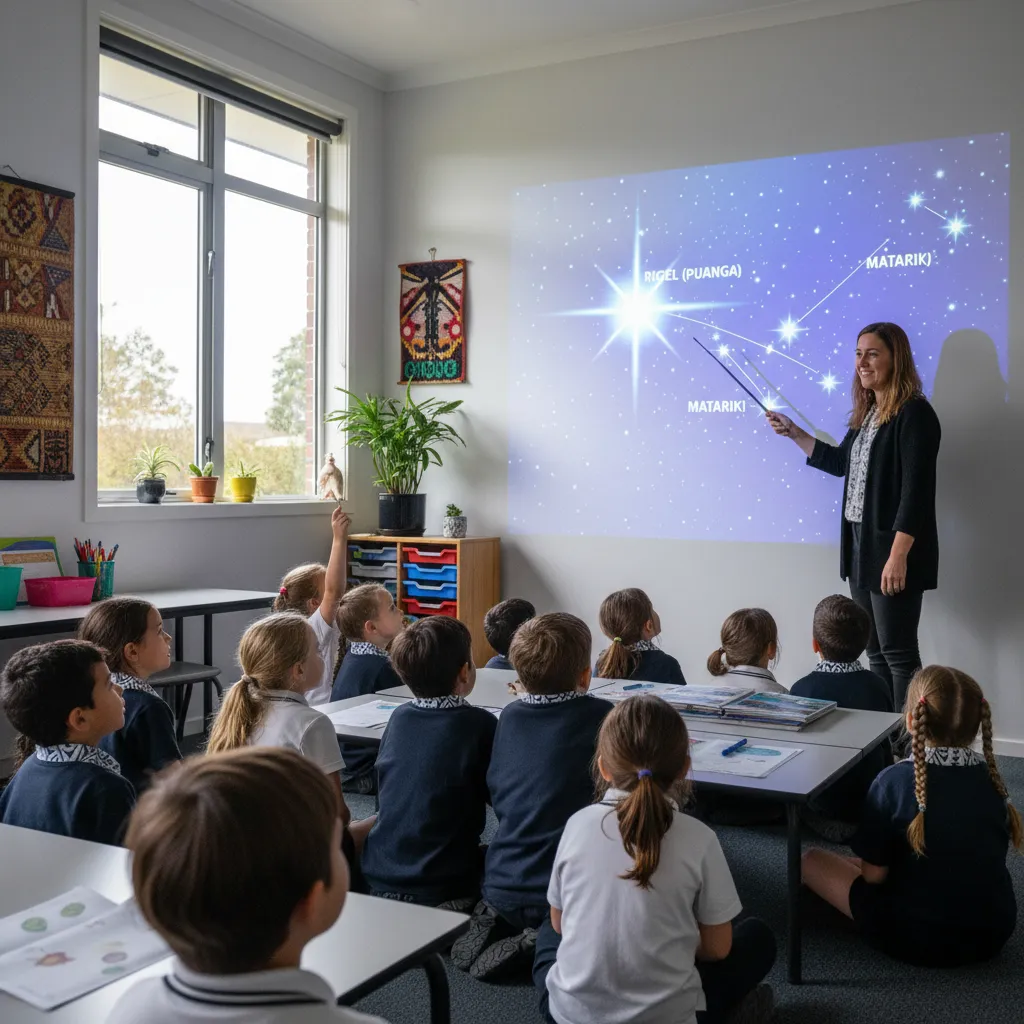
Curriculum Alignment for Puanga
The integration of Puanga into the classroom is not merely an extracurricular activity; it is a core component of the refreshed New Zealand Curriculum, particularly within the Social Sciences and Aotearoa New Zealand’s Histories learning areas. Effective Puanga teaching resources must align with the concept of Tūrangawaewae (a place to stand) and local tribal histories.
Connecting to Aotearoa New Zealand’s Histories
The curriculum explicitly requires that ākonga (students) understand the history of their local area. In regions such as Taranaki, Whanganui, and parts of Northland, the narrative of the New Year is inextricably linked to Puanga. Resources developed for this purpose help schools meet the requirement of teaching “Whakapapa” (genealogy and connections) and “Tūrangawaewae.”
High-quality commercial resources often include specific modules that map directly to curriculum progress outcomes. For example:
- Year 1-3: Recognizing that different iwi have different stories and traditions regarding the stars.
- Year 4-6: Exploring how the environment (geography) influences cultural practices, such as why mountains might block the view of Matariki, making Puanga the primary signal.
- Year 7-8: Investigating the economic and social impacts of the New Year festivals historically and in contemporary society.
Science and Astronomy (Mātai Arorangi)
Beyond history, Puanga resources offer a robust entry point into the Science curriculum. The study of Rigel—a blue-white supergiant star in the constellation Orion—provides a tangible contrast to the star cluster of the Pleiades (Matariki). Educational kits often include star charts and astronomical data that allow students to engage with the physical world through a Māori lens, validating indigenous science alongside western astronomical methods.
The Pedagogical Shift: Teaching Puanga vs. Matariki
One of the most common challenges educators face is addressing the “Matariki vs. Puanga” conversation without diminishing the importance of either. The most effective teaching resources frame this not as a conflict, but as a demonstration of the richness and diversity of Māori culture.
Geographical Context is Key
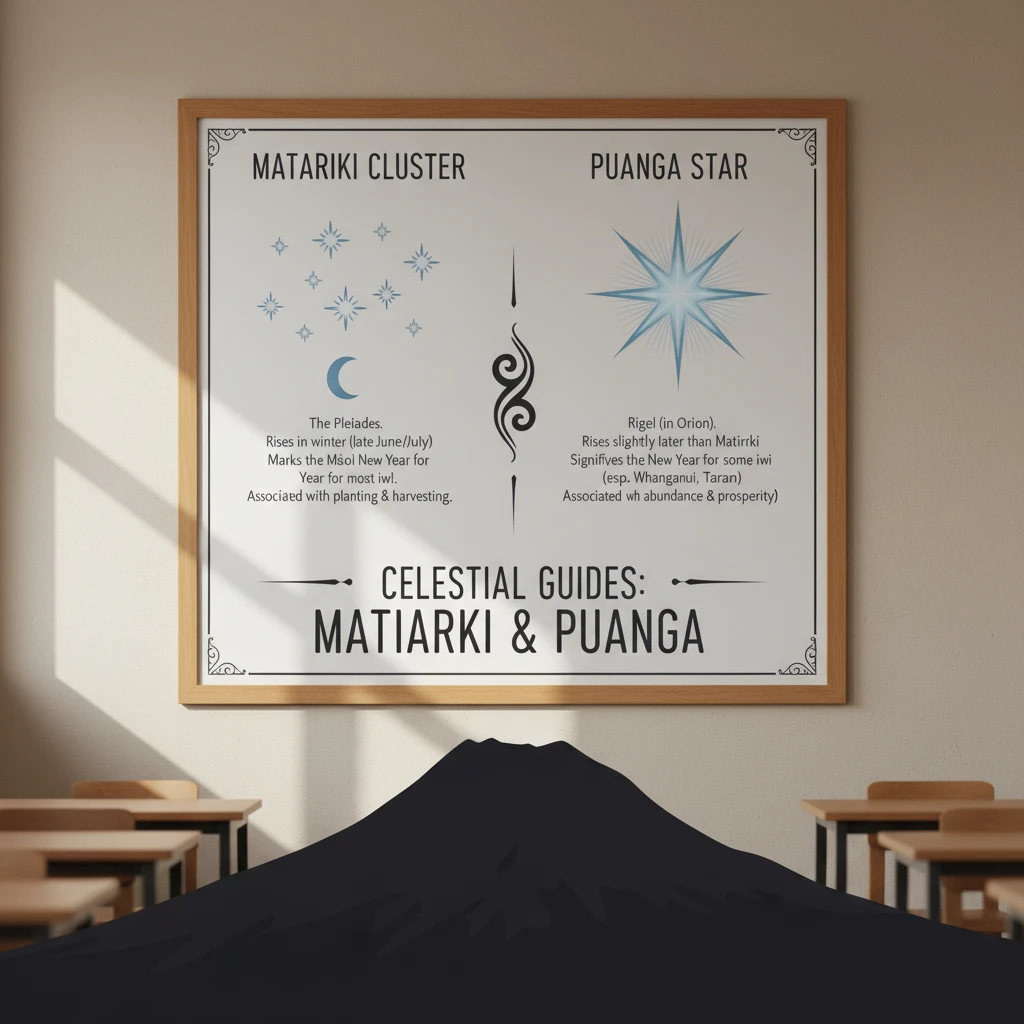
The primary reason for the variation is geographical. In the West Coast regions, the high mountain ranges (such as Maunga Taranaki) often obscure the horizon where Matariki rises. Therefore, the higher, brighter star Puanga is used. Educators need visual aids, such as topographic maps overlaid with star charts, to demonstrate this concept to students visually.
Teaching the Narrative of Diversity
Commercial teaching packs often include scripts or reading comprehension passages that explain this nuance. A sample lesson plan might involve an inquiry project where students research which iwi celebrate which star and why. This reinforces the understanding that Māori culture is not a monolith but a collection of distinct iwi with unique tikanga (customs).
- Key Teaching Point: Puanga is often referred to as the “older brother” of Matariki in some traditions, working in tandem with the cluster.
- Resource Tip: Look for digital slide decks that visualize the dawn sky in June/July, highlighting the specific positioning of Orion’s Belt and Rigel (Puanga) relative to the horizon.
Comprehensive Resource Kits for Different Age Groups
When selecting Puanga teaching resources, specificity to the age group is vital for engagement. Commercial providers typically segment their offerings into Early Childhood Education (ECE), Primary, and Secondary kits.
Early Childhood and Junior Primary (Years 0-3)
At this level, the focus is on storytelling, sensory experiences, and simple arts. Resources should focus on the concepts of remembrance, planting, and family.
- Activity Packs: Printable coloring sheets featuring Puanga as a central star character.
- Crafts: Lantern-making kits (Manu Tukutuku) to welcome the stars.
- Songs (Waiata): Audio resources that teach simple chants about Puanga bringing the harvest.
- Gardening: Seed starter kits labeled “Puanga Kai,” connecting the star to the planting season.
Middle and Senior Primary (Years 4-8)
Resources for this age group should encourage inquiry and collaboration. The “commercial” intent here often shifts toward digital downloads and comprehensive unit plans.
- Inquiry Units: “The Food Storage of the Ancestors” – researching traditional pātaka (storehouses) and food preservation methods signaled by Puanga.
- Journaling: Reflective journals (Mātahi o te Tau) where students set goals for the year ahead and reflect on those who have passed.
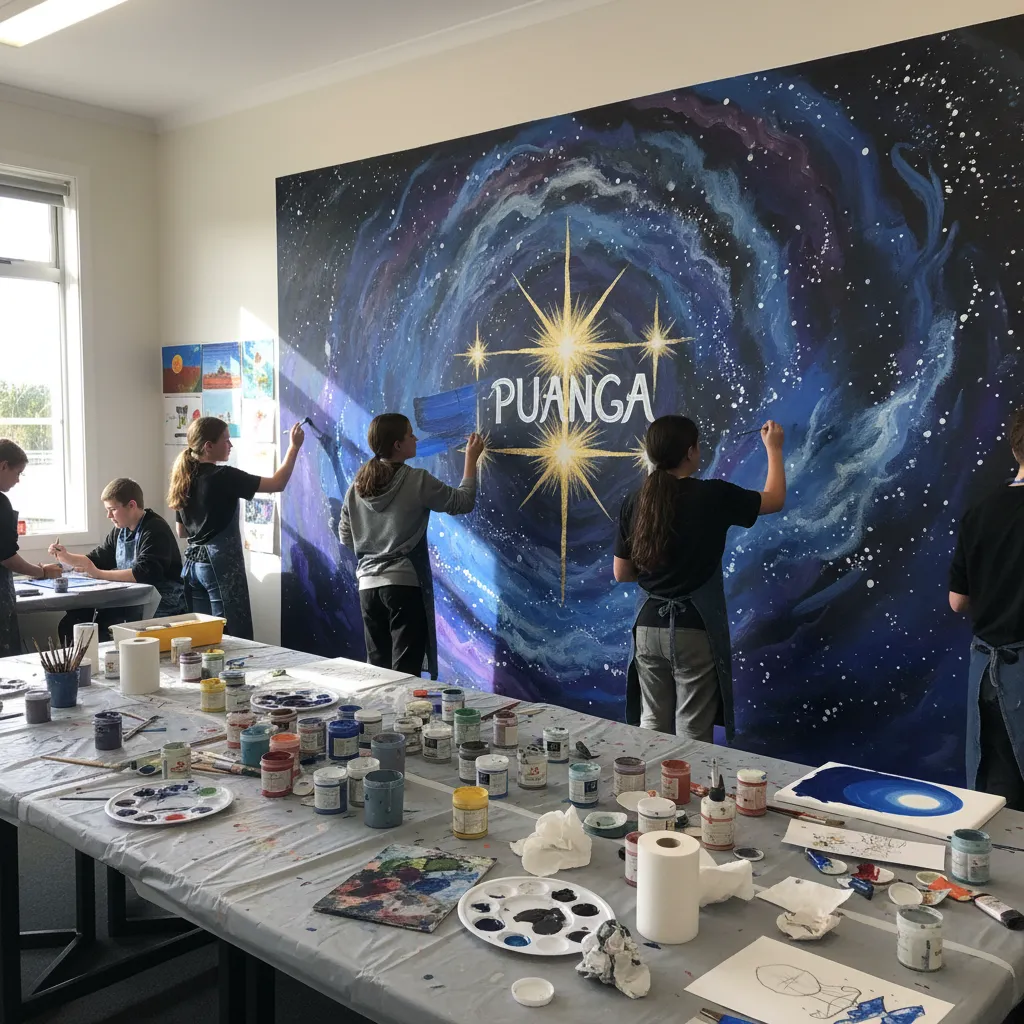
- Art Installations: Collaborative mural packs where the whole class contributes to a night sky display.
Secondary and Wharekura (Years 9-13)
For older students, resources need to be intellectually rigorous, combining science, sociology, and environmental sustainability.
- Debate Kits: Topics regarding the commercialization of Māori holidays or the environmental impact of modern agriculture vs. traditional cycles.
- Astronomy Software: Licenses for stargazing apps that can be set to specific dates and locations to simulate the rising of Puanga.
- Assessment Guides: NCEA-aligned resources that allow students to earn credits through the study of Māori celestial navigation and history.
Bilingual Resources: Integrating Te Reo Māori
A high-quality Puanga resource kit is inherently bilingual. It serves as a vehicle for normalizing Te Reo Māori in the classroom. Educators should look for resources that go beyond simple translation and delve into the etymology of words associated with the season.
Key Vocabulary for Puanga Units
Commercial resources often provide flashcards and wall displays featuring these essential terms:
- Whetū: Star.
- Haukāinga: Home, true home, local people.
- Mahinga Kai: Food gathering places/practices.
- Wānanga: Learning, seminar, forum.
- Whakamaumahara: Remembrance.
Bilingual Readers and Digital Books
Dual-language readers are excellent for mixed-ability classes. These books present the legend of Puanga in both Te Reo Māori and English, allowing students to compare sentence structures and vocabulary. Audiobooks accompanying these texts ensure correct pronunciation, which is crucial for non-Māori speaking teachers to model respect and accuracy.
Engaging Students in Regional History and Tourism
Puanga offers a unique opportunity to connect education with regional tourism and community events. Many regions, specifically Whanganui and Taranaki, host extensive Puanga festivals. Educational resources that bridge the gap between the classroom and the community are highly valuable.
Field Trip Guides (Haerenga)
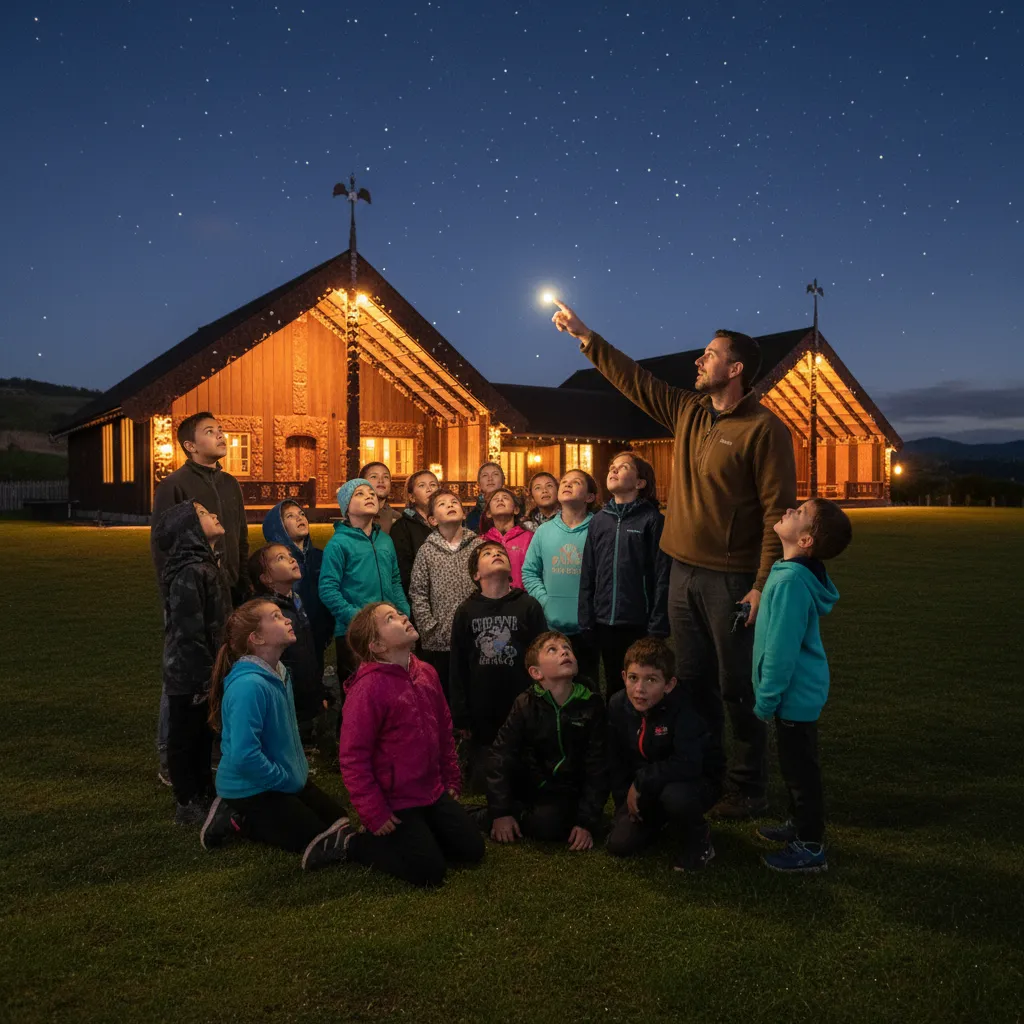
Premium teaching resources often include “Field Trip Packs.” These are guides for teachers to organize visits to local observatories, marae, or significant geographical landmarks.
- Pre-visit activities: Learning the protocol (tikanga) for visiting a marae during Puanga.
- During-visit worksheets: Scavenger hunts or observation logs for students to complete while at a local festival or museum exhibition.
- Post-visit reflection: Templates for students to recount their experience and connect it to their classroom learning.
Connecting with Local Iwi
The best resources are those endorsed or created in partnership with local iwi. Schools are encouraged to purchase resources that return a percentage of profits to iwi education grants. This ensures that the commercial aspect of the resource procurement supports the very communities that hold the knowledge. This authentic engagement enriches the learning experience and builds lasting relationships between schools and their local Māori communities.
Implementation Strategies for Schools
Investing in resources is only the first step. Successful implementation requires a whole-school approach.
- Staff Professional Development (PLD): Before introducing Puanga to students, staff should undergo training using the teacher-guide portions of the resource kits to ensure they are confident in the content.
- Community Evening: Host a school-wide Puanga celebration where students showcase the work they have done using the resources (art, speeches, singing).
- Resource Audit: Annually review the teaching materials to ensure they are up to date with the latest curriculum changes and community expectations.
Frequently Asked Questions
What is the main difference between Puanga and Matariki?
The main difference is the star that signals the New Year. Matariki is the Pleiades cluster, while Puanga is the star Rigel. Iwi in regions where Matariki is not visible on the horizon (due to mountains) look to Puanga instead.
Why is Puanga important to Taranaki and Whanganui iwi?
Geographically, Mount Taranaki and the ranges of the Whanganui river valley block the view of the eastern horizon where Matariki rises. Therefore, the higher star, Puanga, became the reliable indicator of the changing season for these tribes.
Can schools celebrate both Puanga and Matariki?
Absolutely. Many resources encourage acknowledging both to teach students about the diversity of Māori astronomy. It is an opportunity to explain how environment shapes culture.
When is the best time to start teaching a Puanga unit?
Ideally, preparation should begin in late May. The observation of Puanga typically occurs in June or July, depending on the lunar calendar (Maramataka), so starting early allows students to understand the build-up to the event.
Are there free Puanga teaching resources available?
Yes, the Ministry of Education and various museum websites offer free materials. However, paid commercial kits often provide more comprehensive, ready-to-use unit plans with physical assets that save teacher planning time.
How do I pronounce Puanga correctly?
Puanga is pronounced roughly as “Poo-ah-ngah.” The ‘ng’ sound is similar to the sound in the English word ‘singer’. Audio resources are recommended for perfecting pronunciation.