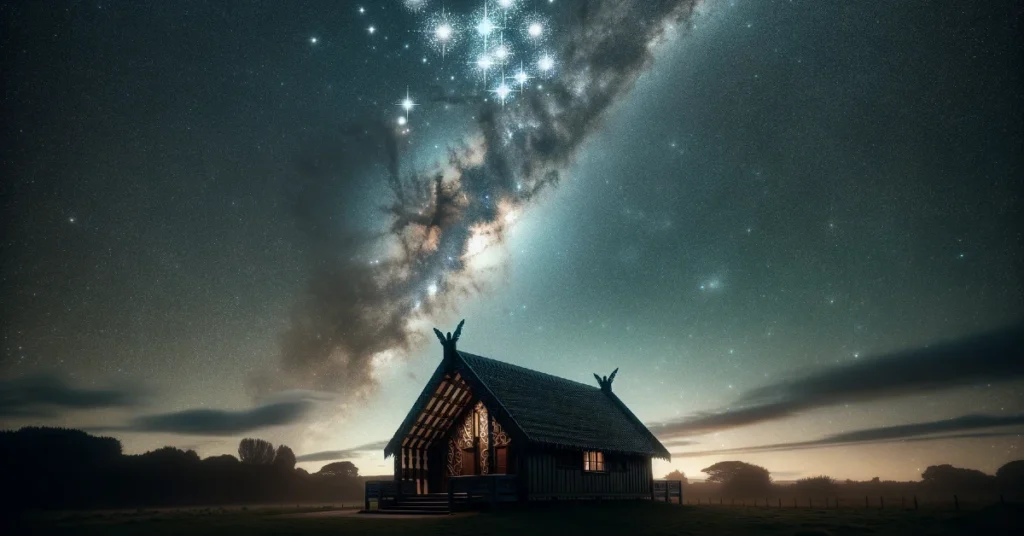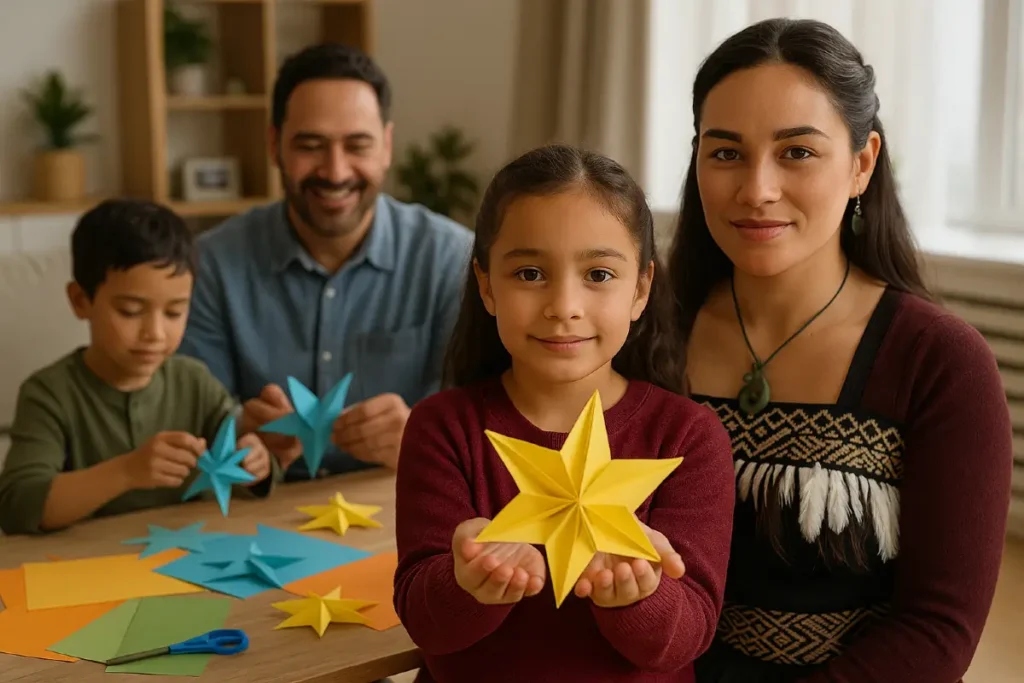
Puanga books for children are specialized literary resources designed to educate young readers about the star Rigel (Puanga) and its significance in the Māori New Year. Unlike general Matariki texts, these books focus on regional traditions specific to West Coast iwi and the South Island (where it is known as Puaka), emphasizing themes of harvest, remembrance, and winter preparation.
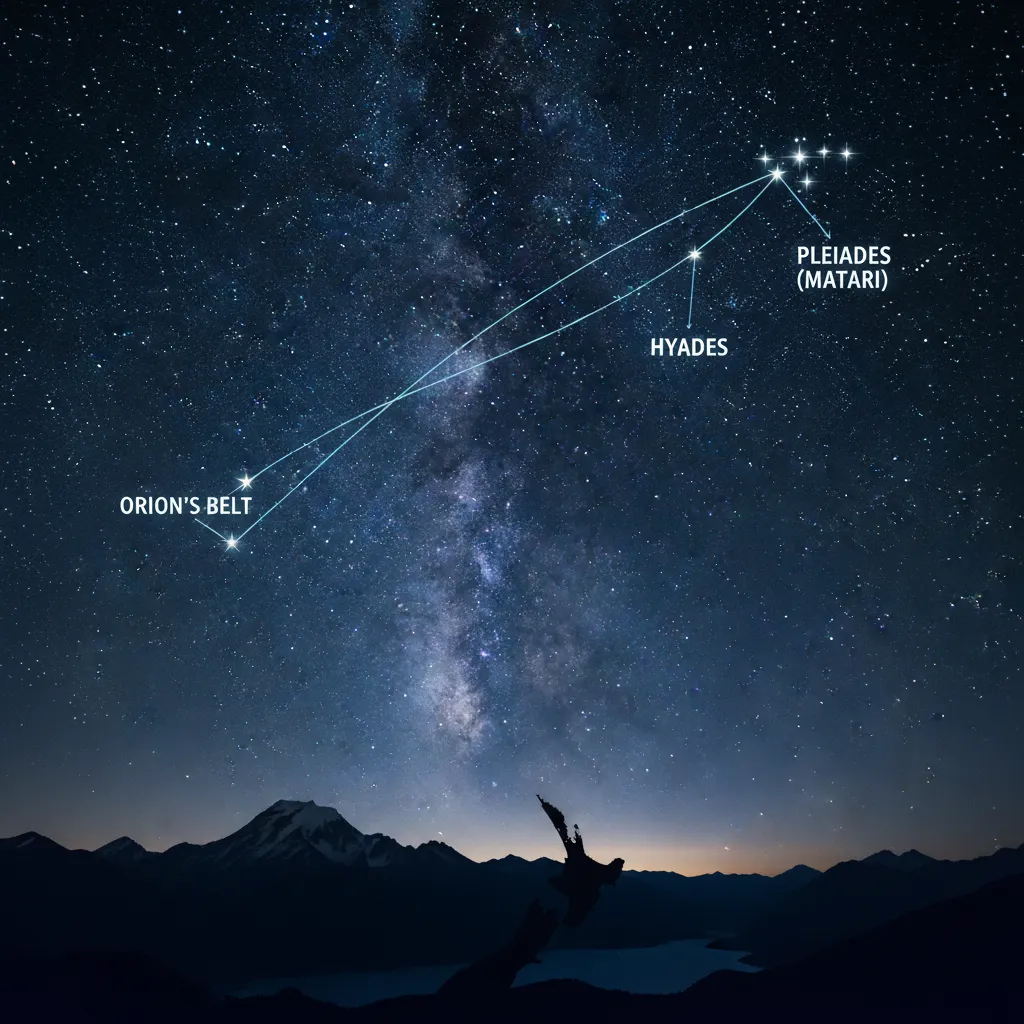
While the rise of Matariki (the Pleiades) is the most widely recognized signifier of the Māori New Year, it is not the universal marker for all of Aotearoa. For tribes in Taranaki, Whanganui, and parts of the Far North and South Island, the geography of the land obscures the view of Matariki. Instead, they look to Puanga (Rigel), the brightest star in the constellation of Orion, to mark the changing of the season. As New Zealand embraces indigenous knowledge, the demand for high-quality Puanga books for children has surged among educators, librarians, and parents seeking to provide accurate regional narratives.
Finding resources that specifically address Puanga—rather than lumping it in with general Matariki content—can be challenging. This guide provides a comprehensive review of the best literature available, ensuring that the unique stories of Puanga and Puaka are shared with the next generation.
Understanding the Difference: Puanga vs. Matariki in Literature
Before purchasing books, it is vital to understand the cultural nuance that separates Puanga literature from standard Matariki books. In commercial publishing, “Matariki” is often used as a catch-all term. However, for families and schools in regions like New Plymouth or Dunedin, books that strictly focus on the Pleiades may not reflect the sky they see or the traditions they hold.
Books focused on Puanga typically emphasize different environmental cues. While Matariki books often focus on the seven (or nine) stars and their individual domains, Puanga literature centers on the solitary brilliance of Rigel. The narratives often revolve around the “contest” between Puanga and Matariki to announce the New Year, or the role of Puanga as a solitary guardian of the winter harvest. When selecting Puanga books for children, look for texts that explicitly mention the West Coast traditions or use the dialectal variation “Puaka” for South Island (Ngāi Tahu) contexts.
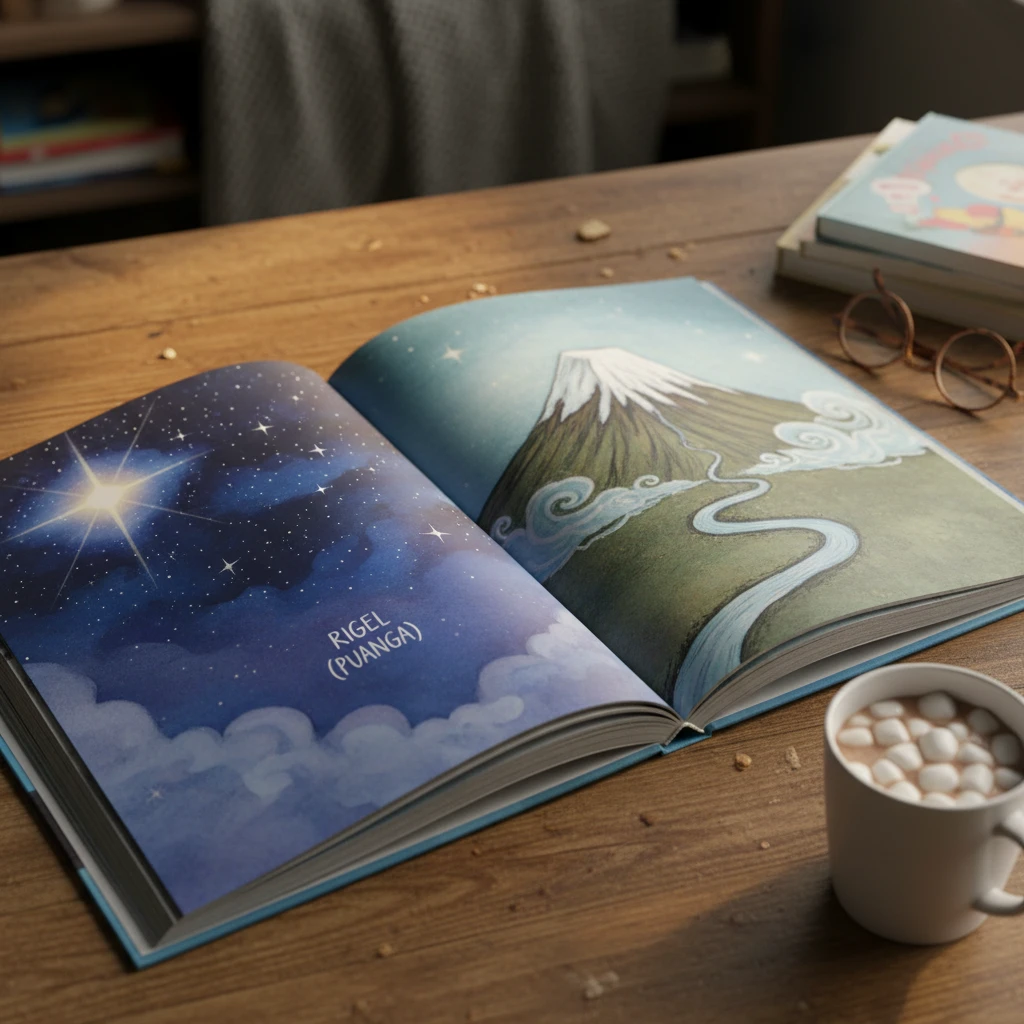
Top Rated Picture Books Featuring Puanga
While the market is saturated with Matariki titles, specific Puanga titles are rarer gems. However, several authors have woven Puanga into their narratives effectively. Here are the top selections for early childhood and primary years.
1. The Astromancer / Te Kōkōrangi
Written by Witi Ihimaera, The Astromancer is a pivotal text for understanding the wider context of the Maramataka (Māori lunar calendar). While the story centers on the search for the wandering stars, it provides one of the most visually stunning and narrative-rich explanations of how different stars interact. It is an essential purchase for its depiction of the celestial battle and the positioning of stars. The book serves as a bridge, acknowledging the various celestial bodies used for navigation and timekeeping.
2. Puanga: Star of the New Year
Often found in educational resource kits rather than general bookstores, resources titled Puanga: Star of the New Year (various authors depending on the publisher, often local iwi trusts) are specific non-fiction readers. These books are designed to explain the astronomy behind the holiday. They are excellent for the 7-10 age bracket, moving away from mythology and into the science of why Rigel appears brighter and higher in certain skies than the Pleiades cluster.
3. Ngā Whetū Matariki i Whānakotia (The Stolen Stars of Matariki)
While the title references Matariki, Miriama Kamo’s debut picture book is significant because it acknowledges the wider celestial family. In many interpretations used in schools, this book is used to open discussions about the other stars that play a role in the night sky. It is a fantastic entry point for younger children (ages 4-7) to begin talking about star clusters versus single stars.
Books Featuring Local Legends and Puaka
For the South Island market, the dialect changes from ‘ng’ to ‘k’, turning Puanga into Puaka. Books catering to this market often incorporate Ngāi Tahu legends which differ significantly from their northern counterparts.
The Legend of Puanga and Matariki
Many regional libraries in Taranaki and Whanganui hold locally published versions of the legend where Puanga is depicted as a jealous cousin or a competitive entity who races Matariki to the horizon. These stories are crucial for teaching children about human emotions through celestial metaphors. When searching for these, look for publications by Huia Publishers or local museum presses (such as Puke Ariki), as they are most likely to carry these specific tribal variations.
In these narratives, Puanga is not just a star; he is a harbinger of the harvest. Books focusing on this aspect will often feature illustrations of storage pits (rua) and the preservation of food, distinguishing them from the planting themes often associated with the later rising of stars in warmer climates.
Educational Non-Fiction and Resource Kits
For teachers and homeschooling parents, narrative picture books are often not enough to build a full curriculum. You need non-fiction resources that explain the tikanga (customs) and pūtaiao (science) of Puanga.
Living by the Stars (Adapted Resources)
While Dr. Rangi Matamua’s seminal work Matariki: The Star of the Year is an adult text, many educational providers have adapted his research into child-friendly formats. Look for “Teacher Resource Kits” derived from his work. These often include flashcards and simplified fact sheets that explicitly detail the “Puanga vs. Matariki” distinction. These resources explain that Puanga is the principal star for the West Coast and parts of the South Island because the ranges block the view of Matariki.
Te Papa Tongarewa Activity Books
The Museum of New Zealand Te Papa Tongarewa frequently releases activity books that encompass the broader Māori New Year. These are high-value commercial items because they combine reading with doing. Look for editions that include star charts. A quality activity book will allow a child to physically map Orion and identify Rigel, solidifying the knowledge gained from reading.
How to Choose Age-Appropriate Puanga Books
Selecting the right Puanga books for children depends heavily on the developmental stage of the reader. The complexity of Māori astronomy can be overwhelming if not pitched correctly.
Preschool (Ages 0-5)
For this age group, focus on visual recognition. You want board books or picture books with high contrast. The narrative should be simple: “Puanga is a bright star. Puanga wakes us up. Puanga brings the winter.” Avoid books with complex genealogy (whakapapa) of the stars at this stage. Stick to themes of family (whānau) and food (kai).
Primary School (Ages 6-10)
This is the “myth and legend” phase. Children in this bracket love the stories of celestial battles and personification. Look for books that explain why Puanga is celebrated in specific regions. Books that include a glossary of Te Reo Māori terms are essential here to expand vocabulary. This is also the age to introduce the concept of regional differences in New Zealand.
Intermediate/High School (Ages 11+)
For older children, move toward graphic novels or illustrated non-fiction. They can handle the astronomical science—declination, azimuth, and the specific timing of the heliacal rising. Resources for this age group should also touch on the sociological aspects: why different iwi have different traditions and the revival of these practices in modern NZ society.
Where to Buy Authentic Puanga Resources
Commercial availability of Puanga-specific books differs from the mass-market availability of Matariki books. To find the best resources, you often need to look beyond big-box retailers.
Independent New Zealand Bookstores
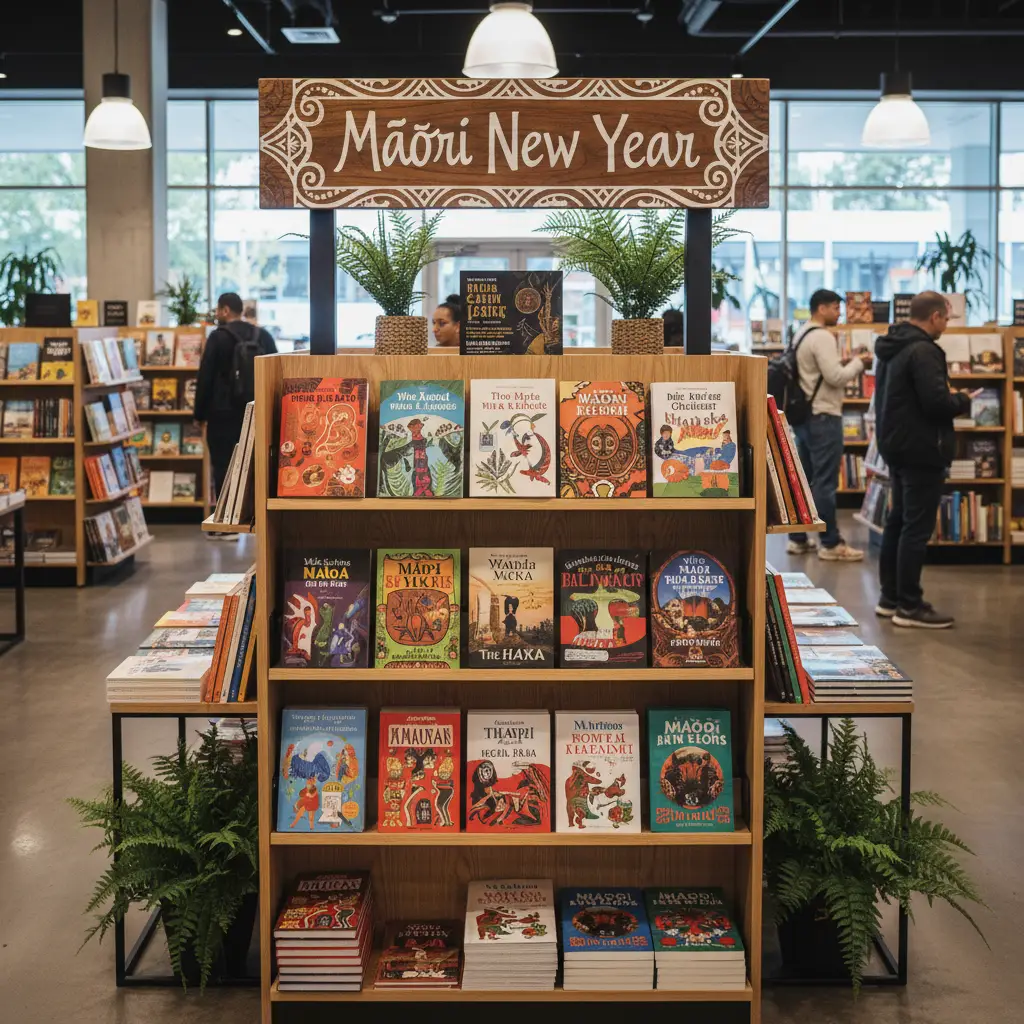
Shops like Unity Books (Auckland/Wellington) and Time Out Bookstore are renowned for curating high-quality NZ non-fiction. They often have dedicated sections for Te Ao Māori. Staff in these stores are generally well-read on the nuances between Matariki and Puanga titles.
Museum and Gallery Shops
This is the secret weapon for finding Puanga books. Puke Ariki in New Plymouth and the Whanganui Regional Museum stock books that are often published locally and unavailable elsewhere. These books are written by local historians and iwi members, ensuring the highest level of cultural authenticity for that specific region. If you are looking for “Puanga” specifically, West Coast museum online stores are your best commercial option.
Specialized Educational Retailers
Retailers like The Māori visual arts specialists or educational supply stores (e.g., Scholastic NZ, formerly reputable for school supplies) often sell “Big Books” for classroom use that cover these topics in depth.
Author Spotlights: Guardians of Indigenous Knowledge
When browsing for books, keeping an eye out for specific authors can act as a quality filter. These authors are known for their dedication to accurate whakapapa and storytelling.
Dr. Rangi Matamua
While primarily an academic, his influence filters down into almost all modern children’s books on the topic. Any book endorsed by him or based on his research is the gold standard for astronomical accuracy.
Katrina Yan
Known for Puanga: Star of the New Year (often available in libraries), writers like Yan focus on accessible non-fiction that breaks down the “When” and “Why” for younger readers.
Local Iwi Trusts
Many of the best books don’t have a famous single author but are produced by Iwi Trusts (e.g., Te Rūnanga o Ngāi Tahu). These publications are often collective efforts to preserve oral history. While the production value might vary compared to Penguin or Huia, the content value is often superior for cultural education.
Frequently Asked Questions
What is the main difference between Puanga and Matariki books?
Puanga books focus on the star Rigel and are specific to the traditions of Taranaki, Whanganui, and parts of the South Island, whereas Matariki books focus on the Pleiades cluster which is celebrated by the majority of other iwi.
Why do some NZ schools celebrate Puanga instead of Matariki?
Schools in regions like the West Coast of the North Island celebrate Puanga because the geography (mountains) blocks the view of Matariki on the horizon during the New Year period, making Puanga the visible herald of the season.
Are there Puanga books suitable for toddlers?
Yes, there are board books available that focus on the stars of the Māori New Year. While specific “Puanga” board books are rare, general astronomy board books for NZ children often include Rigel/Puanga.
Where is the best place to buy Puanga books online?
The online stores of regional museums like Puke Ariki (New Plymouth) or specialist Māori educational retailers like Huia Publishers are the best places to find specific Puanga resources.
Can I use Matariki books to teach about Puanga?
You can, but it requires context. Many Matariki books mention Puanga as a related star. However, for a comprehensive education, it is best to supplement these with resources that specifically explain the regional variation.
What themes should a good Puanga book cover?
A good Puanga book should cover themes of remembrance (honoring those who have passed), the preservation of the harvest, winter preparation, and the specific astronomy of the Orion constellation.