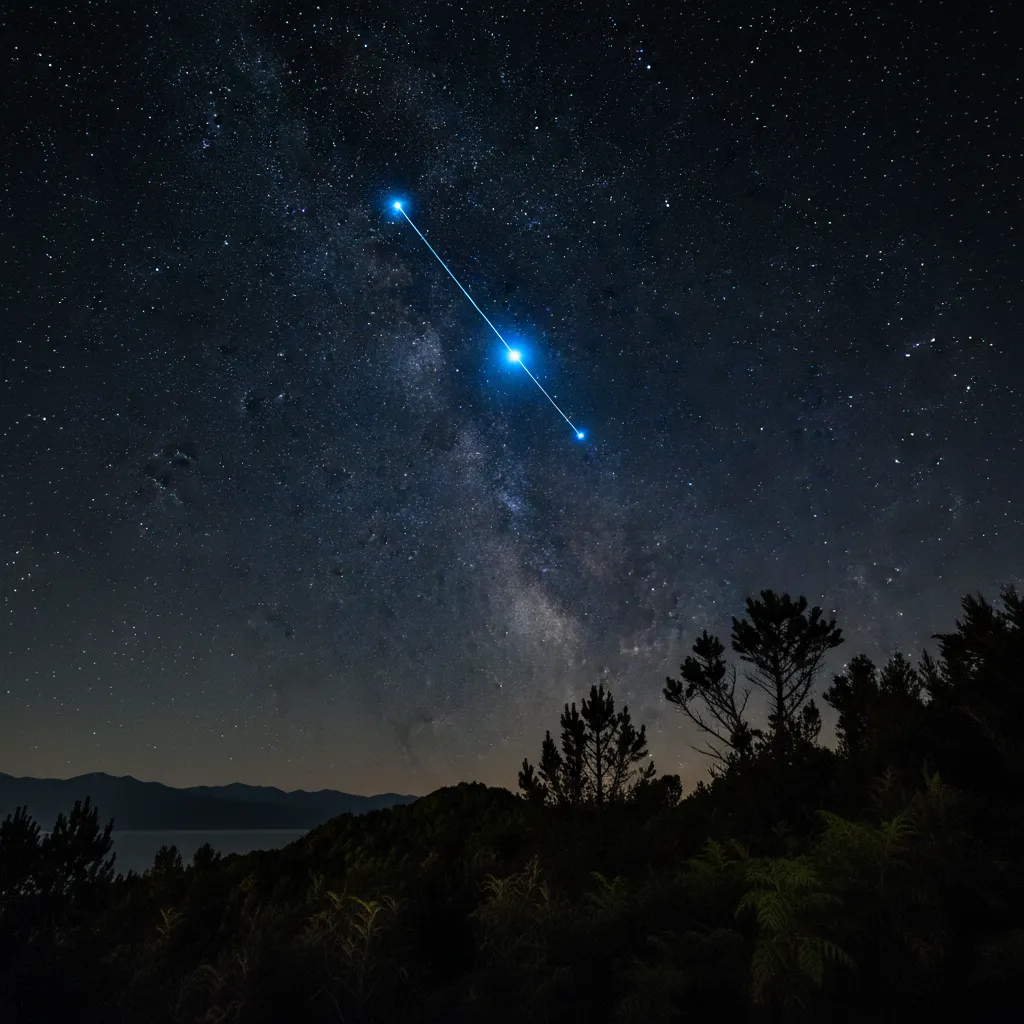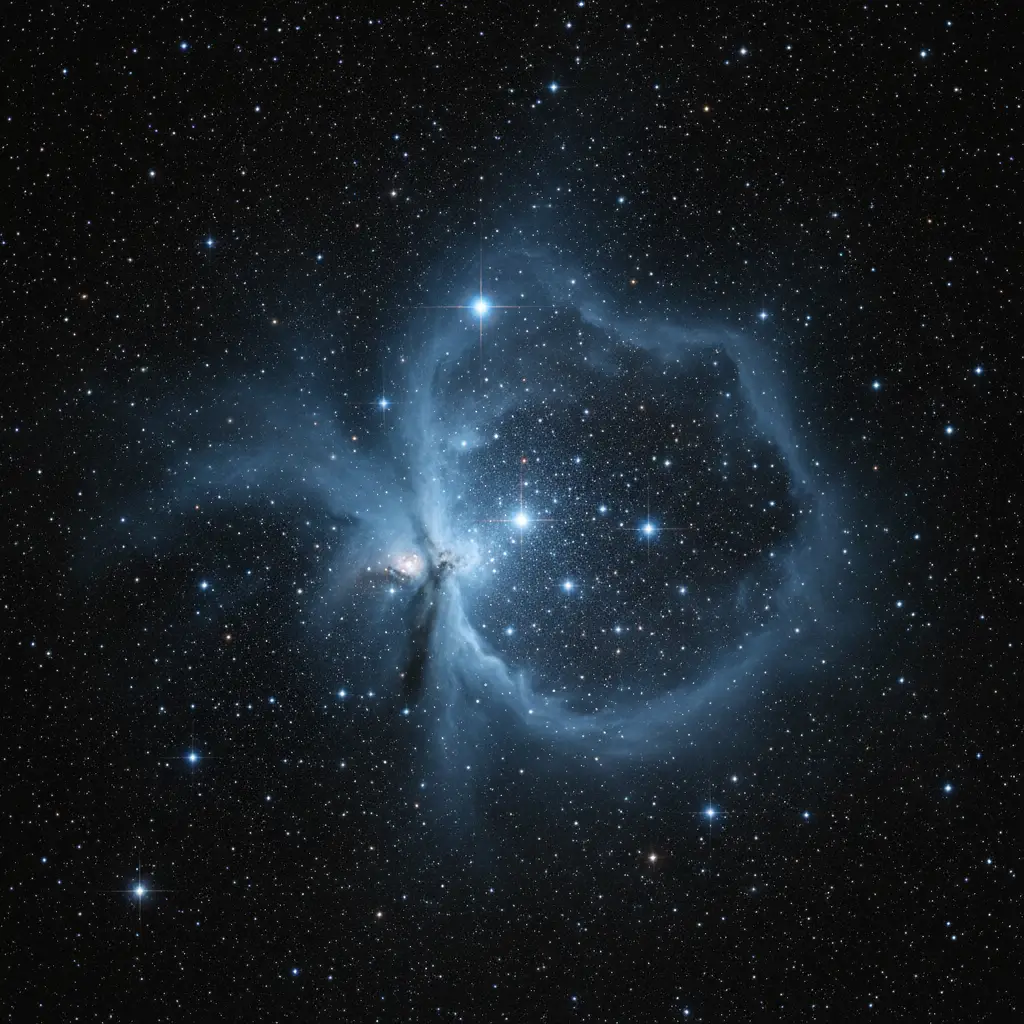
To find Matariki in the sky, look toward the northeastern horizon approximately one hour before sunrise during June and July. Locate Tautoru (Orion’s Belt) first, then trace an imaginary line leftward through the triangular cluster Te Kokota (The Face/Hyades) until you reach the distinct, twinkling cluster of stars known as Matariki or the Pleiades.
The rise of Matariki marks a pivotal moment in the New Zealand calendar, signaling the Māori New Year, a time when many also look to Buy Puanga Merchandise. However, spotting this celestial cluster requires more than just looking up; it demands precise timing, knowledge of celestial navigation markers, and optimal viewing conditions. This guide provides a comprehensive, step-by-step methodology, and you can also use an Interactive Night Sky Map Tool: Locate Matariki Now to better understand their significance.
When is the Best Time to See Matariki?
Timing is the single most critical factor when attempting to locate the cluster. Unlike many other constellations that traverse the night sky for hours, the heliacal rising of Matariki—when it first becomes visible above the eastern horizon just before sunrise—occurs within a very specific window.
The Pre-Dawn Requirement
Matariki is strictly a pre-dawn phenomenon during the New Year period. If you look for it in the evening during June or July, it will be below the horizon. The cluster rises in the northeast roughly an hour to an hour and a half before the sun breaks the horizon. Once the sun begins to rise, the scattering of light in the atmosphere (twilight) quickly washes out the faint starlight of the cluster. Therefore, the optimal viewing window is usually between 5:30 AM and 6:30 AM, depending on your specific latitude in Aotearoa.
The Seasonal Window: June and July
While the Matariki cluster (Pleiades) is visible for much of the year, it disappears from the western horizon in May. This disappearance signals the end of the Māori year. It spends approximately a month “bathing in the waters of the deep” (below the horizon) before re-emerging in the pre-dawn sky in late June or early July. This return signals the beginning of the New Year. The specific dates for celebration vary slightly year to year based on the lunar calendar (Maramataka), specifically attempting to align the sighting with the Tangaroa moon phases (the last quarter moon), which are considered the most auspicious times for viewing.

Step-by-Step: How to Find Matariki in the Sky
Finding Matariki can be challenging for novice stargazers because, despite its cultural fame, it is physically small and relatively faint compared to the blazing stars of the Southern Cross or Sirius. To find it successfully, astronomers and navigators use a technique called “star hopping.” This involves identifying bright, unmistakable stars and using them as signposts to guide your eye to the target.
Using Tautoru (Orion’s Belt) as an Anchor
The first step in your navigation journey begins with one of the most recognizable star patterns in the entire sky: Tautoru, commonly known in the west as Orion’s Belt.
Why Start with Tautoru?
Tautoru is comprised of three brilliant, bluish-white stars aligned in a near-perfect row. Because they are bright and distinct, they are visible even in areas with moderate light pollution. In the pre-dawn winter sky of New Zealand, looking toward the northeast, Tautoru will appear almost vertical or slightly tilted.
The Trajectory
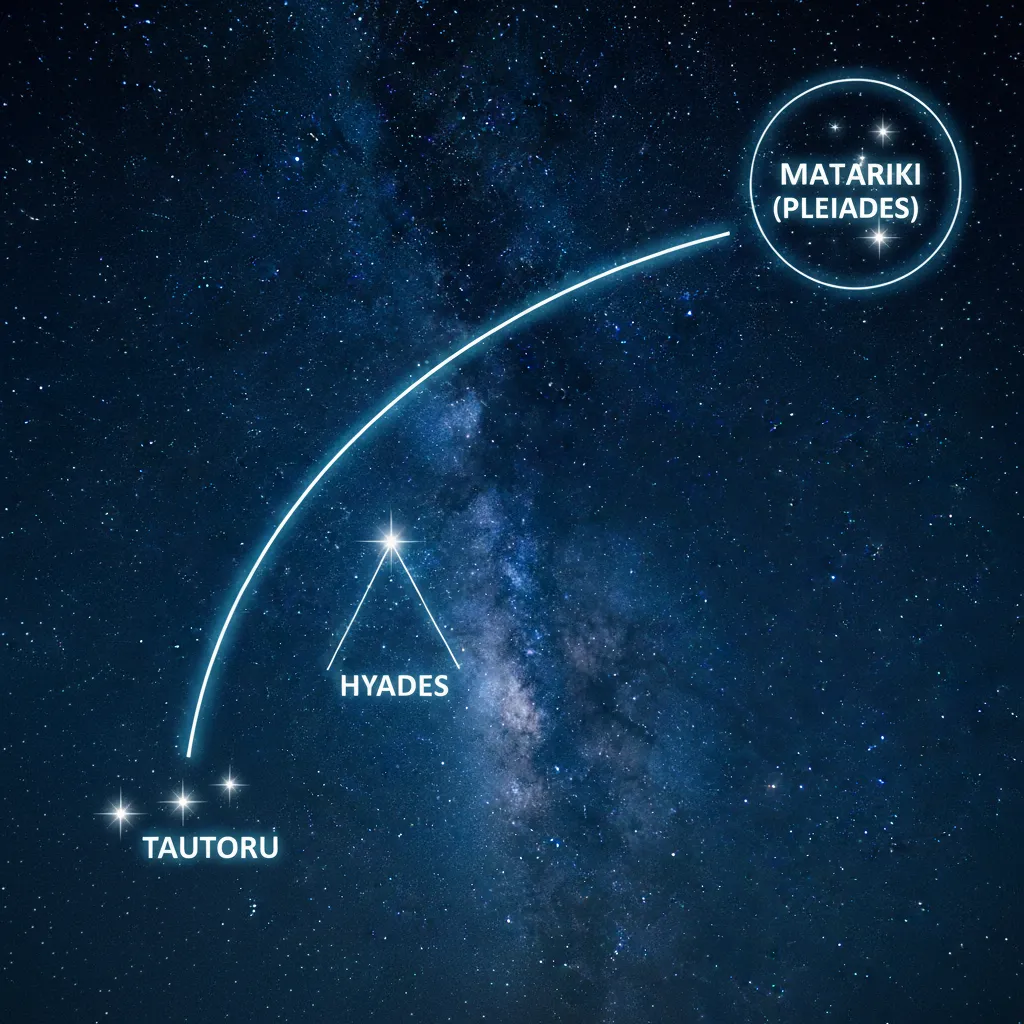
Once you have located the three stars of Tautoru, imagine a line running through them. Follow this line upwards and to the left (northward). This imaginary line is the “highway” that will lead you directly to Matariki. Do not deviate from this general direction. Tautoru is often referred to as “The Pot” in colloquial New Zealand terms; if you view the three stars as the bottom of the pot, you are looking in the direction of the handle.
Navigating via Te Kokota (The Face of the Sky)
As you trace your line leftward from Tautoru, you will encounter a distinct triangular formation of stars before you reach Matariki. This is your second confirmation marker.
Identifying Te Kokota
This V-shaped cluster is known as Te Kokota to Māori, or the Hyades in Greek astronomy (the face of Taurus the Bull). The most prominent feature here is a bright orange-red star called Taumata-kuku (Aldebaran). This star represents the eye of the bull or a significant point in the triangular face.
If you find this V-shape, you are exactly on the right path. Te Kokota is roughly halfway between Tautoru and Matariki. Continue your imaginary line from Tautoru, passing directly through Te Kokota. Keep moving your gaze to the left (further north-east).
The Destination: Matariki
Past Te Kokota, you will spot a small, shimmering cluster of stars. It does not look like a constellation of widely spaced stars; rather, it looks like a tight knot of diamond dust or a small, fuzzy cloud. This is Matariki. To the naked eye, most people see 6 or 7 stars. With excellent vision and dark skies, you may distinguish 9 distinct points of light.
Essential Tips for Optimal Viewing
Knowing where to look is half the battle; knowing how to look ensures you actually see the cluster in its full glory. The Matariki cluster is an open star cluster roughly 444 light-years away, and while visible to the naked eye, environmental factors play a huge role in visibility.
1. Escaping Light Pollution
City lights are the enemy of stargazing. Streetlights, house lights, and car headlights create “skyglow” that washes out faint objects like Matariki. For the best experience, travel to a location with a rating of roughly 3 or 4 on the Bortle Dark-Sky Scale. This usually means driving 20-30 minutes away from major city centers. Coastal areas facing east are often ideal as the ocean provides a naturally dark horizon.
2. Horizon Lines
Because Matariki rises shortly before the sun, it sits relatively low on the horizon during the prime viewing hours. You need a location with a flat, unobstructed view of the northeast. Hills, tall buildings, or dense tree lines will obscure the cluster. Beaches, hilltops, or flat rural plains are superior observation points.

3. Dark Adaptation
Human eyes take approximately 20 to 30 minutes to fully adapt to the dark. This chemical process involves the regeneration of rhodopsin in the rod cells of your retina. Avoid looking at your smartphone screen or using white flashlights while setting up. If you need light, use a red-light torch, as red light does not deplete your night vision as rapidly as blue or white light.
4. Using Averted Vision
A professional astronomer’s trick for seeing faint clusters is “averted vision.” Instead of looking directly at Matariki, look slightly to the side of it. The center of your eye (fovea) is packed with cone cells which detect color but are poor in low light. The periphery of your retina contains more rod cells, which are highly sensitive to light and motion. By looking slightly away, Matariki will often appear brighter and more defined in your peripheral vision.
Identifying the Individual Stars
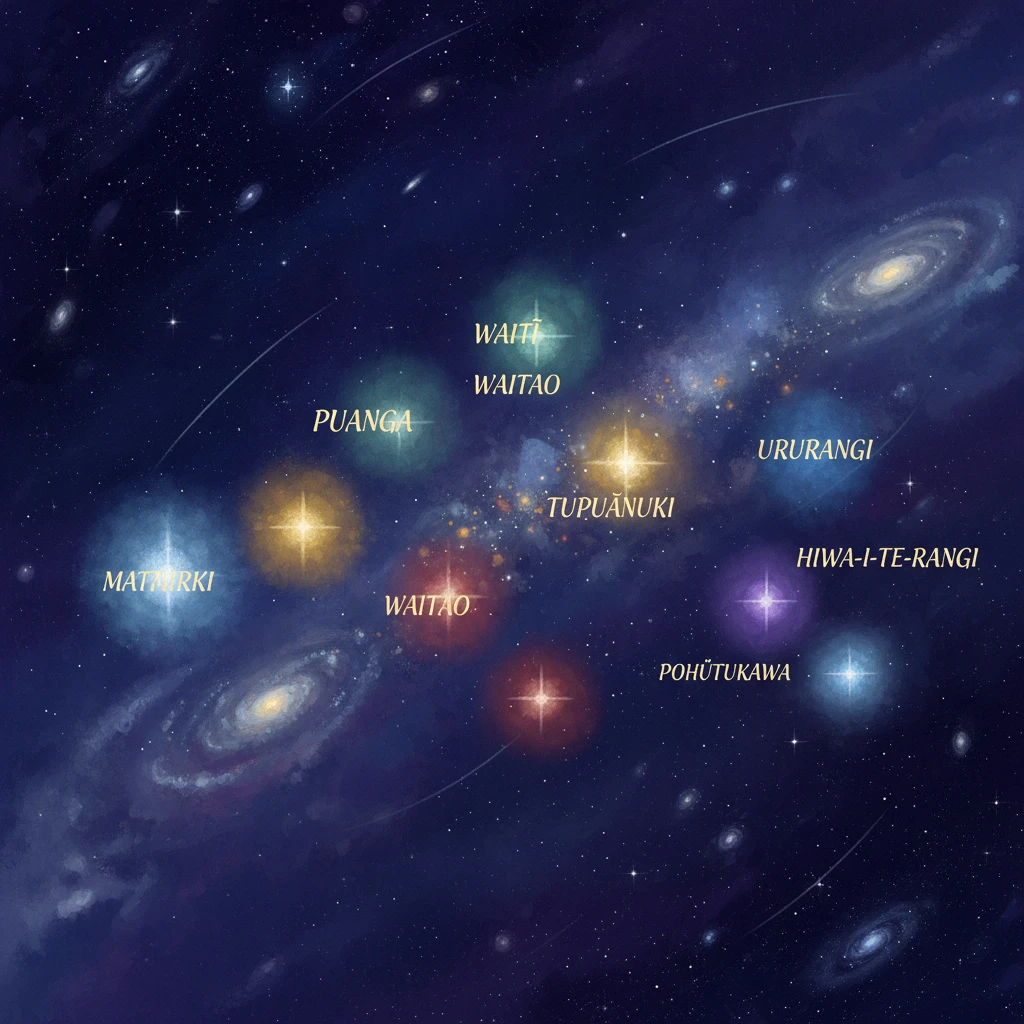
Once you have successfully located the cluster, understanding what you are seeing adds immense depth to the experience. In modern Māori astronomy, revitalized by experts like Dr. Rangi Matamua, nine stars are identified within the cluster, each holding dominion over a specific environmental aspect.
- Matariki: The mother star, signifying reflection, hope, and the health of the people.
- Pōhutukawa: Connects to those who have passed away; the star of the dead.
- Tupuānuku: Associated with food grown in the ground (kumara, potatoes).
- Tupuārangi: Associated with food from the sky (birds, fruit from trees).
- Waitī: Connected to freshwater and the creatures within it (eels, crayfish), reflecting the Puanga Whanganui: Traditions of the River.
- Waitā: Connected to the ocean and saltwater food sources.
- Waipuna-ā-rangi: Associated with the rain.
- Ururangi: Associated with the winds.
- Hiwa-i-te-rangi: The wishing star; associated with granting our desires for the coming year.
Seeing these stars is not just an astronomical exercise but a reading of the environment. Historically, the brightness and clarity of specific stars within the cluster were used to predict the productivity of the coming season’s harvest.
The Cultural Significance of the Sighting
Finding Matariki is an act of reconnection. In traditional Māori society, the appearance of Matariki was a time to stop fighting, to gather with whānau (family), and to remember those who had died since the last rising of the cluster. The names of the dead were called out to the star Pōhutukawa to be carried up to the heavens.
Today, the resurgence of Matariki as a public holiday in New Zealand invites everyone to participate in this observation. It is a moment to pause the busy nature of modern life, look to the horizon, and acknowledge the cycles of nature. Whether you view it from a backyard in Auckland or a dark sky sanctuary in Tekapo, the method of finding it remains the same: Find Tautoru, trace the line through Te Kokota, and rest your eyes on the mother Matariki and her children.
What direction do I look to see Matariki?
You must look towards the northeast horizon. If you have a compass on your phone, look for a bearing between 30 and 60 degrees. It rises in the same general direction as the sun, but appears about an hour earlier.
Can I see Matariki with the naked eye?
Yes, Matariki is an open star cluster visible to the naked eye, provided you are away from bright city lights. It appears as a fuzzy group of stars roughly the size of your thumb held at arm’s length. Binoculars will reveal many more stars within the cluster.
Why can’t I find Matariki in May?
In May, Matariki is too close to the sun to be seen. It sets in the west at dusk and is obscured by the sun’s glare. It remains invisible for several weeks before reappearing in the pre-dawn eastern sky in late June or July.
How many stars are in the Matariki cluster?
Astronomically, the Pleiades cluster contains over 1,000 stars. To the naked eye, most people see 6 or 7. In Māori tradition, there are 9 visible stars recognized as Te Iwa o Matariki, though seeing all 9 requires exceptional eyesight and dark sky conditions.
Is Matariki the same as the Seven Sisters?
Yes, Matariki is the Māori name for the cluster known in Greek mythology as the Seven Sisters or the Pleiades. It is also known as Subaru in Japan and Mao in China. Different cultures attribute different numbers of stars and stories to the same cluster.
What if it is cloudy on the morning of Matariki?
If the horizon is clouded over, you will not be able to see the cluster. However, the Matariki period lasts for several weeks. You can attempt to view the cluster on any clear morning throughout July. The cultural celebrations often continue regardless of the specific weather on the public holiday.