
Matariki events in New Zealand are vibrant celebrations marking the Māori New Year, typically occurring in June or July based on the lunar calendar. These festivities range from traditional hautapu ceremonies, stargazing encounters, and cultural kapa haka performances to large-scale light festivals, fireworks displays, and night markets across major cities like Auckland, Wellington, and Christchurch.
The rise of Matariki as an official public holiday has transformed the winter calendar in Aotearoa. What was once a quiet period of observation has blossomed into a nationwide season of festivals, art, and community gathering. Whether you are looking for deep cultural immersion, family-friendly activities, or spectacular light shows, the schedule of Matariki events NZ has to offer is diverse and growing every year.
Top National Matariki Events
Across the country, specific events have established themselves as cornerstones of the Māori New Year celebrations. These national highlights draw visitors from different regions and offer high-production value experiences that blend modern technology with ancient traditions.
National Broadcast Hautapu Ceremonies
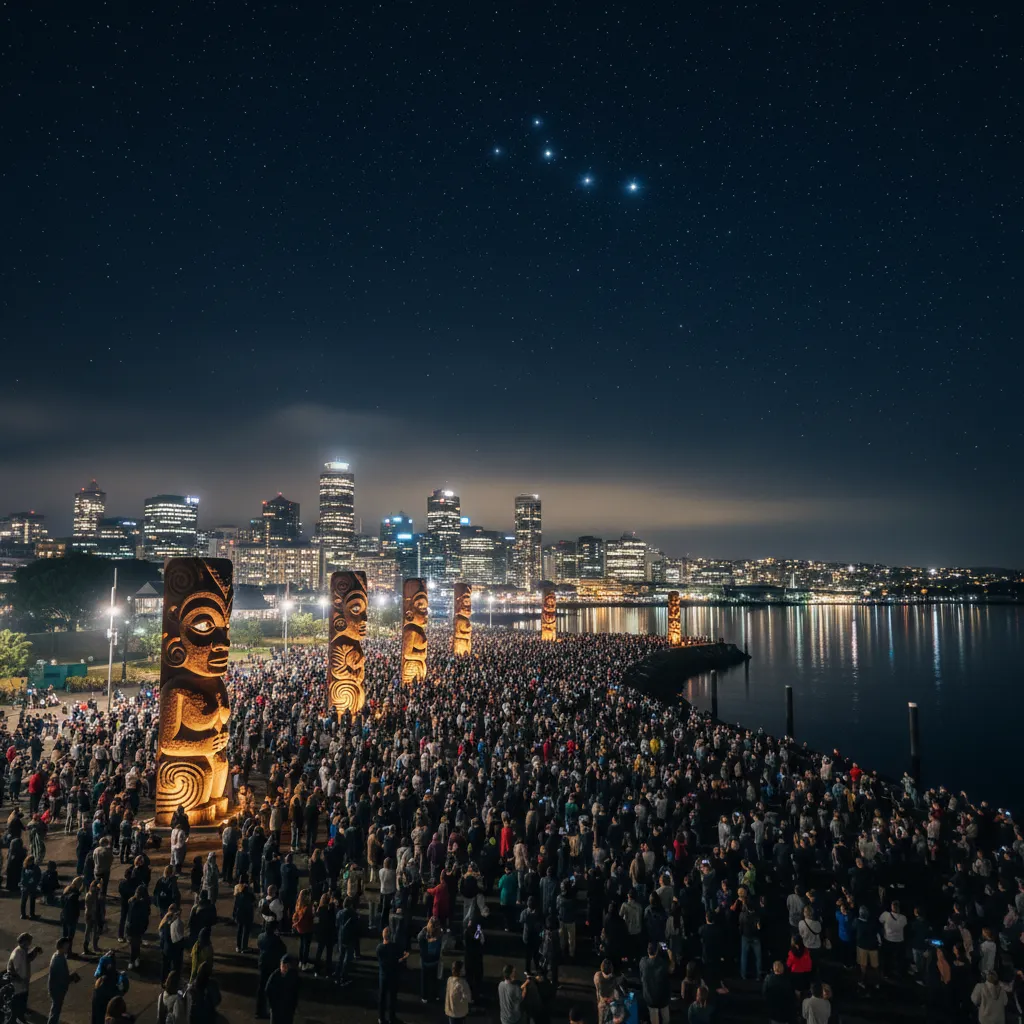
While often an invite-only event for dignitaries and iwi leaders, the national Hautapu ceremony is the spiritual anchor of the holiday. It moves to a different region each year to honor different tribal rohe (territories). For the general public, this is a major broadcast event. Viewing parties are often organized in community centers and public squares, allowing the nation to watch the ceremonial cooking of kai (food) in the earth oven (umu) to feed the stars. This sets the tone for all other Matariki events NZ hosts throughout the month.
Te Papa Tongarewa Celebrations
As the national museum, Te Papa in Wellington hosts a robust schedule of free and ticketed events. These usually include expert lectures on celestial navigation, contemporary Māori art installations, and large-scale whānau days. The museum often serves as a hub for educational resources, making it a primary destination for those wanting to understand the ‘why’ behind the holiday before participating in the festivities.
Regional Festival Guides
Because Matariki is a celebration of place and season, the most engaging events are often specific to the major centers. Local councils and iwi work together to curate programs that reflect the local landscape and history.
Auckland (Tāmaki Makaurau)
Auckland hosts the Matariki Festival, one of the most extensive programs in the country. The festival typically spans several weeks, not just the holiday weekend.
- Matariki on the Waterfront: Silo Park and the Viaduct Harbour usually transform into a pedestrian-friendly zone featuring food trucks, live music, and art installations.
- Vector Lights: The Auckland Harbour Bridge is lit up with a sustainable light show that narrates stories of Māori astronomy, synchronized with a soundtrack available via radio or smartphone app.
- Stardome Observatory: Located in Cornwall Park, the observatory runs special “Ngā Whetū o Matariki” planetarium shows that explain the science and mythology of the cluster.
Wellington (Te Whanganui-a-Tara)
The capital city is renowned for its immersive artistic approach to the holiday. The flagship event is often Matariki Ahi Kā.
- Matariki Ahi Kā: Held on the Wellington waterfront, this event focuses on fire, warmth, and remembrance. Large-scale projections on Te Papa, fire pits, and performance art create a moody, atmospheric experience that embraces the winter chill.
- Mana Moana Pōneke: This is a series of indigenous films projected onto water screens in the harbor, creating a stunning visual effect where stories of the ocean float above the water’s surface.
Christchurch (Ōtautahi)
In the South Island, the celebrations are often colder but incredibly bright. The premier event is Tīrama Mai.
What is Tīrama Mai?
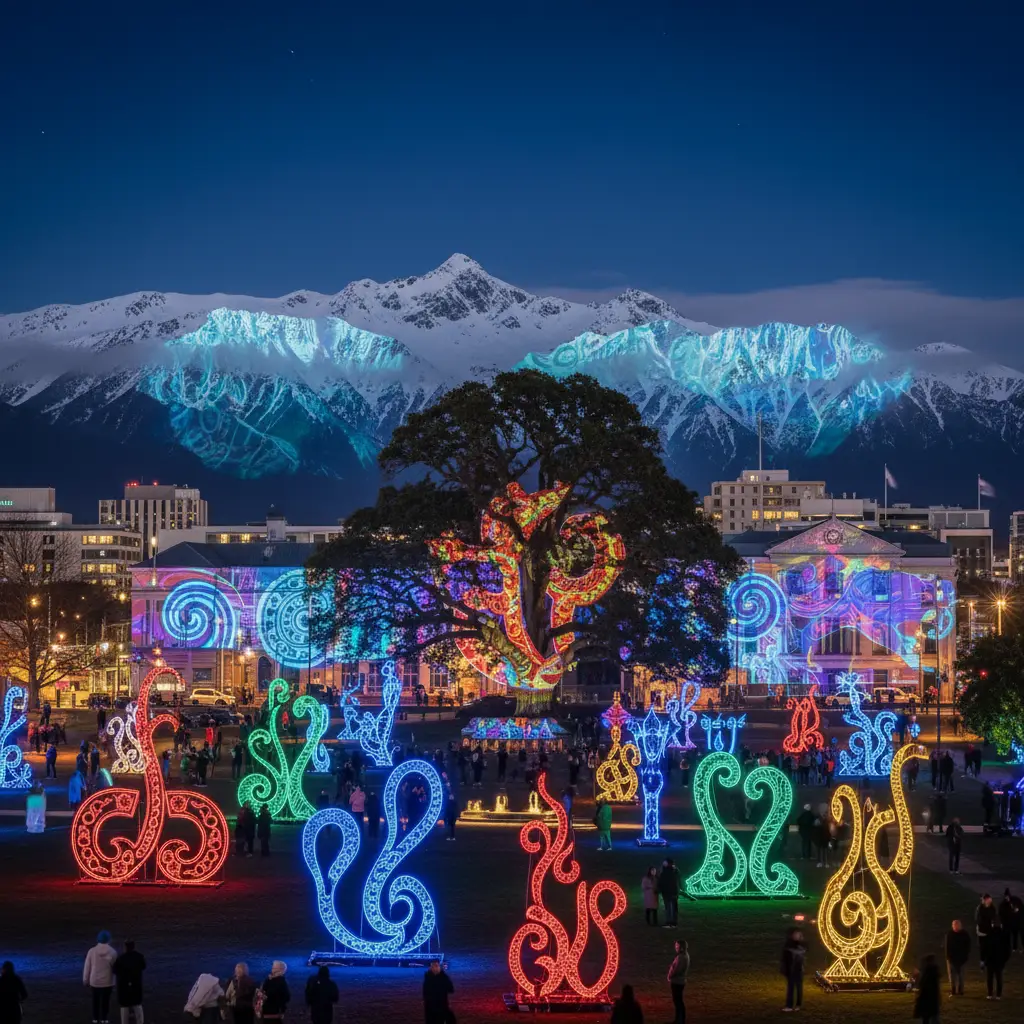
Tīrama Mai is a lighting festival held in the heart of Christchurch. It features illuminated trails, massive light sculptures, and storytelling projections. It is designed to bring people out of their homes during the darkest nights of winter to celebrate creativity and community. It is the South Island’s answer to the vivid light festivals seen globally, but with a distinctively Māori kaupapa (theme).
Rotorua & Central North Island
Rotorua utilizes its geothermal assets to create unique Matariki experiences.
- Geothermal Dining: Several tourism operators offer hāngī meals cooked in natural geothermal steam vents, aligning with the tradition of cooking food for the gods.
- Redwoods Nightlights: The Treewalk in the Whakarewarewa Forest often features special Matariki-themed lantern displays, allowing visitors to walk among the giants under the stars.
Family Friendly Activities
Matariki is fundamentally a time for whānau (family). Consequently, many Matariki events NZ organizers prioritize accessibility for children and elders.
Manu Aute (Kite Flying)
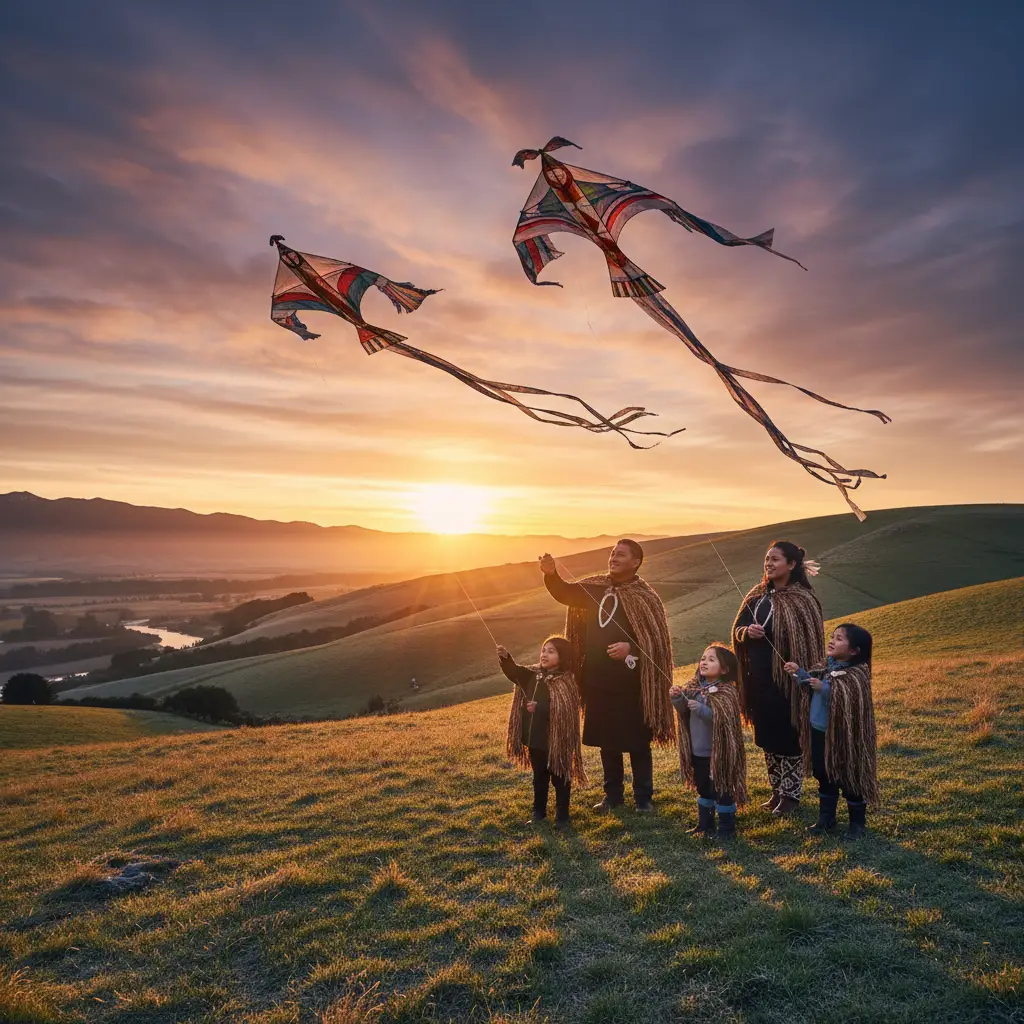
Traditionally, kites were flown to connect the heavens and the earth. Today, massive kite days are held at reserves like Bastion Point in Auckland or New Brighton Beach in Christchurch. These events are visually spectacular, with giant kites in the shapes of native birds and spiritual figures filling the sky. It is a free, participatory event where families are encouraged to bring their own kites.
Planting Days
Matariki is connected to the environment and the preparation of the ground for new crops. Many local councils and conservation groups organize community tree-planting days. This is an excellent way for families to give back to the land (whenua) and marks the new year with positive action.
Library and Museum Workshops
For indoor activities, look to local libraries. Almost every library network in New Zealand runs a school holiday program or weekend workshops focused on Matariki. Activities often include:
- Weaving (raranga) workshops using flax (harakeke).
- Poi making classes.
- Storytelling sessions featuring legends of the nine stars.
Fireworks and Light Shows
While traditional fireworks have been a staple of public celebrations, there is a shifting trend in New Zealand toward light shows and projections, which are quieter and more environmentally friendly, aligning better with the values of Matariki.
Where to see Fireworks?
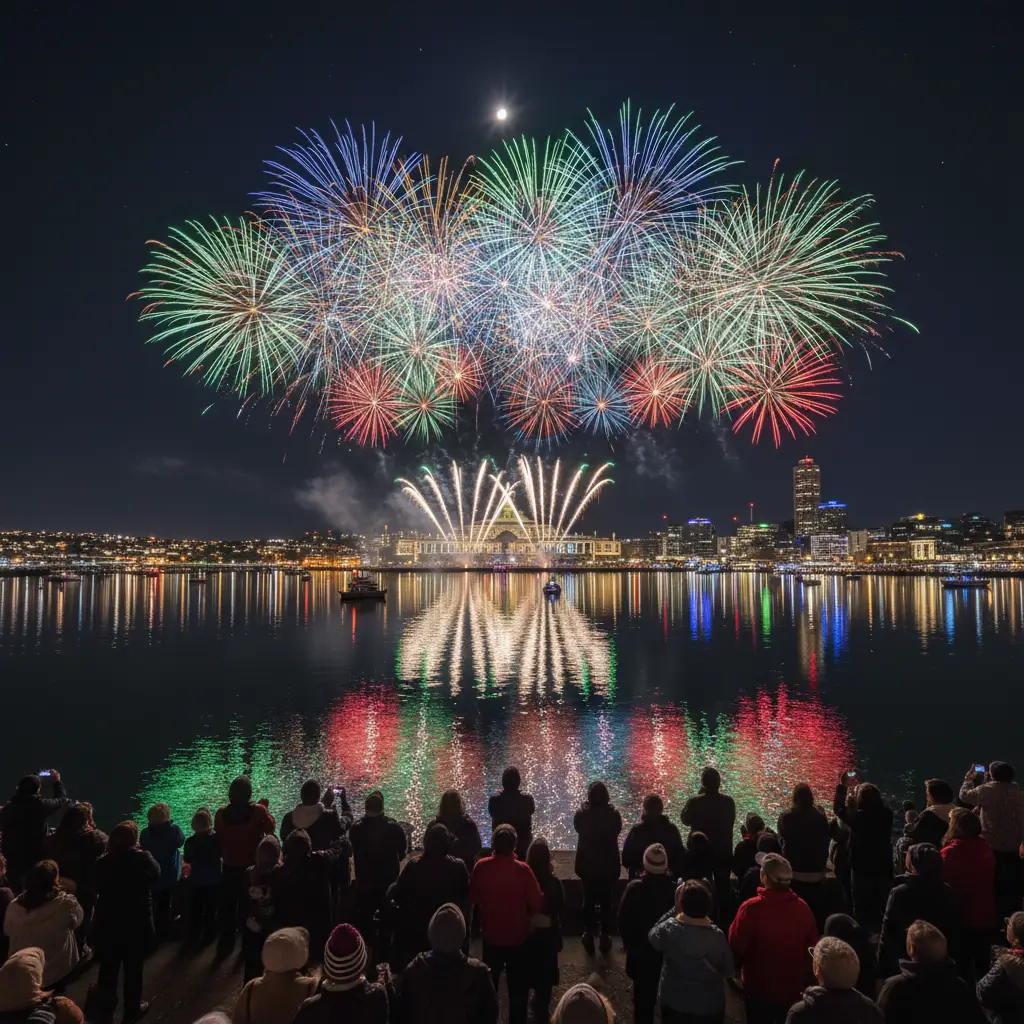
Despite the shift, fireworks remain popular in certain regions. Wellington has historically hosted a “Matariki Sky Show,” though this has evolved into the Ahi Kā fire festival. It is crucial to check local council websites closer to the date, as many regions are replacing pyrotechnics with laser shows to protect local birdlife and reduce pollution.
The Rise of Projection Mapping
The most cutting-edge Matariki events NZ showcases are now projection mappings. Buildings like the Auckland Town Hall, Te Papa, and the Christchurch Art Gallery become canvases for digital artists. These shows run on a loop throughout the evening, allowing crowds to disperse and watch at their leisure, avoiding the congestion associated with a 15-minute firework display.
Understanding the Celebration
To truly appreciate the events, it helps to understand what is being celebrated. Matariki is the Māori name for the star cluster known as the Pleiades. Its rising in mid-winter marks the start of the Māori New Year.
The Three Major Themes
Most events will center around one of these three pillars:
- Remembrance: Honoring those who have passed away since the last rising of Matariki. Events with this theme are often reflective, such as lantern releases or memorial services.
- Celebrating the Present: Gathering with family and friends to share food (kai) and festivities. This drives the food festivals and night markets.
- Looking to the Future: Planning for the year ahead. This is seen in the planting days and educational workshops.
Planning Your Matariki Long Weekend
Since Matariki is a public holiday, it creates a long weekend in June or July. This is a peak time for domestic travel, so early booking is essential.
Accommodation
If you plan to travel to a major hub like Wellington or Auckland for their festivals, book accommodation at least two months in advance. Hotels near the waterfronts (where most events occur) sell out quickly.
Transport
Public transport is often free or discounted on the public holiday in some cities to encourage attendance at events. Check the Auckland Transport or Metlink websites for holiday timetables. Parking near event precincts like the Auckland Viaduct or Wellington Waterfront is notoriously difficult during festival nights; ride-sharing or public transit is highly recommended.
Dining
Many restaurants offer special “Matariki Menus” featuring indigenous ingredients like kūmara, horopito, and kawakawa. These dining experiences are popular, so reservations are a must. Look for “Feast Matariki” listings in local dining guides.
People Also Ask
When is Matariki 2025?
The date for the Matariki public holiday shifts every year because it is based on the lunar calendar (maramataka). In 2025, the public holiday will be observed on Friday, June 20th. The dates are officially announced by the government well in advance to allow for planning.
Is Matariki a public holiday in NZ?
Yes, Matariki is an official public holiday in New Zealand. It was celebrated as a public holiday for the first time in 2022. It typically falls on a Friday in June or July, creating a long weekend for the nation.
What usually happens during Matariki?
During Matariki, people gather to remember loved ones who have passed, celebrate the present with food and music, and plan for the future. Public events include light shows, star gazing, kite flying, cultural performances, and community feasts.
Where can I see the Matariki star cluster?
The Matariki cluster (Pleiades) is best viewed in the early morning, just before dawn, looking towards the northeast horizon. You need a clear, dark sky away from city light pollution. Great viewing spots include Dark Sky Sanctuaries like Lake Tekapo or Great Barrier Island.
Are Matariki events free?
Many community Matariki events are free, including light festivals, kite days, and library workshops. However, specialized experiences like planetarium shows, concert performances, and gala dinners are usually ticketed commercial events.
What food is eaten during Matariki?
Food (kai) is central to Matariki. Traditional foods include kūmara (sweet potato), fish, eel, and birds, often cooked in a hāngī (earth oven). Modern celebrations often feature these ingredients incorporated into contemporary dishes at food trucks and restaurants.