
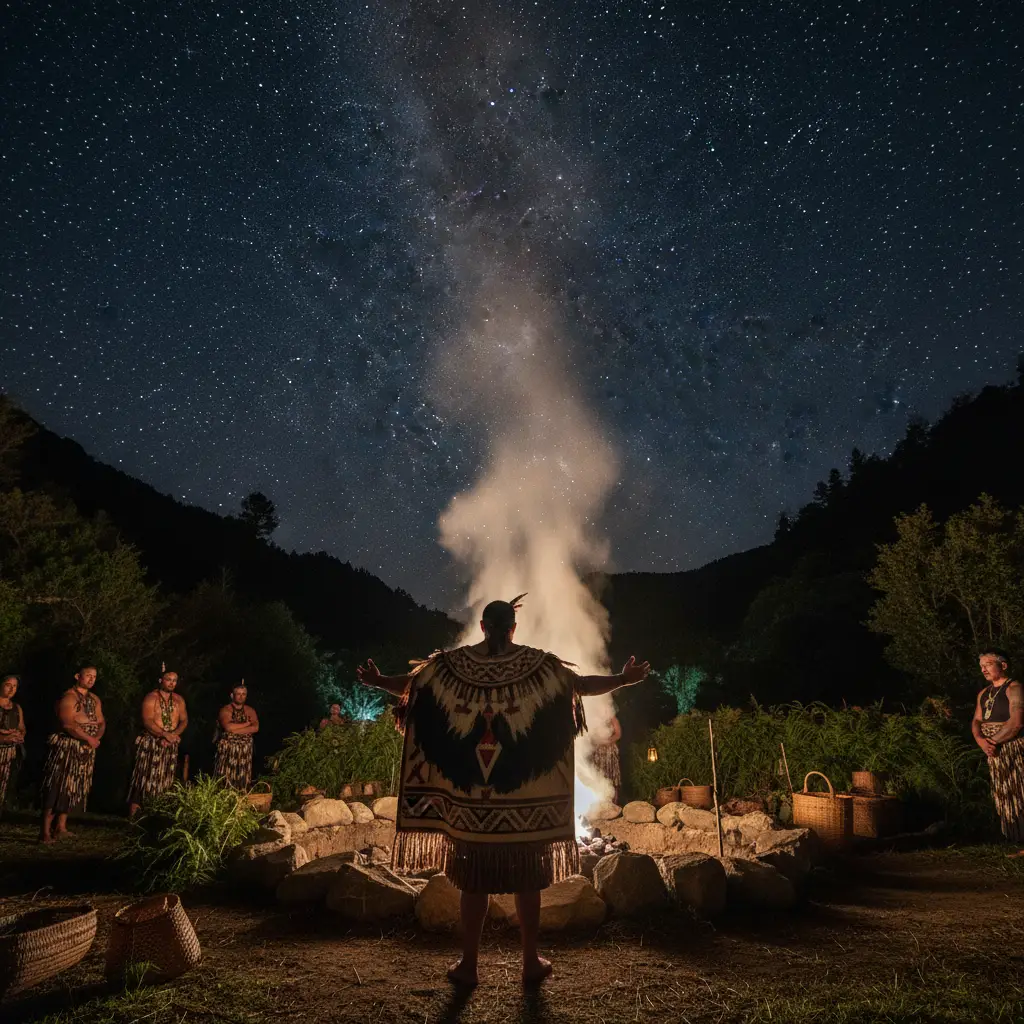
Matariki rituals and traditions are anchored in three central pillars: remembering those who have passed (Whakamahara), celebrating the present harvest with feasting (Hākari), and planning for the future. The most significant ceremonial practice is the Hautapu, involving the cooking of specific foods in an earth oven to release steam, which rises to nourish the stars and ensure prosperity for the coming year.
The rising of the Matariki star cluster (the Pleiades) marks the Māori New Year, a time of profound spiritual renewal and environmental synchronicity in Aotearoa New Zealand. Unlike the western New Year, which is celebrated at the stroke of midnight, Matariki is a period of contemplation observed in the pre-dawn hours. Understanding the tikanga (customs) and rituals associated with this time allows for a deeper, more respectful engagement with the indigenous culture of New Zealand.
The Spiritual Significance of the New Year
In Te Ao Māori (the Māori world), the appearance of Matariki signals a shift in the cosmic and environmental energies. It is not merely a calendar date but a celestial signifier that the harvest is complete, the storehouses are full, and the land is entering a period of rest. The spiritual significance of Matariki rituals and traditions lies in the concept of regeneration.
The stars themselves are viewed as tohu (signs). The brightness, distinctiveness, and color of each star in the cluster are read by tohunga (experts) to predict the productivity of the coming season. For example, if the star Tupu-ā-rangi is bright, it signals an abundance of birds and berries; if it is hazy, resources may be scarce. This connection between the celestial and the terrestrial forms the spiritual backbone of all Matariki ceremonies.

A Time for Reset and Reflection
Spiritually, this is a time to balance the books. Just as the harvest is stored, spiritual debts are settled, and grievances are laid to rest. The transition from the old year to the new is a liminal space where the veil between the physical world and the spiritual realm is thin. This allows for a unique communion with ancestors and the environment, emphasizing that humanity is not separate from nature but an intrinsic part of it.
Overview of the Hautapu Ceremony (Feeding the Stars)
The most formal and sacred of all Matariki rituals and traditions is the Hautapu. The word ‘Hautapu’ translates to a sacred offering of wind or breath, but in this context, it refers to the steam rising from a ceremonial oven. The purpose is literal and symbolic: to feed the stars so they are strong enough to sustain the people for the year ahead.
The ceremony is typically conducted before sunrise, known as the te ata hāpara (the dawn). It involves a specific type of earth oven called the Umu Kohukohu Whetū (steaming earth oven of the stars).
The Four Elements of the Offering
The food placed in the umu is not random; it must correspond to the four stars within the cluster that are associated with food sources. This aligns the ritual with the specific domains of the environment:
- Waitī (Freshwater): Eels (tuna) or freshwater fish are offered to acknowledge the domain of lakes and rivers.
- Waitā (Saltwater): Snapper (tāmure) or other saltwater fish represent the bounty of the ocean.
- Tupu-ā-nuku (Earth): Kūmara (sweet potato) represents food grown within the soil.
- Tupu-ā-rangi (Sky): Birds (traditionally preserved kererū, now often chicken) represent food from the canopy/sky.
Once these foods are cooked in the earth oven, the covering is removed. The steam—rich with the essence of the land, river, sea, and sky—rises upward. A tohunga will recite karakia (incantations) dedicating this essence to Matariki. This act is the “feeding” of the stars. Following the ceremony, the people feast (Hākari) on the cooked food, completing the cycle of reciprocity.
Whakamahara: Remembering Those Who Have Passed
While the Hautapu looks forward to prosperity, the ritual of Whakamahara looks back. Matariki is inextricably linked to death and the afterlife through the star Pōhutukawa. This star is connected to the dead and is often the emotional focal point of Matariki rituals and traditions.
According to tradition, when a person passes away, their spirit travels to Te Rerenga Wairua (the departing place of spirits) and descends into the underworld. Eventually, they ascend to the heavens to be gathered by the great net of Taramainuku. This net casts the spirits into the sky, where they become stars. The return of Matariki is the time when these names are called out, releasing the spirits to become part of the cosmos.
The Ritual of Calling the Names
During formal ceremonies, it is customary to read aloud the names of those who have died since the last rising of Matariki. This is a solemn moment of weeping (tangihanga) and release. By speaking their names into the pre-dawn air, whānau (families) bid a final farewell, allowing the grief of the past year to be lifted so the new year can begin with a lighter heart.

Cultural Safety and Respect for Non-Māori
With Matariki now recognized as a national public holiday in New Zealand, there is a surge of interest in participating in these rituals. However, cultural safety is paramount. Cultural safety means understanding the boundaries of participation and ensuring that Tikanga (protocols) are not appropriated or performed incorrectly.
How to Participate Respectfully
For non-Māori, the key is to observe and support rather than to lead. The Hautapu ceremony, specifically the incantations and the management of the tapu (sacred) nature of the stars, requires expert knowledge usually held by tohunga or cultural leaders.
- Attend Public Events: Many Iwi (tribes) and councils host public ceremonies. Attend these to listen, learn, and support.
- Pronunciation Matters: Make an effort to pronounce the names of the stars and the kupu (words) correctly. This shows respect for the mana of the language.
- Understand the Intent: Avoid commercializing the holiday. Matariki is about community, environment, and remembrance, not sales or marketing gimmicks.
Setting Up a Ritual Space at Home
You do not need to perform a full Hautapu to observe Matariki rituals and traditions at home. Families can create their own meaningful observances that align with the spirit of the holiday without infringing on sacred tapu protocols.
Steps for a Home Observance
1. The Pre-Dawn Vigil:
Wake up early before the sun rises. Turn off all the lights in your home to minimize light pollution. Go outside and look toward the north-east horizon to spot the cluster. This simple act of observation connects you to the environment.
2. Sharing Kai (Food):
Prepare a breakfast that includes elements of the earth (roasted vegetables) and the water (fish). Eat together as a family. The act of eating lifts the tapu of the night and transitions you into the day (noa).
3. Whakapapa and Storytelling:
Use this time to tell stories of family members who have passed away. Bring out photos and share memories. This keeps their legacy alive and fulfills the purpose of Whakamahara.
4. Goal Setting:
Discuss your aspirations for the year ahead. What are you “planting” in your life? This aligns with the star Hiwa-i-te-rangi, the wishing star within the cluster.

People Also Ask
What is the Hautapu ceremony?
The Hautapu ceremony is a sacred Māori ritual performed during Matariki where food is cooked in an earth oven (umu) and the resulting steam is offered to the stars. The steam feeds the stars to give them energy for the coming year, while the cooked food is then eaten by the community.
What are the 3 major principles of Matariki?
The three major principles are: Remembrance (remembering those who have passed), Celebrating the Present (gathering to give thanks for the harvest and food), and Looking to the Future (planning and setting intentions for the new year).
How do you acknowledge the dead during Matariki?
The dead are acknowledged by calling out the names of those who have passed since the last Matariki rising. This is often done while looking at the star Pōhutukawa. Families may also display photos and share stories to honor their memories and release grief.
What foods are cooked for Matariki rituals?
Foods traditionally include kūmara (sweet potato) for the earth, eels or freshwater fish for fresh water, saltwater fish for the ocean, and birds (or chicken) for the sky. These represent the four environmental domains connected to the stars Tupu-ā-nuku, Waitī, Waitā, and Tupu-ā-rangi.
Can non-Māori celebrate Matariki?
Yes, non-Māori are encouraged to celebrate Matariki. It is a time for all people in Aotearoa to connect with the environment and each other. However, it is important to participate respectfully, observing tikanga and avoiding the appropriation of sacred rituals like the formal Hautapu.
What is the correct karakia for Matariki?
There are many karakia (incantations) used for Matariki, ranging from complex priestly recitations to simple community prayers. A common theme in these karakia is acknowledging the stars, giving thanks for the harvest, and asking for a prosperous year ahead. It is best to learn these from local iwi or authorized resources.