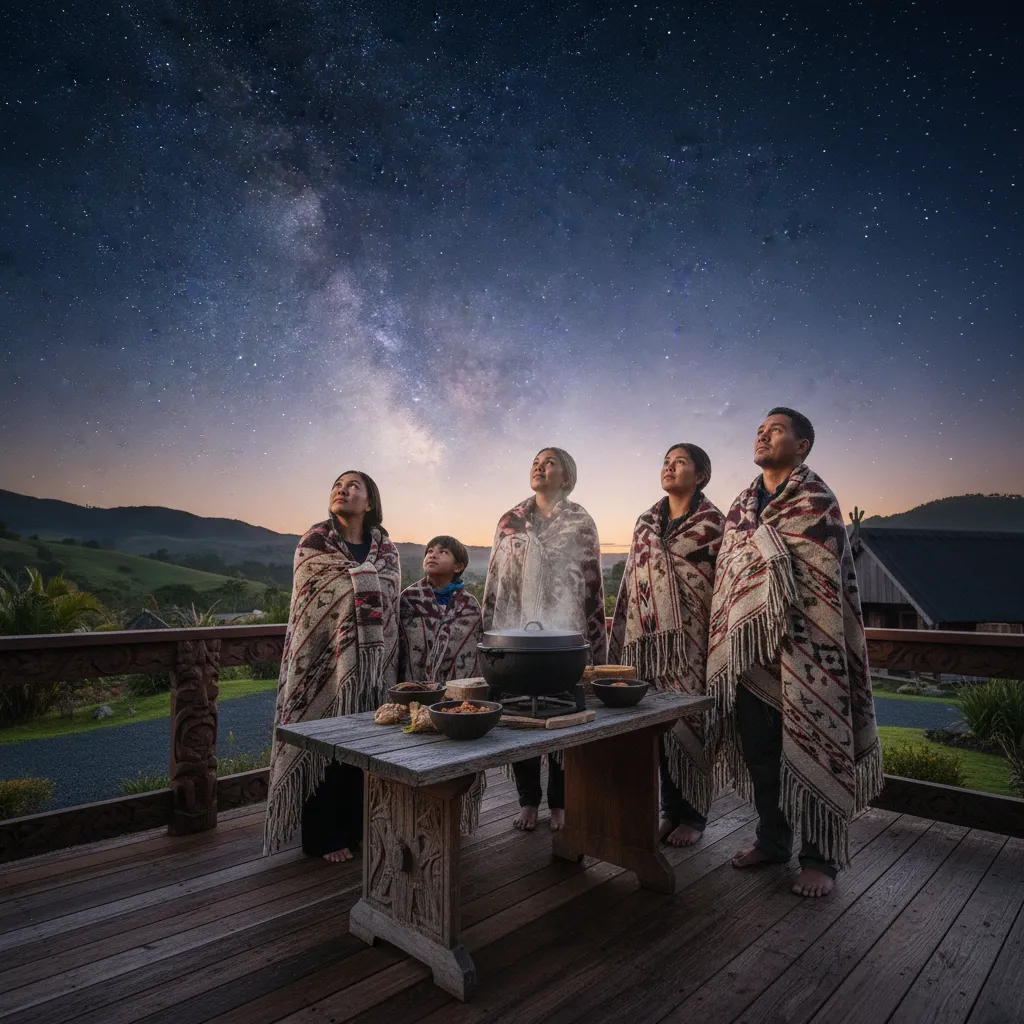
Matariki karakia are traditional Māori incantations recited during the Māori New Year to honor the appearance of the Pleiades star cluster. These prayers serve to acknowledge the past, farewell the dead, celebrate the present harvest, and set intentions for the future, strengthening the connection between the people, the land, and the cosmos.
As the cluster of stars known as Matariki (the Pleiades) rises in the mid-winter sky, Aotearoa New Zealand pauses to reflect, celebrate, and plan. Central to these observances are Matariki karakia—powerful incantations that guide the spiritual and ceremonial aspects of the Māori New Year. Whether you are participating in a formal Hautapu ceremony at dawn or simply sharing a meal with whānau (family), understanding the role of karakia deepens the experience of this indigenous celebration.
Karakia are not merely words; they are a mechanism to clear spiritual pathways, acknowledge the environment, and focus the mind. In the context of Matariki, they address the nine stars of the cluster, each representing different environmental domains such as fresh water, salt water, wind, and rain. This guide provides authoritative translations, cultural context, and practical examples of karakia suitable for various moments of the Matariki season.
What is the Purpose of Matariki Karakia?
Karakia are often translated simply as “prayers,” but this definition rarely captures their full cultural weight. In Te Ao Māori (the Māori world), a karakia is a ritual chant or incantation used to invoke spiritual guidance and protection. During Matariki, these chants serve three primary functions: remembrance of those who have passed (associated with the star Pōhutukawa), celebrating the present bounty (associated with Tupu-ā-nuku, Tupu-ā-rangi, Waitī, and Waitā), and looking to the future (associated with Hiwa-i-te-rangi).
When we recite a Matariki karakia, we are aligning our own energy with the natural rhythms of the environment. The rising of Matariki signals a time when the sun turns back towards the earth, bringing the promise of warmer days. The karakia acknowledges this shift, thanking the environment for the harvest that has been stored for winter and asking for a prosperous season ahead.
Traditional Karakia for Sighting the Stars
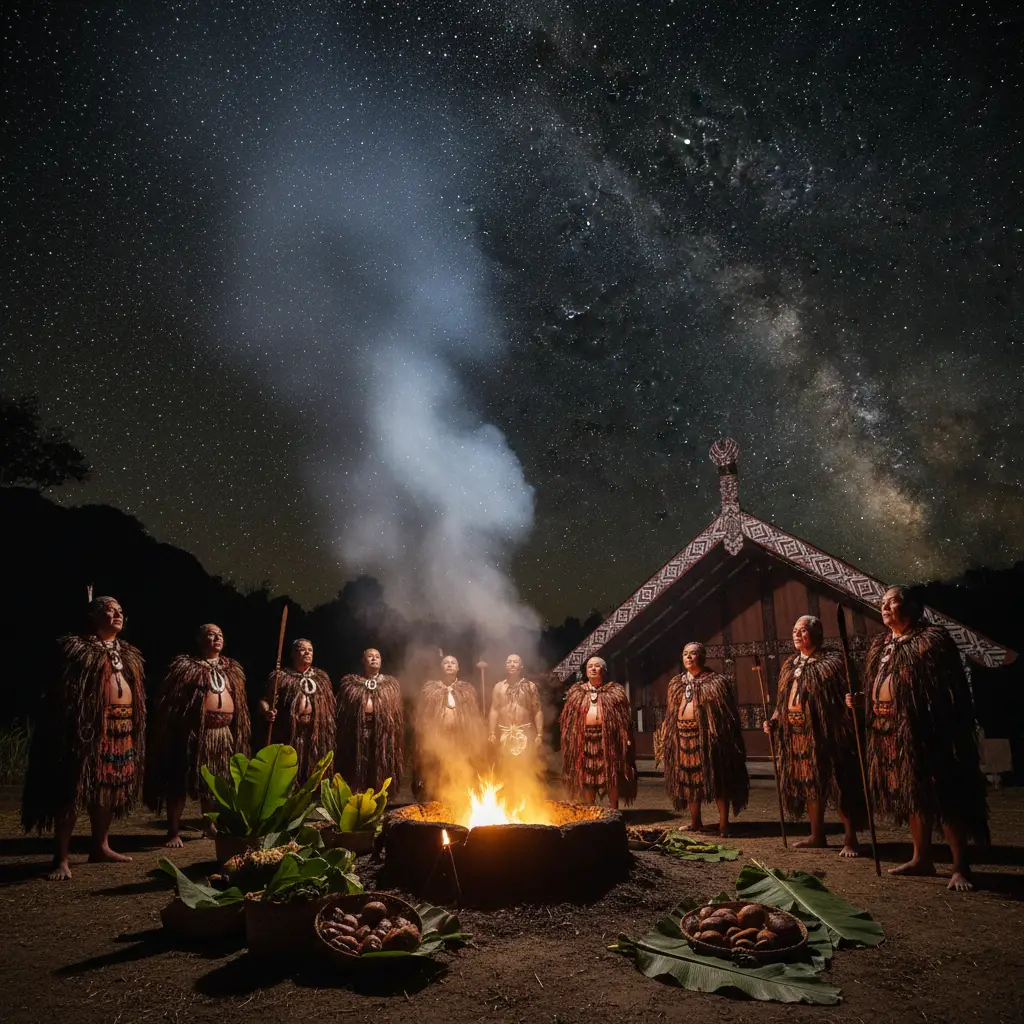
The most sacred time to perform Matariki karakia is pre-dawn, just as the stars become visible on the horizon. This ceremony is often part of a Hautapu, where steam from cooking food is released to feed the stars. Below is a traditional karakia often used to welcome the cluster. It acknowledges the stars’ return and the light they bring to the world.
A Karakia for the Dawn (He Karakia ki a Matariki)
This incantation welcomes the radiance of the stars and the turning of the season.
Māori:
Tuia i runga, tuia i raro
Tuia i te here tangata
Ka rongo te pō, ka rongo te ao
Haumi e, hui e, taiki e.English Translation:
Stitch the celestial energies above, stitch the earthly energies below
Stitch the ties that bind humanity
The night hears, the day hears
Join, gather, unite!
Cultural Insight: The phrase “Haumi e, hui e, taiki e” is a common closing for many karakia. It signifies the binding together of the group’s intention and the spiritual forces invoked. It is the moment where the group affirms their unity.
Specific Acknowledgement of the Stars
Advanced practitioners may recite karakia that name the individual stars within the cluster, acknowledging their specific domains:
- Matariki: The mother star, signifying health and wellbeing.
- Pōhutukawa: Connected to the dead.
- Tupu-ā-nuku: Food grown in the ground (kumara, potatoes).
- Tupu-ā-rangi: Food from the sky (birds, fruit).
- Waitī: Fresh water creatures (eels).
- Waitā: Salt water creatures (fish).
- Waipuna-ā-rangi: Rain.
- Ururangi: Winds.
- Hiwa-i-te-rangi: The wishing star.
Simple Karakia for Opening a Feast (Kai)
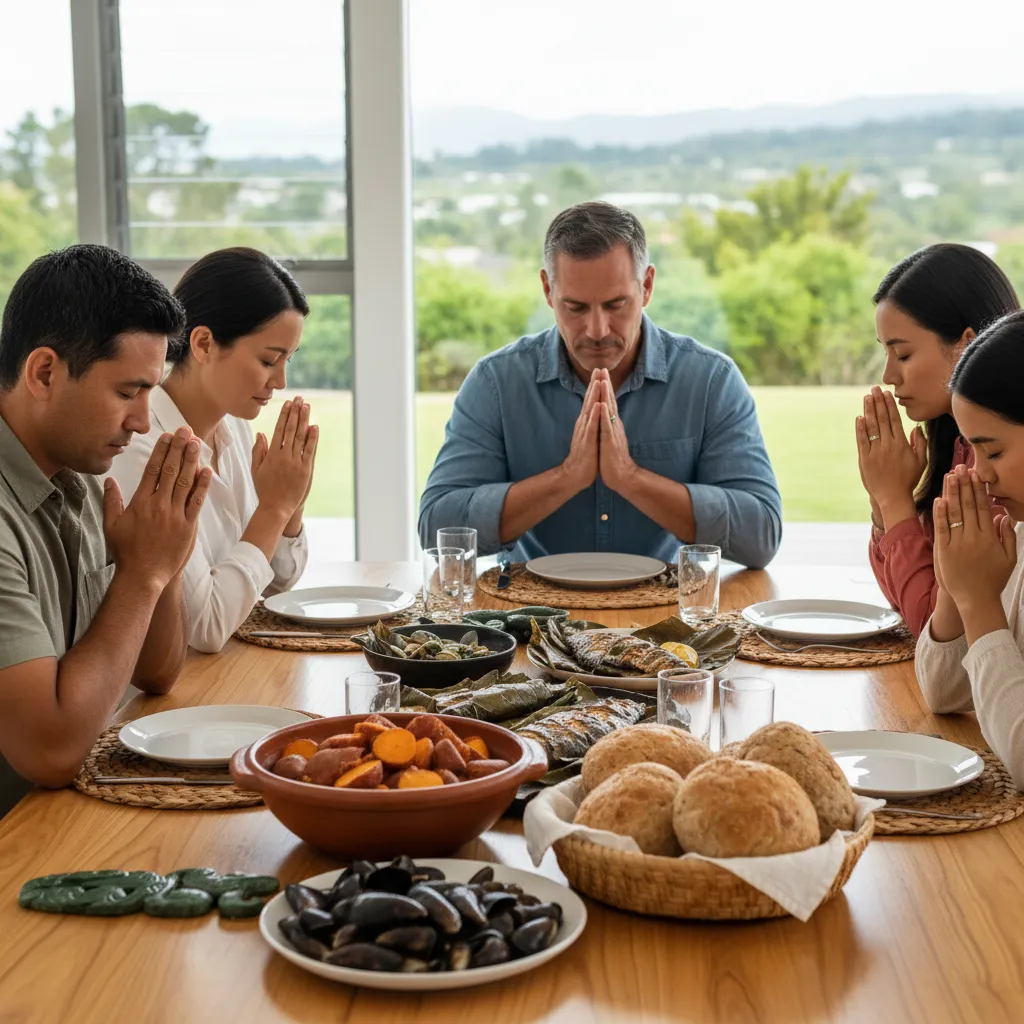
Matariki is fundamentally a celebration of harvest and hospitality (manaakitanga). Sharing food is a way to bring people together. Before eating, it is customary to bless the food (whakapai kai). These karakia can be used by anyone, regardless of fluency, to show respect for the food and the company.
Option 1: A Simple Blessing (Beginner)
This is perfect for children or those new to Te Reo Māori. It expresses gratitude for the food.
Māori:
Nau mai e ngā hua
o te wao,
o te ngākau,
o te wai.
Nā Tāne
Nā Rongo
Mauria ko au ki te ao mārama.
Haumi e, hui e, taiki e!English Translation:
Welcome the gifts of the forest,
of the cultivated gardens,
of the water.
From Tāne (god of forests)
From Rongo (god of cultivated food)
Bring me into the world of light.
Join, gather, unite!
Option 2: A General Blessing (Intermediate)
This karakia acknowledges the source of the food and blesses those who prepared it.
Māori:
Whakapaingia ēnei kai
Hei oranga mō ō mātou tinana
Whāngaia hoki ō mātou wairua
Ki te taro o te ora
Ko Ihu Karaiti tō mātou Ariki
Amine.English Translation:
Bless this food
As nourishment for our bodies
Feed also our spiritual needs
With the bread of life
Jesus Christ is our Lord
Amen.
Note: The second option includes Christian references (Ihu Karaiti), which is very common in modern Māori settings. If you prefer a secular version, the first option focusing on Atua Māori (Tāne and Rongo) is appropriate.
Karakia for Remembrance and New Beginnings
Matariki is a transition point. We farewell the spirits of those who died in the past year, sending them into the night sky to become stars, and we turn to Hiwa-i-te-rangi to cast our wishes for the new year.
Farewelling the Dead (Poroporoaki)
During a Matariki ceremony, names of those who have passed are often read aloud. A short karakia or whakataukī (proverb) may follow:
Māori:
Kua whetūrangitia koe.
Haere ki te pō, haere ki ngā tīpuna.English Translation:
You have become a star.
Go to the night, go to the ancestors.
Setting Intentions (Hiwa-i-te-rangi)
This karakia is directed at the star Hiwa-i-te-rangi, the star to whom we send our aspirations.
Māori:
Hiwa-i-te-rangi, tēnei te manawa ka rere
Ki ngā hihi, ki ngā hā
Homai te waiora, homai te toiora.English Translation:
Hiwa-i-te-rangi, here is the heart that flies
To your rays, to your essence
Grant us health, grant us wellness.
How to Pronounce Matariki Karakia
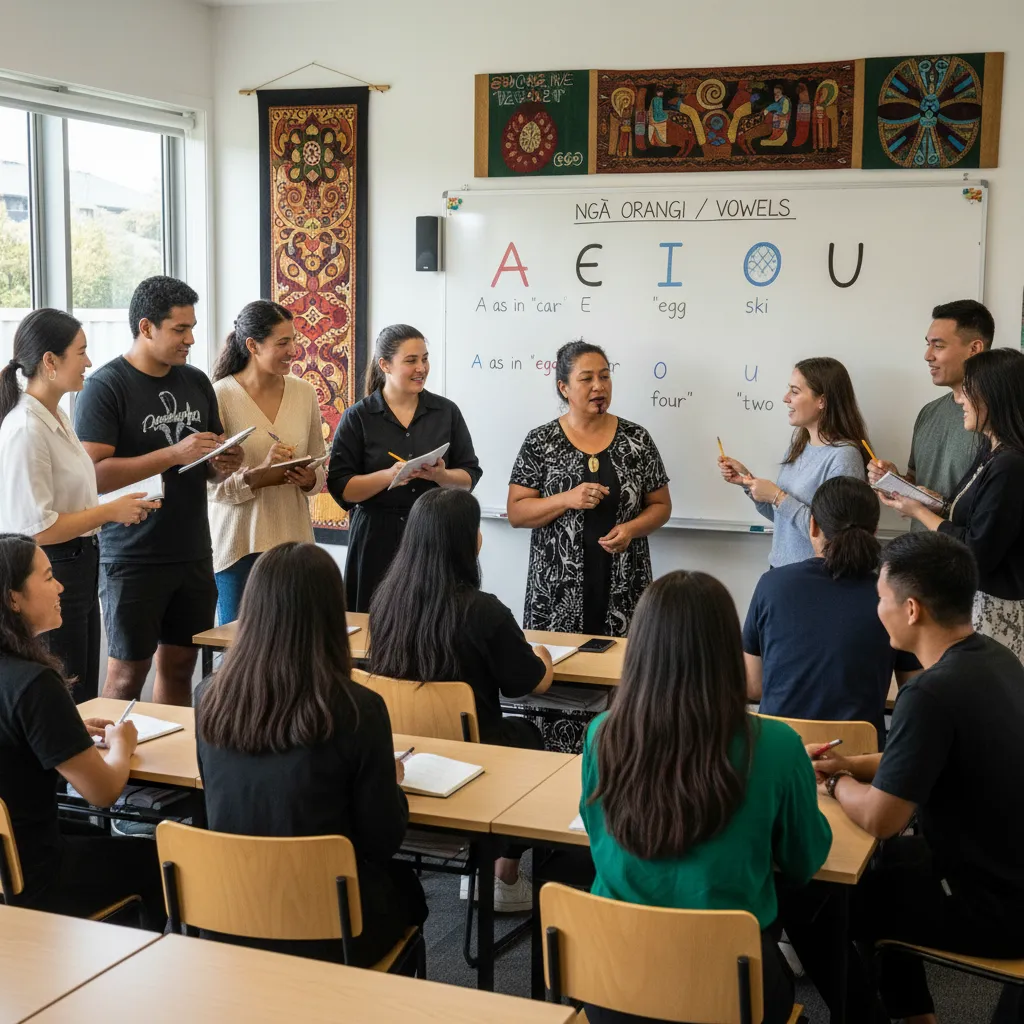
Correct pronunciation upholds the mana (integrity) of the karakia. Te Reo Māori uses consistent vowel sounds, which makes it accessible for learners. Here is a quick guide to the vowel sounds found in the karakia above:
- A as in ‘father’
- E as in ‘egg’
- I as in ‘feet’
- O as in ‘orbit’
- U as in ‘too‘
Macrons (Tohutō): You will notice lines over some vowels (ā, ē, ī, ō, ū). These indicate a long vowel sound. For example, “Kē” is pronounced like “care” without the ‘r’, held longer than “Ke”. Getting the vowel length right is crucial as it can change the meaning of a word.
Consonants: Most are pronounced as in English, with two main exceptions:
Wh: Pronounced like a soft ‘f’ (as in ‘physics’).
Ng: Pronounced like the ‘ng’ in ‘singer’ (not ‘finger’).
Audio Resources for Learning
To truly master these karakia, listening to native speakers is invaluable. Reading the text provides the structure, but hearing the rhythm and cadence brings the incantation to life. The following reputable organizations offer free audio resources for Matariki karakia:
- Te Papa Tongarewa (Museum of New Zealand): Their website hosts a dedicated Matariki section with audio files of karakia and pronunciation guides for the star names.
- Radio New Zealand (RNZ): RNZ’s collection of Māori language resources includes “Karakia of the Week” segments which often feature Matariki-specific prayers during June and July.
- Māori Television (Whakaata Māori): Offers video content of Matariki ceremonies where you can hear karakia performed in context by tohunga (experts).
- Scotty Morrison’s “Māori Made Easy”: While a book series, the accompanying audio resources are excellent for learning the cadence of karakia.
By utilizing these resources and practicing the simple karakia for kai, you actively participate in the revitalization of Māori culture and honor the spirit of the Matariki celebration.
What is the best time to say a Matariki karakia?
The most traditional time is pre-dawn (around 5:30 AM to 6:30 AM) when the Matariki cluster is visible on the horizon. However, karakia for food (whakapai kai) can be said at any mealtime during the celebration period.
Can non-Māori perform Matariki karakia?
Yes, Matariki is a celebration for all people of Aotearoa. Non-Māori are encouraged to participate and learn. It is important to treat the karakia with respect, try your best with pronunciation, and understand the meaning of the words you are speaking.
What is the difference between a karakia and an inoi?
Traditionally, a karakia is a ritual chant or incantation used to invoke spiritual forces or clear a path, often pre-dating Christianity. An inoi is the word typically used for a prayer in the Christian sense, often directed to God (Atua). In modern usage, the terms are sometimes used interchangeably.
Do I need to memorize the karakia?
While memorization allows for a more fluid delivery, it is perfectly acceptable to read from a paper or phone, especially when you are learning. The intention (wairua) behind the words is more important than a perfect performance.
Which star do I pray to for wishes?
Hiwa-i-te-rangi is the star connected to granting the desires of the heart. It is the youngest star in the cluster and is known as the “wishing star.” Karakia for new year’s resolutions or hopes are directed here.
What if I make a mistake while saying the karakia?
In traditional contexts, mistakes were taken very seriously. However, in a modern, learning context, making a mistake is part of the journey. If you stumble, simply pause, correct yourself, and continue with humility and respect.