The story of Matariki legend primarily centers on the Māori New Year, marking the rise of the Pleiades star cluster. While narratives vary by iwi, the most prominent origin story involves Tāwhirimātea, the god of wind, who crushed his own eyes in grief over the separation of his parents, Ranginui and Papatūānuku, and threw them into the heavens to become the “Eyes of the God” (Ngā Mata o the Ariki).
What is the Story of Matariki Legend?
The story of Matariki legend is a cornerstone of Māori astronomy and cultural identity in Aotearoa New Zealand. It is not a single narrative but a tapestry of oral traditions that explain the appearance of the Pleiades star cluster in the mid-winter sky. At its core, the legend signifies remembrance, fertility, and the signaling of the Māori New Year.
While the physical cluster is known globally as the Pleiades, for Māori, these stars represent distinct spiritual entities. The name “Matariki” is often translated as “Tiny Eyes” (Mata riki) or “Eyes of the God” (Mata Ariki). The duality of these translations points to the two dominant narratives: the violent creation of the stars through the grief of Tāwhirimātea, and the peaceful personification of the stars as a mother (Matariki) and her daughters (the sisters) journeying across the sky to visit their ancestor, Papatūānuku.
Understanding these legends requires delving into the cosmogony of the Māori world—the very beginning of existence.
The Separation of Ranginui and Papatūānuku
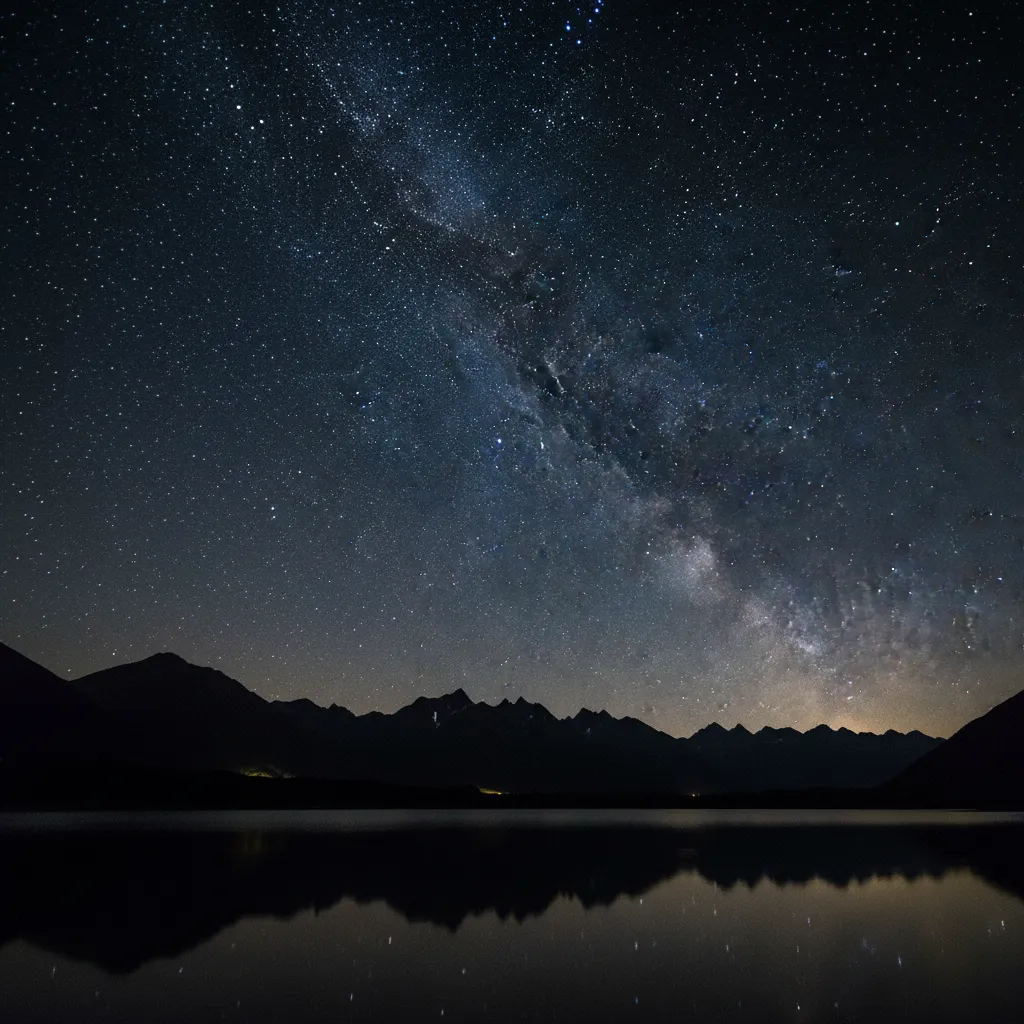
To comprehend the origin of the stars, one must first look to the separation of the primal parents. In the beginning, there was only darkness (Te Pō). Ranginui (the Sky Father) and Papatūānuku (the Earth Mother) were locked in a tight, eternal embrace. Their children, the atua (gods) of the natural world, were forced to live in the cramped darkness between their parents’ bodies.
Frustrated by the lack of light and space, the children debated how to separate their parents. Tūmatauenga, the god of war, proposed killing them. However, Tāne Mahuta, the god of the forest, suggested pushing them apart. Tāne placed his shoulders against the earth and his feet against the sky, pushing with all his might. Slowly, the bonds of light were broken, and Te Ao Mārama (the world of light) was born.
This act of separation allowed life to flourish, but it came at a great emotional cost. The parents were heartbroken, and their tears (rain and dew) continue to fall to this day. This foundational myth sets the stage for the specific creation of the Matariki cluster.
Tāwhirimātea’s Rage and the Creation of the Stars
Not all the children agreed with the separation. Tāwhirimātea, the god of wind and storms, was furious at his brothers for separating his parents. He could not bear to hear his parents’ cries of sorrow. In his distress, Tāwhirimātea waged war against his brothers, sending hurricanes and storms to lash the earth and forests.
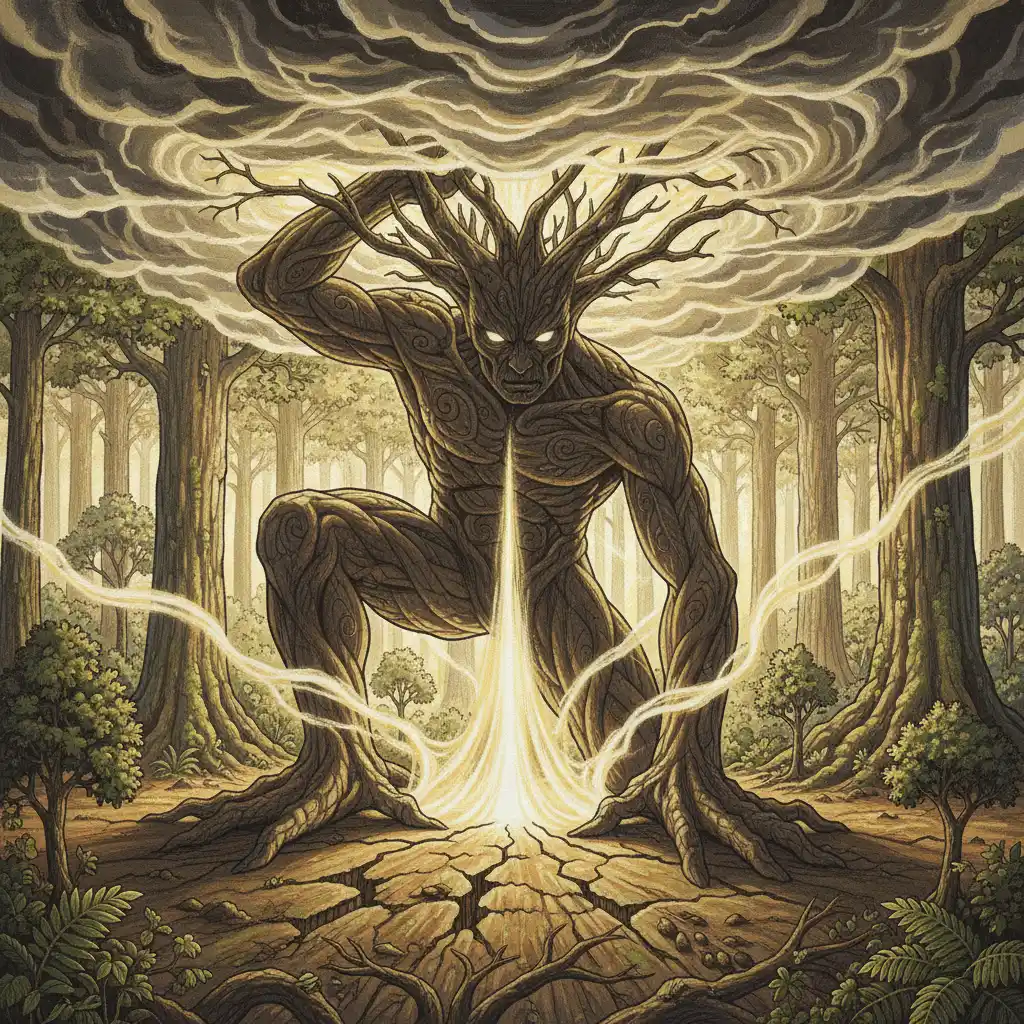
The climax of Tāwhirimātea’s rage provides the most dramatic origin story for the Matariki legend. Overcome with grief and anger, Tāwhirimātea plucked out his own eyes. In a final act of defiance and sorrow, he crushed them within his hands and threw the fragments into the heavens. These shards of divine vision stuck to the chest of his father, Ranginui, becoming the cluster of stars we now know as Matariki.
Thus, the name Ngā Mata o the Ariki—The Eyes of the God—serves as a reminder of this ancient celestial conflict. When Matariki rises in the mid-winter sky, it is often accompanied by the winds of Tāwhirimātea, reminding the people of the connection between the stars and the weather.
The Legend of the Sisters: Matariki and Her Daughters
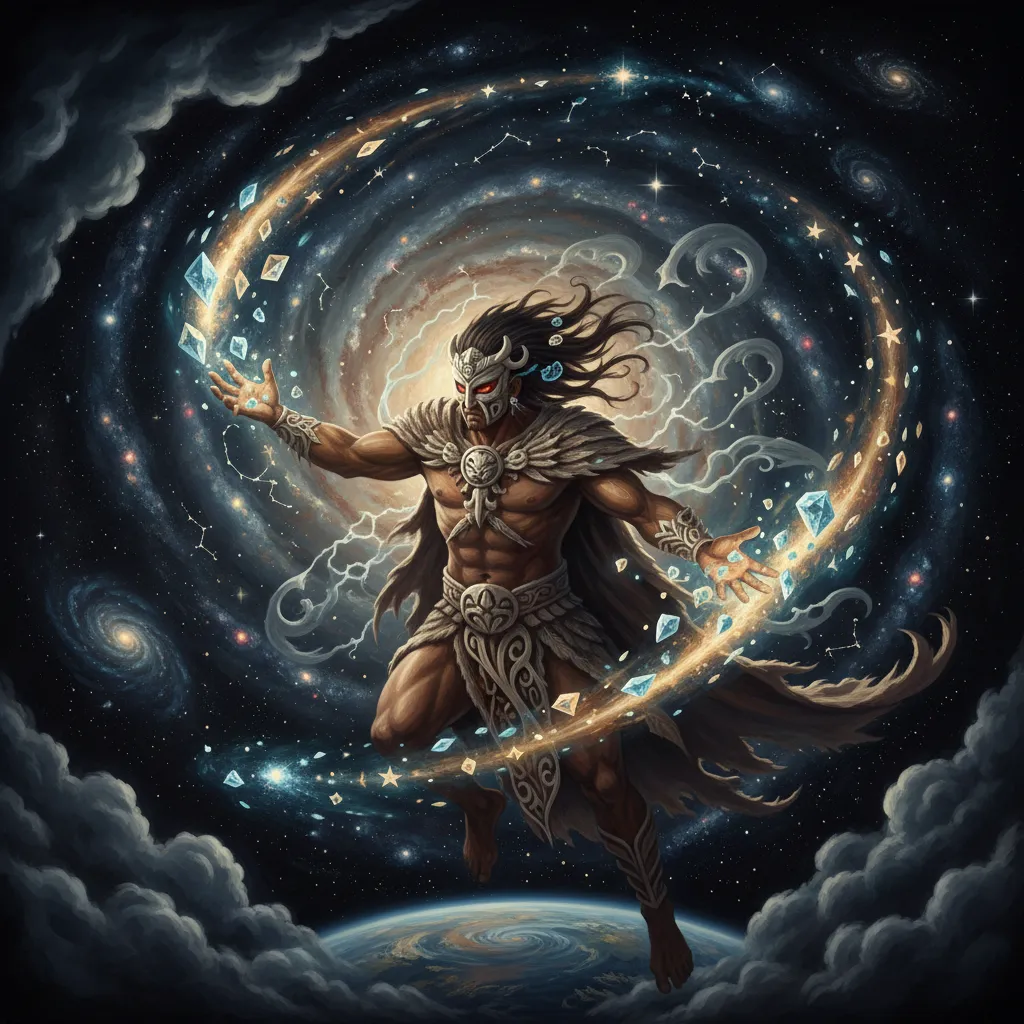
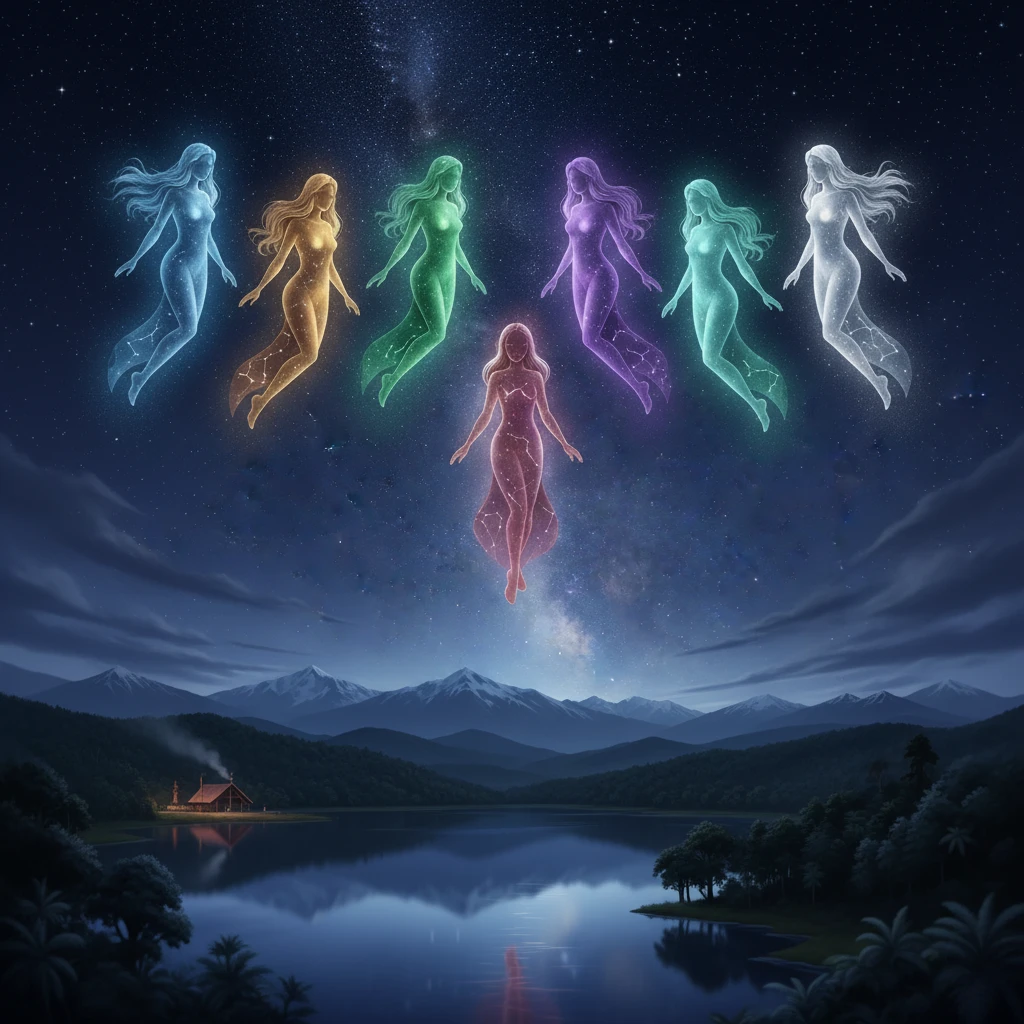
While the story of Tāwhirimātea explains the physical creation of the cluster, the personification of the stars often takes the form of the “Legend of the Sisters.” In this narrative, Matariki is the mother star, surrounded by her daughters. Together, they journey across the sky to visit their grandmother, Papatūānuku.
Each daughter (star) has a specific domain and purpose, influencing the environment and the fortunes of the coming year. This narrative is essential for understanding the ecological knowledge embedded in the legend.
Who are the Matariki Sisters?
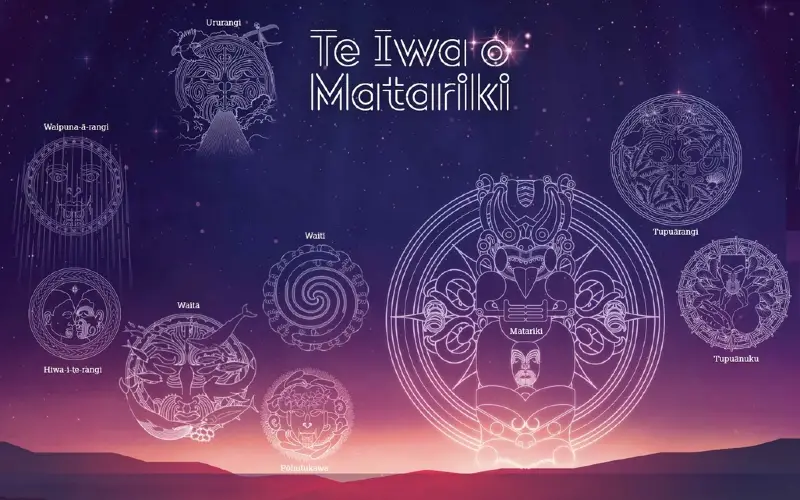
Depending on the iwi (tribe), there are either seven or nine stars recognized. In the nine-star tradition, the family consists of:
- Matariki: The mother star, signifying reflection, hope, and the health of the people. She gathers the others together.
- Pōhutukawa: The star connected to those who have passed away. She carries the dead across the year (hence the connection to remembrance).
- Tupu-ā-nuku: The star connected to food grown in the ground (kumara, potatoes). Her brightness predicts the success of the harvest.
- Tupu-ā-rangi: The star associated with food from the sky (birds, berries, fruits located in trees).
- Waitī: The star linked to fresh water and the creatures within it (eels, trout).
- Waitā: The star representing salt water and the bounty of the ocean.
- Waipuna-ā-rangi: The star connected to rain, hail, and snow.
- Ururangi: The star of the winds.
- Hiwa-i-te-rangi: The wishing star. This is the youngest sister to whom people send their aspirations and dreams for the new year.
This personification transforms the cluster from mere celestial bodies into a family unit that directly impacts the survival and prosperity of the community. It teaches that the health of the environment (fresh water, salt water, forests, and soil) is intrinsically linked to the stars.
Regional Variations: Seven vs. Nine Stars
One of the most fascinating aspects of the story of Matariki legend is the variation between iwi. For many years, the popular Western conception of the Pleiades as the “Seven Sisters” influenced the local narrative. Indeed, many iwi recognize seven stars. However, leading Māori astronomer Dr. Rangi Matamua has popularized the knowledge that many ancient manuscripts and oral traditions actually identify nine stars.
Why the discrepancy?
Visually, the Pleiades cluster contains hundreds of stars. To the naked eye, usually only six or seven are distinct. However, those with exceptional eyesight or in areas with pristine dark skies could distinguish nine. The two stars often excluded in the seven-star version are Pōhutukawa and Hiwa-i-te-rangi.
- The Seven-Star Narrative: Often focuses purely on the agricultural and weather aspects (Earth, Sky, Water, Rain, Wind).
- The Nine-Star Narrative: Adds a deeper spiritual dimension. Pōhutukawa connects the living to the ancestors (the past), and Hiwa-i-te-rangi connects the living to their dreams (the future).
Furthermore, some iwi do not look to Matariki at all to mark the New Year. For iwi in the West Coast of the South Island or parts of Taranaki, the star Puanga (Rigel) is the primary signal, as the geography of the mountains often obscures the view of Matariki on the horizon.
Teaching the Story of Matariki to Children
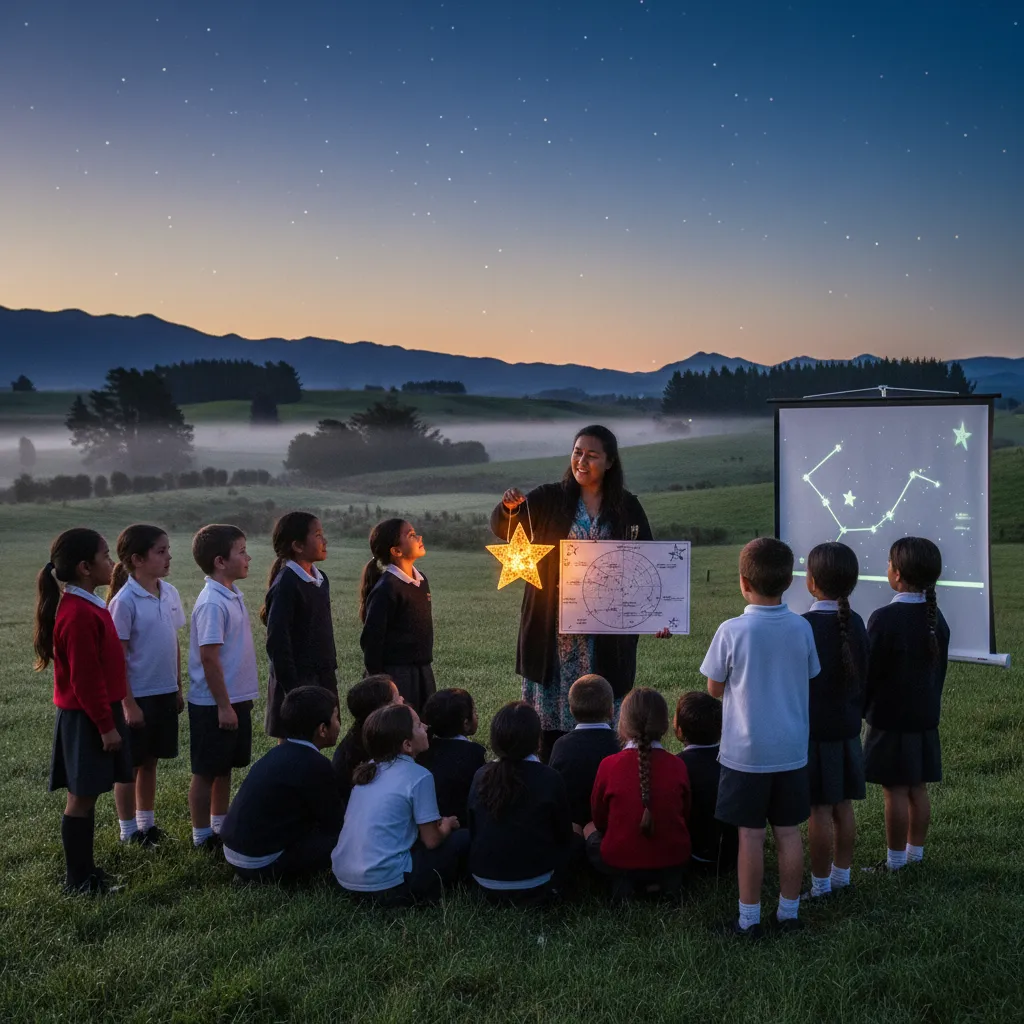
Passing the story of Matariki legend to the next generation is vital for cultural preservation. The narrative offers a perfect vehicle for teaching environmental science, genealogy (whakapapa), and emotional intelligence, often supported by Matariki Worksheets & Resources.
Strategies for Educators and Parents
1. Use the “Sisters” Narrative for Younger Children
The concept of a mother and her daughters is relatable for young children. Assigning each “sister” a domain (e.g., “Waitī likes the river”) helps children categorize parts of nature. Activities can include drawing the stars and matching them to pictures of fish, birds, or gardens.
2. Incorporate Visual Arts
Creating kites (manu tukutuku) is a traditional way to celebrate Matariki. Historically, kites were flown to get closer to the stars. Teachers can have students build kites representing specific stars, combining engineering skills with cultural storytelling.
3. Focus on Remembrance and Future Goals
Matariki is a time of transition. Use the star Pōhutukawa to gently discuss ancestors or loved ones who have passed, fostering a healthy approach to grief. Conversely, use Hiwa-i-te-rangi to have children write down their goals or wishes for the coming year. This balances the somber reflection with optimistic forward-thinking.
4. Observation and Science
Encourage early morning viewing with an Interactive Night Sky Map Tool: Locate Matariki Now. Taking children outside before dawn to spot the cluster connects the myth to the physical world. It provides an opportunity to teach basic astronomy—how to find the Southern Cross, Tautoru (Orion’s Belt), and then follow the line to Matariki.
Conclusion
The story of Matariki legend is more than a myth; it is a framework for living in harmony with the environment and with one another. Whether viewed through the lens of Tāwhirimātea’s grief or the nurturing journey of the Matariki sisters, the legend serves as an annual reminder to reflect on where we have been, appreciate what the earth provides, and look forward to what the future holds.
Frequently Asked Questions (PAA)
What is the main story of Matariki?
The main story involves the appearance of the Pleiades star cluster, signaling the Māori New Year. The origin is often attributed to Tāwhirimātea throwing his eyes into the sky, or the stars are personified as a mother, Matariki, and her daughters, who govern different environmental domains.
Why is Matariki called the seven sisters?
Matariki is often called the Seven Sisters due to similarities with the Greek legend of the Pleiades. While many Māori iwi recognize seven stars, others identify nine distinct stars in the cluster, each with a specific name and purpose.
Who are the 9 sisters of Matariki?
The nine stars are Matariki (the mother), Pōhutukawa, Tupu-ā-nuku, Tupu-ā-rangi, Waitī, Waitā, Waipuna-ā-rangi, Ururangi, and Hiwa-i-te-rangi. Each corresponds to a specific element like fresh water, salt water, wind, rain, or food sources.
What does the Matariki legend teach us?
The legend teaches the importance of environmental stewardship, acknowledging the cycles of nature, remembering ancestors (whakapapa), and planning for the future. It emphasizes the interconnectedness of the stars, the earth, and the people.
How did Tāwhirimātea create Matariki?
According to legend, Tāwhirimātea was enraged by the separation of his parents, Ranginui and Papatūānuku. In his grief, he plucked out his own eyes, crushed them, and threw them onto his father’s chest (the sky), creating the Matariki cluster.
When should you tell the story of Matariki?
The story is traditionally told during the lunar month of Pipiri (June/July) when the star cluster rises in the pre-dawn sky. This period marks the Māori New Year and is a time for Karakia and Waiata for Matariki, wānanga (learning) and celebration.