The best Matariki children’s books combine authentic Māori mythology, stunning illustrations, and cultural education to teach tamariki about the Māori New Year. Top recommendations include The Little Kiwi’s Matariki for juniors, Gavin Bishop’s Matariki for visual storytelling, and Dr. Rangi Matamua’s works for accurate astronomical reference regarding the nine stars of the cluster, or try an Interactive Night Sky Map Tool: Locate Matariki Now.
As Aotearoa New Zealand embraces Matariki as a public holiday and a pivotal moment in the cultural calendar, the demand for high-quality literature surrounding the event has skyrocketed, with many families looking for local Events in Hamilton, Rotorua & Dunedin. Whether you are an Early Childhood Education (ECE) teacher planning a curriculum, a librarian curating a seasonal display, or a parent looking to introduce your whānau to the magic of the stars, selecting the right pukapuka (book) is essential.
This guide categorizes the finest New Zealand-published literature available today, ensuring you find the perfect resource to celebrate the rising of the Pleiades.
Picture Books for ECE and Juniors
For tamariki in Early Childhood Education (ECE) and the junior years of primary school, the best Matariki children’s books rely on vibrant imagery and simple, rhythmic storytelling. At this age, the goal is to introduce the core concepts: the stars, the connection to nature, and the importance of whānau (family) gathering.

The Little Kiwi’s Matariki by Nikki Slade Robinson
This title is a staple in New Zealand classrooms. It serves as a gentle introduction to the holiday through the eyes of the iconic Kiwi. The narrative structure follows a classic “wake up” trope, where Kiwi wakes his forest friends—Tūī, Weka, and Morepork—to witness the rising of the Matariki cluster. The simplicity of the text makes it ideal for reading aloud, allowing young children to join in with the animal sounds and the excitement of the reveal.
The Seven Kites of Matariki by Calico McClintock
This book offers a beautiful legend-based approach. It tells the story of seven sisters (representing the seven stars traditionally viewed) who make kites. The visual storytelling here is paramount; the illustrations capture the distinct New Zealand landscape and the ethereal quality of the night sky. It is particularly useful for craft activities in the classroom, inspiring children to create their own “manu tukutuku” (kites) using high-quality Maori Art Supplies.
Tāwhirimātea: A Song for Matariki by June Pitman-Hayes
Music is a powerful tool for memory retention in juniors. This book comes with a CD (or digital download link) featuring a song that guides children through the story. It focuses on Tāwhirimātea, the god of weather, and his relationship with the stars. The lyrical nature of the text helps children memorize the connection between the stars and the weather patterns of the coming year.
Chapter Books for Middle Grade Readers
As children progress to middle grade (Years 4–8), the literature needs to offer more depth. The best Matariki children’s books for this age group move beyond simple observation and delve into the complex mythology, astronomy, and the social implications of the holiday.

The Astromancer: The Rising of Matariki by Witi Ihimaera
Written by one of New Zealand’s most celebrated authors, The Astromancer is essential for modern curricula. It bridges the gap between ancient legend and modern understanding. Crucially, this book addresses the shift in focus from seven stars to nine stars, aligning with the research of Dr. Rangi Matamua. The protagonist, Ariā, is a character that young readers can relate to, as she seeks to capture the kites of the stars. It is an adventurous narrative that respects the intellect of middle-grade readers while imparting significant cultural knowledge.
Investigation of the Stars
For this age group, fiction often serves as a gateway to inquiry. Books that incorporate the “Maramataka” (the Māori lunar calendar) allow students to understand how Matariki fits into a wider system of timekeeping, planting, and fishing. Teachers should look for narratives that include glossaries and pronunciation guides, encouraging students to expand their Reo Māori vocabulary beyond the basics.
Non-Fiction Reference Books for the Classroom
To truly satisfy the “Commercial” intent for schools and libraries, one must invest in high-quality non-fiction. These resources serve as the “source of truth” for inquiry-based learning projects.
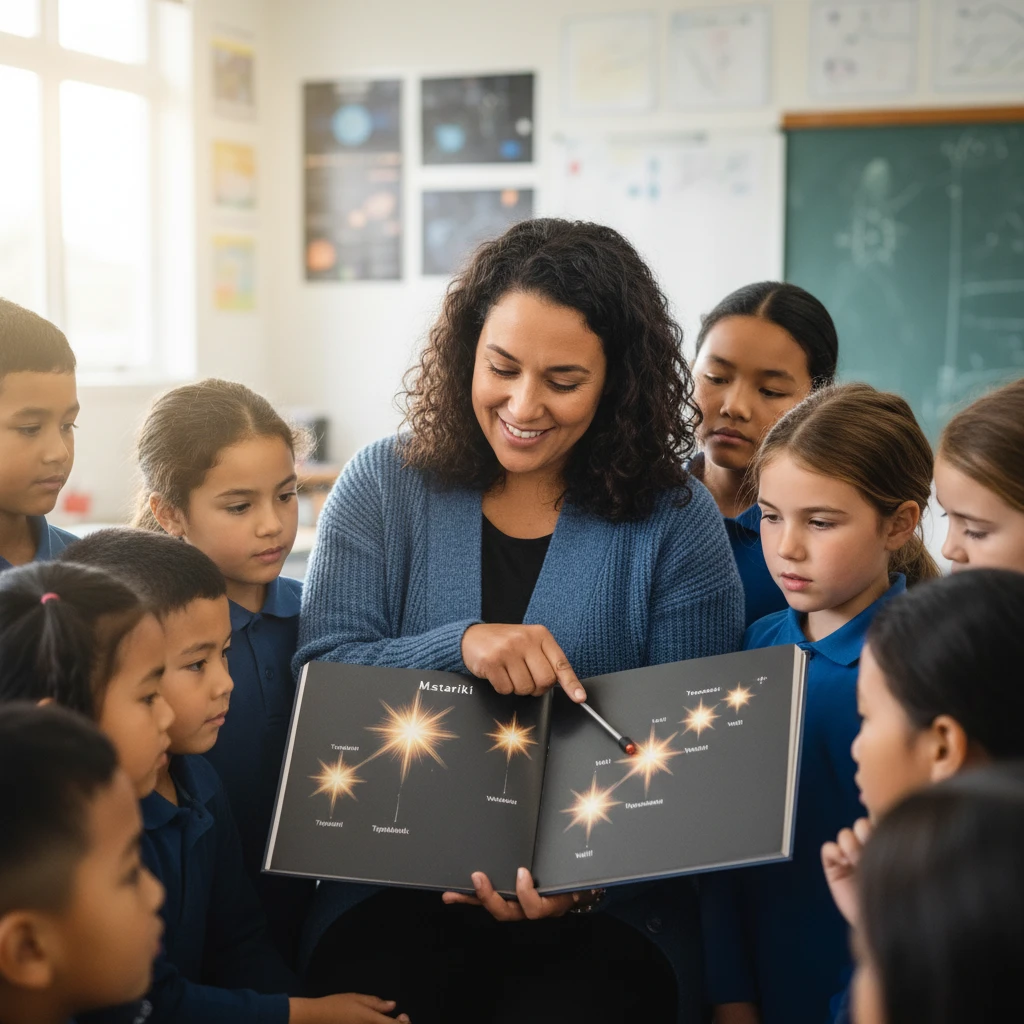
Matariki: The Star of the Year by Dr. Rangi Matamua
While often categorized for adults, this is the definitive text on the subject and is indispensable for senior primary and intermediate classrooms. Dr. Matamua is the preeminent scholar on Māori astronomy. His work debunks myths and re-establishes the ancestral knowledge regarding the nine stars: Matariki, Pōhutukawa, Tupuānuku, Tupuārangi, Waipuna-ā-rangi, Ururangi, Tupuārangi, Hiwa-i-te-rangi, and Waitī/Waitā. For teachers, this book is the ultimate reference guide to ensure they are teaching accurate history rather than simplified versions.
Matariki by Gavin Bishop
Gavin Bishop is a titan of New Zealand children’s literature. His non-fiction picture book on Matariki is a masterpiece of visual communication. It breaks down the specific domain of each star (e.g., Tupuānuku is connected to food grown in the ground). The layout is designed for browsing, making it perfect for classroom libraries where students can dip in and out to find specific facts for their projects.
The Value of Bilingual Pukapuka
When searching for the best Matariki children’s books, prioritizing bilingual editions adds immense value. New Zealand’s curriculum increasingly emphasizes Te Reo Māori, and Matariki is the perfect vehicle for this language acquisition.
Books like Ngā Whetū o Matariki (The Stars of Matariki) offer text in both English and Māori. This supports “code-switching” and normalizes the use of Māori vocabulary in everyday contexts. When selecting books for purchase, check for:
- Macrons: Ensure the text uses macrons correctly (e.g., Māori, not Maori) to support correct pronunciation.
- Translation Quality: Look for books translated by reputable experts to ensure the nuance of the legend is preserved.
- Glossaries: A back-of-book glossary is a helpful tool for parents who may be learning alongside their children.
Where to Buy NZ Published Pukapuka
Supporting the local economy is a key aspect of the Matariki spirit. When looking to purchase these titles, consider sourcing them from retailers that champion New Zealand authors and illustrators.
Specialized Retailers
Huia Publishers: As a specialist in Māori literature, Huia offers the most authentic range of books, many of which are award-winners. Buying direct ensures the maximum return to the indigenous creators.
The Sapling: While primarily a review site, The Sapling guides buyers toward independent bookstores like Unity Books or Time Out Bookstore, which curate their collections with a focus on literary quality rather than mass-market appeal.
Mainstream Options
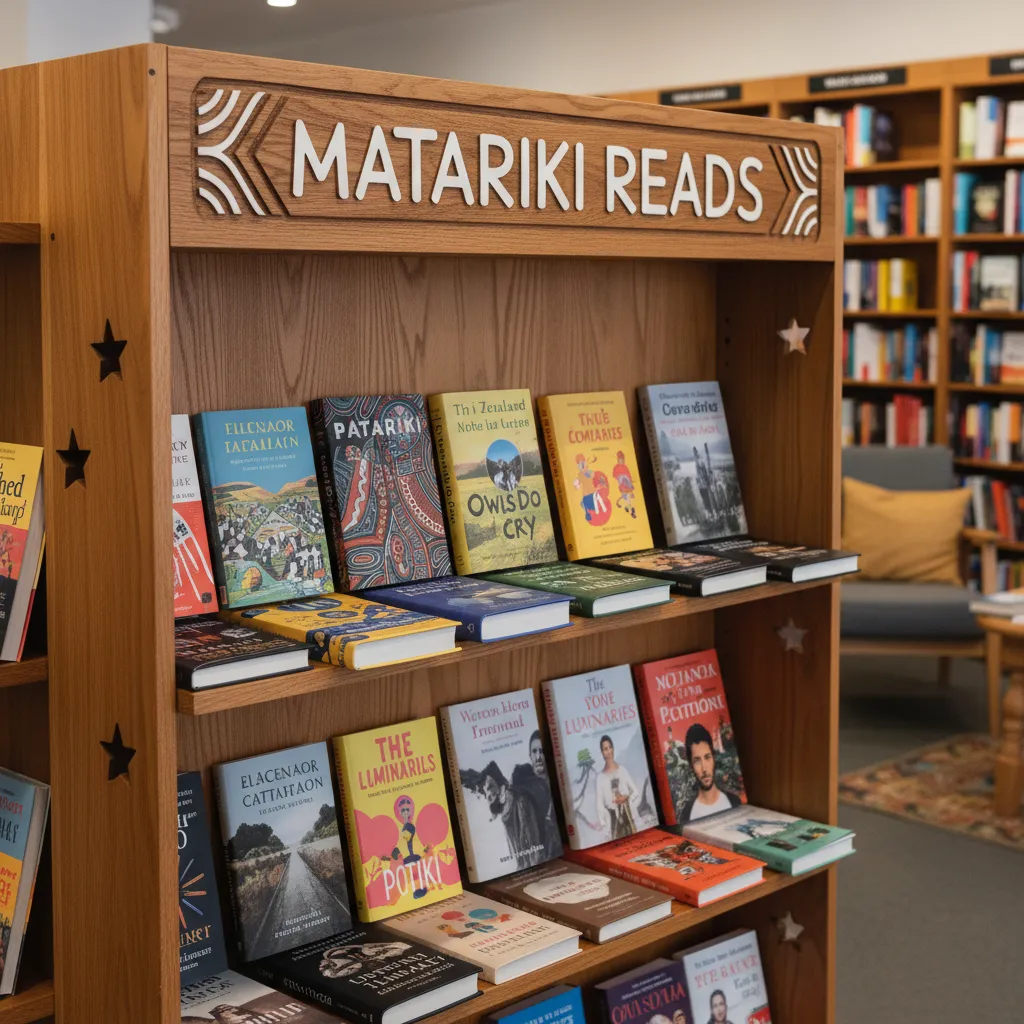
Whitcoulls and Paper Plus: These nationwide chains have significantly improved their “New Zealand” sections in recent years. During May and June, they typically feature dedicated Matariki displays, making it easy to physically browse the books before purchasing.
Wheelers: For schools and libraries, Wheelers is the primary supplier, offering reinforced library bindings and processing services that retail stores cannot match.
Frequently Asked Questions
What is the story of Matariki for kids?
The story of Matariki for kids typically focuses on the star cluster (Pleiades) appearing in the mid-winter sky. It signals the Māori New Year. In many legends, Matariki is the mother surrounded by her daughters (the other stars), and their appearance predicts the harvest and weather for the coming year. It is a time for remembering ancestors and celebrating the present.
How many stars are in Matariki?
Traditionally, many people identified seven stars (similar to the Greek Pleiades). However, in Māori astronomy, specifically according to Dr. Rangi Matamua’s research, there are nine visible stars in the cluster: Matariki, Pōhutukawa, Tupuānuku, Tupuārangi, Waipuna-ā-rangi, Ururangi, Waitī, Waitā, and Hiwa-i-te-rangi.
Why do we celebrate Matariki?
We celebrate Matariki to mark the Māori New Year. It is a time to honor those who have passed away in the previous year (releasing their spirits to become stars), to celebrate the present harvest and food gathering, and to plan for the future. It emphasizes distinct values of remembrance, celebration, and looking forward.
What is a good Matariki activity for children?
Reading Matariki legends is a top activity. Other popular activities include kite making (manu tukutuku), as kites were flown to get closer to the stars, planting trees or vegetables (connecting to Tupuānuku), and sharing a shared meal (hākari) with family to celebrate togetherness.
Who is the mother of the Matariki stars?
In many tribal narratives, the star Matariki is viewed as the mother (whaea) of the other stars in the cluster. She is surrounded by her children, and together they journey across the sky to visit their grandmother, Papatūānuku (Earth Mother).
When is Matariki celebrated?
Matariki is celebrated in mid-winter, usually in June or July. The specific dates change every year because the holiday follows the Māori lunar calendar (Maramataka). It occurs when the star cluster rises in the pre-dawn sky during the correct lunar phase.