
Matariki wishes and goals are centered around Hiwa-i-te-rangi, the star within the Matariki cluster associated with granting aspirations for the coming year. During the Māori New Year, individuals and whānau traditionally send their dreams (manako) to this star, seeking prosperity, vigorous growth, and the realization of hopes after reflecting on the past year’s journey.
As the Matariki star cluster (the Pleiades) rises in the pre-dawn sky of midwinter, it heralds the Māori New Year—a significant time for renewal, remembrance, and planning. While many stars in the cluster relate to food sources and weather, one star stands apart as the guardian of our future aspirations: Hiwa-i-te-rangi. Engaging with Matariki wishes and goals is a profound cultural practice that invites us to look forward with optimism while honoring the path that brought us here.
Who is Hiwa-i-te-rangi?
Hiwa-i-te-rangi is the youngest star in the Matariki cluster and holds a special place in the hearts of those who observe the Māori New Year. Her name translates loosely to “Hiwa in the sky,” where “Hiwa” implies vigorous growth, alertness, and prosperity. Unlike her sisters who are connected to the environment—such as Tupu-ā-nuku (food from the earth) or Waitī (freshwater bodies)—Hiwa-i-te-rangi is connected to the potential of the human spirit.
In Te Ao Māori (the Māori world), it is believed that Hiwa-i-te-rangi is the star to whom you send your wishes. This tradition parallels the Western concept of “wishing upon a star,” yet it is deeply rooted in the cyclical nature of the environment and spiritual connectedness. She represents the promise of a prosperous season and the granting of the heart’s desires.
Understanding Hiwa-i-te-rangi is essential for setting authentic Matariki wishes and goals. She reminds us that while we must tend to our gardens and rivers, we must also tend to our dreams. Without vision and aspiration, a community cannot thrive.

How to Send a Wish to the Star Hiwa
Sending a wish to Hiwa-i-te-rangi is a ritual that combines spiritual intent with physical observation. It is not merely a thought; it is an active engagement with the cosmos. Here is how you can participate in this tradition respectfully and meaningfully.
The Pre-Dawn Ritual
Traditionally, Matariki is observed in the early morning, just before the sun rises. This is when the veil between the physical and spiritual worlds is considered thinnest. To send your wish:
- Wake Early: Rise before dawn during the Matariki period (typically June or July). Find a location with a clear view of the eastern horizon.
- Locate the Cluster: Find Tautoru (Orion’s Belt) and follow the line left to Te Kokota (The Face of Taurus), and continue until you find the cluster of tiny stars that is Matariki. For detailed guidance, you can use an Interactive Night Sky Map Tool: Locate Matariki Now.
- Voice Your Aspiration: It is customary to speak your wishes aloud (karakia or inoi) to Hiwa-i-te-rangi. By vocalizing your goal, you are physically manifesting the vibration of your intent into the world.
- Internalize the Goal: As you look at the star, visualize the outcome of your wish. Whether it is health for a family member, a new job, or harmony in the home, see it as already accomplished.
The Role of Hautapu
In formal ceremonies, a hautapu (sacred offering) is performed. Food is cooked in an earth oven (hāngī), and the steam is released to rise into the sky to feed the stars. As the steam rises, the tohunga (expert/priest) would chant karakia, sending the community’s collective wishes to Hiwa-i-te-rangi. While you may not perform a full hautapu at home, the concept of offering—giving something of value (even your time and focus)—is central to the practice.
Reflecting on the Past Year’s Achievements
Before setting new Matariki wishes and goals, it is imperative to reflect on the past. In the Matariki cluster, the star Pōhutukawa connects us to those who have passed on. However, reflection is not only about grief; it is about acknowledging the journey.
You cannot effectively navigate to a new destination if you do not know where you currently stand. Reflection allows whānau (families) to audit their emotional and physical well-being. Ask yourselves:
- What challenges did we overcome as a family this year?
- What skills or knowledge did we acquire?
- Who supported us, and have we thanked them?
This phase of the New Year is about whakawhetai (gratitude). By acknowledging the abundance you already have, you create a positive foundation for Hiwa-i-te-rangi to plant the seeds of future abundance.

Writing Down Aspirations for the Whānau
Writing is a powerful tool for crystallization. When we move from thinking to speaking, and then to writing, we solidify our commitment to our goals. Writing down aspirations for the whānau transforms individual desires into a collective mission.
Creating a Matariki Puka Moemoeā (Dream Journal)
Dedicate a specific book or journal for your family’s Matariki goals. This book can become a taonga (treasure) handed down through generations, showing the history of your family’s hopes and dreams.
Steps for Whānau Journaling:
- Gather Together: Turn off devices and sit in a circle. Share kai (food) to settle the space.
- Categorize Goals: Divide your goals into categories inspired by the stars:
- Tupu-ā-nuku: Gardening or home renovation goals.
- Waitī/Waitā: Environmental or health goals (water consumption, swimming).
- Hiwa-i-te-rangi: Big dreams, career moves, or education.
- Record and Sign: Have every family member write or draw their contribution. Signing the page acts as a contract of support between family members.

Family Goal Setting Activities for Matariki
To make the concept of Matariki wishes and goals tangible, especially for children (tamariki), engage in activities that physically represent the sending of wishes.
1. Manu Tukutuku (Kite Flying)
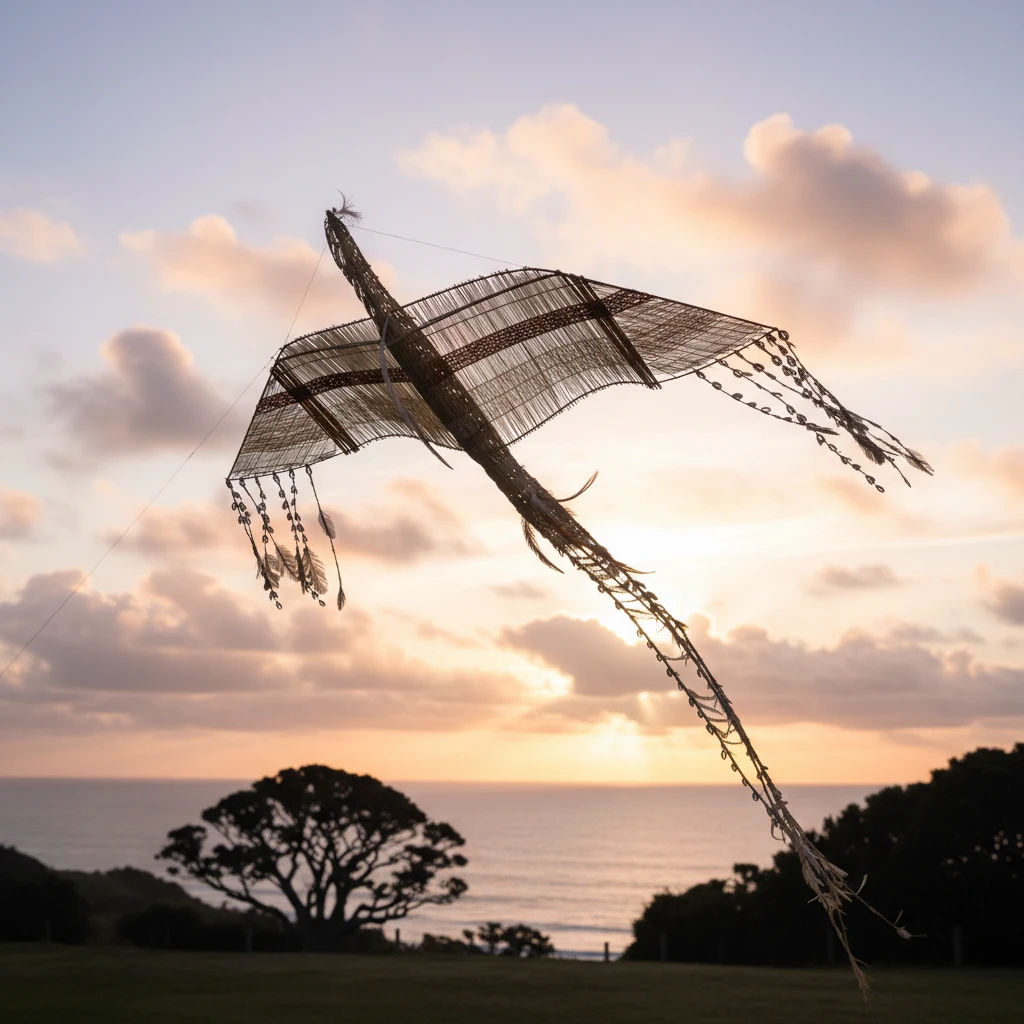
Kites have a deep spiritual significance in Māori culture. They were traditionally viewed as connectors between the heavens and the earth. Flying a kite during Matariki is a beautiful way to physically send your wishes up to Hiwa-i-te-rangi.
The Activity: Build a kite together using natural materials like raupō, flax, or toe toe. Write your wishes on the fabric or paper of the kite. As you fly it, imagine the wind carrying those messages to the stars. This activity promotes whanaungatanga (relationship building) and connects the family to the element of wind (Ururangi).
2. The Wishing Tree (Rākau Moemoeā)
If you cannot see the stars due to weather, bring the symbolism indoors or into your garden. Identify a tree in your garden or create a branch display inside.
The Activity: Cut shapes of stars out of cardboard or colored paper. Write a goal on each star. Hang these stars on your chosen tree. Throughout the year, as goals are achieved, you can remove the stars and replace them with a ribbon of gratitude. This provides a visual reminder of your family’s intentions.
3. Planting for the Future
Aligning with the stars Tupu-ā-nuku and Tupu-ā-rangi, planting trees or a vegetable garden is a practical goal-setting activity. The act of planting a seed represents the wish.
The Activity: Plant a native tree or a winter vegetable patch. As you place the plant in the earth, recite your goal. The growth of the plant throughout the year symbolizes the progress of your goal. It teaches patience and nurturing—key components of achieving any aspiration.
Integrating Matariki Values into Modern Education and Work
The principles of Matariki are not limited to the home; they are highly relevant in educational and corporate sectors. Setting Matariki wishes and goals in these environments fosters a culture of holistic well-being.
In Schools (Kura)
Educators can use Hiwa-i-te-rangi to teach students about resilience and foresight. By incorporating Puanga Teaching Resources & Lesson Plans and Lesson Plans (Primary), teachers can provide students with a richer understanding of this period. Instead of standard academic targets, Matariki goals might focus on character development, such as “How will I show kindness this year?” or “What new skill do I want to master simply for the joy of learning?” This shifts the focus from performance to growth, aligning with the nurturing nature of the holiday.
In the Workplace (Mahi)
For organizations, the Māori New Year is an ideal time for strategic planning that goes beyond the fiscal year. Teams can set “Hiwa” goals that focus on innovation and team culture. It is a time to ask: “What are our aspirations for our community impact?” rather than just “What is our revenue target?” This approach builds Kotahitanga (unity) and ensures that the organization’s goals are sustainable and people-focused.
Conclusion
Matariki is a time of transition, acting as a bridge between the past and the future. By engaging with Hiwa-i-te-rangi, we acknowledge that our future is not something that simply happens to us; it is something we can shape through intention, prayer, and action. Whether you are flying a kite, writing in a journal, or simply standing quietly under the stars, setting Matariki wishes and goals is a powerful way to orient your compass for the year ahead. It brings the whānau together, grounds us in our culture, and reminds us that even in the darkest of winters, there is a light that guides our dreams.
People Also Ask
What is the star for wishes in Matariki?
Hiwa-i-te-rangi is the specific star in the Matariki cluster associated with granting wishes. She represents the youngest child of the cluster and is connected to the promise of a prosperous season and the realization of our heart’s desires.
How do you celebrate Matariki with goals?
You can celebrate by holding a whānau planning session, writing goals in a dedicated journal, flying kites (manu tukutuku) to send wishes to the sky, or planting trees that represent the growth of your aspirations throughout the year.
What do you say for Matariki wishes?
Common greetings include “Mānawatia a Matariki” (Celebrate/Welcome Matariki). When making a wish, you might say a karakia (prayer) or simply voice your specific hope, such as “I wish for health and unity for my family this year.”
Why is Hiwa-i-te-rangi important?
Hiwa-i-te-rangi is crucial because she embodies the future. While other stars govern food and weather, Hiwa governs the human spirit, ambition, and the hope necessary to thrive in the coming year.
Can you make a wish on Matariki?
Yes, making a wish is a central tradition of Matariki. It is customary to send these wishes to the star Hiwa-i-te-rangi during the early morning when the cluster first rises in mid-winter.
What are the 9 stars of Matariki and their meanings?
The stars are: Matariki (health/mother), Pōhutukawa (the dead), Tupu-ā-nuku (food from earth), Tupu-ā-rangi (food from sky), Waitī (freshwater), Waitā (saltwater), Waipunarangi (rain), Ururangi (wind), and Hiwa-i-te-rangi (wishes/aspirations).