
Māori lunar calendar posters, known as Maramataka charts, are essential visual tools that map the moon’s daily phases to guide planting, fishing, and energy management. These posters combine traditional ecological knowledge with contemporary design, serving as vital resources for New Zealand classrooms, workplaces, and homes to align daily activities with the natural rhythms of the environment.
As interest in indigenous knowledge systems grows across Aotearoa, the demand for high-quality Māori lunar calendar posters has surged. These art pieces are not merely decorative; they are functional guides to living in harmony with the environment. Whether you are a teacher looking to integrate Te Ao Māori (the Māori world) into your curriculum, or a homeowner seeking to connect with the natural cycles of the moon, investing in a Maramataka poster is a step towards revitalizing ancient wisdom in modern settings.
What is the Maramataka System?
Before selecting a poster, it is crucial to understand the system it depicts. The Maramataka is the traditional Māori lunar calendar. Unlike the Gregorian calendar, which is based on the sun, the Maramataka relies on the phases of the moon to mark the passage of time. It is a predictive tool used historically for survival and productivity.
A comprehensive Māori lunar calendar poster will typically display the 29.5-day cycle of the moon. Each night has a specific name and carries different energy levels suitable for various activities. For example, high-energy days like Rakaunui (Full Moon) are ideal for action and community events, while low-energy days like Whiro (New Moon) are better suited for reflection and rest.
Review of Top Designed Maramataka Posters
When searching for the perfect Maramataka poster, you will encounter a variety of design aesthetics ranging from strictly utilitarian to fine art prints. The best posters balance legibility with cultural integrity.
1. The Minimalist Modernist
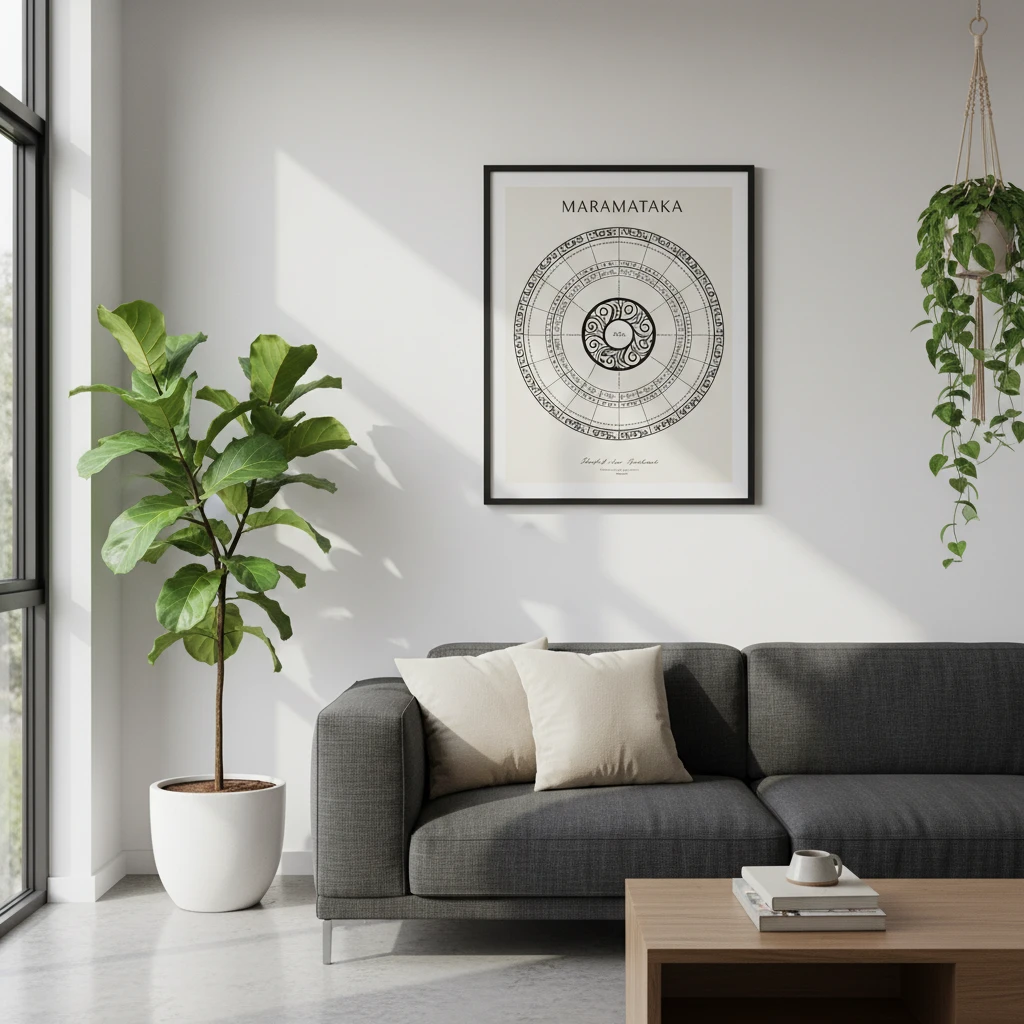
For contemporary homes and offices, minimalist designs are trending. These posters often feature monochrome color palettes—black, white, and earthy ochres. They focus on the geometry of the moon phases, using clean typography to list the names of the nights (e.g., Tirea, Ohoata). These are excellent for those who want the information to blend seamlessly into a modern interior design scheme without overwhelming the space.
2. The Traditional Illustrative Style
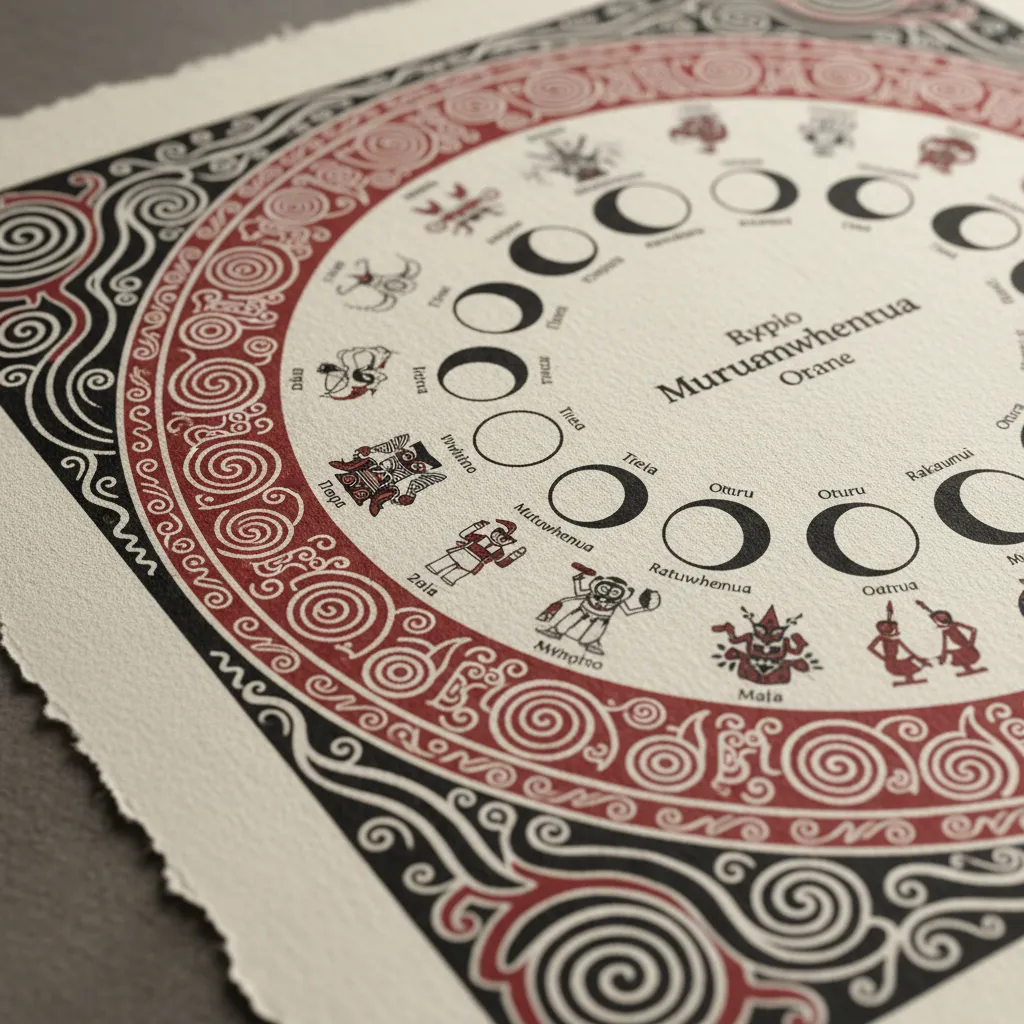
These posters are rich in storytelling. They often include illustrations of the Atua (gods) associated with different phases or depictions of the activities suited for those days, such as fishing nets (hinaki) or planting tools (kō). Artists often use traditional kōwhaiwhai patterns to border the calendar, grounding the piece in whakapapa (genealogy) and history. These are highly recommended for those who want their wall art to serve as a conversation starter about Māori mythology.
3. The Dialect-Specific Charts
It is important to note that Maramataka can vary between iwi (tribes). Some posters are designed specifically to reflect the dialect and observations of specific regions, such as Ngāpuhi or Ngāi Tahu. When reviewing these calendars, check the product description to see if it aligns with the local iwi of your area, which is a respectful way to engage with the mana whenua (people of the land).
Educational Posters for Classrooms
In the education sector, Māori lunar calendar posters are becoming a staple resource. With the recent integration of Matariki as a public holiday and a greater focus on New Zealand history in the curriculum, teachers require visual aids that are engaging and easy for children to understand.
Key Features for Classroom Posters
Educational posters differ from fine art prints in several ways:
- Color Coding: Effective classroom posters often use color coding to indicate energy levels (e.g., green for high energy, blue for fishing, brown for planting).
- Bilingual Text: To support Te Reo Māori learning, these posters usually feature large, clear Māori text with smaller English translations or explanations of the activity.
- Durability: Teachers should look for laminated options or posters printed on heavy-weight cardstock to withstand the classroom environment.
- Interactive Elements: Some of the best educational designs include a movable dial or a magnet system, allowing students to physically change the phase of the moon each day. This kinesthetic learning approach helps solidify the concept of the lunar cycle.
By displaying a Maramataka poster in the classroom, educators provide a daily touchpoint for students to connect with nature. It allows for morning circle discussions: “What is the moon doing today? How might we feel?” This validates Māori knowledge systems alongside Western science.

Where to Buy Authentic Local NZ Art Prints
Commercial intent for this topic is high, but buyers must navigate the market carefully. Supporting authentic Māori artists ensures that the cultural intellectual property is respected and that the revenue goes back to the communities that hold this knowledge.
Local Marae and Cultural Centers
Many local Marae or cultural centers have gift shops that sell resources developed by their own hapū. Buying here is often the most authentic way to purchase a calendar that reflects the specific environmental observations of your region.
Dedicated Māori Art Retailers
Online platforms like Toi Tangata, Kura Gallery, or Poi Princess specialize in Māori resources. These retailers curate their collections to ensure high-quality, culturally appropriate designs. When browsing, look for artist bios to understand the provenance of the work.
Mainstream Art Print Shops
Larger NZ art retailers like Endemicworld or Simply New Zealand also stock Maramataka prints. While convenient, it is advisable to filter by “NZ Artist” or “Māori Art” to ensure you are buying local. Avoid generic mass-produced prints from international drop-shipping sites, as these often contain inaccuracies in the moon phase names or cultural motifs.
Digital Apps vs. Paper Calendars: Which is Best?
In the digital age, many might wonder if a physical poster is necessary when apps are available. Both have distinct advantages, and they often work best when used together.
| Feature | Paper Posters / Art Prints | Digital Apps |
|---|---|---|
| Visual Impact | High. Serves as a constant visual reminder and decor piece. | Low. Hidden on a device until opened. |
| Accuracy | Static. Shows the cycle but requires user to track the current day. | Dynamic. Automatically updates to the exact current phase. |
| Education | Excellent for group learning and classroom displays. | Better for individual, deep-dive learning. |
| Cost | One-time purchase ($30 – $150 NZD). | Often free or low subscription cost. |
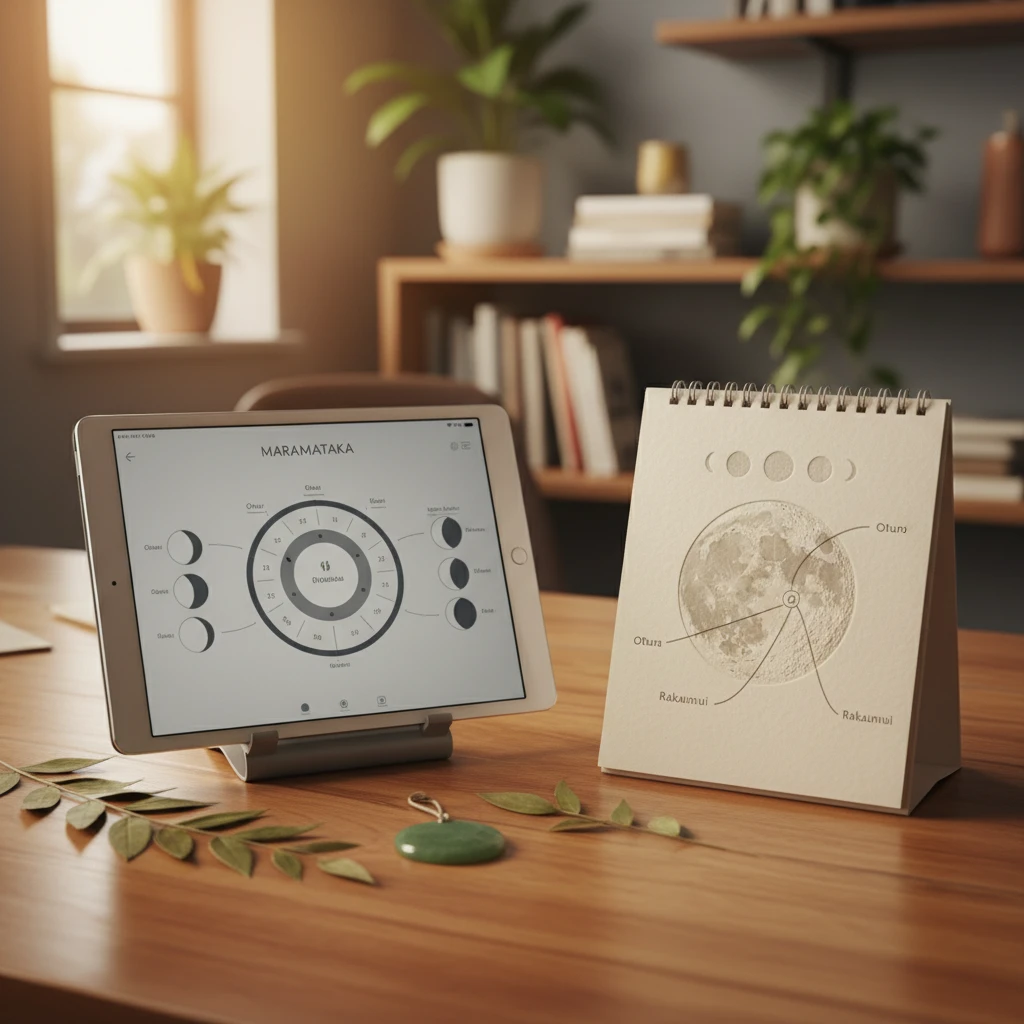
While an app can tell you exactly what phase the moon is in right now, a Māori lunar calendar poster provides the “big picture.” It allows you to visualize the flow of the month ahead. For planning purposes—such as scheduling a hui (meeting) or a planting day—a wall chart is often superior because it allows for collaborative viewing. The ideal setup is to have a beautiful Maramataka poster on the wall for reference and atmosphere, supported by an app for precise daily notifications.
How to Use Your Poster Effectively
Buying the poster is only the first step. To truly benefit from the Maramataka, you must integrate it into your daily routine. Here is a step-by-step guide to getting the most value out of your purchase:
1. Position it Prominently
Do not hide the poster in a hallway. Place it in a high-traffic area like the kitchen, the staff room, or the main whiteboard area in a classroom. The kitchen is particularly relevant as the Maramataka is closely tied to food gathering and gardening.
2. Observe and Validate
Use the poster as a hypothesis tool. If the poster says it is Tamatea (a period often associated with unpredictable weather and winds), look outside. Is it windy? If the poster says it is a high-energy day, assess your own energy levels. This practice, known as titiro (observation), helps you internalize the knowledge rather than just reading it.
3. Plan According to the Phases
Start small. Try to align one activity a week with the moon. For example, avoid scheduling intense brainstorming meetings on Whiro (New Moon) days, which are better for introspection. Instead, aim for Rakaunui (Full Moon) for high-output tasks. Over time, this rhythm becomes second nature.
In conclusion, Māori lunar calendar posters are powerful tools for cultural connection and environmental awareness. Whether you choose a high-end art print for your home or a durable laminated chart for a school, the key is to engage with the knowledge it represents. By purchasing from authentic NZ artists and actively using the calendar to guide your days, you participate in the living tradition of the Maramataka.
People Also Ask
What are the main phases of the Māori lunar calendar?
The main phases generally include Whiro (New Moon), Tamatea (unpredictable energy), Rakaunui (Full Moon), and Tangaroa (productive for fishing). However, there are roughly 30 distinct phases, each with specific characteristics related to planting and fishing.
Why do Maramataka calendars vary between iwi?
Maramataka are based on environmental observations. Since the environment (tides, flora, fauna) varies across New Zealand’s geography, different tribes (iwi) developed calendars that accurately reflected their specific local ecosystem.
Can I use a Maramataka poster for gardening?
Yes, gardening is one of the primary uses. The calendar indicates the best days for planting (to ensure good root growth or abundant foliage) and harvesting, based on the moon’s gravitational pull on water in the soil and plants.
Is the Māori lunar calendar the same every year?
No. The lunar year is shorter than the solar year (approx. 354 days). To align with the seasons, the Maramataka system adjusts, sometimes adding an intercalary month, so the dates of phases shift relative to the Gregorian calendar each year.
Where is the best place to hang a Maramataka poster?
The kitchen or a communal living area is best. Since the calendar dictates food gathering and planting times, having it near where food is prepared or where the family gathers ensures it is checked daily.
Are there Maramataka posters suitable for children?
Yes, there are many posters designed specifically for children. These often feature bright illustrations, simplified explanations of the phases, and interactive elements like magnets to help kids track the moon cycle.