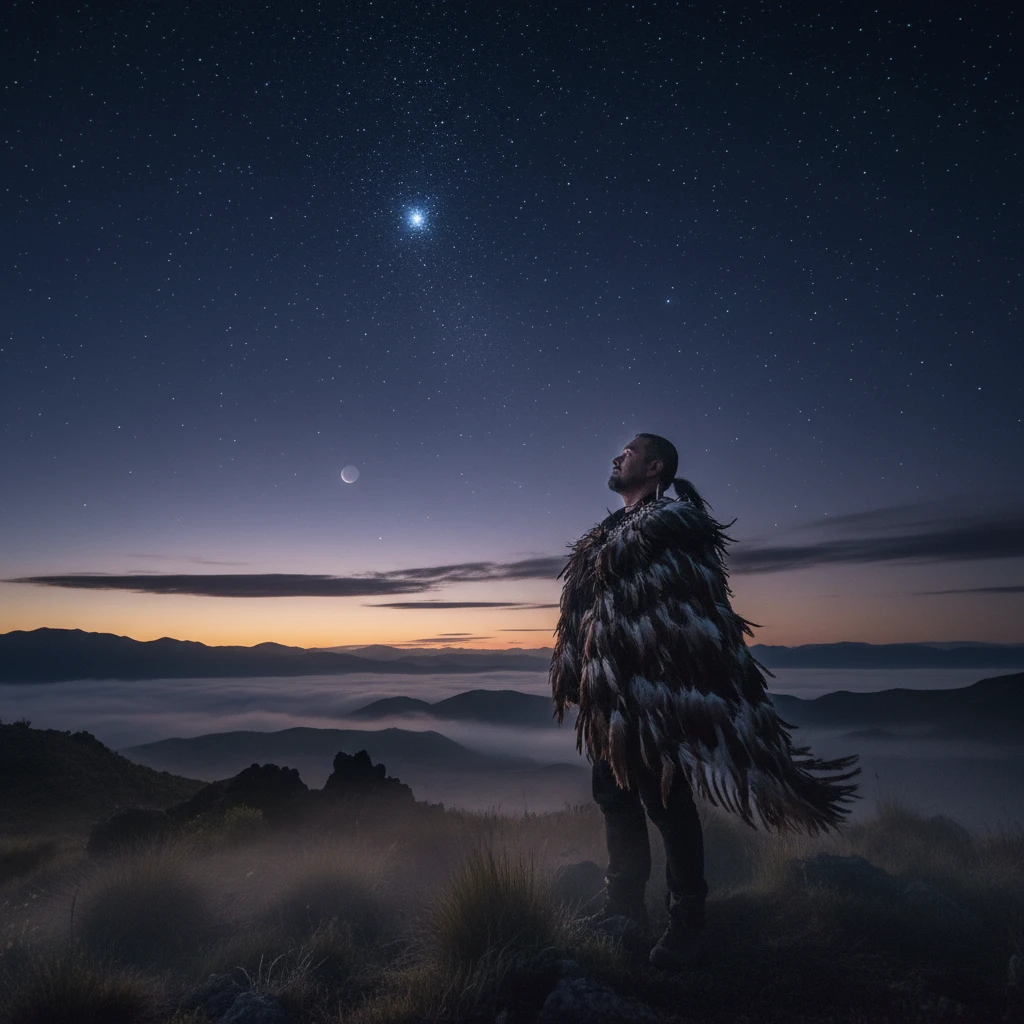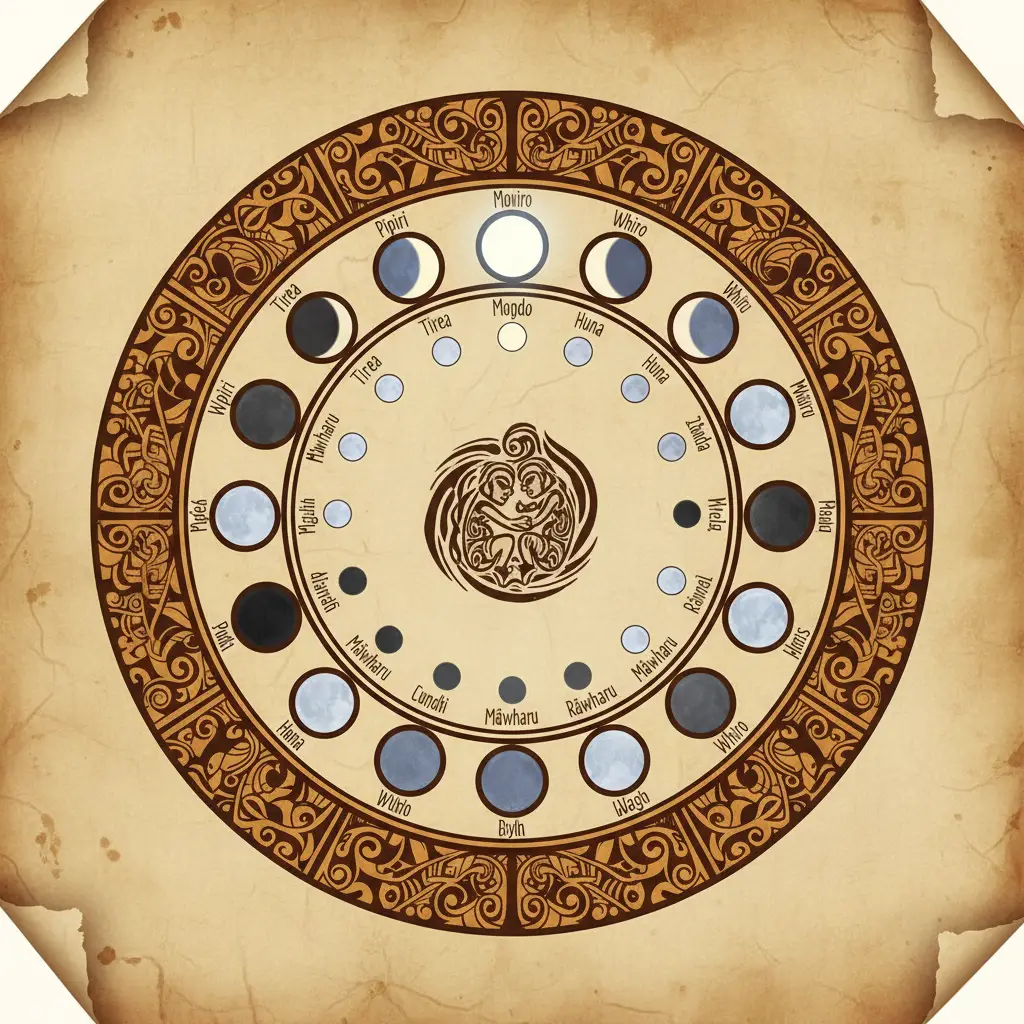
Applying Maramataka to daily life involves aligning your activities, energy levels, and decision-making with the phases of the Māori lunar calendar. By observing the moon’s influence on the environment, individuals can optimize productivity during high-energy phases and prioritize rest and reflection during low-energy periods, restoring balance to their overall well-being.
In a modern world governed by the rigid structure of the Gregorian calendar and the relentless 9-to-5 work week, many individuals feel a profound sense of disconnection. We often push for maximum productivity when our bodies crave rest, or we find ourselves restless during periods designated for relaxation. This misalignment is not merely a personal failing; it is a symptom of living out of sync with the natural environment. For centuries, Māori ancestors navigated the Pacific and flourished in Aotearoa (New Zealand) by living in strict accordance with the Maramataka—the Māori lunar calendar.
Living by the stars is not a mystic or esoteric practice reserved for history; it is a sophisticated, environmental science based on observation. By applying Maramataka to daily life, we can reclaim control over our time, enhance our mental resilience, and foster a deeper connection to the world around us. This guide explores the practical application of these ancient rhythms in a contemporary context.
Understanding the Maramataka: More Than a Calendar
To effectively apply Maramataka to daily life, one must first understand that it is a predictive system based on hundreds of years of empirical observation. Unlike the solar Gregorian calendar, which is mathematically calculated to fit 365 days, the Maramataka follows the cycles of the moon, usually consisting of 29.5 days per month. Each phase of the moon brings a distinct energy that influences the tides, the planting of crops, fishing conditions, and human energy levels.
The cycle is generally divided into phases of low energy, high energy, and volatile energy. Recognizing these shifts allows us to stop swimming against the current. Instead of forcing high-intensity output on low-energy days, the Maramataka teaches us to reserve that time for planning and reflection.
The Science of Observation
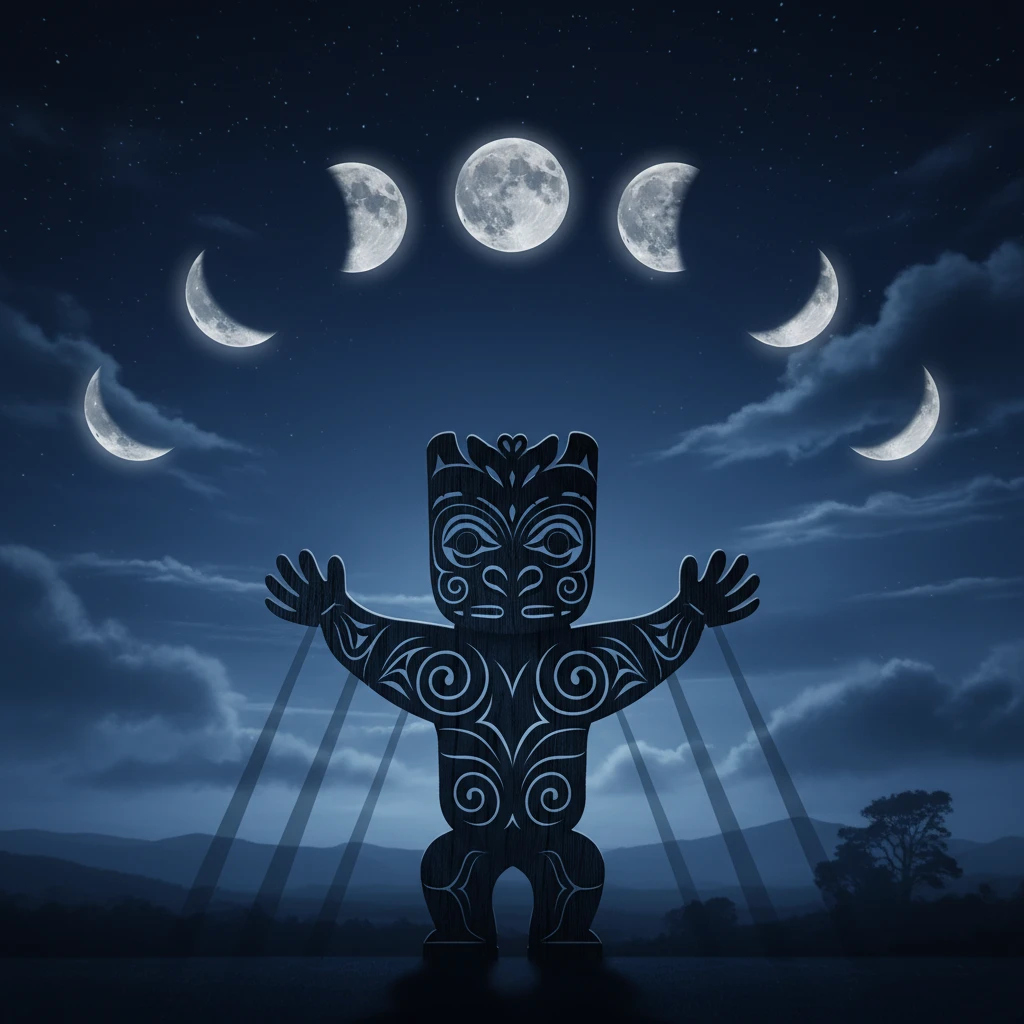
Ancestral knowledge keepers (tohunga) observed how the environment reacted to the moon. They noted that during the Rākaunui (Full Moon), sap in trees rose, making it a poor time for cutting timber but an excellent time for planting. Conversely, during the Whiro (New Moon), the environment was quiet, darker, and conducive to rest. Applying this to modern life means observing our own bio-rhythms. Do you feel lethargic? Check the moon phase. You may find you are in a low-energy phase like Korekore, validating your need for rest rather than frustration.
Using the Lunar Cycle for Mental Health
Mental health struggles often stem from the pressure to be consistently “on.” The Maramataka offers a framework for self-compassion by validating the cyclical nature of human emotion and energy. It normalizes the lows just as much as it celebrates the highs.
Navigating Low Energy Days
The phases known as Korekore are traditionally times when food gathering was scarce or difficult. In a modern context, these are days when mental acuity may be lower, and motivation dips. Instead of viewing this as procrastination or laziness, applying Maramataka reframes this as a necessary biological reset.
Strategies for Korekore days include:
- Reduced Social Interaction: Permission to decline social events to recharge.
- Reflective Journaling: engaging in introspection rather than outward expression.
- Low-Impact Movement: Choosing stretching or walking over high-intensity interval training.
Managing Volatile Energy (Tamatea)
The Tamatea phases are known for unpredictable weather and winds. Translated to human behavior, these days often bring anxiety, short tempers, or sudden changes in mood. Awareness is the antidote here. If you know you are entering a Tamatea phase, you can proactively practice mindfulness, avoid making life-altering decisions, and exercise patience with colleagues and family members.

Workplace Productivity and the Moon
Corporate culture typically demands linear productivity. However, integrating the Maramataka into the workplace can lead to higher efficiency and reduced burnout. By matching tasks to the energy of the day, teams can achieve “flow state” more frequently.
Optimizing the Tangaroa Phases
The Tangaroa phases are associated with productivity, fruitfulness, and action. These are the days to schedule:
- Strategic Planning Days: The mind is sharpest and most expansive.
- Client Pitches and Presentations: Charisma and communication skills are naturally heightened.
- Team Workshops: Collaboration flows more easily.
By front-loading the month’s most demanding tasks into the Tangaroa and Rākaunui phases, businesses can capitalize on natural momentum.
Utilization of Whiro (New Moon)
Whiro is the lowest energy point, yet it is crucial for the cycle. It is the time for “reset.” In a workplace applying Maramataka, Whiro is ideal for:
- Administrative Tasks: Clearing emails, filing, and organizing.
- Review: Analyzing the previous month’s data.
- Goal Setting: Setting intentions for the upcoming cycle.

Restoring Balance (Hauora) Through Natural Rhythms
Hauora refers to a Māori philosophy of health unique to New Zealand, comprising physical, mental, social, and spiritual well-being. The Maramataka acts as a binding agent for these four pillars (Te Whare Tapa Whā). Living by the stars forces a reconnection with the physical environment (Taiao), which is often neglected in urban settings.
Spiritual and Physical Alignment
To apply Maramataka is to observe the night sky. This simple act of looking up grounds an individual in the cosmos, reducing the significance of trivial daily stressors. Physically, it encourages eating seasonally and aligning sleep patterns with light availability. For example, during the bright nights of Rākaunui, one might naturally sleep less and have more energy for evening activities, whereas the dark nights of Whiro invite earlier bedtimes and longer restoration.
A Practical Guide to Key Phases
To start applying Maramataka to daily life immediately, familiarize yourself with these four primary phase groupings. Note that naming conventions can vary between iwi (tribes), but the general energy remains consistent.
1. Whiro (The New Moon)
The Vibe: Low energy, darkness, new beginnings.
Best For: Planning, meditation, solitude, setting intentions.
Avoid: Heavy physical exertion, launching major public campaigns, high-stakes social gatherings.
2. Tamatea (The Unpredictable)
The Vibe: Volatile, windy, changing currents.
Best For: Caution, adaptability, handling small tasks that don’t require deep focus.
Avoid: signing binding contracts, impulsive reactions, risky physical activities.
3. Rākaunui (The Full Moon)
The Vibe: High energy, abundance, illumination.
Best For: Community events, harvesting results, high-intensity workouts, celebration.
Avoid: Seclusion (unless necessary), wasting energy on low-value tasks.
4. Tangaroa (The Productive Days)
The Vibe: Flow, connection, fruitfulness.
Best For: Fishing (literal and metaphorical), closing deals, creative output, networking.
Avoid: Procrastination. This is the time to act.

Case Studies: Businesses Using Maramataka
The application of indigenous knowledge in the corporate sector is growing within New Zealand. Several organizations have moved beyond tokenism to structurally integrate the Maramataka.
Healthy Families NZ
Teams within the Healthy Families initiative have experimented with Maramataka to dictate their workflow. By identifying ‘high energy’ weeks for community engagement and ‘low energy’ weeks for internal reporting, staff reported higher job satisfaction and better work-life balance. They stopped scheduling major community huis (gatherings) during Korekore phases, resulting in better attendance and engagement when events were moved to Rākaunui or Tangaroa phases.
Indigenous Consultancies
Various Māori-owned consultancies now operate on a “Maramataka Leave” basis rather than standard sick leave. If a staff member is feeling the effects of a low-energy phase, they are encouraged to work from home or take time off to restore Hauora, knowing they will make up the output during a high-energy phase. This results in a trust-based model that values output over hours spent at a desk.
Conclusion
Applying Maramataka to daily life is a journey of re-indigenizing our relationship with time. It moves us away from the industrial focus on constant output and toward a cyclical, sustainable approach to living. Whether you are seeking to improve your mental health, optimize your business productivity, or simply reconnect with the environment, the moon offers a guide that has been tested for generations. Start small: look at the moon tonight, identify the phase, and ask yourself if your current energy matches what the stars are telling you.
People Also Ask
What are the main phases of the Maramataka?
While there are approximately 30 phases, they are generally grouped into key periods: Whiro (New Moon/Low Energy), Tamatea (Unpredictable Energy), Rākaunui (Full Moon/High Energy), and Tangaroa (Productive Energy). There are also the Korekore phases, which are low-energy periods best for reflection.
Is Maramataka the same as astrology?
No. While both involve celestial bodies, astrology is often interpretative regarding personality and destiny. Maramataka is an environmental science based on centuries of empirical observation regarding how the moon affects tides, flora, fauna, and human energy levels for survival and productivity.
How do I start using Maramataka as a beginner?
Start by observing the moon’s shape each night and journaling your energy levels the next day. Compare your feelings to a Maramataka chart. Begin by simply identifying the New Moon (Whiro) and Full Moon (Rākaunui) and adjusting your rest and activity levels accordingly.
What is the best moon phase for productivity?
The Tangaroa phases are widely considered the best for productivity. These days usually follow the Full Moon and are associated with high energy, clarity, and successful outcomes in fishing, planting, and modern work tasks.
What does Whiro mean in Maramataka?
Whiro marks the New Moon. It represents the lowest energy point of the cycle. Traditionally associated with darkness, it is a time for rest, planning, and staying close to home, rather than engaging in high-risk activities or intense labor.
How does the moon affect human energy?
Just as the moon’s gravitational pull affects the tides, Maramataka suggests it affects the water within living beings. High energy phases (Full Moon) often correlate with higher physical stamina and alertness, while waning or dark phases correlate with introspection and lower physical drive.