
Matariki food traditions center on the Māori New Year harvest, known as ‘ngā kai o Matariki.’ These customs involve gathering produce connected to specific stars, performing the hautapu ceremony to feed the stars with steam, and hosting a hākari (feast) to strengthen community bonds and honor the abundance of the land and sky.
Matariki, the Māori New Year, is a time of renewal, remembrance, and deep connection to the environment. While the appearance of the Pleiades star cluster signals a shift in the celestial calendar, the festival is grounded firmly in the earth through Matariki food traditions. For centuries, the visibility of these stars has dictated the timing of the harvest, the preservation of crops, and the communal feasts that bind whānau (family) and hapū (sub-tribes) together. Understanding the role of kai (food) in Matariki offers a profound insight into Māori worldview, where astronomy and gastronomy are inextricably linked.
The Significance of the Harvest Festival
In traditional Māori society, Matariki appears in the mid-winter sky, coinciding with the end of the harvest season. This timing is not coincidental; it represents the culmination of a year’s hard work and the preparation for the colder months ahead. The phrase “Ngā kai a Matariki, nāna i ao ake ki runga” (The foods of Matariki, scooped up by her) refers to the abundance of food stored away for winter.
The harvest festival aspect of Matariki is critical for survival. Historically, once the stars rose, the kumara (sweet potato) had been dug up, dried, and stored in pātaka (storehouses). Fish had been caught and preserved, and birds had been snared and preserved in their own fat. The appearance of the cluster was a sign that the pātaka were full, and the people could relax, feast, and focus on learning, arts, and genealogy (whakapapa) during the long winter nights.
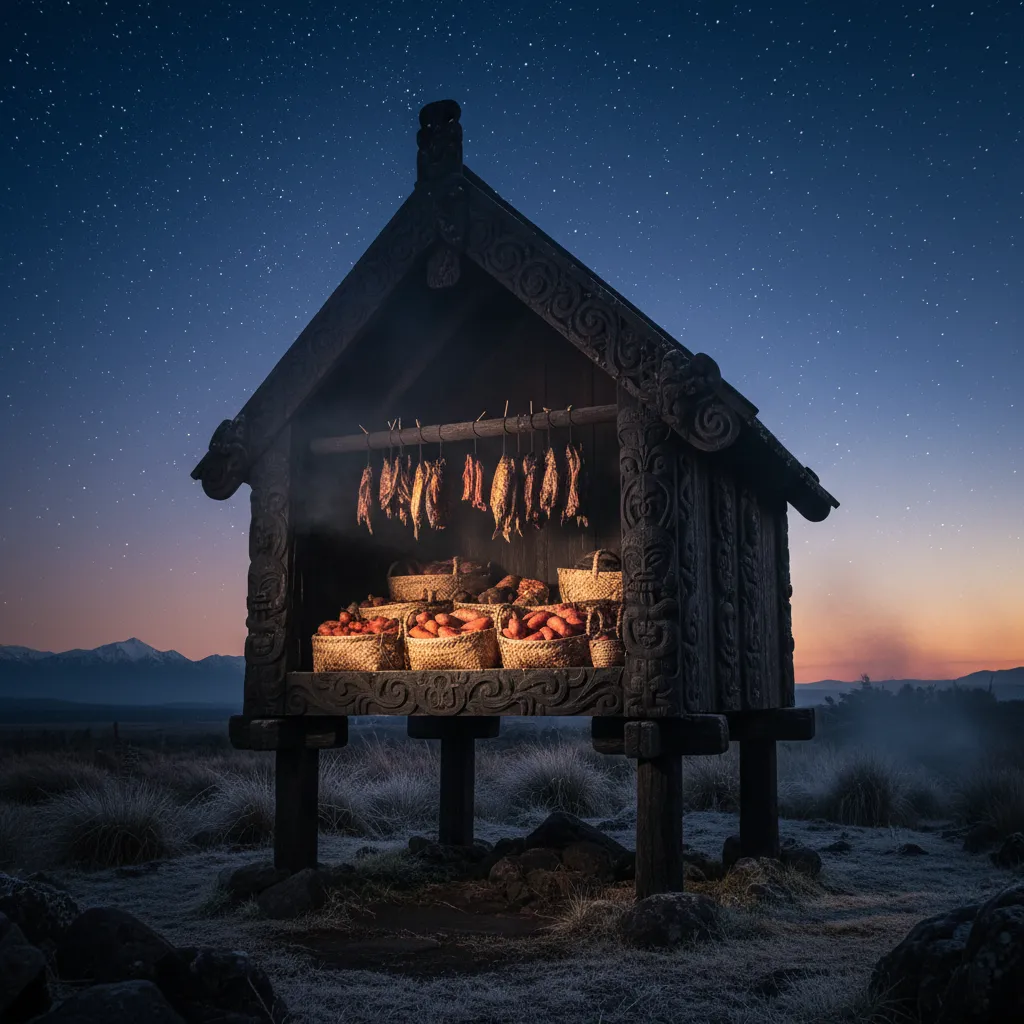
This seasonal transition marks a physical and spiritual shift. It is a time to give thanks to Papatūānuku (Earth Mother) for her bounty. The harvest is not merely about caloric intake; it is a manifestation of the partnership between the people and the land. If the stars of Matariki appeared bright and clear, it was predicted that the coming planting season would be warm and productive. If they were hazy, it foretold a cold winter and potential scarcity, prompting stricter rationing of the stored harvest.
Foods Associated with the Stars (Tupuānuku & Tupuārangi)
Within the Matariki cluster, there are nine distinct stars recognized in many iwi narratives, and specific stars are directly responsible for different domains of food. Understanding Matariki food traditions requires recognizing these celestial guardians. The two most prominent stars regarding the harvest are Tupuānuku and Tupuārangi.
What is the role of Tupuānuku?
Tupuānuku is the star connected to food that is grown in the ground. The name itself breaks down to ‘tupu’ (to grow) and ‘nuku’ (short for Papatūānuku, the earth). This star oversees the cultivation of root vegetables which were staples of the traditional Māori diet.
Key foods associated with Tupuānuku include:
- Kūmara (Sweet Potato): The most prized crop, requiring sophisticated agricultural techniques to grow in New Zealand’s cooler climate.
- Uwhi (Yam): A hardy root vegetable often reserved for chiefs or special occasions.
- Taro: Another tropical import adapted to local conditions.
When Māori look to Tupuānuku during Matariki, they are assessing the success of the past harvest and asking for fertility in the soil for the next planting cycle, which begins as the weather warms.
What is the role of Tupuārangi?
Tupuārangi is the star linked to food sources found in the sky and the trees. ‘Rangi’ refers to Ranginui (the Sky Father). This star is the guardian of the forests and everything that lives within the canopy.
Key foods associated with Tupuārangi include:
- Manu (Birds): Traditionally, this included the kererū (wood pigeon), tūī, and weka. The preservation of birds (huahua) was a major activity leading up to Matariki.
- Berries and Fruits: Native fruits like hinau, tawa, and karaka berries were gathered from the forest floor or canopy.
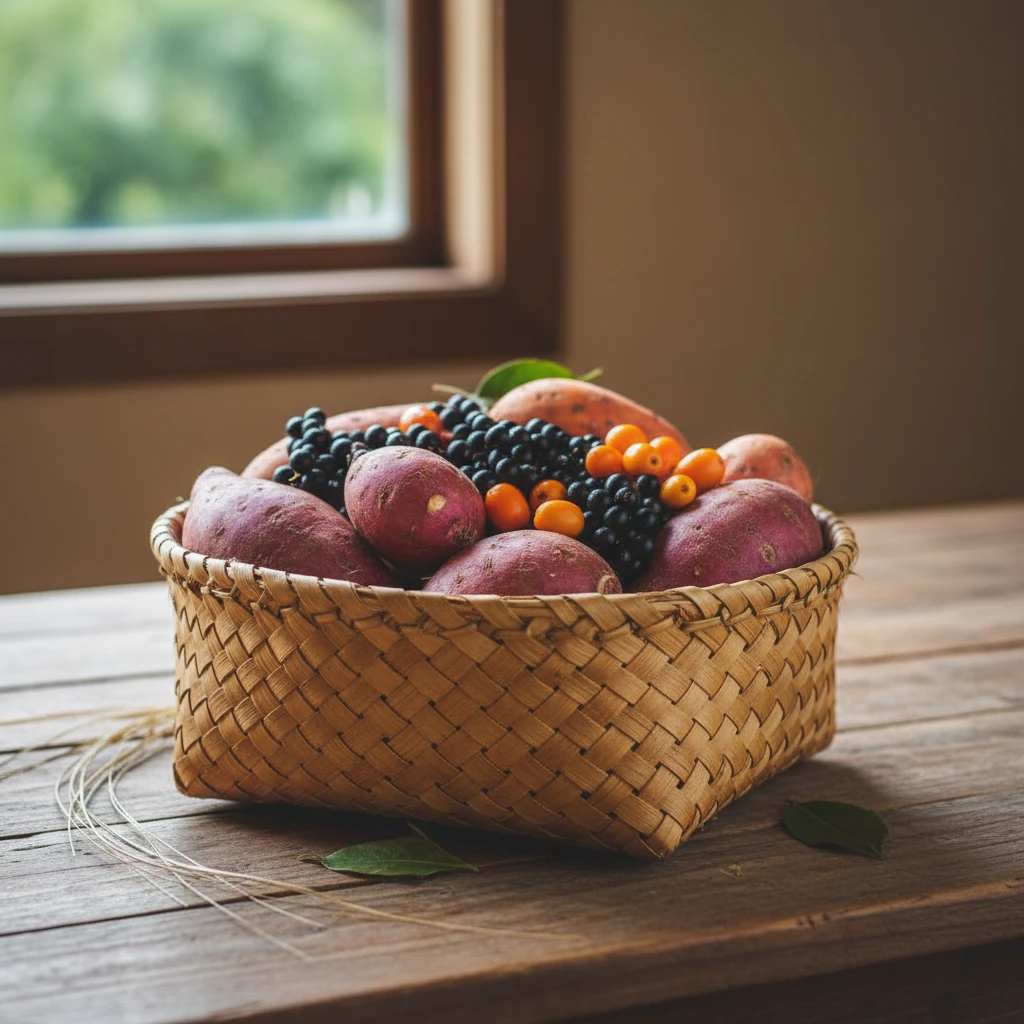
While Tupuānuku and Tupuārangi are central to the harvest, two other stars, Waitī and Waitā, govern freshwater and saltwater food sources respectively (such as eels, crayfish, and snapper), completing the full spectrum of the diet. A balanced Matariki feast aims to include ingredients from all these domains.
The Hautapu: Feeding the Stars
One of the most sacred Matariki food traditions is the Hautapu ceremony. The word hautapu translates to “sacred wind” or “sacred offering.” This ritual involves cooking food to feed the stars themselves.
Traditionally, before the sun rises on the morning of the new moon following the rising of Matariki, an earth oven known as an umu kohukohu whetū (steaming earth oven of the stars) is prepared. Specific foods representing each of the four star domains (earth, sky, fresh water, salt water) are placed upon hot stones.
Unlike a standard hāngī meant for eating, the food in the hautapu is cooked until steam builds up significantly. The covering is then removed, releasing the steam and the aroma of the food into the sky. It is believed that the stars are revitalized by this essence. As the steam rises, tohunga (experts) chant karakia (prayers) acknowledging the names of the stars and the bounty provided.
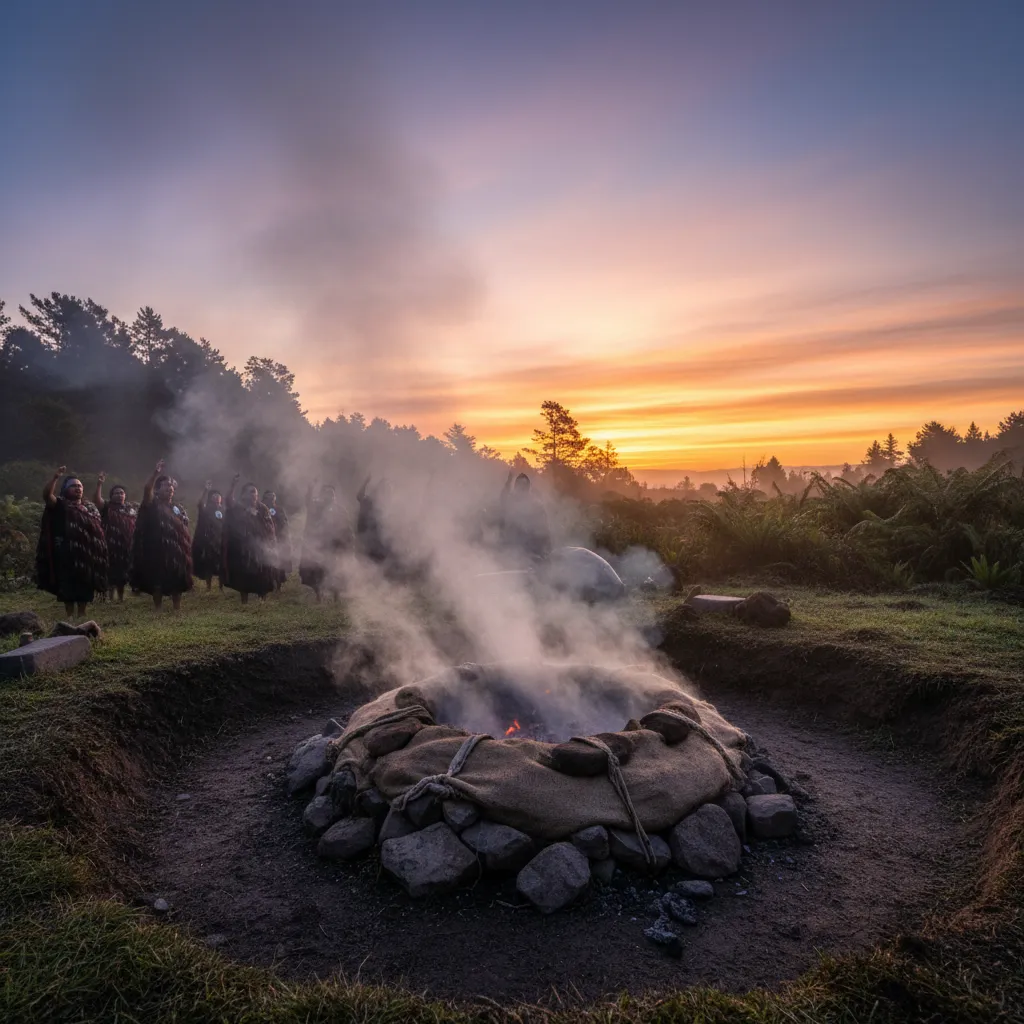
This ceremony is a direct reciprocation: the environment feeds the people, and the people, in turn, offer the essence of that food back to the cosmos. It reinforces the cyclical nature of life and the Māori belief in the interconnectedness of all things.
The Concept of Hākari (The Feast)
Following the solemnity of the ceremonial offerings comes the celebration. The Hākari is a commemorative feast that serves as the social highlight of Matariki. In Māori custom, a hākari is never just a meal; it is a statement of mana (prestige), manaakitanga (hospitality), and economic capacity.
The Structure of the Feast
Historically, Matariki hākari were legendary in scale. Nineteenth-century accounts describe massive stages or scaffolds built to display food vertically, sometimes reaching 30 meters high. These structures were laden with dried fish, baskets of kumara, preserved birds, and gourds of water. The vertical display allowed everyone to see the abundance of the host tribe.
Today, while the scaffolding towers are rare, the principle remains: abundance is key. A Matariki feast must be plentiful. It is a time when the “best of the best” stored food is brought out. It signals to guests that the tribe has survived the harvest well and has enough surplus to share generously.
Sharing Food as a Community Builder
The act of sharing food during Matariki transcends nutritional necessity. It is a powerful tool for community cohesion. In the cold of winter, gathering around hot food creates warmth in both a literal and metaphorical sense.
Manaakitanga is the core value here. It involves nurturing relationships, looking after visitors, and caring for the community. During Matariki, sharing kai allows for:
- Conflict Resolution: Breaking bread together is a traditional method for smoothing over past grievances before the new year begins.
- Knowledge Transfer: As whānau gather to prepare and eat food, elders share stories, legends, and agricultural knowledge with the younger generation.
- Remembrance: Food is often prepared in honor of those who have passed away in the previous year (hunginga mate), keeping their memory alive within the family circle.

Modern Matariki Menu Ideas
As Matariki becomes a recognized public holiday and a moment of national identity in New Zealand, Matariki food traditions are evolving. Contemporary chefs and home cooks are finding ways to honor the stars using modern ingredients and techniques while respecting the four domains.
A modern Matariki menu might include:
- Tupuānuku (Earth): Roasted kumara salad with horopito glaze, or a slow-cooked pork belly with apple and watercress.
- Tupuārangi (Sky): Roast chicken or duck (substituting for traditional forest birds) served with pikopiko (fern fronds) or berry compote.
- Waitī (Fresh Water): Smoked eel pâté or watercress and potato soup.
- Waitā (Salt Water): Raw fish salad (ika mata) or steamed green-lipped mussels.
- Rewa (Bread): Fry bread (parāoa parai) to mop up the juices, representing the comfort of the home fires.
Whether celebrated with a traditional hāngī in the ground or a potluck dinner in a city apartment, the essence remains the same: gratitude for the harvest, remembrance of the ancestors, and the celebration of life through the shared enjoyment of kai.
What traditional foods are eaten during Matariki?
Traditional Matariki foods include kūmara (sweet potato), taro, uwhi (yams), preserved birds (like kererū or muttonbird), eels (tuna), and fish. The menu is designed to represent the four stars connected to food domains: earth, sky, fresh water, and salt water.
Why is food cooked in an earth oven for Matariki?
Food is cooked in an earth oven (hāngī) specifically for the Hautapu ceremony to generate steam. The steam rising from the ‘umu kohukohu whetū’ carries the essence and aroma of the food up to the stars, acting as a sacrificial offering to feed and revitalize them.
What is the difference between Hākari and a regular meal?
A Hākari is a ceremonial feast that signifies mana and hospitality. Unlike a regular meal, it is characterized by an abundance of food, often the best stored reserves, and serves a social function to unite the community, honor guests, and display the tribe’s prosperity.
How does Matariki influence Māori agriculture?
Matariki acts as an agricultural calendar. The brightness and clarity of the stars when they rise predict the weather for the coming growing season. This determines when to plant crops like kūmara to ensure a successful harvest.
Can I celebrate Matariki food traditions without a Hāngī?
Yes. You can honor Matariki food traditions by preparing a meal that incorporates ingredients from the four domains: earth (root vegetables), sky (poultry/fruits), fresh water (trout/cress), and salt water (seafood). The intention of sharing and gratitude is more important than the cooking method.
What does ‘Ngā kai a Matariki’ mean?
The phrase translates to “The foods of Matariki.” It refers to the harvested food stored for winter and the concept that the star cluster is responsible for bringing forth the bounty of the new year.