
Traditional Maori food preservation encompasses ancient techniques used by indigenous New Zealanders to store seasonal surplus for winter survival. Key methods include whakamaroke (drying), kōpiro (fermentation), huahua (preserving in fat), and the use of engineered storage pits known as rua kūmara to maintain stable temperatures for root vegetables.
For the Māori people of pre-European Aotearoa (New Zealand), food preservation was not merely a culinary preference; it was a fundamental survival necessity. Without the convenience of modern refrigeration or canning, the ability to store the abundance of summer (raumati) and autumn (ngahuru) was the only defense against the scarcity of the cold winter months (hōtoke). These practices, rooted in a deep understanding of the environment and biology, demonstrate sophisticated engineering and chemical knowledge.
What is Whakamaroke (Drying) in Maori Culture?
Whakamaroke, or the process of drying food, was perhaps the most ubiquitous form of traditional Maori food preservation. By removing moisture from food sources, Māori were able to inhibit the growth of bacteria and mold, rendering perishable goods shelf-stable for months. This method relied heavily on the natural elements: the heat of the sun (rā) and the drying power of the wind (hau).
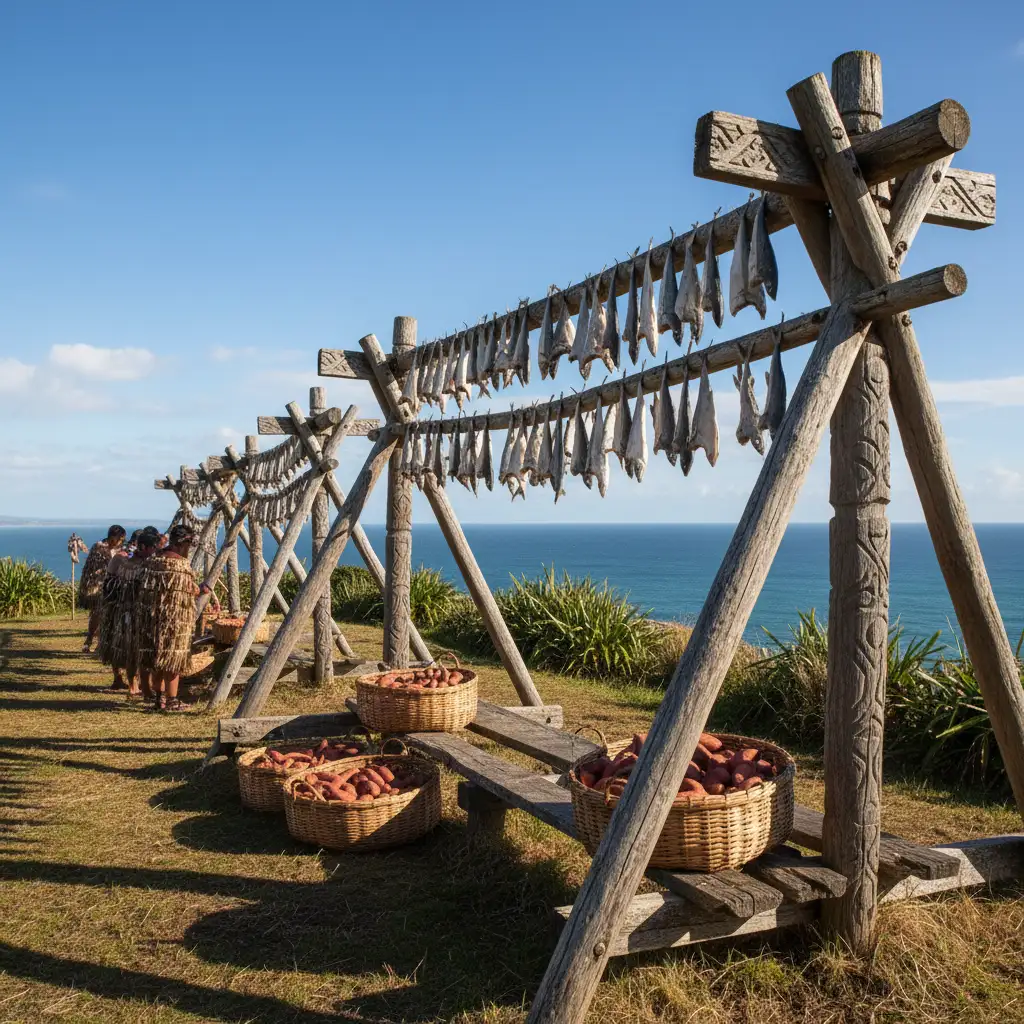
Drying Ika (Fish) and Kaimoana (Shellfish)
With Aotearoa’s extensive coastline, kaimoana was a staple protein. However, catch rates fluctuated with tides and seasons. To preserve fish like snapper (tāmure) or shark (mangō), the catch was cleaned, gutted, and often split open to maximize surface area. These were then hung on large wooden racks known as whata.
The location of the whata was critical. They were positioned in areas with high airflow but protected from rain. Shellfish, particularly pipi and tuatua, were threaded onto strips of flax (harakeke) and hung to dry until they became hard and chewy. Before consumption, these dried shellfish were typically soaked in water and steamed to reconstitute their texture.
Making Kao (Dried Kūmara)
The kūmara (sweet potato) is a tropical plant that struggled in the cooler New Zealand climate. Preserving the harvest was a matter of life and death. While most kūmara were stored in pits, the smaller tubers were often turned into kao. This involved cooking the kūmara in a hāngī (earth oven) and then drying them in the sun on elevated platforms. The resulting product was sweet, chewy, and lightweight, making it an ideal travel food for warriors and travelers.
How did Maori use Fermentation (Kōpiro)?
Fermentation is a biological process that converts sugars into acids, gases, or alcohol. For the Māori, controlled fermentation was a way to extend the life of food and unlock nutrients that might otherwise be indigestible. This method, often referred to as kōpiro, produced foods with strong, distinct flavors that are still culturally significant today.
Kānga Pīrau (Rotten Corn)
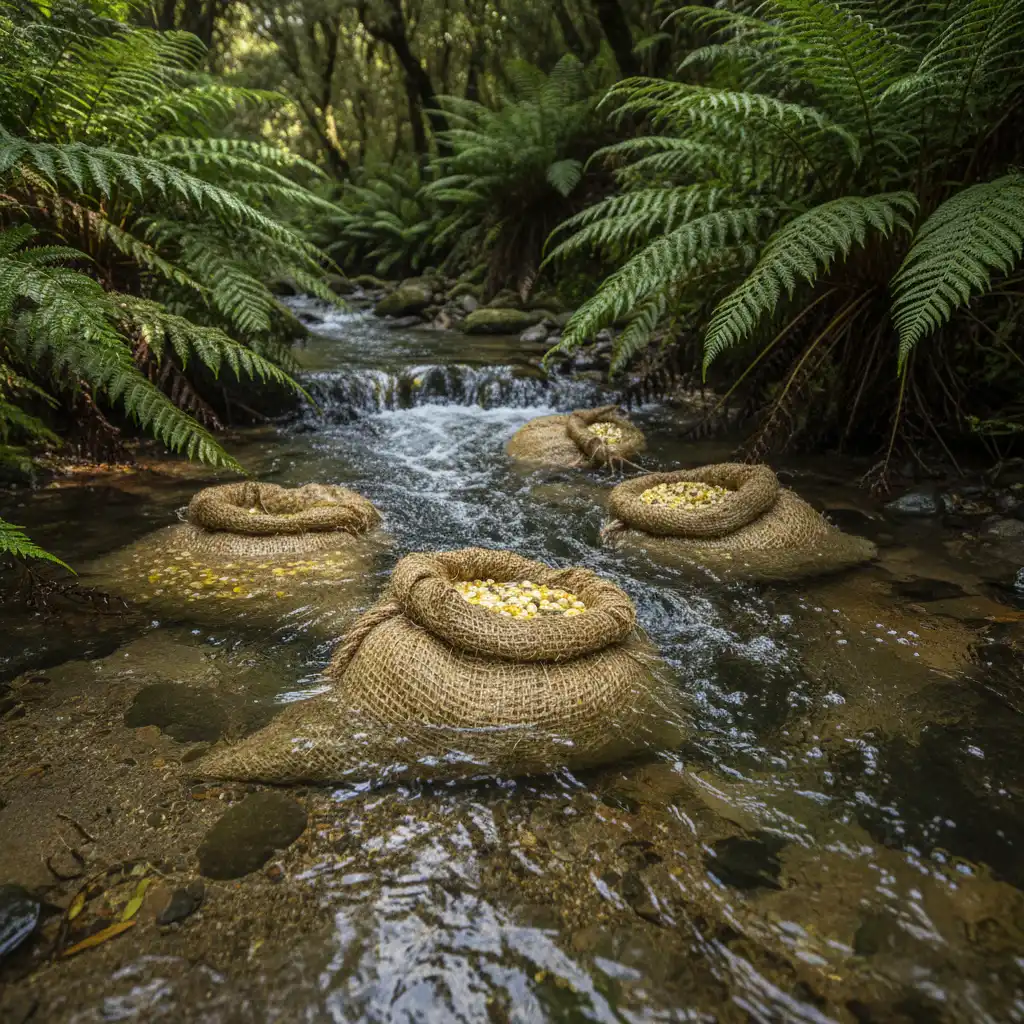
Following the introduction of maize (corn) by early European arrivals, Māori quickly adapted their traditional fermentation techniques to this new crop. Kānga pīrau, or “rotten corn,” is a delicacy prepared by submerging whole cobs of corn (husks on) in sacks within a clean, running stream. The corn is left to steep for several weeks to months.
During this time, the kernels undergo fermentation. The running water prevents the buildup of harmful bacteria while allowing the corn to soften and the starches to break down. Once retrieved, the kernels are scraped off the cob and mashed into a porridge-like consistency. The smell is pungent—often compared to strong cheese—but the taste is rich and savory. This dish remains a staple at many marae (meeting grounds) today.
Kōura (Freshwater Crayfish)
A similar technique was applied to kōura, the freshwater crayfish found in New Zealand’s lakes and streams. The crayfish were submerged in swampy water or mud to ferment. This process softened the shell, making the meat easier to extract and giving it a distinct, tangy flavor profile that was highly prized.
What are Rua Kūmara (Storage Pits)?
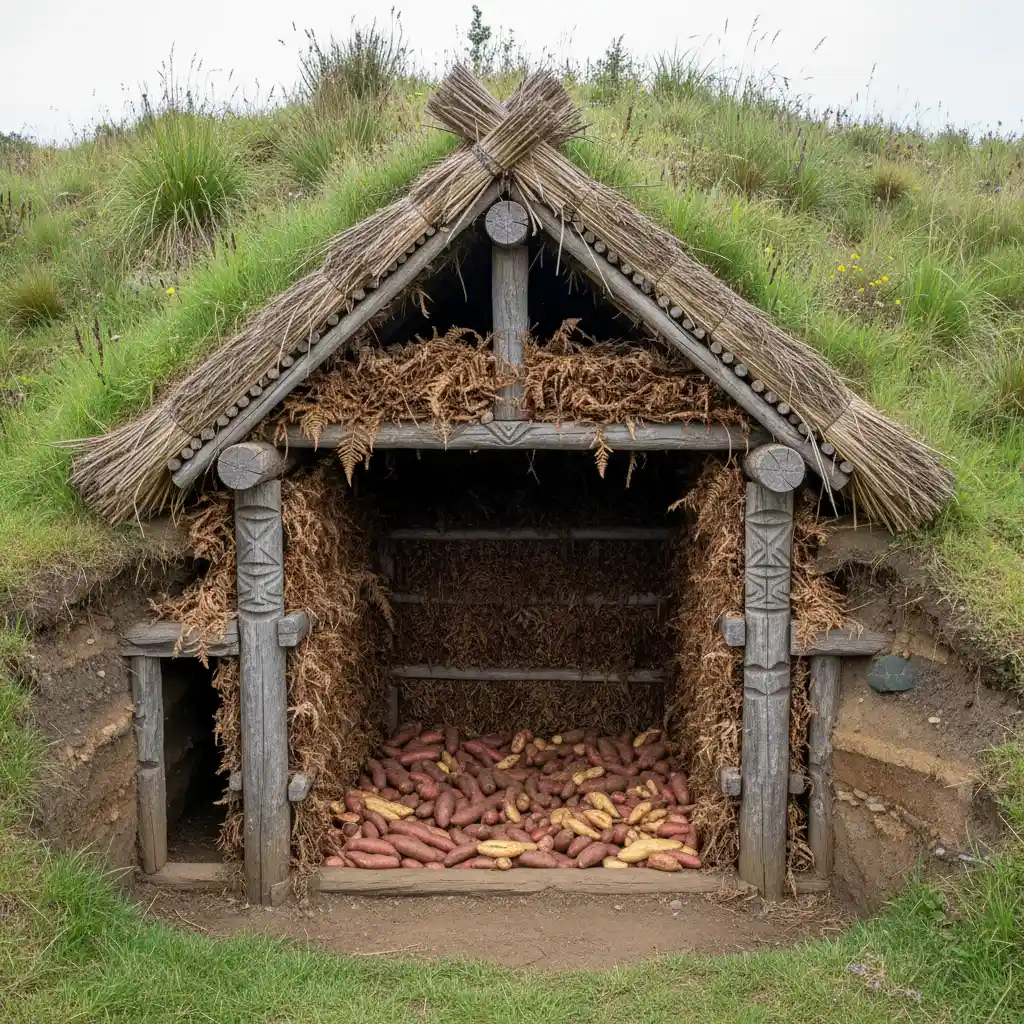
The cultivation of kūmara required sophisticated storage solutions because the tuber is highly susceptible to rot in cold, damp conditions. The solution was the rua kūmara, an underground storage pit designed to maintain a constant temperature and humidity level, effectively acting as a root cellar.
Engineering and Construction
Rua kūmara were typically dug into dry, sloping ground to ensure adequate drainage. The engineering involved was precise:
- Insulation: The pits were often lined with fern fronds and timber to insulate the tubers from the cold earth.
- Roofs: A roof structure, usually A-framed and covered with earth and thatch, was built over the pit. This kept rain out while maintaining a stable internal temperature.
- Pest Control: The sealed nature of the pits helped protect the valuable crop from kiore (Polynesian rats).
Archaeological evidence of these pits is common around pā (fortified village) sites, particularly on volcanic cones where the drainage was naturally superior. The ability to store kūmara allowed Māori populations to grow and sustain larger settlements.
How to Preserve Birds in Fat (Huahua)
One of the most prestigious forms of traditional Maori food preservation was huahua—the preservation of game birds in their own fat. This method is similar to the French technique of confit and was reserved for highly prized birds like the kererū (wood pigeon) and tītī (muttonbird).
The Process of Huahua
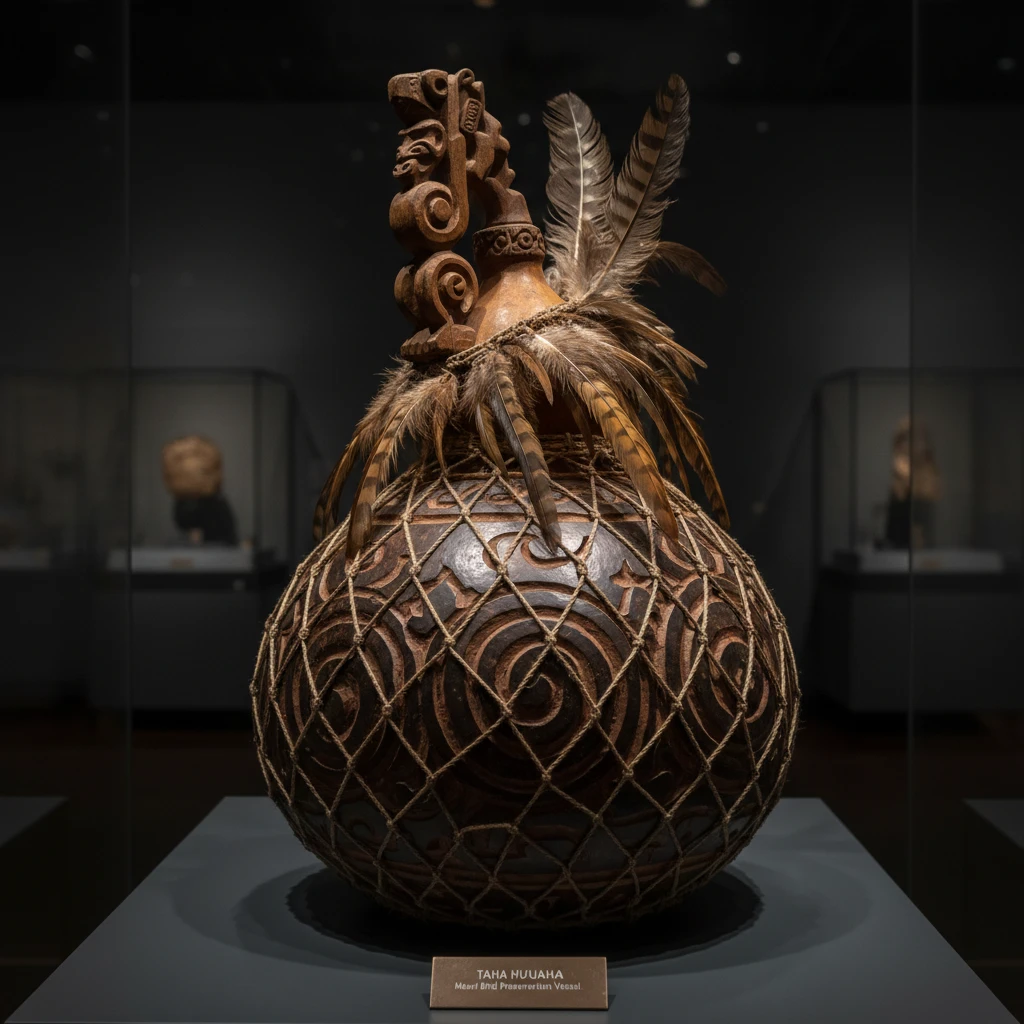
The process began with the de-boning of the birds, which was a meticulous task. The meat was then cooked in its own fat. Once cooked, the birds were packed tightly into vessels.
The primary vessel used was the taha huahua, made from a hollowed-out hue (gourd). To ensure a hermetic seal, melted fat was poured over the packed birds, filling every crevice. As the fat cooled and hardened, it created an airtight barrier that prevented oxidation and bacterial growth. The top of the gourd was often fitted with a carved wooden mouthpiece and decorated with feathers, signifying the value of the contents.
Food preserved this way could last for a year or more. Huahua was often served at important feasts to honor distinguished guests, showcasing the wealth and mana (prestige) of the host tribe.
The Role of the Pātaka (Storehouse)
While root vegetables went underground, other preserved foods needed to be kept high and dry. This was the function of the pātaka, an elevated storehouse raised on wooden piles.
The pātaka was often the most intricately carved building in a village, second only to the wharenui (meeting house). Its elevation served two main purposes:
- Ventilation: Being raised allowed air to circulate freely around the stored goods, preventing mold in dried fish and meats.
- Protection: The smooth, often inverted piles made it difficult for rats to climb up and access the food stores.
The pātaka symbolized the community’s wealth. A full pātaka meant the tribe could host visitors lavishly (manaakitanga) and survive the winter comfortably. Conversely, an empty pātaka was a sign of vulnerability.
Modern Adaptations of Traditional Methods
In modern New Zealand, traditional Maori food preservation methods have evolved but have not disappeared. They have found a place in both cultural tourism and contemporary culinary practices.
Educational and Cultural Tourism
For the education and tourism sector, these preservation techniques offer a tangible connection to the past. Visitors to marae or cultural centers often witness the unearthing of a hāngī or see the drying racks in use. Understanding the effort required to preserve food historically helps contextualize the deep spiritual connection Māori have with the land and the concept of kaitiakitanga (guardianship).
Contemporary Culinary Fusion
Modern Māori chefs are revitalizing these techniques:
- Dried Kumara: Now appears as gourmet chips or dust in fine dining.
- Fermentation: There is a resurgence of interest in kānga pīrau (fermented corn) and fermented rēwena bread, highlighting indigenous probiotics.
- Manuka Smoking: While smoking was traditionally a byproduct of drying over fires, it is now a deliberate flavor-enhancing technique used for fish and meats.
While we now rely on freezers and vacuum packing, the principles remain the same: managing moisture, temperature, and oxygen to extend the life of our food. Traditional Maori food preservation stands as a testament to indigenous innovation and resilience.
People Also Ask
How did Maori store kumara for winter?
Maori stored kumara in semi-subterranean pits called rua kūmara. These pits were engineered with drainage, insulation, and roofs to maintain a stable, cool temperature and humidity, preventing the tubers from rotting or drying out.
What is the Maori method of preserving birds?
The method is called huahua. Birds were de-boned, cooked in their own fat, and then packed into gourds (taha). Melted fat was poured over them to create an airtight seal, preserving the meat for months or even years.
What is rotten corn in Maori culture?
Rotten corn, or kānga pīrau, is a fermented corn dish. Whole corn cobs are submerged in a running stream for several weeks to ferment. The kernels are then mashed into a porridge that has a strong aroma and a savory, acquired taste.
Did Maori use salt for preservation?
Traditionally, Maori did not use salt for preservation in the way Europeans did. Instead, they relied on drying (dehydration), fermentation, and sealing food in fat to prevent spoilage.
What is a Pataka used for?
A pātaka is an elevated storehouse raised on posts. It was used to store dried fish, meat, and other valuable items, keeping them safe from ground pests like rats and ensuring good airflow to prevent mold.
Why was food preservation important to Maori?
Food preservation was essential for survival during the winter months when fresh food was scarce. It also allowed tribes to accumulate surplus food for feasting, hospitality (manaakitanga), and trade.


