
Matariki 2024 in NZ marks the Māori New Year, officially observed as a public holiday on Friday, June 28, 2024. It is a significant cultural event determined by the lunar calendar (Maramataka), centering on three major principles: remembering those who have passed, celebrating the present with community feasting, and setting intentions for the future.
Introduction: Matariki as a Living Tradition
In Aotearoa New Zealand, the rise of the star cluster Matariki (known elsewhere as the Pleiades) signals a profound shift in the seasonal and cultural rhythm of the nation. While ancient in origin, Matariki 2024 represents a modern evolution of this indigenous knowledge, solidifying its place as a cornerstone of New Zealand’s national identity. It is no longer merely a celestial event observed by a few; it is a statutory public holiday and a nationwide period of reflection, distinct to this land.
For centuries, Māori ancestors relied on the appearance of these stars to navigate the oceans and guide their harvest. Today, the resurgence of Matariki invites all New Zealanders—Māori and non-Māori alike—to align themselves with the environment and the Maramataka (Māori lunar calendar). This guide is designed to move beyond surface-level observation, offering a pathway to authentic participation that respects the depth of mātauranga Māori (Māori knowledge).
When is Matariki 2024? Key Dates and Visibility
Unlike the Gregorian New Year which is fixed on January 1st, Matariki follows a stellar and lunar cycle. The dates shift every year based on the Maramataka.
The Official Date
Matariki 2024 is officially observed on Friday, June 28, 2024.
This date was chosen by the Matariki Advisory Committee to align closest with the Tangaroa moon phase, a time of productivity and abundance. The period of Matariki typically lasts for several weeks, beginning when the cluster is first visible in the pre-dawn sky in late June or early July and concluding when the new moon appears.

The Shift from Observation to Active Participation
In recent years, there has been a palpable shift in how Aotearoa engages with this holiday. Initially, for many outside of te ao Māori (the Māori world), Matariki was a spectacle—something to watch, such as light shows or fireworks. However, the ethos of Matariki 2024 encourages active participation.
Authenticity in this context means engaging with the core values of the season rather than commercializing it. It involves a transition from passive consumption to active contribution. This includes learning the names of the stars, understanding their environmental domains, and applying those lessons to our daily lives through conservation, family connection, and mental preparation for the year ahead.
Te Iwa o Matariki: The Nine Stars and Their Significance
To participate authentically, one must understand who—or what—is being celebrated. While many cultures see seven stars (the Seven Sisters), Māori tradition recognizes nine distinct stars in the cluster, each governing a specific domain of the environment and human life.
1. Matariki (The Mother)
The central star of the cluster. Matariki signifies reflection, hope, and the health and well-being of people. When this star is bright, it is a sign of good fortune and health for the coming year. It brings the cluster together, symbolizing the gathering of people.
2. Pōhutukawa
This star is connected to those who have passed away. It is the star that carries our dead across the year. During Matariki, we look to Pōhutukawa to remember and mourn those lost since the last rising, releasing their spirits to become stars in the sky.
3. Tupuānuku
“Tupu” means to grow, and “nuku” refers to Papatūānuku (the Earth). This star governs food that is grown in the soil. A bright Tupuānuku signals a bountiful harvest of kūmara and other root vegetables. Authentic participation here involves gardening or composting.
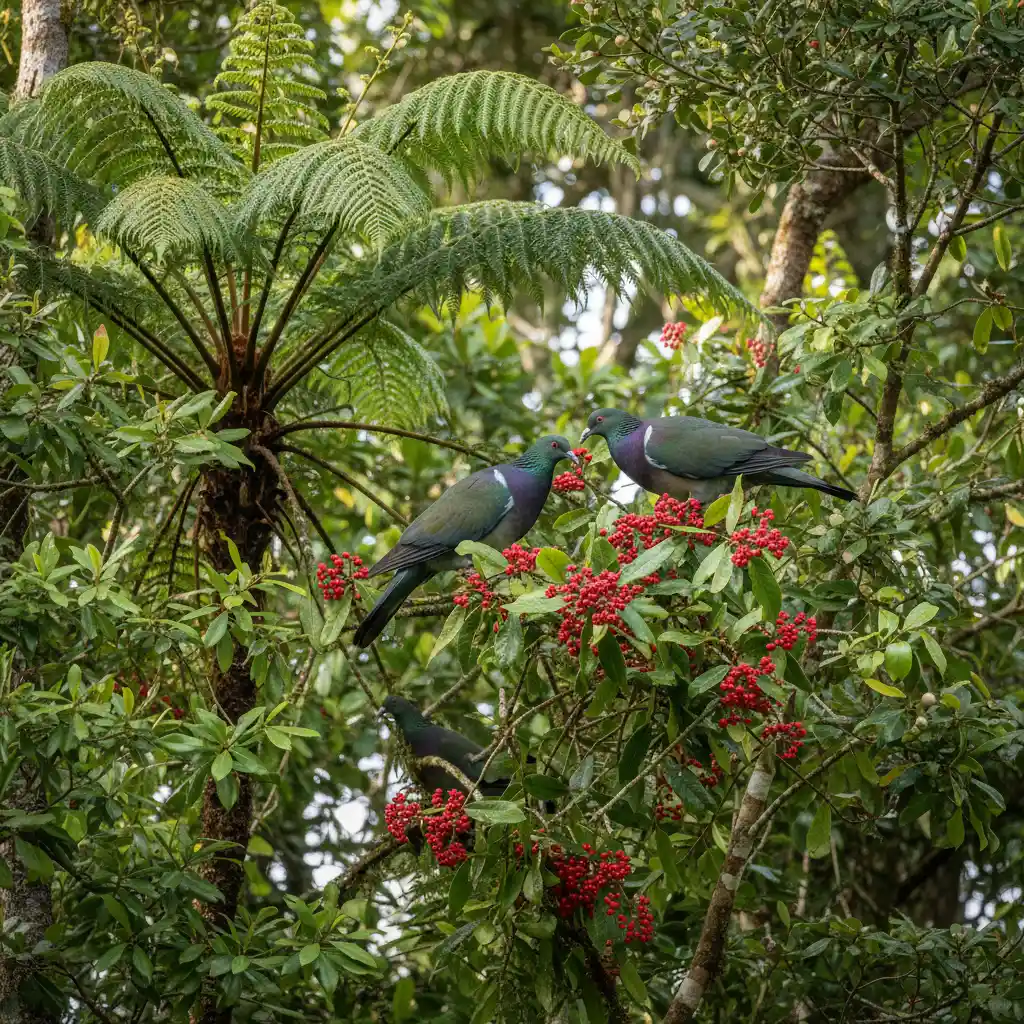
4. Tupuārangi
Connected to food sources from the sky. This includes birds, berries, and fruits found in the tops of trees. It reminds us of the biodiversity of our forests and the need to protect our native canopy.
5. Waipuna-ā-rangi
This star is linked to the rain. Its name translates to “water that pools in the sky.” It dictates the rainfall for the coming year, which is crucial for the hydrological cycle that sustains life. It reminds us to be mindful of our water usage.
6. Waitī
Waitī watches over fresh water environments—lakes, rivers, and streams—and the food sources within them, such as eels (tuna) and trout. It signals the health of our waterways.
7. Waitā
Waitā is the twin of Waitī but looks over the ocean (salt water). It represents the vast food sources of the sea (kaimoana). This star encourages us to respect the ocean and practice sustainable fishing.
8. Ururangi
Ururangi is connected to the winds. The nature of the winds for the year determines the climate’s stability. It is a reminder of the changing nature of life and the need for resilience.
9. Hiwa-i-te-rangi
The wishing star. This is the star to which you send your dreams and desires for the year ahead. Similar to “wishing upon a star,” Hiwa-i-te-rangi helps us set goals and aspirations.
How to Celebrate Authentically: The Three Pillars
Matariki celebration is structured around three major pillars: Remembrance, Celebrating the Present, and Looking to the Future. Here is how you can enact these in 2024.
Remembrance: Honoring the Past
Take time to acknowledge those who have passed away in the previous year. This is not necessarily a morbid activity, but a celebration of their lives. You might display photos of loved ones, share stories about them with younger generations, or visit their resting places. This connects you directly to the energy of the star Pōhutukawa.
Celebrating the Present: Kai and Kōrero
Matariki occurs in mid-winter, a time when traditional food stores were full. Consequently, feasting is central to the holiday. Organize a shared meal (potluck or hākari) with friends and whānau (family). The focus should be on whanaungatanga (building relationships) and manaakitanga (hospitality). Try to include foods represented by the stars: kumara (earth), fish (salt water), and chicken or birds (sky).

Looking to the Future: Setting Intentions
Use the energy of Hiwa-i-te-rangi to plan. This is the Māori New Year’s resolution phase. However, unlike the often solitary resolutions of January 1st, Matariki goals are often discussed collectively. What do we want for our family? What do we want for our community? Write these wishes down or speak them into the night sky.
Understanding the Hautapu Ceremony
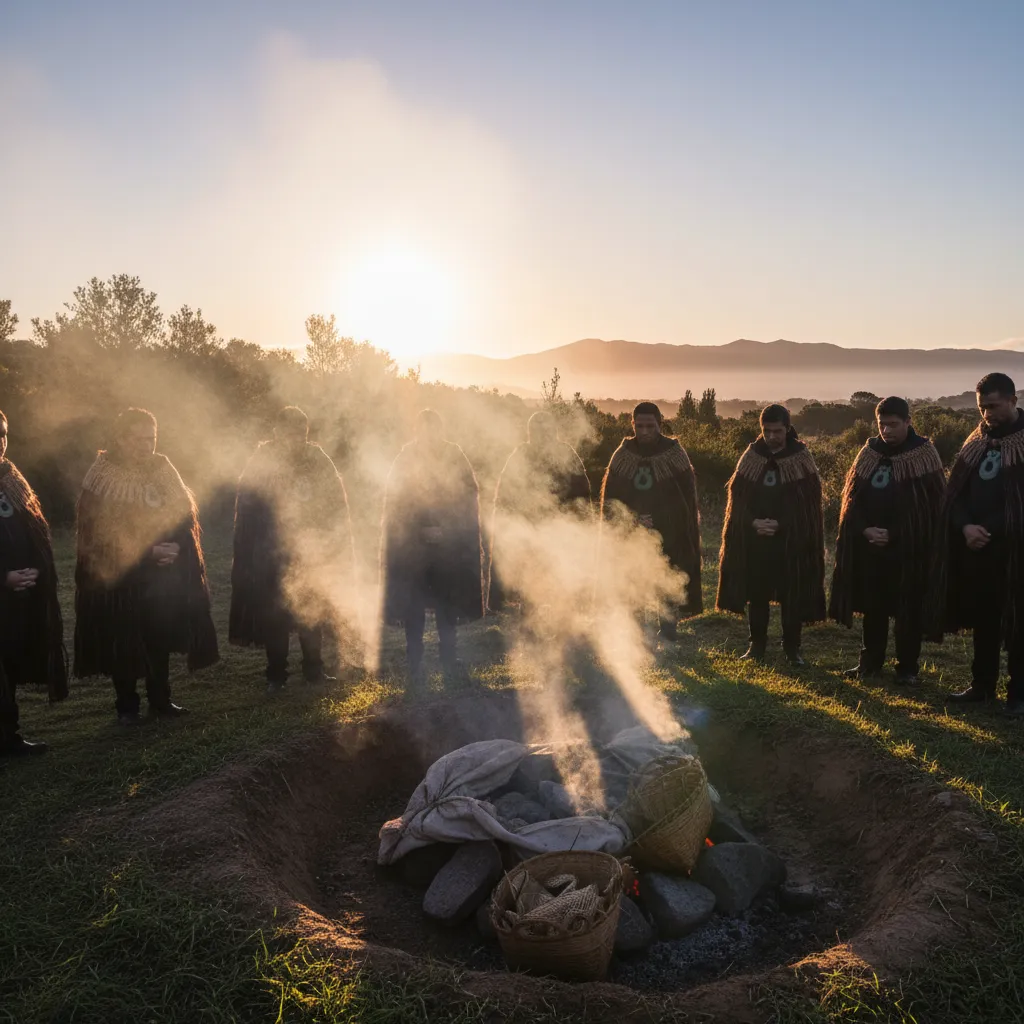
The most traditional and formal way to welcome Matariki is the Hautapu ceremony. While often performed by Iwi on marae, understanding its components enriches your own experience.
The Hautapu involves cooking kai (food) in an earth oven (hāngī) early in the morning. When the stars rise, the earth covering the hāngī is removed, releasing steam. This steam rises into the sky to feed the stars of Matariki. It is a reciprocal gesture: the stars provide the indicators for food, and the people offer the essence of that food back to the stars.
While you may not perform a full formal Hautapu, you can replicate the sentiment by cooking a meal early in the morning and taking a moment to offer gratitude to the environment before eating.
How to View the Cluster
To see Matariki 2024, you must be an early riser. The cluster is visible in the pre-dawn sky.
- Time: Between 5:30 AM and 6:30 AM.
- Direction: Look towards the northeast horizon.
- How to find it:
- Find the row of three stars known as “Tautoru” (Orion’s Belt) or “The Pot.”
- Trace a line leftward from Tautoru to a bright triangular shape of stars (Te Kokotā).
- Continue leftward until you see a faint sparkle of tiny stars. That is Matariki.
If the stars are bright and clear, it is predicted to be a warm and productive year. If they are hazy and shimmering, the year may be cold and challenging. Regardless of the forecast, the act of getting up early to view them connects you to a lineage of observers spanning a thousand years.
People Also Ask
Is Matariki the same date every year?
No, Matariki follows the Māori lunar calendar (Maramataka), not the solar Gregorian calendar. Therefore, the dates shift annually, usually falling between late June and mid-July. The date is determined by the rising of the stars and the phases of the moon.
What food is traditionally eaten during Matariki?
Traditional foods include those harvested and stored for winter, such as kūmara (sweet potato), taro, and preserved birds. Fresh fish (ika) and shellfish are also common. Modern celebrations often feature a hāngī (earth oven meal) or a boil-up, incorporating ingredients from the earth, sky, and water to honor the different stars.
Can non-Māori celebrate Matariki?
Absolutely. Matariki is a holiday for everyone in Aotearoa New Zealand. It is a time for national unity, environmental awareness, and community connection. Non-Māori are encouraged to participate by learning about the stars, attending public events, and sharing meals with family and friends.
What is the difference between Matariki and Puanga?
For some iwi (tribes), particularly in the West Coast and far North, the Matariki cluster is difficult to see due to geography. Instead, they observe the rising of the star Puanga (Rigel) to mark the New Year. The themes of remembrance and celebration remain the same, though the celestial signifier differs.
How do I say “Happy Matariki” in Māori?
The most common greeting is “Mānawatia a Matariki.” This phrase translates to “Celebrate Matariki” or “Welcome Matariki,” but deeper meaning implies honoring and sustaining the essence of the event.
What are the colors of Matariki?
While there are no strict “official” colors, Matariki is often associated with the colors of the dawn and the night sky: deep blues, purples, black, and silver (representing the stars). Earthy tones like ochre and green are also used to represent the harvest and connection to Papatūānuku.