
Matariki kai recipes center on harvesting and sharing produce to mark the Māori New Year, traditionally featuring earth-cooked hāngī, kūmara, and seafood. Modern adaptations preserve these flavors while accommodating dietary needs through vegan oven-hāngī techniques, gluten-free rewena bread alternatives, and plant-based proteins, ensuring the feast remains inclusive and sustainable.
The Significance of Kai During Matariki
Matariki, the Māori New Year, is a time of remembrance, celebrating the present, and looking to the future. Central to this celebration is kai (food). Historically, the rising of the Matariki star cluster signaled the time to harvest crops and preserve food for the winter. It was a time when the pātaka (storehouses) were full, and whānau (family) would gather to share the bounty.
In the context of the stars, specific stars within the cluster hold dominion over different food sources:
- Tupu-ā-nuku: Connected to food grown in the ground (like kūmara and potatoes).
- Tupu-ā-rangi: Connected to food from the sky (birds and berries).
- Waitī: Connected to fresh water food.
- Waitā: Connected to salt water food.
Creating a menu for a modern celebration involves honoring these elements. However, as dietary requirements shift towards plant-based and gluten-free lifestyles, the challenge lies in maintaining the wairua (spirit) of the feast without compromising on inclusivity. A modern Matariki dinner is about abundance and hospitality (manaakitanga), ensuring every guest leaves with a full belly and a warm heart.

Adapting Traditional Māori Cooking for Modern Diets
The cornerstone of Māori cuisine is the Hāngī—a method of cooking food in a pit oven using heated rocks. The result is a distinct, smoky, earthy flavor that steams the food to perfection. For modern urban dwellers or those without access to a pit, and for those avoiding meat, adapting this method requires creativity.
Replicating the Hāngī Flavor Indoors
You do not need a pit to achieve the tender texture of hāngī. The “Oven Hāngī” technique utilizes wet sacks, cabbage leaves, and a roasting dish to create a steam chamber. To replicate the smokiness without meat fats or wood smoke:
- Liquid Smoke: A high-quality, natural liquid smoke (like hickory or manuka) brushed onto vegetables adds that earth-oven depth.
- Smoked Paprika: Generous dusting on root vegetables mimics the charred aroma.
- Manuka Chips: If you have a stovetop smoker or a BBQ, a brief smoke before oven steaming works wonders.
Replacing Animal Proteins
Traditionally, pork, chicken, and mutton are the stars. For a vegan Matariki, we look to the earth. Jackfruit is an exceptional substitute for pulled pork when marinated correctly. Marinated Tofu wrapped in leaves can mimic the texture of steamed fish. However, the true heroes should be the vegetables themselves, celebrated in their whole form.
The Importance of Kūmara and Seasonal Produce
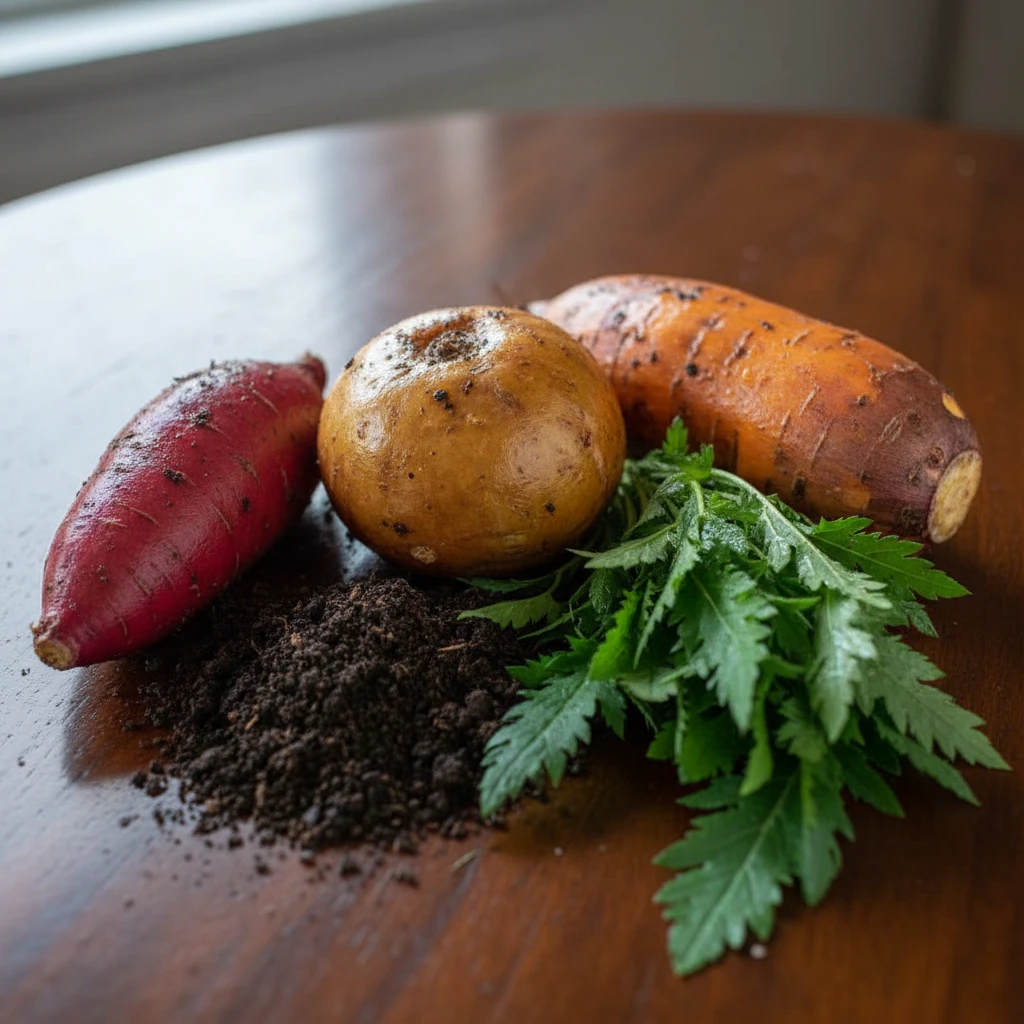
Kūmara (sweet potato) is not just a vegetable; it is a taonga (treasure). Brought to Aotearoa by early Māori voyagers, it required sophisticated gardening techniques to survive the cooler climate. During Matariki, we pay homage to Tupu-ā-nuku by making root vegetables the centerpiece.
Varieties to Use
- Red (Owairaka): Firm texture with a creamy white inside. Best for roasting and salads as it holds its shape.
- Gold (Toka Toka): Soft and sweeter. Perfect for mashing or purees.
- Orange (Beauregard): Rich in beta-carotene, moist and sweet. Excellent for gluten-free baking or soups.
Indigenous Greens: Pūhā and Kawakawa
Foraging or sourcing indigenous greens adds authenticity. Pūhā (sow thistle) is traditionally boiled with pork, but for a vegan version, it is delicious sautéed with garlic and olive oil to cut the bitterness. Kawakawa leaves, known for their medicinal properties, can be dried for tea or used sparingly as a peppery spice in gluten-free flour blends.
Recipe: The Ultimate Vegan Oven Hāngī
This recipe feeds a crowd and brings the aroma of the earth into your kitchen without digging up the backyard.
Ingredients
- 2 Red Kūmara, chunked
- 2 Gold Kūmara, chunked
- 1 Pumpkin, cut into large wedges (skin on)
- 4 Potatoes, scrubbed and halved
- 1 Cabbage (outer leaves reserved, inner heart quartered)
- Stuffing Balls: Gluten-free breadcrumbs, onion, mixed herbs, and vegetable oil binder.
- Protein: 2 cans of Jackfruit (in brine), drained and marinated in soy sauce (or tamari for GF), liquid smoke, and maple syrup.
- Manuka salt
Method
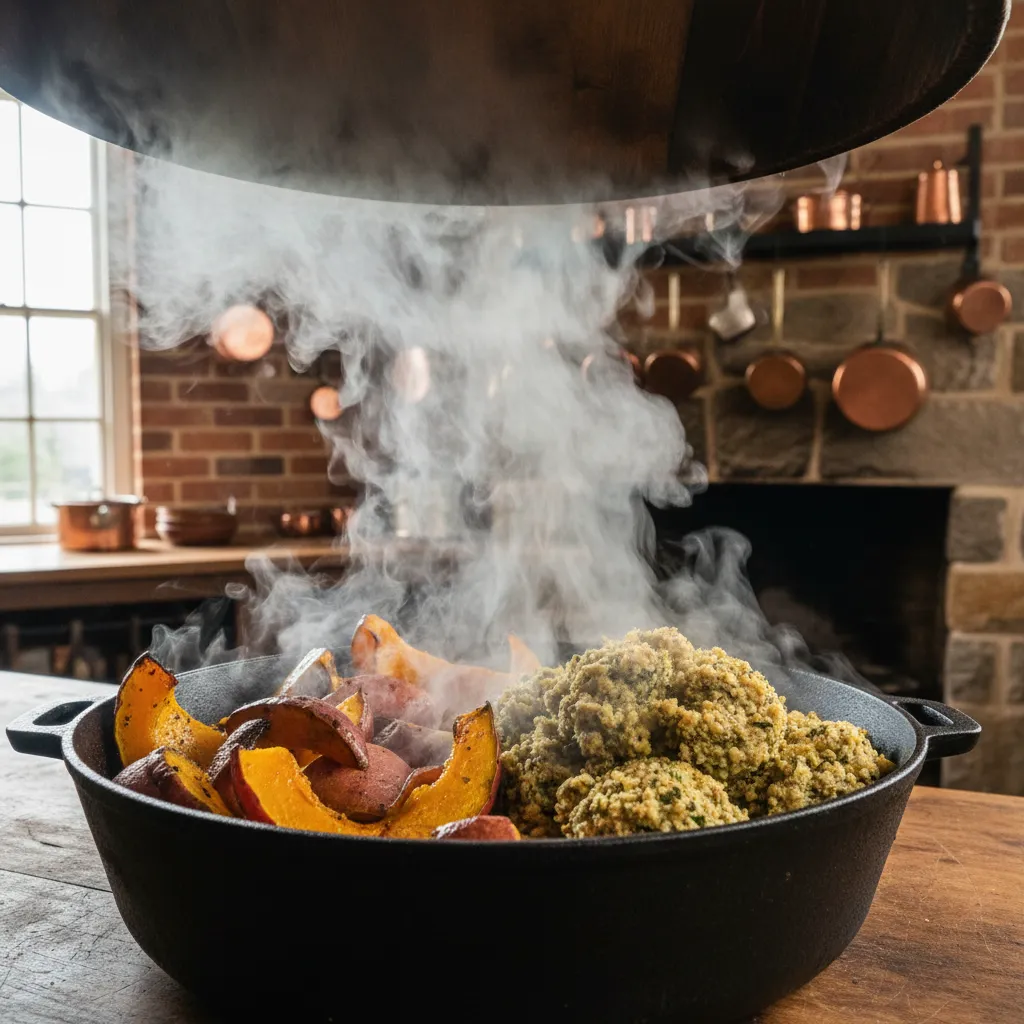
- Prep the Basket: Line a large deep roasting dish with aluminum foil, ensuring plenty of overhang. Place a layer of the reserved large cabbage leaves at the bottom.
- Layering: Place the hard root vegetables (potatoes, kūmara) at the bottom. Season generously with Manuka salt.
- The Protein: Nest the marinated jackfruit and pumpkin wedges in the middle.
- The Top Layer: Place the gluten-free stuffing balls and cabbage quarters on top.
- The Seal: Cover the food with more cabbage leaves. Drizzle 1/2 cup of water over the leaves to create steam. Fold the foil tightly over the top to seal.
- The “Sacks”: Soak a clean tea towel in water, wring it out slightly, and place it over the foil. Cover the entire dish with a second layer of foil or a heavy lid.
- Cook: Bake at 160°C (320°F) for 3.5 to 4 hours. Do not open it. The slow steam is crucial.
Gluten-Free Sides and Modern Twists
Traditional Rēwena bread relies on a potato bug (starter) and wheat flour. Making this gluten-free is challenging but possible using a blend of brown rice flour, tapioca starch, and a gluten-free sourdough starter cultivated with boiled potato water.
Gluten-Free Fried Bread (Parāoa Parai)
Fried bread is a staple at any marae. To make this gluten-free:
- Mix 2 cups of high-grade gluten-free flour blend (with xanthan gum).
- Add 2 tsp baking powder and a pinch of salt.
- Mix in 1 cup of unsweetened soy milk or water until a dough forms.
- Knead gently on a floured surface, cut into rectangles.
- Fry in hot vegetable oil until golden and puffy. Serve with golden syrup or jam.
Raw Kawakawa & Manuka Honey Cheesecake (Dairy-Free)
For dessert, embrace the fusion of raw vegan trends with native flavors.
- Base: Blitz almonds, dates, and desiccated coconut. Press into a tin.
- Filling: Blend soaked cashews, coconut cream, lemon juice, melted cacao butter, and 1/2 cup of high-UMF Manuka honey.
- Flavor: Steep 3 Kawakawa leaves in the warm coconut cream before blending (remove leaves) to infuse a subtle peppery, basil-like flavor.
- Set: Freeze for 4 hours. Garnish with edible fern fronds.
Hosting a Conscious Matariki Dinner
Matariki is not just about eating; it is about the ceremony. Hosting a conscious dinner means acknowledging the source of the food and the company you keep.
Tikanga (Protocol) for the Table
While you may not be on a marae, incorporating simple tikanga elevates the experience:
- Karakia (Blessing): Always begin with a karakia kai to acknowledge the food and give thanks. This settles the energy of the room.
- Whakawhanaungatanga (Connection): Before eating, go around the table. Ask guests to share a reflection on the past year or a hope for the year ahead.
- Sharing: Serve food “family style” with large platters in the center. This encourages interaction and passing of food, reinforcing the bond between guests.

Sourcing Local Ingredients in Aotearoa
Sustainability is a core tenet of Matariki. We look to Papatūānuku (Earth Mother) with respect, taking only what we need. To ensure your feast is eco-conscious:
Reduce Food Miles
Try to source ingredients grown within your region. In New Zealand, we are blessed with ample farmers’ markets. Buying direct from growers not only ensures the produce is fresh (nutrient-dense) but also supports the local economy.
Seasonal is Key
Matariki occurs in winter (June/July). Do not buy asparagus or strawberries imported from overseas. Embrace winter produce: parsnips, yams, carrots, pumpkin, Brussels sprouts, and citrus. These vegetables are at their peak flavor and lowest price point during the New Year.
Respectful Foraging
If you choose to gather wild food (kai whenua) like watercress or pūhā, follow the rule of sustainability: never take the whole plant. Leave the roots and enough leaves for the plant to regenerate. Ensure you are foraging in clean areas away from roadsides or sprayed farmland.
By integrating these recipes and philosophies, your Matariki celebration becomes more than a meal—it becomes a meaningful observance of the turning of the year, honoring the environment, your body, and your ancestors.
What creates the traditional smoky flavor in a vegan hāngī?
In the absence of wood smoke and meat fats, the smoky flavor in a vegan oven hāngī is achieved using liquid smoke (brushed on vegetables), smoked paprika, or by using smoked salt (like Manuka salt). Some cooks also briefly smoke the ingredients in a stovetop smoker before steaming them in the oven.
Can I make Rēwena bread without gluten?
Yes, but it requires a different approach than traditional wheat-based Rēwena. You must create a gluten-free starter using boiled potato water and sugar, fed with a gluten-free flour blend (typically brown rice and starches). The texture will be denser, similar to a heavy rye bread, but the flavor profile remains authentic.
What are the best vegetables to harvest during Matariki?
Matariki occurs in the New Zealand winter, so the best vegetables are root crops that store well. This includes all varieties of Kūmara, potatoes (taewa), pumpkin, yams, and carrots. Winter greens like silverbeet, kale, and indigenous pūhā are also in season.
How do I host a Matariki dinner respectfully?
To host respectfully, focus on Manaakitanga (hospitality). Begin with a Karakia (blessing) for the food. Encourage sharing and reflection among guests regarding the past year and the year ahead. Ensure there is an abundance of food, and try to use locally sourced, seasonal ingredients to honor the environment.
Is traditional Māori kai healthy?
Traditional Māori kai, prior to European colonization, was very healthy, consisting largely of lean proteins (fish, birds) and root vegetables. Modern adaptations return to these roots by reducing processed foods, sugar, and saturated fats, focusing instead on steaming (hāngī) and boiling rather than frying.
What is the significance of the 9 stars of Matariki regarding food?
Four of the stars in the Matariki cluster are directly associated with food sources. Tupu-ā-nuku (food from the earth), Tupu-ā-rangi (food from the sky/trees), Waitī (freshwater food), and Waitā (saltwater food). A complete Matariki feast often tries to include an element representing each of these domains.