
Matariki etiquette for migrants involves observing specific Māori protocols (tikanga) to honor the New Year. Key practices include removing shoes before entering a meeting house (wharenui), refraining from eating in sacred areas, offering a donation (koha) to support hosts, and understanding that Matariki is a time for both celebration and solemn remembrance of those who have passed.
What is Matariki and Why Does Etiquette Matter?
Matariki is the Māori name for the cluster of stars also known as the Pleiades. Its rising in mid-winter marks the beginning of the Māori New Year. For Aotearoa New Zealand, this is a unique holiday that focuses on three major themes: remembering those who have passed since the last rising, celebrating the present with whānau (family) and friends, and planning for the future.
For migrants and newcomers to New Zealand, participating in Matariki is a wonderful way to connect with the land and its indigenous culture. However, because Matariki is deeply rooted in tikanga Māori (Māori customs and protocols), approaching it with the correct etiquette is essential. It is not merely a party; it is a spiritual and environmental observance.
Understanding Matariki etiquette for migrants ensures that you do not accidentally cause offense. It demonstrates that you respect the mana (prestige/authority) of the host culture. Whether you are attending a public light show, a community tree planting, or a formal ceremony at a local Marae, your behavior reflects your willingness to embrace the values of your new home.

Dos and Don’ts for Attending a Marae-Based Event
Many Matariki celebrations take place on a Marae (Māori meeting grounds). The Marae is the standing place of the people and the anchor of Māori identity. If you are invited to a Marae or attend a public open day during Matariki, strict protocols apply. These rules exist to protect the sanctity of the space and the people within it.
The Pōwhiri (Welcome Ceremony)
If you are part of a group visiting a Marae, you will likely undergo a pōwhiri. This is a formal welcome ceremony that removes the tapu (sacredness/restriction) from visitors (manuhiri) to make them one with the hosts (tangata whenua).
- DO wait to be called on: Do not walk onto the Marae atea (the courtyard in front of the meeting house) until the Karanga (call of welcome) has begun.
- DON’T walk in front of speakers: During speeches (whaikōrero), never walk between the speaker and the listeners. This is considered highly disrespectful.
- DO dress conservatively: While formal wear isn’t always required, dress tidily. Avoid sunglasses and hats during the formal welcome.
Shoes and Hats
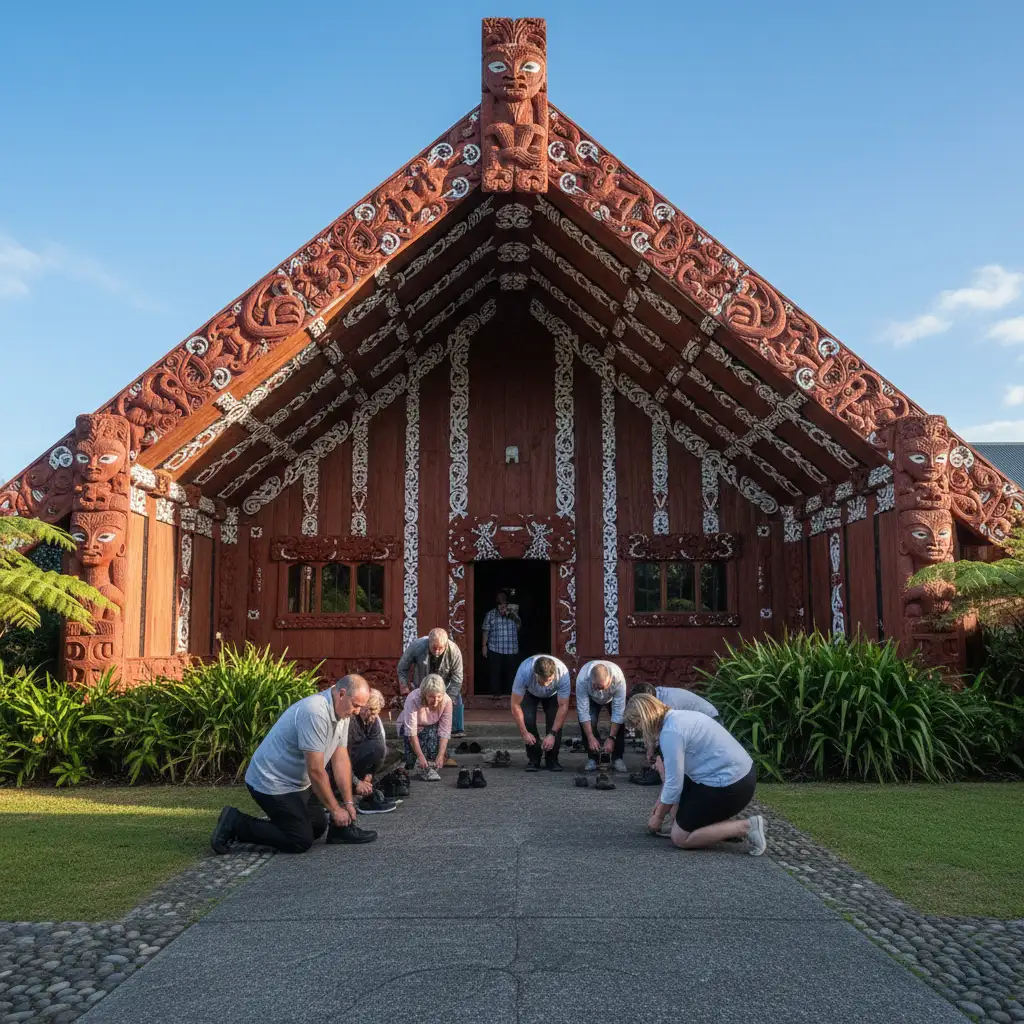
One of the most visible rules of Matariki etiquette for migrants to learn immediately involves footwear.
- DO remove your shoes: Before entering the Wharenui (carved meeting house), you must take off your shoes. This keeps the physical dirt outside, but metaphorically, it leaves the dust of the outside world behind as you enter the domain of the ancestors.
- DON’T wear hats inside: Hats should be removed when entering the Wharenui or the Wharekai (dining hall) as a sign of respect.
Photography and Phones
In the digital age, the urge to document cultural experiences is strong, but restraint is necessary.
- DO ask for permission: Never assume you can take photos, especially during the formal pōwhiri or inside the Wharenui.
- DON’T take photos of carvings without asking: Some carvings represent specific ancestors, and there may be intellectual property or spiritual reasons restricting photography.
- Turn phones off: Ensure your phone is on silent or turned off completely during ceremonies.
Understanding the ‘Tapu’ Nature of Certain Traditions
To truly grasp Matariki etiquette, one must understand the concepts of Tapu (sacred/restricted) and Noa (common/unrestricted). These concepts govern Māori life and are heightened during Matariki, a time when the veil between the living and the dead is believed to be thinner.
Why Food and Sacred Spaces Don’t Mix
Food (kai) is considered noa. It has the power to neutralize tapu. Because the Wharenui represents the body of an ancestor and is a place of high tapu (especially during speeches or when bodies lie in state), bringing food or drink inside is strictly forbidden.
If you have a water bottle or a snack in your bag, leave it outside or in the car. Consuming food inside the meeting house is seen as degrading the sanctity of the ancestor the house represents.
The Hautapu Ceremony
During Matariki, a specific ceremony called ‘Hautapu’ involves cooking kai so the steam rises to feed the stars. This is a highly sacred ritual.
- Silence is Golden: If you are witnessing a Hautapu or a remembrance reading of names of those who have passed, maintain absolute silence.
- Head Movements: Avoid walking over people’s legs or touching people’s heads. The head is the most tapu part of the body in Māori culture.
The Art of Gift-Giving: Koha Explained
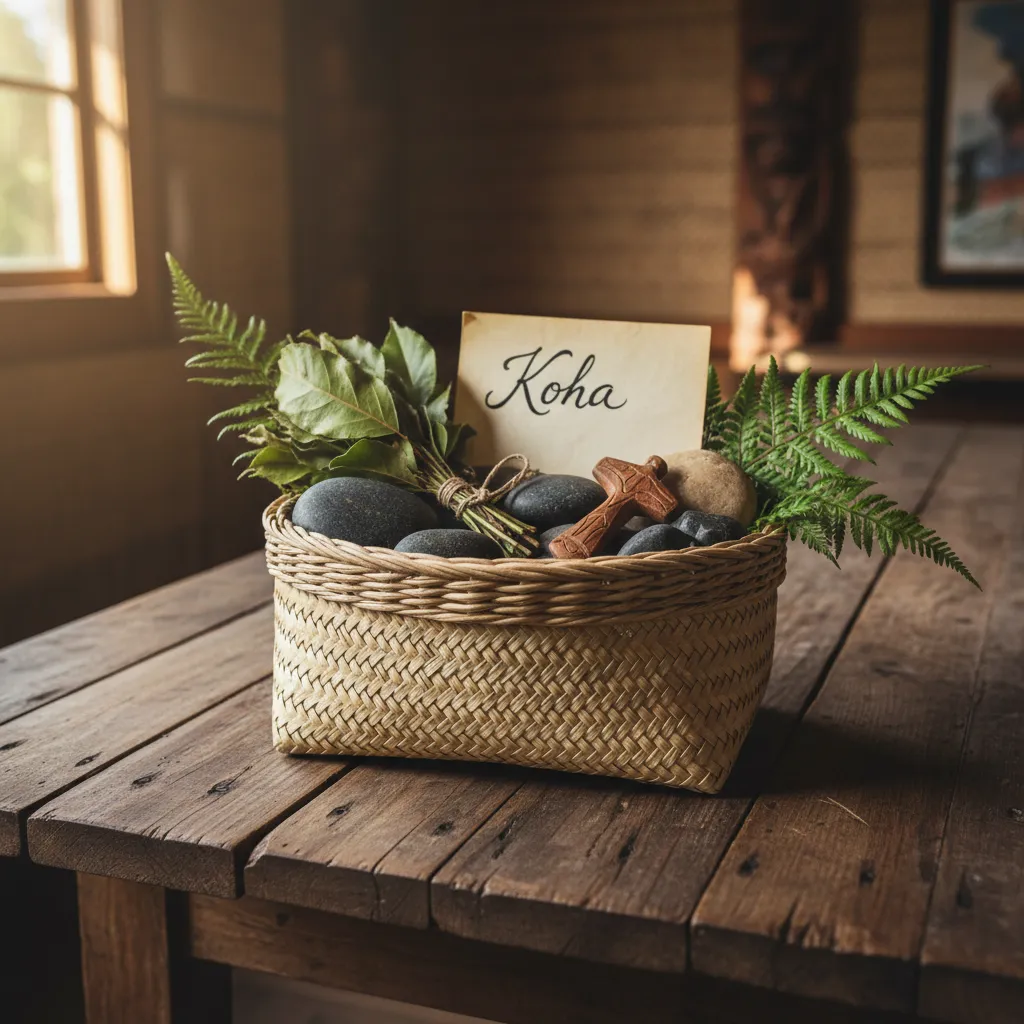
Koha is often translated as a “donation” or “gift,” but it carries a deeper meaning of reciprocity and support. When attending a Matariki event, particularly on a Marae, giving koha is a standard practice.
What is Appropriate Koha?
There is no set amount for koha. It should reflect your capacity to give and your appreciation for the hospitality received. For a community event, a gold coin donation might be suggested. for a formal Marae visit involving a meal, a more substantial monetary contribution (paper notes) is appropriate.
How to Present Koha
If you are part of a formal group (ope), the koha is usually collected beforehand and placed in a single envelope. The last speaker from your group will usually lay the envelope on the ground (or hand it to the hosts, depending on local tribal custom) at the conclusion of their speech.
Key etiquette tip: Do not flash the money around. It is usually placed discreetly in an envelope. If you are attending a casual event where a donation bucket is present, simply placing your contribution there quietly is perfect.
How to Ask Questions Without Being Intrusive
New Zealanders (Kiwis) generally love it when migrants show interest in Māori culture. However, the timing and phrasing of your questions matter. Matariki is a time of learning, but it is also a time of deep emotion for families mourning recent losses.
Wait for the Right Moment
Do not interrupt a formal speech or a prayer (karakia) to ask a question. The best time to ask questions is usually during the Hākari (the feast) that follows the formal ceremony. Sharing food brings everyone to a state of noa (neutrality), making conversation and connection much easier.
Who to Ask?
If you are unsure about protocol, look for someone who seems to be organizing the event or a “kaiāwhina” (helper). You can say:
“I am new to New Zealand and want to ensure I am being respectful. Could you please advise me on where I should sit?”
Admitting you don’t know is far better than guessing and getting it wrong. Most hosts will appreciate your humility and desire to do things correctly.
Ways to Celebrate Matariki as a Newcomer
You don’t have to be on a Marae to celebrate Matariki. There are many ways migrants can participate in the spirit of the holiday while respecting the culture.
Environmental Stewardship (Kaitiakitanga)
Matariki is tied to the environment. The stars indicated to ancestors when to plant and harvest. A highly respectful way to participate is to engage in environmental restoration. Join a local tree-planting group or a beach cleanup. This honors the earth (Papatūānuku) and aligns with the values of the season.
Shared Kai (Food)
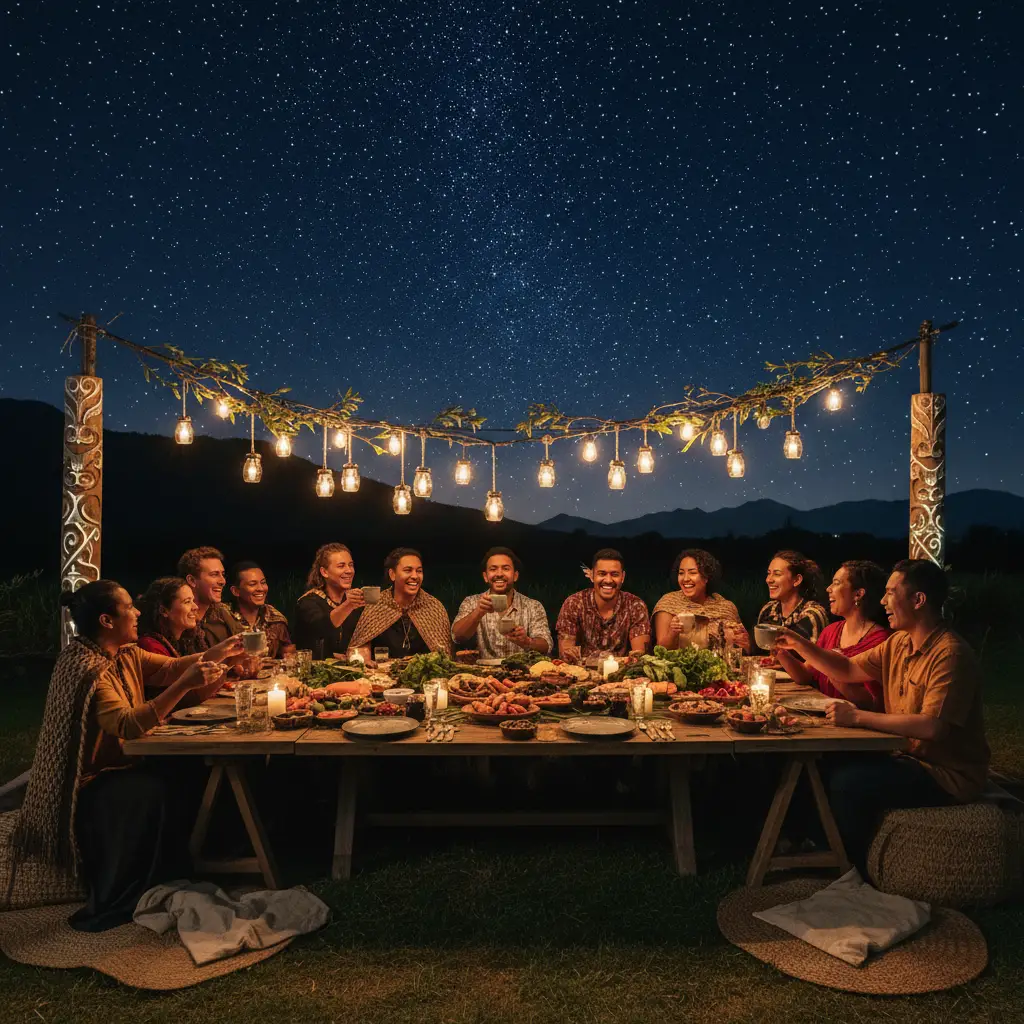
Matariki is a time to gather. Host a potluck dinner with friends where you share food. In the spirit of Matariki, try to include locally sourced ingredients like kumara (sweet potato) or seafood (kaimoana). Before eating, you might acknowledge the source of the food and the people who prepared it.
Learning the Stars
Take time to learn the names of the nine stars of Matariki and what they represent. For example, Waitī is connected to fresh water, and Waitā to salt water. Understanding these connections deepens your appreciation of why environmental protection is a core part of the festival.
People Also Ask (PAA)
What is the most important rule of Matariki?
The most important rule is to show respect for the environment and the people around you. This includes acknowledging those who have passed away, protecting the natural world (kaitiakitanga), and spending quality time with family. If attending a formal event, following the host’s lead on tikanga (protocol) is paramount.
Can I take photos during a Matariki ceremony?
Generally, you should not take photos during formal ceremonies, prayers (karakia), or speeches, especially inside a Marae meeting house. Always ask for permission first. Public festivals and light shows are usually fine for photography, but solemn rituals are not.
What food should I bring to a Matariki potluck?
Bringing “comfort food” or dishes that represent your own culture is very welcome, as sharing culture is part of the spirit. However, traditional Māori foods like kumara, pumpkin, roasted meats, or seafood are excellent choices that align with the harvest nature of the holiday.
Do I need to speak Māori to participate?
No, you do not need to speak Te Reo Māori to participate. However, learning a few basic greetings like “Kia ora” (Hello) and “Mānawatia a Matariki” (Happy Matariki) shows great respect and effort, which is highly appreciated by hosts.
Is Matariki a religious holiday?
Matariki is a spiritual and cultural observance rather than a religious one in the Western sense. It focuses on the cycles of nature, astronomy, and ancestry. People of all faiths and backgrounds are welcome to participate in the celebrations.
What colors should I wear for Matariki?
There are no strict rules on colors, but black is often worn at formal Māori gatherings, particularly if there is a mourning aspect. For festive Matariki events, colors representing the stars, the night sky (blues, blacks, purples), or the earth (greens, browns) are appropriate and thematic.