
The history of Maramataka vs Gregorian calendar systems highlights a fundamental divergence in timekeeping: the Gregorian calendar is a rigid solar construct designed for administrative uniformity, while the Maramataka is an adaptive lunar-environmental system based on observation. For businesses, understanding this distinction is crucial for aligning workflows with natural energy cycles rather than industrial output targets.
In the modern business landscape of Aotearoa New Zealand, the reintroduction of indigenous knowledge systems is reshaping how organizations approach productivity, well-being, and strategic planning. With the official recognition of Matariki as a public holiday, leaders are increasingly asking how to navigate the differences between the standard Gregorian calendar and the traditional Māori lunar calendar, the Maramataka.
What is the history of Maramataka vs Gregorian calendar systems?
To understand the current shift in business culture, we must first examine the history of Maramataka vs Gregorian calendar origins. These two systems were developed for entirely different purposes, and their collision during colonization has shaped the economic structures we see today.

The Gregorian Calendar: An Administrative Tool
The Gregorian calendar, introduced by Pope Gregory XIII in 1582, was a refinement of the Julian calendar. Its primary objective was to align the civil year more accurately with the solar year (the time it takes Earth to orbit the sun) to ensure Easter remained in the spring. It is a linear, mathematical construct that divides time into arbitrary segments—months of varying lengths that do not correlate with the actual phases of the moon.
From a business history perspective, the Gregorian system became the global standard because it facilitated the synchronization of trade, banking, and shipping across the expanding European empires. It treats time as a standardized commodity—”time is money”—where every hour is theoretically equal in value and potential productivity. This industrial view of time ignores environmental cues and human energy fluctuations.
The Maramataka: An Environmental Survival Guide
In contrast, the Maramataka (literally meaning “the moon turning”) is a sophisticated indigenous system developed over centuries of observation by Polynesian navigators and Māori ancestors. It is not merely a calendar but a comprehensive ecological almanac. It tracks the cycles of the moon, the rising and setting of stars (such as Matariki and Puanga), and the corresponding behaviors of the ocean, flora, and fauna.
Historically, the Maramataka dictated when to fish, plant, harvest, or rest. It was a survival tool that ensured human activity was synchronized with the environment. For example, during the Tamatea phases (often associated with unpredictable weather and winds), it was deemed unsafe to venture onto the ocean. In a modern context, this historical wisdom translates to risk management; knowing when the environment—or the “market climate”—is volatile is a key business asset.
The Collision and Revitalization
When European settlers arrived in New Zealand, the Gregorian calendar was imposed as the mechanism of governance and commerce. The history of Maramataka vs Gregorian calendar relations during this period is one of suppression. The Maramataka was often dismissed as folklore, despite its scientific basis in astronomy and biology. However, the recent establishment of the Matariki public holiday marks a significant turning point, validating indigenous timekeeping at a legislative level and inviting businesses to explore how these ancient systems can enhance modern operational resilience.
Why does the Matariki date change annually?
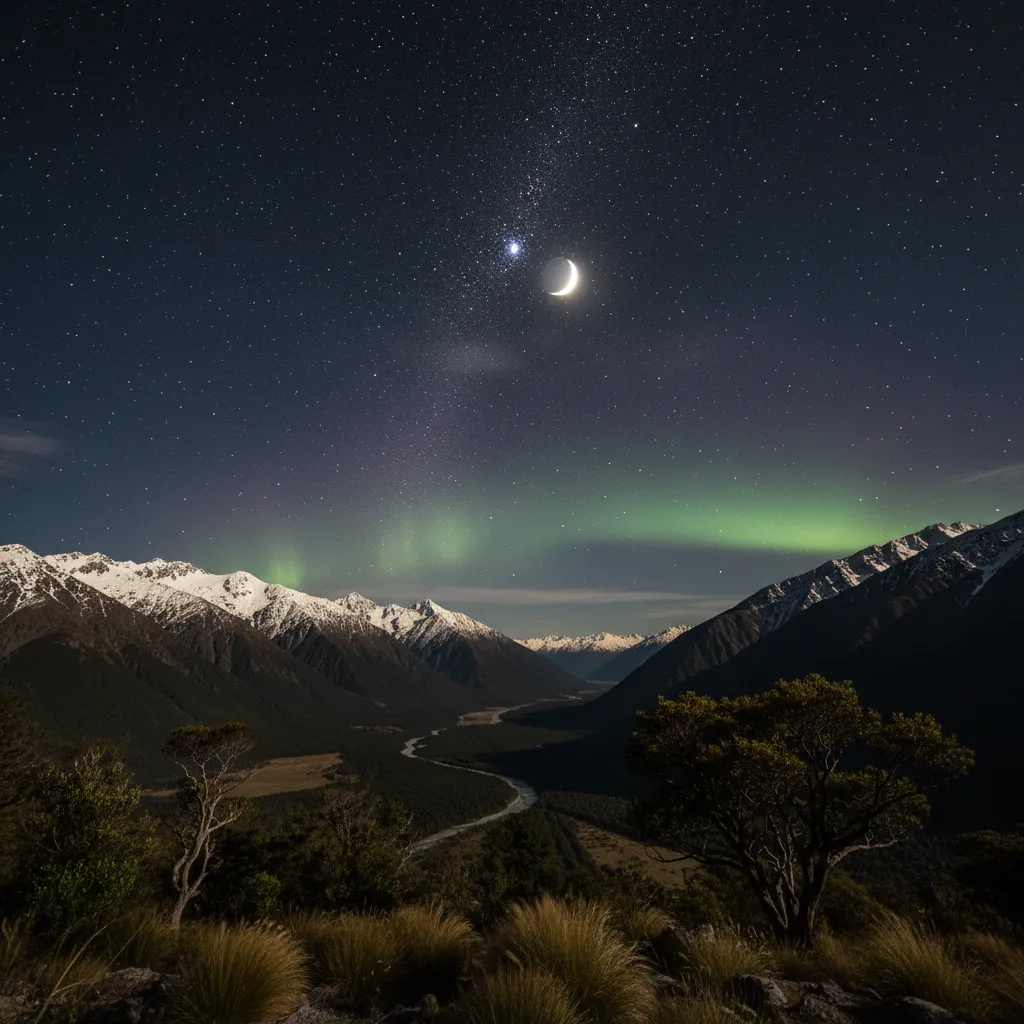
One of the most confusing aspects for businesses transitioning to include indigenous frameworks is the fluctuation of dates. Unlike the Gregorian calendar, which fixes holidays to specific dates (e.g., Christmas on December 25th), Matariki follows a stellar-lunar cycle.
The Solar vs. Lunar Year Discrepancy
A solar year is approximately 365.25 days long. A lunar year, consisting of 12 lunar months (cycles of 29.5 days), is approximately 354 days long. This creates an 11-day discrepancy annually. If left uncorrected, a lunar calendar would drift out of sync with the seasons.
Intercalation in the Maramataka
The Māori system corrects this drift through the observation of stars. The New Year is heralded by the heliacal rising of the Matariki cluster (Pleiades) or Puanga (Rigel) in mid-winter. The holiday date is determined by the nearest lunar phase to this stellar event—specifically, the Tangaroa phase of the moon following the rising of the stars.
For businesses, this means the Matariki public holiday will shift dates on the Gregorian calendar each year, much like Easter does. This requires organizations to be agile in their annual planning, moving away from rigid “copy-paste” schedules from previous years and adopting a more responsive approach to time.
What are the operational benefits of lunar alignment?
Why should a modern corporation care about the moon? The answer lies in human performance and sustainable productivity. The industrial model assumes employees function like machines—capable of consistent, linear output 9-to-5, Monday to Friday, regardless of environmental factors. The Maramataka recognizes that energy is cyclical.
High Energy vs. Low Energy Phases
The Maramataka identifies specific phases where energy is high and productive, and others where energy is low and reflective.
- Tangaroa Phases: These occur around the last quarter of the moon. Historically excellent for fishing, in a business context, these are days for high productivity, execution, sales pushes, and launching new initiatives. The energy is abundant and conducive to “doing.”
- Whiro (New Moon): This is the lowest energy phase. The moon is dark. Historically a bad time for fishing, but an excellent time for planning. In business, Whiro days should be reserved for strategy, review, rest, and administrative cleanup. Forcing high-output tasks during Whiro often leads to burnout and errors.
- Rakaunui (Full Moon): High energy but potentially volatile. This is a time of high visibility and completion.

Reducing Burnout Through Cyclical Workflows
By understanding the history of Maramataka vs Gregorian calendar usage, businesses can see that the Gregorian system promotes a “burn and bust” cycle. Aligning with the Maramataka encourages a rhythm of ebb and flow. Allowing teams to slow down during low-energy phases (Whiro) ensures they have the reserves to sprint effectively during high-energy phases (Tangaroa). This approach directly addresses the modern crisis of workplace burnout.
How to integrate Maramataka into project management?
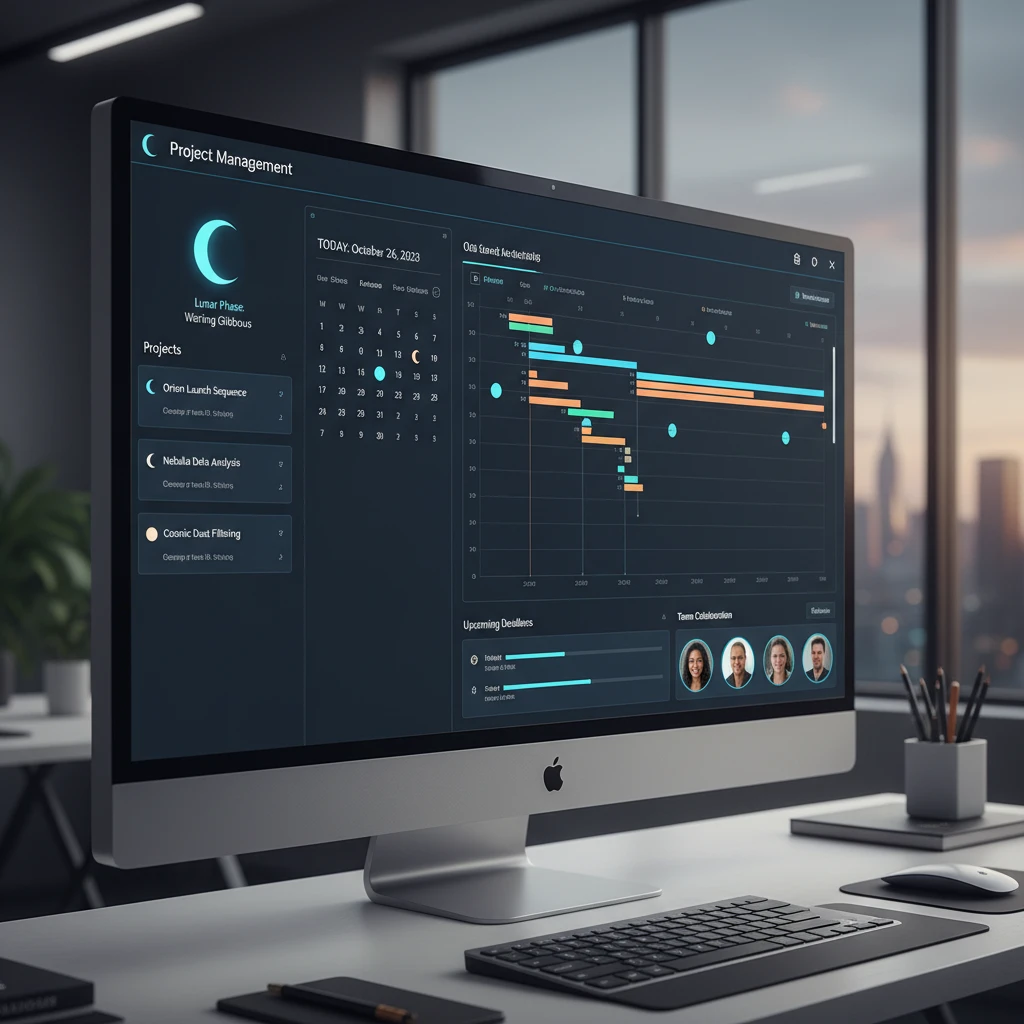
Integrating the Maramataka doesn’t mean discarding your Outlook calendar. It means overlaying a layer of energetic intelligence onto your scheduling. This hybrid approach is increasingly popular in New Zealand’s government and private sectors.
Step-by-Step Implementation
- Audit Your Current Schedule: Look at your recurring meetings. Are you holding intense brainstorming sessions during low-energy phases? Are you scheduling rest or review days during high-productivity windows?
- Map the Moon Phases: Use a Maramataka dial or app to identify the current phase. Mark the Tangaroa (productive), Whiro (planning), and Tamatea (volatile) periods on your Gregorian calendar.
- Adjust Meeting Types:
- Strategy & Review: Schedule these during the Whiro (New Moon) or Korekore phases. These are times for internal reflection, not external action.
- Launches & Sprints: Schedule “Go Live” dates or major client pitches during the Tangaroa phases or approaching Rakaunui (Full Moon).
- Risk Management: Avoid signing major contracts or making high-stakes decisions during the Tamatea phases, which are traditionally associated with unpredictable winds and changing conditions.
The Agile Connection
Interestingly, the Maramataka aligns well with Agile project management. A lunar month (approx. 29.5 days) is similar to a standard 4-week Sprint.
- Week 1 (New Moon/Whiro): Sprint Planning.
- Week 2 (Waxing): Development and building.
- Week 3 (Full Moon/Rakaunui): Review and high-intensity output.
- Week 4 (Waning/Korekore): Retrospective and winding down.
Why is Indigenous Cultural Safety vital in scheduling?
Adopting the Maramataka is also a matter of Cultural Safety. For Māori employees and stakeholders, the Gregorian calendar is a colonial imposition that has historically severed connection to ancestral knowledge. By validating the Maramataka in the workplace, businesses signal a commitment to the Treaty of Waitangi (Te Tiriti o Waitangi) principles of partnership and protection.
Beyond Tokenism
It is critical that businesses do not treat the Maramataka as a mere novelty. It is a science of observation. Integration should be led by or in consultation with cultural advisors (Pūkenga) to ensure the tikanga (protocols) are respected. When done correctly, it fosters an inclusive environment where indigenous staff feel their heritage is valued not just as a holiday, but as a legitimate operational framework.
Ultimately, the history of Maramataka vs Gregorian calendar teaches us that time is not just a line on a spreadsheet; it is a cycle of opportunity. By harmonizing these two systems, businesses can achieve a more sustainable, human-centric, and culturally responsive model of success.
People Also Ask
What is the main difference between Maramataka and the Gregorian calendar?
The main difference is that the Gregorian calendar is a solar-based system designed for administrative consistency with fixed months, while the Maramataka is a lunar-environmental system that relies on observing moon phases, stars, and ecological cues to guide activity and survival.
How does Matariki affect the New Zealand financial year?
Matariki introduces a floating public holiday that usually falls in June or July. While it doesn’t change the standard April-March financial year dates, it requires businesses to adjust payroll processing and project deadlines annually, similar to how Easter is handled.
Can businesses use Maramataka for productivity?
Yes. By aligning high-intensity tasks with high-energy moon phases (like Tangaroa) and administrative or planning tasks with low-energy phases (like Whiro), businesses can improve workflow efficiency and reduce employee burnout.
Why was the Gregorian calendar adopted over Maramataka?
The Gregorian calendar was adopted due to British colonization. It was the standard system used by the British Empire for trade, law, and church administration, and was imposed on New Zealand’s governance structures, largely displacing the Maramataka in official use until recent revitalization efforts.
What do the different moon phases mean for work?
Generally, the waxing moon and Tangaroa phases are best for action, communication, and planting ideas. The Full Moon (Rakaunui) is for high energy and completion. The waning moon and Whiro (New Moon) are best for rest, review, strategy, and planning.
How do I start using Maramataka in my workplace?
Start by purchasing a Maramataka dial or calendar from a reputable Māori provider. Begin by observing the energy levels of your team during different phases. Try scheduling your monthly strategy meetings during the New Moon (Whiro) and your major launches during the productive Tangaroa phases.