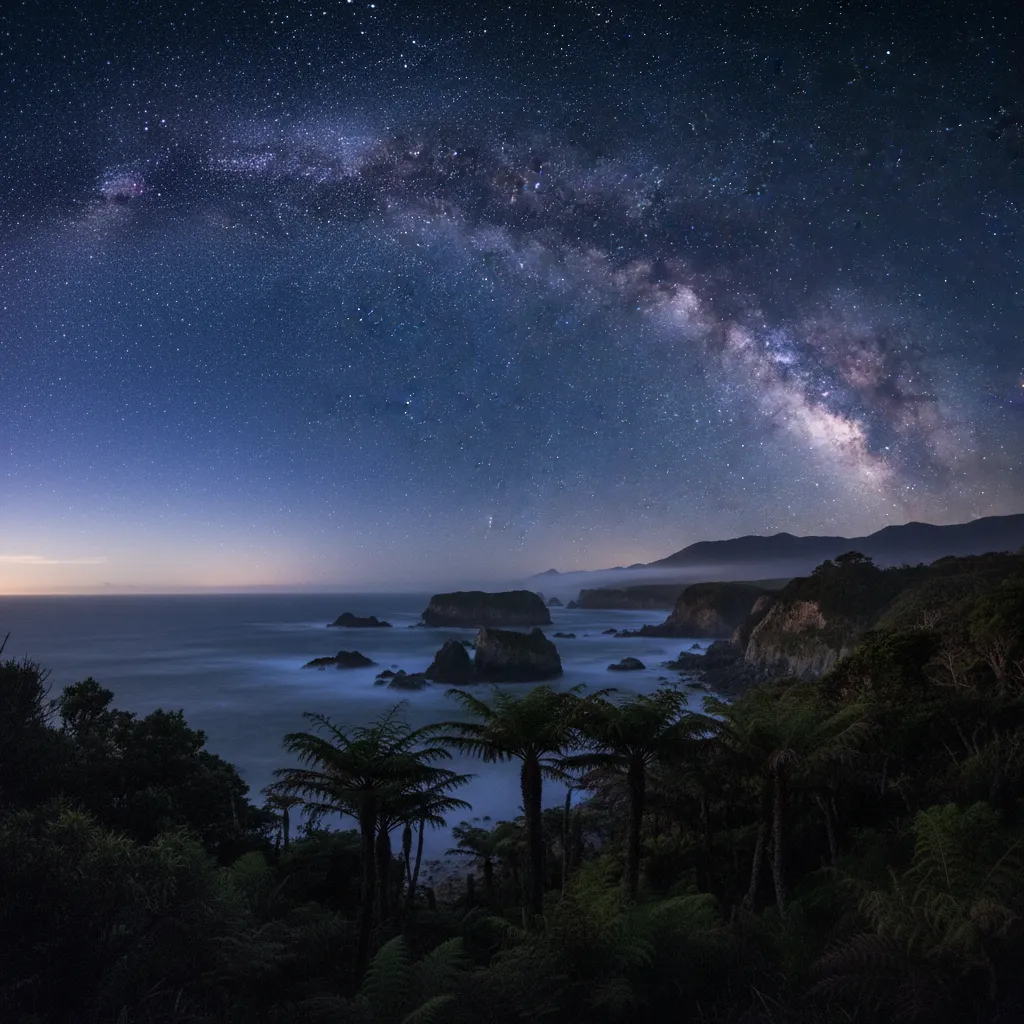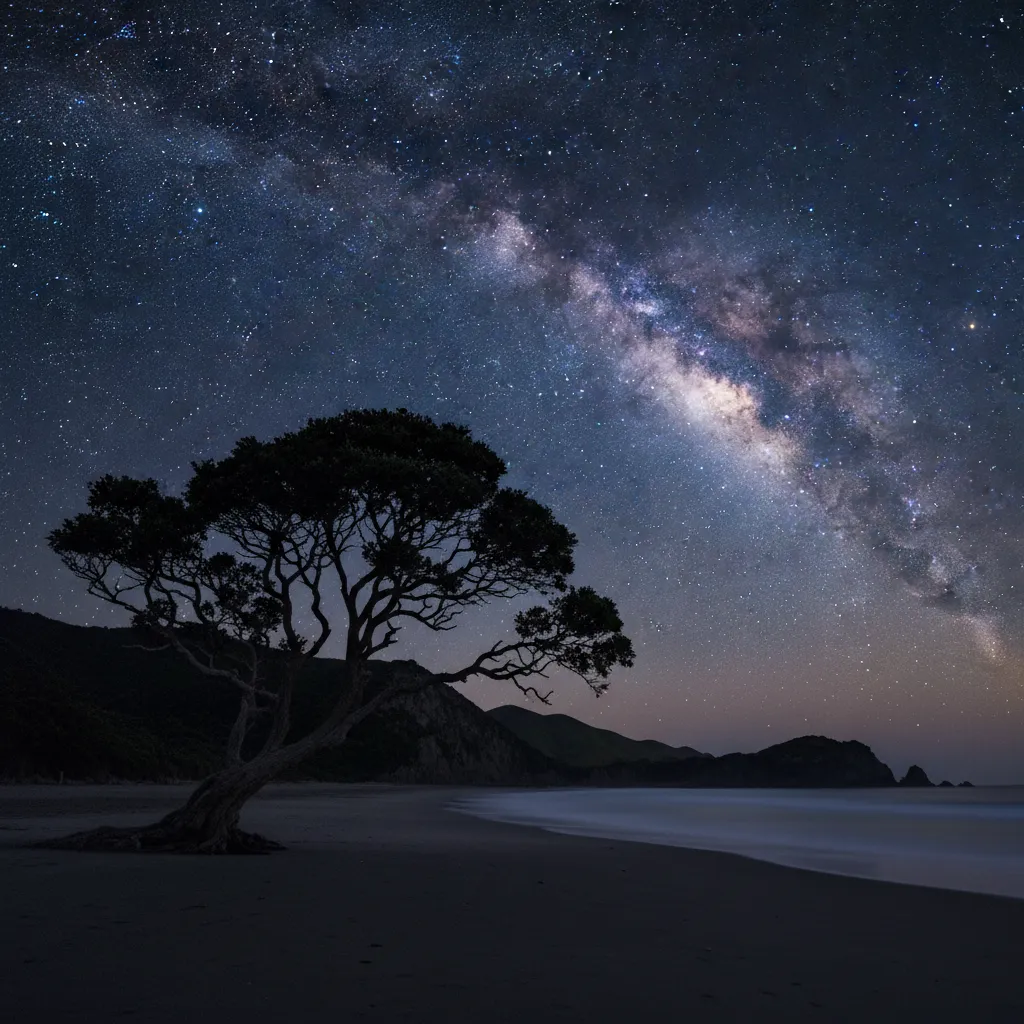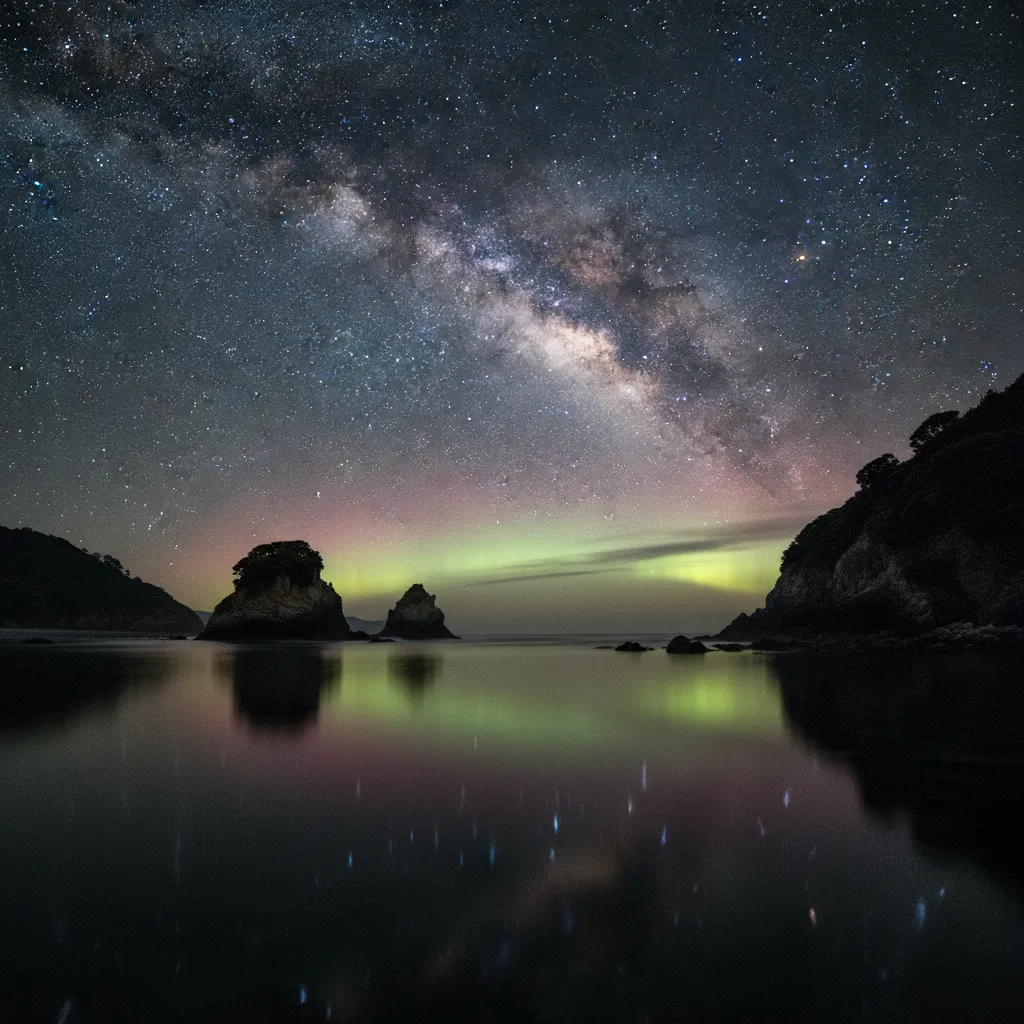
Queenstown stargazing tours offer immersive astronomical experiences in New Zealand’s South Island, utilizing professional-grade telescopes to explore the Southern Hemisphere sky. These guided excursions, ranging from gondola-accessed peaks to remote dark sky sanctuaries like Glenorchy, provide prime opportunities to view the Aurora Australis, the Milky Way core, and Maori constellations.
While Queenstown is globally renowned as the “Adventure Capital of the World,” its most spectacular thrill requires no bungee cord or jet boat. As the sun dips below the jagged peaks of The Remarkables, a different kind of landscape emerges overhead. The region’s pristine atmosphere, low light pollution, and high southern latitude make Queenstown stargazing tours an essential itinerary item for travelers seeking a connection with the cosmos.
Whether you are an amateur astronomer, a photographer hunting the elusive Southern Lights (Aurora Australis), or a traveler interested in the indigenous Maramataka (Maori lunar calendar), the Otago region offers unrivaled access to the night sky. This comprehensive guide explores the top commercial experiences, the science behind the clear skies, and how to combine your alpine adventures with astronomical discovery.
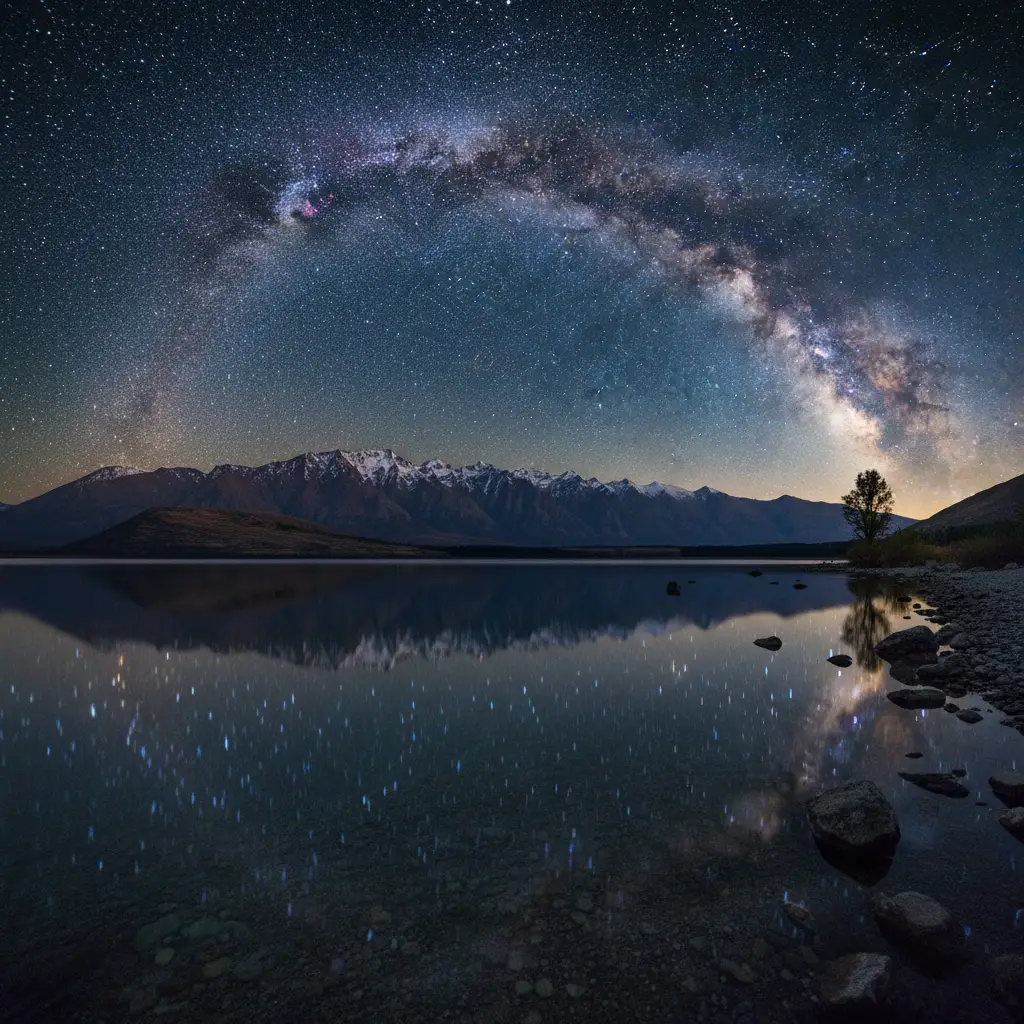
Why Queenstown is a World-Class Stargazing Haven
Before booking a tour, it is crucial to understand why this specific coordinate on the globe delivers such high-value astronomical experiences. Queenstown sits at approximately 45 degrees South latitude. This positioning is significant for several reasons that directly impact the quality of your viewing experience.
The Southern Advantage
The Southern Hemisphere looks out toward the center of the Milky Way galaxy, whereas the Northern Hemisphere looks away from it. This means that stargazers in Queenstown view the brightest and most complex part of our galaxy directly overhead. Key celestial features visible here that are invisible to much of the world include:
- The Magellanic Clouds: Two dwarf galaxies orbiting the Milky Way, appearing as detached pieces of the Milky Way visible to the naked eye.
- The Southern Cross (Crux): The most iconic constellation in the southern sky, featuring the Jewel Box Cluster.
- Alpha Centauri: The closest star system to our solar system.
Atmospheric Clarity
The geography of the South Island contributes to exceptional “seeing” conditions—an astronomical term for the stability of the atmosphere. The prevailing westerlies lose much of their moisture over the Southern Alps before reaching the Queenstown basin, often resulting in crisp, dry air that minimizes atmospheric distortion. This clarity allows the high-powered telescopes used on Queenstown stargazing tours to resolve images of planets and nebulae with breathtaking sharpness.
The Skyline Stargazing Experience
For those seeking accessibility without compromising on quality, the Skyline Stargazing tour atop Bob’s Peak is the market leader. Situated high above the town, accessed via the iconic Skyline Gondola, this location offers a balance of comfort and celestial visibility.
What to Expect on the Tour
The experience begins with a scenic gondola ride, lifting you out of the immediate streetlights of the town center. Upon reaching the top terminal, guides lead guests to a purpose-built stargazing platform. This area is shielded from the light of the complex, preserving night vision.
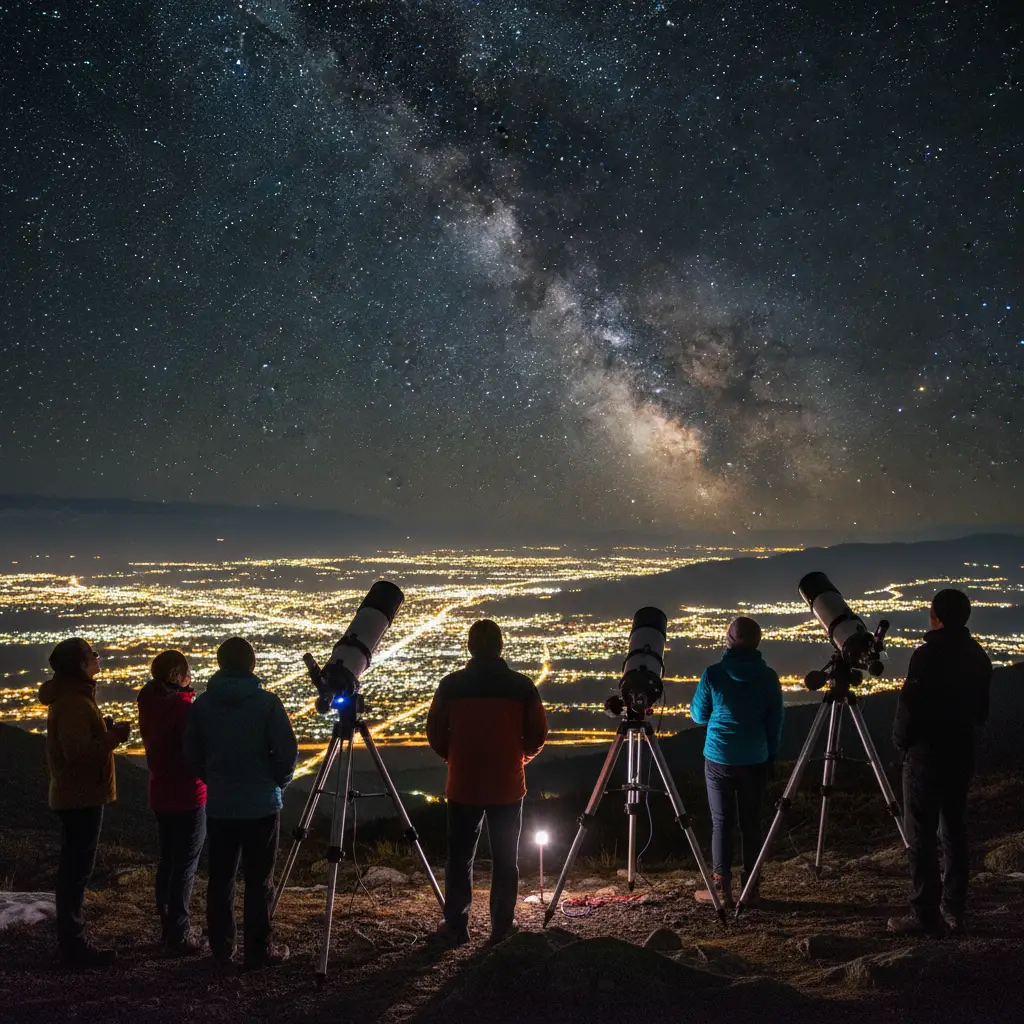
The tour generally utilizes high-end telescopes, such as the Celestron CPC 9.25 GPS or similar apertures. These instruments are capable of gathering over 1,000 times more light than the human eye. During a typical session, guides will align these telescopes to reveal:
- Planetary Detail: The rings of Saturn and the cloud bands of Jupiter are common targets when the planets are in opposition.
- Nebulae: The Great Orion Nebula (in summer/autumn) and the Carina Nebula are showcased as stellar nurseries where new stars are being born.
- Globular Clusters: Dense balls of ancient stars, such as Omega Centauri, which look like spilled diamond dust through the eyepiece.
Logistics and Suitability
Skyline tours are particularly well-suited for families and those on a tight schedule. The proximity to the town center means you can enjoy a dinner at the Stratosfare Restaurant and follow it immediately with a stargazing session. The tours are weather-dependent; however, Skyline often provides indoor engaging astronomy presentations in their theater if the clouds roll in, ensuring the educational value is retained.
Glenorchy Dark Skies: Into the Wild
If you are willing to travel 45 minutes from Queenstown, the township of Glenorchy offers a darker, more rugged experience. Known as the “Gateway to Paradise,” Glenorchy sits at the northern end of Lake Wakatipu and is surrounded by Mount Aspiring National Park. The absence of urban development here creates a Bortle Scale class of sky that rivals recognized International Dark Sky Reserves.
The “Lord of the Rings” Landscape
Glenorchy is famous for its cinematic landscapes, having served as the backdrop for Isengard and Lothlórien in The Lord of the Rings. At night, these mountains form a dramatic silhouette against the star field. Tours operating in this sector focus on the connection between the landscape and the skyscape.
Deep Sky Photography Opportunities
Because the light pollution is virtually non-existent, Glenorchy is the superior choice for astrophotography. Many operators here offer “photo-centric” tours where they assist you in setting up tripods and dialing in exposure settings (ISO, aperture, and shutter speed) to capture the Milky Way core. The lack of ambient light allows for longer exposures without the image being washed out by sodium street lamps.
Maramataka: Maori Astronomy & Culture
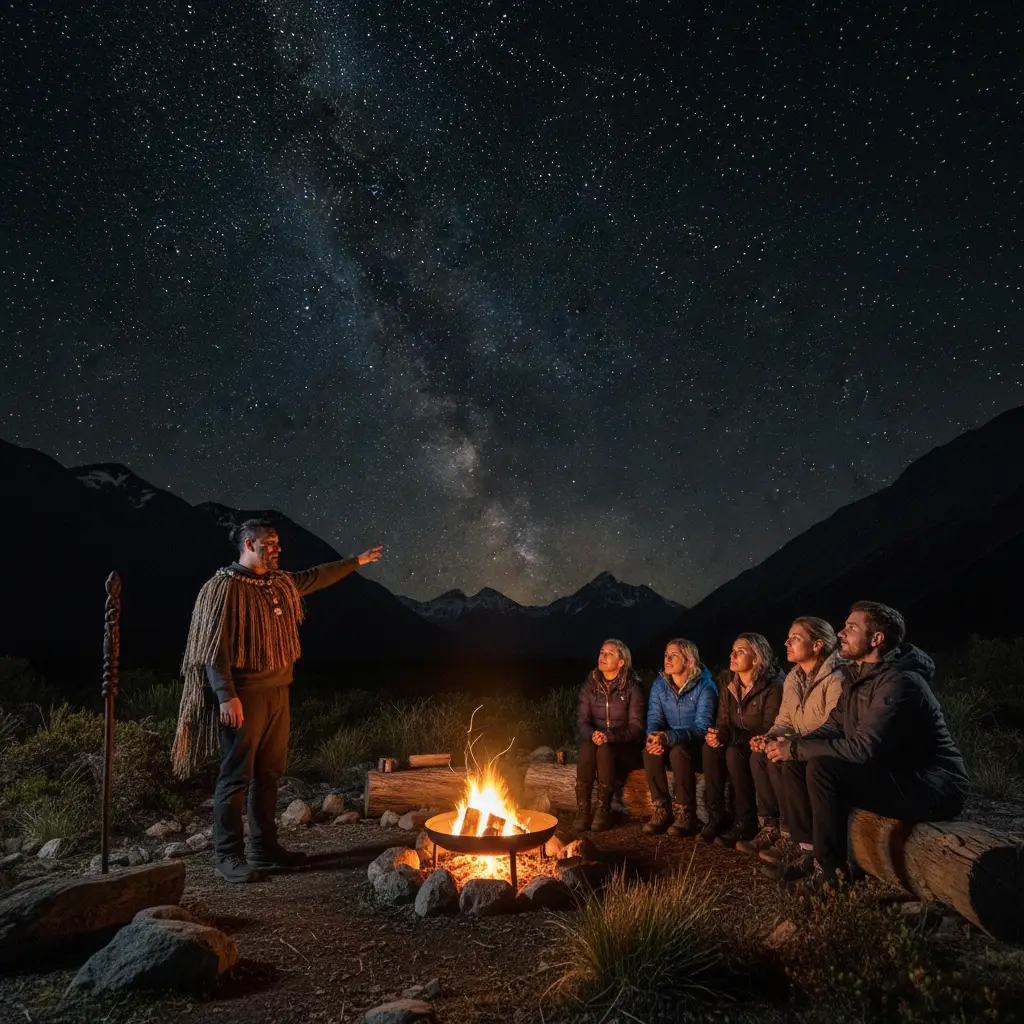
A distinct advantage of booking Queenstown stargazing tours is the integration of cultural storytelling. New Zealand astronomy is not just about Greek and Roman constellations; it is deeply rooted in Maramataka, the Maori lunar calendar.
Navigating by the Stars
Polynesian voyagers were among the world’s greatest astronomers, navigating the vast Pacific Ocean using the stars long before European instruments existed. Expert guides in the region explain how the rising of certain stars signaled the changing of seasons, planting times, and harvest.
Matariki (The Pleiades): Perhaps the most significant star cluster in New Zealand culture. The heliacal rising of Matariki in mid-winter marks the Maori New Year. Tours during June and July focus heavily on this cluster, explaining its significance in remembrance of the dead and planning for the year ahead. Understanding the sky through the lens of Maori legend adds a profound spiritual layer to the visual spectacle.
Winter Festival Stargazing and Aurora Hunting
The Queenstown Winter Festival, typically held in late June or early July, coincides with the longest nights of the year. For astronomers, winter is the prime season. The sun sets as early as 5:00 PM, providing nearly 12 hours of darkness for observation.
Chasing the Aurora Australis
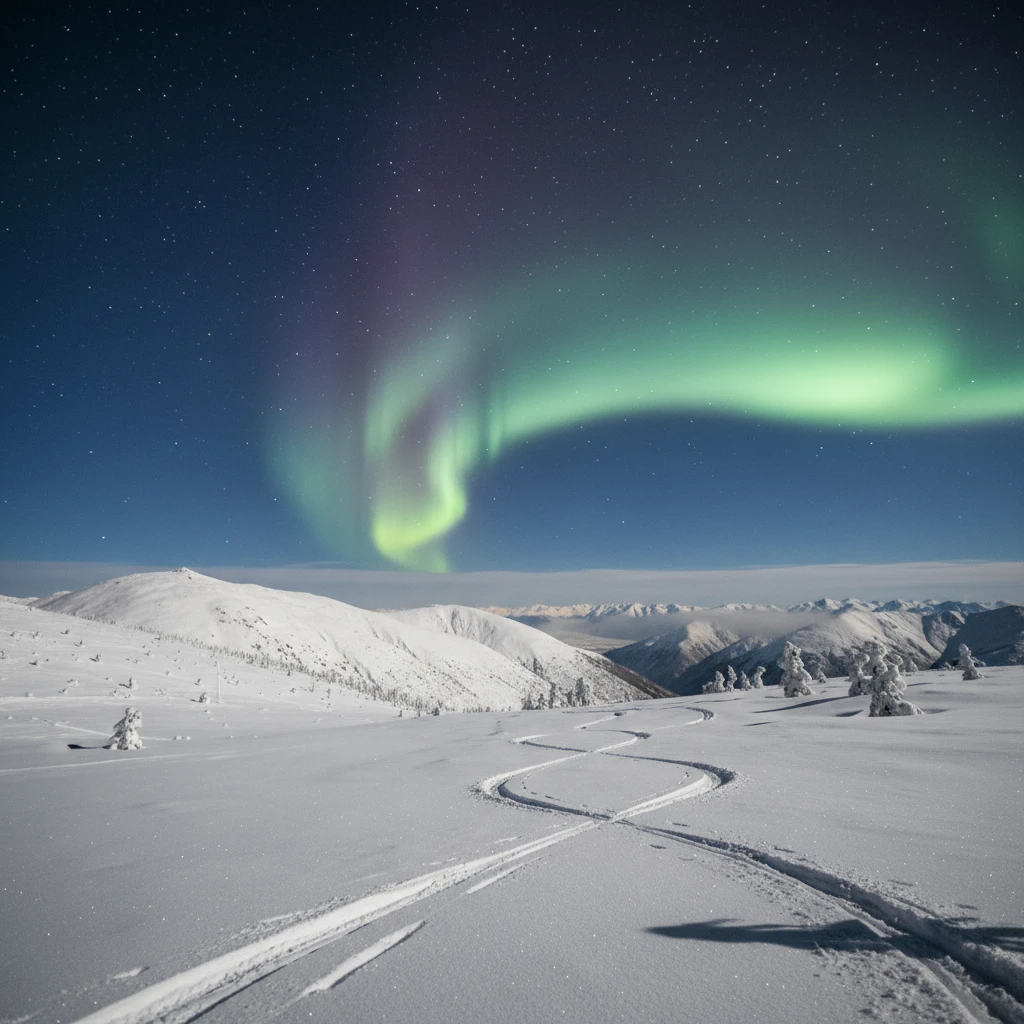
The Southern Lights are elusive, but Queenstown’s latitude puts it in a favorable zone during periods of high solar activity (solar maximum). Unlike the Aurora Borealis, which often appears directly overhead in the Arctic, the Aurora Australis usually manifests as a dynamic curtain of pinks, greens, and purples dancing on the southern horizon.
To maximize your chances of seeing the Aurora on a tour:
- Monitor Kp Index: Look for a Kp index of 5 or higher.
- Book Remote Tours: You need a clear view of the southern horizon, unobstructed by mountains or city lights. Tours that head toward the Crown Range or Glenorchy are best for this.
- Patience is Key: Auroras can flare up and die down within minutes. Guided tours provide the benefit of experienced spotters who know exactly where to look.
Combining Skiing and Astronomy
Queenstown is unique in that it offers world-class skiing by day and world-class astronomy by night. This duality allows for a dense, high-value travel itinerary. The “Aprés-ski” culture in Queenstown is evolving to include night-sky appreciation.
Coronet Peak Night Skiing
While not a dedicated astronomy tour, night skiing at Coronet Peak (available on Wednesdays and Fridays during the season) offers a hybrid experience. Skiing under floodlights is thrilling, but the real magic happens on the chairlift rides. As you ascend away from the floodlights, the sky above opens up. It is a casual way to enjoy the stars, though serious observers will prefer dedicated dark sky locations.
The Perfect Itinerary
For the ultimate 24-hour experience:
- 09:00 – 16:00: Ski or snowboard at The Remarkables.
- 17:00 – 19:00: Dinner and rest in Queenstown center.
- 20:00 – 23:00: Depart for a guided stargazing tour. The cold, crisp air that keeps the snow powdery also ensures the sky remains transparent for telescope viewing.
Practical Tips for Your Stargazing Tour
To ensure your transactional investment in a tour yields the best experience, preparation is vital. The alpine environment at night is unforgivingly cold, even in summer.
Essential Gear
- Thermal Layers: Merino wool base layers are standard New Zealand attire for a reason.
- Down Jacket: A heavy puffer jacket is mandatory. Tours involve standing still for long periods, which makes you colder than when you are active.
- Red Light Torch: If you bring a light, ensure it has a red mode. White light destroys night vision, which takes 20 minutes to regenerate.
- Gloves and Beanie: Essential to prevent heat loss from extremities.
Booking Advice
Queenstown stargazing tours are high-demand, low-capacity activities due to the limited number of telescopes and guides. It is recommended to book at least two weeks in advance, especially during the peak winter season (July-August) and Chinese New Year. Always check the cancellation policy regarding cloud cover; reputable operators offer full refunds or rescheduling if the sky is not visible.
Conclusion
Queenstown offers more than just adrenaline; it offers perspective. Standing beneath the vastness of the Southern Sky, viewing ancient constellations and distant galaxies, provides a humbling and awe-inspiring counterpoint to the rush of daily life. Whether you choose the convenience of the Skyline gondola or the remote beauty of Glenorchy, a stargazing tour is an investment in a memory that will last a lifetime.
People Also Ask
What is the best time of year for stargazing in Queenstown?
Winter (June to August) is the best time for stargazing in Queenstown. The nights are longest, the air is coldest (holding less moisture), and the Galactic Core of the Milky Way is most visible. It is also the best season to spot the Aurora Australis.
Can you see the Southern Lights from Queenstown?
Yes, it is possible to see the Southern Lights (Aurora Australis) from Queenstown, particularly from locations with a clear view of the southern horizon away from city lights. However, sightings rely on solar activity and are never guaranteed.
How much do Queenstown stargazing tours cost?
Prices vary by operator. Skyline Stargazing typically ranges from $100-$140 NZD per adult (including gondola). Specialized small-group tours or photography tours in remote locations like Glenorchy can range from $150 to $300+ NZD.
Are stargazing tours suitable for children?
Yes, most tours are family-friendly, particularly the Skyline Stargazing experience which is easily accessible. However, parents should consider the late hours and cold temperatures. Most operators have a minimum age (often around 5 or 6 years old).
What happens if it is cloudy on the night of my tour?
Reputable operators constantly monitor weather. If visibility is poor, they will usually cancel the tour and offer a full refund or the option to reschedule. Some operators, like Skyline, offer an indoor “virtual” tour option if you prefer not to cancel.
Do I need a professional camera for a stargazing tour?
You do not need a professional camera to enjoy the visual experience through telescopes. However, if you want to capture the night sky, a DSLR or Mirrorless camera with manual mode and a tripod is recommended. Some modern smartphones can also capture astrophotography with night mode.