
Matariki 2025 resources NZ provide essential tools for celebrating the Māori New Year, which will be observed as a public holiday on Friday, June 20, 2025. These resources encompass educational curriculum packs for schools, cultural competency guides for workplaces, and community event calendars designed to help New Zealanders reflect on the past, celebrate the present, and plan for the future.
As Aotearoa prepares to mark another year of the rising of the Pleiades star cluster, the demand for high-quality, authentic Matariki 2025 resources NZ has never been higher. Whether you are a teacher looking for curriculum-aligned activities, a business leader seeking to implement culturally safe celebrations, or a whānau member wanting to deepen your understanding of tikanga Māori, this hub serves as your comprehensive guide.
When is Matariki 2025?
The Matariki public holiday in 2025 will take place on Friday, June 20, 2025. Unlike traditional calendar holidays, the date of Matariki shifts annually. It depends on the Maramataka (the Māori lunar calendar) and the sighting of the Matariki star cluster (the Pleiades) in the pre-dawn sky during the lunar phase of Tangaroa, the last quarter of the moon.
The Matariki Advisory Committee, tasked with determining these dates, ensures that the public holiday aligns with the most auspicious time for celebration according to traditional astronomical knowledge. This period marks the transition between the harvesting of crops and the planting of new ones, symbolizing a time of renewal and reset.

What are the Best Educational Resources for Schools?
Educators across New Zealand require robust materials to teach the significance of Matariki effectively. The shift from passive acknowledgement to active learning is a core component of the national curriculum.
Ministry of Education and Te Kete Ipurangi (TKI)
The Ministry of Education provides extensive Matariki 2025 resources NZ tailored for different age groups, from Early Childhood Education (ECE) to secondary school levels. Key resources include:
- Te Whāriki Alignment: Activity packs that focus on the connection to nature and Papatūānuku for younger learners.
- Social Sciences Curriculum: Lesson plans discussing the history of the holiday’s reinstatement and the science of the Maramataka.
- Science and Astronomy: Modules detailing the astrophysics of the Pleiades cluster compared to Māori astronomical narratives.
Te Papa Tongarewa Teaching Kits
Te Papa offers downloadable activity books that are invaluable for classroom settings. These often include:
- Star Charts: Printable maps to help students identify the nine stars in the night sky.
- Waiata and Karakia: Audio files and lyrics to teach traditional songs and prayers associated with the New Year.
- Art Projects: Instructions for creating manu tukutuku (kites) and weaving stars (whetū) from harakeke (flax).
How Can Workplaces Celebrate Matariki?
For the corporate sector, Matariki presents an opportunity to enhance cultural competency and foster team unity. It is not merely a day off but a chance to integrate Māori values into business operations.
Workplace Policy and Celebration Guides
Leading diversity and inclusion organizations in NZ provide toolkits that help businesses navigate the holiday respectfully. Essential resources for 2025 include:
- Pronunciation Guides: Audio tools to ensure staff can correctly pronounce “Matariki” and the names of the stars.
- Tikanga Guidelines: Advice on hosting a workplace kai (feast), including the protocols of whakatau (welcome) and karakia mō te kai (blessing of food).
- Strategic Planning Workshops: Using the ‘planning for the future’ aspect of Matariki to hold vision-setting days for the new financial year.

What Resources are Available for Whānau?
Matariki is fundamentally a time for whānau (family) to gather, remember those who have passed, and celebrate the present.
Home Celebration Kits
Several organizations and iwi produce downloadable kits for home use. These resources usually focus on the three major themes of Matariki:
- Remembrance (Māharata): Templates for creating a “memory wall” or altar to honor family members who have passed away since the last Matariki.
- Celebrating the Present (Whakanuia): Recipes for a mid-winter feast, focusing on seasonal ingredients like kūmara and fish, which align with the stars Matariki and Waitī/Waitā.
- Looking to the Future (Ihirangi): Goal-setting worksheets for the family to plan the year ahead together.
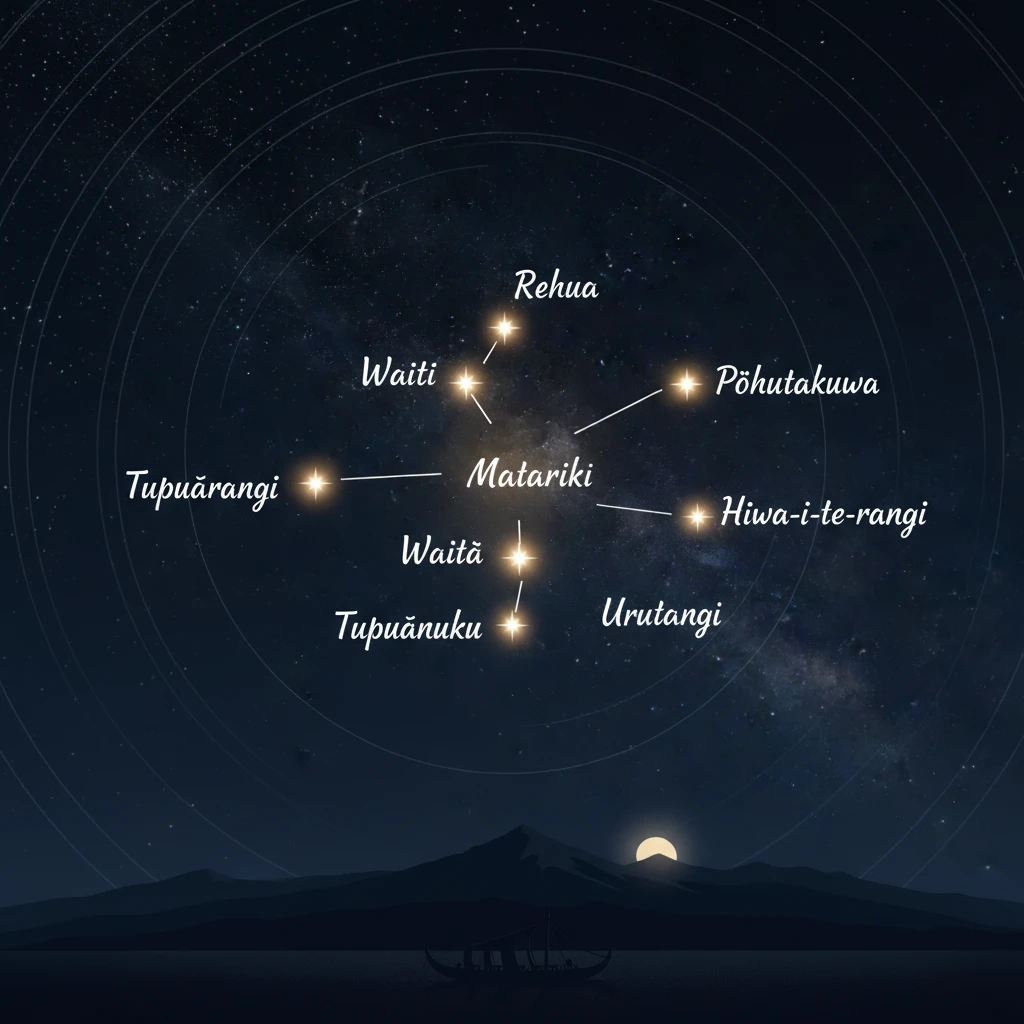
Understanding the Nine Stars of Matariki
To truly utilize Matariki 2025 resources NZ, one must understand the significance of the cluster itself. While many cultures recognize seven stars (the Seven Sisters), Māori tradition, specifically within the Tainui and Te Arawa waka traditions as championed by Dr. Rangi Mātāmua, recognizes nine distinct stars. Each star holds dominion over a specific environmental domain.
The Domains of the Stars
- Matariki: The mother of the cluster, signifying reflection, hope, and the health of people.
- Pōhutukawa: Connects to those who have passed away; the star of remembrance.
- Tupuānuku: Associated with food grown in the ground (kūmara, potatoes).
- Tupuārangi: Associated with food from the sky (birds, fruit, berries).
- Waitī: Connects to fresh water and the creatures within it (eels, koura).
- Waitā: Connects to the ocean and salt water food sources.
- Waipuna-ā-rangi: Associated with the rain.
- Ururangi: Associated with the winds.
- Hiwa-i-te-rangi: The wishing star; associated with granting the desires of the heart for the coming year.
Utilizing resources that explain these distinctions allows for a deeper connection to the environment. For example, if Ururangi is bright, it is said the winds will be favorable; if dim, the year may be turbulent.
Regional Event Highlights for 2025
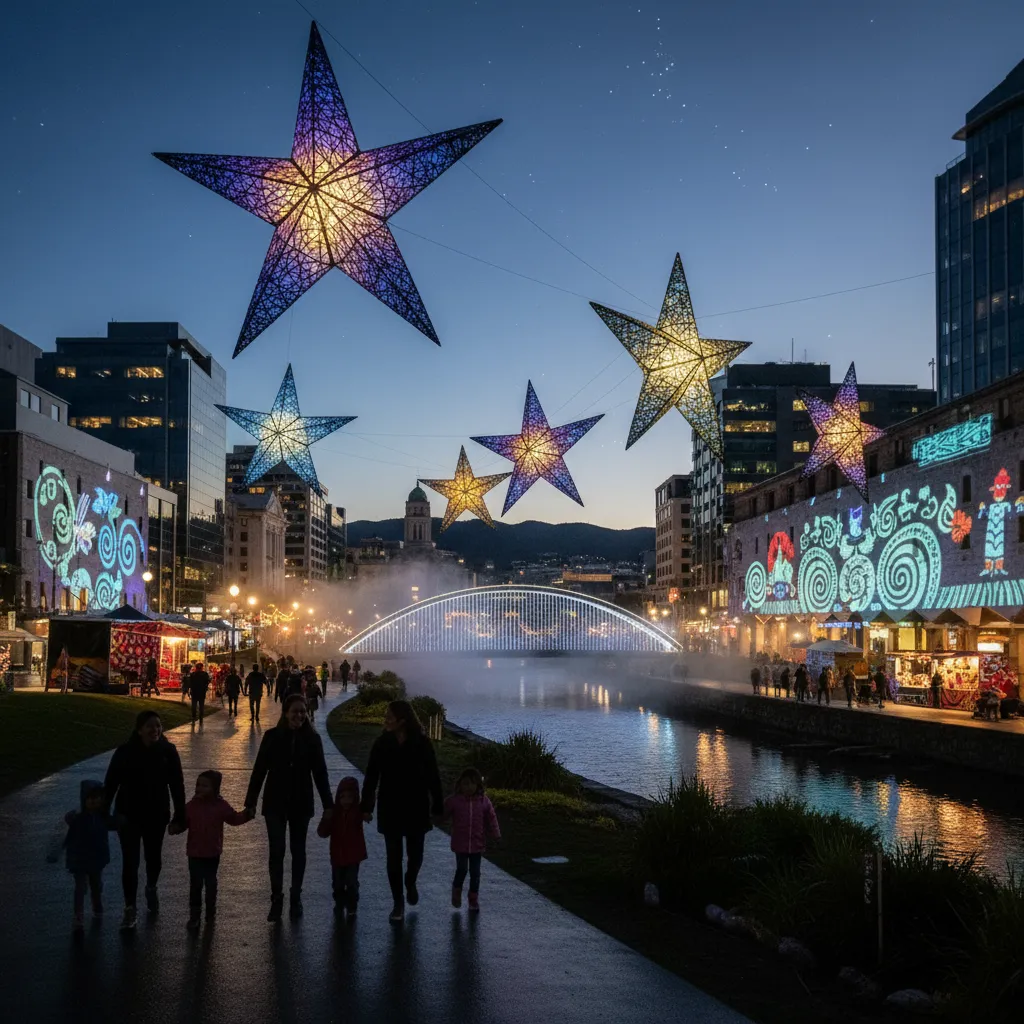
Across the motu (country), councils and iwi organize spectacular events. While specific schedules are finalized closer to the date, the following regions host flagship celebrations that are central to the Matariki 2025 resources NZ landscape.
Auckland (Tāmaki Makaurau)
The Matariki Festival in Auckland is a month-long celebration. Expect to see light shows illuminating the Harbour Bridge and large-scale concerts at the Auckland Domain. The focus is often on Te Karanga a Hape, a street party on Karangahape Road featuring live music, art installations, and street kai.
Wellington (Te Whanganui-a-Tara)
Wellington often hosts the Matariki Ahi Kā festival. This involves massive projections on the waterfront and Te Papa, celebrating fire and warmth during the cold winter months. A key resource here is the Wellington City Council’s app, which often includes an augmented reality star hunt along the waterfront.
Christchurch (Ōtautahi)
Tīrama Mai is Christchurch’s lighting festival. It transforms the central city with light installations and storytelling projections. The event focuses heavily on storytelling (pūrākau) and is a fantastic resource for families wanting to experience visual storytelling of Māori myths.
Rotorua & Regional Hubs
In regions like Rotorua, celebrations are often more traditional, centering around thermal activity and hautapu ceremonies held at dawn. These events are often livestreamed, serving as a digital resource for those unable to attend in person.
How to Move from Understanding to Active Celebration
The journey of Matariki in New Zealand has shifted from awareness to deep engagement. Using Matariki 2025 resources NZ effectively means participating in the rituals, not just reading about them.
The Hautapu Ceremony
The most traditional way to celebrate is the Hautapu. This involves cooking food in an earth oven (umu kohukohu whetū) and uncovering it so the steam rises to feed the stars. While a full ceremonial Hautapu requires specific knowledge, families can replicate the intent by cooking a shared meal and taking a moment outside, before dawn, to observe the stars and let the steam of their hot drinks or food rise up as an offering of gratitude.
Environmental Kaitiakitanga
Because Matariki is tied to the harvest and the environment, many resources now emphasize kaitiakitanga (guardianship). Planting trees, cleaning local waterways (Waitī), or organizing beach clean-ups (Waitā) are practical ways to honor the stars that govern these domains.
People Also Ask (PAA)
Is Matariki the same date every year?
No, the date of Matariki changes every year. It follows the Māori lunar calendar (Maramataka) and the position of the stars. In 2025, the public holiday is on June 20, but in other years it can range from late June to mid-July.
What are the 3 main things to do during Matariki?
The three main principles of Matariki are: 1) Remembrance (honoring those who have passed), 2) Celebrating the present (gathering with whānau and sharing kai), and 3) Looking to the future (planning and goal setting for the new year).
Can anyone celebrate Matariki?
Yes, Matariki is for everyone in Aotearoa New Zealand. While it is rooted in Māori culture, the values of reflection, thanksgiving, and renewal are universal. Non-Māori are encouraged to participate respectfully and learn about the traditions.
What food is traditionally eaten on Matariki?
Traditional foods include kūmara (sweet potato), fish, eel, birds (where legally and culturally appropriate), and preserved foods. The feast is known as ‘te kai o te tau hou’ (the food of the new year).
How do you find the Matariki cluster in the sky?
To find Matariki, look towards the northeast horizon before dawn. Find the line of three stars in Orion’s Belt (Tautoru). Follow the line to the left to find a triangular cluster (Te Kokotā). Continue left to find the bright star cluster of Matariki.
Why are there 9 stars of Matariki instead of 7?
While the Pleiades cluster contains hundreds of stars and many cultures see seven (the Seven Sisters), Māori astronomy identifies nine visible stars that have specific significance to the environment and weather patterns in Aotearoa.