Professional Matariki greetings in Te Reo Māori centre on the phrase “Mānawatia a Matariki,” which translates to “Celebrate Matariki” or “Welcome Matariki.” For business contexts, combining this with formal acknowledgments like “Tēnā koutou katoa” (Greetings to all) ensures cultural respect, professionalism, and appropriate recognition of the Māori New Year within corporate communications and meetings.
Why Use Te Reo Māori During Matariki?
Matariki, the Māori New Year, is a pivotal time in the New Zealand calendar, marking the rising of the Pleiades star cluster. In the business landscape of Aotearoa, acknowledging this event goes beyond mere compliance; it demonstrates a genuine commitment to biculturalism and respect for tangata whenua (people of the land). Using professional Matariki greetings te reo is a powerful way to align your organizational values with the cultural fabric of the nation.
Integrating bilingual greetings into your corporate vocabulary during this period fosters inclusivity. It signals to clients, stakeholders, and employees that your business is culturally competent and aware of the changing seasons—both environmental and cultural. It transforms a standard meeting opener into a moment of shared connection and reflection, which are key themes of Matariki.

Furthermore, the revitalization of Te Reo Māori is a national project. By adopting these phrases in professional settings, businesses play a crucial role in normalizing the language. This section explores not just the words, but the intent behind them, ensuring that when you speak, you do so with mana (integrity) and understanding.
What Are the Best Professional Matariki Greetings?
When selecting a greeting for a business context, precision and formality are key. While casual greetings like “Kia ora” are ubiquitous, Matariki calls for specific phrasing that acknowledges the occasion. Below are the primary phrases you should integrate into your vocabulary during June and July.
The Primary Greeting: Mānawatia a Matariki
This is the most widely accepted and encouraged phrase. It is versatile and can be used in emails, as a spoken greeting, or on signage.
- Te Reo: Mānawatia a Matariki
- English Meaning: Celebrate Matariki / Welcome Matariki
- Usage: Use this in place of “Happy New Year” or general greetings during the festival period.
Expanded Formal Greetings
For more formal correspondence or opening a speech, you may wish to expand on the basic greeting to include the concept of the New Year.
- Te Reo: Ngā mihi o Matariki, te tau hou Māori
- English Meaning: Greetings of Matariki, the Māori New Year
- Usage: Excellent for the subject line of client emails or the opening sentence of a newsletter.
Acknowledging the Season
Matariki is also a time of winter. Acknowledging the season adds depth to your greeting.
- Te Reo: Ngā mihi o te wā
- English Meaning: Acknowledgments of the time/season
- Usage: A safe, general professional greeting that fits well during the Matariki period when you want to be concise.
Formal Opening and Closing Phrases for Speeches
Public speaking in a New Zealand business context often requires a formal structure known as mihi. While you may not perform a full whaikōrero (formal speech), using the correct opening and closing bookends elevates your presentation and shows respect to the audience.

Opening a Meeting or Speech (Timatanga)
Start by acknowledging the gathering. In a professional setting, you are usually addressing a group.
Option 1 (General Group):
“Tēnā koutou, tēnā koutou, tēnā koutou katoa.”
(Greetings, greetings, greetings to you all.)
Option 2 (Matariki Specific):
“Tēnā koutou katoa. Mānawatia a Matariki ki a koutou.”
(Greetings to all. Happy Matariki to you all.)
Option 3 (Acknowledging Dignitaries/VIPs):
“E ngā mana, e ngā reo, tēnā koutou katoa.”
(To the authorities, to the voices/speakers, greetings to you all.)
Closing a Meeting or Speech (Whakamutunga)
Ending a speech requires a clear sign-off. Do not just fade away; conclude with intent.
Option 1 (Simple & Professional):
“Nō reira, tēnā koutou, tēnā koutou, tēnā koutou katoa.”
(Therefore, greetings, greetings, greetings to you all.)
Option 2 (Blessing/Goodwill):
“Kia pai tō rā. Ngā mihi nui.”
(Have a good day. Many thanks.)
Option 3 (Matariki Reflection):
“Kia hora te marino, kia whakapapa pounamu te moana. Mānawatia a Matariki.”
(May peace be widespread, may the sea be like greenstone [calm]. Celebrate Matariki.)
Pronunciation Guide for Non-Speakers
Nothing undermines a professional greeting faster than poor pronunciation. While effort is appreciated, accuracy shows true respect. Te Reo Māori has consistent pronunciation rules, particularly regarding vowels. Mastering these is the first step to using professional Matariki greetings te reo effectively.
The Five Vowels
Unlike English, Māori vowels generally have one sound (though length varies with a macron/tohutō).
- A: as in ‘car’ (short: ‘cup’)
- E: as in ‘egg’
- I: as in ‘feet’ (short: ‘kit’)
- O: as in ‘or’ (short: ‘fort’)
- U: as in ‘moon’ (short: ‘put’)
Pronouncing “Mānawatia a Matariki”
Let’s break down the target phrase phonetically.
- Mānawatia: Maah-nah-wah-tea-ah. (Stress the first ‘Maah’).
- a: ah.
- Matariki: Mah-tah-ree-key. (Keep the ‘r’ soft, almost like a ‘d’ in English).
Tip: Avoid the anglicized “Mat-a-ricky.” Ensure the ‘ri’ sounds like ‘ree’ and the ‘ki’ sounds like ‘key’.
Contextual Usage: When to Use Which Greeting
Context is king in business communication. Using a highly formal greeting in a quick Slack message might seem out of touch, while using a casual greeting in a board report might seem disrespectful. Here is a guide to navigating these nuances.
The Boardroom & Client Presentations
Tone: High Formality.
Recommended: Start with “Tēnā koutou katoa” followed by “Ngā mihi o te tau hou Māori.”
Why: This establishes authority and acknowledges the solemnity of the meeting. It sets a culturally safe space for proceedings.
Internal Team Meetings
Tone: Semi-Formal / Collegial.
Recommended: “Kia ora koutou, Mānawatia a Matariki.”
Why: “Kia ora” is friendly and inclusive. Adding the Matariki greeting acknowledges the time of year without feeling overly ceremonial.
Email Correspondence
Tone: Professional but efficient.
Opening: “Kia ora [Name],” or “Tēnā koe [Name],”
Closing: “Ngā mihi,” or specifically for June/July, “Ngā mihi o Matariki.”
Why: It keeps the email standard professional but customizes the sign-off to be current and culturally aware.
Bilingual Email Signatures and Sign-offs
One of the easiest ways to integrate Te Reo into your business is through email signatures. This is a passive yet high-impact method of normalizing the language.
Professional Sign-offs
- Nāku noa, nā (Yours sincerely) – Use this when you have opened with a formal greeting like Tēnā koe.
- Ngā mihi (Regards / Thanks) – The standard business closing.
- Ngā mihi nui (Kind regards / Many thanks) – Slightly warmer.
- Mā te wā (See you later) – Good for colleagues you speak with often.
Matariki Specific Signature Add-on
Consider adding a temporary banner or text line to your email signature during the Matariki period:
Mānawatia a Matariki – Celebrating the Māori New Year
We acknowledge the rising of Matariki and the time for reflection and renewal.
Creating a Printable Cheat Sheet for Meeting Rooms
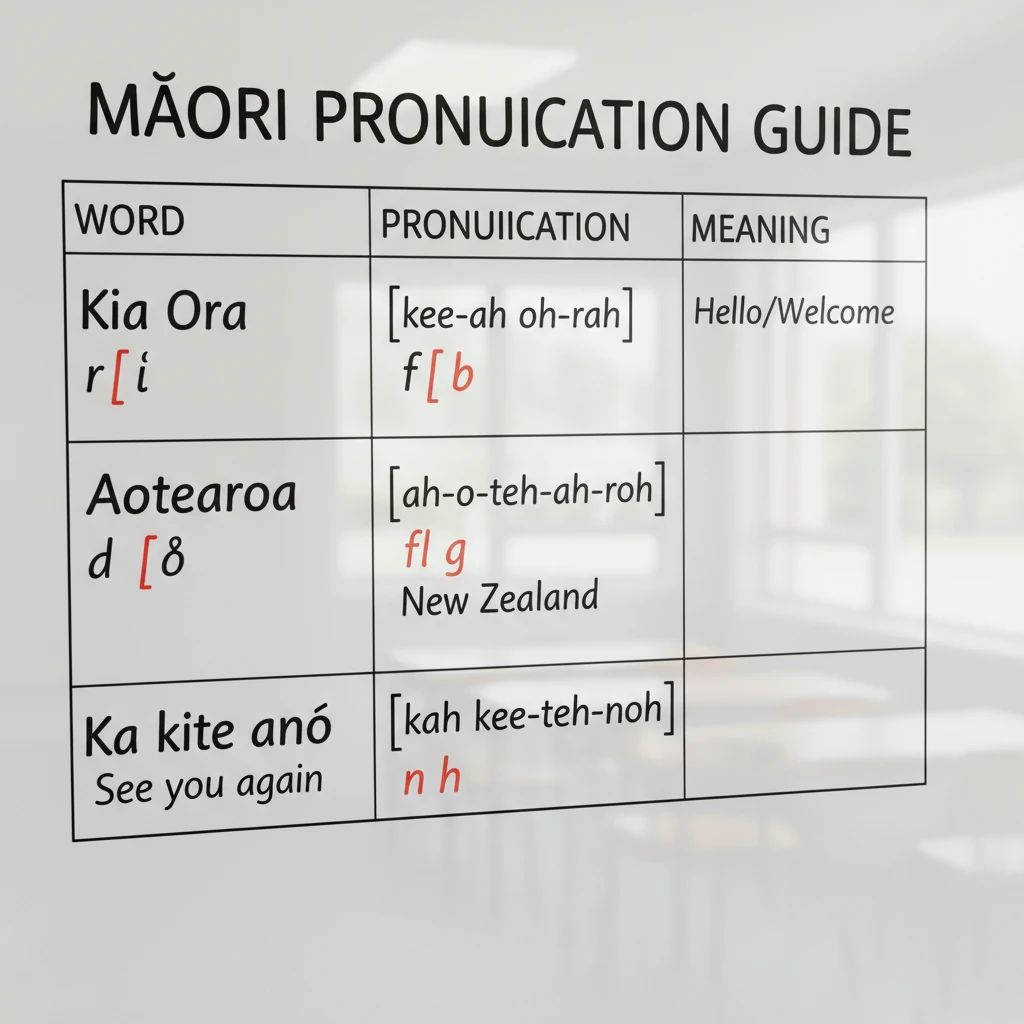
To truly embed these greetings into your workplace culture, accessibility is vital. Staff often hesitate to use Te Reo because they are afraid of making a mistake. A “Meeting Room Cheat Sheet” removes this barrier.
What to include on your cheat sheet:
- The “Big Three” Greetings: Kia ora (Hello), Tēnā koe (Hello to one), Tēnā koutou (Hello to all).
- The Matariki Special: Mānawatia a Matariki (Happy Matariki).
- Phonetic Help: Small text underneath difficult words.
- Opening Karakia (Optional): A non-religious opening blessing is often appreciated in NZ government and educational sectors.

By placing these visible aids in meeting rooms, you give permission for staff to try. It signals that effort is valued over perfection, creating a learning environment consistent with the principles of Matariki—growth and new beginnings.
People Also Ask
What is the correct way to wish someone a Happy Matariki in a business email?
The most professional and widely accepted phrase is “Mānawatia a Matariki.” You can use this as a standalone subject line or as a sign-off (e.g., “Ngā mihi, Mānawatia a Matariki”). Another option is “Ngā mihi o te tau hou Māori” (Greetings of the Māori New Year).
How do you start a formal speech in Te Reo Māori?
A standard formal opening is “Tēnā koutou, tēnā koutou, tēnā koutou katoa.” This acknowledges everyone present three times, representing the three baskets of knowledge or simply emphasizing the greeting to the many. For Matariki, you might add “Mānawatia a Matariki” immediately after this opening.
Can I use “Kia ora” in a formal business meeting?
“Kia ora” is generally acceptable in most modern New Zealand business contexts, but it is considered informal to semi-formal. For very high-stakes meetings, formal presentations, or when addressing elders/superiors for the first time, “Tēnā koe” (to one person) or “Tēnā koutou” (to three or more) is more appropriate and respectful.
What are professional email sign-offs for Matariki?
During the Matariki season, you can replace your standard “Regards” with “Ngā mihi o Matariki” (Matariki greetings) or simply “Mānawatia a Matariki.” For a standard professional closing year-round, “Ngā mihi” (Regards) or “Nāku noa, nā” (Yours sincerely) are best.
How do you pronounce “Mānawatia a Matariki”?
It is pronounced “Maah-nah-wah-tea-ah ah Mah-tah-ree-key.” Ensure you pronounce the ‘a’ sounds as a soft ‘ah’ (like in car) and the ‘i’ sounds as ‘ee’ (like in feet). Avoid hard English vowel sounds.
Is it appropriate for non-Māori to use Te Reo greetings?
Yes, it is highly encouraged. Using Te Reo Māori respectfully shows support for the language and culture of Aotearoa. The key is to make a genuine effort with pronunciation and to use the phrases in the correct context. It is seen as a gesture of goodwill and cultural competence.