Matariki office decorations NZ encompass a range of culturally significant items used to celebrate the Māori New Year in professional environments. Authentic displays typically feature representations of the nine stars (Ngā Whetū o Matariki), natural materials like harakeke (flax), and educational resources sourced from Māori-owned businesses to ensure cultural integrity and sustainability.
As Aotearoa New Zealand embraces Matariki as a public holiday, businesses across the country are seeking meaningful ways to mark this period of reflection, celebration, and renewal. Decorating the office is more than just aesthetic enhancement; it is a visual commitment to biculturalism and an opportunity to educate staff and visitors about the significance of Te Kāhui o Matariki (the Matariki star cluster).
Where to Buy Authentic Matariki Decorations in NZ
When searching for Matariki office decorations NZ, the most critical factor is authenticity. Commercializing indigenous culture requires sensitivity. The best practice is to purchase display packs and artwork directly from pakihi Māori (Māori businesses) or suppliers who collaborate with Māori artists. This ensures that the designs are culturally appropriate and that the economic benefits return to the community.
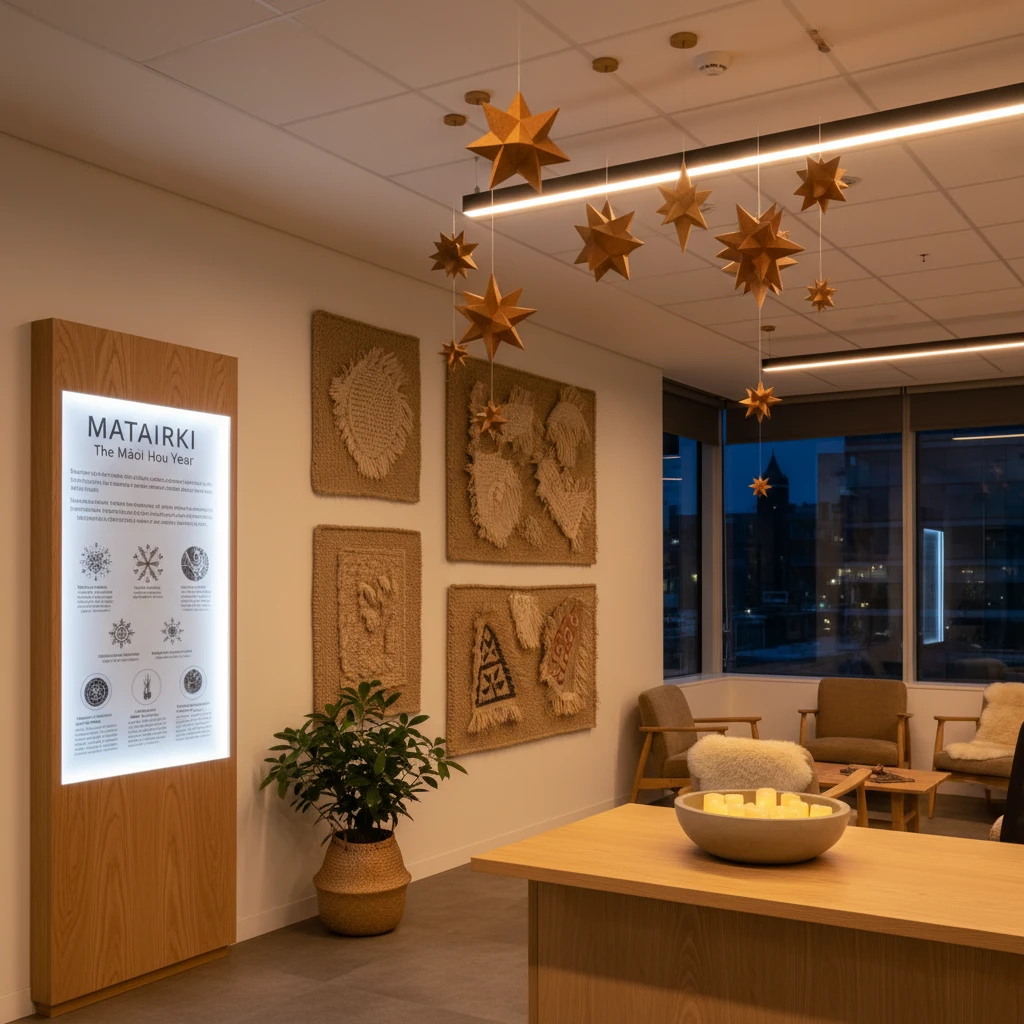
Top Sources for Office Display Packs
Several New Zealand retailers and organizations specialize in educational and decorative resources suitable for corporate environments:
- TeacherTalk & Kmart (Local Collaborations): While mass-market retailers often stock generic items, look for specific lines that credit local Māori artists. These often include bunting, wall decals, and window clings featuring traditional kōwhaiwhai patterns.
- Ako Aotearoa & Te Wānanga o Aotearoa: These educational institutions often release downloadable resource packs that can be printed professionally for high-quality wall displays.
- Local Marae and Markets: For physical items like weaving (raranga) or carvings (whakairo), commissioning a local artist is the gold standard. This provides your office with a taonga (treasure) that can be used for years to come.
What to Look for in a Commercial Display Pack
A comprehensive Matariki display pack for an office setting should ideally include:
- Star Cutouts: Representations of the nine distinct stars.
- Bunting: To span across ceilings or reception desks.
- Information Cards: Brief explanations of what Matariki means, suitable for staff to read in passing.
- Te Reo Māori Labels: Vocabulary cards to encourage language learning (e.g., “Manawatia a Matariki”).
The Meaning of the Stars in Visual Displays
An effective office display goes beyond decoration; it educates. When arranging your Matariki office decorations NZ, it is powerful to group them according to the specific domains of the nine stars. This transforms a wall into a storytelling medium.
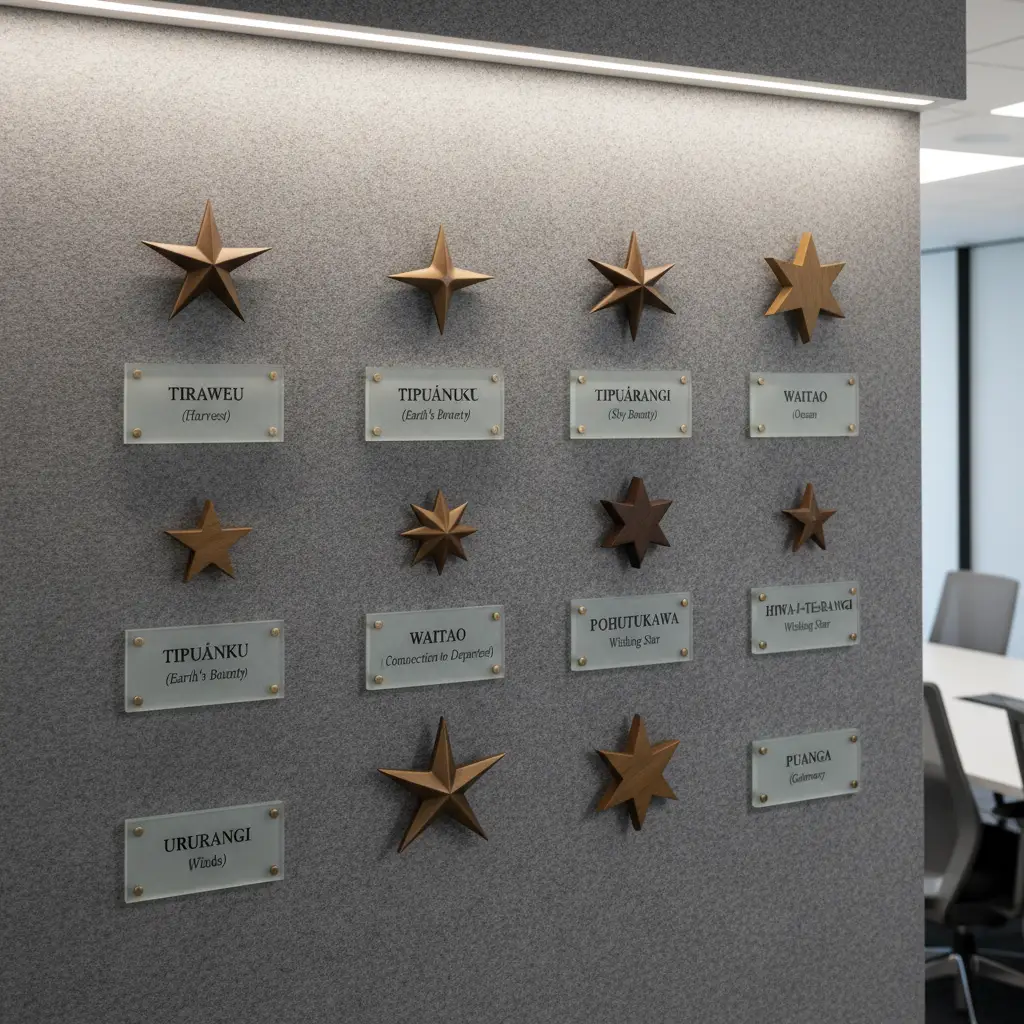
Designing a “Nine Stars” Feature Wall
To create a focal point in your lobby or breakroom, consider dedicating specific zones to the different stars. Here is how to interpret them for a visual display:
- Matariki (The Mother): Place this star in the center or at the top. It signifies reflection, hope, and the health of the environment.
- Pōhutukawa: Associated with those who have passed on. A display here could include a “memory tree” where staff can respectfully pin notes for loved ones lost.
- Tupuānuku (Food from the earth): Decorate this section with green tones and images of kumara or ferns.
- Tupuārangi (Food from the sky): Use bird motifs (manu) and tree imagery.
- Waipuna-ā-rangi (Rain): Use cascading blue streamers or droplet shapes to represent rainfall.
- Waitī (Freshwater): Teal and light blue colors representing eels (tuna) and rivers.
- Waitā (Saltwater): Darker blues and marine life imagery.
- Ururangi (Wind): Swirling patterns and kites (manu tukutuku) fit well here.
- Hiwa-i-te-rangi (The wishing star): This is crucial for corporate goal setting. Create a “wishing wall” where the team can post aspirations for the business year ahead.
DIY Decoration Ideas for Team Building
Matariki is fundamentally about whanaungatanga (kinship/connection). Engaging your team in creating the decorations is often more impactful than buying pre-made items. It fosters collaboration and allows for a shared learning experience regarding the holiday’s significance.
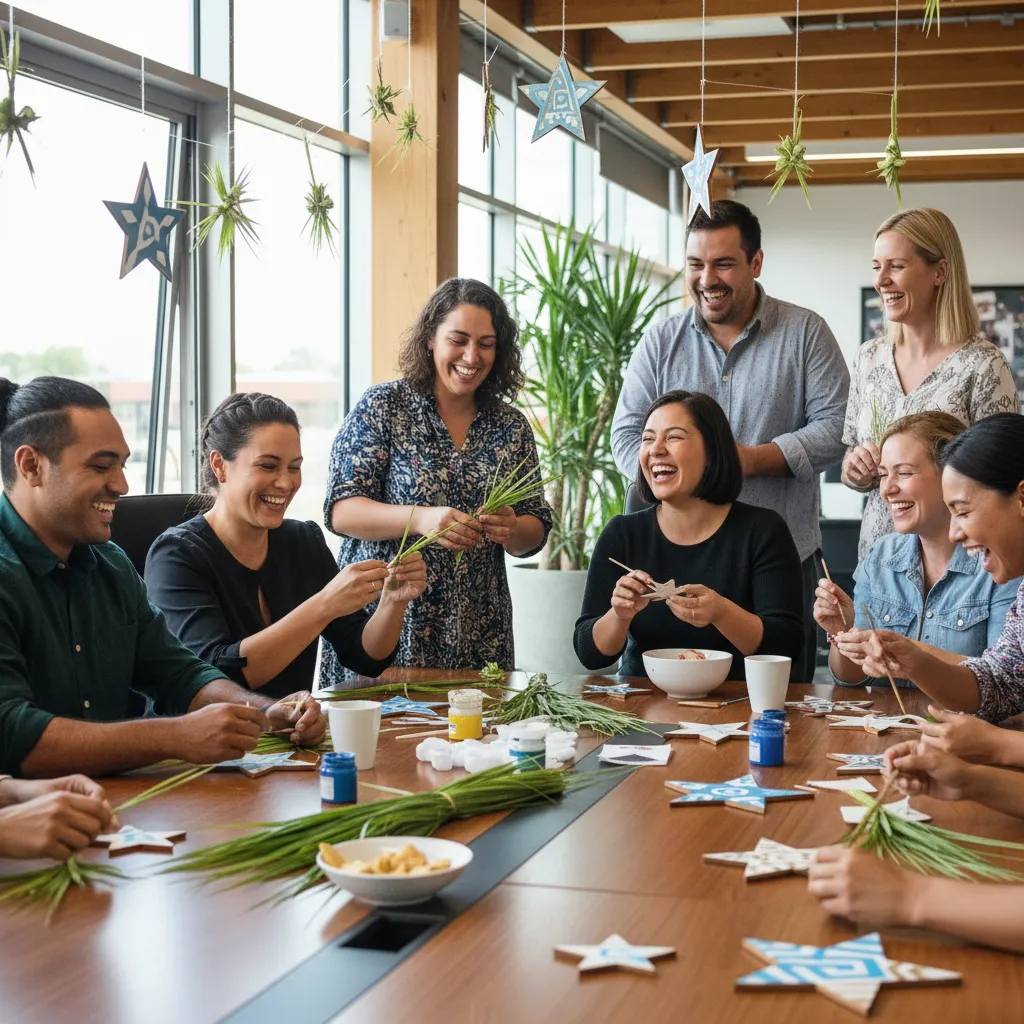
Activity 1: Harakeke (Flax) Weaving Workshop
Invite a local weaver to teach your staff how to make simple putiputi (flowers) or whetū (stars) from harakeke. These can be dried and kept indefinitely. If fresh flax isn’t available, high-quality paper strips can be used to simulate the weaving process.
Activity 2: The “Hiwa-i-te-rangi” Dream Board
Instead of a standard whiteboard session, dedicate a lunch hour to creating a collective dream board. Use recycled magazines and craft supplies to create a visual collage of the company’s goals for the New Year. Frame this collage and hang it in a communal space as a central piece of your Matariki decor.
Activity 3: Manu Tukutuku (Kite) Construction
Kites were traditionally flown during Matariki to connect the earth and heavens. Teams can compete to build small, decorative kites using bamboo skewers and tissue paper. These make excellent ceiling hangings that catch the air conditioning currents, adding movement to the office.
Sustainable and Plastic-Free Decor Options
Matariki is deeply connected to the environment and the cycles of nature. Therefore, using single-use plastics, glitter, or non-recyclable materials contradicts the spirit of the holiday. Sustainable Matariki office decorations NZ align your celebration with the values of kaitiakitanga (guardianship).
Eco-Friendly Alternatives
- Wood over Plastic: Choose laser-cut wooden stars rather than plastic or foam shapes. These can be reused annually and look more professional.
- Natural Light: Instead of battery-operated fairy lights which generate e-waste, utilize paper lanterns or arrange displays near windows to catch the natural winter light.
- Living Decor: Incorporate native plants into your display. Small potted Kawakawa or ferns can be placed around the office and planted in the ground once the celebration concludes.
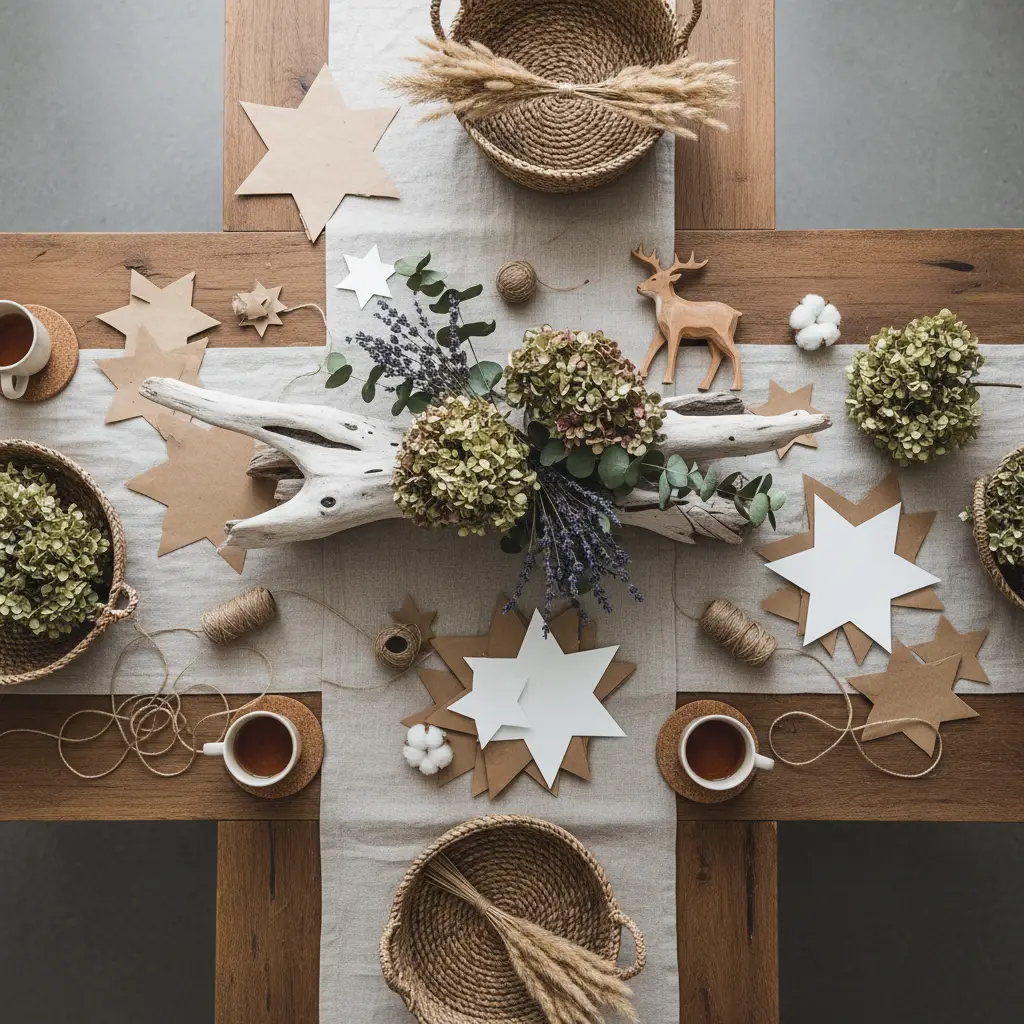
- Recycled Paper Bunting: Use old maps, books, or office paper to cut out star shapes for bunting. This adds a texture and history to the decor that store-bought plastic streamers lack.
Cultural Etiquette for Displaying Matariki Art
When displaying cultural items in a commercial space, following proper tikanga (protocol) ensures respect. Here are key guidelines for your office:
Placement Matters
Avoid placing representations of Matariki, especially those depicting ancestors or Pōhutukawa (associated with the dead), near areas where food is consumed or disposed of, such as directly above trash cans or in bathrooms. High positions on walls are generally preferred as they represent the celestial nature of the stars.
Storage and Removal
When Matariki concludes, decorations should not be thrown in the rubbish bin. If they are natural materials (like flax), they should traditionally be returned to the earth (buried or composted). If they are reusable items, they should be stored carefully in a dedicated box, not mixed loosely with general office clutter. Treating the items with respect maintains the mana of the celebration for the following year.
People Also Ask
What are the best colors for Matariki decorations?
The most appropriate colors for Matariki decorations are those found in the winter night sky and nature. Black, dark blue, and purple represent the night sky (Te Pō). Silver and white represent the stars (Ngā Whetū). Earthy tones like ochre, deep greens, and browns are also suitable to represent the harvest and the earth (Papatūānuku).
When should we put up Matariki decorations in the office?
Matariki decorations should ideally go up in late May or early June, coinciding with the heliacal rising of the star cluster. They can remain up throughout the Matariki period, which typically lasts until mid-July. It is common to take them down after the official public holiday or the end of the lunar phase.
Is it appropriate for non-Māori businesses to decorate for Matariki?
Yes, it is appropriate and encouraged for all New Zealand businesses to celebrate Matariki. It is a unique holiday for Aotearoa. The key is to approach the decoration with respect, using it as an opportunity for education and acknowledging the cultural origins of the event, rather than just for commercial gain.
How can we make our own Matariki stars?
You can make Matariki stars using “harakeke” (flax) weaving techniques or origami using square pieces of paper. For a simpler office activity, cardboard cutouts wrapped in wool or twine create a rustic, textured star that is easy for teams to assemble together.
What is the difference between the 7 and 9 stars of Matariki?
Historically, some iwi recognized 7 stars, while others recognized 9. In the context of the modern public holiday and education, the 9 stars are formally recognized. The two additional stars are Pōhutukawa and Hiwa-i-te-rangi. Including all 9 in your display is considered the most inclusive and educational approach for a workplace.
Where can I find free Matariki printables for work?
Free Matariki printables are often available from government websites like Te Papa Tongarewa, the Science Learning Hub, and Te Wānanga o Aotearoa. These resources are high-quality, culturally accurate, and excellent for creating budget-friendly educational wall displays.