
The Matariki stars for food are Tupu-ā-nuku and Tupu-ā-rangi. Tupu-ā-nuku governs edible plants grown within the earth, such as kūmara (sweet potato) and taewa (potatoes), signaling soil fertility. Tupu-ā-rangi oversees food sources from the sky, specifically the forest canopy, including birds like the kererū and edible berries, indicating the health of the forest ecosystem.
As the Matariki cluster (Pleiades) rises in the pre-dawn sky of mid-winter, it signals the Māori New Year. While the cluster as a whole represents renewal and remembrance, specific stars within the group hold distinct responsibilities over the environment and sustenance. For agriculturalists, gardeners, and those interested in cultural tourism in New Zealand, understanding the Matariki stars for food is essential for aligning with the natural rhythms of the land and sky.
Tupu-ā-nuku: The Star of Cultivated Food
Tupu-ā-nuku is the star connected to everything that grows within the soil to be harvested for sustenance. The name itself breaks down to “Tupu” (to grow) and “Nuku” (short for Papatūānuku, the Earth Mother). This star is the celestial advocate for gardeners, farmers, and anyone who relies on the soil for their livelihood.
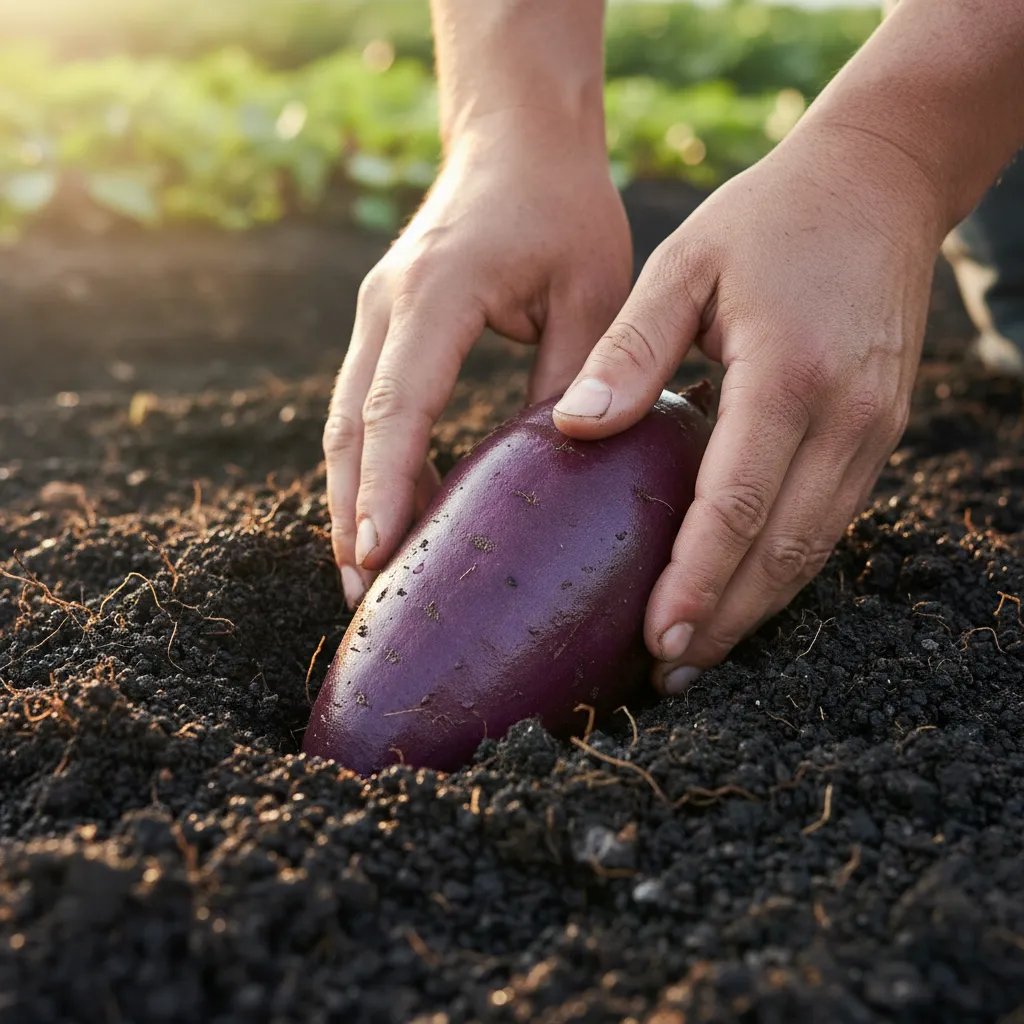
The Connection to Papatūānuku
In Māori cosmology, the relationship between the stars and the earth is symbiotic. Tupu-ā-nuku is often viewed as the eldest of the stars associated with food because the cultivation of crops was the cornerstone of pre-European Māori survival. This star dictates the health of the soil and the success of root vegetables.
When Tupu-ā-nuku appeared bright and clear in the pre-dawn sky during the rising of Matariki, it was interpreted as a sign that the coming growing season would be fruitful. A warm season with abundant crops of kūmara and taewa (Māori potatoes) was expected. Conversely, if the star appeared hazy or shimmering, it was a warning of a cold, difficult season ahead, prompting the ancestors to manage their stored food stocks with extreme caution.
Key Crops Associated with Tupu-ā-nuku
While modern New Zealand gardens contain a vast array of vegetables, Tupu-ā-nuku is traditionally linked to the staples of the Māori diet that require earth cultivation:
- Kūmara (Sweet Potato): The most prized crop, brought from the Pacific islands and adapted to the cooler New Zealand climate.
- Taewa (Māori Potatoes): Varieties like Moemoe and Urenika.
- Taro: Though harder to grow in cooler regions, it remains significant.
- Aruhe (Fern Root): While wild, it is dug from the earth, falling under this star’s domain.
Tupu-ā-rangi: Bounty from the Forest Canopy
Shift your gaze from the soil to the sky, and you find Tupu-ā-rangi. This star is connected to food products that originate in the sky—specifically, the fruits, berries, and birds found in the trees. “Rangi” is short for Ranginui (the Sky Father). This star represents the biodiversity of the forest and the abundance of “kai” (food) available above our heads.
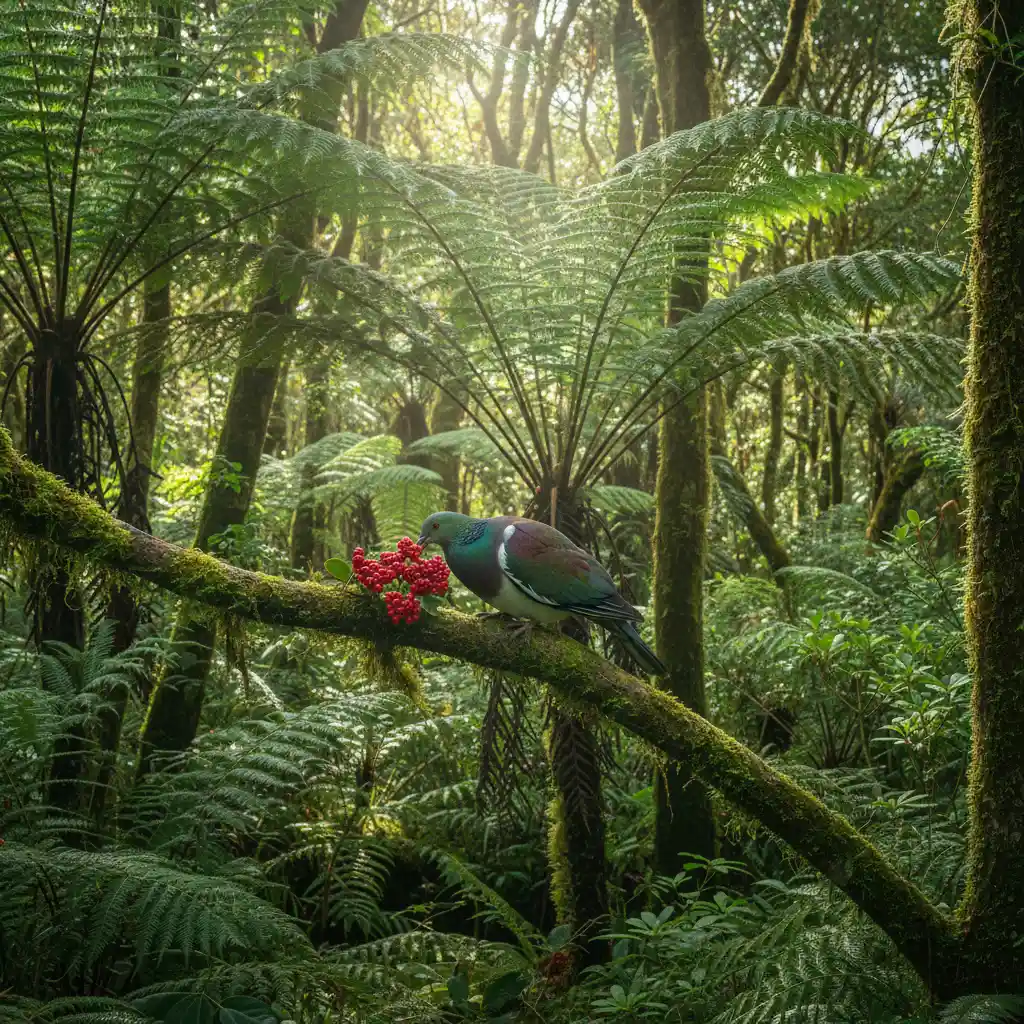
Guardianship of the Forest
Tupu-ā-rangi is often cited as an advocate for the forest’s health. In the traditional worldview, if the forest is healthy, the bird life is abundant. The brightness of Tupu-ā-rangi predicted the availability of key protein sources, particularly the kererū (New Zealand wood pigeon), tūī, and other forest birds that were traditionally harvested (a practice now regulated or prohibited to conserve native species).
Berries and Blossoms
The link between birds and trees is inseparable; the birds thrive only when the trees fruit. Therefore, Tupu-ā-rangi is also the star of berries and seeds. Essential forest foods include:
- Hinau berries: Often pounded into cakes.
- Miro berries: A favorite food of the kererū, which in turn made the birds fat and flavorful.
- Karaka berries: Toxic if eaten raw, but a staple carbohydrate when processed correctly.
Today, Tupu-ā-rangi serves as a reminder of the importance of conservation. It encourages us to look after our native trees and protect the habitats of our native birds, ensuring the “sky” remains full of life.
Harvesting Traditions and the Maramataka
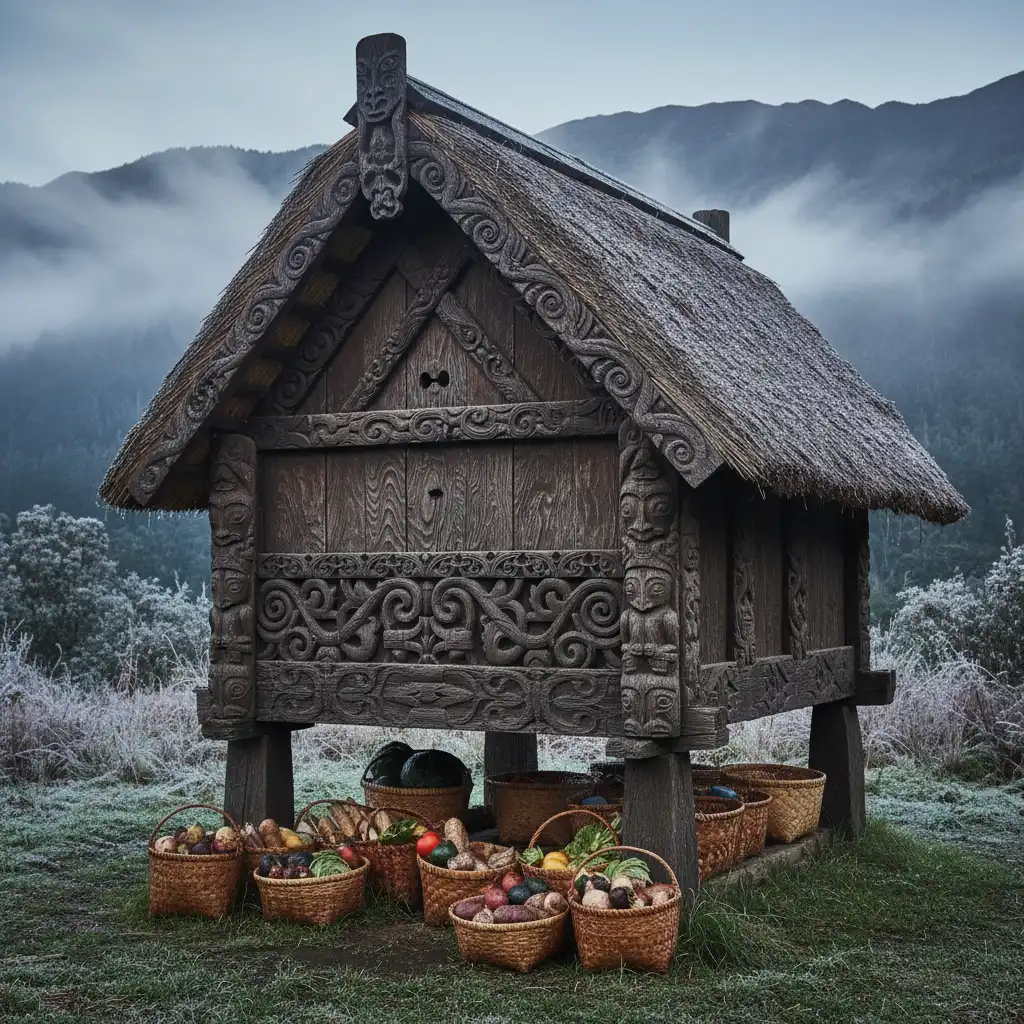
The rising of the Matariki stars for food coincides with the end of the harvest season. By May and June, the hard work of the growing season is largely complete. The kūmara has been lifted from the mounds, dried, and stored in the pātaka (storehouses). This timing is crucial and dictates the festivities of the New Year.
The Maramataka (Lunar Calendar)
Māori did not plant or harvest randomly; they followed the Maramataka, the lunar calendar which interprets the phases of the moon and their effect on energy levels, water tables, and plant growth. Matariki resets this calendar.
When Matariki rises, it is a time known as Te Matahi o te Tau (the first month of the year). Because the food stores were full (thanks to the influence of Tupu-ā-nuku), this period became the optimal time for hākari (feasting). It was the only time of year when labor in the gardens ceased, allowing communities to gather, share the bounty of the harvest, and plan for the future.
Preservation: The Art of Whata
Understanding the influence of these stars also meant mastering preservation. If Tupu-ā-rangi signaled a poor season for birds in the coming year, preservation of the current catch became critical. Birds were often preserved in their own fat in calabashes (hue) or kelp bags (pōhā), a process that allowed the food to last for months. This ensured survival during the lean months when Tupu-ā-nuku’s soil was dormant.
Modern Gardening Tips for Matariki
For the modern gardener or lifestyle block owner in New Zealand, Matariki is more than a cultural observance; it is a practical guide for horticultural activities. While winter is often seen as a dormant period, the influence of Tupu-ā-nuku suggests it is the most important time for soil preparation.
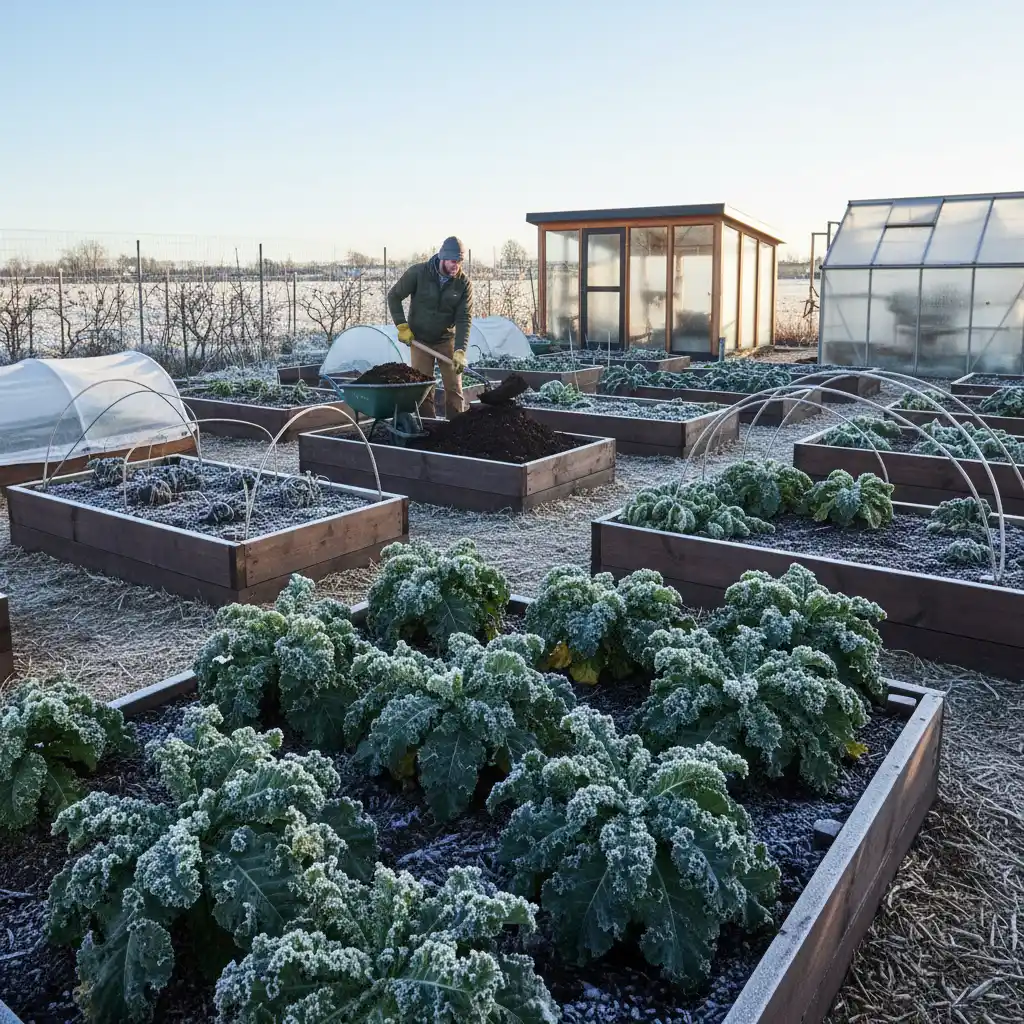
1. Feed the Soil (Manaaki i te Whenua)
Just as Tupu-ā-nuku rests, so does the soil. However, resting does not mean neglect. Matariki is the ideal time to add compost, seaweed, and sheep pellets to your garden beds. This replenishes the nutrients extracted during the summer harvest, ensuring the earth is ready for spring planting.
2. Planting Garlic and Shallots
Traditionally, the shortest day (Winter Solstice) is the cue to plant garlic and shallots. As this often aligns closely with the Matariki period, these are the primary crops to put into Tupu-ā-nuku’s domain during June and July. They require the cold to split into cloves and bulbs.
3. Planning the Spring Garden
Use the reflective time of Matariki to plan your crop rotation. If you planted potatoes (members of the Solanaceae family) in one bed last year, move them to a new spot to prevent disease buildup. Draw out your garden plan during the long winter nights.
4. Tree Planting
Matariki is an excellent time to plant native trees (honoring Tupu-ā-rangi). The soil is moist, and the plants are dormant, reducing transplant shock. Planting trees now ensures they establish a root system before the dry summer arrives, eventually providing berries for the birds.
Reading the Stars: Environmental Indicators
The visibility of Tupu-ā-nuku and Tupu-ā-rangi serves as a sophisticated environmental indicator. Māori tohunga (experts) would observe the stars carefully pre-dawn.
- Clear and Bright: If the stars were distinct and high contrast, it predicted a warm, productive season. This encouraged early planting.
- Hazy or Close Together: If the stars appeared to shimmer or looked ‘squashed’ by the atmosphere, it indicated a cold, wet, or windy season. This signaled farmers to plant on higher ground to avoid flooding or to plant later to avoid late frosts.
This ancient knowledge aligns with modern meteorology; atmospheric turbulence (which causes stars to twinkle or look hazy) is often caused by the mixing of air layers, which can predict weather fronts and instability. By observing the Matariki stars for food, we reconnect with a system of observation that sustained people in Aotearoa for centuries.
People Also Ask
What food does Tupu-ā-nuku represent?
Tupu-ā-nuku represents all cultivated food grown in the soil. This includes root vegetables like kūmara (sweet potato), taewa (potatoes), taro, yams, and carrots. It is the star associated with edible plants that are harvested from the earth.
What is the meaning of Tupu-ā-rangi?
Tupu-ā-rangi translates to “grow in the sky.” It is the star associated with food sources found above the ground, specifically in the forest canopy. This includes native birds (like kererū and tūī), berries, fruits, and other arboreal produce.
Why are there stars for food in Matariki?
The Matariki cluster rises in mid-winter, marking the end of the harvest and the preparation for the new growing season. Specific stars were assigned dominion over different environmental domains (earth, sky, water) to help ancestors predict weather patterns and manage food resources for survival.
When should I plant my garden for Matariki?
During the actual rising of Matariki (June/July), the garden is mostly dormant. This is the time for planting garlic, shallots, and deciduous fruit trees. It is primarily a time for soil preparation (composting) and planning, rather than active sowing of summer crops.
What are the 9 stars of Matariki?
The nine stars are Matariki (the mother), Pōhutukawa (connected to the dead), Tupu-ā-nuku (food from earth), Tupu-ā-rangi (food from sky), Waitī (freshwater food), Waitā (saltwater food), Waipuna-ā-rangi (rain), Ururangi (wind), and Hiwa-i-te-rangi (wishing star).
How do I celebrate Matariki with food?
You can celebrate by hosting a ‘hākari’ (feast) featuring foods connected to the stars. A traditional meal might include roasted kūmara (for Tupu-ā-nuku), chicken or duck (representing the birds of Tupu-ā-rangi), and fish (for Waitā/Waitī), shared communally with family and friends.