
Matariki karakia are traditional Māori incantations recited during the Māori New Year to honor the appearance of the Pleiades star cluster. These prayers acknowledge the passing of the dead, give thanks for the harvest, and welcome the promise of the new year. They are essential for spiritually aligning participants with the environment and the rhythms of the natural world.
As the cluster of stars known as Matariki rises in the mid-winter sky, Aotearoa New Zealand pauses to reflect, celebrate, and look forward. Central to these celebrations are karakia (incantations/prayers) and waiata (songs). These oral traditions are not merely performances; they are the vessels through which history, whakapapa (genealogy), and aspirations are transmitted. Whether you are organizing a community event, a workplace gathering, or a quiet family observance, understanding the lyrics and intent behind these taonga (treasures) is vital for a respectful celebration.
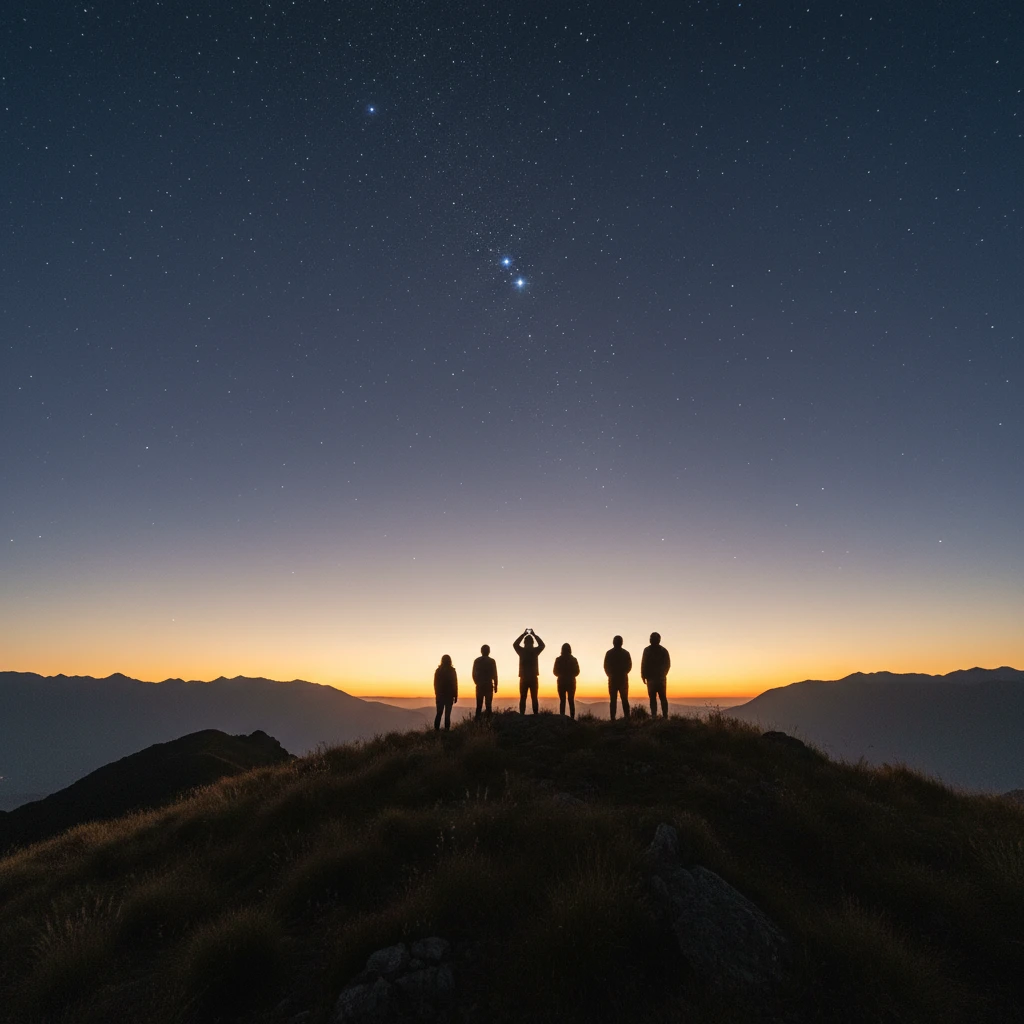
What is the Significance of Karakia During Matariki?
Karakia are the spiritual pathway between the physical world and the spiritual realm. In the context of Matariki, they serve three primary functions: Poroporoaki (farewelling the dead), Whakamiha (celebrating the present bounty), and Whakaaroaro (planning for the future).
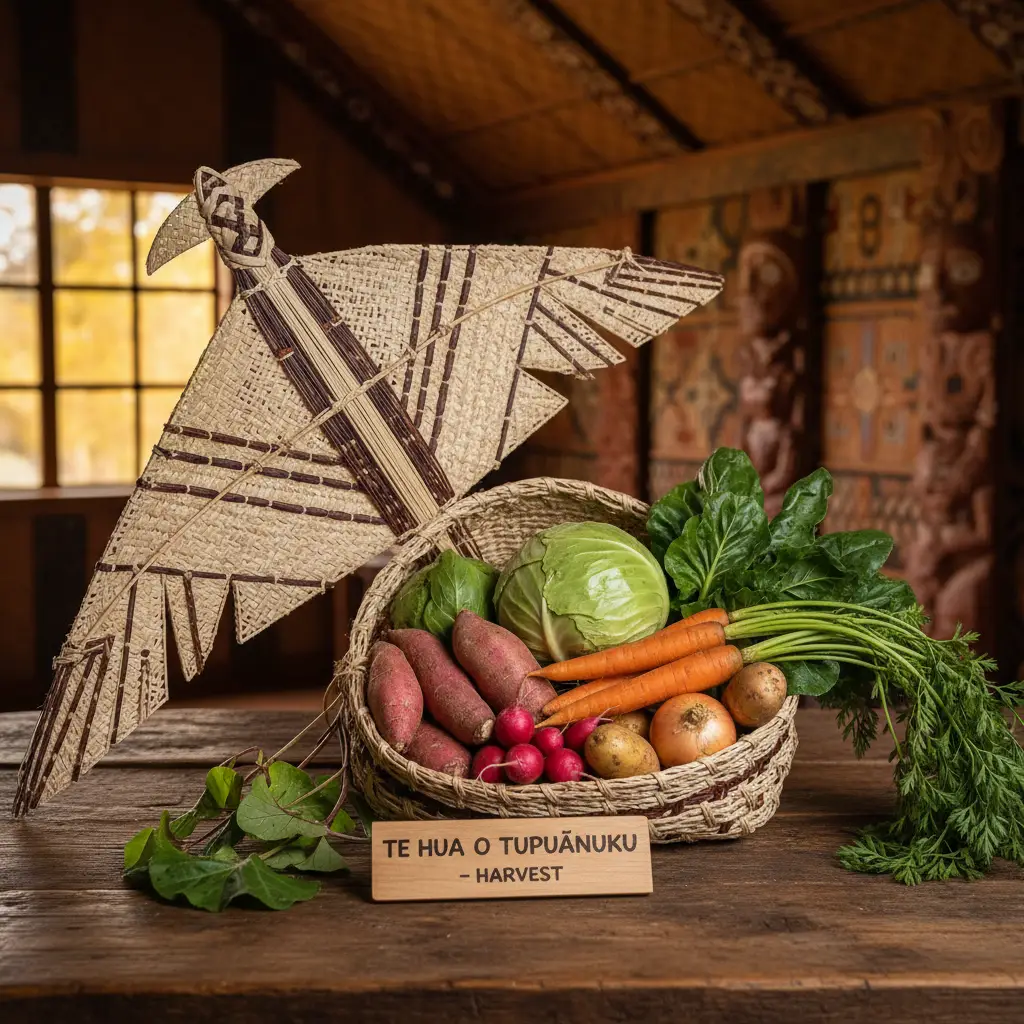
When we recite Matariki karakia lyrics, we are often addressing the stars directly. Each star in the cluster—Matariki, Pōhutukawa, Tupuānuku, Tupuārangi, Waipuna-ā-rangi, Ururangi, Hiwa-i-te-rangi, Waitī, and Waitā—holds dominion over a specific aspect of the environment, such as fresh water, salt water, winds, or crops. The karakia acknowledges these domains, asking for balance and productivity in the coming season.
For cultural tourism operators and educators, using the correct karakia sets the tone for the entire interaction. It signals respect for the land (mana whenua) and invites guests to step out of their mundane mindset and into a space of cultural appreciation.
Simple Matariki Karakia Lyrics for Opening Ceremonies
For those new to Te Reo Māori, starting with a Karakia Tīmatanga (opening prayer) is appropriate to settle the group and clear the space for learning or celebration. Below are accessible karakia with translations.
1. Whakataka Te Hau (Preparation for the Day)
This is arguably the most famous simple karakia used in New Zealand. While not exclusive to Matariki, it is perfect for opening a dawn ceremony as it references the weather and the transition from cold to calm.
Te Reo Māori:
Whakataka te hau ki te uru
Whakataka te hau ki te tonga
Kia mākinakina ki uta
Kia mātaratara ki tai
E hī ake ana te atakura
He tio, he huka, he hau hū
Tihei mauri ora!
English Translation:
Cease the winds from the west
Cease the winds from the south
Let the breeze blow over the land
Let the breeze blow over the ocean
Let the red-tipped dawn come with a sharpened air
A touch of frost, a promise of a glorious day
Behold the breath of life!
2. Karakia mō Matariki (Specific to the Occasion)
This karakia specifically acknowledges the rising of the stars and the light they bring.
Te Reo Māori:
Tuia i runga, tuia i raro
Tuia i te here tangata
Ka rongo te pō, ka rongo te ao
Haumi e, hui e, tāiki e.
Manawa maiea te putanga o Matariki
Manawa maiea te ariki o te rangi
Manawa maiea te Mātahi o te Tau.
English Translation:
Bind the realm above, bind the realm below
Bind the tangles of humanity
The night hears, the day hears
United, connected, it is done.
Celebrate the rising of Matariki
Celebrate the lord of the skies
Celebrate the New Year.
Waiata (Songs) to Learn for Matariki
Waiata are often sung immediately after a karakia to “cement” the prayer and lift the tapu (sacredness) slightly, allowing the group to transition back to a state of noa (normality/safety). This is known as kinaki (relish/embellishment).
Waiata: “Ngā Iwa o Matariki” (The Nine Stars of Matariki)
This is an educational waiata that helps participants remember the names of the nine stars. It is sung to a gentle, rhythmic tune often taught in schools, but suitable for all ages.
Lyrics:
- Matariki (The mother star/conductor)
- Waitī (Fresh water)
- Waitā (Salt water)
- Waipuna-ā-rangi (Rain)
- Tupuānuku (Food from the ground)
- Tupuārangi (Food from the sky/trees)
- Ururangi (Winds)
- Pōhutukawa (Those who have passed)
- Hiwa-i-te-rangi (Wishing star)
Chorus Structure (Example):
“Tirohia ake ngā whetū e
Ko Matariki te ariki e…”
(Look up at the stars, Matariki is the leader…)
Waiata: “Te Aroha”
While not exclusively for Matariki, “Te Aroha” is a universal waiata about love, faith, and peace. It is perfect for closing a Matariki ceremony, emphasizing the value of togetherness.
Lyrics:
Te aroha (Love)
Te whakapono (Faith)
Me te rangimarie (And peace)
Tātou, tātou e (For us all)
Pronunciation Guide for Beginners
Correct pronunciation is a sign of respect. In Te Reo Māori, vowels are pronounced consistently, unlike in English where they change sound.
The Vowels (Ngā Orokati)
Mastering these five sounds will help you pronounce almost any Matariki karakia lyric correctly:
- A as in ‘car’ (Whakataka)
- E as in ‘egg’ (Here)
- I as in ‘feet’ (Tihei)
- O as in ‘or’ (Poroporoaki)
- U as in ‘to’ (Ururangi)
Macrons (Tohutō)
You will notice lines over some vowels (ā, ē, ī, ō, ū). This indicates a long vowel sound. It does not change the type of sound, only the duration. For example, ‘Kākā’ (parrot) is held longer than ‘kaka’ (dress/fibre).
The ‘Wh’ and ‘Ng’ Digraphs
- Wh: Usually pronounced like a soft ‘f’ (as in ‘physics’). Example: Whānau (Family).
- Ng: Pronounced like the ‘ng’ in ‘singer’ (not ‘finger’). Practice by saying “sing-along” without the ‘si’ and ‘alo’. Example: Ngā (The – plural).

Tikanga: Protocols for Reciting Karakia
When incorporating karakia into your Matariki event, following protocol ensures cultural safety.
Who can say Karakia?
In a modern context, anyone can recite a karakia provided they do so with the correct intent (ngākau pono) and have practiced the pronunciation. However, for significant ceremonial duties, it is customary to invite a Kaumatua (elder) or a culturally competent representative to lead.
Order of Proceedings
- Gathering: Ensure everyone is standing and attentive.
- Karakia Tīmatanga: The opening prayer.
- Waiata: Sung immediately after to support the karakia.
- Mihimihi: Speeches or greetings.
- Kaupapa: The main event (dinner, stargazing, awards).
- Karakia Whakamutunga: Closing prayer to end the formal proceedings.
- Kai: Food is essential after karakia to ground the energy (whakanoa).
Creating Your Own Lyric Sheets
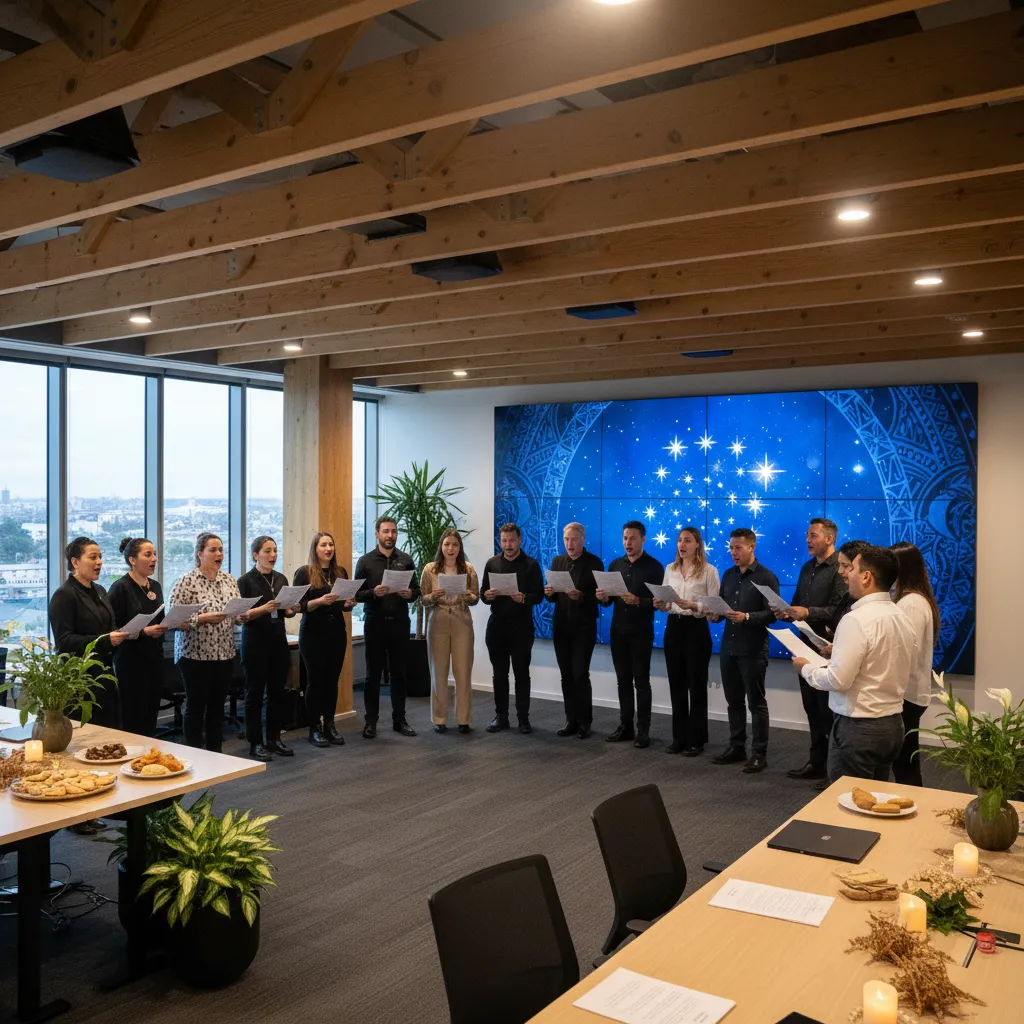
To facilitate participation, it is highly recommended to provide physical or digital copies of the Matariki karakia lyrics. When designing these resources for your tourism business or educational group, consider the following layout tips:
- Bilingual Layout: Place the Te Reo Māori text on the left and the English translation on the right. This allows learners to understand the meaning while reciting.
- Visual Aids: Incorporate imagery of the Matariki stars next to their respective names in the waiata sections.
- Phonetic Help: For absolute beginners, small phonetic guides in brackets under difficult words can be helpful, though encouraging the learning of proper vowel sounds is preferred.
- Attribution: Always credit the composer (kaitito) of the waiata if known. Traditional karakia are often attributed to “Traditional” or specific iwi (tribes) if the dialect is distinct.
Frequently Asked Questions
What is the best karakia for Matariki?
The best karakia depends on the specific intent. For opening a general celebration, “Whakataka te hau” is widely accepted. For acknowledging the stars specifically, “Manawa maiea te putanga o Matariki” is the most appropriate choice as it directly hails the arrival of the constellation.
How do you pronounce Matariki correctly?
Matariki is pronounced “Mah-tah-ree-key”. Break it down: ‘Ma’ (as in mum), ‘ta’ (as in tar), ‘ri’ (rolled r, short ‘ee’ sound), ‘ki’ (key). Avoid emphasizing the second syllable; try to keep the stress even across the syllables.
Can non-Māori perform karakia?
Yes, non-Māori can perform karakia, provided it is done with respect, proper preparation, and good intent. It is important to learn the correct pronunciation and understand the meaning of the words you are saying. If a Māori elder is present, it is polite to defer to them to lead.
What are the 9 stars of Matariki?
The nine stars recognized in the Matariki cluster are: Matariki (the mother), Pōhutukawa, Tupuānuku, Tupuārangi, Waipuna-ā-rangi, Ururangi, Hiwa-i-te-rangi, Waitī, and Waitā. Each star represents a different aspect of the environment and wellbeing.
What is a simple waiata for Matariki?
“Te Aroha” is one of the simplest waiata to learn for Matariki. It has very few lyrics, a slow tempo, and a melody that is easy to follow. Another excellent option is “Tūtira Mai Ngā Iwi,” which focuses on unity and gathering.
When should Matariki karakia be performed?
Traditionally, Matariki karakia were performed at pre-dawn (weheruatanga) when the stars rose. However, in modern celebrations, they can be performed at the beginning of any event held during the Matariki period (June/July) to open the proceedings.