
The history of Matariki encompasses the astronomical observation of the Pleiades star cluster, marking the Māori New Year in Aotearoa New Zealand. Traditionally used for navigation and agricultural timing, it fell into decline post-colonization but has recently experienced a profound cultural revival, becoming an official public holiday in 2022 to honor ancestry, abundance, and future aspirations.
What is the Astronomical Definition of Matariki?
To understand the history of Matariki, one must first look to the skies. Matariki is the Māori name for the star cluster known internationally as the Pleiades, or Messier 45 (M45). Located in the constellation Taurus, it is one of the nearest star clusters to Earth and arguably the most recognizable to the naked eye. While the cluster contains over a thousand stars, only a handful are visible without a telescope.
In Aotearoa New Zealand, the pre-dawn rising of Matariki in the mid-winter sky (typically late June or early July) signals the beginning of the Māori New Year. This astronomical event marks the turning point of the seasons, shifting from the cold of winter toward the eventual warmth of spring. The visibility of these stars was not merely poetic for early Māori; it was a critical survival mechanism. The brightness and clarity of the stars were interpreted by tohunga kōkōrangi (expert astronomers) to predict the success of the upcoming harvest.
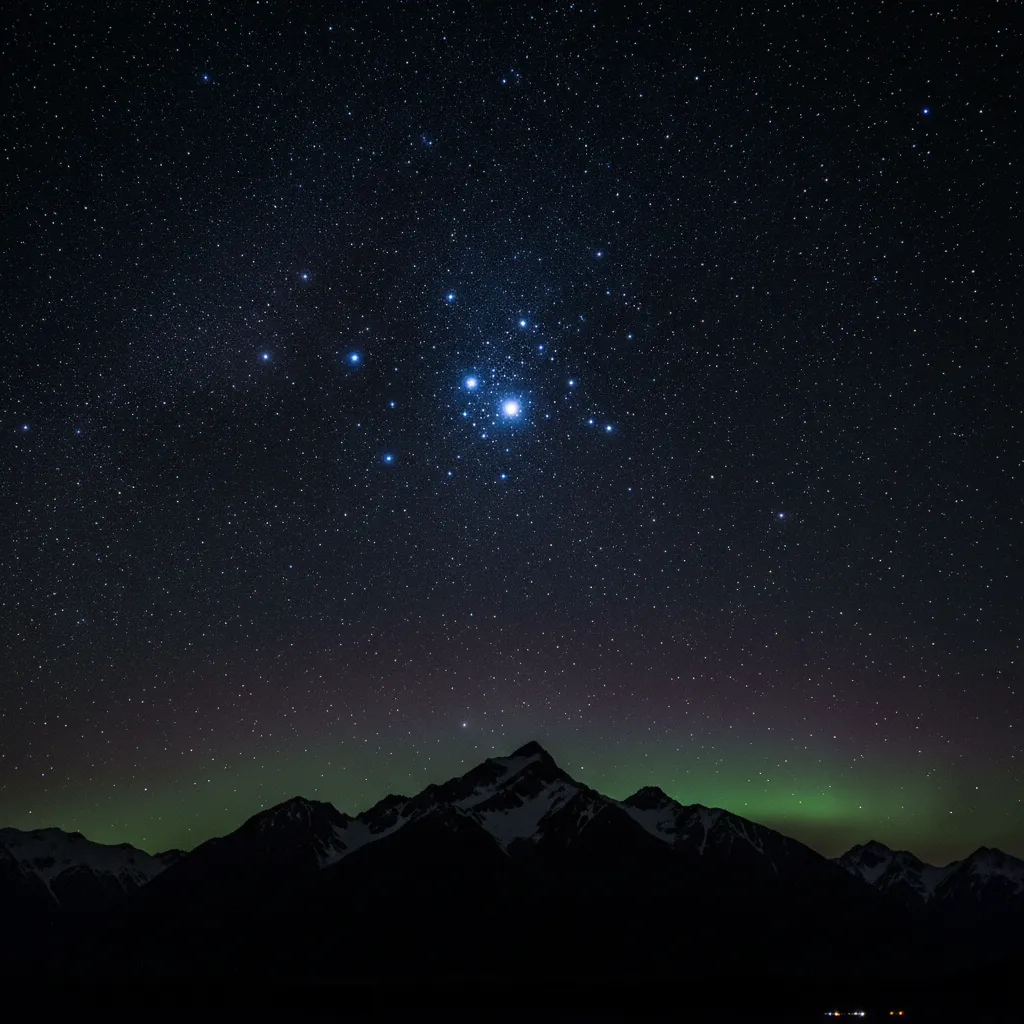
Unlike the Gregorian New Year, which is fixed to January 1st, the date of Matariki shifts. It follows a lunar-stellar calendar (maramataka). The new year begins when Matariki rises during the lunar phase known as Tangaroa, the last quarter moon. This sophisticated understanding of celestial mechanics highlights the advanced scientific knowledge possessed by Polynesian voyagers and early Māori settlers.
What are the Māori Creation Myths Involving Matariki?
The history of Matariki is deeply intertwined with cosmology and legend. While there are variations across different iwi (tribes), the most pervasive narratives link the cluster to the separation of the primordial parents, Ranginui (Sky Father) and Papatūānuku (Earth Mother).
The Eyes of Tāwhirimātea
One of the most dramatic origin stories concerns Tāwhirimātea, the god of wind and weather. Deeply angered by the separation of his parents, Ranginui and Papatūānuku, by his brother Tāne Mahuta, Tāwhirimātea flew into a rage. In his anguish, he tore out his own eyes, crushed them in his hands, and threw them into the heavens to stick to his father’s chest (the sky). The name “Matariki” can be translated as a contraction of Ngā Mata o the Ariki, meaning “The Eyes of the God.” This myth explains why Matariki is often associated with unpredictable winter weather and winds.
The Mother and Her Children
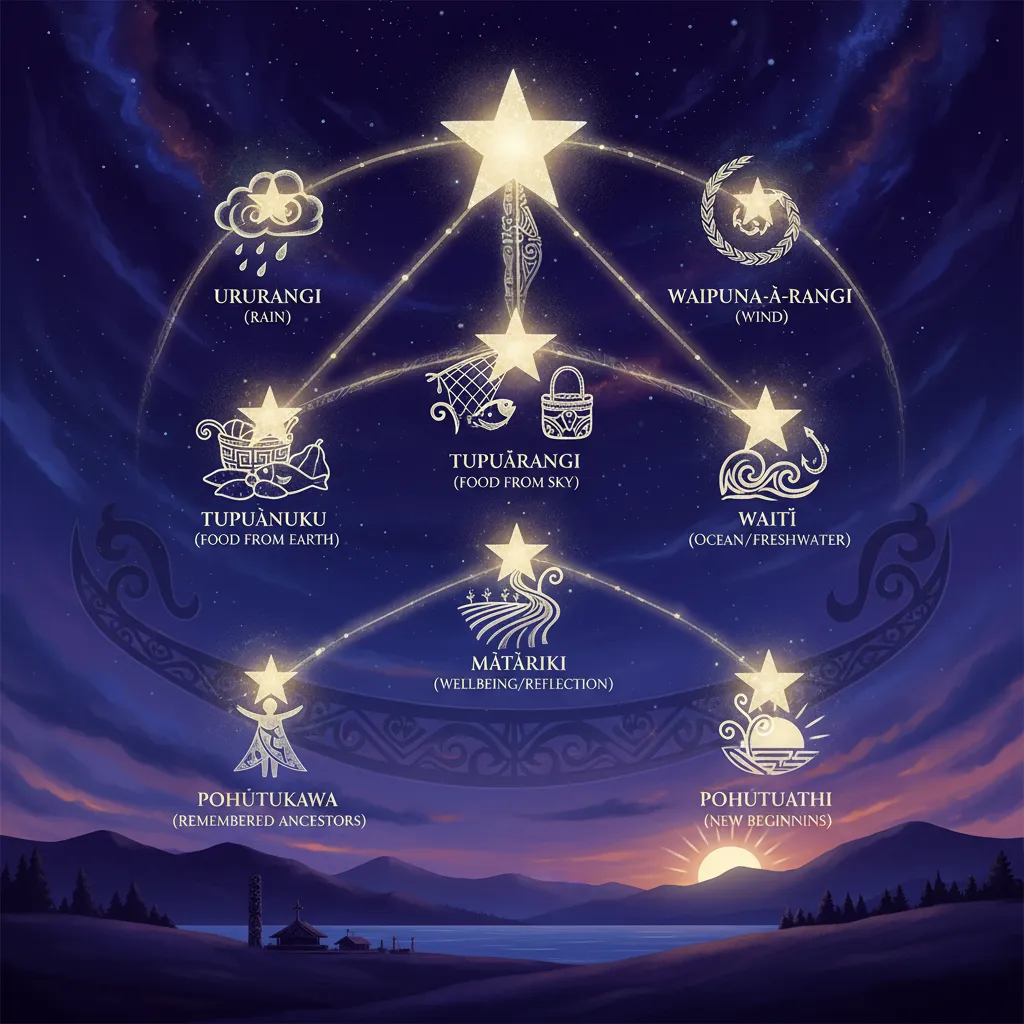
Another prevailing tradition views Matariki as a mother star surrounded by her children. In this narrative, the central star is Matariki (Alcyone), and she is accompanied by eight daughters (or children), each governing a specific domain of the natural world. This shift from the “Seven Sisters” (common in Greek mythology) to nine stars is a significant aspect of the modern revival, championed by experts like Dr. Rangi Matamua.
The Domains of the Nine Stars
Understanding the history of Matariki requires recognizing the role of each star within the cluster:
- Matariki: The mother, signifying reflection, hope, and the health of the people.
- Pōhutukawa: Connects to those who have passed on; the star of the dead.
- Tupu-ā-nuku: Associated with food grown in the ground (kumara, potatoes).
- Tupu-ā-rangi: Associated with food from the sky (birds, berries).
- Waitī: Connected to fresh water and the food within it (eels, crayfish).
- Waitā: Connected to salt water and the food within it (fish, shellfish).
- Waipuna-ā-rangi: Associated with the rain.
- Ururangi: Associated with the winds.
- Hiwa-i-te-rangi: The wishing star; associated with granting the desires of the heart for the coming year.
How Was Matariki Used in Pre-European History?
Before European colonization, the history of Matariki was purely practical and spiritual. It was a cornerstone of the Māori way of life.
Navigation and Migration
The history of Matariki begins before Māori even arrived in Aotearoa. Polynesian navigators used the stars as a celestial compass. The position of Matariki was crucial for voyaging canoes (waka) traversing the vast Pacific Ocean. The rising of these stars helped navigators maintain their course and timing during long voyages.
The Agricultural Cycle
Once settled in New Zealand, the focus shifted from navigation to agriculture. The brightness of the stars upon their helical rising was a bio-indicator. If the stars were clear and bright, it signaled a warm growing season, prompting the planting of crops like kumara in September. If the stars appeared hazy or shimmering, it predicted a cold, difficult winter, leading to delayed planting. This connection underscores that the history of Matariki is fundamentally a history of survival and adaptation to the environment.
Why are there Regional Differences Across Aotearoa?
A common misconception in the history of Matariki is that it is celebrated uniformly across New Zealand. However, the geography of Aotearoa dictates different celestial views.
Matariki vs. Puanga
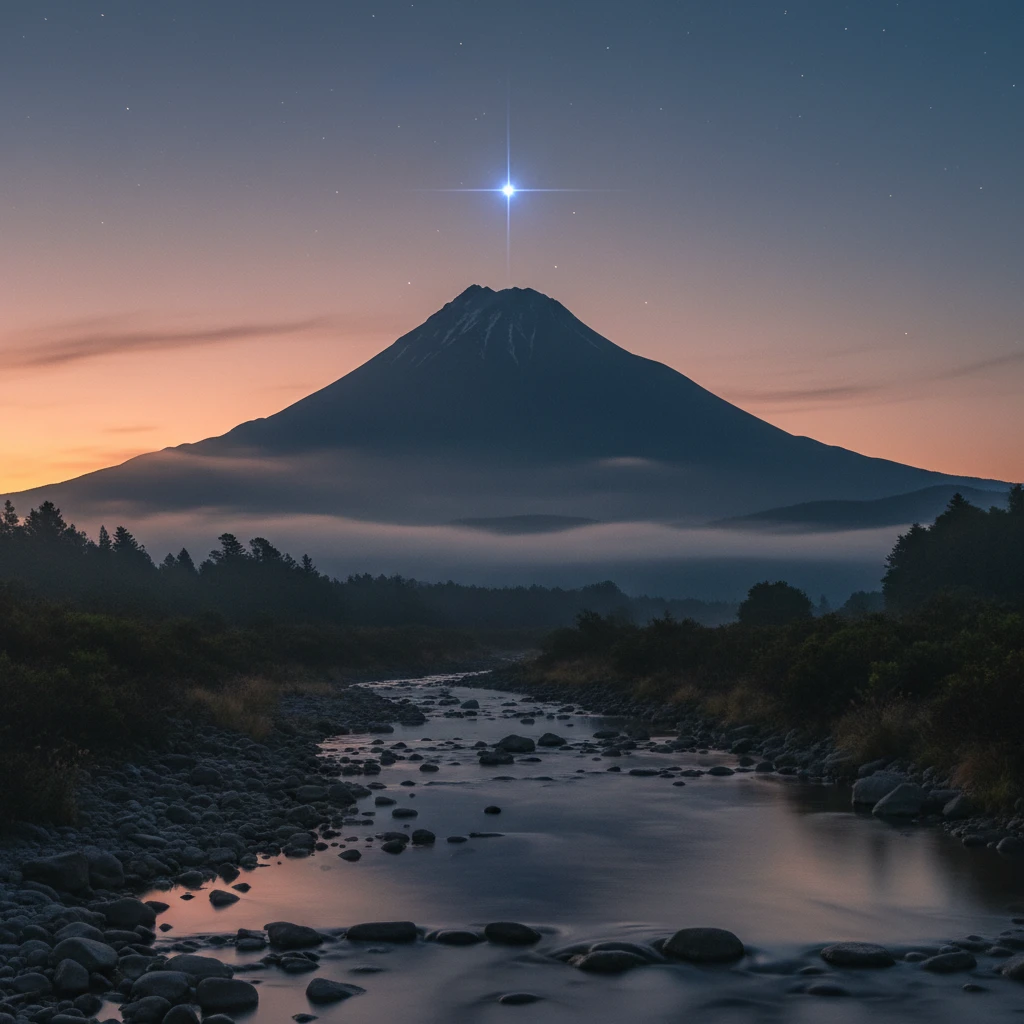
In some parts of the country, particularly in the West Coast, Taranaki, Whanganui, and parts of the Far North, the geography (such as high mountain ranges) obscures the view of Matariki on the eastern horizon. For iwi in these regions, the primary signal for the New Year is not Matariki, but Puanga (Rigel), the brightest star in the constellation Orion. Puanga rises slightly earlier than Matariki and higher in the sky.
While the astronomical marker differs, the intent of the celebration remains consistent: remembering the dead, celebrating the harvest, and planning for the future. This regional variation enriches the history of Matariki, showcasing the localized knowledge of different iwi.
The Decline and Modern Revival of Matariki
The history of Matariki is not linear; it suffered a significant disruption following European settlement.
The Impact of Colonization
As European influence grew in the 19th and early 20th centuries, traditional Māori practices were actively suppressed or displaced. The Tohunga Suppression Act of 1907, intended to stop traditional healers, had the side effect of silencing the experts who held the astronomical knowledge. Furthermore, the adoption of the Gregorian calendar and Christian holidays shifted the focus away from the lunar-stellar cycles. By the mid-20th century, the celebration of Matariki had largely faded from public consciousness, preserved only within certain whānau (families) and academic circles.
The Renaissance (1990s – Present)
The revival of Matariki began in earnest during the 1990s and early 2000s, paralleling the broader Māori cultural renaissance. Key figures, such as Dr. Rangi Matamua, played a pivotal role in researching ancient manuscripts and interviewing elders to recover lost astronomical knowledge. His work in identifying the nine stars (rather than the Western seven) was instrumental in re-indigenizing the narrative.
In 2022, a historic milestone was reached with the passing of the Te Kāhui o Matariki Public Holiday Act. This legislation made Matariki the first official public holiday in New Zealand dedicated to Māori culture. It marked a maturity in the nation’s identity, moving beyond colonial holidays to embrace indigenous timekeeping.
How is Matariki Celebrated Today?
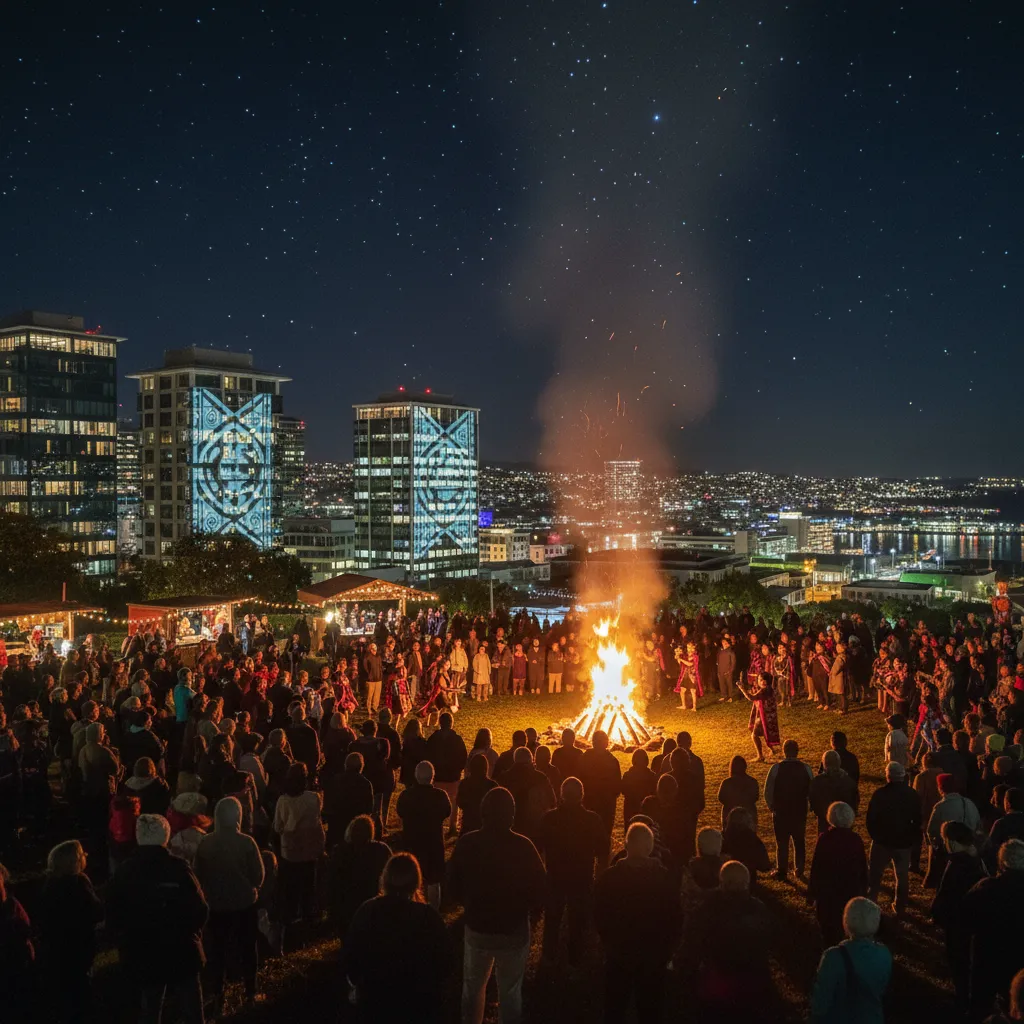
Modern celebrations of Matariki blend ancient rites with contemporary festivities. It is a time for three major actions: remembering those who passed in the previous year, celebrating the present abundance, and looking to the future.
Umu Kohukohu Whetū
One of the most sacred traditional ceremonies being revived is the umu kohukohu whetū (steaming earth oven of the stars). Food representing the different domains (earth, sky, water) is cooked in an earth oven. When the oven is uncovered, the steam rises into the sky to feed and honor the stars, particularly Matariki.
Community and Education
Today, the history of Matariki is taught in schools across the country. Festivals featuring light shows, kite flying (manu aute), and kapa haka performances occur nationwide. It has become a unifying event for all New Zealanders, regardless of background, to pause, reflect, and reset during the depths of winter.
People Also Ask
When does Matariki start?
Matariki dates change every year because they are based on the lunar calendar (maramataka). It typically occurs in late June or early July. The holiday is observed on the Friday closest to the Tangaroa lunar phase (last quarter moon) after the Matariki cluster has risen.
What are the 9 stars of Matariki?
The nine stars recognized in Māori tradition are Matariki (the mother), Pōhutukawa, Tupu-ā-nuku, Tupu-ā-rangi, Waitī, Waitā, Waipuna-ā-rangi, Ururangi, and Hiwa-i-te-rangi. Each star governs a specific environmental domain or aspect of life.
Why is Matariki a public holiday now?
Matariki became a public holiday in 2022 to recognize and celebrate New Zealand’s indigenous heritage. It provides a distinct national identity, acknowledges the Māori lunar calendar, and offers a time for the entire nation to reflect, celebrate, and plan, distinct from colonial holidays.
Is Matariki the same as the Pleiades?
Yes, astronomically, Matariki is the Pleiades star cluster (Messier 45). However, culturally, “Matariki” refers specifically to the Māori significance, narratives, and the New Year celebrations associated with the rising of this cluster in the New Zealand winter sky.
What is the difference between Matariki and Puanga?
Matariki is the Pleiades cluster, while Puanga is the star Rigel in Orion. In regions where mountains block the view of Matariki (like the West Coast and Taranaki), tribes observe the rising of Puanga to mark the New Year. Both serve the same cultural function.
How do you wish someone a Happy Matariki?
You can say “Mānawatia a Matariki,” which translates to “Celebrate Matariki” or “Welcome Matariki.” It is a respectful and joyful way to acknowledge the New Year and wish well-being upon others.