
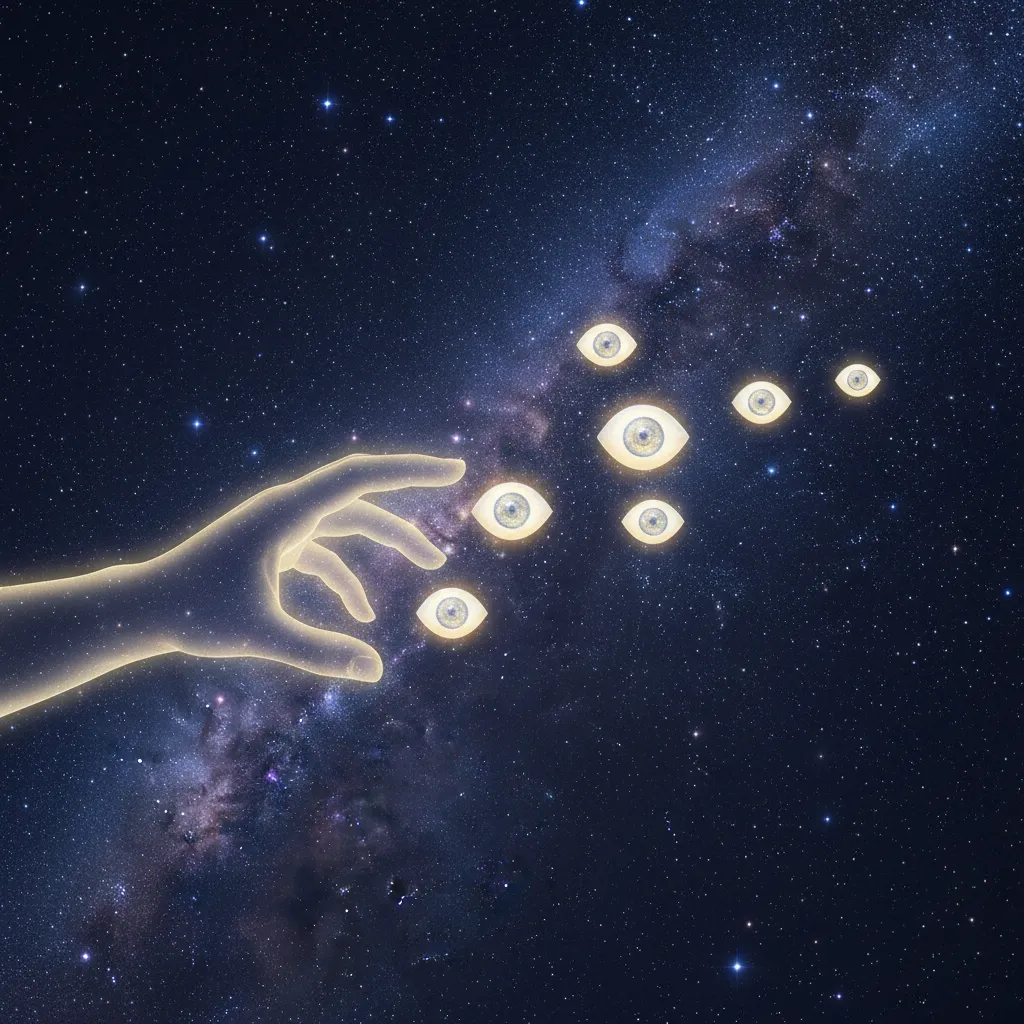
The story of Matariki eyes of god describes the creation of the Pleiades cluster in Māori mythology. Following the forced separation of his parents, Ranginui (Sky Father) and Papatūānuku (Earth Mother), the wind god Tāwhirimātea became consumed by rage and grief. In a final act of defiance, he plucked out his own eyes, crushed them, and flung the glowing fragments into the sky to become the stars of Matariki.
For centuries, the appearance of the Matariki star cluster has signaled the Māori New Year, a time of remembrance, joy, and peace. However, the origins of these celestial bodies are rooted in a tale of heartbreak, family conflict, and the violent birth of the natural world. Understanding the legend of Tāwhirimātea provides essential cultural context for anyone engaging with New Zealand’s history and the spiritual significance of Aotearoa.
The Primal Beginning: Ranginui and Papatūānuku
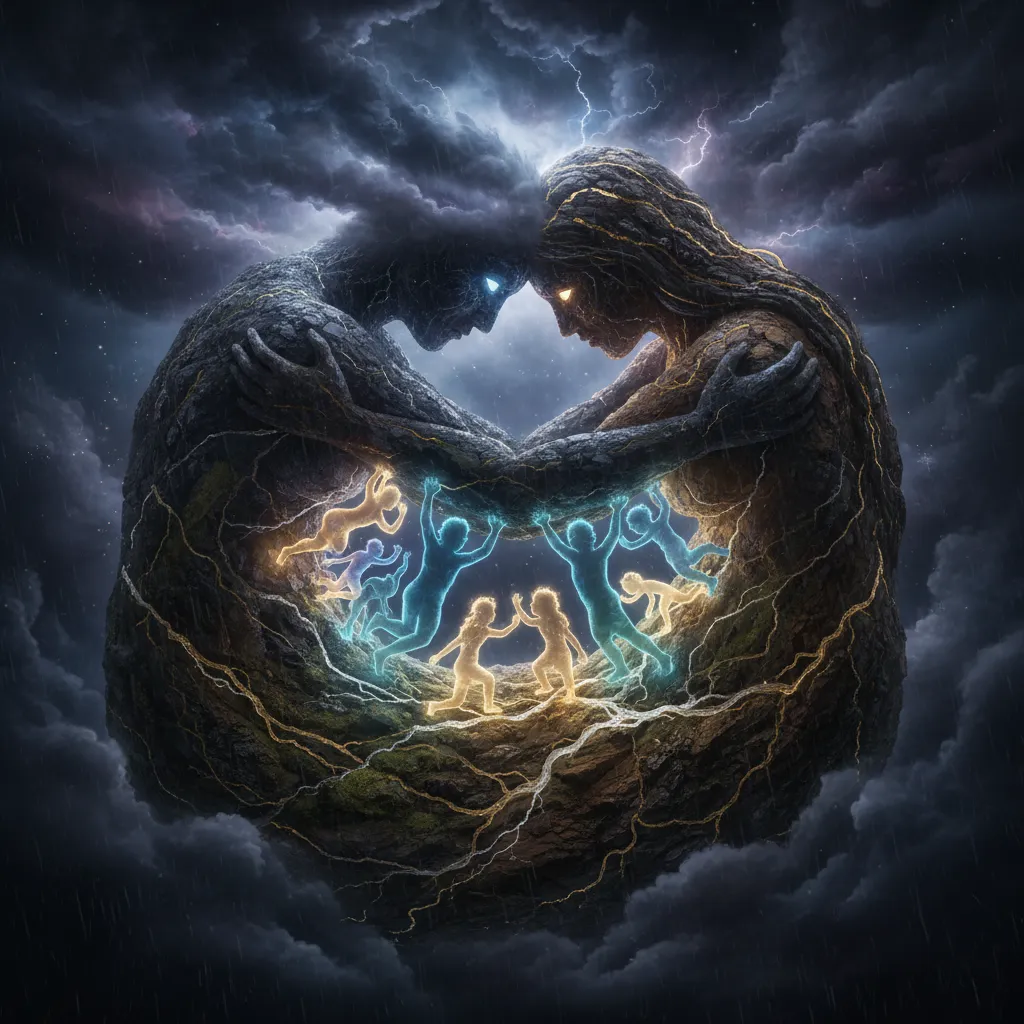
To understand the story of Matariki eyes of god, one must first look to the very beginning of the Māori universe (Te Kore). Before there was light, there was only darkness. In this darkness, Ranginui, the Sky Father, and Papatūānuku, the Earth Mother, lay locked in a tight, eternal embrace. Their love was immense, but it left no room for light to penetrate between them.
Within the cramped darkness between their bodies, they bore many children. These children were the Atua (gods) who would eventually become the guardians of the natural world. They included:
- Tāne Mahuta: Atua of the forests and birds.
- Tangaroa: Atua of the sea and fish.
- Rongomātāne: Atua of cultivated food (kūmara) and peace.
- Haumietiketike: Atua of uncultivated food.
- Tūmatauenga: Atua of war and humanity.
- Tāwhirimātea: Atua of the wind, storms, and weather.
For aeons, these divine children lived in the perpetual gloom, unable to stand upright or see clearly. They crawled through the narrow spaces between their parents, growing increasingly frustrated by their confinement. The desire for Te Ao Mārama (the world of light) began to grow among the siblings, sparking a debate that would change the cosmos forever.
The Great Separation: Te Wehenga
The brothers debated how to solve their predicament. Tūmatauenga, the fiercest of them, proposed killing their parents to gain freedom. However, Tāne Mahuta suggested a different path: they should push their parents apart, sending Rangi high above and leaving Papa below to nurture them.
Most of the brothers agreed, although Tāwhirimātea remained silent, his anger simmering. He loved his parents deeply and could not bear the thought of them being torn apart. Despite his silent protest, the plan proceeded.
One by one, the brothers attempted to separate the primal couple. Rongomātāne and Haumietiketike tried but failed. Tangaroa and Tūmatauenga exerted all their strength, but Rangi and Papa held fast to one another. Finally, it was Tāne Mahuta’s turn.
Placing his strong shoulders against his mother, the Earth, and planting his feet firmly against his father, the Sky, Tāne pushed. He strained and heaved, the great trees of the forest growing and expanding with his effort. Slowly, agonizingly, the bonds were broken. Ranginui and Papatūānuku were forced apart. For the first time, light flooded into the world, illuminating the brothers and the vast expanse of creation.
Tāwhirimātea: The Atua of Wind and Storms
While most of the brothers rejoiced in the newfound light and space, Tāwhirimātea was overcome with sorrow and rage. He heard the cries of his parents as they were ripped from each other’s arms. The rain that falls today is said to be the tears of Ranginui weeping for his separated wife, while the mist that rises from the ground is Papatūānuku sighing for her lost husband.
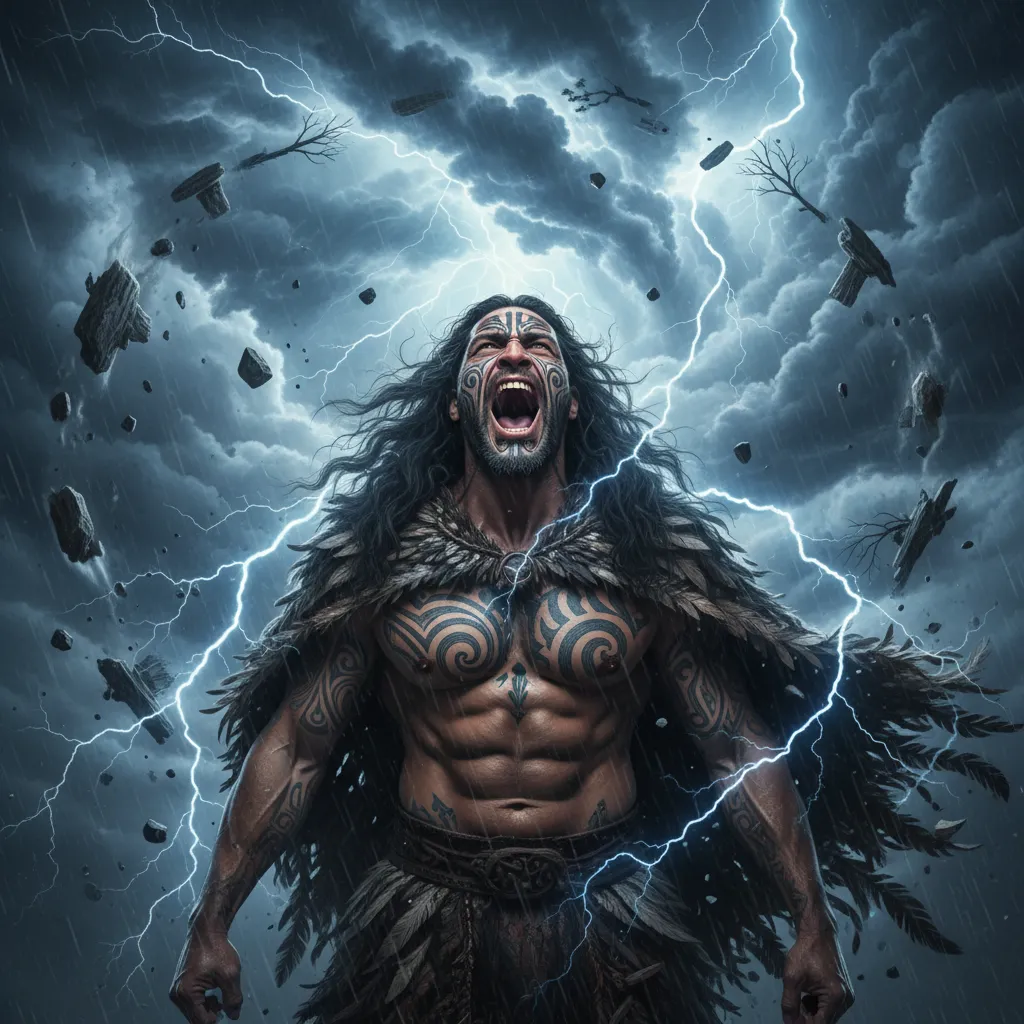
Tāwhirimātea could not forgive his brothers for what he viewed as a cruel betrayal. Unlike his siblings who settled on the earth or in the sea, Tāwhirimātea ascended to the sky to join his father, Ranginui. From the heavens, he declared war on his brothers, vowing to torment them with storms, hurricanes, and relentless winds.
This marked the beginning of the chaotic weather patterns we experience today. Tāwhirimātea attacked Tāne Mahuta, snapping the great trees of the forest. He churned the oceans of Tangaroa into massive waves. He decimated the crops of Rongomātāne and Haumietiketike. Only Tūmatauenga, the god of war and humanity, was able to stand firm against Tāwhirimātea’s wrath, establishing the enduring struggle between the elements and mankind.
The Story of Matariki Eyes of God
It is within this context of familial war and divine grief that we find the specific origin of the Matariki cluster. The phrase “Matariki” acts as an abbreviation for “Ngā Mata o te Ariki Tāwhirimātea,” which translates directly to “The Eyes of the God Tāwhirimātea.”
The Act of Sacrifice
After waging war on his brothers and devastating the earth, Tāwhirimātea’s rage turned inward. His grief for his parents’ separation was so profound that he could no longer bear to see the separation clearly. In a moment of pure anguish, he gouged out his own eyes.
Holding his crushed eyes in his hands, he flung them with all his might toward the chest of his father, Ranginui. The fragments stuck to the sky, forming the cluster of stars we now know as the Pleiades, or Matariki. This act ensured that his eyes would forever look down upon the world, watching his brothers and the separation he so despised, while also serving as a constant reminder of his power.
Interpreting the Name
While there are other interpretations of the name—such as “Matariki” meaning “Little Eyes” (Mata = eyes, Riki = small)—the story of Matariki eyes of god relating to Tāwhirimātea is the most dramatic and widely taught version in Māori cosmogony regarding the cluster’s creation. It serves as a powerful metaphor for the intensity of nature and the deep spiritual connections between the sky, the earth, and the weather.
Why Matariki is Associated with Wind and Weather
The connection between Matariki and the weather is not just mythological; it is practical and agricultural. Because the stars are the literal eyes of Tāwhirimātea, the god of wind and storms, the appearance of the cluster is intimately tied to weather prediction.
When the Matariki cluster rises in the pre-dawn sky during mid-winter (usually late June or July), Māori tohunga (experts/priests) would observe the stars carefully. The visibility, brightness, and color of each individual star were believed to predict the productivity of the coming season and the weather conditions.
The Stars of Weather
Within the cluster, specific stars are linked to different environmental domains, directly reflecting Tāwhirimātea’s influence:
- Ururangi: This star is connected to the winds. If Ururangi is bright and clear, it signals favorable winds. If it is hazy or flickering, it predicts turbulent storms.
- Waipuna-ā-rangi: This star is associated with rain. Its appearance helps predict rainfall patterns—whether there will be drought or flooding in the coming year.
Because Tāwhirimātea is blind, having thrown his eyes into the heavens, he wanders the sky feeling his way around. This unpredictability is why the wind changes direction so frequently and why the weather can be so volatile. The stars of Matariki are his eyes, watching over the seasons, and by reading them, Māori navigators and horticulturalists could align their activities with the natural cycles.
Cultural Significance in Modern Aotearoa
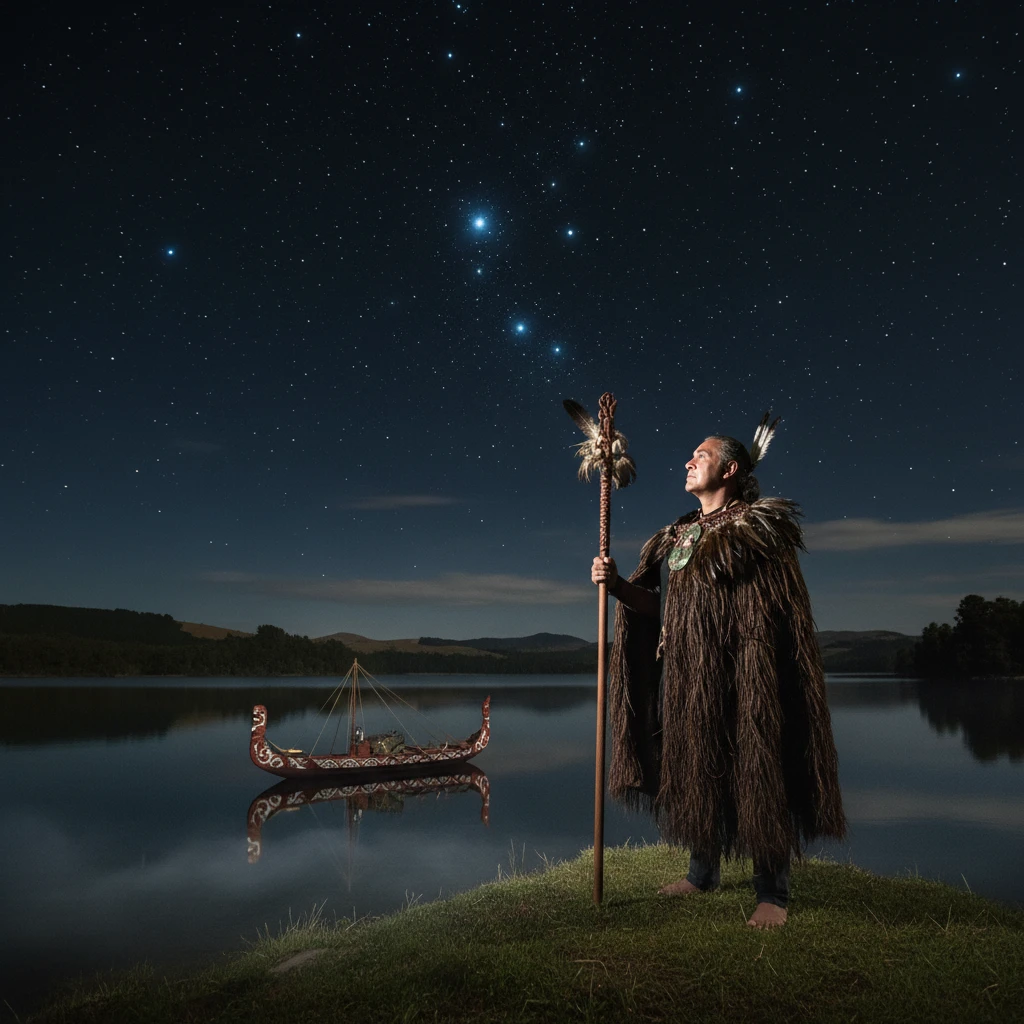
Today, the story of Matariki eyes of god is more than just a legend; it is a cornerstone of New Zealand’s cultural identity. The revival of Matariki as a public holiday marks a significant moment in the nation’s history, acknowledging the indigenous knowledge systems (Mātauranga Māori) that have guided life in Aotearoa for centuries.
The narrative of Tāwhirimātea reminds us of the balance of nature. It teaches that out of grief and conflict, beauty and guidance can emerge. The stars that were born from a god’s rage now serve as beacons of hope, signaling a time for families to gather, remember those who have passed (sending their spirits to become stars), and plan for the future.
For tourists and students of culture, understanding this story adds depth to the experience of the New Zealand winter. It transforms a simple stargazing experience into a profound encounter with an ancient living history.
Frequently Asked Questions
What does the name Matariki literally mean?
Matariki can be translated in two main ways. The most common in the context of this legend is an abbreviation of “Ngā Mata o te Ariki” (The Eyes of the God). Alternatively, it can be translated as “Mata Riki,” meaning “Small Eyes” or “Little Eyes,” referring to the cluster’s appearance as small points of light.
Which god threw his eyes to create Matariki?
Tāwhirimātea, the Atua (god) of wind, storms, and weather, threw his eyes into the sky. He did this in a fit of rage and grief following the separation of his parents, Ranginui and Papatūānuku.
How many stars are in the Matariki cluster?
From an astronomical perspective, the Pleiades cluster contains hundreds of stars. However, in Māori tradition, there are usually seven or nine distinct stars identified and named, depending on the specific iwi (tribal) dialect and tradition. The nine commonly recognized stars are Matariki, Pōhutukawa, Tupuānuku, Tupuārangi, Waipuna-ā-rangi, Waitī, Waitā, Ururangi, and Hiwa-i-te-rangi.
Why is Tāwhirimātea angry in the legend?
Tāwhirimātea was angry because his brothers forcibly separated their parents, Ranginui (Sky Father) and Papatūānuku (Earth Mother), ending their eternal embrace. He believed this separation was cruel and disrespectful, leading him to wage war against his siblings.
When is Matariki celebrated?
Matariki is celebrated in mid-winter, typically in late June or July. The exact dates shift every year because the Māori calendar (Maramataka) is a lunar-stellar system. The celebration begins when the star cluster rises in the north-eastern horizon just before dawn.
What is the connection between Matariki and the weather?
Because Matariki is formed from the eyes of the wind god Tāwhirimātea, the stars are used to predict the weather for the coming year. Bright, clear stars signal a warm and productive season, while hazy or shimmering stars warn of cold, wind, and poor crops.