
Matariki, known globally as the Pleiades star cluster, holds profound significance in cultures worldwide. While celebrated as the Māori New Year in New Zealand, it is revered as Makali’i in Hawaii, Matari’i in Tahiti, and Subaru in Japan, universally signaling seasonal shifts, agricultural cycles, and ancestral navigation.
The rising of the star cluster known as Matariki is a phenomenon that transcends the shores of Aotearoa New Zealand. While the revitalization of the Māori New Year has brought this celestial event into the modern spotlight, the cluster—astronomically defined as Messier 45 or the Pleiades—has guided humanity for millennia. From the navigational charts of Polynesian wayfinders to the harvest calendars of ancient Japan, these stars weave a narrative of connection, survival, and reverence for the natural world.
Understanding Matariki in other cultures provides a deeper appreciation of the shared human experience under the night sky. For cultural tourism enthusiasts and educators, recognizing these cross-cultural links transforms a local holiday into a global celebration of heritage.
The Shared Whakapapa: Polynesian Voyaging and the Stars
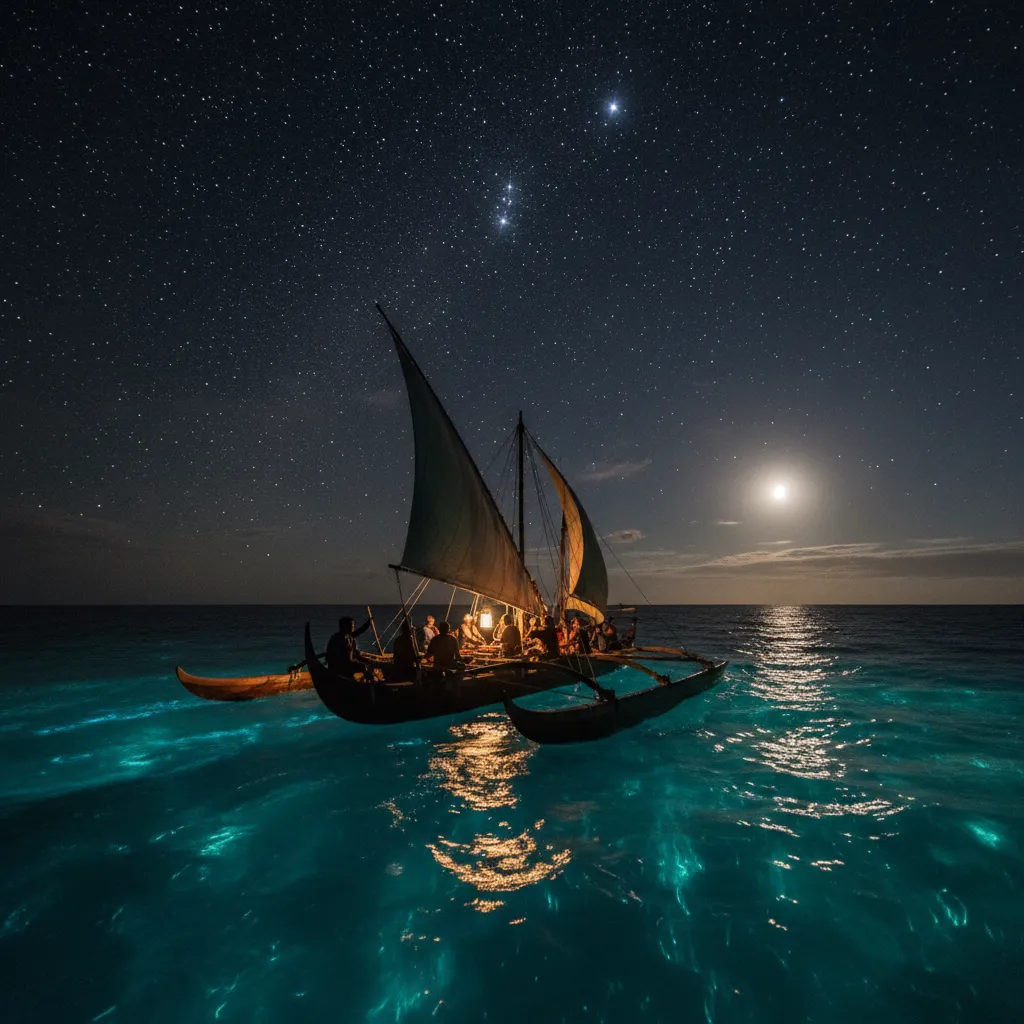
To understand the significance of Matariki across the Pacific, one must first understand the ocean roads that connect the islands. The Pacific Ocean, or Moana-nui-a-Kiwa, was not a barrier to ancient Polynesians but a highway. The settlement of the Pacific Triangle—bounded by Hawaii in the north, Rapa Nui (Easter Island) in the east, and Aotearoa (New Zealand) in the southwest—is one of the greatest feats of human exploration in history.
How did the stars guide Polynesian migration?
Celestial navigation was the cornerstone of Polynesian voyaging. Without magnetic compasses or GPS, navigators (kaiurungi) relied on a mental star compass. The rising and setting points of specific stars on the horizon provided directional bearings.
Matariki was crucial in this navigational matrix. As an open star cluster located in the constellation Taurus, it is distinct and bright, making it an excellent marker. For navigators sailing from the tropics toward Aotearoa, the position of Matariki helped determine latitude and seasonal timing. The phrase “Ngā Waka o Matariki” (The Canoes of Matariki) references the idea that the waka (canoes) were guided to New Zealand by these stars, linking the celestial bodies directly to the whakapapa (genealogy) of the people.
This shared history means that while the names and specific rituals may differ between island nations, the core reverence for the cluster is identical. It represents the link between the ancestors who sailed the ocean and the descendants who now care for the land.
Makali’i in Hawaii: The Season of Renewal
In Hawaii, the Pleiades are known as Makali’i, which translates to “Little Eyes” or “Tiny Eyes,” a linguistic cognate to the Māori “Matariki.” The cultural parallels between the Hawaiian and Māori observances are striking, stemming from their shared ancestral origins in East Polynesia.
What is the Makahiki season?
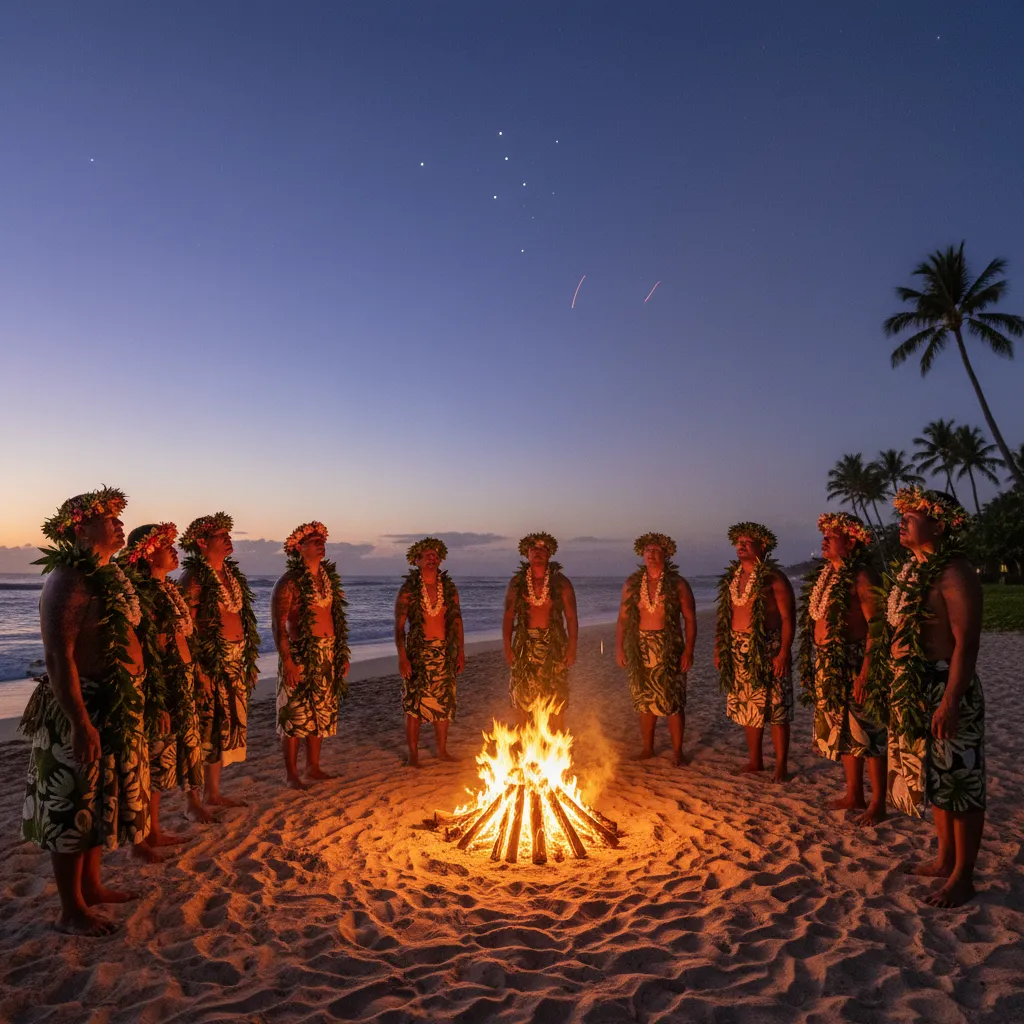
The rising of Makali’i at sunset (acronychal rising) marks the beginning of the Hawaiian new year and the season known as Makahiki. This period, usually lasting four months from October/November to February/March, was historically a time of peace, feasting, and deep spiritual reflection.
During Makahiki, warfare was strictly forbidden. It was a time dedicated to Lono, the god of fertility, agriculture, rainfall, and music. The significance of this cannot be overstated: the appearance of the stars dictated a complete societal shift from the aggressive politics of the the Ku season (war) to the peaceful restoration of the Lono season.
Key elements of the Makali’i celebration in Hawaii include:
- Hookupu (Offerings): Communities would offer the fruits of the land to Lono to ensure continued fertility for the coming year.
- Sports and Games: Boxing, wrestling, and bowling games were held to entertain the populace and the gods.
- Hula: Sacred dances were performed to honor the connection between the sky and the earth.
Today, the revitalization of Makahiki in Hawaii mirrors the Matariki renaissance in New Zealand. It serves as a vehicle for indigenous education, teaching younger generations about sustainable farming, lunar calendars, and conflict resolution.
Matari’i in Tahiti: The Cycle of Abundance
In Tahiti and the Society Islands, the star cluster is called Matari’i. The Tahitian calendar is fundamentally binary, divided into two distinct seasons determined entirely by the visibility of these stars.
What are the two seasons of Matari’i?
The ancient Tahitians divided their year into Matari’i i ni’a (Matari’i above) and Matari’i i raro (Matari’i below).
- Matari’i i ni’a (The Season of Abundance): Commencing around November when the Pleiades rise in the evening, this season is associated with life, fertility, and plenty. It is when food crops flourish, and the fish are abundant in the lagoon. It is a time of high cultural activity and celebration.
- Matari’i i raro (The Season of Scarcity): Beginning around May when the Pleiades set and disappear from the sky, this marks the start of the cooler, drier season. It is a time for conserving resources, repairing nets, and preparing the soil for the next cycle.
This stark division highlights the pragmatic role of astronomy in Pacific cultures. Matari’i was not just a spiritual entity; it was an essential agricultural tool. If the stars were “above,” the land would provide. If they were “below,” the people needed to be prudent.
Modern celebrations in Tahiti, particularly the Tauiti festivities, have seen a resurgence. These events focus on traditional arts, oratory (’ōrero), and reconnecting with the cycles of nature, reinforcing the bond between the Tahitian people and their environment.
Subaru in Japan: Uniting the Stars
Moving beyond the Polynesian triangle, the cultural footprint of the Pleiades extends deep into Asia. In Japan, the cluster is known as Subaru. While most westerners associate the name immediately with the automobile manufacturer, the word itself has ancient origins and deep poetic meaning.
What does Subaru mean in Japanese culture?
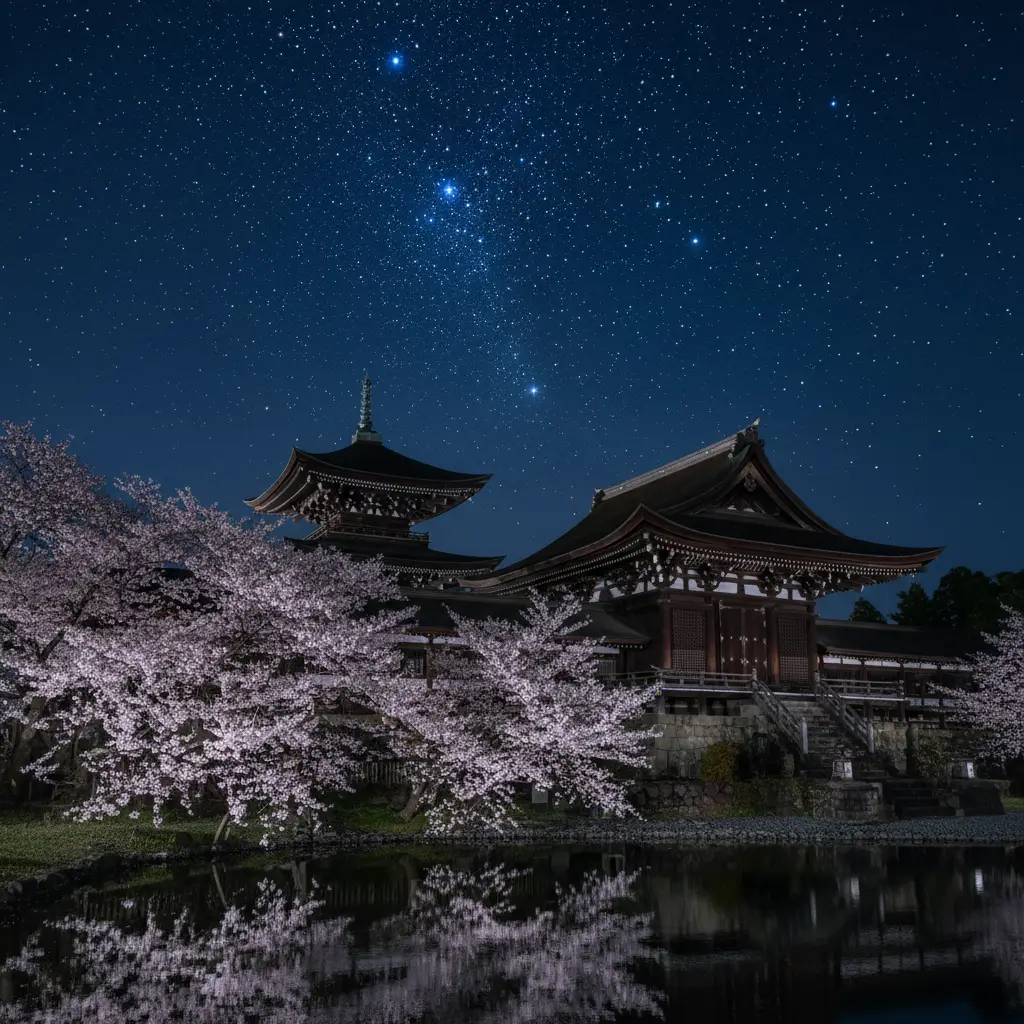
The term “Subaru” stems from the verb subaru, meaning “to gather together” or “to unite.” This is a literal description of the tight grouping of stars in the night sky. In ancient Japan, just as in the Pacific, the visibility of Subaru was a marker for the planting of rice, linking it inextricably to the survival of the people.
The literary history of Subaru is prestigious. It appears in the Kojiki (an ancient chronicle of myths) and is famously mentioned in The Pillow Book (Makura no Sōshi) by Sei Shōnagon, a court lady from the 10th century. She wrote that Subaru was the most beautiful of all star clusters, cementing its place in Japanese aesthetics.
The Branding Connection:
Interestingly, the logo of the Subaru car company depicts six stars, not the seven commonly cited in Greek mythology (the Seven Sisters). This reflects the visual reality that, to the naked eye, usually only six stars are distinct in the cluster, although telescopes reveal hundreds. The large star in the logo represents the parent company (Fuji Heavy Industries), and the five smaller stars represent the companies that merged to form it—a modern corporate application of the ancient meaning “to unite.”
Beyond the Pacific: The Pleiades in World Mythology
The universality of the Pleiades stories is one of the most fascinating aspects of archaeoastronomy. Despite vast geographical distances, cultures that had no contact with one another developed strikingly similar myths, often involving a group of women or siblings.
The Greek “Seven Sisters”
In Greek mythology, the Pleiades were the seven daughters of the Titan Atlas and the sea-nymph Pleione. Pursued by the hunter Orion, they were transformed into stars by Zeus to save them. This myth explains the relative positions of the constellations in the sky: Orion the Hunter appears to be eternally chasing the Pleiades across the night sky.
Indigenous Australia
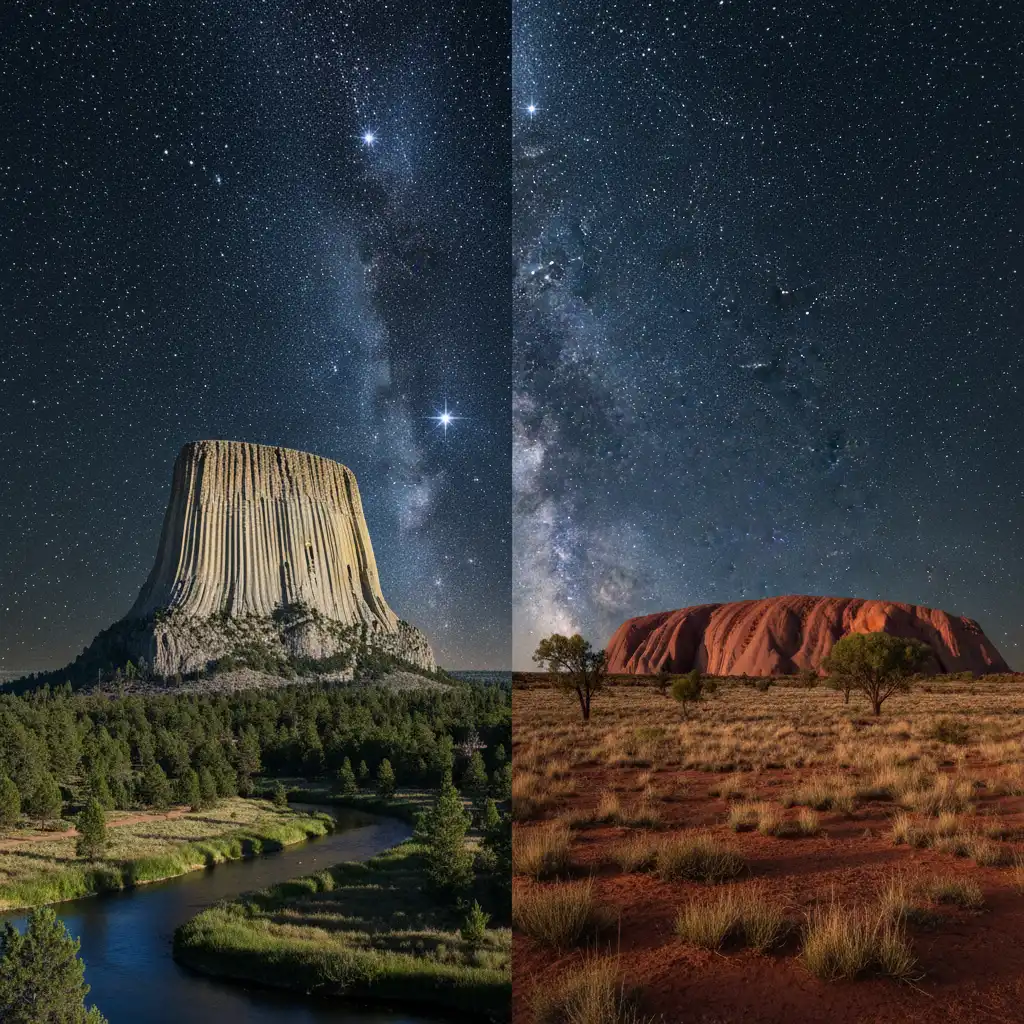
For many Aboriginal Australian groups, particularly in the Central Desert, the story is remarkably similar to the Greek myth. The stars are viewed as a group of young women (the Kungkarangkalpa) who are fleeing from a lustful man (associated with Orion) or a group of men. This narrative is encoded in “Songlines” that traverse the continent, serving as both a moral teaching and a navigational map across the desert.
Native American Legends
Across North America, the Pleiades feature heavily in folklore. The Kiowa and Lakota people tell the legend of Devils Tower (Mato Tipila). According to the story, seven young girls were chased by giant bears. They climbed a rock, and the Great Spirit raised the rock into the sky to save them. The bears scratched the sides of the rock (creating the tower’s vertical striations), and the girls became the stars of the Pleiades. This story links geological formations directly to celestial bodies.
The Significance for Cultural Tourism and Education
For the New Zealand tourism and education sectors, the global context of Matariki offers a unique value proposition. Matariki is not merely a local holiday; it is New Zealand’s specific expression of a global human heritage.
Educational Value:
Teaching Matariki alongside Makali’i, Subaru, and the Seven Sisters fosters global citizenship. It allows students to see Māori knowledge (Mātauranga Māori) as standing shoulder-to-shoulder with Greek, Japanese, and Native American sciences. It validates indigenous science as accurate, observational, and vital for survival.
Tourism Opportunities:
For the cultural tourism market, emphasizing these connections attracts international visitors who may already have a relationship with the Pleiades. A Japanese tourist recognizing Subaru in the context of a Māori pōwhiri creates an instant cultural bridge. Astrotourism is a growing niche in New Zealand, with Dark Sky Sanctuaries like Aoraki Mackenzie and Great Barrier Island becoming major drawcards. Positioning Matariki as the “Pacific host” of this global star party enhances the depth of the visitor experience.
By celebrating Matariki, we are not just looking up at the stars; we are looking across the ocean to our neighbors and back through time to our ancestors. It is a reminder that while our lands are separated by water, our sky is shared.
Frequently Asked Questions
What is the difference between Matariki and the Pleiades?
There is no astronomical difference; they are the same star cluster (Messier 45). The difference lies in the cultural interpretation. “Pleiades” is the Greek name used in Western astronomy, while “Matariki” is the Māori name. Matariki encompasses not just the physical stars, but the spiritual, agricultural, and social systems associated with their rising in the New Zealand winter.
Why do some cultures see 7 stars and others see 6 or 9?
The number of visible stars depends on atmospheric conditions, light pollution, and visual acuity. While the cluster contains hundreds of stars, 6 to 9 are typically visible to the naked eye. Māori tradition often identifies 9 stars (Matariki and her 8 children), while the Greek and Japanese traditions typically focus on 7 or 6 respectively. These variations often shape the specific myths of each culture.
When is Matariki celebrated in other countries?
The timing depends on latitude and the specific cultural calendar. In Hawaii (Northern Hemisphere), Makali’i rises at sunset in October/November, marking the Makahiki season. In Tahiti and New Zealand (Southern Hemisphere), the heliacal rising (rising before the sun) occurs in mid-winter, typically June or July. Therefore, the “celebration” moves around the globe depending on when the stars are visible.
Is Matariki celebrated in Australia?
Yes, Indigenous Australian cultures have deep connections to the Pleiades, often referred to as the Seven Sisters (Kungkarangkalpa). While it is not a public holiday like in New Zealand, the star cluster is central to many Songlines and is celebrated through ceremony, art, and oral history, particularly in the Central Desert regions.
What does the Subaru logo have to do with Matariki?
Subaru is the Japanese name for the Pleiades/Matariki star cluster. The car manufacturer adopted the name and the image of the stars to symbolize the merger of five smaller companies into one larger parent company (Fuji Heavy Industries), reflecting the Japanese meaning of Subaru: “to gather together” or “unite.”
How can tourists experience Matariki in New Zealand?
Tourists can experience Matariki through dedicated festivals held nationwide in June and July. Activities include dawn viewing ceremonies (hautapu), cultural performances (kapa haka), art exhibitions, and feasts (hākari). Visiting Dark Sky Reserves in Tekapo or Great Barrier Island offers the best visual experience of the cluster itself.