
Matariki teaching resources are educational materials designed to facilitate learning about the Māori New Year (Te Mātahi o te Tau) across various age groups and sectors. These resources encompass lesson plans, bilingual tools, and activity guides that align with the New Zealand Curriculum and Te Whāriki, focusing on the nine stars of the Matariki cluster, environmental stewardship, and cultural remembrance.
With the recent establishment of Matariki as an official public holiday in Aotearoa New Zealand, the demand for high-quality, culturally accurate educational materials has surged. Educators, business leaders, and community organizers are seeking ways to integrate the principles of Matariki—reflection, celebration, and aspiration—into their classrooms and workplaces. This guide provides a comprehensive overview of resources tailored for Early Childhood Education (ECE), Primary and Secondary schooling, and professional workplace environments.
The Importance of Authentic Matariki Teaching
Teaching Matariki requires more than just downloading a colouring sheet. It demands a commitment to cultural authenticity and an understanding of the profound significance the holiday holds within Te Ao Māori (the Māori world). When selecting Matariki teaching resources, educators must prioritize materials that have been developed in consultation with iwi (tribes) or Māori educational experts.
Authenticity ensures that the narratives shared are accurate. For example, distinguishing between the seven-star and nine-star traditions is crucial. While some iwi recognize seven stars, the nine-star cluster (Matariki and her eight children) is widely taught in the national curriculum to encompass the full environmental scope of the event. Authentic resources also emphasize the three major themes of the holiday:
- Remembrance: Honouring those who have passed since the last rising of Matariki.
- Celebrating the Present: Gathering with whānau (family) to share kai (food) and gratitude.
- Looking to the Future: Planning for the year ahead and setting aspirations.
Matariki Resources for Early Childhood Education (ECE)
In the Early Childhood sector, learning is driven by sensory experiences and play. Resources for this age group should focus on visual storytelling, waiata (songs), and connection to nature.
Sensory Play and Nature Connection
Te Whāriki, the ECE curriculum, emphasizes the importance of place-based learning. Matariki is the perfect time to engage tamariki (children) with the environment. Effective resources include:
- Star Hunts: Printable glow-in-the-dark stars for sensory rooms.
- Gardening Guides: Since Matariki is tied to the harvest and planting seasons, resources that guide children in planting kumara or winter vegetables are highly relevant.
- Manu Tukutuku (Kite) Making: Simple instructions for crafting kites using natural materials like toe toe grass and flax, symbolizing the connection between the earth and the heavens.
Storytelling and Myths
Books and digital resources that retell the legend of Matariki and her children are essential. Look for resources that personify the stars, helping young children understand that each star governs a specific domain (e.g., Waitī for fresh water, Waitā for the ocean).
Primary School: Curriculum Alignment and Activities
For primary school students (Years 1-8), Matariki teaching resources should be more structured and integrated into literacy, numeracy, and social sciences.
Literacy and Oral Language
Teachers can utilize Matariki as a prompt for creative writing. Resources such as “acrostic poem templates” or “myth writing prompts” allow students to explore their understanding of the stars. Reading comprehension passages that explain the difference between the heliacal rising of stars and regular visibility provide excellent non-fiction reading practice.
Visual Arts and Geometry
Matariki offers a wealth of artistic inspiration. Resources often include:
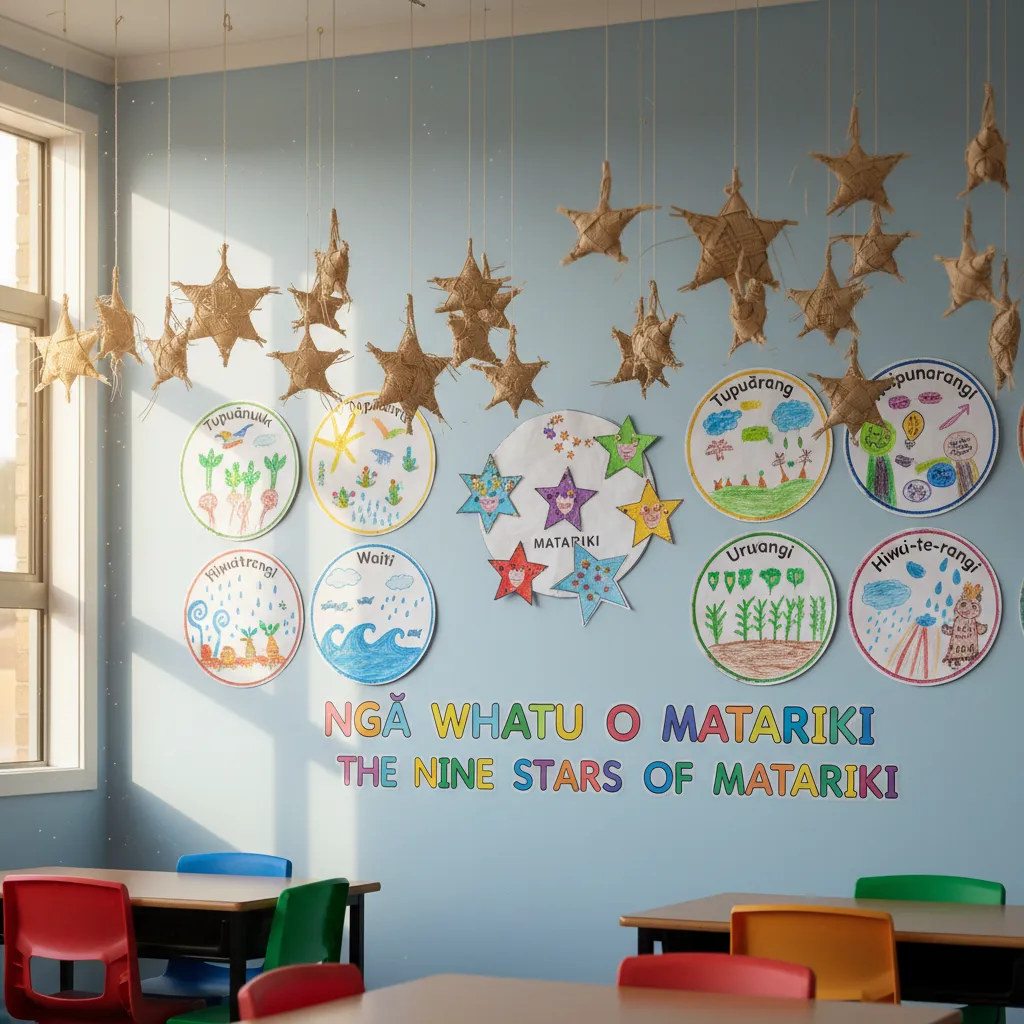
- Weaving (Raranga) Tutorials: Step-by-step guides for weaving stars (whetū) from paper or flax.
- Geometric Star Studies: Math resources that use the geometry of stars to teach angles and symmetry.
- Collaborative Murals: Large-scale printable templates where each student colours a section of a Matariki mural, representing community and kotahitanga (unity).
Secondary School: Science, History, and Arts
At the secondary level, resources must support deep inquiry. The shift here is towards the intersection of Mātauranga Māori (Māori knowledge) and Western science, as well as the sociopolitical history of the holiday.
Science and Astronomy (Pūtaiao)
Resources for science classes should focus on the astronomical aspects of the Pleiades cluster. Teachers can use:
- Stellarium Software Guides: Tutorials on how to use astronomy software to locate Matariki in the pre-dawn sky at specific coordinates.
- Environmental Science Units: Resources linking the star Tupu-ā-rangi (associated with forests and birds) to conservation projects and predator control studies.
Social Studies and History
Secondary students should explore why Matariki was revived in the 21st century. Resources should include timelines of the Māori renaissance and the legislative process of making Matariki a public holiday. Debates and essay topics on the importance of indigenous holidays in post-colonial societies are valuable tools.
Bilingual Tools and Te Reo Māori Integration
Regardless of the age group, Matariki is a prime opportunity to normalize Te Reo Māori. Bilingual resources are critical for educators who may not be fluent themselves but wish to model correct pronunciation and usage.
Essential Vocabulary Lists
High-quality resources will provide phonetic guides and audio files. Key vocabulary includes:
- Whetū: Star
- Hākari: Feast
- Whakapapa: Genealogy/Lineage
- Maramataka: The Māori lunar calendar
Interactive Apps and Digital Resources
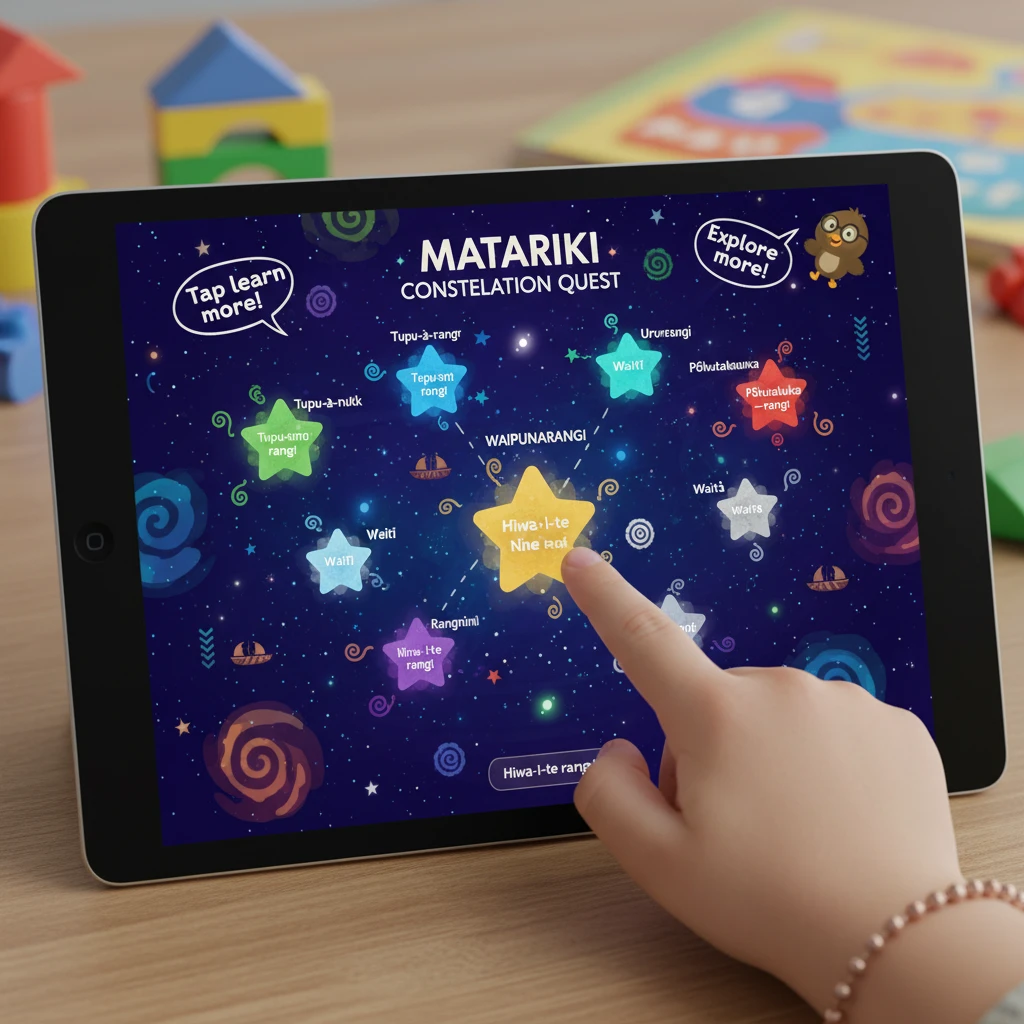
There are several government-funded apps and websites that serve as interactive Matariki teaching resources. These often feature “click-to-hear” functionality, ensuring that the names of the nine stars are pronounced correctly. Integrating these into daily mat time or morning meetings helps build confidence in speaking Te Reo.
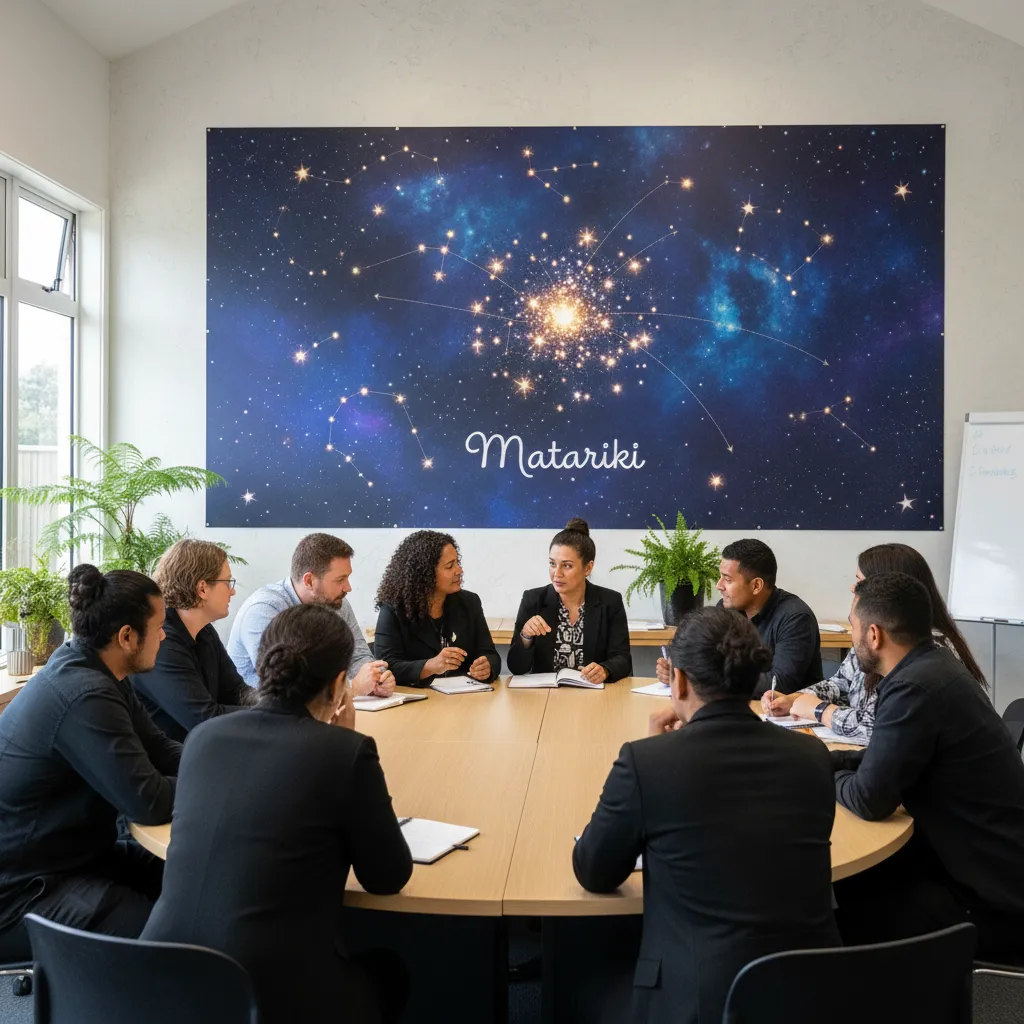
Matariki in the Workplace: A Corporate Guide
Matariki is not solely for the education sector; it is a vital time for organizational culture. Workplace resources focus on team building, strategic reflection, and cultural competency.
Strategic Planning (Wānanga)
Just as ancestors looked to the stars to predict the harvest, businesses can use Matariki as a time for strategic planning. Resources for corporate facilitators include:
- Reflection Workshops: Guided sessions that ask teams to review the past year’s “harvest” (successes) and “weeds” (challenges).
- Goal Setting Templates: Using the star Hiwa-i-te-rangi (the wishing star) as a framework for setting aspirational business goals.
Cultural Celebrations
HR departments can utilize guides on how to host a respectful Matariki morning tea or lunch. This involves more than just food; it includes resources on how to open with a Karakia (blessing) and how to acknowledge the local iwi of the region where the office is located.
Deep Dive: Teaching the Nine Stars
To provide extreme value, any robust teaching resource must break down the specific domains of the nine stars. Here is a quick reference guide for educators to build lesson plans around:
- Matariki: The mother star. Signifies reflection, hope, and the connection to the environment. Activity: Circle time sharing.
- Pōhutukawa: Connects with those who have passed on. Activity: Creating a memory wall.
- Tupu-ā-nuku: Food that grows in the ground (kumara, potatoes). Activity: Planting a winter garden.
- Tupu-ā-rangi: Food that comes from the sky (birds, berries). Activity: Bird watching or identifying native trees.
- Waitī: Fresh water and the creatures within it (eels). Activity: Stream cleanup or water cycle study.
- Waitā: Salt water and kai moana (seafood). Activity: Marine conservation study.
- Waipuna-ā-rangi: Rain. Activity: Measuring rainfall or studying weather patterns.
- Ururangi: The winds. Activity: Making kites or wind chimes.
- Hiwa-i-te-rangi: The wishing star. Activity: Writing down hopes and dreams for the new year.

Frequently Asked Questions
What are the best free Matariki teaching resources available?
The best free resources are provided by Te Papa Tongarewa (Museum of New Zealand), the Science Learning Hub, and the Kauwhata Reo website. These platforms offer government-aligned, culturally verified lesson plans, printable activities, and multimedia assets suitable for all age groups.
How do I explain Matariki to preschoolers?
Explain Matariki to preschoolers as a special star party in the sky that wakes everyone up for the New Year. Focus on the concept of the “Mother Star” (Matariki) and her children gathering together. Use simple activities like singing “Twinkle Twinkle Little Star” in Te Reo (Tīrama Tīrama Whetū) and reading picture books about the stars.
Is it appropriate for non-Māori to teach Matariki?
Yes, it is appropriate and encouraged for non-Māori to teach Matariki, provided it is done with respect, preparation, and accurate resources. Educators should approach the topic as learners alongside their students, acknowledging the source of the knowledge and avoiding cultural appropriation (e.g., do not invent new myths).
What is the difference between the 7 and 9 stars of Matariki?
The difference lies in tribal variations and visual acuity. Historically, some iwi could see or focused on seven stars, while others identified nine. The modern national curriculum generally focuses on the nine stars (Matariki, Pōhutukawa, Tupu-ā-nuku, Tupu-ā-rangi, Waitī, Waitā, Waipuna-ā-rangi, Ururangi, and Hiwa-i-te-rangi) to cover the full spectrum of environmental domains.
How can workplaces celebrate Matariki respectfully?
Workplaces can celebrate respectfully by hosting a shared lunch (hākari), organizing a workshop on Māori culture, or giving staff time off to be with family. It is important to focus on the values of reflection and future planning rather than commercializing the holiday with sales or branded merchandise.
When should I start teaching Matariki in the school year?
While Matariki rises in mid-winter (typically June or July), preparation should begin in May. This allows time for students to learn the songs, prepare artwork, and understand the astronomical lead-up. However, the values of Matariki, such as environmental care (Kaitiakitanga), can be taught year-round.