
Matariki words and meanings encompass the specific Te Reo Māori terminology used to describe the Māori New Year, including the names of the nine stars in the Pleiades cluster, customary greetings like “Mānawatia a Matariki,” and astronomical concepts. Understanding these terms provides deep cultural insight into the environmental domains of wind, water, food, and remembrance that the festival celebrates.
The Cultural Significance of Language During Matariki
Matariki is not merely a holiday; it is a period of environmental attunement and cultural reflection. To truly engage with the spirit of the Māori New Year, one must delve into the Matariki words and meanings that frame this celestial event. Language (Te Reo) acts as the vessel for cultural knowledge, carrying the history, science, and spiritual beliefs of the Māori people.
When we learn the specific terminology associated with the rising of the Pleiades, we are doing more than memorizing vocabulary. We are acknowledging the whakapapa (genealogy) of the natural world. Each word connects us to a specific domain—be it the garden, the forest, the ocean, or the winds. For cultural tourists and educators in New Zealand, mastering these terms is an essential step in showing respect and deepening the experience of the season.
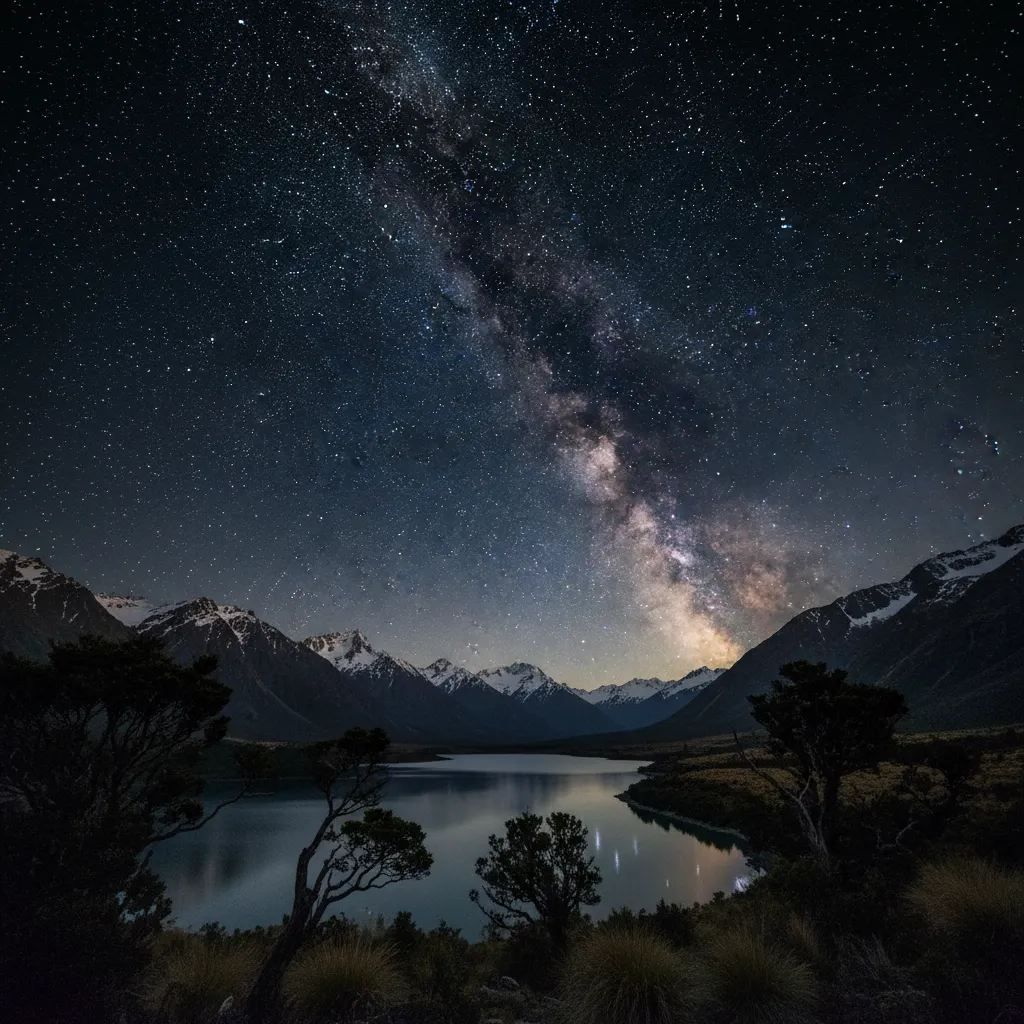
Ngā Whetū o Matariki: The Nine Stars and Their Meanings
Central to any glossary of Matariki are the names of the stars themselves. While some traditions recognize seven stars, the most common narrative in modern Aotearoa acknowledges nine. Each star holds dominion over a specific aspect of wellbeing and the environment.
1. Matariki (The Mother Star)
Meaning: The name Matariki refers to both the entire cluster and the central star. It signifies reflection, hope, and the connection to the environment. It is often translated as “The eyes of god” (Mata Ariki) or “Little eyes” (Mata Riki).
Domain: Health and wellbeing. This star gathers the others together and encourages us to check in on the health of our people and our environment.
2. Pōhutukawa
Meaning: This star connects Matariki to the dead. It is the star of remembrance.
Domain: Those who have passed on. When we see Pōhutukawa, we recall the names of those who have died since the last rising of Matariki, releasing their spirits to become stars in the sky.
3. Tupu-ā-nuku
Meaning: “Tupu” means to grow, and “Nuku” refers to Papatūānuku (the Earth Mother).
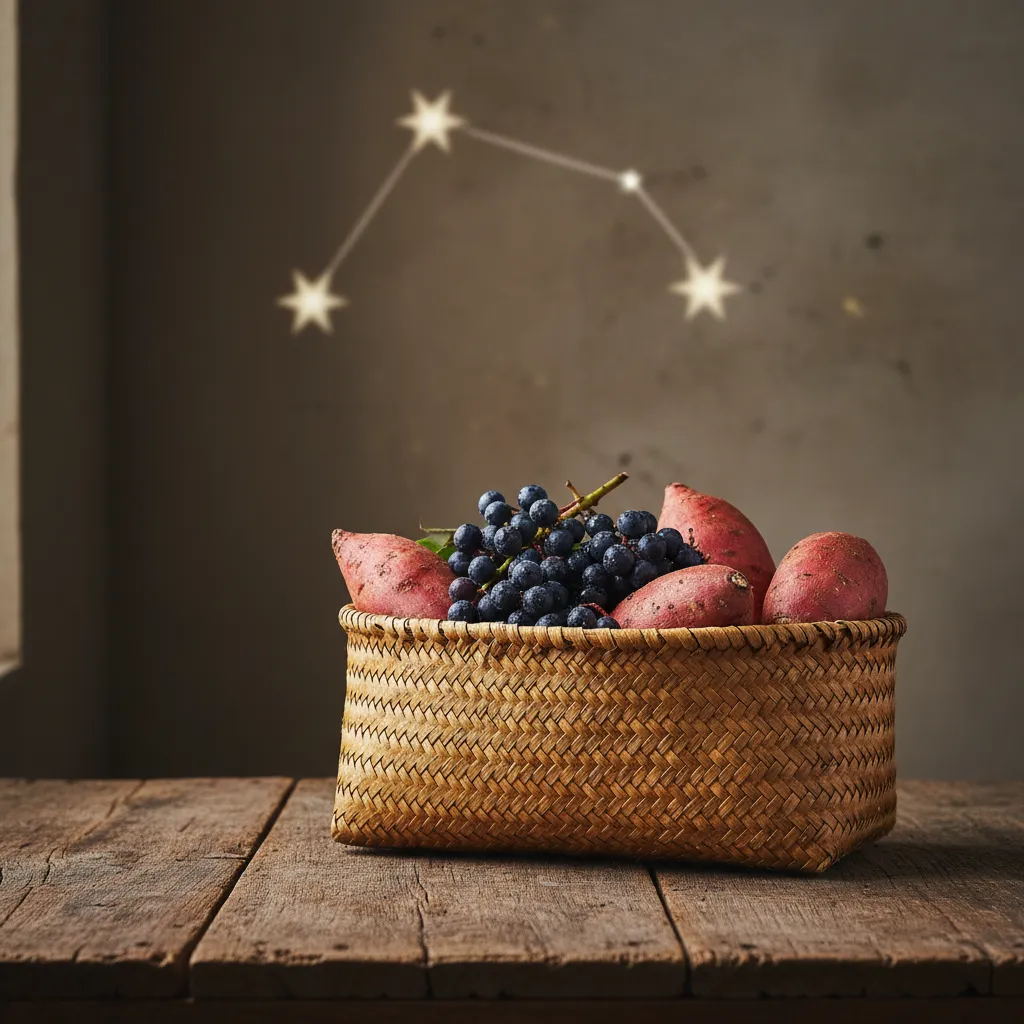
Domain: Food that grows within the soil. This includes kūmara (sweet potato) and other root vegetables. This star is looked to for predicting the success of the coming harvest.
4. Tupu-ā-rangi
Meaning: “Rangi” refers to the sky.
Domain: Food that grows above the ground. This covers fruits, berries from trees, and birds (manu). It emphasizes the abundance of the forests.
5. Waipuna-ā-rangi
Meaning: “Water that pools in the sky.”
Domain: Rain and snow. This star is linked to the weather patterns, specifically precipitation that is vital for the land. It reminds us of the water cycle’s importance.
6. Waitī
Meaning: “Sweet water.”
Domain: Fresh water bodies. This includes rivers, streams, and lakes, and the food sources within them, such as eels (tuna) and koura. It signals the health of our waterways.
7. Waitā
Meaning: “Salt water.”
Domain: The ocean. This star represents the vast marine environment and the kaimoana (seafood) harvested from it. It connects to the tides and currents.
8. Ururangi
Meaning: “The winds of the sky.”
Domain: The winds. Ururangi determines the nature of the winds for the year—whether they will be gentle and favorable or harsh and destructive.
9. Hiwa-i-te-rangi
Meaning: The wishing star.
Domain: Aspirations and the future. This is the star to which you send your wishes for the coming year. It represents growth, planning, and the realization of dreams.
Greetings and Salutations: Saying Happy New Year
Using the correct greetings is a respectful way to participate in the festivities. While “Happy New Year” is the sentiment, the translation is specific to the occasion.
What does “Mānawatia a Matariki” mean?
The most widely accepted and encouraged greeting is “Mānawatia a Matariki.”
Literally, this translates to “Welcome Matariki” or “Celebrate Matariki.” The word Mānawatia comes from manawa (heart/breath), implying that we are honouring the presence of the stars and breathing life into the celebration. It is a powerful affirmation used to acknowledge the rising of the new year.
Other Useful Greetings
- Ngā mihi o te Tau Hou: Greetings of the New Year.
- Ngā mihi o Matariki: Greetings of Matariki.
- Kia pai tō Matariki: Have a good Matariki.
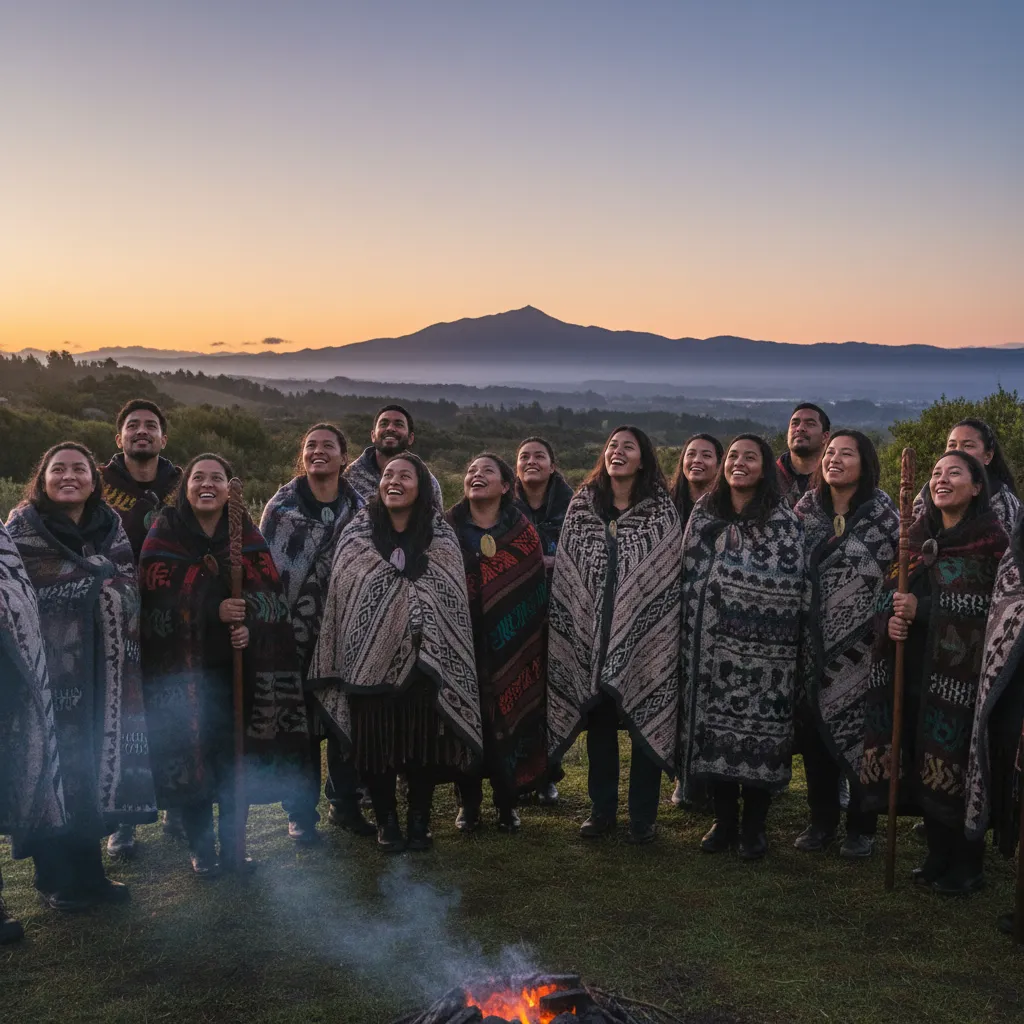
Te Whānau Mārama: Astronomical Terms
To discuss Matariki accurately, it helps to know the broader astronomical vocabulary in Te Reo Māori. These terms position the holiday within the science of navigation and timekeeping.
Whetū (Star)
The general term for a star. Matariki is a kāhui whetū (cluster of stars) rather than a single solar body, although we often refer to the lead star simply as Matariki.
Maramataka (The Lunar Calendar)
The Māori system of time is not solar (like the Gregorian calendar) but lunar-stellar. The Maramataka tracks the phases of the moon to determine the best times for fishing and planting. Matariki marks the reset of this calendar.
Takurua (Winter/Sirius)
Takurua is the Māori word for winter, but it is also the name of the star Sirius, the brightest star in the night sky. In some iwi (tribal) traditions, particularly in the South Island, the rising of Puanga (Rigel) is the primary signal for the New Year because Matariki sits lower on the horizon and is harder to see in mountainous regions.
Hokinga-a-mahara (Return of memory)
While not strictly a celestial body, this term is associated with the astronomical phase of reflection. As the stars rise, memory returns.
Key Cultural Concepts and Traditions
Beyond the names of stars, several concepts define the activities undertaken during this period.
Hākari (The Feast)
A hākari is a ceremonial feast. During Matariki, this is vital. Once the stars have been viewed and the karakia (prayers) recited, the restriction of tapu (sacredness) is lifted from the ceremony through the sharing of food. This food usually represents the four domains: earth, sky, water, and ocean.
Whāngai i te hautapu (Feeding the stars)
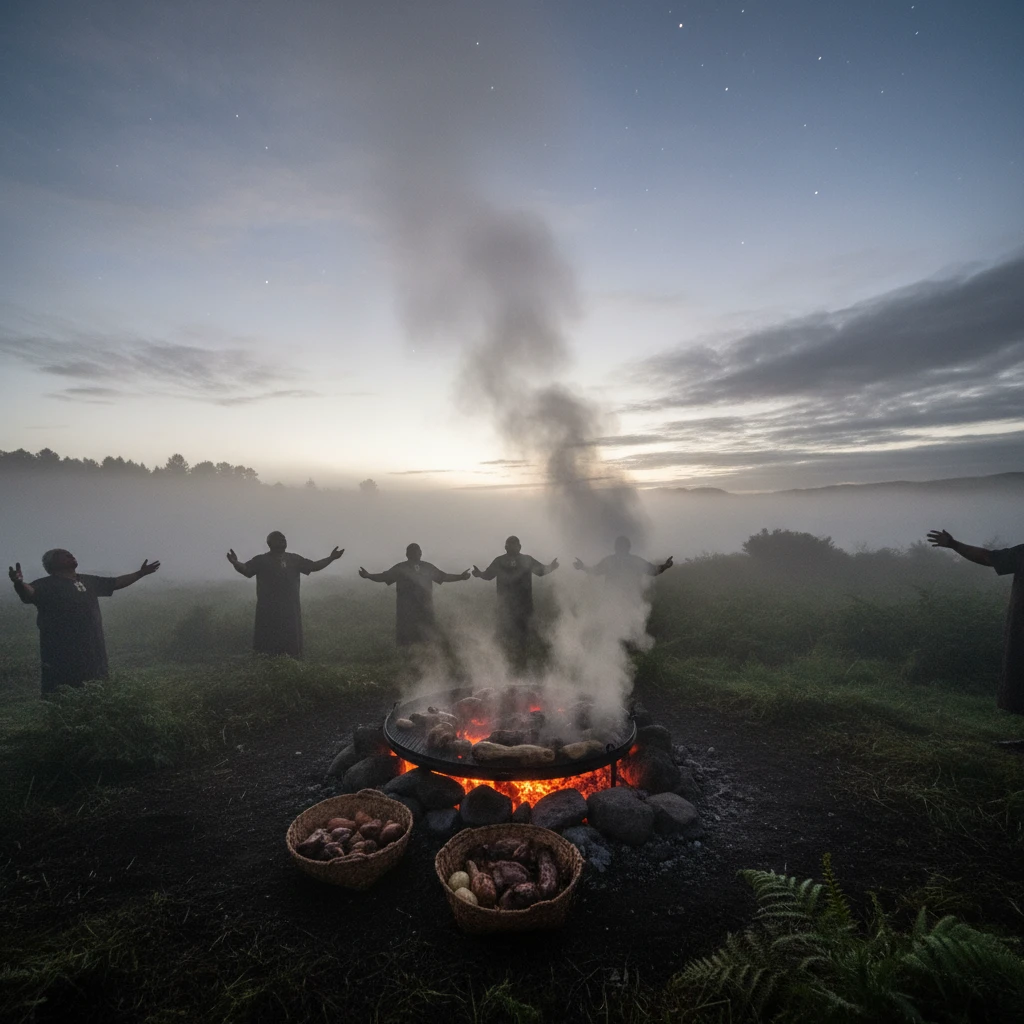
This is a traditional ceremony where food is cooked in an earth oven (hāngī). The steam is allowed to rise into the sky to “feed” the stars. It is an offering of gratitude to the distinct stars for the bounty provided in the previous year and a request for abundance in the next.
Wānanga (Learning/Discussion)
Matariki is historically a time when the harvest is stored, and the weather is cold, keeping people indoors. Consequently, it became the season for wānanga—intensive learning. Elders would pass down knowledge, whakapapa, and skills to the younger generation.
Pronunciation Guide and Audio Context
Correct pronunciation honours the language and the mana of the event. Te Reo Māori is a phonetic language with consistent rules.
Vowel Sounds
The five vowels are pronounced as follows:
- A: as in ‘car’
- E: as in ‘egg’
- I: as in ‘eat’
- O: as in ‘or’
- U: as in ‘tool’
Macrons (Tohutō)
You will notice lines over some vowels (ā, ē, ī, ō, ū). These are macrons, indicating a long vowel sound. For example, the ‘a’ in Matariki is short, but the ‘ā’ in Mānawatia is long. Holding the sound longer can change the meaning of a word entirely.
The ‘Wh’ and ‘Ng’ Digraphs
- Wh: Pronounced almost like an ‘f’ sound, or a soft ‘ph’. In Whetū (star), it sounds like ‘fet-u’.
- Ng: A soft nasal sound, like the ‘ng’ in ‘singer’. It is never a hard ‘g’ sound.
Pronouncing the Stars
Here is a simplified guide for the nine stars:
- Matariki: Mah-tah-ree-key
- Pōhutukawa: Paw-hoo-too-kah-wah
- Tupu-ā-nuku: Too-poo-ah-nook-oo
- Tupu-ā-rangi: Too-poo-ah-rung-ee
- Waipuna-ā-rangi: Why-poo-nah-ah-rung-ee
- Waitī: Why-tee
- Waitā: Why-tah
- Ururangi: Oo-roo-rung-ee
- Hiwa-i-te-rangi: Hee-wah-ee-teh-rung-ee
Frequently Asked Questions
What are the 3 main meanings of Matariki?
The three main themes of Matariki are: 1) Remembering the past and honoring those who have died (Pōhutukawa); 2) Celebrating the present, gathering with family, and sharing food (Hākari); and 3) Looking to the future, planning, and setting goals (Hiwa-i-te-rangi).
How do you say Happy Matariki in Te Reo?
The most appropriate phrase is “Mānawatia a Matariki.” While you can say “Ngā mihi o Matariki” (Greetings of Matariki), “Mānawatia a Matariki” captures the spirit of welcoming and celebrating the constellation’s rising.
What is the spiritual meaning of Matariki?
Spiritually, Matariki represents a time of renewal and connection between the physical and spiritual worlds. It is when the spirits of the deceased are released into the sky to become stars, and when the living reaffirm their connection to the earth and the cosmos.
Why are there 9 stars of Matariki instead of 7?
While the Pleiades cluster contains hundreds of stars, and many cultures identify seven (the Seven Sisters), Māori narratives often identify nine. The two additional stars usually included in the Māori cluster are Pōhutukawa (connected to the dead) and Hiwa-i-te-rangi (connected to future wishes), adding specific cultural depth to the cluster.
What foods are associated with Matariki?
Traditional Matariki foods come from the domains of the stars: Kūmara (sweet potato) from the earth (Tupu-ā-nuku), birds or berries from the forest (Tupu-ā-rangi), eels from fresh water (Waitī), and fish from the ocean (Waitā).
When should I start celebrating Matariki?
Matariki dates shift every year because they follow the lunar calendar (Maramataka). It generally occurs in mid-winter (June or July) when the stars reappear in the dawn sky. Celebrations typically begin on the first day of the sighting and continue for a period of roughly a week or until the new moon.