
To locate Matariki in New Zealand skies using a star map method, face the eastern horizon before dawn. First, identify Tautoru (Orion’s Belt or ‘The Pot’). Follow the line of the three stars leftward to find the bright orange star Taumata-kuku (Aldebaran). Continue extending that line to discover the distinct, tight cluster of twinkling stars known as Matariki (The Pleiades).
Matariki marks the Māori New Year and is a time of immense cultural significance in Aotearoa. Observing the rise of this star cluster is a practice that connects New Zealanders to the environment, the seasons, and ancestral traditions. However, for the uninitiated, distinguishing Matariki from the myriad of other celestial bodies in the pre-dawn sky can be challenging. This guide provides a comprehensive step-by-step Matariki star map NZ strategy to ensure you can confidently identify the cluster.
The Cosmic Alignment: Orion’s Belt to Matariki
Finding Matariki does not require advanced astronomical equipment; it requires knowledge of celestial geometry. The night sky is a map, and by using prominent constellations as signposts, you can navigate your way to the Matariki cluster with precision. The most reliable method involves a three-step visual alignment often referred to as the “Cosmic Coat Hangers” or the “Three-Step Rule.”
This alignment relies on the brightness of Tautoru (Orion’s Belt) and Te Kokota (The Hyades). Because Matariki is a relatively faint open star cluster compared to individual giant stars, using these brighter neighbors as guides is essential, especially in areas with mild light pollution.
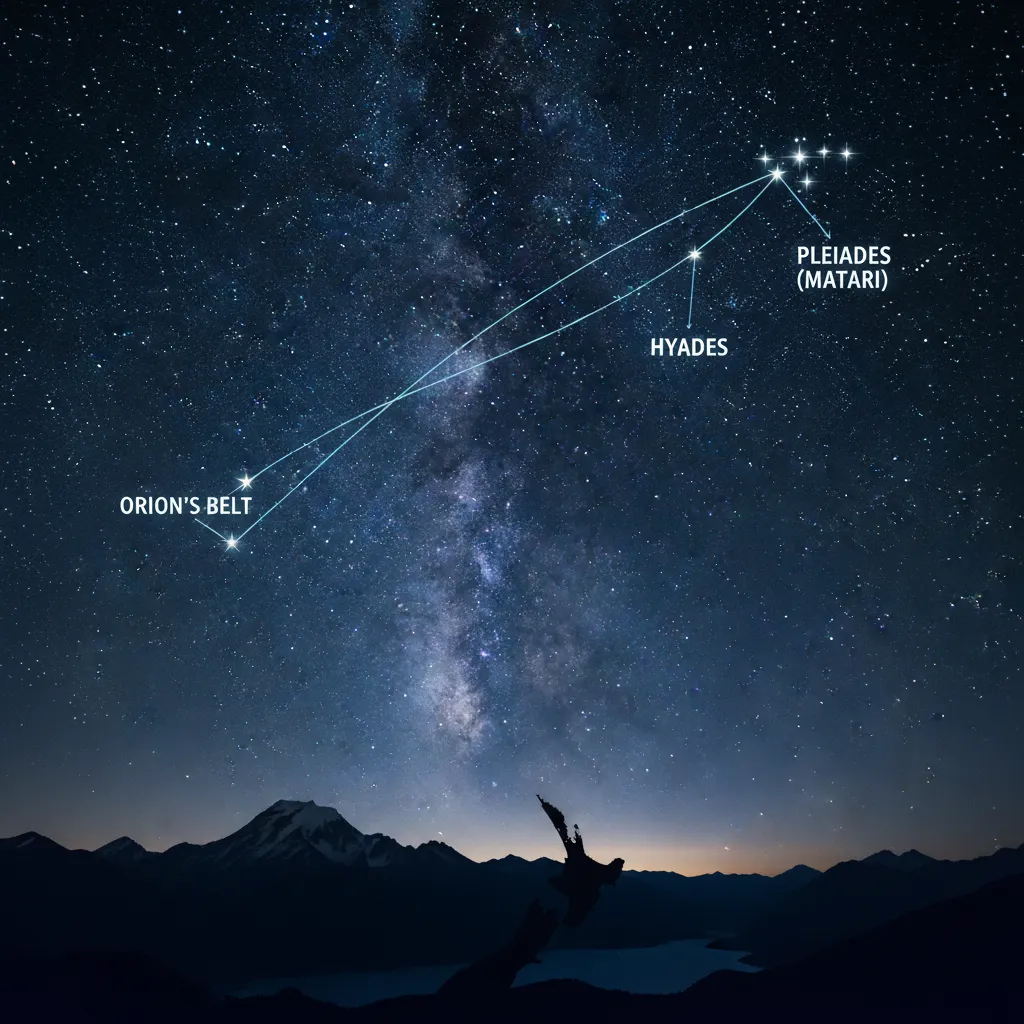
Step-by-Step Star Map: Finding the Cluster
To successfully locate the cluster, follow this detailed progression. The best time to view Matariki is usually in mid-winter (June or July) during the early morning hours, typically between 5:30 AM and 6:30 AM, just before the sun begins to lighten the sky.
1. Orient Yourself East
Find a location with a clear view of the eastern horizon. Obstructions like tall buildings, trees, or hills can block the view since Matariki rises relatively low in the sky during the early phases of its reappearance. Position yourself away from streetlights to allow your eyes to adjust to the darkness.
2. Locate Tautoru (The Pot / Orion’s Belt)
Look for the most recognizable constellation in the winter sky: Orion. In New Zealand, this is often called “The Pot.” You are specifically looking for the three bright stars that form the bottom of the pot (or the belt of the hunter Orion). These stars are arranged in a distinct straight line.
3. Find Te Kokota (The Face / Hyades)
Draw an imaginary line from Tautoru (the three stars) moving to the left (northward). Your gaze will land on a V-shaped cluster of stars. This is Te Kokota (The Hyades). The brightest star in this V-shape is Taumata-kuku (Aldebaran), a red giant that glows with a distinct orange hue. This serves as your second waypoint.
4. Arrive at Matariki (The Pleiades)
Continue that imaginary line from Taumata-kuku further to the left. You will encounter a smaller, tighter cluster of stars that looks somewhat like a miniature version of the Big Dipper or a small cloud of diamond dust. This is Matariki. It is much smaller and more compact than the Hyades.
Distinguishing Matariki from Other Stars
One of the most common mistakes amateur stargazers make is confusing Matariki with other clusters or bright planets. Understanding the visual characteristics of Matariki is crucial for accurate identification, as is knowing the differences in regional observation like Matariki vs. Puanga.
Is Matariki the Seven Sisters?
Yes, Matariki is known internationally as the Pleiades or the Seven Sisters. However, in Māori astronomy, up to nine stars are often recognized: Matariki (the mother) and her eight children (Tupu-ā-nuku, Tupu-ā-rangi, Waipunarangi, Waitī, Waitā, Ururangi, Pohutukawa, and Hiwa-i-te-rangi). To the naked eye, most people see roughly six or seven stars, appearing as a fuzzy blue-white smudge.
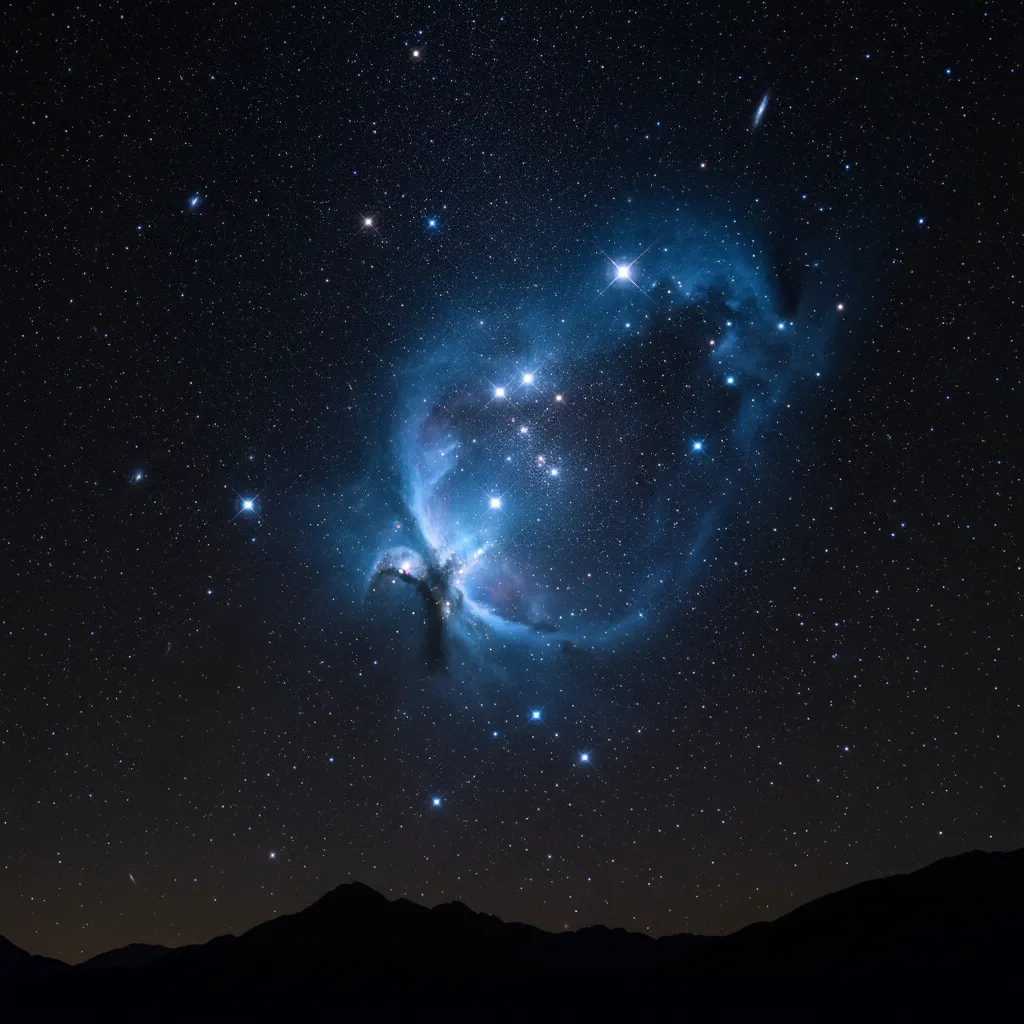
Matariki vs. The Hyades
As mentioned in the star map method, the Hyades (Te Kokota) are close to Matariki. The key difference is size and spread. The Hyades form a larger, more open “V” shape, whereas Matariki is a very tight, condensed knot of stars. Furthermore, the Hyades is anchored by the bright orange star Aldebaran, whereas the stars in Matariki are generally blue-white in color.
Matariki vs. Jupiter or Venus
Planets often appear in the eastern sky in the morning. Planets shine with a steady, non-twinkling light and are significantly brighter than any single star in the Matariki cluster. If you see a single, blindingly bright object, it is likely a planet, not Matariki. Matariki is a group of stars, not a single point of light.
Using Smartphone Apps and Digital Maps
While traditional navigation using the “Cosmic Coat Hangers” is rewarding, modern technology offers precision tools to verify your sighting. Integrating an Interactive Night Sky Map Tool: Locate Matariki Now into your Matariki viewing experience can be incredibly helpful, especially for educational purposes with children or students.
Recommended Astronomy Apps
Several apps utilize your phone’s gyroscope and GPS to overlay a star map onto the real sky:
- Stellarium Mobile: Widely considered the gold standard for amateur astronomy. It allows you to simulate the sky at different times, meaning you can plan your Matariki viewing the night before.
- Star Walk 2: Features a user-friendly interface with beautiful graphics, making it excellent for beginners.
- SkyView Lite: An augmented reality (AR) app that lets you point your camera at the sky to identify objects instantly.

Downloadable PDF Star Charts
For educators and event organizers, printed PDF star charts are invaluable. Organizations like The Museum of New Zealand Te Papa Tongarewa and Stardome Observatory often release updated “Matariki Star Map NZ” PDFs annually. These charts are calibrated for the specific year’s planetary positions and provide a static reference that doesn’t ruin your night vision like a bright phone screen might.
Naked Eye vs. Binoculars: Best Viewing Practices
You do not need a telescope to appreciate Matariki. in fact, a telescope with high magnification might zoom in too far, causing you to lose the context of the cluster’s shape. Here is how to optimize your viewing experience with different equipment.
The Naked Eye Experience
Viewing Matariki with the naked eye is the traditional way and offers the widest field of view. This allows you to see the cluster in relation to Tautoru and Te Kokota. To enhance naked-eye viewing, use the technique of “averted vision.” By looking slightly to the side of the cluster rather than directly at it, you engage the rod cells in your peripheral vision, which are more sensitive to low light, making the faint cluster appear brighter.
Using Binoculars
Binoculars are arguably the best tool for viewing Matariki. A standard pair of 7×50 or 10×50 binoculars frames the cluster perfectly. Through binoculars, the “fuzzy patch” resolves into dozens of diamond-like stars. You will be able to distinguish the primary stars (the mother and children) clearly. The blue tint of the hot, young stars becomes more apparent, and the experience is often described as breathtaking.

Minimizing Light Pollution
Light pollution is the enemy of deep-sky objects like the Pleiades. To see the full nine stars, you need a dark sky site. If you are in a city like Auckland or Wellington, try to find a park or hill that blocks the direct glare of city lights. Coastal areas facing east are often ideal as the ocean provides a naturally dark horizon.
The Significance of the Nine Stars
While the astronomical identification is the first step, understanding the meaning deepens the experience. In Māori tradition, the visibility of Matariki signals the start of the New Year. It is a time to remember those who have passed (pohutukawa connects to the dead), celebrate the present (food and harvest represented by Tupu-ā-nuku and others), and plan for the future (Hiwa-i-te-rangi is the wishing star). Many iwi recognize distinct regional stars, such as Puanga Whanganui: Traditions of the River.
When you locate the cluster using your star map, take a moment to recite the names and reflect on their domains—wind, rain, fresh water, salt water, food from the earth, and food from the sky. This transforms a simple stargazing activity into a profound connection with the mātauranga Māori (Māori knowledge) that has guided navigation and agriculture in Aotearoa for centuries.
People Also Ask
What time is best to see Matariki in NZ?
The best time to view Matariki is in the early morning, just before dawn, typically between 5:30 AM and 6:30 AM during the months of June and July.
Where do I look for Matariki?
Look towards the north-eastern horizon. Use Orion’s Belt (The Pot) as a guide, follow the line left to the V-shaped Hyades, and continue to the cluster of Matariki.
Can I see Matariki without a telescope?
Yes, Matariki is visible to the naked eye as a fuzzy cluster of stars. However, using binoculars will reveal more individual stars and detail.
How many stars are in the Matariki cluster?
While there are hundreds of stars in the actual cluster, traditionally Māori identify nine distinct stars. To the naked eye, usually 6 or 7 are visible.
What dates is Matariki visible in 2024/2025?
Matariki reappears in the pre-dawn sky in mid-to-late June. The specific dates for the public holiday shift annually based on the lunar calendar (Maramataka).
Why does Matariki disappear?
Matariki disappears from view in April or May because it sets in the west just as the sun is setting, becoming lost in the sun’s glare, before reappearing in the east in June.