
Matariki resources for teachers are curriculum-aligned educational materials designed to help kaiako (educators) teach the significance of the Māori New Year. These resources typically include lesson plans covering Te Iwa o Matariki (the nine stars), interactive science activities, cultural arts projects like manu tukutuku (kites), and guides for school-wide celebrations that integrate Mātauranga Māori with the New Zealand Curriculum.
As Aotearoa New Zealand embraces Matariki as a public holiday, the demand for high-quality, authentic Matariki resources for teachers has surged. Educators across the country are seeking ways to integrate this significant cultural event into their classrooms in a way that is respectful, engaging, and educational. Whether you are in Early Childhood Education (ECE), Primary, or Secondary school, finding the right tools to convey the depth of the Māori New Year is essential for fostering cultural understanding and meeting curriculum goals.
This comprehensive guide functions as a central Kaiako Hub, navigating you through the best available materials, from free government-provided assets to premium comprehensive teaching packs. We will explore how to align these resources with Te Mātaiaho (the refreshed curriculum), bridge the gap between science and culture, and plan memorable school assemblies.
Aligning Matariki with the New Zealand Curriculum
Effective teaching of Matariki goes beyond one-off craft activities; it requires deep integration into the learning framework. When searching for Matariki resources for teachers, prioritize those that explicitly link to the learning areas of Te Mātaiaho.
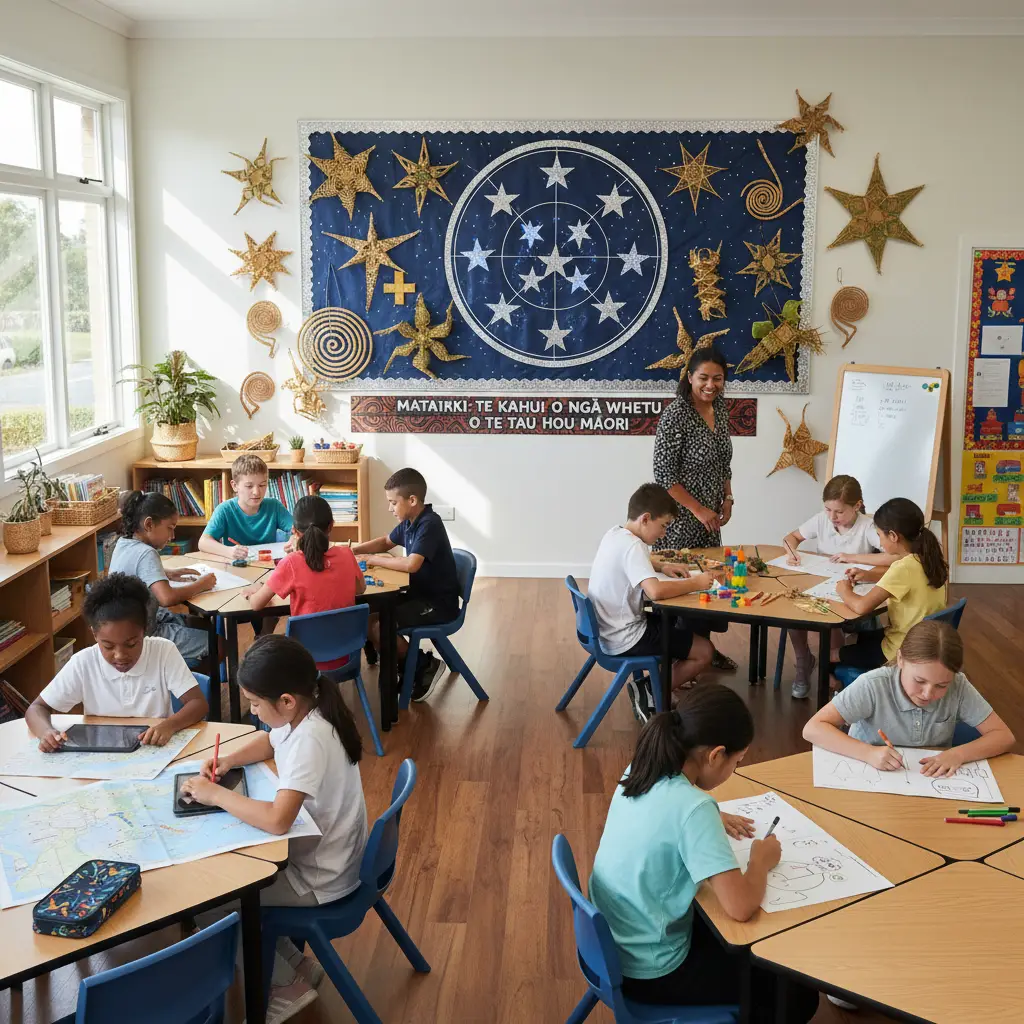
Aotearoa New Zealand’s Histories and Social Sciences
Matariki provides a perfect context for exploring the history of Māori navigation, the lunar calendar (maramataka), and the cyclical nature of time in Māori worldview. Resources should help students understand:
- Whakapapa (Genealogy): How Matariki connects the present generation to ancestors.
- Turangawaewae (Place): How the observation of stars varies across different iwi (tribes) and regions.
- Kaitiakitanga (Guardianship): The link between the stars and environmental sustainability.
The Arts (Ngā Toi)
The arts are a primary vehicle for celebrating Matariki. Curriculum-aligned resources often include:
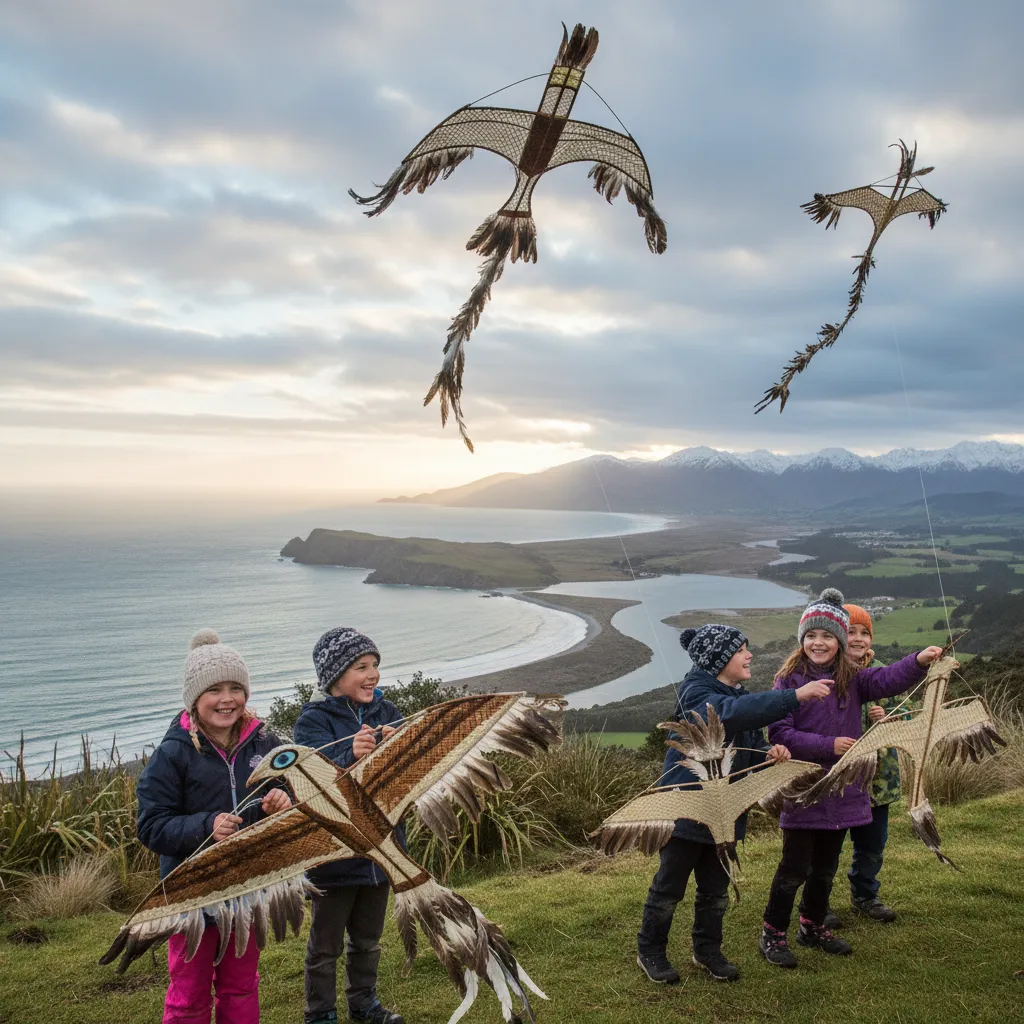
- Visual Arts: Creation of Manu Tukutuku (kites) to connect earth and sky.
- Music (Puoro): Learning waiata (songs) that name the stars and their meanings.
- Performance: Kapa haka and storytelling (pūrākau) regarding the separation of Ranginui and Papatūānuku.
Age-Appropriate Lesson Plans (ECE, Primary, Secondary)
One size does not fit all when it comes to cultural education. The depth of discussion regarding astronomy and sociology must be tailored to the developmental stage of the ākonga (learners).
Early Childhood Education (ECE): Sensory and Storytelling
For the youngest learners, Matariki resources for teachers should focus on sensory experiences and simple narratives. The goal is to build familiarity with the names of the stars and the concept of a new year.
- Activity Idea: Create a “Starry Night” sensory bin using black rice, silver stars, and natural materials.
- Resource Focus: Picture books by Māori authors (e.g., “The Little Kiwi’s Matariki”) are invaluable here.
- Key Concepts: Togetherness, sharing food, and remembering loved ones.
Primary School (Years 1–8): Exploration and Creation
In the primary years, students can begin to distinguish the specific roles of the different stars within the cluster. This is the ideal time to introduce the connection between the stars and the environment.
- Activity Idea: Garden to Table. Since Matariki is a time for harvesting and planting, resources that guide students in preparing a winter vegetable garden are highly relevant.
- Resource Focus: Worksheets that match stars to their domains (e.g., Tupuānuku for food from the ground, Waitī for fresh water).
- Cultural Integration: Weaver workshops where students learn to weave putiputi (flowers) from harakeke (flax).
Secondary School (Years 9–13): Analysis and Application
For secondary students, resources should facilitate critical thinking and complex application. Teachers can explore the physics of astronomy or the political history of the holiday’s reinstatement.
- Activity Idea: Physics of Light. Analyze the spectrum of starlight and how atmospheric conditions affect the visibility of the cluster (tohu of weather).
- Resource Focus: Research projects on the Maramataka (Māori lunar calendar) and its application in modern agriculture and fishing.
- Social Studies: Debating the significance of indigenous holidays in a post-colonial society.
Integrating Science and Culture: Te Iwa o Matariki
A unique aspect of teaching Matariki is the seamless blend of Mātauranga Māori (Māori knowledge) and Western Science. The best Matariki resources for teachers do not treat these as separate entities but as complementary systems of knowledge.
Understanding the 9 Stars
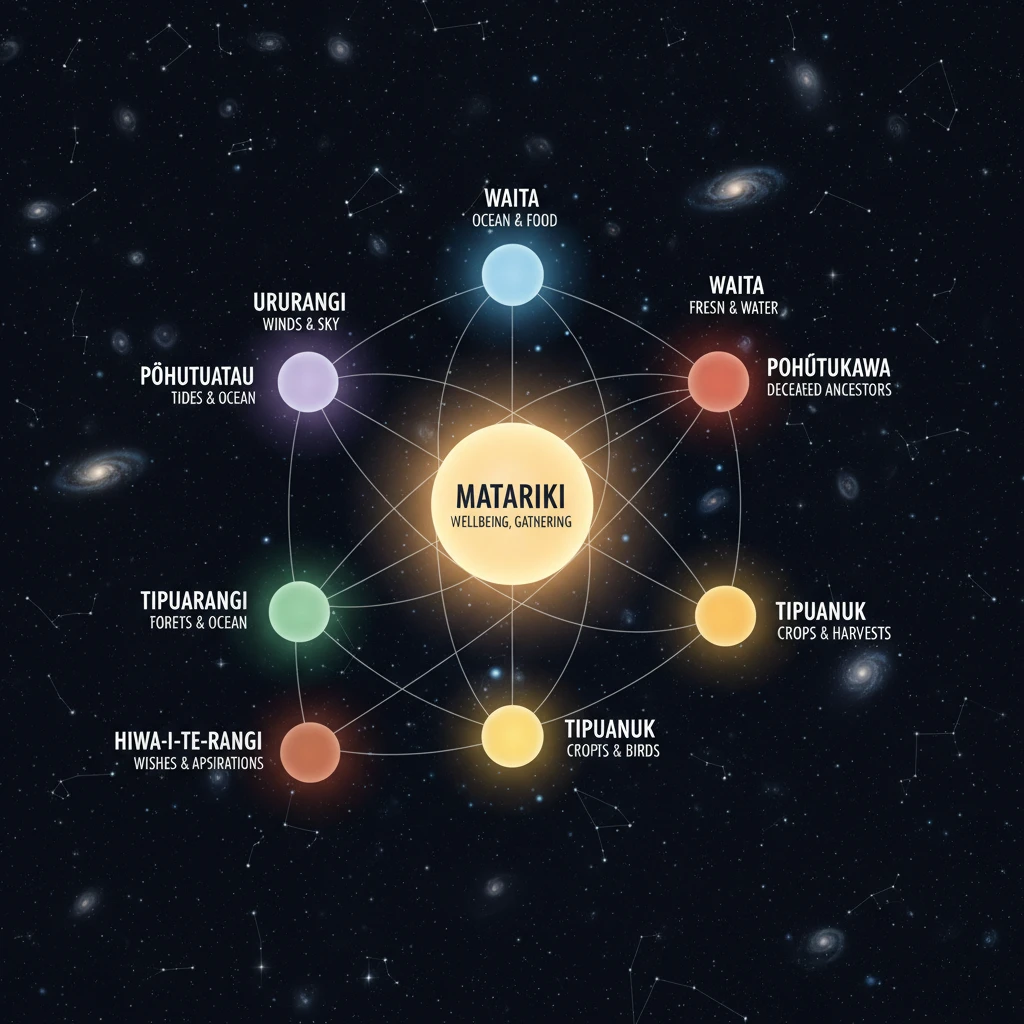
While some traditions recognize seven stars, current educational resources largely focus on the nine stars (Te Iwa o Matariki). Teachers need clear visual aids to explain the domain of each star:
- Matariki: The mother star, signifying reflection, hope, and the connection to the environment.
- Pōhutukawa: Connects with those who have passed on.
- Tupuānuku: Food that grows in the ground (kumara, potatoes).
- Tupuārangi: Food that comes from the sky (birds, fruit).
- Waitī: Bodies of fresh water and the food within them.
- Waitā: The ocean and salt water food sources.
- Waipuna-ā-rangi: Rain and snow.
- Ururangi: The winds.
- Hiwa-i-te-rangi: The wishing star, representing future goals.
Science Curriculum Links
Use resources that encourage observation. “Planisphere” downloads allow students to map the night sky. Teachers can discuss the heliacal rising of stars—why Matariki disappears in April and reappears in June—bridging astronomy and seasonal cycles.
Navigating Free vs. Paid Resource Packs
The market is flooded with materials. Kaiako must discern between high-quality, authentic resources and generic fillers. Here is a breakdown of where to look.
Free Resources (Government and Institutional)
The most authentic Matariki resources for teachers often come from New Zealand’s cultural institutions. These are usually free and vetted by cultural advisors.
- Te Papa Tongarewa: Offers extensive free downloadable activity books, posters of the stars, and instructional videos.
- Ministry of Education (Kauwhata Reo): Provides resources specifically aligned with the curriculum, including readers and lesson plans in Te Reo Māori and English.
- Science Learning Hub: Excellent for the astronomical and environmental aspects of Matariki.
Paid Resource Packs (Third-Party Creators)
Paid resources can save teachers significant planning time by providing “done-for-you” units. However, caution is advised.
- Pros: Comprehensive unit plans, beautifully designed worksheets, PowerPoint presentations, and differentiated activities for mixed-ability classes.
- Cons: Some international platforms may lack cultural nuance. Always check if the creator is New Zealand-based or has consulted with Māori advisors.
- Recommendation: Support local Kiwi teacher-authors (often found on platforms like Teachers Pay Teachers or independent sites) who demonstrate authentic knowledge of Tikanga Māori.
School Assembly and Celebration Ideas
Matariki is fundamentally a time for community. Moving beyond the classroom, school-wide assemblies are a powerful way to celebrate.
Structuring a Matariki Assembly
An assembly should mirror the themes of Matariki: Remembrance, Celebrating the Present, and Looking to the Future.
- The Opening (Karakia and Mihi): Start with a traditional blessing. Acknowledging the local iwi is crucial.
- Remembrance (Pōhutukawa): A moment of silence or a visual tribute to community members who have passed away in the last year.
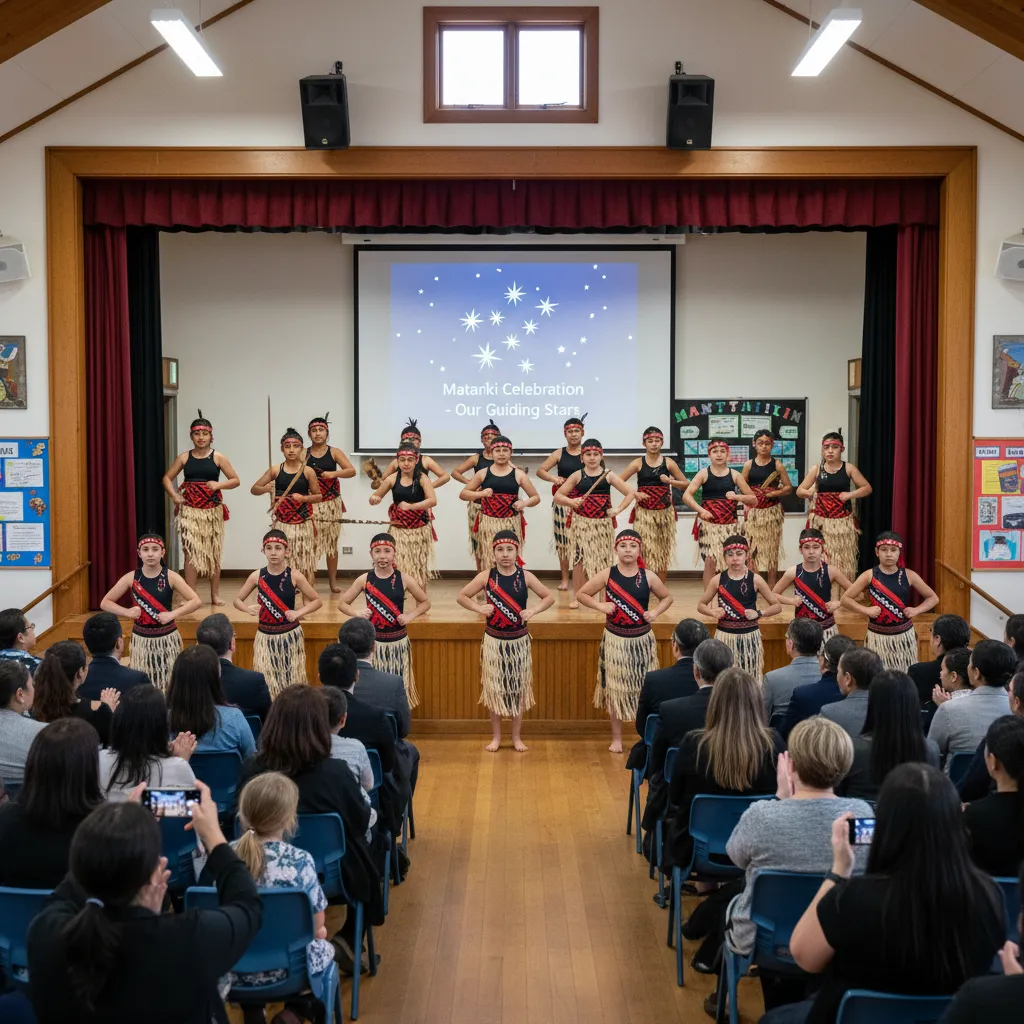
- Performance: Kapa haka groups performing waiata specifically composed for Matariki.
- Goal Setting (Hiwa-i-te-rangi): Selected students reading out their wishes or aspirations for the school year.
Hosting a Hākari (Feast)
Food is central to Matariki. Many schools organize a shared breakfast or a Hāngī. Resources for this include planning templates for food hygiene, invitation templates for whānau, and guides on tikanga (protocol) regarding food preparation and blessing.
Digital Tools and Interactive Media
Modern Matariki resources for teachers include digital platforms that bring the stars into the classroom, especially useful if a pre-dawn excursion isn’t possible.
- Stellarium: A free open-source planetarium for your computer. Teachers can set the location to New Zealand and the date to June/July to simulate the rising of Matariki on the smartboard.
- Spark’s Matariki App: Often releases interactive storytelling experiences that use augmented reality.
- Youtube Channels: Channels like ‘Tākai’ or ‘Te Wānanga o Aotearoa’ offer high-quality pronunciation guides and history lessons.
By utilizing a mix of these digital tools, physical activities, and authentic cultural resources, teachers can create a Matariki learning experience that is respectful, educational, and deeply memorable for their students.
People Also Ask
What are the 9 stars of Matariki and their meanings?
The nine stars are Matariki (health/mother), Pōhutukawa (death/remembrance), Tupuānuku (food from earth), Tupuārangi (food from sky), Waitī (freshwater food), Waitā (saltwater food), Waipuna-ā-rangi (rain), Ururangi (wind), and Hiwa-i-te-rangi (wishes/desires). Each star governs a specific environmental domain or aspect of life.
How do you explain Matariki to a child?
Matariki is the Māori New Year. It is marked by a group of stars rising in the winter sky. It is a time to remember those we have lost, celebrate the food we have harvested, spend time with our family (whānau), and make wishes for the year ahead.
What activities are done during Matariki?
Common activities include flying kites (manu tukutuku) to get closer to the stars, sharing a feast (hākari), singing songs (waiata), gardening, storytelling, and observing the night sky. In schools, this often involves arts and crafts, cultural performances, and goal setting.
Is Matariki a religious holiday?
Matariki is a cultural and astronomical event rather than a religious one in the Western sense. It is based on the Māori lunar calendar (Maramataka) and environmental observations. However, it is a spiritual time for Māori, involving karakia (prayer) and connection to ancestors.
When should schools celebrate Matariki?
Matariki dates change every year because they follow the lunar calendar. It generally occurs in June or July. Schools should check the official government dates for the public holiday and plan their units of work in the weeks leading up to the rising of the stars.
Where can I find free Matariki printables?
The best sources for free, authentic printables are Te Papa Tongarewa, the Science Learning Hub, and the Ministry of Education’s Kauwhata Reo website. These sites offer coloring sheets, word searches, and star charts that are culturally accurate.