
Puanga and Puaka refer to the star Rigel, which signals the Māori New Year for iwi in regions where the Matariki cluster is obscured by geography. While Matariki is widely recognized, tribes in Taranaki, Whanganui, the Far North, and parts of the South Island look to the brilliant rise of Puanga/Puaka to mark the seasonal shift.
What are Puanga and Puaka?
While the resurgence of Matariki has captured the national consciousness of Aotearoa New Zealand, it is merely one part of a complex and regionally diverse astronomical system. For many tribes (iwi), the New Year is not heralded by the Pleiades cluster, but rather by a single, brilliant star known as Puanga or Puaka.
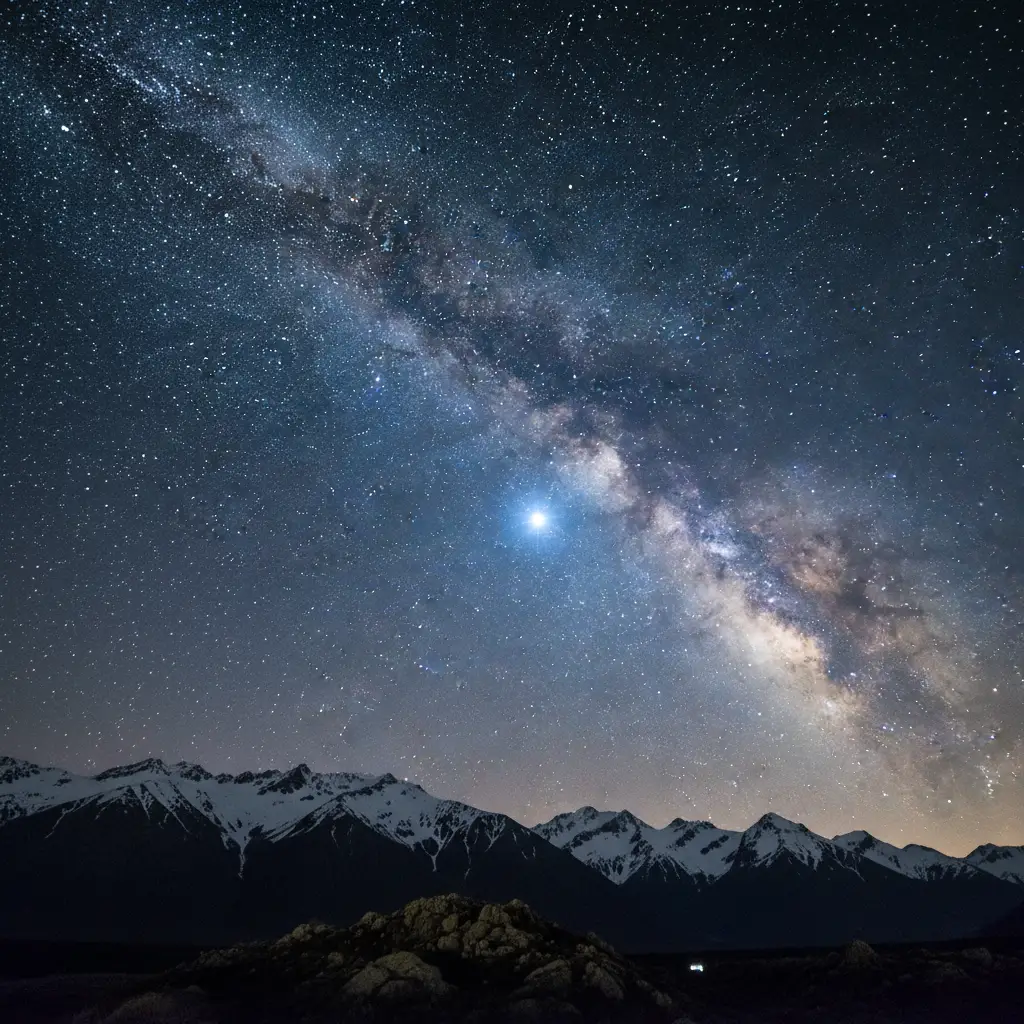
Puanga is the Māori name for the star known internationally as Rigel. It is the brightest star in the constellation Orion (Te Kakau) and the seventh brightest star in the night sky. Located above the three stars of Orion’s Belt (Tautoru), Puanga’s heliacal rising—its first appearance on the eastern horizon before dawn—marks the beginning of the lunar calendar for specific regions.
Puaka is simply the dialectal variation of the same name, used primarily by the southern tribes of Te Waipounamu (the South Island), specifically Ngāi Tahu. In the southern dialect, the ‘ng’ sound is often replaced with a ‘k’. Therefore, Puanga and Puaka are the same celestial body, serving the same function as the herald of the New Year, but pronounced differently depending on tribal affiliation and location.
The Difference Between Matariki and Puanga
A common question arises among those learning about Māori astronomy: Why do some iwi celebrate Matariki while others look to Puanga? The answer lies in the unique geography of Aotearoa.
Why isn’t Matariki visible everywhere?
The Matariki cluster (Pleiades) rises low on the northeastern horizon in mid-winter. However, Aotearoa is a land of rugged topography. For tribes located on the West Coast of the North Island or in deep valleys, high mountain ranges often block the view of the eastern horizon. Specifically, the Southern Alps, the Tararua ranges, and Mount Taranaki can obscure the low-rising Matariki cluster until it is high in the sky, well past the dawn phase required for the New Year reading.
Puanga (Rigel), however, rises slightly earlier and sits higher in the northern sky. Its intense brightness and higher trajectory make it visible to tribes in Taranaki, Whanganui, and parts of the Far North who cannot see Matariki clearly from their vantage points. Consequently, these iwi developed a calendar system anchored to Puanga alongside, or instead of, Matariki.
The Cultural Significance of Rigel
In Māori cosmology, stars are not merely balls of gas; they are ancestors, deities, and environmental indicators. Puanga is viewed as a senior star, often considered the older brother or a relation to Matariki. The relationship between the two is symbiotic rather than competitive. In some traditions, it is said that Puanga is tasked with taking care of the harvest and the weather because Matariki cannot do it alone.
The Star of Abundance
Puanga is intrinsically linked to agriculture and food preservation. The brightness and color of the star upon its rising were historically used to predict the productivity of the coming season:
- Bright and Clear: If Puanga appeared bright and shimmering with minimal haze, it signaled a warm season ahead with abundant crops.
- Hazy or Dim: A dull appearance often warned of a cold, difficult winter and a poor harvest, prompting tribes to ration their food stores strictly.
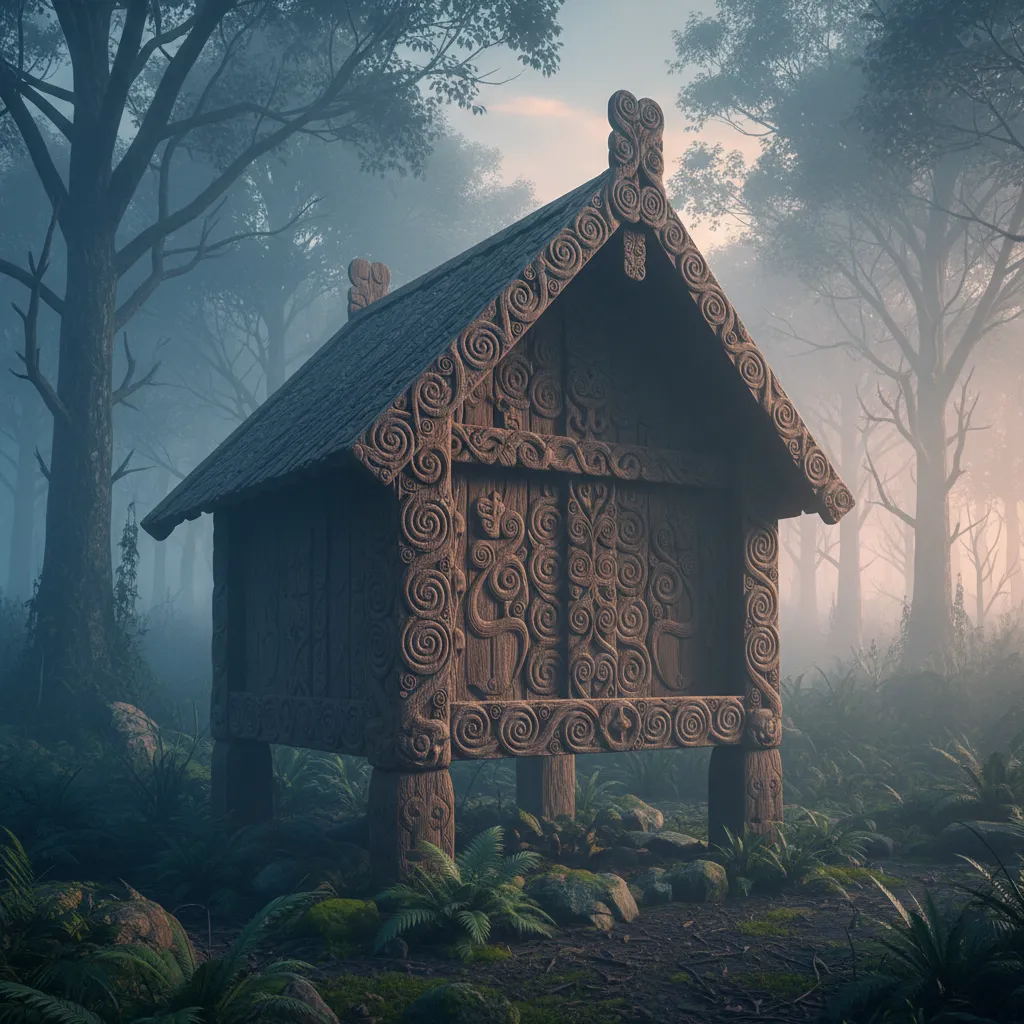
Because Puanga rises during the colder months (June/July), it is also closely associated with the preservation of food. This is the time when kai (food) was stored in pātaka (storehouses) to ensure survival through the winter. The adage “Puanga kai rau” (Puanga of the hundred foods) reflects this abundance.
Regional Guide: Where is Puanga/Puaka Celebrated?
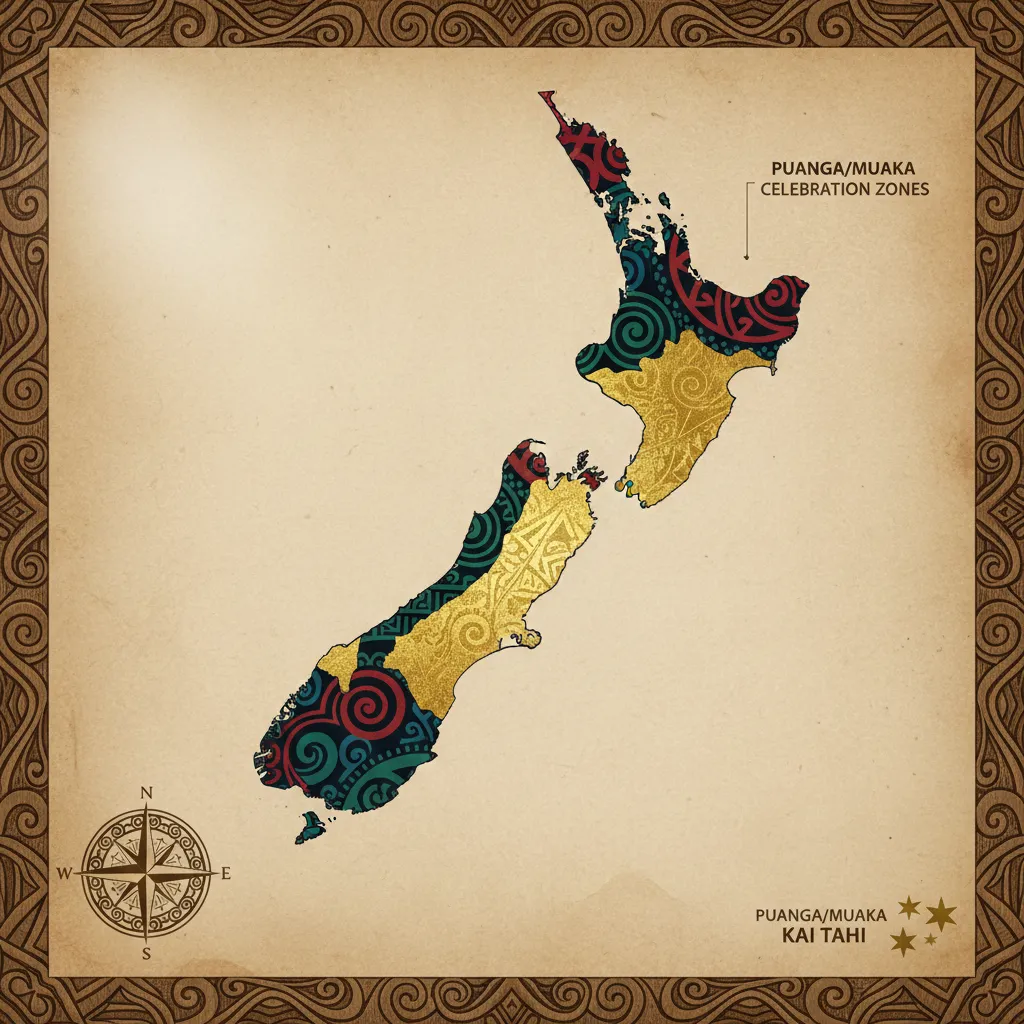
To understand the Māori New Year fully, one must look at the regional map of Aotearoa. The celebration of Puanga and Puaka is most prominent in the following areas:
1. Taranaki
In the Taranaki region, the majestic Mount Taranaki dominates the landscape to the east. This geographical feature blocks the view of Matariki for many hapū (sub-tribes). Therefore, the tribes of Taranaki, Te Atiawa, and Ngāruahine have a strong tradition of observing Puanga. The star is seen as the primary signal for the turning of the year, and local festivities focus heavily on the connection between the star and the mountain.
2. Whanganui
Similar to Taranaki, the deep valleys and rugged terrain of the Whanganui River area make Puanga the more reliable celestial marker. The Whanganui tribes hold deep knowledge regarding the rising of Puanga, often conducting ceremonies at specific vantage points along the river. For them, Puanga is not just a time marker but a spiritual entity that connects the river people to the cosmos.
3. Te Tai Tokerau (Far North)
While many parts of the North celebrate Matariki, specific iwi in the Hokianga and Far North (Ngāpuhi and Te Rarawa) also place significant emphasis on Puanga. In these northern latitudes, the positioning of the stars allows for a dual observation, but Puanga often takes precedence in specific local narratives regarding the planting of kūmara.
4. Te Waipounamu (South Island)
For Ngāi Tahu, the principal tribe of the South Island, the star is Puaka. The distinct southern dialect and the specific environmental conditions of the south mean that Puaka is central to their winter observations. The rise of Puaka signals the time to retreat, to focus on indoor learning (wānanga), and to prepare for the extreme cold of the southern winter.
Seasonal Festivities and Rituals
The celebration of Puanga and Puaka shares many thematic similarities with Matariki, centering on three major pillars: remembrance, celebrating the present, and planning for the future.
Whakamaumaharatanga (Remembrance)
Just as Matariki connects to Pōhutukawa (the star associated with the dead), Puanga is a time to mourn and honor those who have passed away since the last rising. Names of the deceased are called out (whakaahu) to the star, releasing their spirits to become stars in the sky. This is a solemn time of reflection, tears, and farewells.
Whakawhanaungatanga (Connecting)
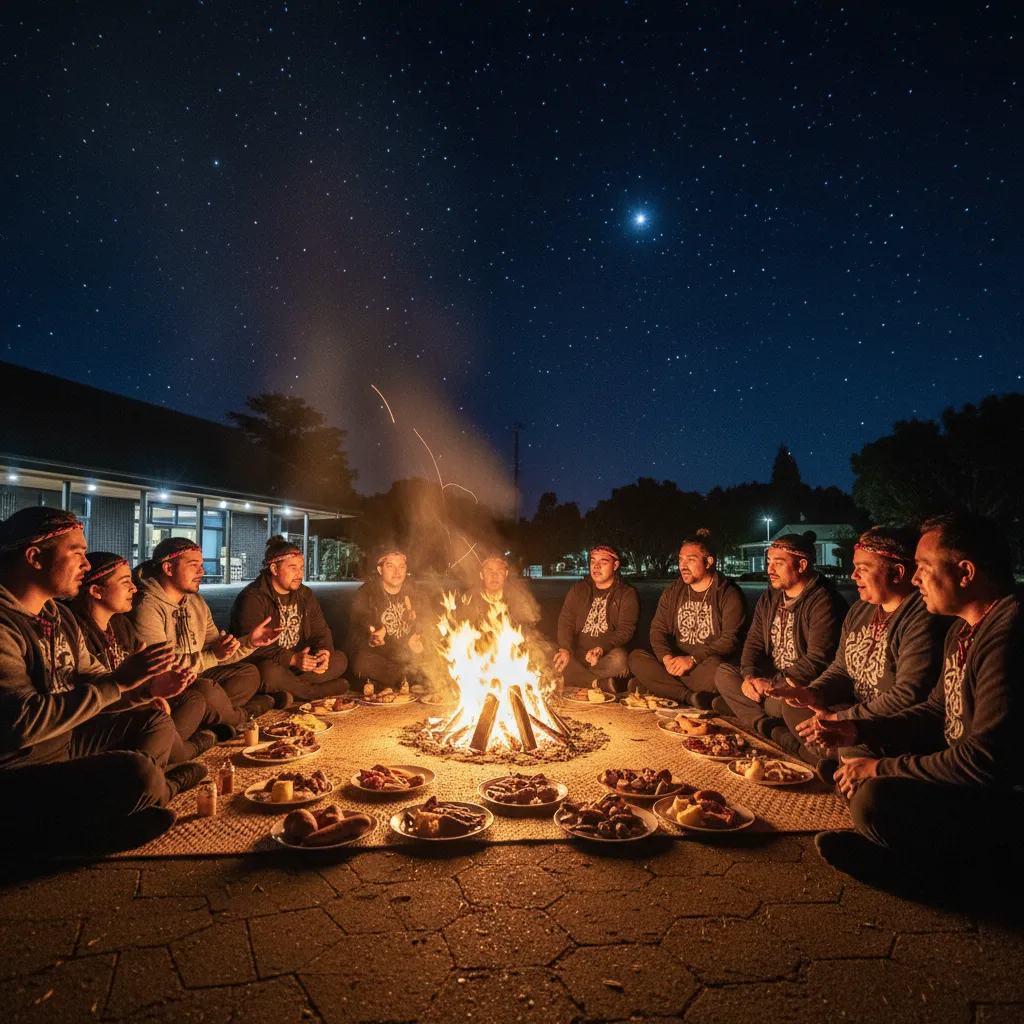
Once the solemn ceremonies are complete, the focus shifts to the living. Because this occurs in mid-winter, it is a time for indoor activities. Families gather to share kai, sing songs (waiata), and tell stories. It is a season of wānanga—learning and discussion. Elders pass down knowledge to the younger generation while huddled together for warmth.
Te Mahi Kai (Food Preparation)
Feasting is central to Puanga. Historically, this was the time when the harvest was complete. Communities would feast on preserved birds, eels, and root vegetables. Modern celebrations often involve hāngī (earth oven cooking) and sharing meals that utilize seasonal produce like kūmara and pumpkin.
How to Observe Puanga Today
With the establishment of the Matariki public holiday in New Zealand, awareness of Puanga has also grown. You do not need to be in a specific region to acknowledge the energy of this star. Here are ways to observe Puanga and Puaka in modern times:
- Look Up: In June and July, look for Orion’s Belt in the eastern sky before dawn. The bright blue-white star above the belt is Puanga. Taking a moment to witness it is the most authentic way to connect.
- Attend Regional Festivals: If you are in Taranaki, Whanganui, or Dunedin, look for local “Puanga Festival” or “Puaka Matariki” events. These often include light shows, kappa haka performances, and educational talks.
- Plant a Garden: Use this time to plan your spring garden. Puanga is a signal to prepare the soil (physically and metaphorically) for new growth.
- Reflect and Reset: Use the dark winter mornings for journaling or meditation. Set intentions for the year ahead, focusing on what you want to “grow” in your life.
Understanding Puanga and Puaka enriches our appreciation of Māori astronomy. It reminds us that knowledge is not uniform; it is shaped by the land we stand on and the horizon we look toward. Whether you look to the cluster of Matariki or the brilliance of Puanga, the intent remains the same: to honor the past, celebrate the present, and prepare for the future.
Frequently Asked Questions
When can I see Puanga in the sky?
Puanga (Rigel) is best viewed in the early morning sky, looking east, during the months of June and July. It rises shortly before the sun (heliacal rising) and marks the start of the New Year. It is located above the three stars of Orion’s Belt.
Is Puanga the same star as Matariki?
No. Matariki is a star cluster known as the Pleiades. Puanga is a single star known as Rigel in the constellation Orion. While they both signal the New Year, they are distinct celestial bodies used by different tribes based on geographic visibility.
Which regions celebrate Puanga instead of Matariki?
The primary regions that celebrate Puanga are Taranaki, Whanganui, parts of the Far North (Te Tai Tokerau), and parts of the South Island (where it is often called Puaka). This is largely due to mountain ranges blocking the view of Matariki.
What does the name Puaka mean?
Puaka is the Southern Māori dialect variation of Puanga. It refers to the same star (Rigel). The name is associated with the blossoming of words, the preservation of knowledge, and the abundance of food (kai).
What colors of Puanga are significant?
Traditionally, if Puanga appeared bright, clear, and white/blue, it signaled a prosperous year and good weather. If it appeared red, hazy, or dim, it was viewed as an omen of a harsh winter and potential food shortages.
Can I celebrate both Matariki and Puanga?
Absolutely. Many New Zealanders acknowledge both. Some regions celebrate a “Puaka Matariki” festival, recognizing the dual significance of these stars in the winter sky. It is respectful to acknowledge the traditions of the local iwi where you reside.