
The Matariki stars meaning encompasses a cluster of nine stars, known as Te Iwa o Matariki, marking the Māori New Year. Each star holds a specific environmental domain, influencing weather, freshwater, ocean food sources, crops, and human wellbeing. Collectively, they signal a time for remembrance, celebrating the present, and planning for the future.
Introduction to Te Iwa o Matariki
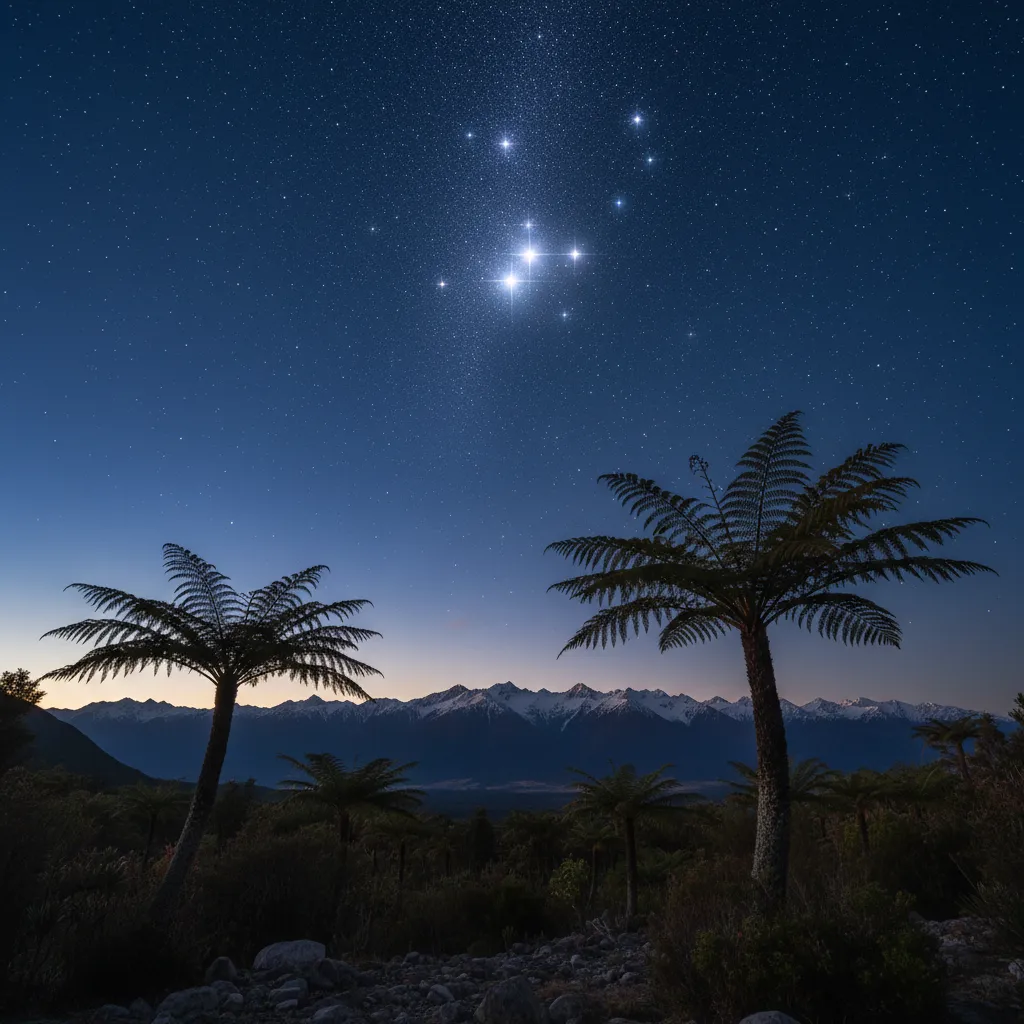
In the pre-dawn sky of mid-winter, a twinkling cluster of stars rises on the eastern horizon of Aotearoa New Zealand. This cluster, known internationally as the Pleiades or Messier 45, is known to Māori as Matariki. The rising of these stars signals the Māori New Year, a pivotal time in the maramataka (Māori lunar calendar).
While many cultures recognize this cluster—from the Subaru in Japan to the Seven Sisters in Greece—the Matariki stars meaning is uniquely tied to the environmental and spiritual context of New Zealand. Historically, the visibility, brightness, and distinct colors of these stars were used to predict the success of the coming harvest, the severity of the winter, and the abundance of food sources.
For generations, knowledge regarding the specific domains of these stars was preserved orally. Recent revitalisation efforts, spearheaded by experts like Dr. Rangi Matamua, have brought the narrative of the nine stars (Te Iwa o Matariki) back into the national consciousness, expanding beyond the commonly known seven.
Why Do Some Iwi Count Seven Stars and Others Nine?
A common point of confusion for those learning about the Māori New Year is the discrepancy between the number of stars counted. Is it seven, or is it nine? The answer lies in both astronomical visibility and tribal variation.
The Seven Sisters Narrative
Globally, the Pleiades are most often referred to as the “Seven Sisters.” To the naked eye, under average viewing conditions, seven main stars are clearly visible. Consequently, many iwi (tribes) traditionally acknowledged seven stars. In these narratives, Matariki is often viewed as the mother surrounded by her six daughters.
The Restoration of the Nine Stars
However, ancient manuscripts and the teachings of specific whare wānanga (houses of learning), particularly from the Tūhoe and Tainui regions, account for nine stars. The two additional stars, Pōhutukawa and Hiwa-i-te-rangi, are often harder to distinguish without optimal atmospheric conditions or keen eyesight.
The distinction is significant because it alters the Matariki stars meaning. The seven-star model focuses primarily on food and weather. The nine-star model incorporates the spiritual elements of death (Pōhutukawa) and aspiration (Hiwa-i-te-rangi), providing a holistic worldview that encompasses the past, present, and future.
The Meaning and Domain of Each Star
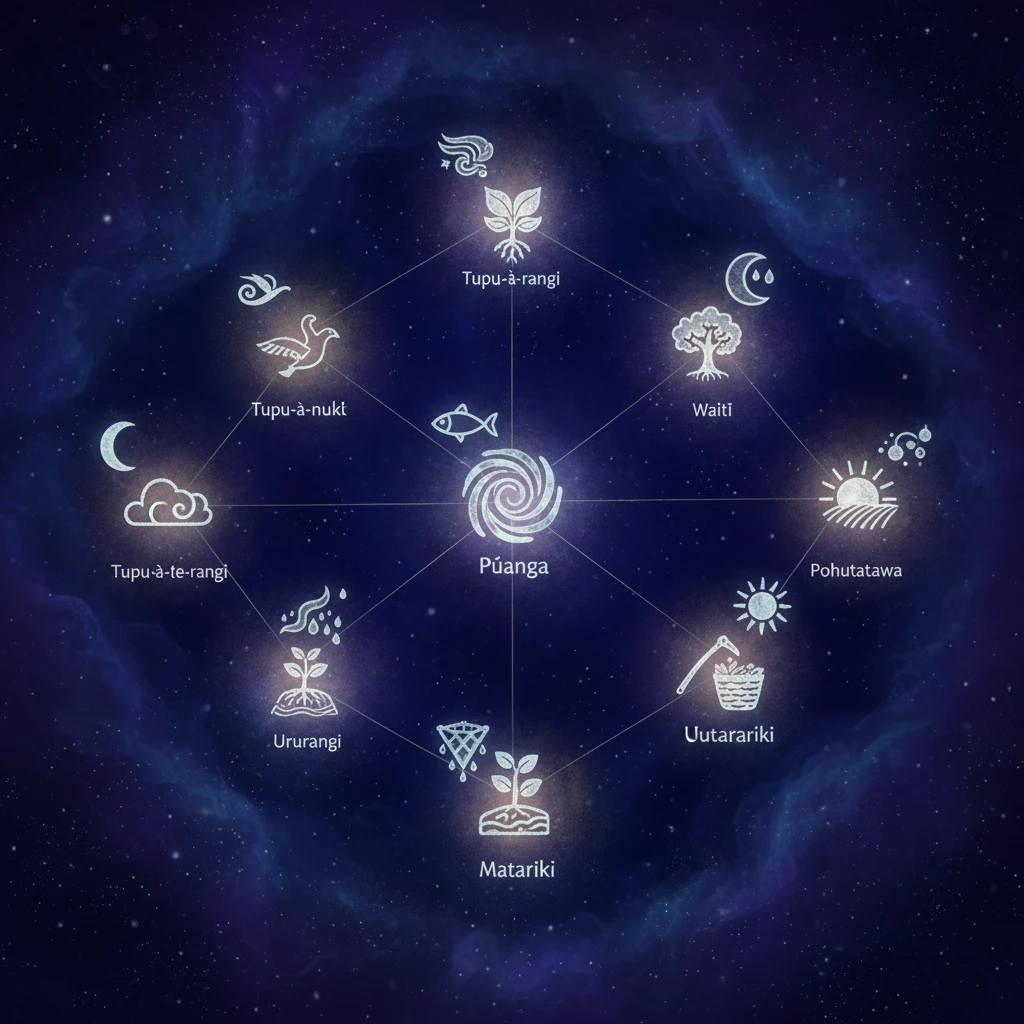
To fully understand the significance of the cluster, one must look at the individual responsibility of each star. In Māori astronomy, nothing is random; every celestial body governs a specific aspect of the natural world or human existence.
1. Matariki (The Mother)
Significance: Health and Wellbeing
Matariki is the brightest star in the cluster and is viewed as the mother of the other eight stars. Her domain is the overall wellbeing of people. She signifies the gathering of people, the health of the community, and the interconnectedness of the other stars. When Matariki is bright and clear, it is a tohu (sign) of good health and good fortune for the coming year.
2. Pōhutukawa
Significance: Remembrance and the Dead
Pōhutukawa is the star connected to those who have passed away. It is the oldest child of Matariki. As the cluster rises, Māori call out the names of loved ones who have died since the last appearance of Matariki. This star carries their spirits to the afterlife. It serves as a reminder to honor our whakapapa (genealogy) and those who came before us.
3. Tupu-ā-nuku
Significance: Food from the Earth
“Tupu” means to grow, and “Nuku” refers to Papatūānuku (the Earth Mother). This star governs all edible plants grown in the soil. This includes kūmara (sweet potato), rīwai (potatoes), and other vegetable crops. Farmers and gardeners look to the brightness of Tupu-ā-nuku to predict the success of the planting season.
4. Tupu-ā-rangi
Significance: Food from the Sky and Trees
Contrasting with Tupu-ā-nuku, Tupu-ā-rangi connects to food sources located above the ground. This includes fruits, berries from native trees, and birdlife (manu). Historically, this star indicated the abundance of kererū and other forest food sources essential for survival.
5. Waitī
Significance: Freshwater Bodies and Food
Waitī watches over freshwater environments: rivers, streams, lakes, and springs. It is inextricably linked to the creatures that inhabit these waters, such as eels (tuna), kōura (freshwater crayfish), and whitebait. A clear Waitī signals healthy water flows and abundant freshwater resources.
6. Waitā
Significance: The Ocean and Saltwater Food
Waitā represents the vast ocean (Te Moana-nui-a-Kiwa) and the kaimoana (seafood) harvested from it. This star is associated with tides, currents, and the abundance of fish species like snapper and kahawai. It reminds us of the vast biodiversity of the marine environment.
7. Waipuna-ā-rangi
Significance: Rain and Atmospheric Water
Translated as “Water that pools in the sky,” this star governs rainfall. It is responsible for the hydration of the earth and the replenishment of the water table. The visibility of Waipuna-ā-rangi helps predict rainfall patterns—whether the season will be prone to drought or flooding.
8. Ururangi
Significance: The Winds
Ururangi means “The winds of the sky.” This star determines the nature of the winds for the coming year. In a maritime society like that of early Māori, understanding wind patterns was crucial for navigation and safety. Ururangi is associated with the four main winds and the variations in between.
9. Hiwa-i-te-rangi
Significance: Aspirations and the Future
Hiwa-i-te-rangi is the youngest star. She is the star to whom you send your wishes. Similar to the notion of “wishing upon a star,” Māori send their dreams and desires for the new year to Hiwa-i-te-rangi. She represents the potential of the future, planning, and setting goals.
The Connection Between Stars and the Environment
The Matariki stars meaning is not merely symbolic; it is deeply scientific and ecological. Māori were master voyagers and horticulturalists who relied on environmental cues for survival. The rising of Matariki occurs in the cold months (June/July), a time when food storage was critical and planting preparations were beginning.
Reading the Tohu (Signs)
Tohunga kōkōrangi (expert astronomers) would observe the cluster in great detail. They looked for:
- Brightness: Bright stars predicted a warm season and abundant crops.
- Haziness: If the stars appeared hazy or shimmering, it often predicted a cold, harsh winter or poor harvest.
- Distance between stars: Subtle apparent shifts were interpreted to predict wind and weather patterns.
This observation system is a form of Traditional Ecological Knowledge (TEK). It acknowledges that the cosmos and the earth are not separate entities but part of a unified system. For example, the link between Waipuna-ā-rangi (rain) and Tupu-ā-nuku (crops) highlights the understanding of the hydrological cycle’s impact on agriculture.
How to Identify Matariki in the Night Sky
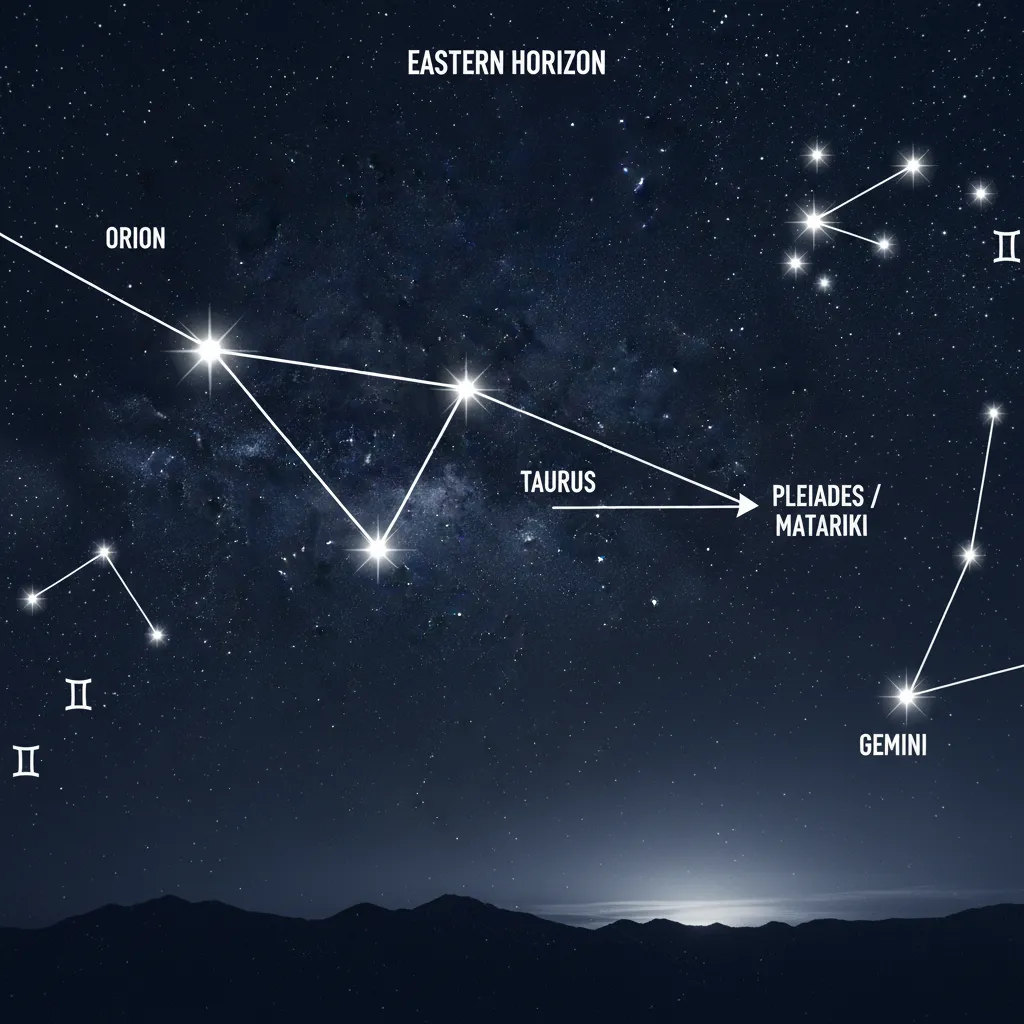
Finding Matariki is a rewarding experience, but it requires knowing where to look and waking up early. The cluster is best viewed in the pre-dawn sky (between 5:30 AM and 6:30 AM) from late June onwards.
Step-by-Step Navigation Guide
- Find Tautoru (Orion’s Belt): Look to the eastern horizon. The easiest constellation to spot is usually Orion’s Belt—three bright stars in a distinctive straight row.
- Locate Te Kokota (The Face of Taurus): Follow the line of Orion’s Belt to the left (northward). You will find a triangular cluster of stars. This is the face of the bull in western astrology, or Te Kokota to Māori. The bright orange star here is Taumata-kuku (Aldebaran).
- Find Matariki: Continue drawing that imaginary line to the left from Te Kokota. You will see a small, tight cluster of twinkling lights. That is Matariki. It is much smaller than the other constellations, appearing almost like a smudge of light until your eyes adjust.
Modern Significance and Cultural Revival
In 2022, New Zealand celebrated its first indigenous public holiday marked by the rising of Matariki. This was a monumental shift in acknowledging the Matariki stars meaning at a national level. It represents a move towards a dual-heritage nation that respects the lunar calendar alongside the solar Gregorian calendar.
The Three Major Principles
Modern celebrations of Matariki are guided by three major principles derived from the stars’ domains:
- Remembrance: Honoring those who have passed (connected to Pōhutukawa).
- Celebrating the Present: Gathering with whānau (family) and friends to share kai (food) and gratitude (connected to Matariki and the food stars).
- Looking to the Future: Planning, learning, and setting intentions for the year ahead (connected to Hiwa-i-te-rangi).
Understanding the domains of Te Iwa o Matariki allows us to engage with the holiday more deeply. It moves the event from a simple celestial observation to a profound period of reflection, environmental stewardship, and community bonding.
Frequently Asked Questions
What are the 9 stars of Matariki?
The nine stars are Matariki, Pōhutukawa, Waitī, Waitā, Waipuna-ā-rangi, Tupu-ā-nuku, Tupu-ā-rangi, Ururangi, and Hiwa-i-te-rangi.
What does the star Hiwa-i-te-rangi represent?
Hiwa-i-te-rangi represents our aspirations, dreams, and wishes for the coming year. It is the star to which people send their desires for the future.
Why is Matariki called the Māori New Year?
Matariki appears in the mid-winter sky just after the winter solstice. Its rising marks the reset of the Māori lunar calendar (maramataka), signaling the end of the harvest and the beginning of a new cycle.
Can you see all 9 stars of Matariki with the naked eye?
Usually, only seven are clearly visible to the naked eye. Seeing all nine requires exceptional eyesight, very dark skies with low light pollution, and optimal atmospheric conditions.
What is the difference between Pleiades and Matariki?
They are the same star cluster. “Pleiades” is the Greek name used in Western astronomy, while “Matariki” is the Māori name, which carries specific cultural and environmental meanings relevant to New Zealand.
What food is associated with Matariki stars?
Four stars are specifically associated with food: Tupu-ā-nuku (grown in the ground), Tupu-ā-rangi (birds/berries from trees), Waitī (freshwater food like eels), and Waitā (seafood).