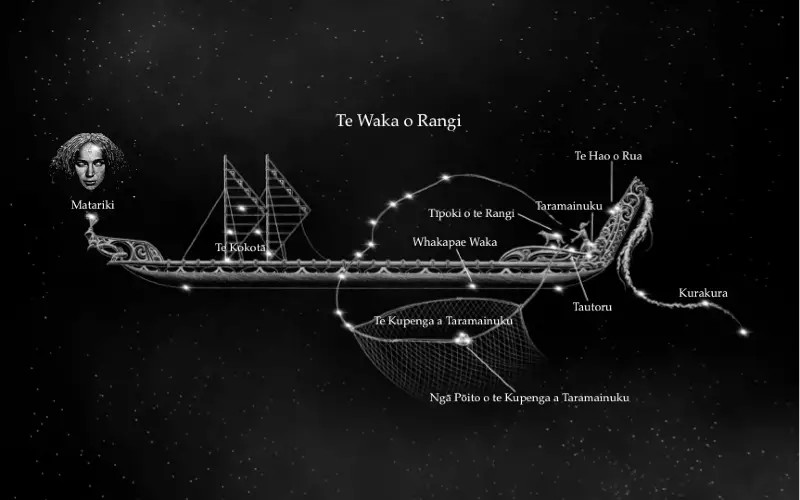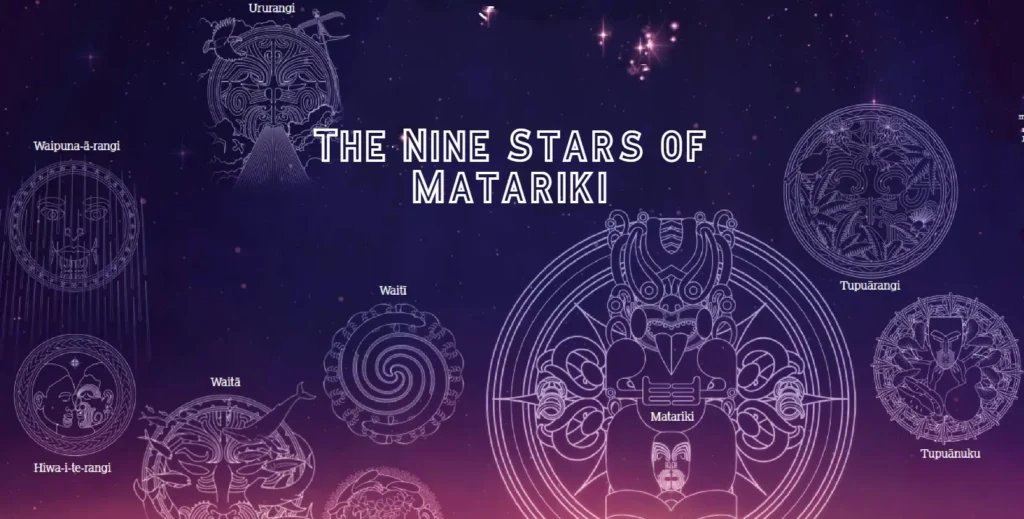
Pōhutukawa is the star within the Matariki cluster (Pleiades) associated with those who have died. In Māori astronomy, it connects the living to the deceased, serving as the celestial guardian that carries the spirits of those who have passed away since the last rising of Matariki into the afterlife.
While many associate the name Pōhutukawa primarily with the iconic New Zealand Christmas tree, within the context of the Māori New Year (Matariki), it refers to a specific and sacred star. It is the eldest child of the Matariki whānau (family) and holds a somber yet vital role in the cycle of life and death. As we look to the horizon during the pre-dawn rising of Matariki, Pōhutukawa invites us to pause, reflect, and honor the memories of our loved ones.
What is the Meaning of the Pōhutukawa Star?
The Pōhutukawa star meaning is deeply rooted in the concept of maumahara (remembrance) and the spiritual transition of the soul. As one of the nine stars in the Matariki cluster recognized in many Māori traditions, Pōhutukawa is often identified as the star that connects the physical realm with the spiritual realm.
In Māori mythology, the stars of Matariki are often viewed as a family. Pōhutukawa is the eldest, bearing the heavy responsibility of caring for the dead. The name itself can be translated to mean “splash of red” or “origin of the head-dress,” but in an astronomical context, it signifies the repository of memories.
Unlike other stars in the cluster that predict food bounties—such as Tupuānuku (food from the earth) or Waitī (freshwater food)—Pōhutukawa provides no physical sustenance. Instead, it provides spiritual sustenance. It reminds us that acknowledging the past is essential for moving forward into the New Year. Without Pōhutukawa, the celebration of Matariki would be incomplete, as the cycle of the year requires the closure of the past before the new beginning can be fully embraced.
Distinguishing the Star from the Tree
A common point of confusion for those new to Māori astronomy is the relationship between the Pōhutukawa star and the Pōhutukawa tree (Metrosideros excelsa). While they share a name and a deep spiritual connection, they are distinct entities with different roles in the journey of the wairua (spirit).
The Earthly Guardian vs. The Celestial Guide
The Pōhutukawa tree is renowned in New Zealand for its brilliant crimson flowers that bloom in summer. However, its spiritual significance lies in its roots. At Cape Reinga (Te Rerenga Wairua), at the very top of the North Island, stands an ancient, solitary Pōhutukawa tree. It is believed that the spirits of the deceased descend the roots of this tree to enter the underworld (Rarohenga) and begin their journey back to the ancestral homeland of Hawaiki.
The Pōhutukawa star, conversely, represents the destination or the celestial counterpart to this journey. While the tree marks the exit from the physical world, the star marks the acceptance of the spirit into the heavens. There is a proverb (whakataukī) that links them: as the red flowers of the tree fall to the earth, so too do the people fall; yet, as the star rises, the spirits are swept up into the sky.

The Connection Between Pōhutukawa and Those Who Have Passed
Why is Pōhutukawa specifically connected to the dead? This association comes from the Māori belief system regarding the trajectory of the soul after death. When a person dies, their physical body returns to the earth (Papatūānuku), but their spirit (wairua) undertakes a journey.
During the year, as people pass away, their spirits are said to be gathered by the guardian of the dead. When Matariki sets in the west during the lunar month of Haratua (roughly May), it is believed that the cluster is gathering these spirits. When Matariki rises again in the north-east during the lunar month of Pipiri (June/July), Pōhutukawa releases these spirits into the sky.
This release allows the spirits to become stars themselves. This is the origin of the phrase “Kua whetūrangitia koe” (You have become a star). The Pōhutukawa star is the vessel through which this transformation occurs. It acts as the gateway, ensuring that the spirits are not lost in the darkness but are instead placed among the heavens to watch over the living.
Why We Cry the Names of the Dead to This Star
One of the most poignant rituals during the rising of Matariki involves “crying the names” of the dead. This is not merely a roll call; it is a cathartic release of grief and a formal farewell ceremony known as poroporoaki.
The Ritual of Whakamahara
When the Matariki cluster is first sighted on the horizon before dawn, tohunga (experts) and families will look specifically toward Pōhutukawa. They will call out the names of those who have died since the last appearance of Matariki. This act serves two profound purposes:
- Spiritual Release: It is the final act of letting go. By speaking the names to the star, the living acknowledge that their loved ones now belong to the realm of the ancestors (te pō) and the stars. It frees the spirit to ascend.
- Emotional Healing: For the living, this ritual marks the end of formal mourning for the year. It allows the tears to flow one last time for those specific individuals before the focus shifts to the celebration of life and the New Year.

The Role of Tears and Mourning
In this context, tears are viewed as a gift. They are an expression of love and a necessary mechanism for healing. The Pōhutukawa star serves as the recipient of these tears. Once the names are called and the tears are shed, the burden of grief is lightened, allowing the community to turn their faces toward the other stars in the cluster—those that promise abundance, growth, and prosperity for the coming year.
Rituals of Remembrance Associated with Pōhutukawa
While calling out names is the central ritual, there are other ways Pōhutukawa is honored during the Matariki period. These rituals are designed to honor the whakapapa (genealogy) and the legacy of those who have passed.
The Hautapu Ceremony
In the traditional Hautapu ceremony, food is cooked in an earth oven (hāngī) and the steam is released as an offering to the stars. While the steam from specific foods is dedicated to the agricultural stars (like Tupuānuku and Tupuārangi), the portion of the ceremony dedicated to Pōhutukawa is different. It is less about asking for food and more about offering gratitude for the lives of the ancestors.
During this time, people may also:
- Visit Urupā (Cemeteries): Families often clean headstones and weed the graves of their ancestors leading up to the Matariki rising.
- Share Stories: It is customary to gather and tell stories about those who have passed—not just mourning their death, but celebrating their achievements, humor, and contributions to the whānau (family).
- Display Photos: Many households create a small area of remembrance with photos of the deceased, lighting candles to symbolize the light of the Pōhutukawa star.

Preparing for the New Year
It is strictly observed that one cannot fully celebrate the new year until the dead have been properly acknowledged. Pōhutukawa stands as the gatekeeper to the festivities. Only after the remembrance is complete does the focus shift to Hiwa-i-te-rangi (the wishing star) to set intentions for the future. This structure teaches a valuable psychological lesson: we must process our grief to make room for new hope.
How to Locate Pōhutukawa in the Matariki Cluster
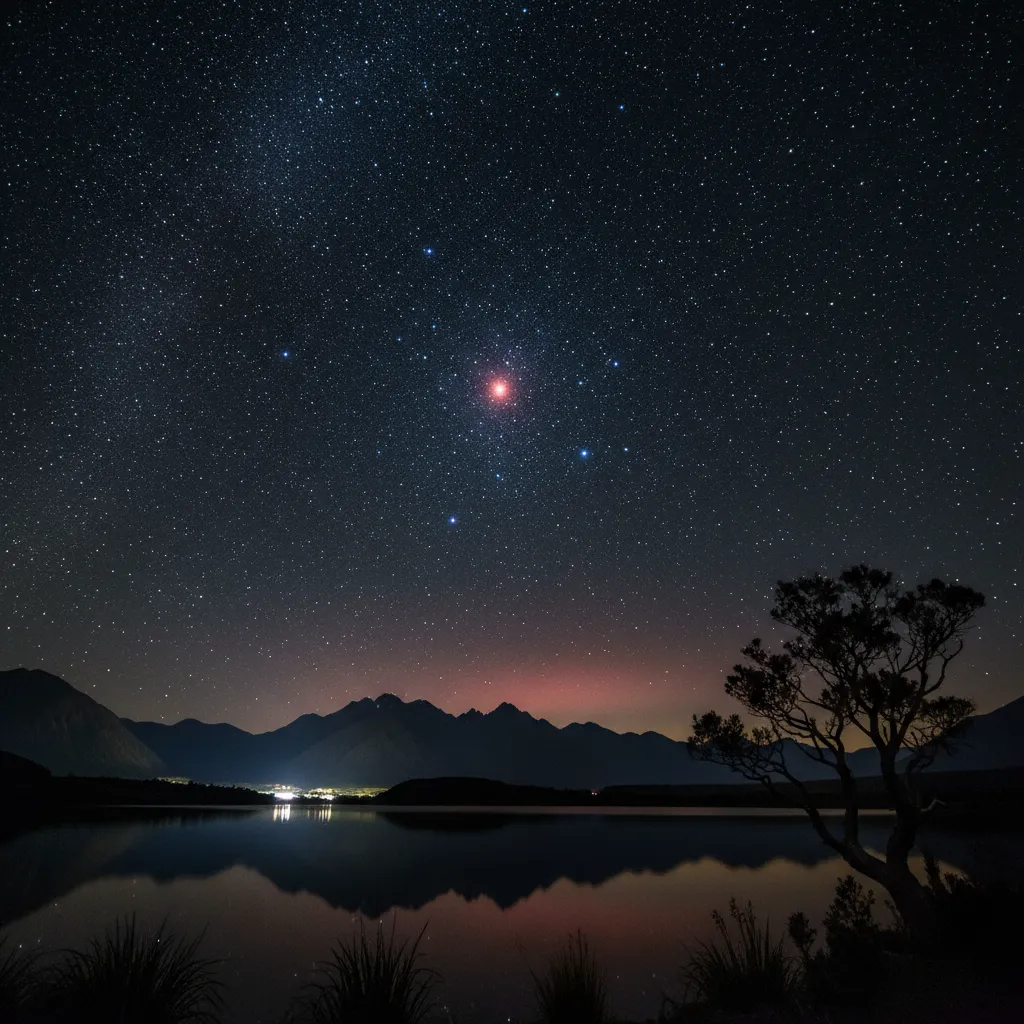
To find Pōhutukawa, one must first locate the Matariki cluster (Pleiades). In the southern hemisphere, this is best done in the pre-dawn hours of mid-winter (June or July), looking towards the north-east horizon.
The cluster often resembles a small, shimmering gathering of lights. In the context of the nine stars recognized by leading Māori astronomers like Dr. Rangi Mātāmua, Pōhutukawa is located to the right of the central star, Matariki (Alcyone), and slightly above the bottom stars. It is often visualized as being connected to the star Matariki, emphasizing its closeness to the mother of the cluster.
While you may not be able to distinguish every individual star with the naked eye without optimal dark-sky conditions, directing your gaze and your thoughts toward the cluster is sufficient for the purpose of remembrance. The intent (te hiahia) carries as much weight as the visual identification.
Conclusion
The Pōhutukawa star meaning goes far beyond a simple point of light in the night sky. It acts as a celestial vessel for our grief, a guardian for our ancestors, and a reminder of the precious cycle of life and death. By understanding the role of Pōhutukawa, we deepen our connection to the Matariki celebration, transforming it from a mere holiday into a profound spiritual observance. It teaches us that while our loved ones may leave the physical world, they are never truly gone; they are simply written into the stars, watching over us until we meet again.