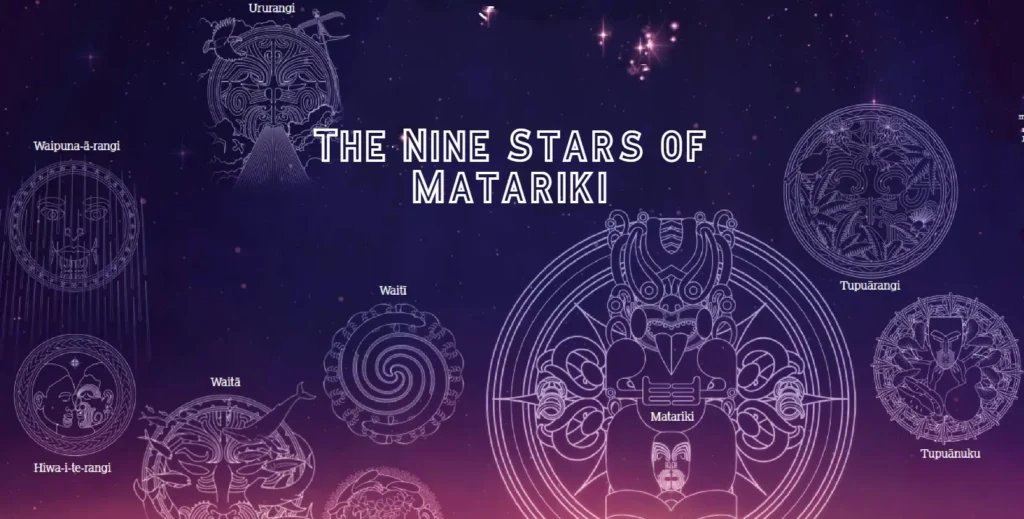
Tupu-ā-nuku is the star within the Matariki cluster associated with food grown in the ground. Its name translates to “grow in the earth,” serving as a celestial indicator for soil fertility and the harvest of cultivated crops like kūmara. Together with Tupu-ā-rangi, it determines the abundance of the coming season’s food supply and signals the time to store winter provisions.
The appearance of the Matariki star cluster (the Pleiades) in the pre-dawn sky of mid-winter marks the Māori New Year. However, Matariki is far more than a simple calendar date; it is a sophisticated environmental and agricultural system. For centuries, Māori tohunga (experts) have looked to specific stars within the cluster to predict the weather, determine planting cycles, and gauge the abundance of natural resources.
Among the nine stars visible to the naked eye, two are intrinsically linked to sustenance and survival: Tupu-ā-nuku and Tupu-ā-rangi. These are the harvest stars. They represent the dichotomy of earth and sky, covering the full spectrum of food sources required to sustain a community through the cold winter months. Understanding the Tupu-ā-nuku meaning requires a deep dive into the relationship between celestial bodies and terrestrial biology.
What is the Meaning of Tupu-ā-nuku?
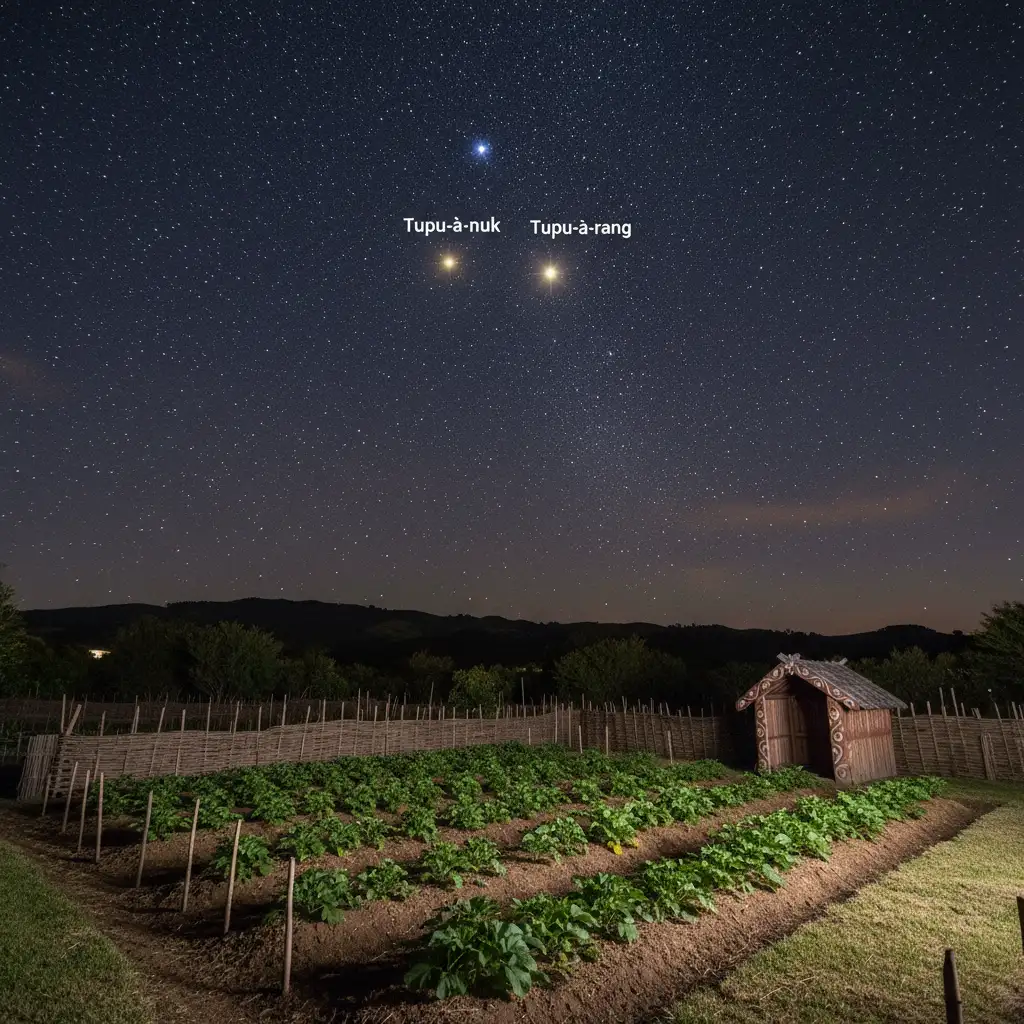
To fully grasp the significance of this star, one must break down its etymology. In Te Reo Māori, “Tupu” means to grow, spring up, or develop. “Nuku” is a shortening of Papatūānuku, the Earth Mother. Therefore, Tupu-ā-nuku can be literally translated as “to grow in the earth.”
This star has dominion over everything that is cultivated within the soil. It is the celestial guardian of edible plants, specifically those that are harvested from the ground. While it oversees wild edible plants, its primary association is with agricultural crops that require human tending and soil management. When we speak of the Tupu-ā-nuku meaning, we are speaking of the life-force of the soil and the success of the harvest.
Tupu-ā-nuku: Gardening and the Soil Harvest
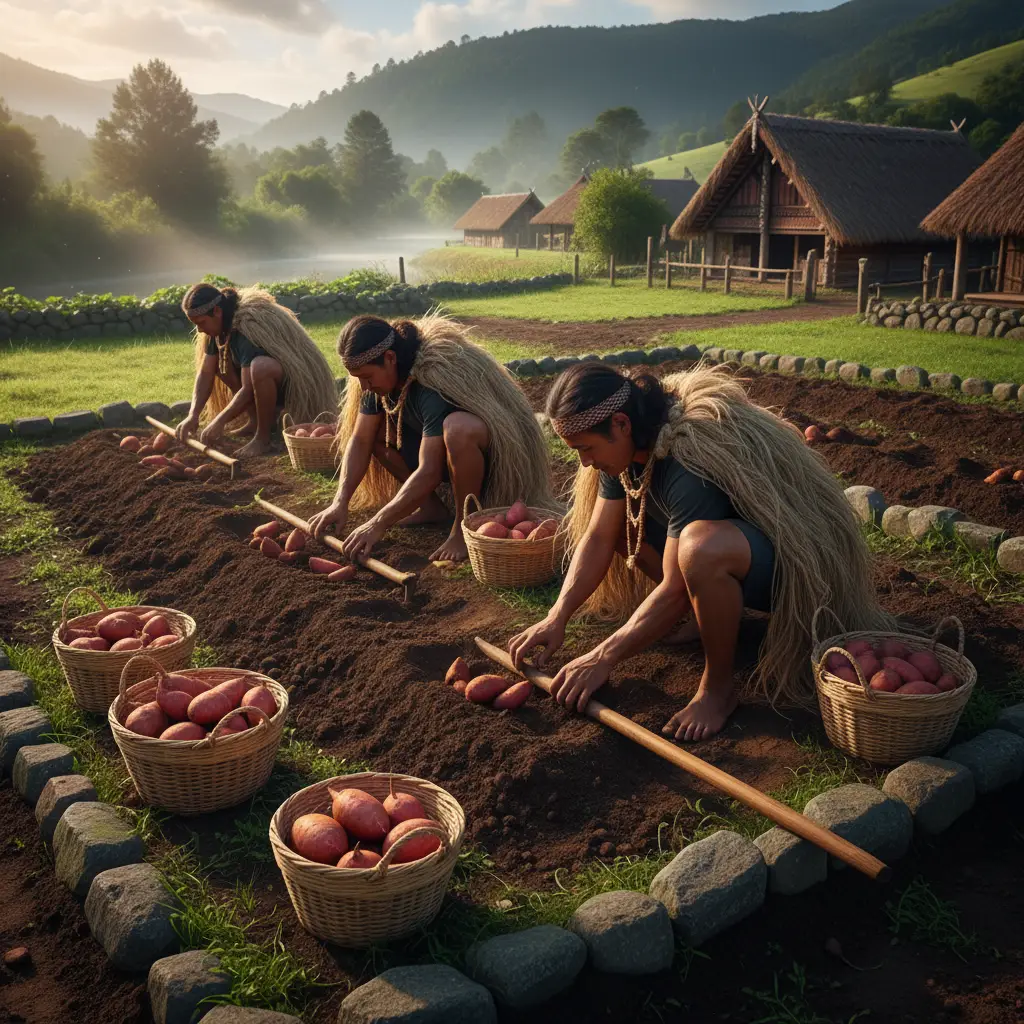
In traditional Māori society, the visibility and brightness of Tupu-ā-nuku were critical indicators for the coming agricultural season. The star is inextricably tied to the cultivation of staple crops, most notably the kūmara (sweet potato), but also taro, uwhi (yams), and hue (gourds).
The Cycle of Planting and Harvesting
Matariki rises in mid-winter (typically June or July), which coincides with the end of the harvest season. By the time Tupu-ā-nuku becomes visible, the crops have usually been lifted from the ground and stored. Therefore, the star serves two distinct purposes regarding gardening:
- Gratitude for the Past Harvest: It is a focal point for ceremonies thanking Papatūānuku for the food that has been gathered. It acknowledges the hard work of the gardening and the fertility of the soil.
- Prediction for the Future Planting: The clarity of the star predicts the success of the next planting season, which begins in spring.
If Tupu-ā-nuku appeared bright and clear in the pre-dawn sky, it was interpreted as a sign that the coming season would be warm and the soil fertile, leading to a bountiful harvest. Conversely, if the star appeared hazy, dim, or shimmered erratically, it was a warning. It suggested a cold season, poor soil conditions, or pests, prompting communities to prepare for scarcity or adjust their planting strategies accordingly.
Tupu-ā-rangi: Birds and Berries from the Trees
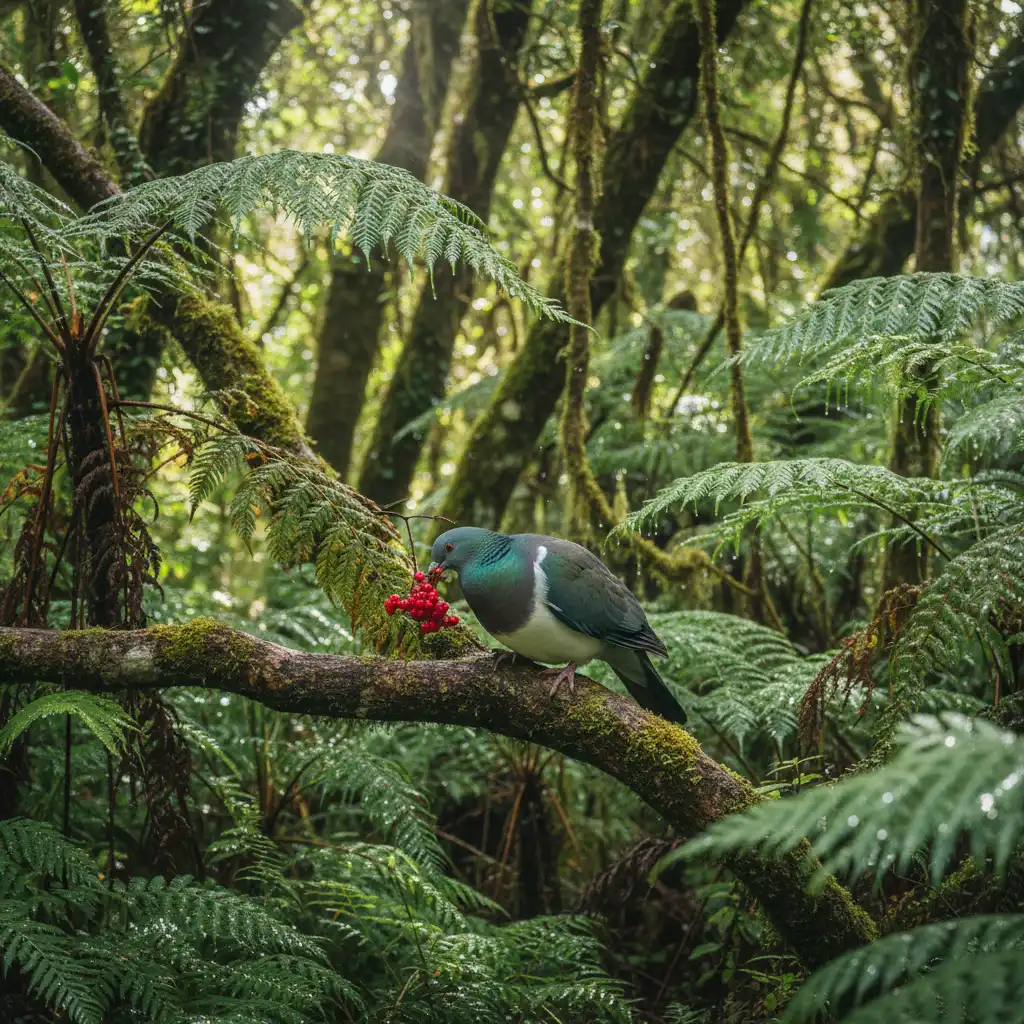
While Tupu-ā-nuku looks down to the earth, its twin star, Tupu-ā-rangi, looks up to the heavens. “Rangi” is short for Ranginui, the Sky Father. This star is the guardian of everything that grows or lives above the ground—specifically in the canopy of the forest.
Tupu-ā-rangi is associated with:
- Manu (Birds): Native birds such as the kererū (wood pigeon), tūī, and kākā were essential protein sources.
- Hua (Berries/Fruits): Edible berries from trees like the hīnau, miro, and karaka.
The Forest Ecosystem
The connection between Tupu-ā-rangi and the forest is a lesson in ecological interdependence. The abundance of birds is directly related to the abundance of berries. If the trees fruited heavily (a mast year), the bird populations would thrive, providing ample food for the people. If the berry crop failed, the birds would be scarce or lean.
Similar to Tupu-ā-nuku, the brightness of Tupu-ā-rangi was used to forecast the bounty of the forest. A clear star signaled a season where the forest floor would be littered with berries and the canopy filled with fat birds. A dim star warned of a “lean” forest, where food gathering would be difficult. This knowledge allowed hapū (sub-tribes) to implement rāhui (temporary ritual prohibitions) to protect resources if a poor season was predicted.
Reading the Stars: Predicting the Harvest
The ability to read these stars was a highly specialized skill possessed by the tohunga kōkōrangi (expert astronomers). They did not view the stars in isolation but as part of a complex weather and climate system. The “reading” involved analyzing the color, brightness, and distance between the stars.
When analyzing Tupu-ā-nuku and Tupu-ā-rangi together, the tohunga could determine the balance of food sources. For example:
- High Visibility: If both stars were bright, it indicated a year of plenty across all domains—gardens would flourish, and forests would be abundant.
- Asymmetry: If Tupu-ā-nuku was bright but Tupu-ā-rangi was dim, the community knew to focus their energy on agriculture, as hunting in the forest would yield poor results.
This celestial guidance was crucial for survival. It dictated the division of labor. Should the tribe make more bird snares or prepare more garden mounds? The stars provided the strategic plan for the year’s food production.
The Importance of Winter Food Storage
The rising of Matariki occurs in the deep winter, a time known as Te Wero i te Ninihi (the piercing cold). By this time, the active work of harvesting is largely complete. The kūmara have been dug up, the birds have been preserved, and the focus shifts to storage and rationing.
The connection between Tupu-ā-nuku, Tupu-ā-rangi, and food storage is symbolized by the pātaka (storehouse). The pātaka was one of the most important structures in a traditional village, often intricately carved to show its significance. It was raised on posts to protect the contents from kiore (rats) and moisture.
Matariki as a Time of Reflection and Planning
Because the harvest was finished, Matariki became a time of relative leisure and learning. With the pātaka full (hopefully), the community could gather to share stories, sing, and pass on knowledge. The food stored under the patronage of Tupu-ā-nuku and Tupu-ā-rangi had to last until the new crops could be harvested in the late summer or autumn.
If the stars predicted a poor season ahead, the management of these stored resources became strictly controlled. The “harvest stars” were not just about getting the food; they were a reminder of the discipline required to make that food last. This concept of long-term thinking is a core value of the Matariki tradition.
Mahinga Kai Practices and Sustainability
The concepts embodied by Tupu-ā-nuku and Tupu-ā-rangi are deeply rooted in Mahinga Kai—the traditional value of food gathering and the places where food is gathered. This goes beyond simple harvesting; it encompasses the management, protection, and enhancement of these resources.
These stars teach the principle of Kaitiakitanga (guardianship). You cannot constantly take from Tupu-ā-nuku (the soil) without replenishing it. You cannot strip the forests of Tupu-ā-rangi without allowing the bird populations to recover. The stars served as a celestial regulator of consumption.
Modern Application of Ancient Wisdom
Today, the lessons of these stars are more relevant than ever. They remind us of:
- Seasonality: Eating food that is in season rather than forcing production year-round.
- Soil Health: The importance of composting and resting the earth (fallow periods) to ensure Tupu-ā-nuku remains fertile.
- Biodiversity: Protecting native forests to ensure that Tupu-ā-rangi’s domain remains vibrant.

Connecting with the Harvest Stars Today
As Matariki is reclaimed and celebrated as a public holiday in Aotearoa New Zealand, Tupu-ā-nuku and Tupu-ā-rangi offer a framework for reconnecting with our food sources. In a world of supermarkets and global supply chains, it is easy to forget the origins of our sustenance.
Celebrating these stars can be practical. It might involve starting a winter garden, learning to compost, planting a native tree to support birdlife, or simply sharing a meal with whānau (family) that features locally sourced ingredients. By acknowledging the Tupu-ā-nuku meaning—growth in the earth—we acknowledge our dependence on the land and our responsibility to protect it for future generations.
When you look up at the Matariki cluster this winter, find the stars that govern the harvest. Let them remind you of the hard work of the past year, the food on your table, and the promise of growth in the spring to come.
What is the difference between Tupu-ā-nuku and Tupu-ā-rangi?
The main difference lies in their domain of influence. Tupu-ā-nuku governs food grown within the earth (soil), such as kūmara and root vegetables. Tupu-ā-rangi governs food obtained from the sky and trees, such as birds and berries. Together, they cover the complete spectrum of food sources.
Why is Tupu-ā-nuku important for gardeners?
Tupu-ā-nuku is vital for gardeners because it serves as a celestial indicator of soil fertility and the success of the harvest. Historically, its brightness helped determine the timing of planting and predicted whether the coming growing season would be bountiful or challenging.
What foods are associated with Tupu-ā-nuku?
Foods associated with Tupu-ā-nuku are those cultivated in the ground. This primarily includes the kūmara (sweet potato), taro, uwhi (yams), hue (gourds), and tī pore (Pacific cabbage tree). It also encompasses edible wild roots and rhizomes.
How do you find Tupu-ā-nuku in the sky?
To find Tupu-ā-nuku, locate the Matariki cluster (Pleiades). Tupu-ā-nuku is generally identified as the star located at the bottom of the cluster, closest to the horizon, symbolizing its connection to the earth. Tupu-ā-rangi is typically found directly above it.
What does it mean if Tupu-ā-nuku is hazy?
In traditional Māori astronomy, if Tupu-ā-nuku appeared hazy, dim, or shimmered excessively, it was considered a negative omen for the harvest. It predicted a cold, difficult season with poor crop yields, prompting communities to ration food and prepare for scarcity.
How are these stars related to Mahinga Kai?
These stars are the celestial guardians of Mahinga Kai (food gathering practices). They dictate when to harvest and when to rest the environment. They embody the concept of sustainability, teaching that the abundance of the earth (Tupu-ā-nuku) and sky (Tupu-ā-rangi) relies on respectful management and guardianship.