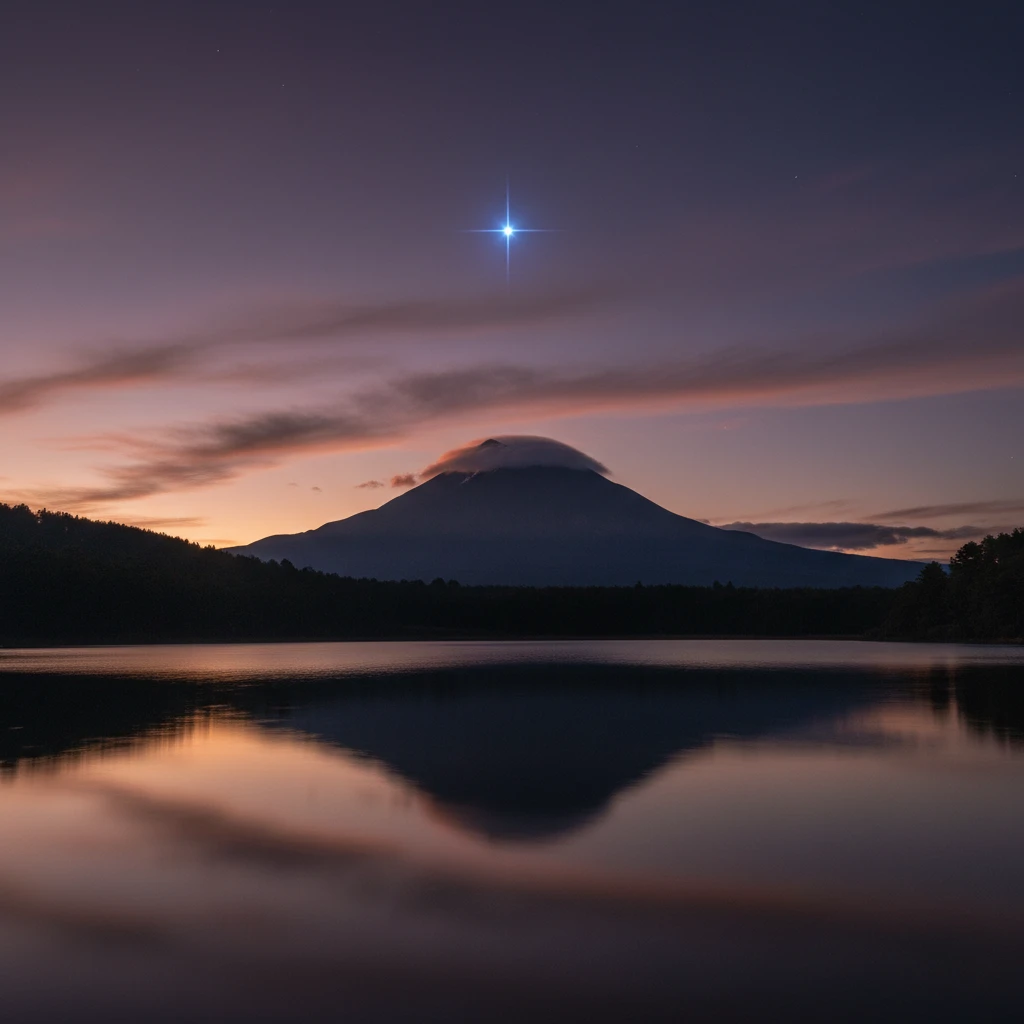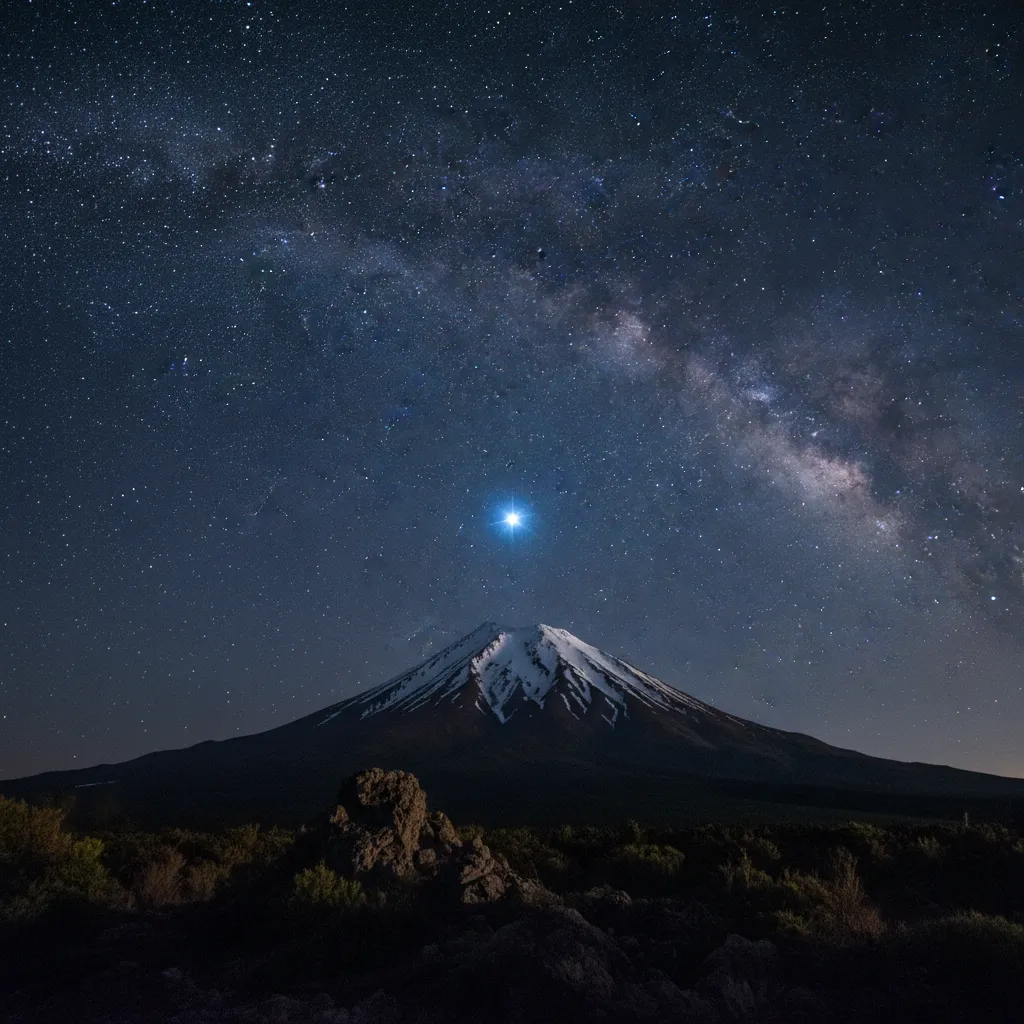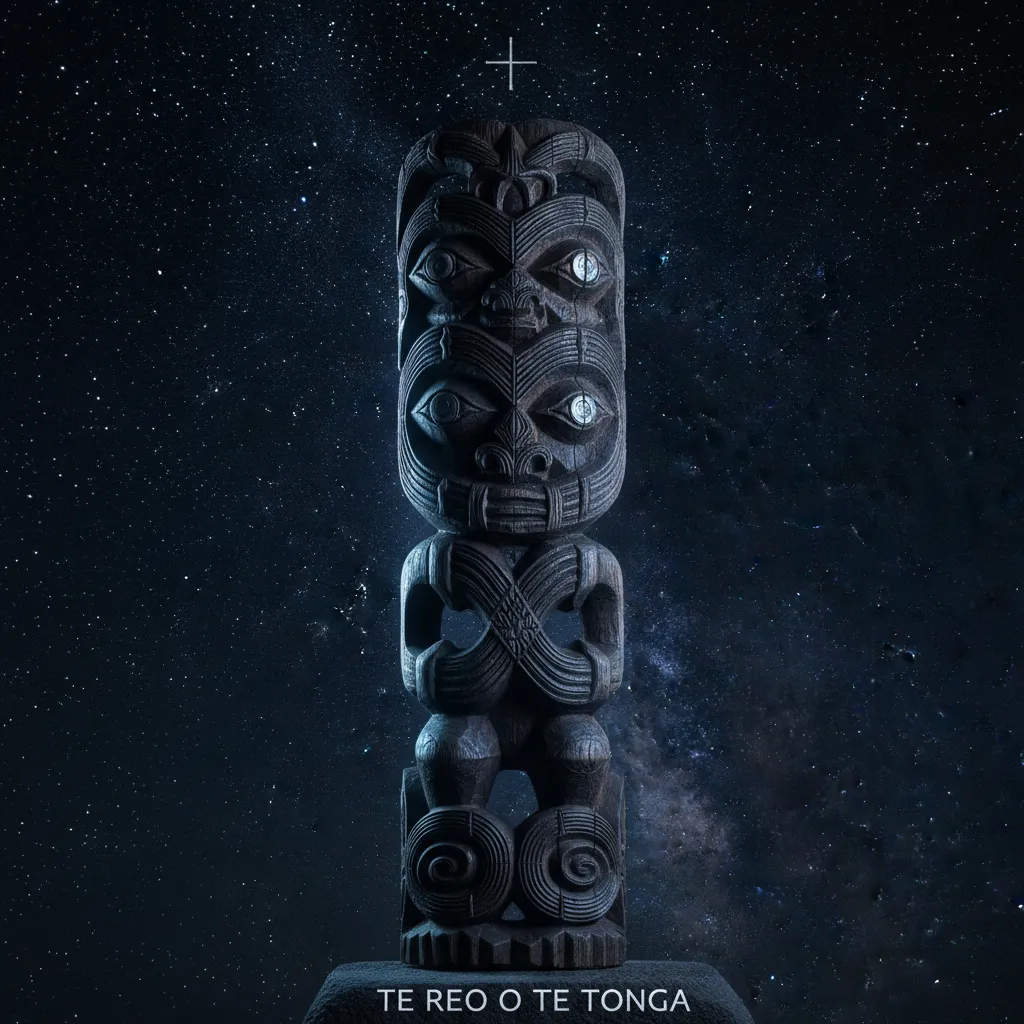
In the Whanganui region, the Māori New Year is marked by the rise of Puanga (Rigel) rather than Matariki, due to local geography obscuring the Pleiades. The Puanga Whanganui river traditions center on the connection between the cosmic realm and Te Awa Tupua (the river), signaling a time for wānanga (learning), reflection, and the harvesting of seasonal kai like kererū and piharau to prepare for winter.
Why is Puanga Significant to the Whanganui River Tribes?
To understand the cultural landscape of New Zealand, one must appreciate that the observation of the Māori New Year varies by region. While much of the country looks to the horizon for Matariki (the Pleiades cluster), the tribes of the Whanganui River and the West Coast look to a different celestial marker: Puanga.
Puanga is known internationally as Rigel, the brightest star in the constellation Orion. The specific reliance on Puanga by Whanganui Iwi is born of geography. The high mountain ranges of the central plateau and the rugged terrain surrounding the Whanganui River valley often obscure the view of the eastern horizon where Matariki rises. Puanga, appearing higher in the sky and slightly earlier, shines brightly above the peaks, acting as the herald of the new year.
This distinction is not merely astronomical; it is deeply woven into the identity of the river people. The rise of Puanga signals the turning of the season, marking the end of the harvest and the beginning of winter (Takurua). It is a time when the people of the river turn inward—both physically, by spending more time in the wharenui (meeting house) due to the cold, and spiritually, by reflecting on the year that has passed and preparing for the one to come.
The Connection Between the Whanganui River and the Stars
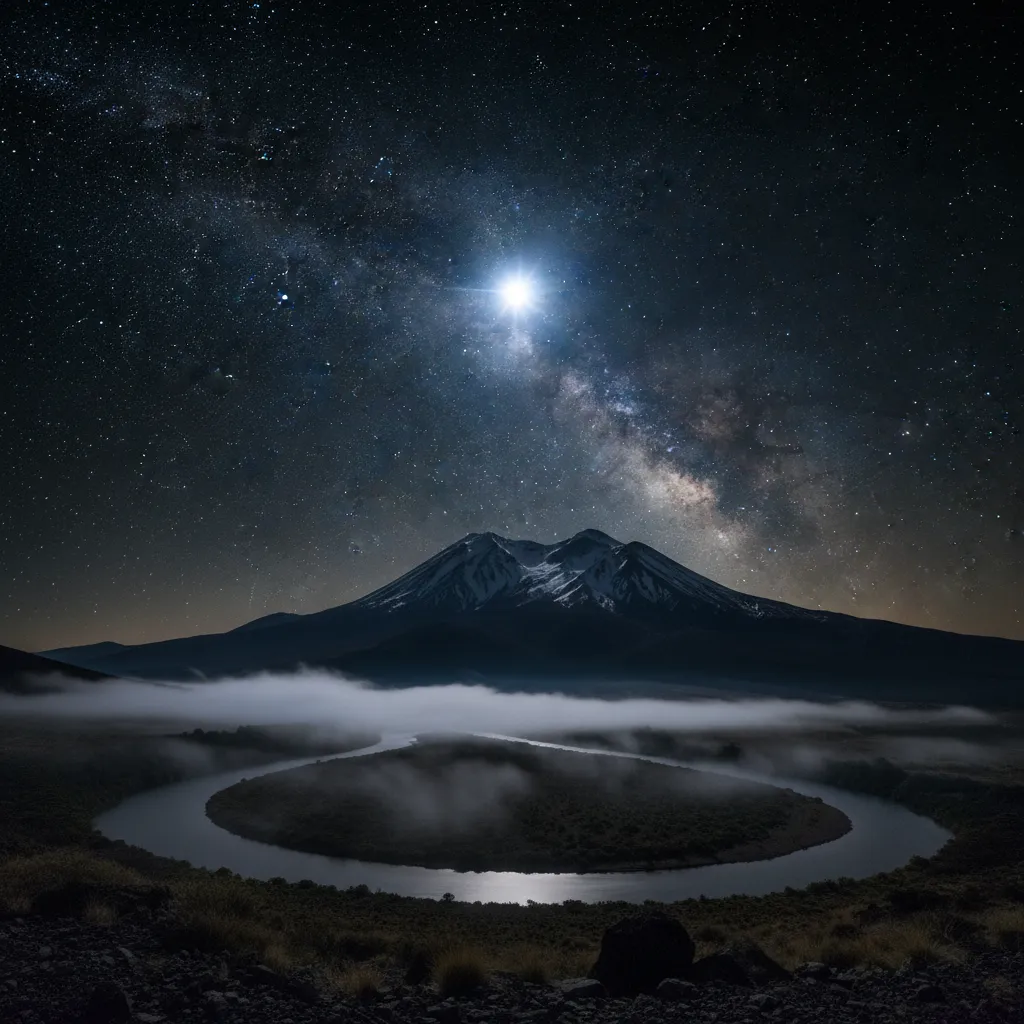
For the Whanganui Iwi, the river is not just a body of water; it is a living ancestor, Te Awa Tupua. There is a profound philosophical connection between the water flowing on earth and the heavens above. This is often summarized in the maxim “As above, so below.” The Whanganui River is seen as a mirror to the Milky Way (Te Ika-a-Rangi or Te Mangōroa).
During the season of Puanga, the connection between the physical river and the celestial river is considered to be at its strongest. The calm, cold waters of the river in early winter reflect the brilliance of the night sky, creating a visual and spiritual link between the realms of the living and the ancestors. This reflection serves as a reminder of whakapapa (genealogy), tracing the lineage of the people back to the beginning of the universe.
The appearance of the stars during Puanga is also read as a tohu (sign). A bright, clear Puanga predicts a fruitful year with abundant food and mild weather. Conversely, if the stars appear hazy or shimmering, it may foretell a harsh winter or poor harvest. The river tribes have historically used these celestial cues to manage their resources and plan their activities along the Awa.
Harvesting Traditions Coinciding with Puanga
The rise of Puanga marks the finality of the harvest season. By the time this star is prominent, the kumara (sweet potato) should be stored in the rua (pits), and the focus shifts to the bounties provided by the forest and the river itself. The Puanga Whanganui river traditions are heavily centered on food preservation (kai), ensuring the iwi has enough sustenance to last through the cold months.
The Piharau (Lamprey)
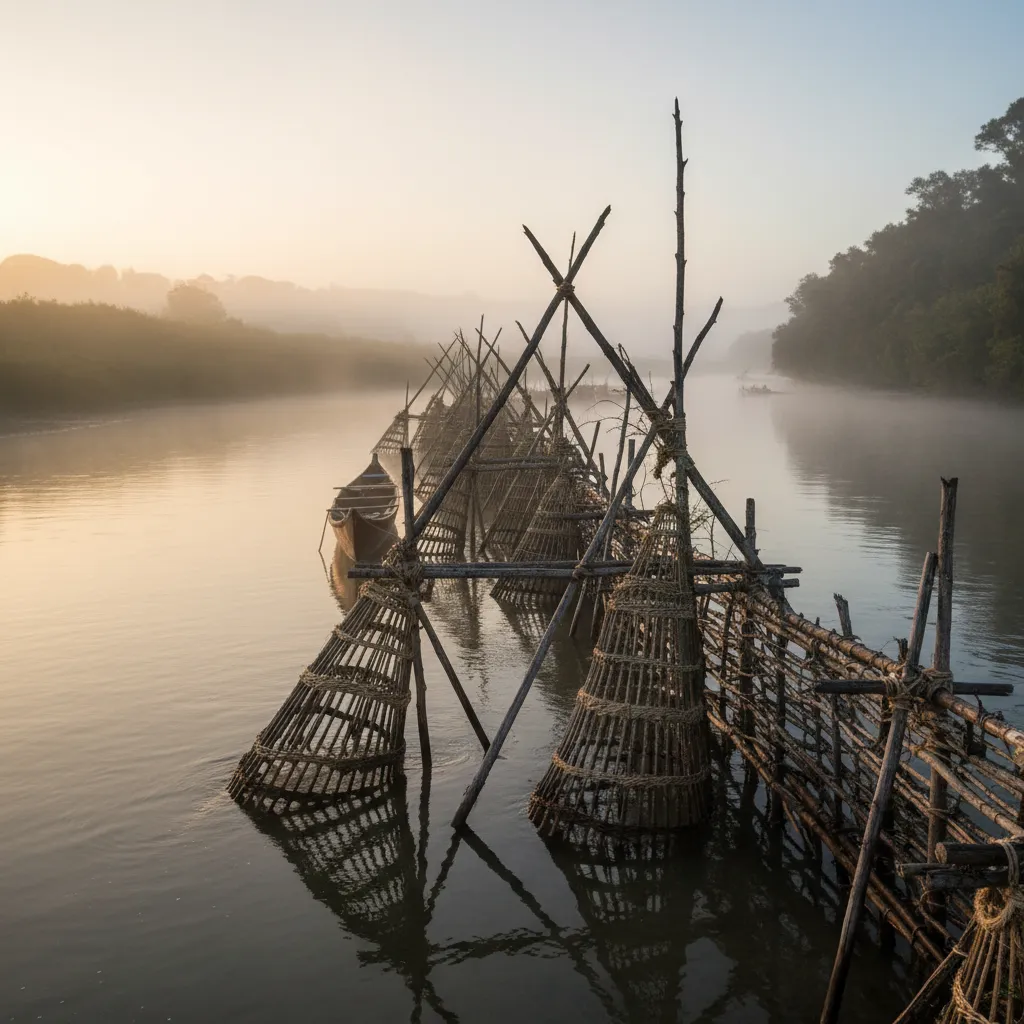
One of the most significant delicacies associated with the Whanganui River is the piharau, also known as kanakana or lamprey. These ancient, eel-like fish migrate up the river during the winter months. Catching piharau is a specialized skill passed down through generations, utilizing specific weirs and traps (utu piharau) set in the rapids.
The harvest of piharau coincides with the Puanga season. Because the water is cold, the fish are firm and fatty, providing essential energy for the winter. The preparation and drying of piharau is a communal activity, reinforcing the bonds between whānau (families) living along the riverbanks.
Eeling (Tuna)
While the main eel migration (heke) occurs earlier in autumn, the winter months are a time for consuming the preserved tuna (eels). The tuna is often dried or smoked to last through the winter. The management of eel weirs (pā tuna) is strictly governed by tikanga (customary practices) to ensure sustainability, a concept that aligns with the renewal aspect of the New Year.
The Role of the Kererū During this Season
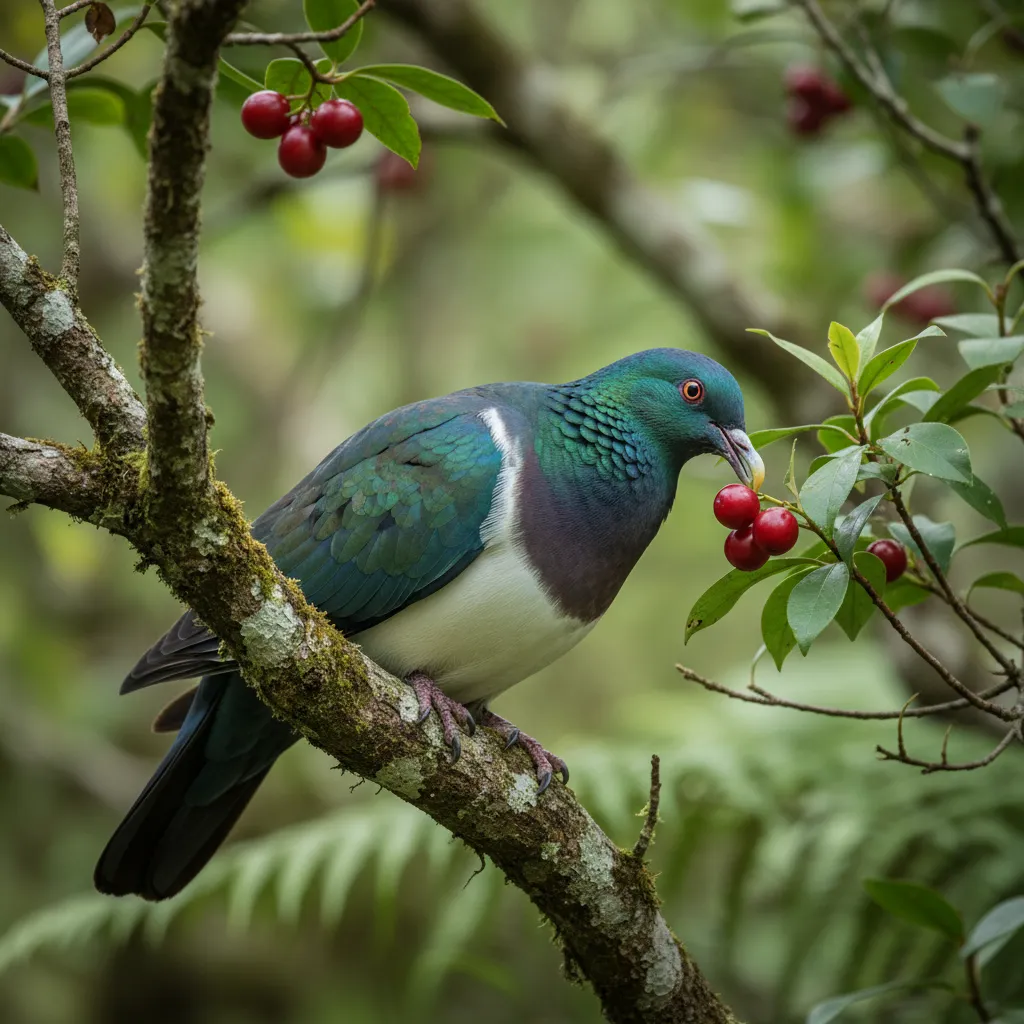
A critical component of the Puanga narrative in the Whanganui region is the Kererū (New Zealand wood pigeon). In the outline of traditional ecological knowledge, the behavior of the Kererū is inextricably linked to the stars and the season.
During the months leading up to Puanga, the Miro trees in the Whanganui forests bear fruit. The Kererū feast on these berries, which are known to make the birds thirsty. This leads them to descend to the river and streams to drink, making them more accessible for harvesting, although modern conservation laws now protect them.
Historically, however, the Kererū was a staple protein source for the winter. The bird was prized not just for its meat, but for its fat. The birds were preserved in their own fat in gourds (taha), a process known as huahua. This preserved food was reserved for special occasions and for feeding distinguished guests, often during the wānanga (learning forums) that took place during the Puanga season.
Culturally, the Kererū is associated with the star Puanga because the star’s appearance signals the time when the bird is at its fattest and most bountiful. The whakataukī (proverb) “Kua timu te tai o te kererū” (The tide of the kererū has ebbed) refers to the end of the season, but during Puanga, the “tide” is high. The bird symbolizes the abundance of the forest (Tāne Mahuta) complementing the abundance of the river.
Tribal Gatherings and Narratives Along the River
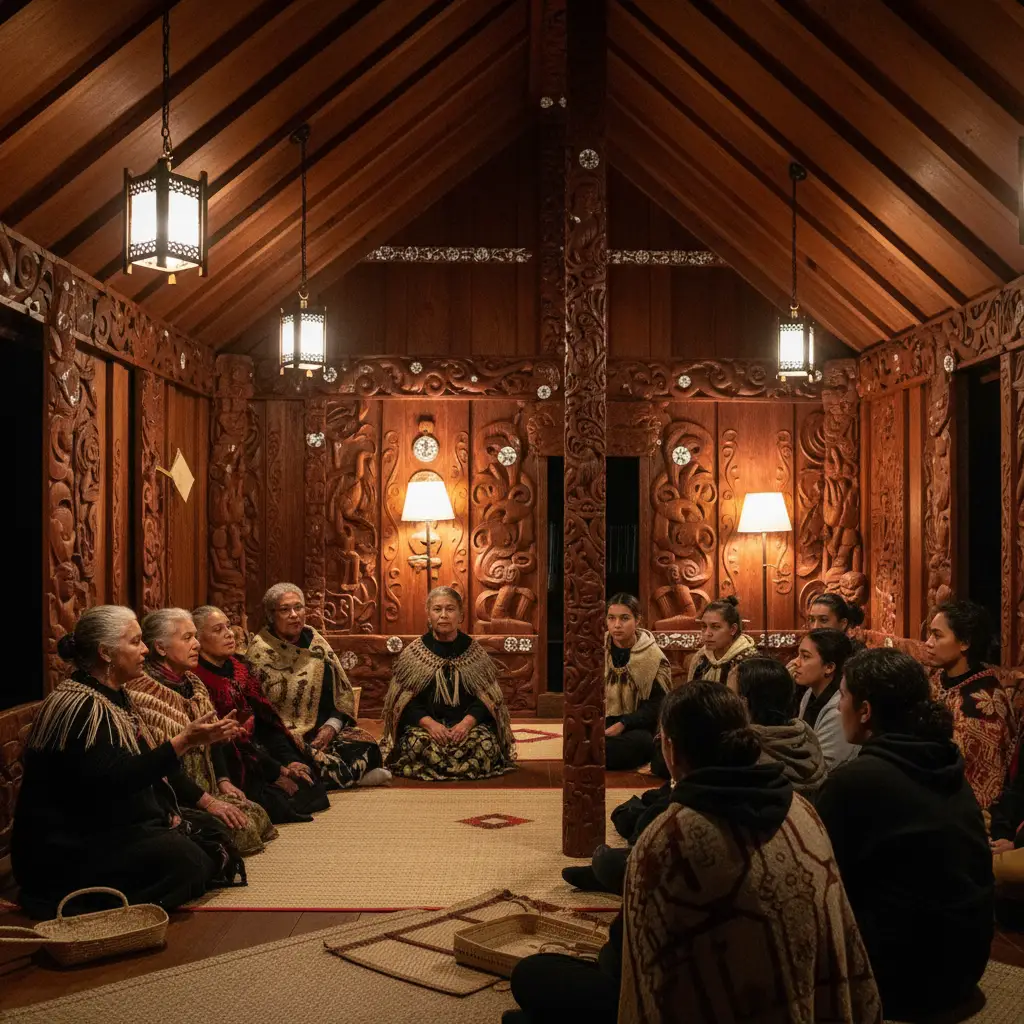
Puanga is not merely a time for food; it is a time for the mind and spirit. With the harvest complete and the nights long, the Whanganui people traditionally gathered in the wharenui to pass on knowledge. These gatherings are central to the identity of the river tribes.
Wānanga (Schools of Learning)
The winter months were the academic semester of ancient Māori society. The concept of wānanga involves deep discussion, debate, and the transmission of esoteric knowledge. Under the sign of Puanga, experts in whakapapa, carving, weaving, and oral history would teach the younger generations, often utilizing educational tools like Classroom Wall Charts.
Along the Whanganui River, these wānanga often focused on the specific narratives of the river: the battles of the ancestors, the naming of the rapids, and the spiritual guardians (taniwha) of the bends. It is a time to reinforce the connection to the Awa Tupua—affirming that “I am the river and the river is me” (Ko au te awa, ko te awa ko au).
Whanaungatanga (Kinship)
Puanga is also a time to rekindle relationships. Families travel up and down the river road to visit relatives. It is a time to mourn those who have passed since the last rising of Puanga (a ceremony often called te whare o apitu in other dialects, or simply remembering the hunga mate). By speaking the names of the dead, they are sent into the stars to become stars themselves, joining the cluster in the night sky.
Modern Observance and Regional Tourism
In recent years, there has been a significant resurgence in the observance of Puanga, moving from private tribal practice to public celebration. For the visitor interested in cultural tourism, the Whanganui region offers unique experiences during June and July that are distinct from the Matariki celebrations found elsewhere in New Zealand.
Local councils, in partnership with Iwi, now host Puanga festivals. These often include:
- Night Markets: Featuring local kai and Māori arts.
- River Journeys: Waka ama (outrigger canoe) events on the river.
- Stargazing Tours: Guided tours that explain the navigation and astronomical knowledge of the ancestors, specifically pointing out Puanga and its relationship to the local topography. To better navigate the heavens, many use an Interactive Night Sky Map Tool: Locate Matariki Now.
- Arts and Performance: Kapa Haka competitions and exhibitions of weaving and carving that celebrate the stories of the Awa. These events have grown in scale, often requiring advance booking like Matariki Concert Tickets.
For the traveler, engaging with these events offers a deeper understanding of the Puanga Whanganui river connection. It is an opportunity to see the river not just as a scenic attraction, but as a cultural entity that dictates the rhythm of life for the people who live on its banks.
Conclusion
The traditions of Puanga along the Whanganui River represent a sophisticated understanding of the environment. It is a system where astronomy, ecology, and sociology intertwine. The star Puanga signals the time to retreat, to learn, and to feast on the preserved abundance of the kererū and piharau. For the Whanganui Iwi, the river remains the central artery of this existence, reflecting the stars above and sustaining the people below. As the region opens these traditions to the wider world, it offers a profound lesson in how to live in sync with the natural cycles of the earth and sky.
What is the difference between Puanga and Matariki?
Matariki is the Pleiades star cluster, which marks the New Year for many Māori tribes. Puanga is the star Rigel. In the Whanganui and Taranaki regions, mountains block the view of Matariki, so Puanga is used as the primary marker for the New Year instead.
When is Puanga celebrated in Whanganui?
Puanga is typically celebrated in June or July. The exact timing depends on the lunar calendar (maramataka) and the physical sighting of the star Rigel in the early morning eastern sky.
What food is traditionally eaten during Puanga?
Traditional foods include preserved birds (like Kererū, historically), eels (tuna), lamprey (piharau), and stored root vegetables like kumara. It is a time for feasting on the stores gathered during the harvest.
Why is the Kererū important to Puanga?
The Kererū (wood pigeon) feeds on Miro berries during this season, becoming fat and flavorful. Historically, this made them a vital food source for winter survival, and their abundance signaled a prosperous season.
Can tourists participate in Puanga celebrations?
Yes, the Whanganui region hosts various public events, including arts festivals, markets, and educational talks that are open to the public, allowing visitors to learn about local traditions.
What does “Te Awa Tupua” mean?
Te Awa Tupua refers to the Whanganui River as an indivisible and living whole, from the mountains to the sea, incorporating all its physical and metaphysical elements. It is also the legal status granting the river personhood.