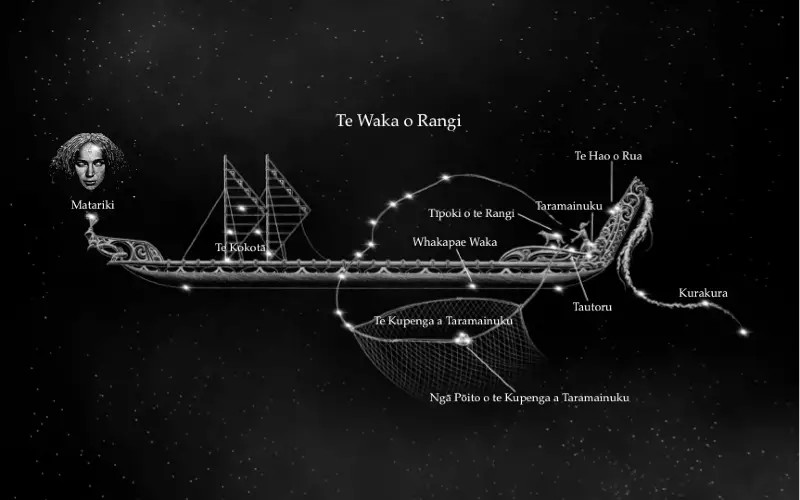
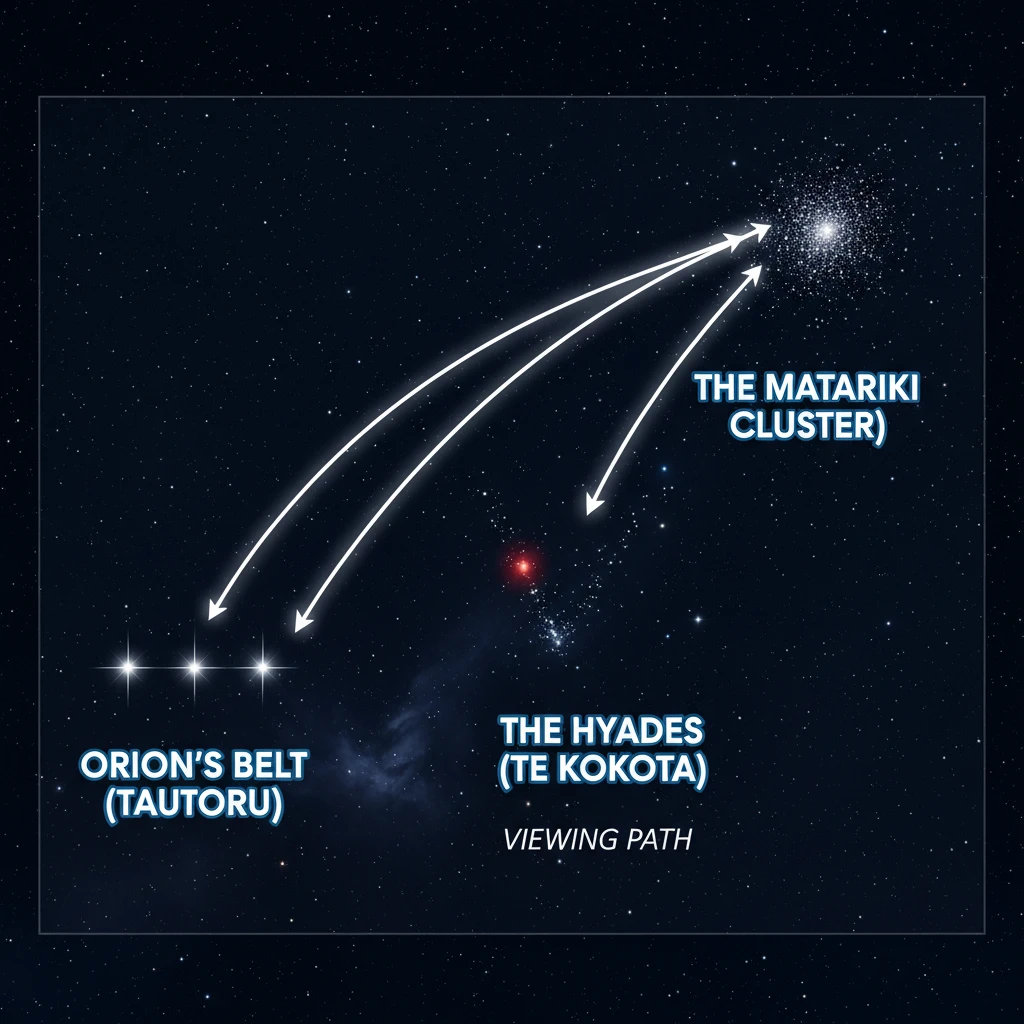
To find Matariki stars, look toward the northeastern horizon approximately 30 to 60 minutes before sunrise during late June and early July. Locate Tautoru (Orion’s Belt) and trace a line leftward through Te Kokota (The Face) until you reach the bright star Puanga. Matariki appears as a distinct cluster of twinkling stars just to the left of Puanga.
The reappearance of the Matariki star cluster signals the beginning of Te Tau Hou Māori—the Māori New Year. This celestial event is not merely a visual spectacle; it is a profound cultural moment in Aotearoa New Zealand, marking a time for remembrance, celebrating the present, and looking to the future. While the cluster, known globally as the Pleiades, is visible from many parts of the world, finding it in the pre-dawn winter sky of the Southern Hemisphere requires specific timing and navigational knowledge.
Whether you are a seasoned stargazer or a first-time observer, understanding the celestial mechanics and cultural significance of this cluster enhances the experience. This guide provides authoritative instructions on exactly how to locate the cluster, the optimal dates for viewing, and the environmental signs associated with its visibility.
What is Matariki?
Matariki is the Māori name for the star cluster known to astronomers as the Pleiades or Messier 45. It is an open star cluster located in the constellation Taurus. While it contains over a thousand stars, only a handful are visible to the naked eye. In Aotearoa, the rise of Matariki in the mid-winter sky marks the shifting of seasons and the start of the new year.
Historically, Matariki was a critical marker for navigation and agriculture. The brightness and clarity of the stars were used to predict the success of the upcoming harvest. Today, it serves as a national holiday in New Zealand, fostering a deeper connection to Mātauranga Māori (Māori knowledge) and the environment, which is further explored in Matariki History Webinars & Talks.
How to Find Matariki Stars: A Step-by-Step Guide
Finding Matariki can be challenging for the uninitiated because the cluster is relatively small compared to other constellations. However, by using prominent celestial markers, you can locate it with precision. The most reliable method involves using Tautoru (Orion’s Belt) as an anchor point.
Step 1: Locate Tautoru (The Pot/Orion’s Belt)
Begin by looking towards the eastern horizon. The most recognizable constellation is usually Tautoru, often referred to as “The Pot” or the bottom of the saucepan in New Zealand skies. You are looking for three bright stars in a distinct row. This is Orion’s Belt. In the pre-dawn sky, the pot appears to be tipping over.
Step 2: Find Te Kokota (The Face)
Once you have identified the three stars of Tautoru, look northward (to the left) of the pot. You will see a triangular cluster of faint stars. This is Te Kokota, also known as the Hyades cluster, which forms the face of the bull in the Taurus constellation. The brightest orange star in this V-shape is Taumata-kuku (Aldebaran).
Step 3: Identify Puanga (Rigel)
Continuing your visual line to the left of Tautoru and past Te Kokota, look for a very bright, blue-white star. This is Puanga (Rigel). In some iwi (tribes), particularly in the Far North and West Coast where Matariki sits lower on the horizon or is obscured by geography, Puanga is the primary marker for the New Year, a topic covered in Why Some Iwi Don’t See Matariki.
Step 4: Locate Matariki
Keep moving your gaze to the left of Puanga. Matariki will appear as a tight, glimmering cluster of stars. Unlike the spread-out stars of the Pot, Matariki looks like a small, fuzzy diamond or a tiny school of fish. If you have good eyesight and little light pollution, you may distinguish seven to nine individual stars.
Best Dates and Times for Viewing
Timing is critical when learning how to find Matariki stars. The cluster sets in the west during the late autumn and disappears from view for roughly a month. This period is known as the time when Matariki is “washing her children.” The New Year begins when the cluster reappears on the eastern horizon.
The Tangaroa Moon Phases
While the Gregorian calendar places Matariki in June or July, the precise timing is determined by the Māori lunar calendar (Maramataka). The optimal viewing period occurs during the Tangaroa phases of the moon—the last quarter moon. During this phase, the moon is less bright, creating a darker sky that makes the faint cluster of Matariki easier to see.
The Pre-Dawn Window
Matariki is a heliacal rising star, meaning it rises just before the sun. If you look too early (e.g., 3:00 AM), the cluster will be below the horizon. If you look too late (after 7:00 AM), the sun’s light will drown out the stars.
The Golden Window: The best time to look is between 5:30 AM and 6:30 AM. You need to be in position before the first light of dawn begins to brighten the sky.
Compass Directions and Location Tips
Knowing when to look is half the battle; knowing where to stand is the other. To successfully view Matariki, you must have a clear line of sight to the horizon.
Face Northeast
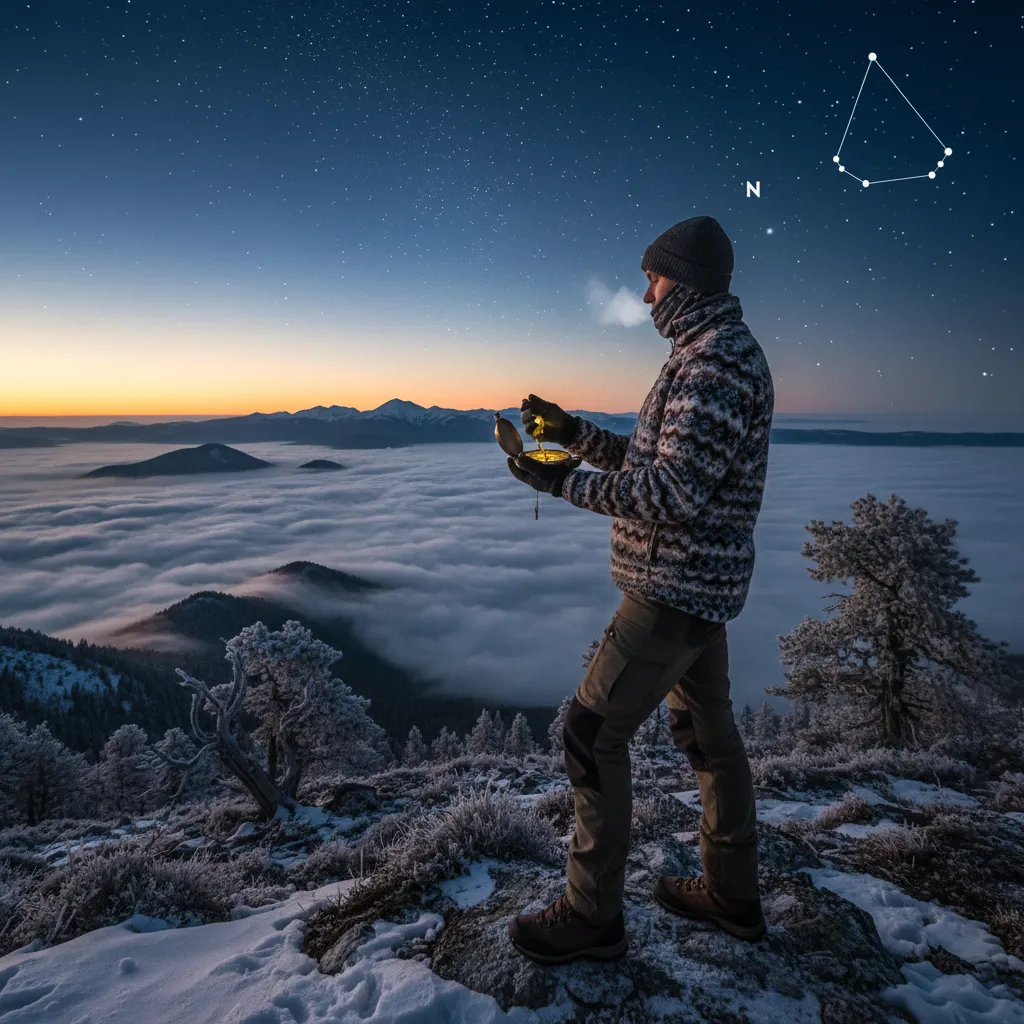
Matariki rises in the northeast. If you have a compass or a smartphone app, orient yourself between 30° and 60°. If you do not have a compass, look for where the sun rises and turn slightly to your left, or use an Interactive Night Sky Map Tool: Locate Matariki Now for digital guidance.
Elevation and Light Pollution
Because Matariki sits relatively low on the horizon during its initial rising, physical obstacles can block your view. Hills, trees, and tall buildings are common obstructions.
- Seek Elevation: Climbing a local hill or Maunga (mountain) significantly improves visibility.
- Escape the City: Light pollution from streetlights and buildings makes it difficult to see the individual stars of the cluster. Driving to a rural area or a designated dark sky reserve will provide a much clearer view.
- Coastal Viewing: East-facing beaches are often ideal locations because the ocean provides a flat, unobstructed horizon.
What if it is Cloudy? (Reading the Tohu)
A common frustration for stargazers is the unpredictable winter weather. However, in Mātauranga Māori, the visibility of Matariki—or the lack thereof—is itself a message (tohu).
Visibility and Predictions
Traditionally, tohunga kōkōrangi (expert astronomers) would observe the stars carefully upon their rising.
- Clear and Bright: If the stars were distinct and bright, it was a tohu of a warm season and a bountiful harvest ahead.
- Hazy or Shimmering: If the stars appeared hazy or seemed to move closer together, it predicted a cold winter and potentially poor crop yields.
- Missing Stars: Sometimes, specific stars within the cluster might be invisible. Each star corresponds to a different environmental domain (e.g., fresh water, salt water, rain, wind). If the star associated with rain (Waipuna-ā-rangi) was invisible, it might suggest a drought.
Therefore, if you go out to find Matariki stars and the weather is cloudy, do not be discouraged. Use the moment to reflect on the environment. The clouds, the wind, and the cold are all part of the natural cycle that Matariki governs.
The Significance of the Nine Stars
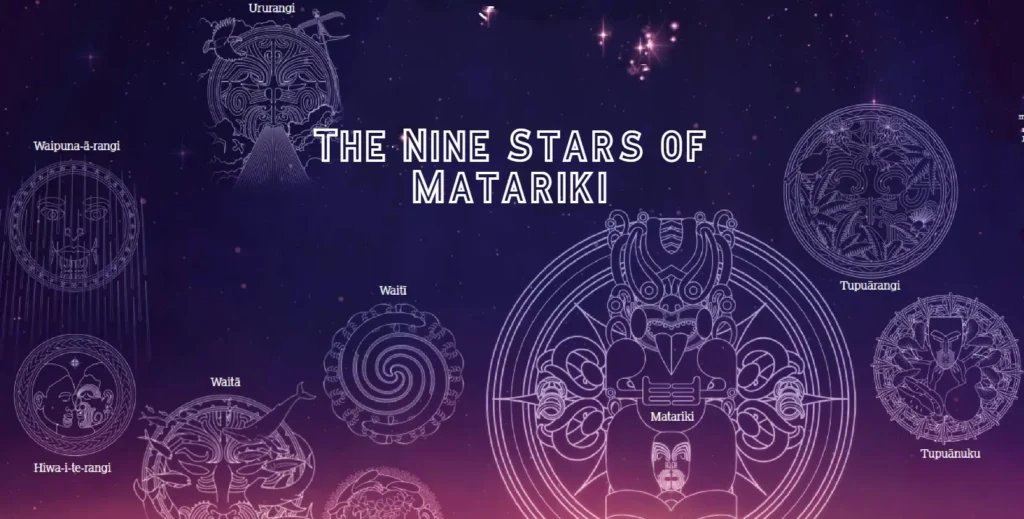
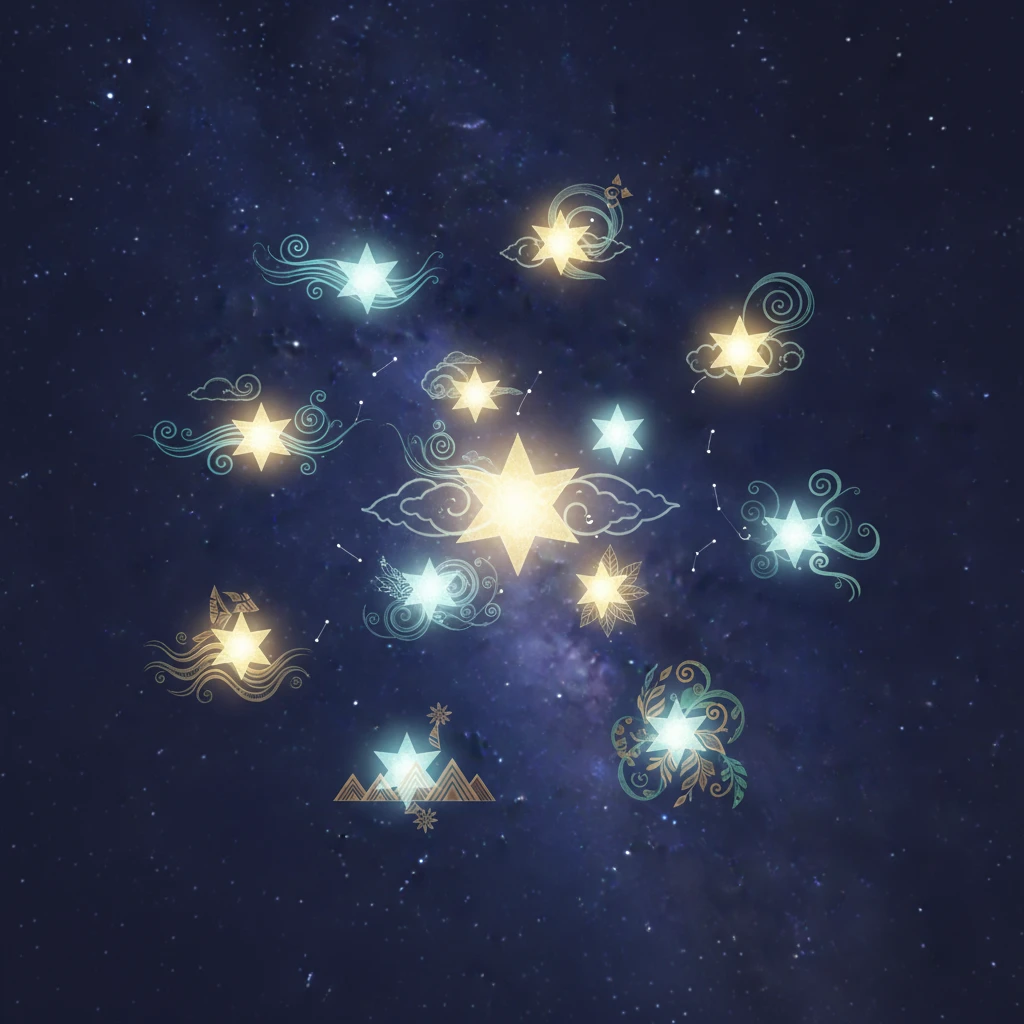
While many people can see seven stars with the naked eye, leading to comparisons with the “Seven Sisters” of Greek mythology, Māori tradition often recognizes nine stars in the cluster. Understanding the name and domain of each star adds immense depth to the viewing experience.
- Matariki: The mother star, signifying reflection, hope, and the health of the people.
- Pōhutukawa: Connects with those who have passed on; the star of remembrance.
- Tupu-ā-nuku: Connected to food that grows in the ground (gardens and crops).
- Tupu-ā-rangi: Connected to food that comes from the sky (birds and fruit).
- Waitī: Connected to fresh water and the creatures within it.
- Waitā: Connected to the ocean and salt water food sources.
- Waipuna-ā-rangi: Connected to the rain.
- Ururangi: Connected to the winds.
- Hiwa-i-te-rangi: The wishing star; connected to granting the desires of the heart for the coming year.
When you locate the cluster, try to visualize these domains. It transforms the act of stargazing into an act of acknowledging the entire ecosystem that sustains us.
Frequently Asked Questions
What is the best time of day to see Matariki?
The best time is pre-dawn, specifically between 5:30 AM and 6:30 AM. You must look before the sun rises, as the light of dawn will make the stars invisible. This viewing window applies strictly to the winter months of June and July.
Can I see Matariki without a telescope?
Yes, Matariki is visible to the naked eye. While it appears as a fuzzy blur or a small cluster, you do not need a telescope. However, a pair of binoculars can help resolve the individual stars and separate the cluster from the background sky.
Why does Matariki disappear in April?
Matariki disappears due to the position of the Earth in its orbit around the Sun. In late autumn, the sun moves into the same part of the sky as the Pleiades cluster. The brightness of the sun obscures the stars, rendering them invisible until the Earth continues its orbit and the stars emerge ahead of the sun in mid-winter.
Is Matariki the same as the Seven Sisters?
Astronomically, yes. Matariki is the Māori name for the Pleiades cluster, which is known as the Seven Sisters in Greek mythology, Subaru in Japan, and Krittika in India. However, the cultural narratives and significance attached to the cluster vary uniquely across different indigenous cultures.
Where should I look if I am outside of New Zealand?
The Pleiades cluster is visible from both the Northern and Southern Hemispheres. In the Northern Hemisphere, it is a winter constellation visible in the evening sky around November/December. However, to view it as Matariki in the context of the Māori New Year (June/July), you must be in the Southern Hemisphere looking northeast before dawn.
How many stars are in the Matariki cluster?
While the cluster contains over 1,000 stars, only about 6 to 9 are visible to the naked eye, depending on your eyesight and light pollution levels. Māori tradition typically identifies nine distinct stars, each with its own name and environmental significance.