
The Umu Kohukohu Whetū is a specialized ceremonial earth oven prepared specifically during Matariki to offer food steam to the stars. Unlike a standard cooking hāngī, its primary purpose is spiritual; the steam released acts as a sacrificial offering (Hautapu) to feed the star cluster, symbolizing gratitude and the regeneration of the environment for the year ahead.
What is Umu Kohukohu Whetū?
The term Umu Kohukohu Whetū translates loosely to “steaming earth oven of the stars.” It is a profound component of the Hautapu ceremony, a ritual traditionally performed during the rising of Matariki (the Pleiades) in the mid-winter pre-dawn sky. While the mechanics of the umu resemble the well-known hāngī—using heated stones in a pit to cook food—the intent differs significantly.
In a culinary hāngī, the goal is to produce a meal for people to consume. In an Umu Kohukohu Whetū, the primary recipient of the “meal” is the environment itself, personified by the stars. The steam (kohu) that rises from the oven when it is opened is believed to carry the essence of the food upward to the heavens. This act of feeding the stars is reciprocal; by offering the best of the harvest to the celestial bodies, Māori tradition holds that the stars will, in turn, ensure a bountiful year ahead.
The revival of this practice is central to the modern celebration of Matariki in Aotearoa New Zealand. It serves as a reminder of the deep connection between the people, the land, and the cosmos. Understanding the correct preparation is essential for anyone wishing to participate in or facilitate this cultural heritage event with integrity and respect.
The Spiritual Significance of the Hautapu
The Hautapu ceremony is the context in which the Umu Kohukohu Whetū operates. Hau refers to the vitality or essence, and tapu refers to sacredness. Together, the ceremony involves feeding the stars with the spiritual essence of the food.
When Matariki reappears in the winter sky, it signals a time of remembrance for those who have passed during the year (pōhutukawa) and a time to plan for the future (hiwa-i-te-rangi). The Umu Kohukohu Whetū addresses the stars associated with food sources. By cooking specific items and releasing their steam, the community demonstrates to the stars that the land and waters have been productive. It is a visual and olfactory report card presented to the cosmos.
The distinct aroma of the cooking food rising into the cold winter air is a critical element. It is said that the stars are sustained by this essence. If the steam rises straight and clear, it is interpreted as a good omen for the coming season. If the steam is turbulent or dispersed, it may signal challenges ahead.
Specific Requirements for a Ceremonial Umu
Constructing a ceremonial umu requires adherence to strict protocols that differ from a backyard cooker. The sanctity of the occasion demands high-quality materials and a specific location.
Selecting the Location
The site for the Umu Kohukohu Whetū must be chosen carefully. Ideally, it should be an elevated area or an open space with a clear, unobstructed view of the eastern horizon where the Matariki cluster rises. The visual connection between the steam (the offering) and the stars (the recipients) is paramount.
The ground must be clean and free from contaminants. In traditional times, a specific area might be designated as wāhi tapu (sacred space) for the duration of the ceremony. The pit dug for the umu does not need to be as large as a communal feeding hāngī, as the quantity of food is symbolic rather than for mass sustenance, though this depends on whether the food will be shared communally after the offering.
Materials: Stones and Wood
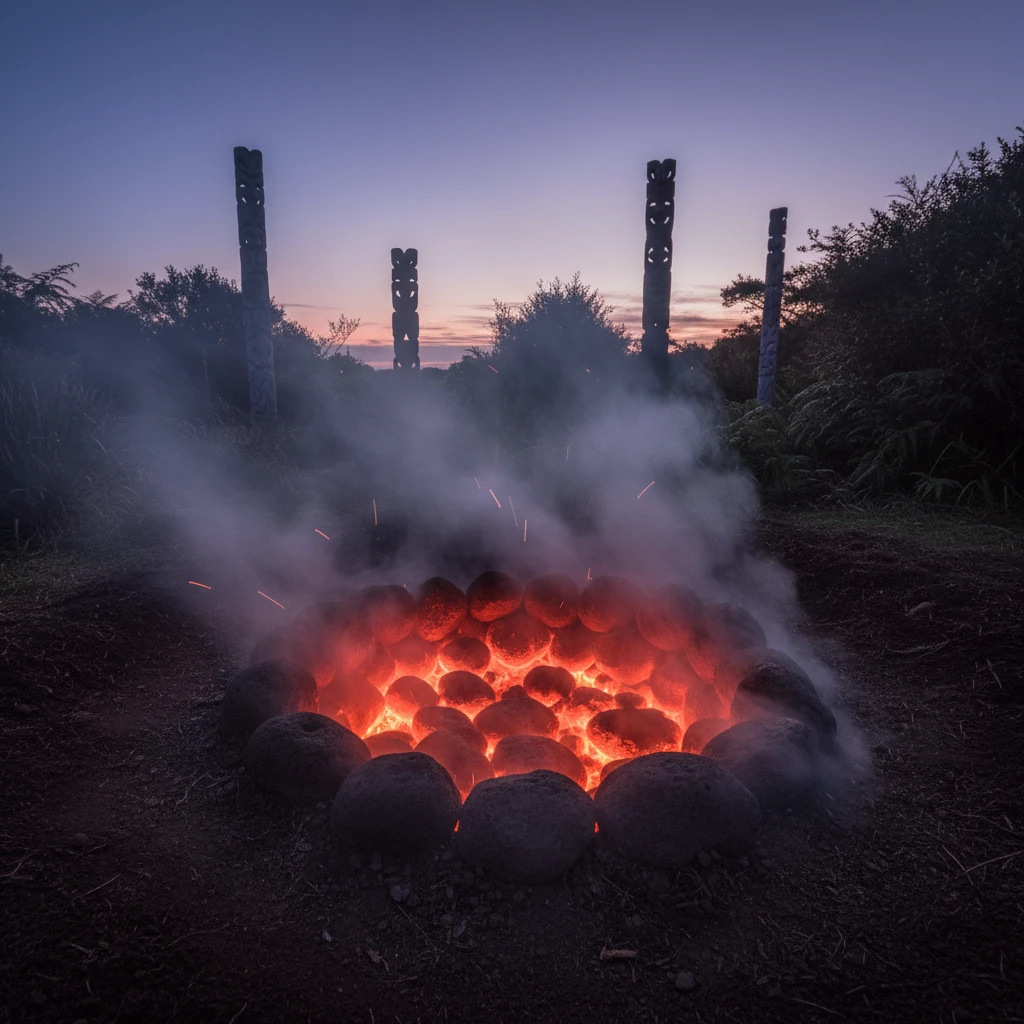
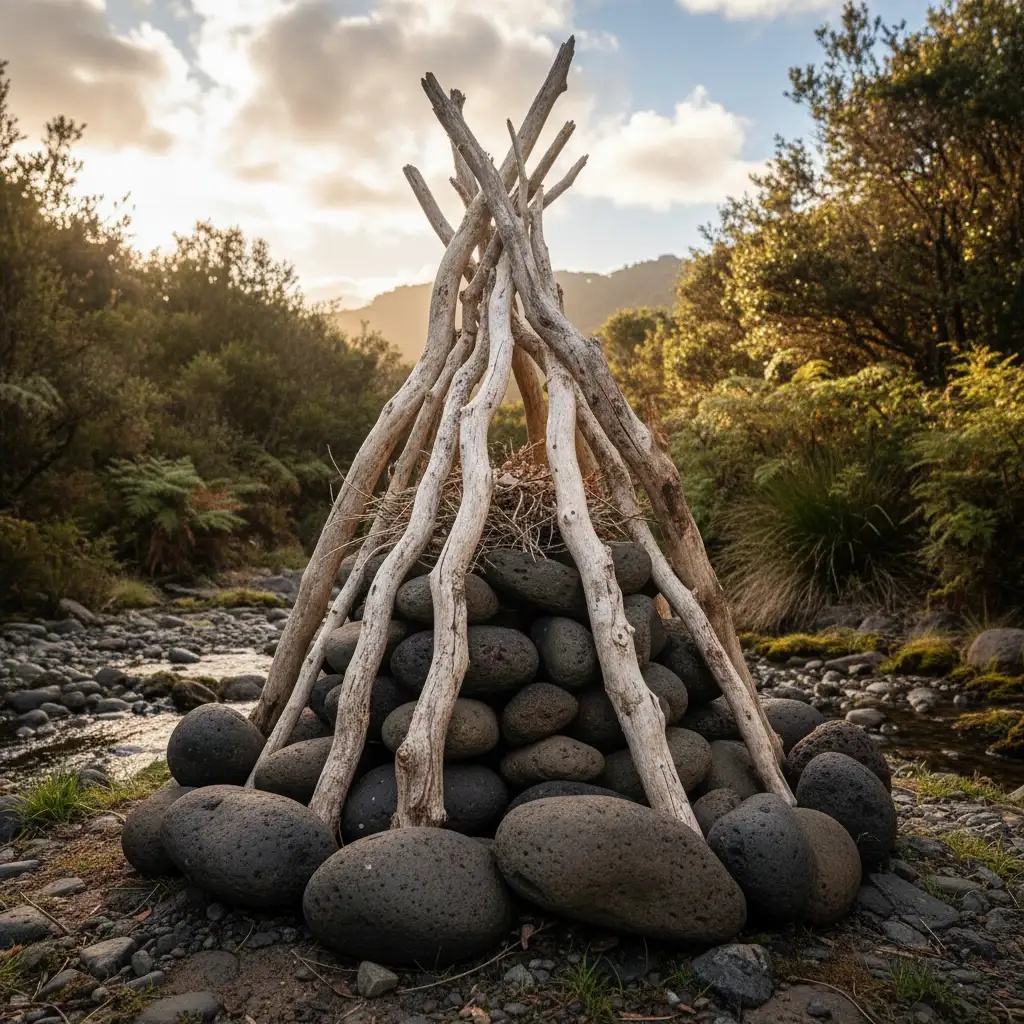
The Stones (Kōhatu): The stones used must be volcanic rock capable of retaining intense heat without exploding. River stones are often preferred for their density. For a ceremonial umu, these stones should be clean and, if possible, not used for general cooking previously, to maintain the tapu of the offering.
The Wood (Wahie): The wood selected for the fire should be dry and clean-burning. Native timbers like Mānuka or Kānuka are preferred due to the intense heat they generate and the aromatic smoke they produce, which adds to the sensory nature of the offering. Treated timber or rubbish must never be used in a ceremonial fire.
Selecting the Four Food Items (Stars Representation)
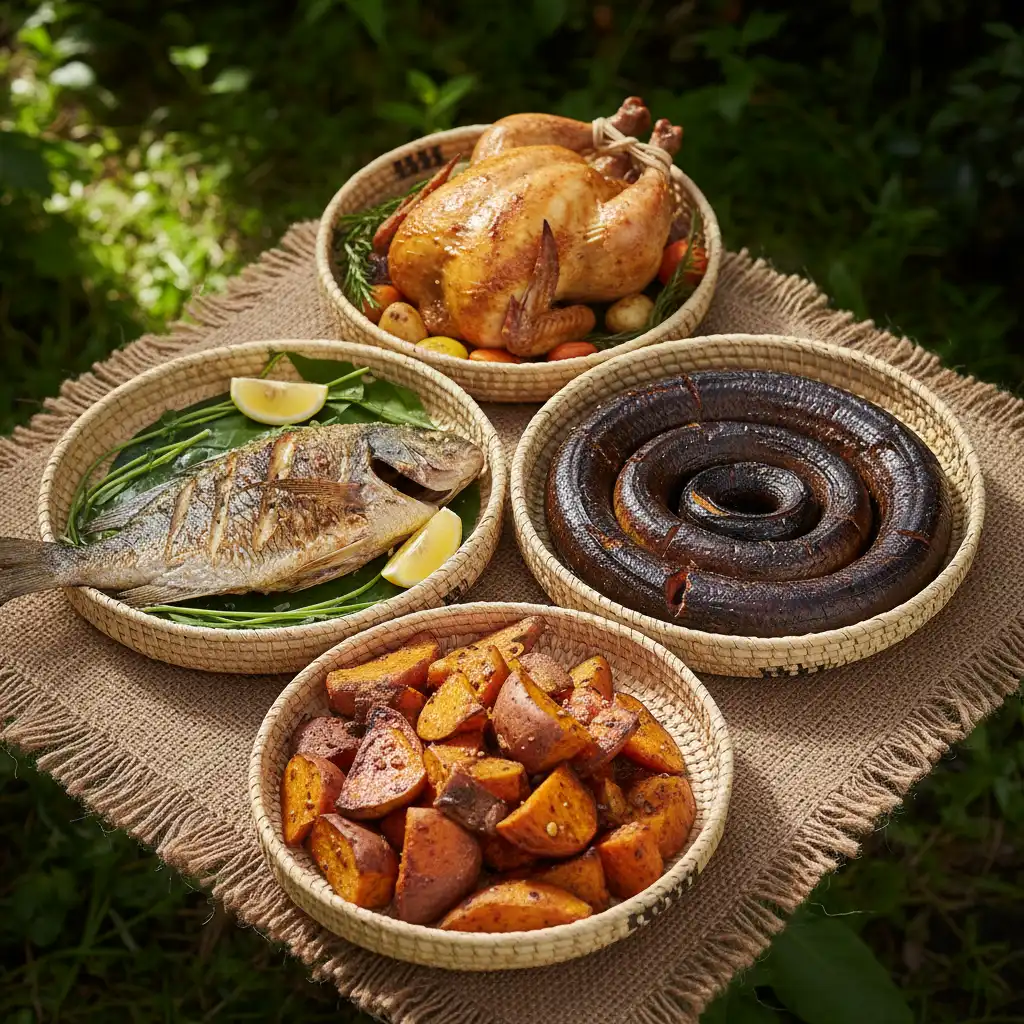
The most critical aspect of the Umu Kohukohu Whetū is the selection of the food. You cannot simply throw any food into the pit. The contents must directly correspond to the four stars in the Matariki cluster that govern specific food domains. This ensures that every aspect of the environment is acknowledged and blessed.
1. Tupuanuku: Offerings from the Earth
Star Connection: Tupuanuku is the star connected to food grown in the ground.
Food Item: Kūmara (sweet potato) is the standard offering here. It represents the cultivated gardens and the soil. Other root vegetables like taewa (Māori potatoes) or yams can also be used. The kūmara should be of high quality, perfectly formed, representing the best of the harvest.
2. Tupuarangi: Offerings from the Sky
Star Connection: Tupuarangi is the star connected to food from the sky (birds and fruit from trees).
Food Item: Traditionally, this would be a native bird like kererū, but due to conservation status, this is no longer practiced. Today, chicken (heihei) or duck is used to represent the birds of the forest. Berries or fruits harvested from high trees can also be included in this category.
3. Waitī: Offerings from Fresh Water
Star Connection: Waitī watches over freshwater environments (lakes, rivers, streams).
Food Item: Tuna (freshwater eel) is the most significant offering for Waitī. It represents the health of the rivers. If eel is unavailable, freshwater crayfish (kōura) or freshwater fish like trout can serve as the representative. The focus is on the source: it must come from sweet water, not the sea.
4. Waitā: Offerings from the Ocean
Star Connection: Waitā watches over the ocean and salt water.
Food Item: Ika (fish) or kaimoana (shellfish) represent the bounty of the sea. Snapper, kahawai, or mussels are common choices. This acknowledges the vast food resources provided by the ocean.
The Timing of the Steam Release
Timing is the variable that transforms a cooking process into a spiritual ritual. The Umu Kohukohu Whetū is not dictated by hunger, but by the movement of the celestial bodies.
The Pre-Dawn Preparation
The fire for the umu is typically lit well before dawn, often around 3:00 AM or 4:00 AM. This ensures the stones are white-hot and the food is cooked by the time Matariki rises. The preparation takes place in darkness, a time of quiet reflection and karakia (prayer).
The Moment of Release
The critical moment occurs just as the Matariki cluster becomes visible on the eastern horizon, usually during the phase known as Te Whai Ao (the glimmer of dawn) before the sun fully rises.
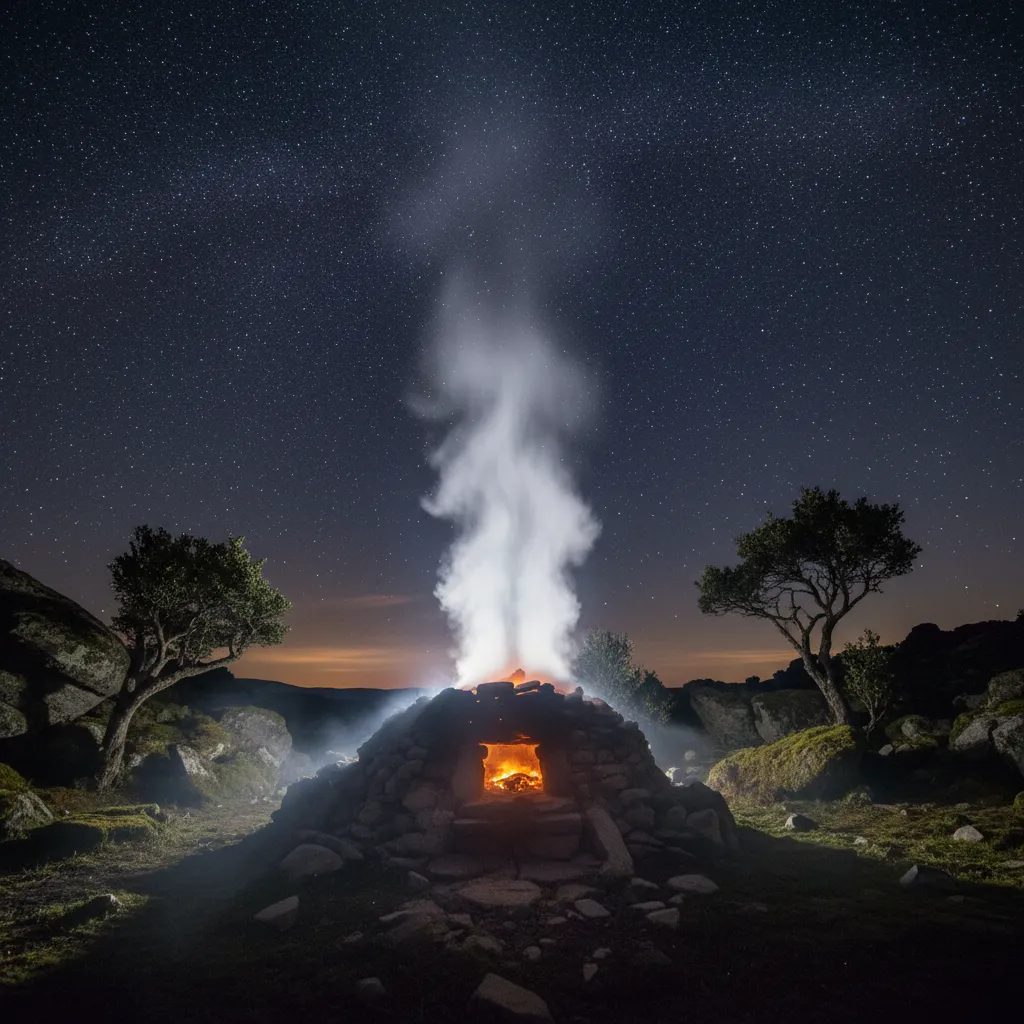
A tohunga (expert) or designated leader will recite karakia to call upon the stars. At the precise moment instructed, the earth covering the umu is removed, and the mats covering the food are peeled back. This releases the trapped steam—the “kohukohu.”
The steam must rise while the stars are still visible or just as they are fading into the morning light. It is believed that the stars “eat” the aroma. Once the steam has dispersed and the karakia concludes, the ceremony transitions from the spiritual realm back to the physical realm, often followed by a communal meal.
Safety and Cultural Safety Guidelines
Conducting an Umu Kohukohu Whetū involves managing intense physical heat and significant cultural weight. Both require strict adherence to guidelines to ensure the safety of participants and the integrity of the tradition.
Cultural Safety (Tikanga)
Intention and Knowledge: Do not attempt to perform this ceremony without proper understanding or guidance from local mana whenua (people of the land). The rituals, karakia, and specific protocols can vary between iwi (tribes). It is respectful to invite local elders to lead or advise on the process.
Tapu and Noa: The area around the umu is tapu (sacred) while the ceremony is in progress. Food is generally not eaten around the pit until the ritual is complete. Participants should dress respectfully and refrain from smoking or casual chatter near the ceremonial site.
Physical Safety Protocols
Fire Management: The fire required to heat the stones is large and intense. Ensure there is a clear perimeter established to keep observers, especially children, at a safe distance. Have water sources nearby for emergency damping, although water should not be used on the hot stones themselves as they can crack explosively.
Handling Hot Stones: Moving stones from the fire to the pit (if heating externally) or arranging them requires long-handled shovels and protective gear. The steam release can be sudden and scalding; those opening the umu must stand clear of the initial blast of steam.
Food Safety: While the food is an offering, if it is to be consumed afterward (which is common in modern adaptations where the food is shared to remove the tapu), standard food hygiene rules apply. Ensure the food is fully cooked. Chicken and pork must be checked carefully, as the ceremonial timing can sometimes rush the cooking process if not timed perfectly.
Frequently Asked Questions
What is the difference between a Hāngī and Umu Kohukohu Whetū?
A Hāngī is primarily a method of cooking food for people to eat. An Umu Kohukohu Whetū is a ceremonial earth oven where the steam is released as a spiritual offering to the stars, though the food may be eaten afterward.
Can I perform a Hautapu ceremony at home?
While families can acknowledge Matariki at home, a full Hautapu with an Umu Kohukohu Whetū is a significant ritual. It is best done with guidance from cultural experts or by attending a community event to ensure tikanga (protocol) is followed correctly.
What happens to the food after the steam is released?
Traditionally, the food might have been left as an offering or set aside. In many modern ceremonies, once the steam has been offered and the karakia is complete, the food is shared among the participants to bring the ceremony to a close (whakanoa).
Why are there four specific food items in the Umu?
The four items correspond to the four stars of Matariki that govern food sources: Waitī (fresh water), Waitā (salt water), Tupuanuku (grown in earth), and Tupuarangi (from the sky/trees).
What time should the Umu be opened?
The Umu should be opened pre-dawn, specifically when the Matariki star cluster is visible on the horizon. This allows the steam to rise up to the stars before the sun rises.
What wood is best for the Umu fire?
Native hardwoods like Mānuka or Kānuka are best because they burn hot and clean, providing the necessary heat for the stones and a pleasant, traditional aroma for the ceremony.


