Puanga karakia are traditional Māori incantations recited during the rising of the star Puanga (Rigel). These prayers acknowledge the transition of seasons, honor those who have passed in the previous year, and welcome the abundance and promise of the Māori New Year, particularly for iwi in western and northern regions where Puanga is the primary signal.
What is Puanga and Why Do We Recite Karakia?
In the rich tapestry of Te Ao Māori (the Māori worldview), celestial navigation and astronomy are intrinsically linked to daily life, agriculture, and spirituality. While the Matariki cluster (Pleiades) is the most famous harbinger of the Māori New Year, it is not the universal signal for all tribes. For many iwi (tribes), particularly those on the West Coast of the North Island (such as Taranaki and Whanganui) and in the Far North, the geography of the land obscures the view of Matariki on the eastern horizon. Instead, these tribes look to Puanga.
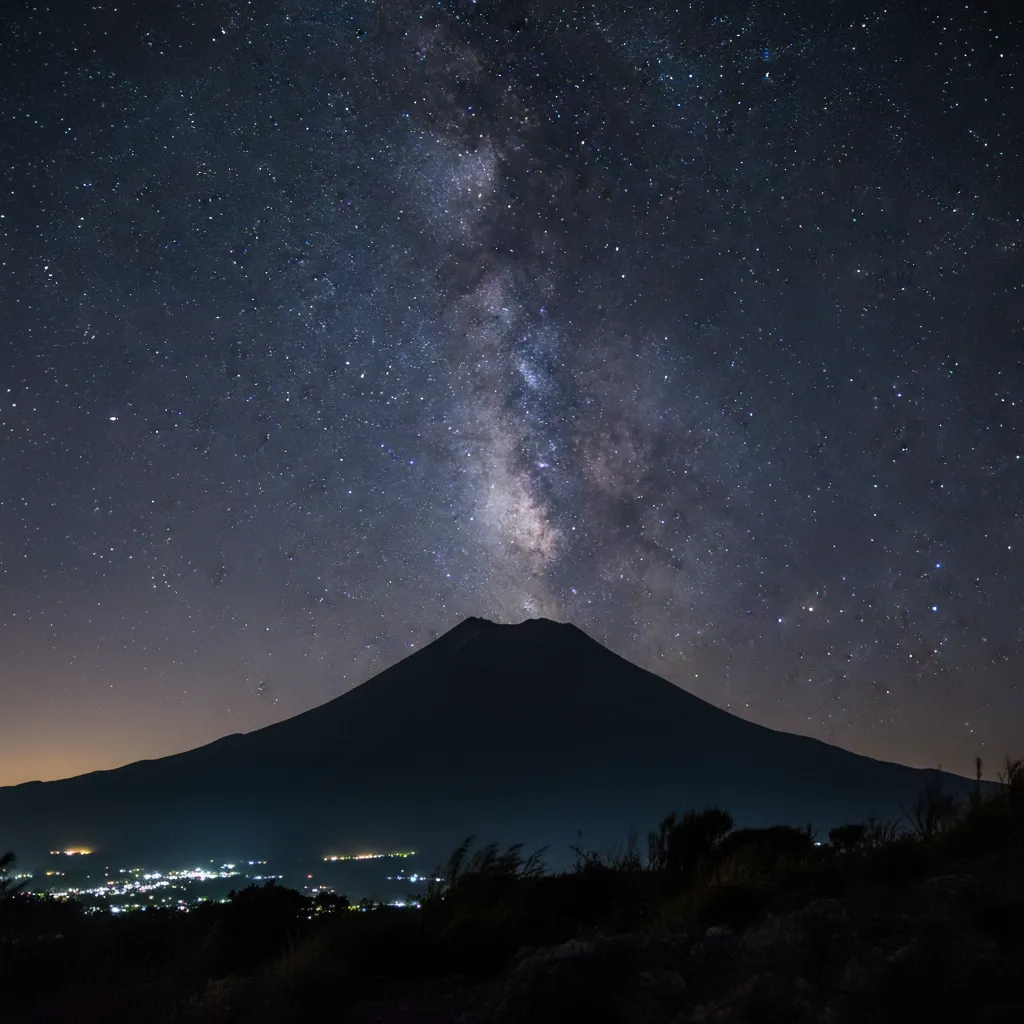
Puanga is known astronomically as Rigel, the brightest star in the constellation Orion. When Puanga rises in the pre-dawn sky during the lunar phase of Tangaroa (typically June or July), it signals the beginning of the New Year. The recitation of Puanga karakia is a critical ceremonial component of this time.
Karakia are often translated simply as “prayers,” but this definition is insufficient. They are incantations, ritual chants, and invocations that establish a spiritual pathway between the physical world and the spiritual realm. During Puanga, karakia serve three primary functions:
- Poroporoaki (Farewell): Sending the spirits of those who have died in the past year into the stars to become whetū (stars) themselves.
- Whakawhetai (Gratitude): Giving thanks for the harvest that has been stored (the pātaka kai) and the survival of the tribe through the colder months.
- Tūmanako (Hope): Asking for favorable weather, distinct seasonal changes, and social harmony for the year ahead.
Appropriate Karakia for the Rising of Puanga
When selecting a karakia for Puanga, it is essential to choose one that aligns with the intent of the gathering. Below are traditional examples often used during the Māori New Year celebrations. Note that specific iwi may have their own dialectal variations (mita).
1. Karakia Timatanga (Opening Incantation)
This karakia is widely used to clear the spiritual space, settle the energy of the group, and prepare for the learning or celebration ahead. It calls upon the winds to cease and the environment to settle.
Whakataka te hau ki te uru
Whakataka te hau ki te tonga
Kia mākinakina ki uta
Kia mātaratara ki tai
E hī ake ana te atakura
He tio, he huka, he hau hū
Tihei mauri ora!
2. Karakia mō Puanga (Incantation for Puanga)
While many karakia are general, some are specific to the star itself. This simple recitation acknowledges the appearance of the star and the light it brings.
Tērā Puanga ka rewa i te pae
Nau mai ngā hua o te tau hou
E ngā mate o te tau, haere, haere, haere atu rā
Haumi e, hui e, tāiki e!
Translations and Deep Meanings
Understanding the literal translation is helpful, but grasping the metaphorical meaning is where the true value lies.
Translation of Whakataka te hau
“Cease the winds from the west,
Cease the winds from the south.
Let the breeze blow over the land,
Let the breeze blow over the ocean.
Let the red-tipped dawn come with a sharpened air,
A touch of frost, a promise of a glorious day.
Behold, the breath of life!”
The Meaning: This karakia describes the transition from the harsh, turbulent weather of winter (associated with the west and south winds in NZ) to a calm, frost-bitten morning. The “red-tipped dawn” (atakura) symbolizes hope and new beginnings. By reciting this, you are ritually clearing away the “storms” of the past year—be they mental, physical, or environmental—to make way for the clarity of the New Year.
Translation of the Puanga Recitation
“There is Puanga floating over the horizon,
Welcome the fruits of the New Year.
The dead of the year, farewell, farewell, go yonder.
Join, gather, intertwine!”
The Meaning: This text is more direct. It visually identifies the star (“rewa i te pae” – floating on the horizon). It explicitly addresses the duality of the season: welcoming the “hua” (fruits/abundance) while simultaneously bidding farewell to “ngā mate” (the dead). The final line, “Haumi e, hui e, tāiki e,” is a binding spell. It signifies that the group is united in this purpose, the canoe is bound, and the intention is solidified.
When to Perform These Karakia
Timing is a crucial element of tikanga (protocol). Puanga karakia are not recited at random; they follow the rhythm of the environment.
Te Wehengatanga o te Ata (The Parting of the Dawn)
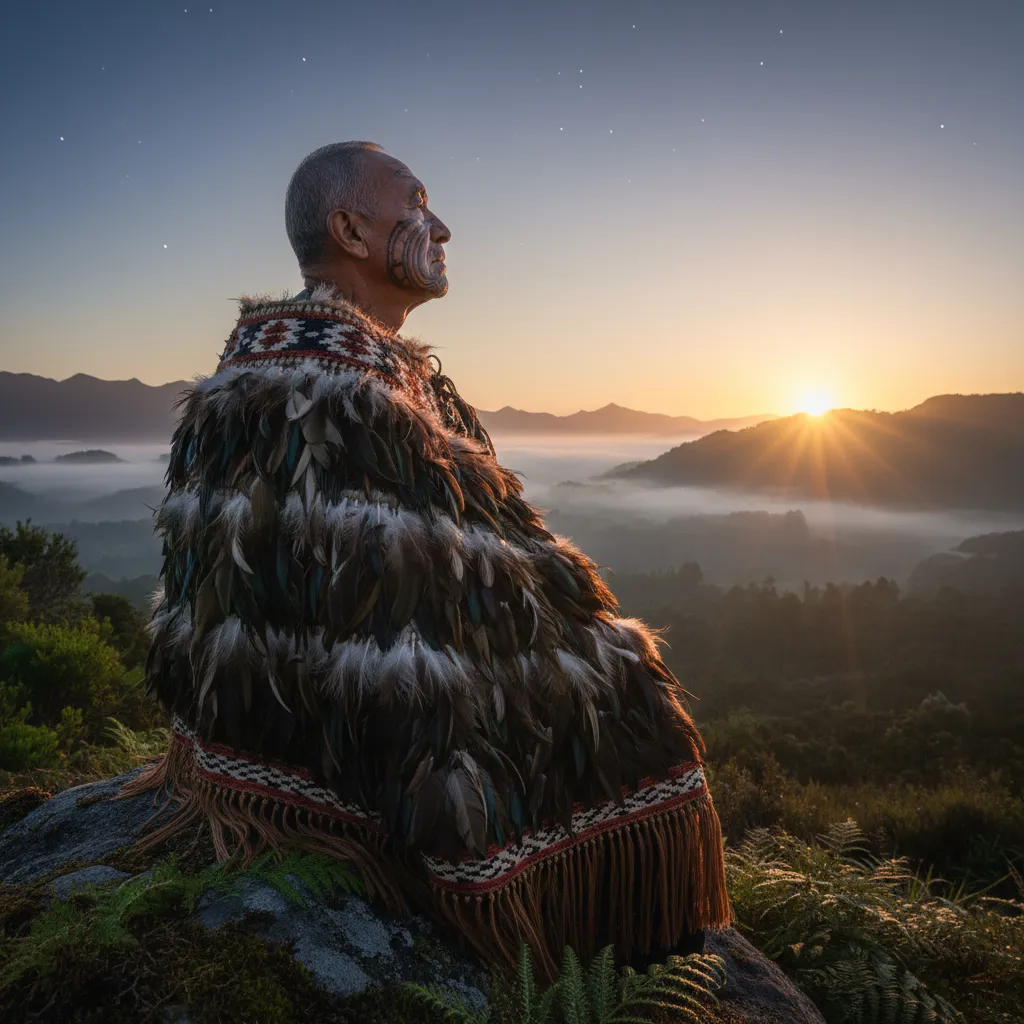
The most potent time to recite Puanga karakia is during the pre-dawn hours, known as te wehengatanga o te ata. This is the time when the veil between the physical world and the spiritual world is believed to be thinnest. It is also the only time the star Puanga is visible before the sun rises and washes out the starlight.
Specific Timing Guidelines:
- Month: Typically late May to early July (the month of Pipiri).
- Hour: Between 5:30 AM and 6:30 AM (depending on your latitude in New Zealand).
- Observation: The karakia should ideally be timed so that it concludes just as the sun begins to breach the horizon.
Protocols for Recitation (Tikanga)
Reciting karakia involves more than just reading words; it involves wairua (spirit) and mana (authority/prestige). Whether you are in a classroom, a workplace, or on a marae, observing the correct protocols ensures the safety and sanctity of the process.
1. Who Should Recite?
Traditionally, a Kaumātua (elder) or a Tohunga (expert) leads the karakia. However, in modern contexts, anyone can lead a karakia provided they do so with the right intention and accurate pronunciation. If you are learning, it is respectful to ask permission or defer to someone more senior in cultural knowledge first.
2. Posture and Focus
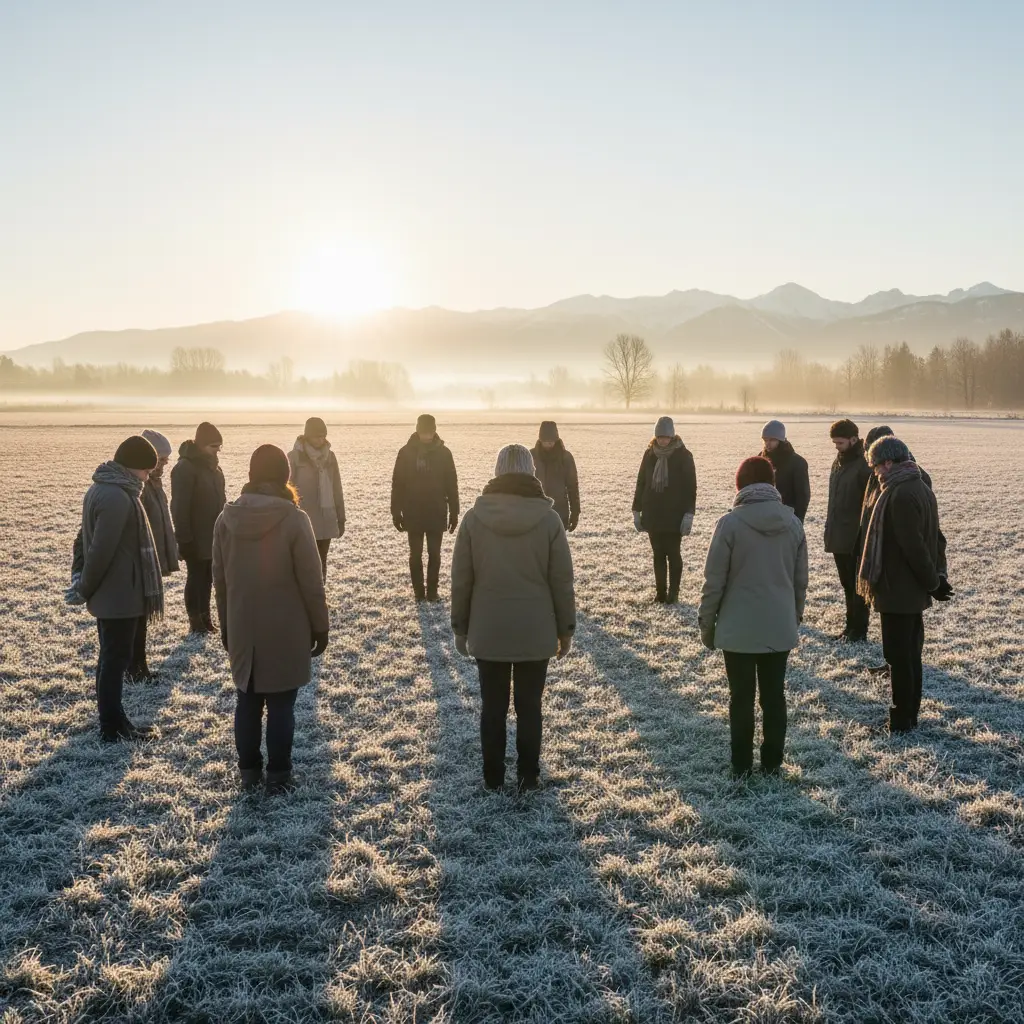
When karakia is being performed, all activity must stop. Food should not be eaten, and hats should be removed. The group should stand still, often in a circle or facing the star if outdoors. The focus must be entirely on the words and the intention behind them.
3. Whakanoa (Removing Tapu)
Karakia invokes tapu (sacredness). To return to a state of noa (normality/safety) where everyday activities can resume, the ceremony is almost always followed by the sharing of kai (food). This is why a shared breakfast is a staple of Puanga and Matariki dawn ceremonies. The food acts as a bridge back to the physical, earthly realm.
Audio Resources and Learning Pronunciation
Correct pronunciation is vital in Te Reo Māori. Mispronunciation can alter the meaning of the words or diminish the mana of the karakia. Fortunately, there are excellent resources available for those wishing to learn.
Key Pronunciation Tips
- Vowels: Māori vowels are generally consistent. A (far), E (egg), I (eat), O (or), U (too).
- Macrons: Pay attention to the tohutō (macron). A vowel with a macron (e.g., ā) is held twice as long as a short vowel. This length distinction is phonemic and changes meaning.
- The ‘Wh’ Sound: Usually pronounced as a soft ‘f’ sound.
- The ‘Ng’ Sound: Pronounced like the ‘ng’ in “singer” (not “finger”).
Recommended Resources
To hear these karakia spoken by native speakers, we recommend utilizing the following platforms:
- Te Papa Tongarewa: The Museum of New Zealand offers extensive audio files for Matariki and Puanga karakia on their official website.
- Taranaki and Whanganui Iwi Websites: Local iwi websites often have education sections (Mātauranga) specifically for their tribal dialect and Puanga traditions.
- Māori Television (Whakaata Māori): Their on-demand services feature documentaries on Puanga which include recitations.
The Regional Significance of Puanga vs. Matariki
Understanding why you are celebrating Puanga rather than Matariki adds depth to your karakia. It connects you to the specific whenua (land) you are standing on.
In the Taranaki region, the mountain (Mount Taranaki) physically blocks the eastern view where Matariki rises. Therefore, the tribes of Taranaki, as well as Whanganui and parts of the Far North, look to Rigel (Puanga) in the northern sky. Puanga is seen as the elder sibling or the herald. In some traditions, Puanga is considered to have a rivalry with Matariki, striving to rise first to announce the year.
By reciting Puanga karakia, you are upholding the unique identity and mana of these specific regions. It is a declaration of local identity as much as it is a seasonal celebration.
What is the difference between Puanga and Matariki?
Puanga is the star Rigel, while Matariki is the Pleiades star cluster. Different iwi celebrate the New Year based on which star is most visible in their region. Puanga is primarily celebrated in the West Coast and Far North of New Zealand, while Matariki is observed in other regions.
How do you say Happy New Year in Māori for Puanga?
You can say “Ngā mihi o te tau hou” (Greetings of the New Year) or more specifically “Ngā mihi o Puanga” to acknowledge the specific star.
What does the star Puanga represent?
Puanga represents the harvest, weather prediction, and the preservation of knowledge. It is often associated with the storage of food (kai) for winter and is viewed as a signal to gather and learn indoors.
Can anyone recite a karakia?
Yes, anyone can recite a karakia if they do so with respect, proper intention, and an effort to pronounce the words correctly. However, in formal settings, it is customary to defer to an elder (Kaumātua).
What food is eaten for Puanga?
Traditional foods include kūmara (sweet potato), preserved birds (in historical contexts), fish, and rewena bread. The focus is on hot, comforting foods that utilize the harvest stored from the previous season.
Where is Puanga located in the sky?
Puanga (Rigel) is the bright blue-white star found above the three stars of Orion’s Belt (The Pot). It is usually visible in the pre-dawn sky in the north-eastern direction during June and July.