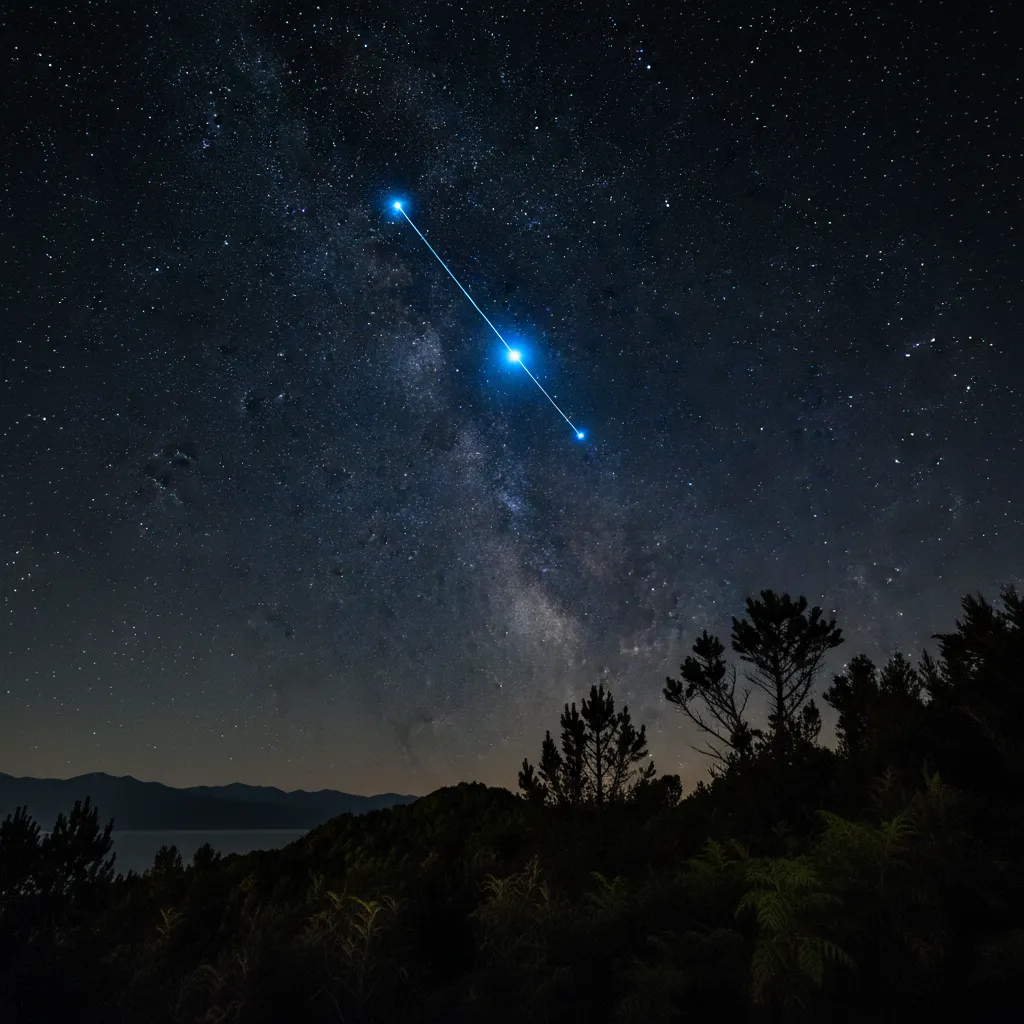
The Pleiades star cluster, also known as Messier 45 (M45) or Matariki, is an open star cluster containing middle-aged, hot B-type luminous blue stars located approximately 444 light-years from Earth in the constellation Taurus. It is the nearest star cluster to Earth and the most obvious to the naked eye in the night sky.
Known globally by many names—the Seven Sisters in Greek mythology, Subaru in Japan, and Matariki in Aotearoa New Zealand—this celestial formation bridges the gap between hard astrophysics and deep cultural heritage. For educators and cultural tourists alike, understanding the Pleiades offers a unique window into stellar evolution and indigenous navigation history.
What defines the Pleiades Star Cluster scientifically?
To understand the Pleiades star cluster facts, one must first look at its classification. The Pleiades is an open cluster, which is a group of up to a few thousand stars that were formed from the same giant molecular cloud and have roughly the same age. In the case of the Pleiades, the cluster is dominated by hot blue and luminous stars that have formed within the last 100 million years.
Astronomers refer to this object as Messier 45 (M45). Unlike globular clusters, which are ancient, dense spheres of stars hovering in the galactic halo, open clusters like the Pleiades are located in the galactic disk and will eventually disperse due to gravitational interactions with other clouds and stars. The core radius of the cluster is about 8 light-years, while the tidal radius extends to about 43 light-years.
The Luminosity of B-Type Stars
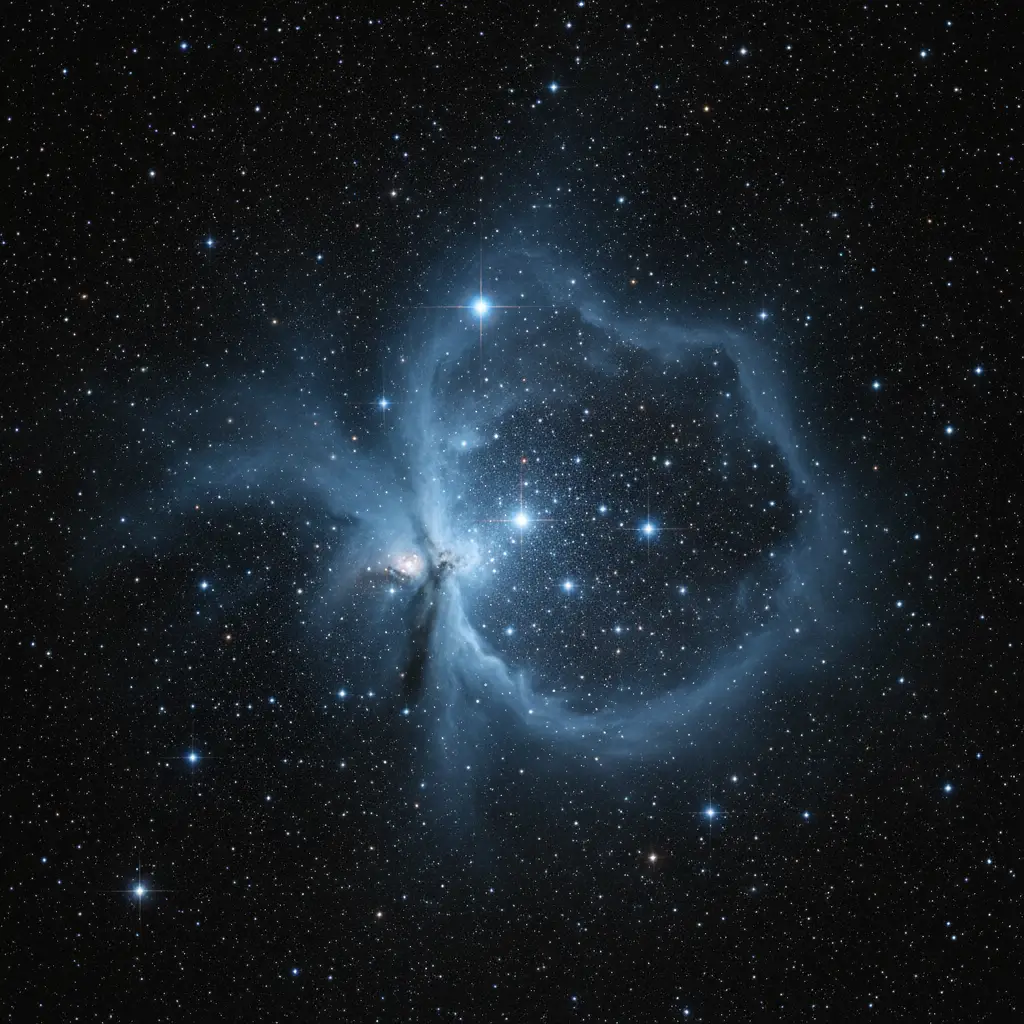
The most visible stars in the Pleiades are spectral type B. These are extremely luminous and hot, burning through their hydrogen fuel at a ferocious rate compared to our Sun (a G-type star). Their intense brightness is what makes them visible to the naked eye despite the vast distance. If our Sun were placed at the same distance as the Pleiades, it would be too faint to be seen without a telescope.
How far is the Pleiades cluster from Earth?
Determining the exact distance to the Pleiades has been a subject of scientific debate and refinement for decades. This measurement is crucial because astronomers use the Pleiades as a calibration step in the “cosmic distance ladder,” which helps measure distances to further galaxies.
Current consensus, refined by radio interferometry and the Gaia space observatory, places the Pleiades at approximately 444 light-years (136 parsecs) from Earth. Earlier measurements by the Hipparcos satellite in the 1990s suggested a distance of about 390 light-years, a discrepancy that puzzled astrophysicists for years until errors in the Hipparcos data were corrected.
Why does the cluster appear to be surrounded by blue mist?
One of the most striking features of Pleiades astrophotography is the ghostly blue nebulosity wrapping around the brightest stars. For a long time, scientists believed this was the remnant dust from the nebula that formed the stars. However, modern calculations of the cluster’s age (approx. 100 million years) suggest that the original birth cloud would have dissipated long ago due to stellar winds and radiation pressure.
The current explanation is that the cluster is simply passing through an unrelated dust cloud in the interstellar medium. This is known as a reflection nebula. The dust particles scatter the light from the nearby stars. Because blue light scatters more efficiently than red light (the same physics that makes Earth’s sky blue, known as Rayleigh scattering), the nebula appears a brilliant, icy blue.
How do different cultures interpret the Seven Sisters?
The Pleiades is one of the few celestial objects mentioned in ancient texts across entirely disconnected civilizations. Its distinct appearance—a tight knot of stars—has spurred mythology globally. While the Greeks saw seven sisters (daughters of Atlas and Pleione), other cultures saw sieves, herds of animals, or marketplaces.
The Japanese Subaru
In Japan, the cluster is known as Subaru, which translates to “unite” or “gather together.” This cultural reference is famously immortalized by the Subaru automobile manufacturer. If you look closely at the logo on a Subaru car, you will see an artistic representation of the Pleiades star cluster. Originally, the logo featured six stars, reflecting the tradition that only six are readily visible to the naked eye, despite the cluster being named the “Seven Sisters” in the West.

What is the significance of Matariki in New Zealand?
For the Education and Cultural Tourism sector in New Zealand, the Pleiades holds profound significance as Matariki. In Māori astronomy (tātai arorangi), the rising of this star cluster marks the beginning of the Māori New Year. This event usually occurs in mid-winter (late June or early July).
The Nine Stars of Matariki
While Western tradition focuses on seven stars, Māori narratives often identify nine distinct stars within the cluster, each holding dominion over a specific environmental domain. This holistic view integrates astronomy with ecology and agriculture:
- Matariki: The mother of the other stars, connected to people and health.
- Pōhutukawa: Connected to those who have passed away.
- Tupuānuku: Connected to food grown in the ground (kumara, potatoes).
- Tupuārangi: Connected to food from the sky (birds, fruit).
- Waitī: Connected to fresh water and freshwater food.
- Waitā: Connected to the ocean and salt water food.
- Waipuna-ā-rangi: Connected to the rain.
- Ururangi: Connected to the winds.
- Hiwa-i-te-rangi: The wishing star, connected to future aspirations.
This detailed classification demonstrates a sophisticated understanding of seasonal cycles. When the cluster rose, tohunga (priests/experts) would observe the brightness and clarity of individual stars to predict the productivity of the coming season. For example, if Waitī was dim, it might signal a poor season for eels and freshwater fishing.

What is the Heliacal Rising and why does it matter?
The term “heliacal rising” refers to the first time a star or cluster becomes visible in the eastern sky just before sunrise, after a period of being hidden by the sun’s glare. For Matariki, this astronomical phenomenon is the trigger for the New Year celebrations.
The Effect of Axial Precession
Due to the precession of the equinoxes—a slow wobble in Earth’s rotation axis over a 26,000-year cycle—the timing of the heliacal rising changes slowly over centuries. Ancient Māori navigators and astronomers adjusted their lunar calendars (maramataka) to align with these stellar cues, ensuring that planting and harvesting remained synchronized with the seasons.
How to observe the Pleiades in the Southern Hemisphere
New Zealand is rapidly becoming a premier destination for “Dark Sky Tourism,” and the Pleiades is a crown jewel of the southern winter sky. Unlike observing from the Northern Hemisphere where the cluster appears high in winter, in New Zealand, it appears low on the northeastern horizon in the early morning during June and July (Matariki), and higher in the sky during late spring and summer evenings.
Top Locations for Viewing
To see the fainter members of the cluster and hint at the nebulosity without a camera, you need pristine dark skies. New Zealand offers several International Dark Sky Sanctuaries and Reserves:
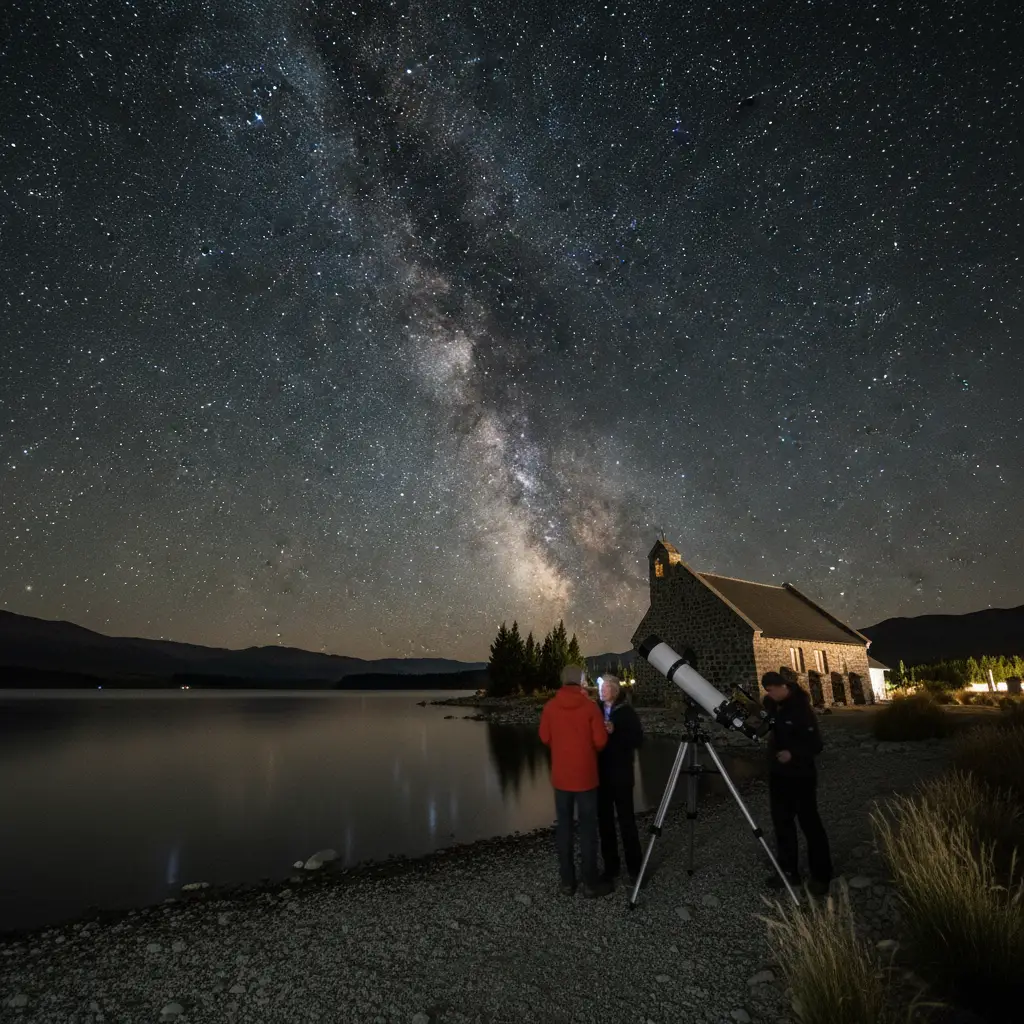
- Aoraki Mackenzie International Dark Sky Reserve: Located in the South Island, this is one of the best places on Earth for stargazing. The lack of light pollution allows the Pleiades to pop against a velvet black background.
- Great Barrier Island (Aotea): An island sanctuary off the coast of Auckland, offering a unique maritime viewing experience.
- Stewart Island (Rakiura): The southernmost Dark Sky Sanctuary, offering long winter nights perfect for observing Matariki.
Tips for the Best Experience
1. Use Binoculars, Not Telescopes: While telescopes are powerful, the Pleiades is a large object, covering an area of sky several times larger than the full moon. High-magnification telescopes often zoom in too far, showing only a few stars at a time. A simple pair of 7×50 or 10×50 binoculars frames the cluster perfectly, revealing dozens of diamond-like stars.
p>2. Peripheral Vision: To see the faint nebulosity or the dimmer stars, use “averted vision.” Look slightly to the side of the cluster rather than directly at it. The rod cells in your peripheral vision are more sensitive to low light than the cone cells in the center of your eye.
3. Wait for Adaptation: Allow your eyes at least 20 minutes to adapt to the darkness before attempting to count the stars. Avoid looking at phone screens, as the white/blue light will reset your night vision instantly.
The Future of the Cluster
The Pleiades will not last forever. As an open cluster, it is loosely bound by gravity. Over the next 250 million years, the gravitational tug of passing giant molecular clouds and the spiral arms of the Milky Way will slowly strip stars away from the group. Eventually, the sisters will drift apart, becoming solitary travelers in the galaxy, much like our own Sun is today. This transient nature adds a layer of poignancy to the cluster—it is a brief, beautiful gathering in the cosmic timescale.
Why are there only 6 stars visible if it is called the Seven Sisters?
While the cluster contains over 1,000 stars, only a handful are bright enough to be seen with the naked eye. Depending on light pollution and eyesight, most people see six. However, under exceptionally dark skies, sharp-eyed observers can see up to 14. The name “Seven Sisters” likely originates from ancient Greek mythology where one sister, Merope or Electra, was said to be hiding or “lost,” explaining the discrepancy.
What is the best time of year to see the Pleiades in New Zealand?
For the cultural experience of Matariki, the best time is early morning (pre-dawn) in June and July. However, for the easiest viewing experience where the cluster is high in the sky during the evening, the summer months (December to February) are ideal in the Southern Hemisphere.
Is the Pleiades a constellation?
No, the Pleiades is not a constellation; it is an asterism and a star cluster located within the constellation of Taurus the Bull. A constellation is a specific region of the sky, whereas a star cluster is a physical grouping of stars held together by gravity.
How hot are the stars in the Pleiades?
The brightest stars in the Pleiades are B-type stars, with surface temperatures ranging from 12,000 to 14,000 Kelvin (approx. 21,000°F to 25,000°F). In comparison, our Sun is about 5,778 Kelvin. This intense heat is what gives them their distinct blue-white color.
Can you see the nebula around the Pleiades with a telescope?
It is difficult but possible. The reflection nebula is faint and requires very dark skies and a telescope with good light-gathering power (aperture). It is much easier to capture the nebula using long-exposure astrophotography than to see it with the naked eye through an eyepiece.
What does Matariki mean literally?
Matariki is an abbreviation of “Ngā Mata o the Ariki,” which translates to “The Eyes of the God” (referring to the god Tāwhirimātea). Alternatively, it can be translated simply as “Little Eyes” (Mata = eyes, Riki = little/small).