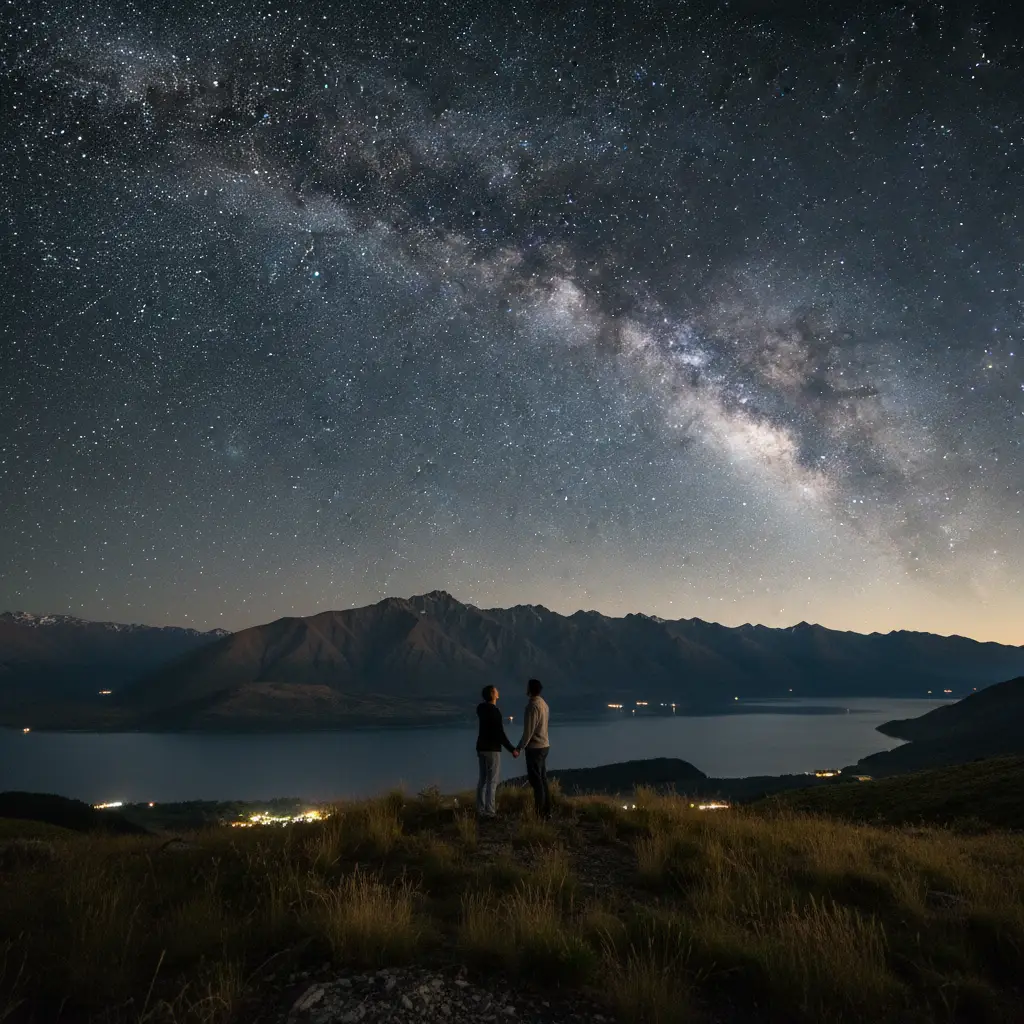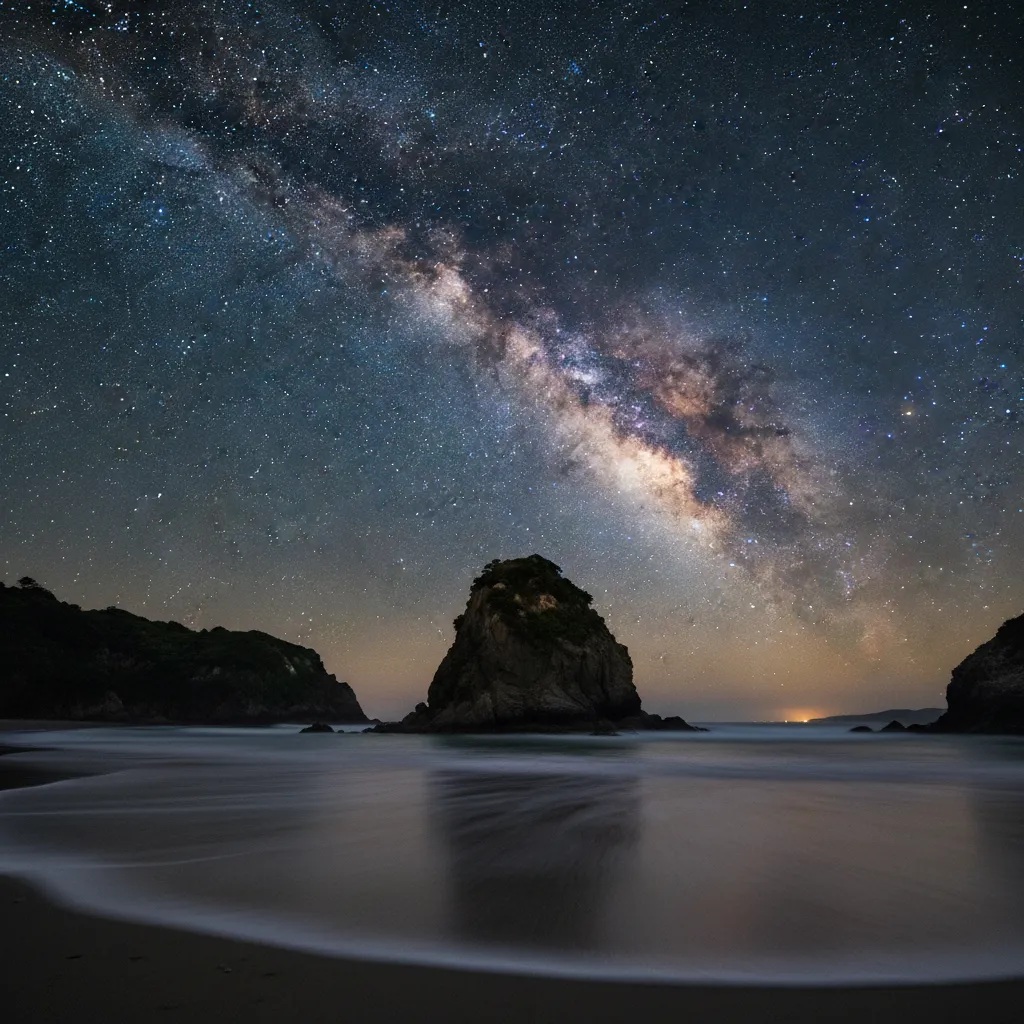
Camping stargazing in NZ offers an immersive astronomical experience within some of the world’s darkest skies. By combining remote wilderness accommodation with minimal light pollution, enthusiasts can observe the Milky Way, Aurora Australis, and celestial navigation markers significant to Maramataka, specifically in designated Dark Sky Sanctuaries and National Parks.
Why New Zealand is a World Leader in Astronomy
New Zealand is frequently cited as the premier destination for astrophotography and celestial observation. This reputation is not merely anecdotal; it is backed by data and international recognition. The country possesses a unique combination of low population density, strict local government lighting ordinances, and geography that isolates it from the light pollution of neighboring continents. For those seeking the ultimate camping stargazing NZ experience, the archipelago offers access to Bortle Class 1 and 2 skies—the darkest possible rating on the light pollution scale.
Furthermore, New Zealand’s position in the Southern Hemisphere grants observers access to celestial features invisible to the north, such as the Magellanic Clouds (dwarf galaxies orbiting the Milky Way) and the Southern Cross (Crux). Whether you are a seasoned astrophotographer aiming to capture the galactic core or a casual camper hoping to witness the ethereal glow of the Aurora Australis, the New Zealand wilderness provides a front-row seat to the universe.
Top South Island Campsites for Astrophotography
The South Island is the heavyweight champion of dark skies, home to the Aoraki Mackenzie International Dark Sky Reserve. Here, the landscape is rugged, the air is thin and crisp, and the stars appear to touch the ground.
White Horse Hill Campground (Aoraki/Mount Cook)
Located at the foot of New Zealand’s highest peak, White Horse Hill is arguably the most iconic location for astrophotography camping. Managed by the Department of Conservation (DOC), this site places you deep within the Dark Sky Reserve.
- The Shot: The hooker valley track starts here. A short walk allows you to frame Aoraki/Mt Cook reflecting in Mueller Lake under a canopy of stars.
- Light Pollution: Virtually non-existent (Bortle 1).
- Tip: Even in summer, temperatures can drop below freezing at night. Ensure your camera batteries are kept warm to prevent rapid draining.
Lake Tekapo: Lake McGregor Campsite
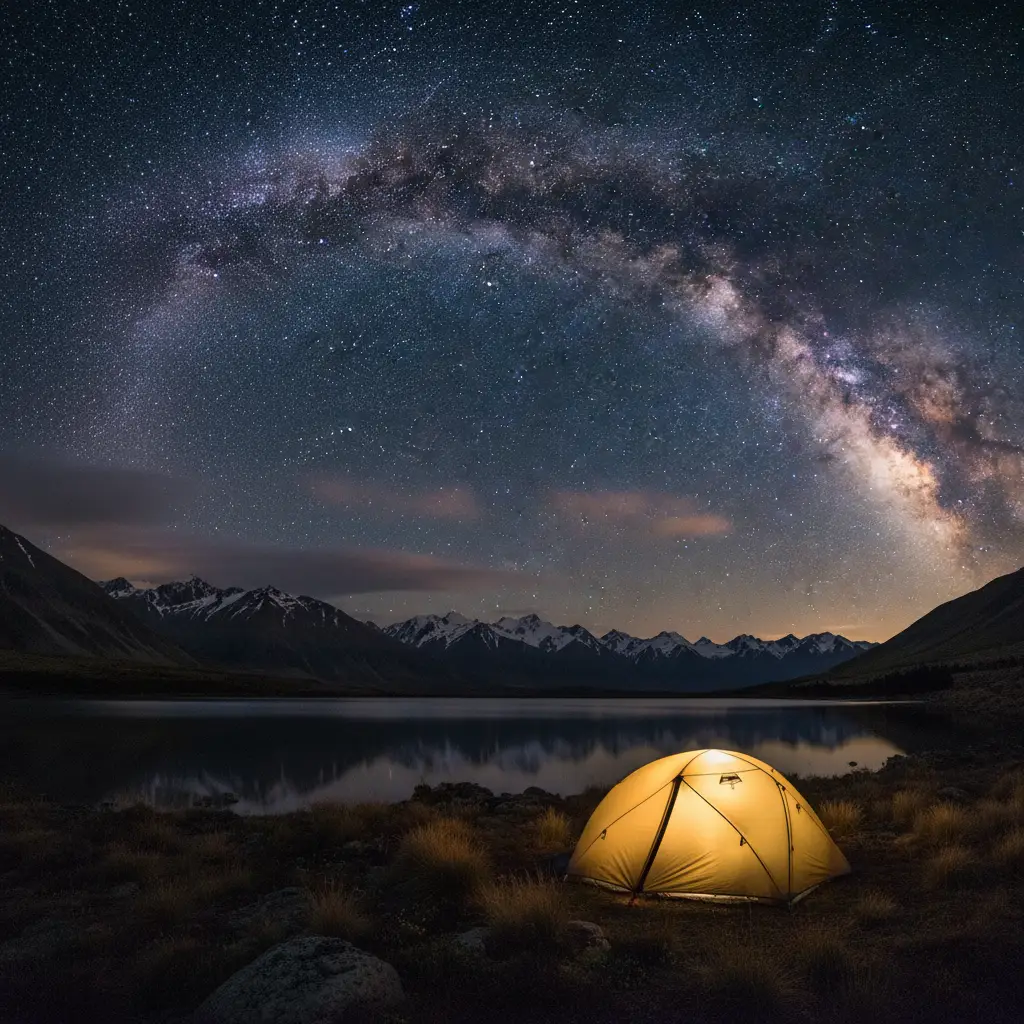
While the township of Lake Tekapo is famous for the Church of the Good Shepherd, the immediate area can be crowded with tourists. For a more authentic camping stargazing NZ experience, head to Lake McGregor. Situated between Lake Tekapo and Lake Alexandrina, this smaller campsite offers seclusion and perfectly still waters for reflection shots.
The area is strictly controlled for light pollution, meaning you will see the zodiacal light and airglow clearly with the naked eye. It is an ideal spot for wide-angle panorama shots of the Milky Way arching over the Southern Alps.
Purakaunui Bay Campsite (The Catlins)
Moving to the deep south, the Catlins offers a different astronomical flavor. Purakaunui Bay features towering cliffs and a surf beach that faces southeast—the perfect direction for hunting the Aurora Australis.
- The Aurora Advantage: Because there is no land mass between the Catlins and Antarctica, the horizon is unobstructed. If the Kp index (planetary K-index) hits 5 or above, this is one of the best places in the world to capture the Southern Lights.
- Composition: Use the massive cliff faces as a silhouette against the shifting colors of the aurora.
Top North Island Campsites for Dark Skies
While the South Island is famous for mountains, the North Island offers dark sky sanctuaries on islands and volcanic plateaus that provide dramatic, otherworldly foregrounds.
Great Barrier Island (Aotea)
Aotea / Great Barrier Island was the first island in the world to be designated an International Dark Sky Sanctuary. It is off-grid, meaning there is no reticulated electricity, which naturally enforces a dark sky environment.
- Where to Camp: Medlands Beach or Awana Beach DOC campsites.
- The Experience: The isolation here is palpable. The sound of the ocean combined with a sky so dense with stars that constellations become difficult to distinguish makes this a spiritual experience.
- Photography Tip: The eastern beaches provide excellent opportunities to photograph the galactic core rising over the Pacific Ocean early in the season (February–April).
Tongariro National Park (Mangahuia Campsite)
For a landscape that looks like Mars, Tongariro National Park is unmatched. The Mangahuia Campsite is tucked away off the main highway and offers views of Mount Ruapehu and Mount Ngāuruhoe (Mount Doom).
The volcanic terrain provides stark, high-contrast foregrounds. On a clear night, the red glow of the Milky Way’s core contrasts beautifully with the snowy peaks of the volcanoes. The altitude here (over 1000m) often puts you above the low-lying haze, ensuring crystal clear atmospheric seeing.
Castlepoint (Wairarapa)
Located on the Wairarapa coast, Castlepoint is famous for its lighthouse and limestone reef. While there is a small settlement, the light pollution is low facing east and south.
The Castlepoint Holiday Park is the main accommodation. Astrophotographers flock here to capture the Milky Way aligning vertically with the lighthouse. It requires planning with an app like PhotoPills to get the alignment right, but the result is a world-class image.
Maramataka and the Aurora Australis
To truly understand camping stargazing NZ, one must acknowledge the indigenous perspective. Māori were expert astronomers, using the stars to navigate the vast Pacific Ocean and to determine the timing of harvest and hunting.
Maramataka: The Māori Lunar Calendar
Maramataka is the traditional Māori lunar calendar, which uses the phases of the moon and the rising of specific stars (like Matariki/The Pleiades or Puanga/Rigel) to guide daily life. When camping, observing these stars adds a layer of cultural depth to your experience.
For example, the rising of Matariki in mid-winter signals the Māori New Year. Camping during this time (June/July) is cold, but it offers a chance to see the cluster that defines the New Zealand celestial year. Understanding Maramataka transforms stargazing from a visual spectacle into a connection with history and the environment.
Chasing the Southern Lights
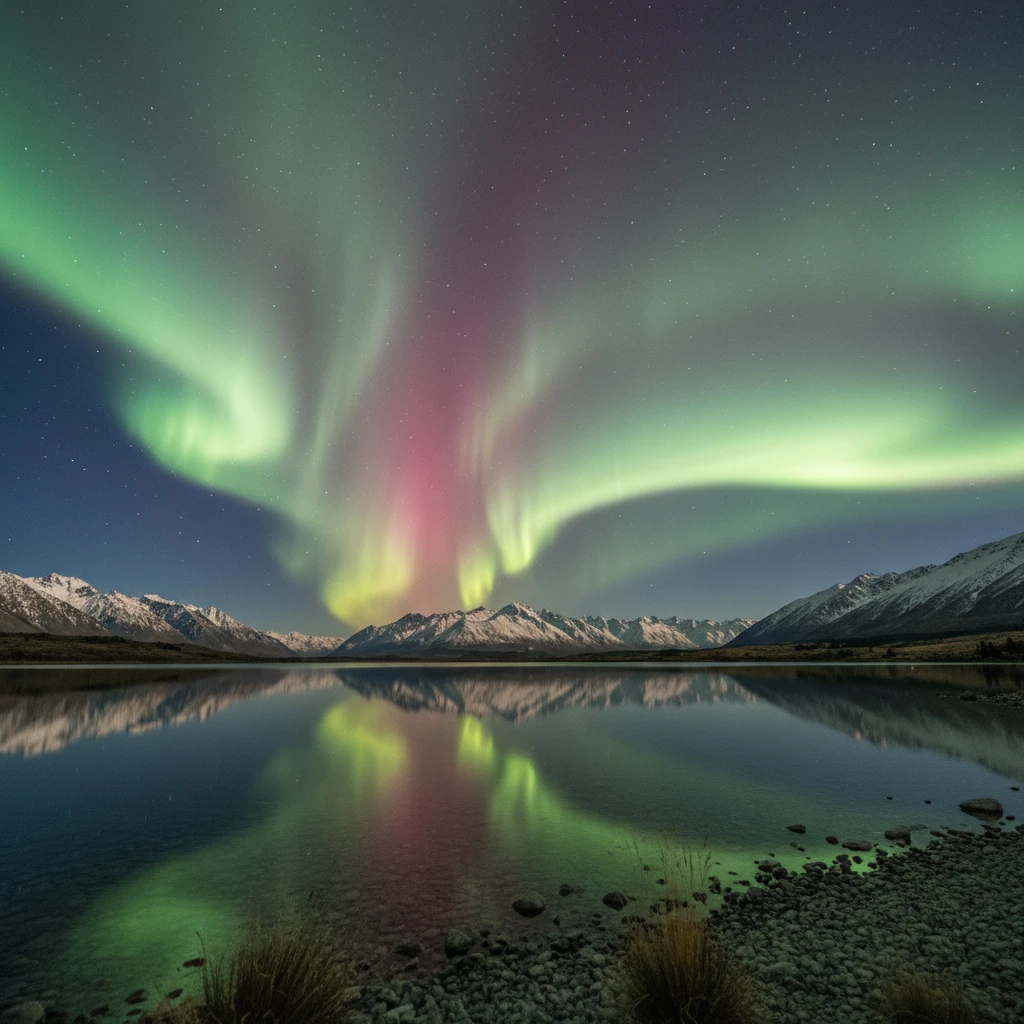
New Zealand is one of the few places on Earth where the Aurora Australis is visible. Unlike the Aurora Borealis, which is often green, the Southern Lights frequently appear to the naked eye as white or grey beams, only revealing their brilliant pinks, purples, and greens to the camera sensor.
To increase your chances of seeing the aurora while camping:
- Season: Winter (May to August) offers the longest nights.
- Location: The further south, the better. Stewart Island and the Catlins are prime territory.
- Moon Phase: Plan your trip during a New Moon. A Full Moon will wash out the faint light of the aurora.
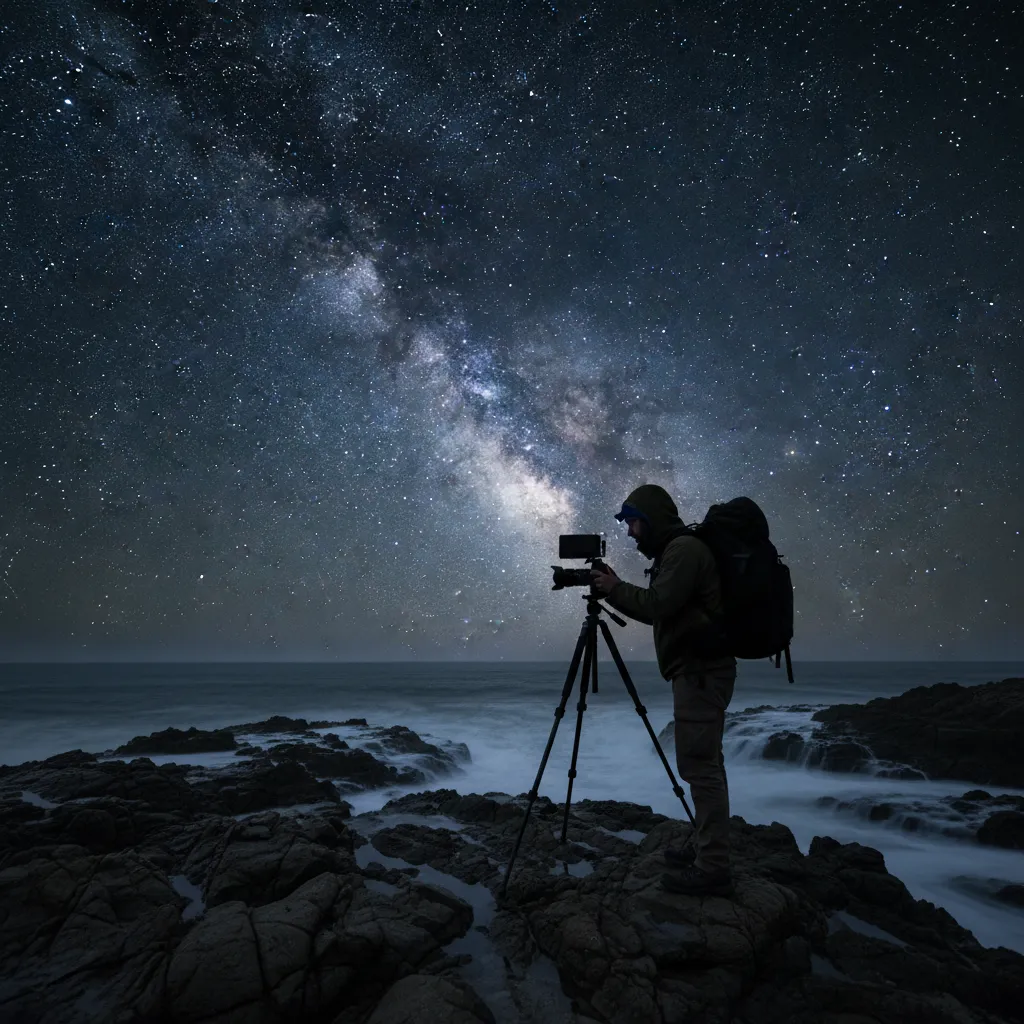
Camping Etiquette at Night: The Dark Sky Code
When you are in a dark sky location, light discipline is not just a courtesy; it is a requirement. Eyes take 20 to 30 minutes to fully adapt to the dark. A single flash of white light can ruin night vision for everyone in the vicinity.
Red Light Rule
Always use a headlamp with a red light mode. Red light has a longer wavelength and does not trigger the chemical reaction in the human eye that resets night vision. If you are camping at a popular astrophotography spot like White Horse Hill, walking around with a bright white LED torch is the quickest way to upset your neighbors.
Vehicle Lights
If you arrive at a campsite late at night, switch your headlights to parking lights as soon as it is safe to do so. Avoid shining beams directly into tents or campervans. If you are setting up your camera near a road, be aware that car headlights may ruin your long exposure; position yourself accordingly rather than getting frustrated with drivers.
Quiet Hours
Astrophotography is a silent pursuit. While shutter clicks are acceptable, loud music or shouting disrupts the serenity of the wilderness. Many stargazers camp to escape the noise of the city; respect the silence of the void.
Safety in Remote Locations
New Zealand’s weather is notoriously changeable. “Four seasons in one day” is a cliché because it is true. When venturing into remote areas for camping stargazing NZ, preparation is vital.
Weather and Hypothermia
Clear skies usually mean cold nights. Radiative cooling occurs when there is no cloud cover to trap heat. Even in summer, temperatures in the Mackenzie Basin or Central Plateau can drop to near freezing. Dress in layers: merino wool base layers, an insulating mid-layer, and a windproof outer shell are essential. Hypothermia is a real risk for photographers standing still for hours next to a tripod.
Navigation and Communication
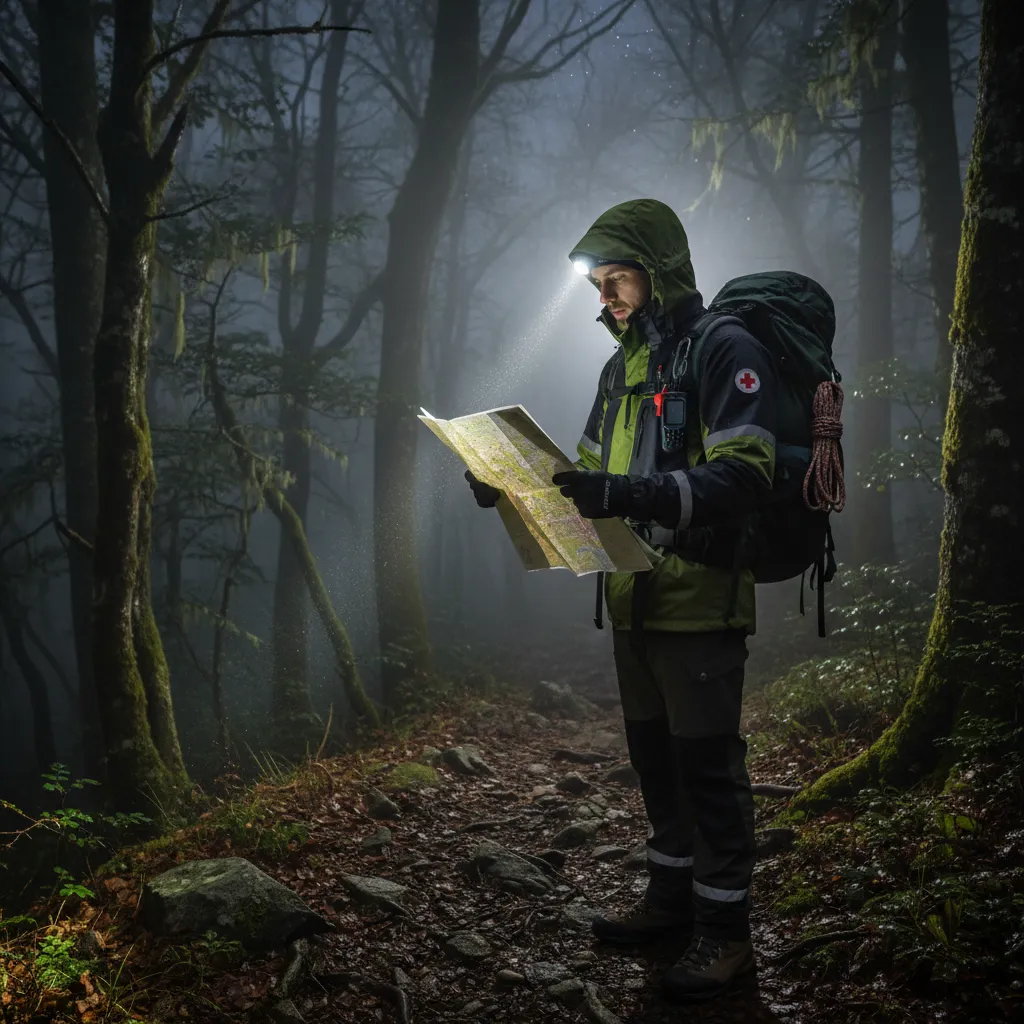
Many of the best dark sky locations have zero cellular coverage. Do not rely on your phone for navigation or emergency calls.
- Beacon: Always carry a Personal Locator Beacon (PLB) if you are hiking to a remote spot.
- Maps: Download offline topographic maps or carry paper maps.
- Tell Someone: Always leave your intentions (where you are going and when you will be back) with a trusted contact.
Frequently Asked Questions
Where is the best place to stargaze in New Zealand?
The Aoraki Mackenzie International Dark Sky Reserve in the South Island is widely considered the best location due to its Bortle 1 skies, high altitude, and strict light ordinances. Specifically, White Horse Hill Campground offers premier access.
Can you see the Milky Way in New Zealand?
Yes, the Milky Way is incredibly bright in New Zealand. The galactic core (the brightest part) is most visible from February to October. In the Southern Hemisphere, it rises higher in the sky than in the North, offering spectacular views.
What is the best month for stargazing in NZ?
Winter months (June to August) provide the longest nights and the best chance to see the Aurora Australis. However, late summer (February/March) is often preferred for camping as the temperatures are milder while the galactic core is still visible.
Is it safe to camp in remote NZ locations?
Generally, yes. New Zealand has no dangerous predators (no snakes, bears, or wolves). The primary dangers are environmental: rapidly changing weather, river crossings, and rugged terrain. Always check DOC alerts before departing.
What does Maramataka mean for stargazing?
Maramataka is the Māori lunar calendar. For stargazing, it adds cultural context to the night sky, highlighting how stars like Matariki and Rehua were used for navigation, agriculture, and marking the passage of time.
Do I need a permit for astrophotography in National Parks?
For hobbyist or personal use, no permit is required to take photos in National Parks. However, if you are conducting a commercial workshop or filming for a commercial production, you will need a concession from the Department of Conservation (DOC).