
Aurora Australis NZ refers to the Southern Lights phenomenon visible from New Zealand, particularly in the South Island. Caused by the interaction of charged solar particles with Earth’s magnetic field and atmosphere, these vibrant displays of green, pink, and red light are most frequent during periods of high solar activity and are best viewed from dark sky locations like Stewart Island, Lake Tekapo, and The Catlins.
New Zealand is widely recognized as one of the premier locations on Earth for witnessing the celestial spectacle known as the Aurora Australis. Unlike its northern counterpart, the Aurora Borealis, the Southern Lights offer a unique viewing experience, often characterized by dynamic pillars of light stretching high above the southern horizon. For astronomers, photographers, and nature enthusiasts, understanding the mechanics behind this phenomenon—and knowing exactly when and where to look—is essential for a successful chase.
The Science: How the Southern Lights are Formed
To successfully hunt the Aurora Australis in NZ, one must first understand the physics driving the display. The phenomenon originates 150 million kilometers away at the Sun. During solar storms, the Sun ejects massive clouds of charged particles, known as Coronal Mass Ejections (CMEs), into space. When these particles travel via the solar wind and collide with Earth’s magnetosphere, they are funneled toward the magnetic poles.
Atmospheric Chemical Reactions
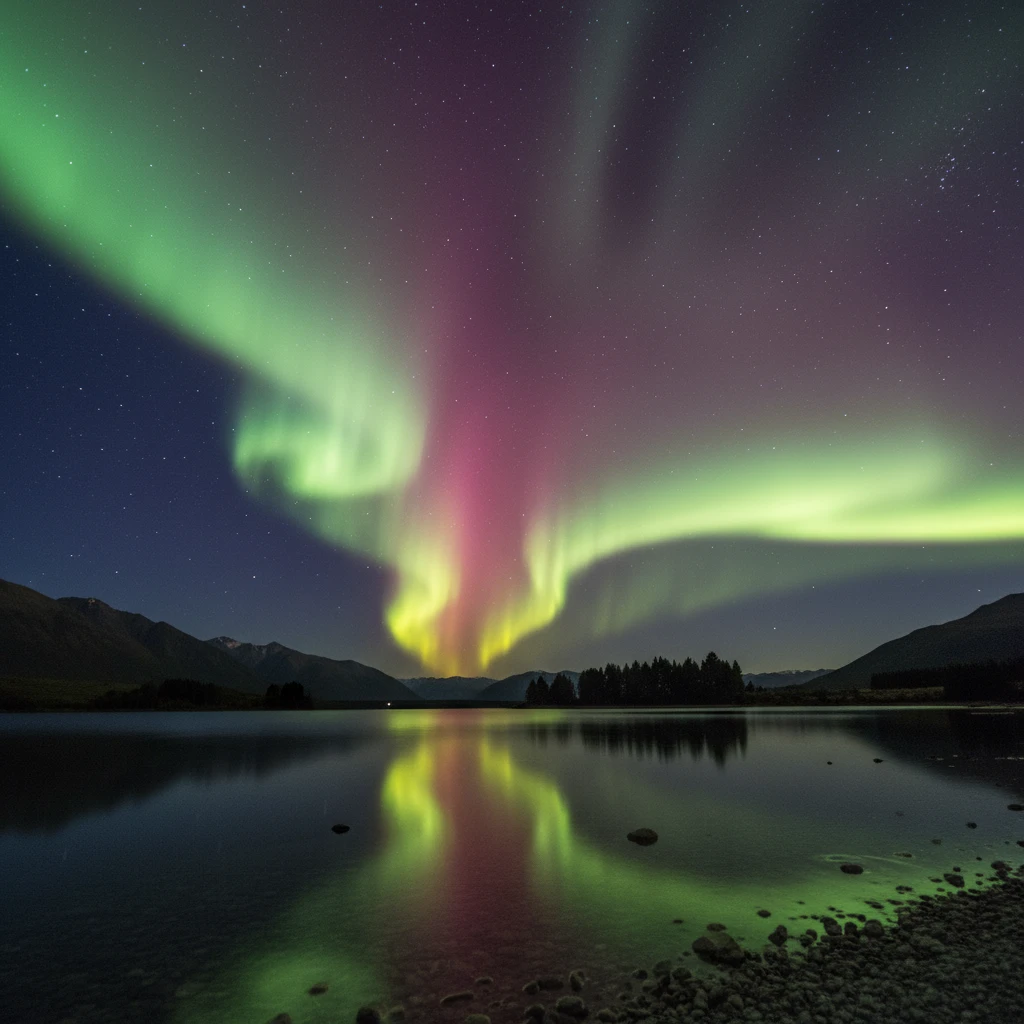
The colors you see are dictated by the specific atmospheric gases the solar particles collide with and the altitude at which these collisions occur. In New Zealand, the most common colors include:
- Green: Caused by oxygen molecules located about 100 to 300 kilometers above the Earth. This is the most sensitive color to the human eye and camera sensors.
- Red: Produced by high-altitude oxygen (above 300 km). These are often seen in New Zealand as a “wash” or glow above the green arc because the curvature of the Earth hides the lower altitude lights from further north.
- Pink/Purple: Created by nitrogen molecules at lower altitudes (below 100 km). These usually appear during intense geomagnetic storms when particles penetrate deeper into the atmosphere.
Current Solar Cycle 25: A Golden Era for Chasing
We are currently in the midst of Solar Cycle 25, a period of increasing solar activity that began in late 2019. Solar cycles typically last 11 years, swinging between a solar minimum (quiet sun) and a solar maximum (active sun). Experts predict the peak of this cycle to occur between 2024 and 2025, making this the optimal time for viewing the Aurora Australis in NZ.
Why Solar Maximum Matters
During the solar maximum, the sun’s magnetic field flips, and the number of sunspots increases drastically. Sunspots are the launchpads for solar flares and CMEs. For observers in New Zealand, this translates to:
- Higher Frequency: More storms mean more nights with visible aurora.
- Greater Intensity: Stronger storms push the “auroral oval” further north, making the lights visible from locations that typically don’t see them, such as Christchurch or even Wellington during extreme events.
- Russell-McPherron Effect: Around the equinoxes (March and September), cracks open in Earth’s magnetic field, allowing more solar wind to pour in. Combining the solar maximum with equinox windows provides the highest probability of witnessing a G4 or G5 class storm.
Top Locations for Aurora Australis in NZ
Location strategy is critical. To see the Aurora Australis in NZ, you need a clear view to the south and minimal light pollution. The further south you travel, the higher the aurora will appear in the sky.
Rakiura / Stewart Island
As the southernmost populated island in New Zealand, Rakiura is arguably the best location for aurora hunting. It was designated as an International Dark Sky Sanctuary in 2019. The lack of light pollution here is absolute, allowing the faint structure of the aurora to be seen with the naked eye even during moderate storms.
Aoraki Mackenzie International Dark Sky Reserve
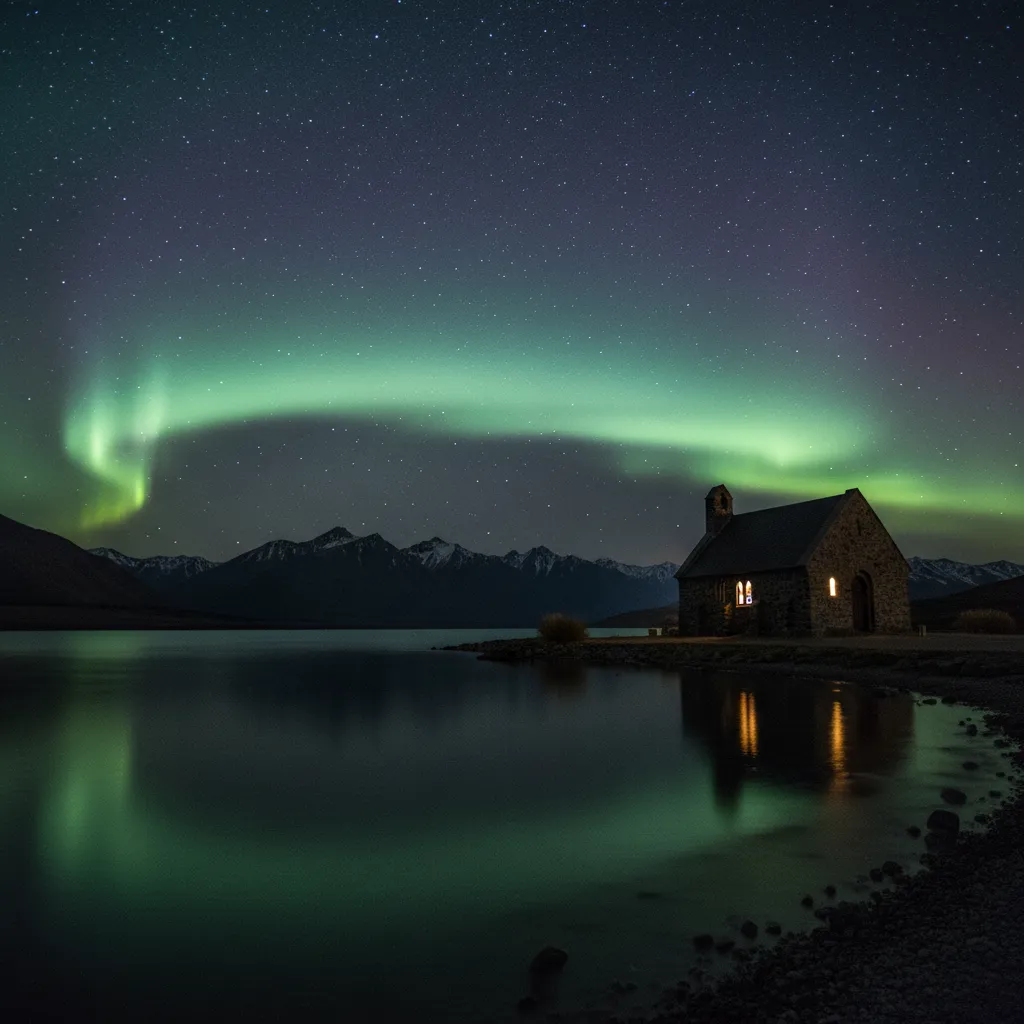
Encompassing Lake Tekapo, Mt Cook, and Twizel, this reserve is world-famous for astrophotography. The iconic Church of the Good Shepherd provides a stunning foreground, though it can be crowded. For a more secluded experience, head to the darker shores of Lake Pukaki or the clay cliffs near Omarama.
The Catlins and Otago Peninsula
The coastal stretch from Dunedin to Invercargill offers unobstructed southern horizons over the ocean. Locations like Waipapa Point Lighthouse and Nugget Point are favored by landscape photographers because the ocean reflection amplifies the light, and there are no mountains blocking the southern view.
Aurora Intelligence: How to Read Forecasts
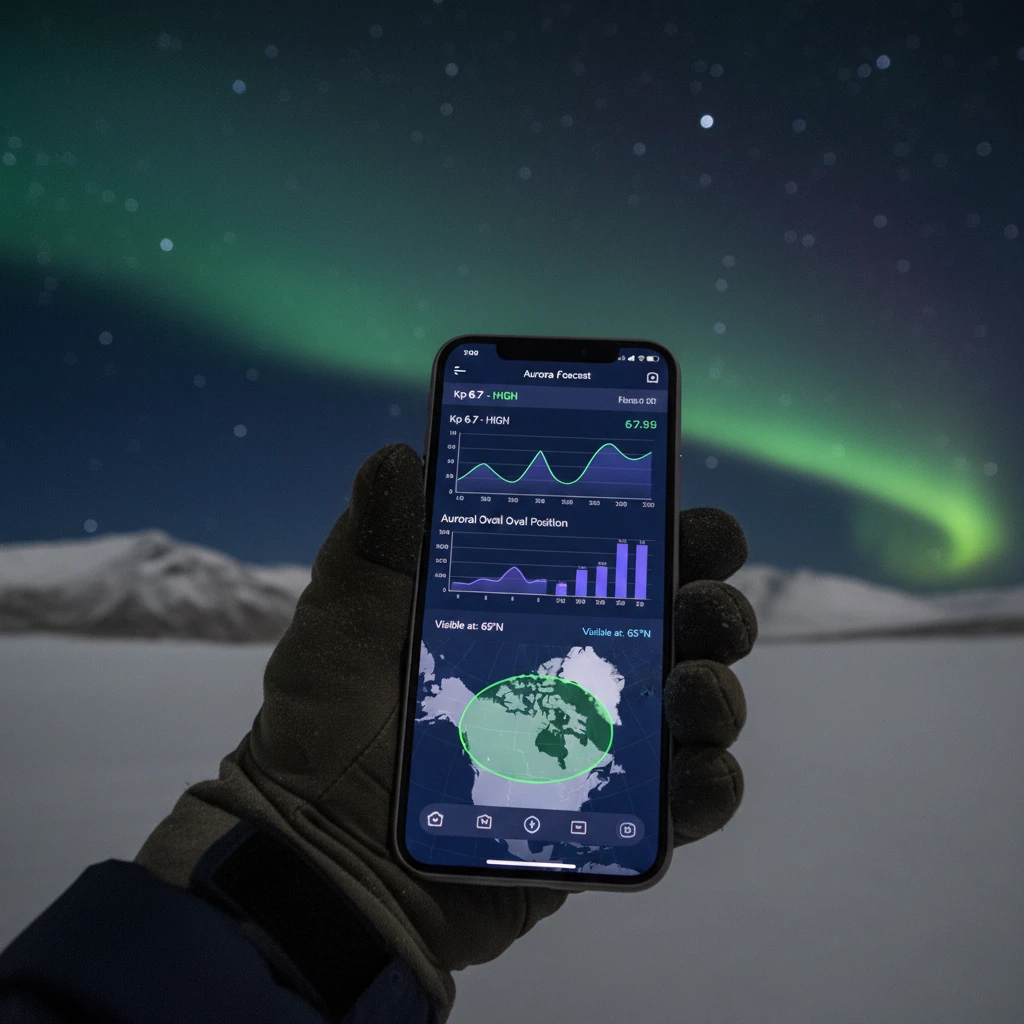
Relying solely on luck is not a strategy. Professional chasers utilize real-time data to predict when the lights will appear. You don’t need a degree in astrophysics, but you do need to understand a few key metrics found on sites like NOAA or various aurora apps.
Interpreting the Kp Index
The Kp index measures geomagnetic activity on a scale of 0 to 9.
- Kp 0-2: Generally too weak for visual observation in NZ, though cameras might pick up a faint glow from Stewart Island.
- Kp 3-4: Visible on the horizon from the lower South Island. Good for photography.
- Kp 5-6 (Storm Level): Visible to the naked eye as dancing beams from the South Island; photographic from the lower North Island.
- Kp 7-9: intense storm. Visible across most of the country.
However, the Kp index is a 3-hour average and often lags behind real-time events. For immediate “intelligence,” you must look at the solar wind data.
The Critical Role of Bz and Bt
This is the secret weapon of experienced chasers.
Bt (Total Interplanetary Magnetic Field): This measures the total strength of the magnetic field carried by the solar wind. You want this number to be high (above 10nT is good, above 20nT is excellent).
Bz (North-South Direction of the Magnetic Field): This is the most important metric. Think of the Earth’s magnetic field as a shield pointing North. If the solar wind’s magnetic field (Bz) is also pointing North (positive), it bounces off. If the Bz turns South (negative), it connects with Earth’s field, opening a door for energy to flood in.
The Golden Rule: You want a highly negative Bz (e.g., -10nT or lower) sustained for a period of time. If the Kp is high but the Bz is positive, you likely won’t see anything.
Maramataka and Māori Astronomy
In New Zealand, the Aurora Australis is not just a scientific curiosity; it holds cultural significance. In Māori astronomy, the aurora is often referred to as Tahunui-a-rangi (Great burning of the sky) or Ngā Kahukura o Hine-nui-te-pō (The rainbow of the Goddess of the Night).
The Maramataka (Māori lunar calendar) relies heavily on the observation of celestial bodies to guide planting, harvesting, and fishing. While the aurora is sporadic and not used for timekeeping like Matariki, its appearance was often viewed as a tohu (sign) or omen. Modern Māori tourism initiatives are now blending this ancestral knowledge with modern astrophysics, offering guided tours that explain the night sky through the lens of indigenous navigation and mythology, adding a rich layer of context to the visual spectacle.
Photographing the Aurora Australis
Capturing the Aurora Australis in NZ requires specific camera settings, as the camera sensor can see color and detail that the human eye cannot in low light.
Essential Gear
- Tripod: Non-negotiable. Long exposures require absolute stability.
- Fast Wide-Angle Lens: An aperture of f/2.8 or lower (f/1.8 is ideal) allows more light in. A wide focal length (14mm-24mm) captures the expansive sky.
- Remote Shutter: To prevent camera shake when pressing the button.
Recommended Settings
- Focus: Set to Manual. Focus on a bright star or a distant light using Live View, then do not touch it. Infinity on the lens barrel is not always accurate.
- Aperture: Wide open (lowest f-number possible).
- ISO: Start at 1600 or 3200. Modern cameras can handle high ISO, which is necessary to capture faint light.
- Shutter Speed: This depends on the aurora’s speed.
- Static glow: 15–20 seconds.
- Active, dancing beams: 5–8 seconds. If you expose too long during an active display, the beams will blur into a mush of color.
Safety Tips for Night Chasing
Chasing the southern lights often involves venturing into remote, dark, and cold environments. Safety should be your primary intelligence metric.
Cold Weather Management
Clear skies in the NZ South Island winter mean freezing temperatures, often dropping below 0°C. Hypothermia is a real risk when standing still for hours. Wear merino wool base layers, a windproof outer shell, gloves, and a beanie. Keep spare batteries warm in an internal pocket; cold drains batteries rapidly.
Driving and Isolation
Many of the best viewing spots are on unlit, gravel roads. Wildlife (possums, rabbits, livestock) is active at night. Drive slowly. Ensure your vehicle has sufficient fuel, as gas stations in rural NZ often close early. Always let someone know your location plan, as cell reception can be spotty in areas like The Catlins or remote Mackenzie Country.
Dark Adaptation
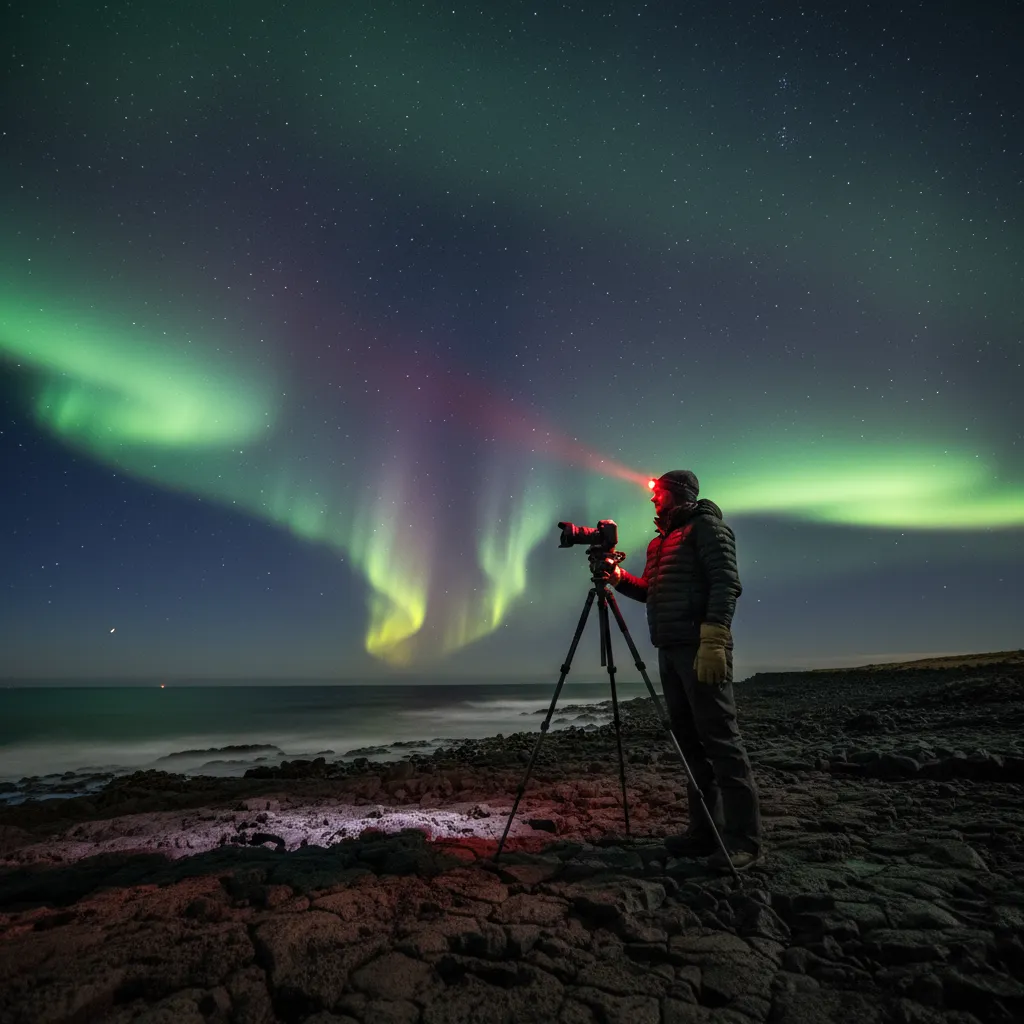
Avoid using bright white torches. They destroy your night vision, which takes 20 minutes to recover. Use a red light headlamp for setting up gear and walking. This protects your eyes and respects other photographers nearby who will be ruining their long exposures if you shine a white light.
People Also Ask
What is the best month to see Aurora Australis in New Zealand?
The best time is during the winter months, from March to September, due to longer nights. specifically, the equinox months of March and September often see higher geomagnetic activity due to the Russell-McPherron effect.
Can you see the Southern Lights with the naked eye?
Yes, during strong geomagnetic storms (Kp5+), the aurora appears as dynamic, moving beams of white or pale green light. However, cameras capture significantly more color and detail than the human eye can perceive in the dark.
Is there an app for Aurora Australis in NZ?
Yes, popular apps include “Aurora Reach,” “My Aurora Forecast,” and “Glendale App” (specifically for NZ data). These provide real-time Kp numbers, Bz data, and cloud cover forecasts.
What time of night is best for Aurora Australis?
While they can happen anytime it is dark, the statistical peak for auroral activity is often around magnetic midnight, which in New Zealand is usually between 11:00 PM and 2:00 AM.
Where is the darkest sky in New Zealand?
The darkest accessible skies are found in the Rakiura/Stewart Island International Dark Sky Sanctuary and the Aoraki Mackenzie International Dark Sky Reserve in the central South Island.
Why is the Aurora Australis sometimes red?
Red aurora is caused by solar particles interacting with high-altitude oxygen (above 300km). Because the curvature of the Earth obscures the lower green lights for viewers further north, the high-altitude red is sometimes the only visible color.