
The best camera tripod for stars combines rigid stability with vibration-dampening materials like carbon fiber to eliminate micro-shakes during long exposures. It must support at least 1.5 times your camera gear’s weight, feature a low center of gravity, and include a hook for ballast to withstand the windy conditions often found in New Zealand’s dark sky reserves.
New Zealand offers some of the most spectacular night skies in the world. From the Aoraki Mackenzie International Dark Sky Reserve to the remote corners of Great Barrier Island, Aotearoa is a paradise for astrophotographers. However, capturing the rising of Matariki or the ethereal glow of the Aurora Australis requires more than just a high-quality sensor; it demands a foundation of rock-solid stability.
When shooting long exposures ranging from 15 seconds to several hours, even the slightest vibration can ruin an image. The unique geography of New Zealand, characterized by coastal winds and alpine breezes, makes the choice of support gear critical. This guide explores the best camera tripod for stars available in the NZ market, balancing the needs of the hiking photographer with the absolute rigidity required for professional-grade astro-imaging.
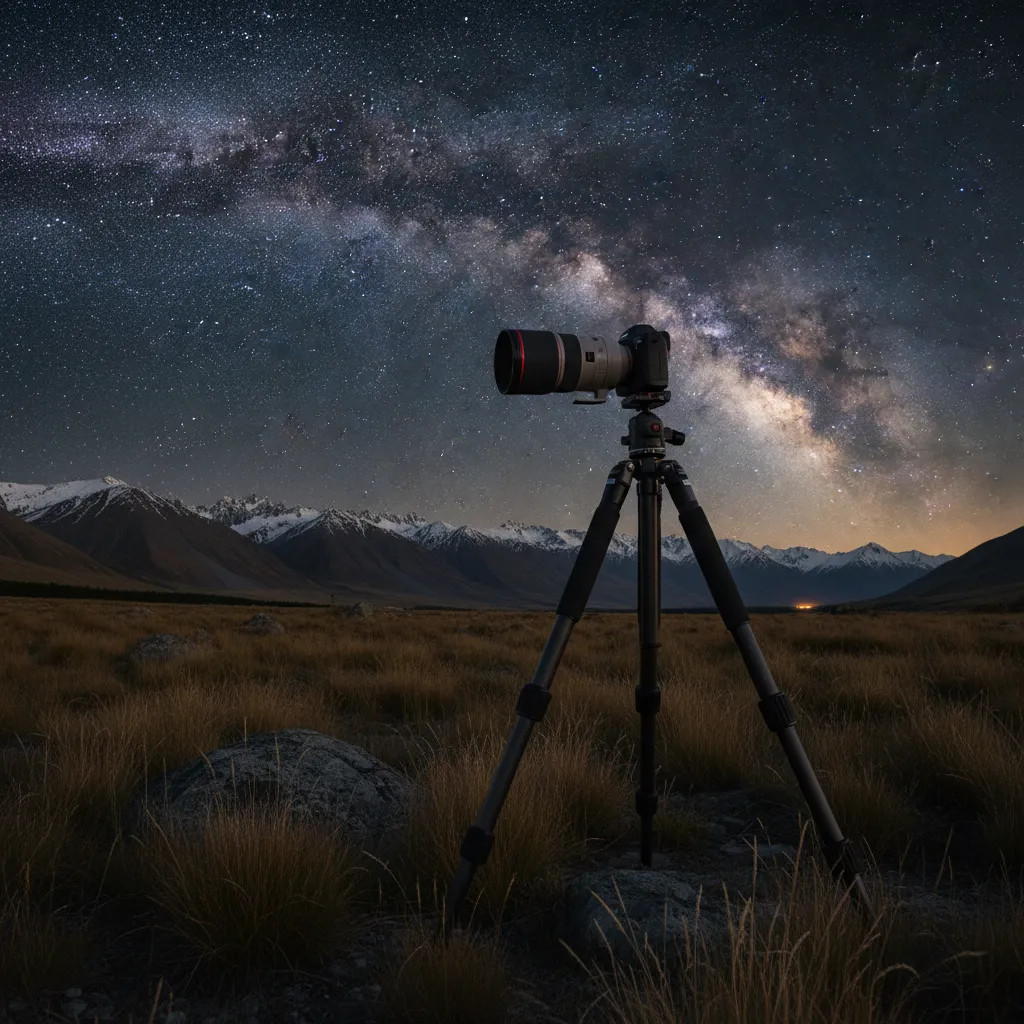
Why Stability is Non-Negotiable for Astrophotography
In the realm of astrophotography, stability is the currency of sharpness. Unlike daytime landscape photography, where shutter speeds are fast enough to freeze motion, shooting the stars involves keeping your shutter open for extended periods. The Earth is rotating, and while we use the “500 Rule” or the “NPF Rule” to calculate maximum exposure times before stars begin to trail, these calculations assume the camera is perfectly still.
New Zealand presents specific environmental challenges. Our position in the “Roaring Forties” means wind is a constant companion, especially in elevated locations like the Crown Range or Mount Victoria. A tripod that wobbles in a slight breeze will result in “star bloat” or squiggly light trails, rendering the image unusable.
To secure the best camera tripod for stars, you must look at torsional rigidity. This is the tripod’s resistance to twisting. When a long lens is attached, the center of gravity shifts. If the tripod legs have flex, the mirror slap (in DSLRs) or the shutter mechanism (in mirrorless cameras) can introduce vibration that travels down the legs and bounces back up to the sensor.
What constitutes a safe payload?
A common mistake beginners make is looking at the manufacturer’s “max load” and assuming it is accurate for astrophotography. If a tripod is rated for 8kg, and your gear weighs 6kg, you are too close to the limit for long exposures. For astrophotography, you should aim for a tripod with a payload rating of at least 2 to 3 times the weight of your camera and heaviest lens combination. This overhead ensures that the legs are not stressed and maintain their dampening properties.
Carbon Fiber vs. Aluminum: The NZ Winter Factor
When shopping for the best camera tripod for stars in New Zealand, the material of the legs is a primary consideration. The two main contenders are Aluminum and Carbon Fiber. While both can be stable, their behavior in the field—specifically during the cold winter nights of Matariki—differs significantly.
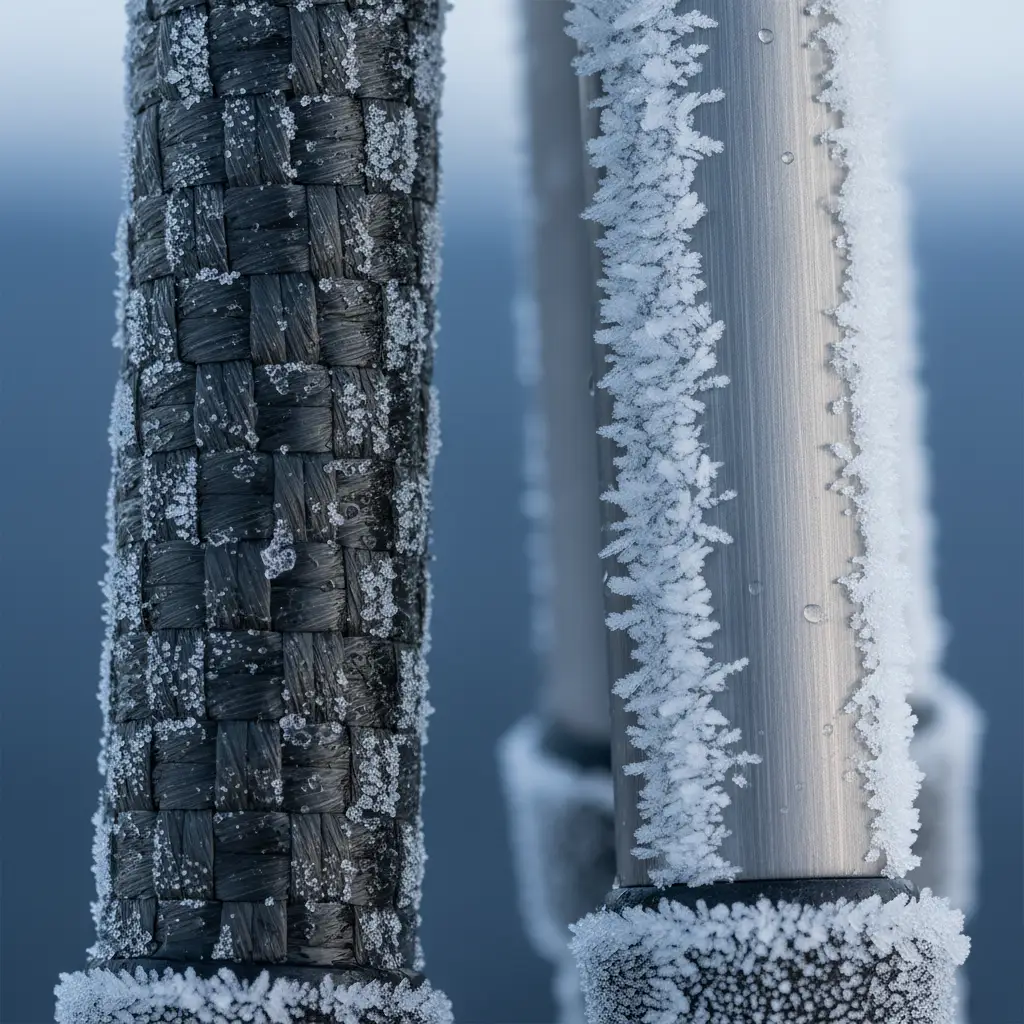
Aluminum is the traditional choice. It is heavy, durable, and generally more affordable. The weight can actually be an advantage for stability, acting as a natural anchor. However, aluminum transmits vibration more readily than composites. More importantly for NZ photographers, aluminum has high thermal conductivity. Handling aluminum tripod legs in sub-zero temperatures at Lake Tekapo without gloves can be painful and dangerous. The metal sucks the heat right out of your hands.
Carbon Fiber is the superior choice for astrophotography for two reasons:
- Vibration Absorption: Carbon fiber has excellent dampening qualities. It absorbs micro-vibrations from wind or shutter shock much faster than metal.
- Thermal Properties: Carbon fiber does not conduct cold. It remains relatively neutral to the touch even in freezing conditions, making your setup and breakdown process much more comfortable during winter shoots.
- Weight-to-Strength Ratio: It is lighter to carry but stiffer than aluminum, offering the best of both worlds for those hiking to dark sky locations.
Top Camera Tripods for Stars Available in NZ
New Zealand has a robust market for photography gear, with retailers stocking some of the world’s most reputable brands. When looking for the best camera tripod for stars, the following brands and series have proven themselves in local conditions.
Benro (Mach3 and Tortoise Series)
Benro has become a favorite among Kiwi landscape photographers for offering a high price-to-performance ratio. The Benro Mach3 (TMA37C) is a beast. It is a 9-layer carbon fiber tripod that lacks a center column in some configurations (or allows it to be removed), which is ideal for astrophotography as it lowers the center of gravity and reduces wobble. The Tortoise series is also excellent for those needing something more compact without sacrificing rigidity.
Manfrotto (055 and 190 Series)
Manfrotto is a household name. The Manfrotto MT055CXPRO4 (Carbon Fiber) is widely available in NZ. Its key feature is the 90-degree center column mechanism, though for stars, you will mostly keep it vertical and retracted. It is incredibly robust and parts are easy to find in NZ if repairs are needed. It is heavier than comparable Benro models, which adds stability but increases hiking load.
Gitzo (Mountaineer and Systematic)
If budget is less of a concern and you want the absolute best camera tripod for stars, Gitzo is the gold standard. The Systematic Series 3 or 4 has no center column and massive leg tubes. It is built like a tank and is the preferred choice for deep-sky astrophotographers using trackers and heavy telephoto lenses. The stiffness of Gitzo legs is unmatched, ensuring that even in the gusty winds of the Wairarapa coast, your stars remain pin-sharp points of light.
Sirui (W Series)
Sirui offers excellent value. The W-2204 is waterproof, featuring sealed twist locks. This is a unique advantage in New Zealand, where shooting stars often involves being near the ocean or in dew-heavy grass. Preventing salt water and grit from entering the leg mechanisms extends the life of the tripod significantly.
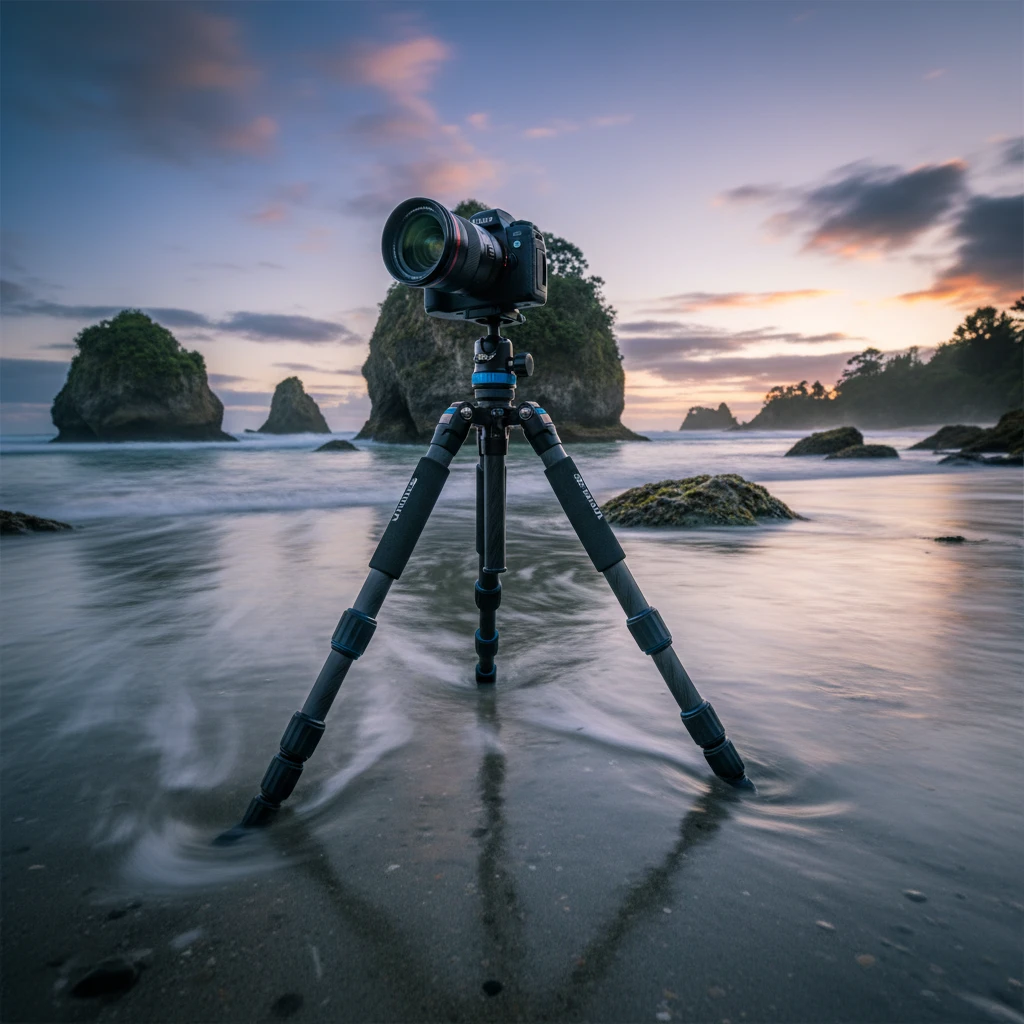
Portability vs. Stability: Hiking to the Viewpoint
There is an eternal trade-off in photography: the most stable tripod is the one you left at home because it was too heavy. Many of the best locations for viewing Matariki or the Milky Way require a hike—whether it’s the steep track up Roys Peak or a trek into the Tongariro National Park.
For hiking, you want a “Travel Tripod,” but you must be careful. Ultra-light travel tripods often have thin leg sections (the bottom section might be the width of a pencil) which are useless for long exposures in wind.
The Compromise: Look for a “Series 2” carbon fiber tripod. This usually strikes the balance between weight (around 1.5kg – 1.8kg) and stability. Avoid tripods with 5 leg sections; stick to 3 or 4 sections. Fewer sections mean fewer joints, which means less mechanical flex. If you must use a lighter tripod, ensure it has a hook on the center column. Hanging your camera bag (lightly touching the ground to prevent swinging) adds mass and dampens vibration.
Essential Features for Night Sky Photography
Beyond the legs, several features define the best camera tripod for stars:
Ball Head vs. 3-Way Head
For astrophotography, a robust Ball Head is generally preferred over a 3-way geared head for speed and ease of use in the dark. However, the ball head must have a “friction control” knob. This allows you to loosen the head enough to frame your shot without the camera flopping over instantly. Brands like Acratech or the higher-end Manfrotto XPRO ball heads are excellent. They allow you to point your camera at the zenith (straight up) without the head slipping over the duration of a 30-second exposure.
Interchangeable Feet
New Zealand’s terrain varies from slippery river stones to soft moss and deep snow. The ability to swap rubber feet for metal spikes is crucial. Spikes allow you to dig the tripod into the earth, grounding it solidly. Most professional tripods from Benro and Gitzo come with spikes included.
Bubble Levels
Framing in the dark is difficult. Having a bubble level on the tripod spider (the chassis where legs meet) helps ensure your horizon is straight before you even attach the camera. This saves you from cropping pixels later in post-processing.
Budget vs. Professional Options
Investing in support gear is often referred to as “buying sharp pixels.” Here is how the market segments in New Zealand:
Entry-Level ($150 – $300 NZD):
In this range, you are mostly looking at aluminum models or lower-end carbon fiber. The Manfrotto Element series or MeFOTO RoadTrip fit here. They are capable of wide-angle astrophotography on calm nights but may struggle with heavier full-frame cameras or windy conditions.
Mid-Range ($400 – $800 NZD):
This is the sweet spot for most enthusiasts. The Benro Mach3, Sirui W Series, and Vanguard Alta Pro reside here. These tripods offer professional-grade stability, carbon fiber construction, and quality ball heads. They are reliable tools that will last for years.
Professional ($1,000+ NZD):
Gitzo Mountaineer, Really Right Stuff (RRS), and top-tier Manfrotto options. These are for photographers who cannot afford a single failed shot. They offer the highest stiffness-to-weight ratio, parts that can be serviced, and ergonomics designed for daily use in harsh environments. If you are planning to mount a star tracker (like the Sky-Watcher Star Adventurer) plus a heavy lens, this is the category you should aim for.
Choosing the best camera tripod for stars is about protecting your investment in your camera and ensuring your time spent under the freezing New Zealand night sky yields breathtaking results. Whether you are capturing the rising of Matariki to mark the New Year or simply marveling at the Milky Way, a solid foundation is the key to unlocking the universe.
People Also Ask
Do I need a heavy tripod for astrophotography?
Generally, yes. Heavier tripods provide more mass, which resists wind and vibration better than lightweight models. However, you can use a lighter carbon fiber tripod if it is stiff and has a weight hook to add ballast (like your camera bag) for extra stability.
Is carbon fiber better than aluminum for night photography?
Yes, carbon fiber is significantly better for night photography. It absorbs vibrations faster than aluminum (crucial for sharp stars) and does not conduct cold, making it much safer and more comfortable to handle during freezing New Zealand nights.
What is the best tripod head for stars?
A high-quality ball head with separate friction control and panning locks is best for stars. It allows for quick adjustments to frame the Milky Way. For deep-sky imaging with heavy lenses, a gimbal head or a specialized geared head may be preferred for precision.
Can I use a travel tripod for astrophotography in NZ?
You can, provided the conditions are calm. However, travel tripods often have thin lower leg sections that flex. To maximize success, do not extend the center column, keep the thinnest leg sections retracted if possible, and hang weight from the center hook.
How do I stop my tripod from shaking in the wind?
To reduce shake: remove the camera strap (it acts like a sail), keep the tripod low to the ground, retract the thinnest leg sections, use a stone bag or hang your bag from the hook (ensuring it touches the ground slightly to stop swinging), and body-block the wind if necessary.
What is the best brand of tripod in New Zealand?
“Best” is subjective, but for availability and quality in NZ, Gitzo is the premium standard for professionals. Manfrotto and Benro are widely considered the best value-for-money brands, offering excellent parts support and availability through NZ retailers.