Matariki children’s books in NZ are essential educational resources that blend storytelling with cultural heritage to celebrate the Māori New Year. The best titles, such as The Seven Kites of Matariki, offer bilingual text, vibrant illustrations of the star cluster, and engaging narratives that teach tamariki about remembrance, harvesting, and looking toward the future.
Why Matariki Children’s Books are Vital for NZ Education
As Aotearoa New Zealand embraces Matariki as a public holiday, the demand for high-quality educational resources has skyrocketed. Literature serves as the primary vessel for transmitting the pūrākau (legends) and values associated with the Māori New Year to the next generation. Unlike standard picture books, the best Matariki children’s books NZ authors produce are often collaborative efforts involving tribal elders, ensuring that the mātauranga Māori (Māori knowledge) presented is authentic and respectful.
For parents and educators, these books are not merely bedtime stories; they are curriculum tools. They introduce complex concepts—such as astronomy, environmental stewardship (kaitiakitanga), and genealogy (whakapapa)—in accessible, age-appropriate formats. Whether you are stocking a school library or looking for a gift, selecting the right book requires understanding the nuance between simple entertainment and cultural education.
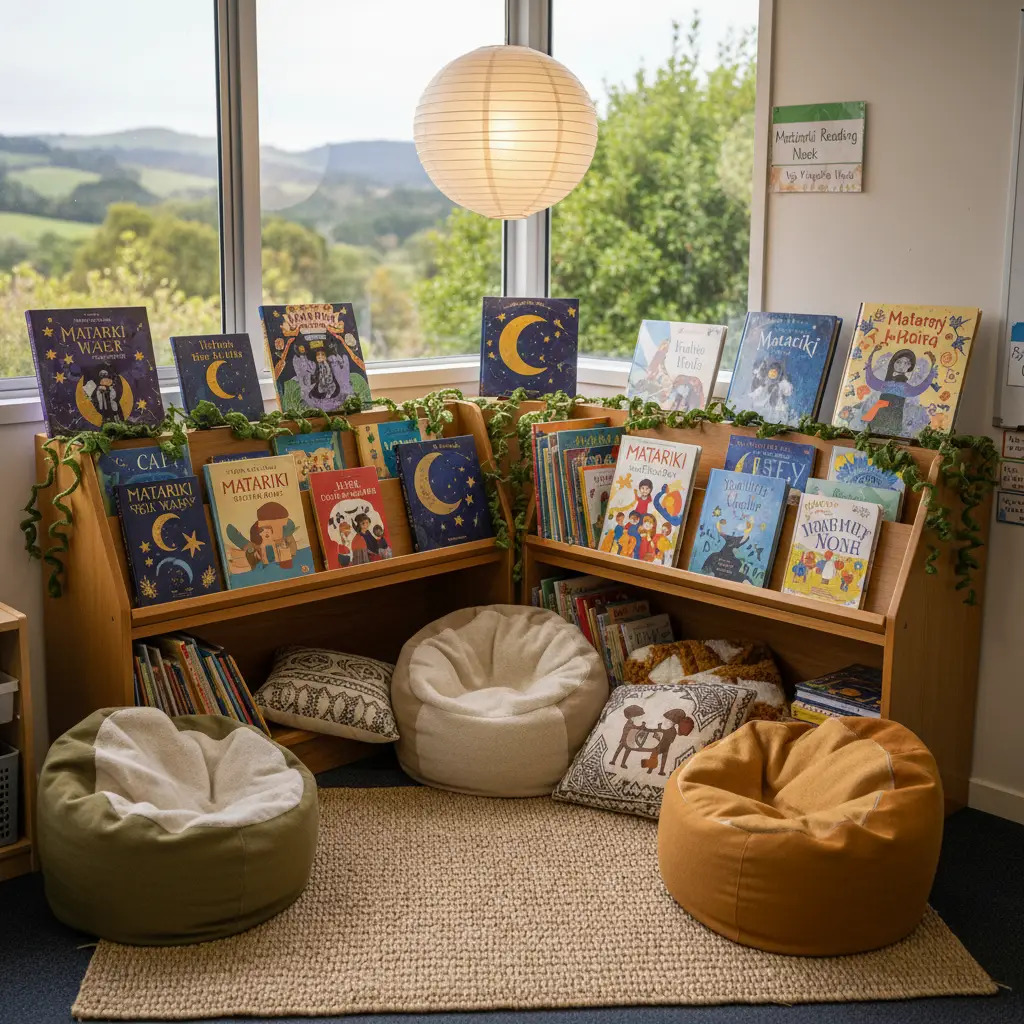
Review: The Seven Kites of Matariki
What makes ‘The Seven Kites of Matariki’ a top pick?
Written by Calico McClintock and illustrated by Dominique Ford, The Seven Kites of Matariki represents a creative departure from the standard retelling of the “Seven Sisters” myth. Instead, this narrative focuses on seven sisters who craft kites (manu tukutuku) to fly during the New Year. This book is widely regarded as a staple in the genre of Matariki children’s books NZ for several compelling reasons.
Visual Storytelling: Dominique Ford’s illustrations are lush and organic, utilizing a palette that reflects the New Zealand landscape—deep greens, ocean blues, and the sparkling contrast of the night sky. The visual representation of the kites connects the reader to the traditional Māori art of kite making, which was historically used to communicate with the heavens.
Narrative Arc: The story is gentle yet profound. The sisters’ kites are swept away by the wind, leading to a journey of discovery. The resolution, where the kites become the stars of Matariki, provides a whimsical origin story that resonates with primary-aged children (5-8 years). It moves away from conflict-heavy myths to focus on creativity, loss, and transformation.
Educational Application: Teachers favor this book because it naturally leads to art projects. It is an excellent prompt for students to design their own manu tukutuku, integrating technology and arts curricula with cultural learning.
Review: Twinkle Twinkle Matariki
Is ‘Twinkle Twinkle Matariki’ suitable for toddlers?
For the Early Childhood Education (ECE) sector and parents of toddlers, Twinkle Twinkle Matariki by Rebecca Larsen is often the first point of entry into Matariki literature. This book ingeniously adapts the universally known melody of “Twinkle Twinkle Little Star” to introduce the specific stars of the Matariki cluster.
Engagement Factor: The primary strength of this title is its interactivity. It is designed to be sung rather than just read. This musical element aids in memorization, helping very young children (ages 0-4) retain the names of the stars and the associated Māori vocabulary. The rhythmic repetition aligns perfectly with oral language development milestones.
Visual and Tactile Elements: Often available in board book format, it is durable enough for little hands. The illustrations are bold, high-contrast, and feature kiwi characters engaging in Matariki activities, such as preparing kai (food) and gathering together. This grounds the celestial concept in relatable, terrestrial activities.
Cultural Accessibility: Larsen includes a glossary and often a CD or digital download link for the song, ensuring that parents who are not fluent in Te Reo Māori can still pronounce the words correctly and participate fully in the reading experience.

Other Essential Matariki Titles
While the previous two titles are market leaders, a comprehensive library requires a broader selection. The following books are highly recommended for their commercial availability and educational depth.
The Little Kiwi’s Matariki
Written by Nikki Slade Robinson, this book is a multi-award winner. It follows the character of Little Kiwi as he rushes through the forest to wake up his friends because Matariki has risen. The urgency and excitement in the narrative capture the anticipation of the holiday. It serves as an excellent introduction to New Zealand’s native fauna, as Little Kiwi interacts with Tūī, Morepork, and Katipō. It is particularly effective for explaining when Matariki occurs and the excitement of the first sighting.
Daniel’s Matariki Feast
For a focus on the hākari (feast) aspect of the holiday, Daniel’s Matariki Feast is the go-to resource. It moves the setting to a modern educational context—a kindergarten or school environment. It depicts children harvesting vegetables and preparing a meal to share. This book is crucial for teaching the social aspect of Matariki: gathering, sharing food, and community bonding. It bridges the gap between ancient tradition and modern-day celebration.
Bilingual Book Options
The resurgence of Te Reo Māori has led to a demand for bilingual books where English and Māori text appear side-by-side. These resources are invaluable for mainstream schools working towards cultural responsiveness.
The Stolen Stars of Matariki (Ngā Whetū Matariki i Whānakotia): This book by Miriama Kamo offers a more adventurous tale involving two children who must rescue the stars from patupaiarehe (fairies). The bilingual nature of the text allows readers to flip between languages, comparing sentence structures and vocabulary. It is slightly more text-heavy, making it suitable for fluent readers or read-aloud sessions.
Tāwhirimātea: A Song for Matariki: Similar to Twinkle Twinkle Matariki, this book by June Pitman-Hayes creates a musical journey. The bilingual lyrics celebrate the family bond and the connection to the elements. The inclusion of Māori lyrics alongside English ensures that the rhythm and rhyme are preserved in both languages.
Books for Different Reading Levels
When purchasing Matariki children’s books NZ, it is critical to match the complexity of the text with the developmental stage of the child.
ECE and Preschool (Ages 0-4)
Focus: Rhyme, repetition, high-contrast images, board books.
- Twinkle Twinkle Matariki
- Matariki (Te Reo Singalong) by Sharon Holt – This series is essential for ECE centers as it focuses on pronunciation and simple sentence structures.
Junior Primary (Ages 5-7)
Focus: Narrative structure, relatable characters, introduction to myths.
- The Little Kiwi’s Matariki
- The Seven Kites of Matariki
- Flit the Fantail and the Matariki Map – A fun, character-driven story that introduces navigation and star reading in a simplified way. This mirrors the function of an Interactive Night Sky Map Tool: Locate Matariki Now.
Senior Primary and Intermediate (Ages 8-12)
Focus: Complex mythology, astronomy, historical context.
- Matariki: The Star of the Year by Dr. Rangi Matamua – While technically non-fiction for adults, there are simplified versions and excerpts suitable for older children researching the specific stars (Waitī, Waitā, Waipuna-ā-rangi, etc.).
- The Promise of Puanga – This book acknowledges that in some parts of NZ, the star Puanga signals the New Year, providing a necessary regional nuance (including the Karakia for Puanga: Prayers & Incantations) for older students.
Where to Buy for School Libraries
Securing these titles requires looking beyond generic online retailers to support New Zealand businesses and ensure authentic sourcing.
Specialized Educational Suppliers
Wheelers: The primary supplier for NZ schools and libraries. They offer library-grade binding and cataloging services, which is essential for the longevity of high-circulation Matariki books.
Independent NZ Bookstores
Stores such as Unity Books, Time Out Bookstore, and The Children’s Bookshop in Wellington curate their Matariki collections meticulously. Purchasing from these vendors often supports the local publishing ecosystem.
Direct from Publishers
Publishers like Huia Publishers and Scholastic NZ are the powerhouses behind Māori literature. Huia, in particular, specializes in indigenous storytelling. Buying directly can sometimes provide schools with bulk discounts or access to teacher resource kits that accompany the books.
People Also Ask
What is the story of Matariki for kids?
The story of Matariki generally involves the star cluster representing a mother (Matariki) and her children (the other stars). Each star has a specific purpose, such as watching over the ocean, the forest, or the crops. During the New Year, they return to the sky to signal a time of remembrance, celebrating the harvest, and planning for the future.
How many Matariki stars are there?
While there are hundreds of stars in the cluster, traditionally, nine stars are recognized in Māori astronomy today: Matariki, Pōhutukawa, Tupuānuku, Tupuārangi, Waitī, Waitā, Waipuna-ā-rangi, Ururangi, and Hiwa-i-te-rangi. Previously, seven were commonly cited, but the revival of mātauranga Māori has emphasized the nine.
What is a good Matariki activity for preschoolers?
Reading rhythmic books like Twinkle Twinkle Matariki is excellent. Other Matariki Activities for Kids include kite making (manu tukutuku), planting seeds to represent new beginnings, or creating star crafts using glitter and black paper to mimic the night sky.
Why do we celebrate Matariki?
Matariki is celebrated to mark the Māori New Year. It is a time to honor those who have passed away in the previous year, celebrate the present by gathering with whānau (family) and sharing kai (food), and look forward to the future by setting goals and aspirations.
Is Matariki a public holiday in NZ?
Yes, Matariki is an official public holiday in New Zealand. The date shifts each year as it follows the lunar calendar (Maramataka), typically falling in June or July when the star cluster rises in the pre-dawn sky.
What are the names of the Matariki stars?
The nine stars are: Matariki (the mother), Pōhutukawa (connects to those who have passed), Tupuānuku (food from the earth), Tupuārangi (food from the sky/trees), Waitī (freshwater food), Waitā (saltwater food), Waipuna-ā-rangi (rain), Ururangi (wind), and Hiwa-i-te-rangi (wishing star).