
A Matariki wall chart is a vital educational tool used to visually represent the significance of the Māori New Year, specifically the Pleiades star cluster. When looking to buy Matariki wall charts, educators prioritize resources that accurately depict the Matariki Star Names & Meanings, the Maramataka (lunar calendar), and key Te Reo Māori vocabulary to foster deep cultural appreciation and learning.
As the recognition of Matariki grows across Aotearoa New Zealand and the world, the demand for high-quality, authentic educational resources has surged. For educators, parents, and cultural enthusiasts, finding the right visual aids is crucial for effectively teaching the narratives, science, and values associated with this indigenous celebration. Whether you are outfitting a primary school classroom, an early childhood center, or a community hall, selecting the right wall charts can transform a space into an immersive learning environment.
Why Buy Matariki Wall Charts for Your Classroom?
Investing in professional wall charts serves a dual purpose: aesthetic engagement and curriculum alignment. Matariki is not merely a holiday; it is a period of reflection, planning, and environmental awareness, often celebrated at the Whanganui Puanga Kai Festival. When you buy Matariki wall charts, you are acquiring a static teacher that remains on the wall, constantly reinforcing lessons about astronomy, agriculture, and social cohesion.
High-quality charts act as a focal point for inquiry-based learning. They allow students to independently verify star names, understand the connection between specific stars and environmental domains (such as Waitī for fresh water and Waitā for the ocean), and visualize the cyclical nature of the Māori lunar calendar. Furthermore, in a commercial context, purchasing these resources often supports the revitalization of Māori art and design, ensuring that indigenous narratives are told through an authentic lens.
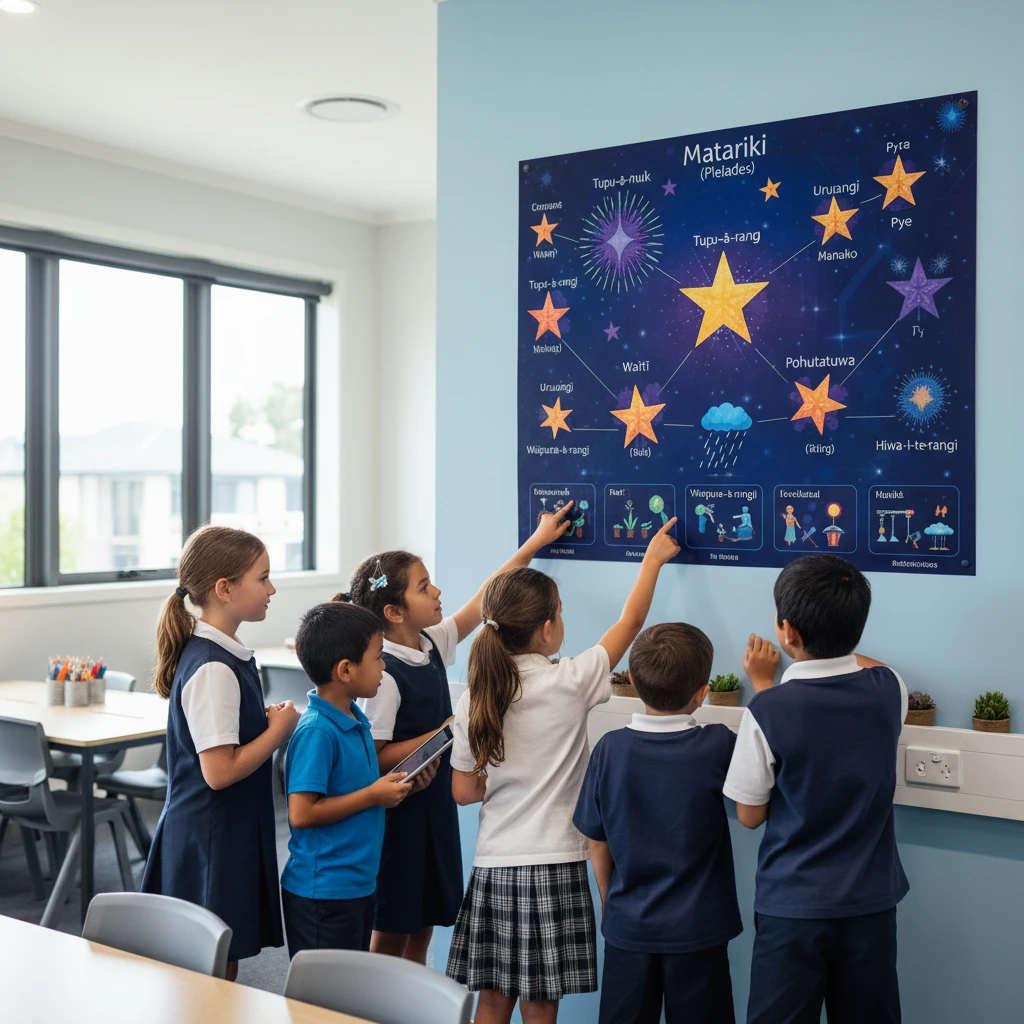
Visual Aids for the 9 Stars: What to Look For
The core of any Matariki display is the depiction of the star cluster itself. While historically seven stars were often cited, modern educational standards embrace the nine stars: Matariki, Pōhutukawa, Tupuānuku, Tupuārangi, Waitī, Waitā, Waipuna-ā-rangi, Ururangi, and Hiwa-i-te-rangi. To help learners find these in the sky, teachers often pair posters with an Interactive Night Sky Map Tool: Locate Matariki Now. When browsing to buy Matariki wall charts, the accuracy of this representation is paramount.
Distinguishing the Domains
A superior wall chart will not just list the names but will visually associate each star with its domain. For example:
- Tupuānuku: Should be associated with soil, plants, and food grown in the ground. Look for earthy tones or botanical illustrations.
- Tupuārangi: Connects to food from the sky (birds, fruits). Imagery should reflect the canopy or avian life.
- Waipuna-ā-rangi: Relates to rain and weather. Blues and cloud motifs are essential here.
Charts that utilize these visual cues help students memorize the functions of the stars faster than text-only versions. The best products on the market combine distinct typography with high-fidelity illustration to make these abstract concepts concrete for young learners.
Maramataka Calendar Posters: Teaching Lunar Phases
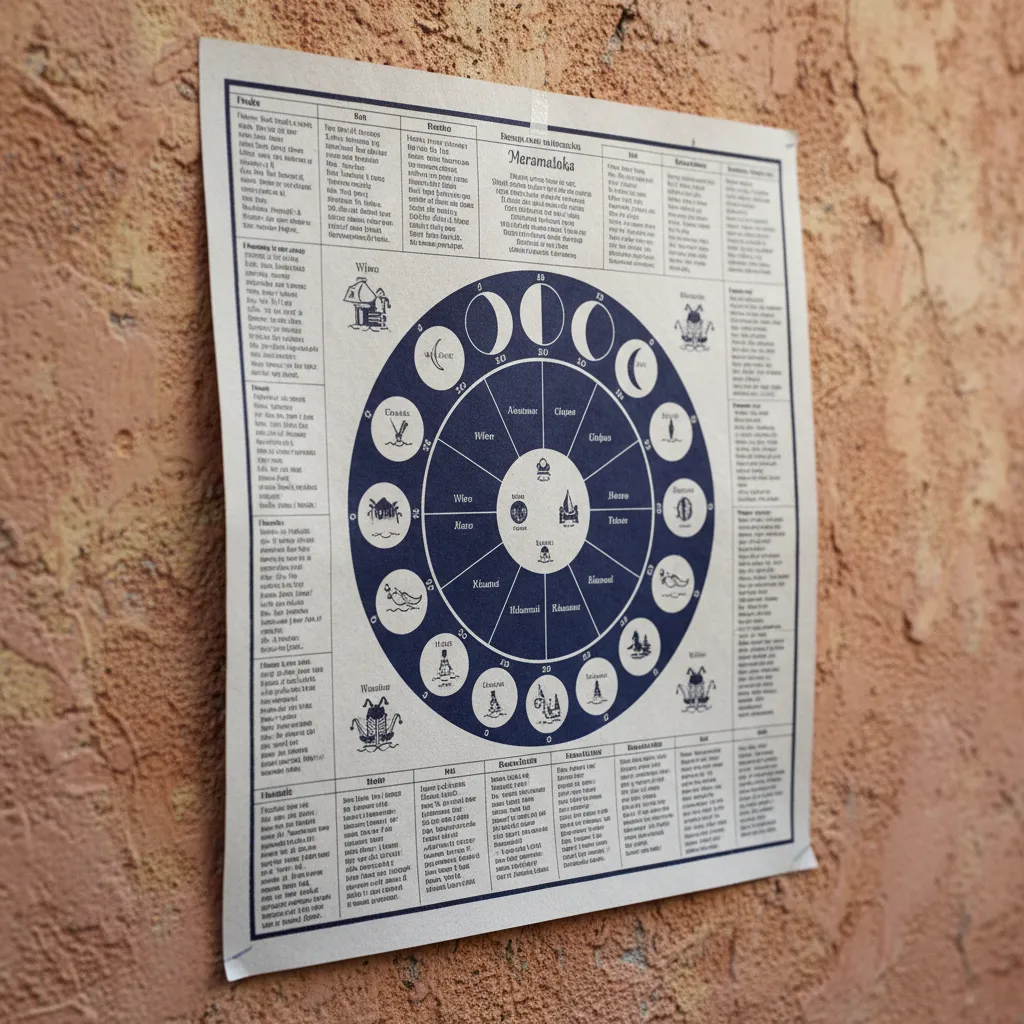
Matariki signals the beginning of the Māori New Year, but it is intrinsically tied to the Maramataka—the Māori lunar calendar. Buying a wall chart that details the phases of the moon is an excellent way to extend learning beyond just the star cluster. These charts are practical tools for teaching science, biology, and timekeeping.
The Maramataka is not a standard solar calendar; it dictates the best times for planting, fishing, and resting based on the energy of the moon. An effective wall chart will outline the 30 nights of the moon cycle, from Whiro (new moon) to Rakaunui (full moon). When selecting a poster, look for annotations that explain the energy levels of each day. For instance, high-energy days are good for activity and gardening, while low-energy days are better for reflection and planning.
Te Reo Vocabulary Charts and Language Integration
Language is the vehicle of culture. To fully honor the season, educators should buy Matariki wall charts that prioritize Te Reo Māori. These charts serve as constant visual prompts, encouraging the use of vocabulary in daily classroom interactions.
Key Vocabulary to Display
Look for charts that include more than just star names. Valuable vocabulary lists include:
- Hākari: Feast or celebration.
- Whetū: Star.
- Whakapapa: Genealogy/Lineage (often discussed during Matariki regarding those who have passed).
- Hauhake: Harvest.
Bilingual charts are particularly effective in mainstream education settings. They should present the Te Reo word prominently, with a smaller English translation or a visual icon to aid comprehension. This supports “incidental learning,” where students absorb the language simply by being exposed to it in their environment.
Size and Material Options: Durability for Education
When you decide to buy Matariki wall charts, practical considerations regarding size and material are just as important as the content. Classroom environments can be demanding, and resources need to withstand wear and tear.
Laminated vs. Unlaminated
For high-traffic areas or younger age groups (ECE and Junior Primary), laminated charts are non-negotiable. They resist tearing, can be wiped down, and allow teachers to use whiteboard markers to circle specific stars or dates. However, for older students or staff rooms, high-quality matte paper stock can look more sophisticated and frame-worthy. Matte finishes also reduce glare from classroom lights, making the text easier to read from a distance.
Choosing the Right Dimensions
A3 (297 x 420 mm): Ideal for small group stations or crowded walls. These are often sold in sets (e.g., one card for each star).
A2 (420 x 594 mm): The standard size for a focal wall chart. Large enough to be read from a few meters away but not overwhelming.
A1 (594 x 841 mm): Best for large halls, assemblies, or main bulletin boards. These make a significant visual statement.

The Importance of Supporting Māori-Owned Businesses
Commercial intent in this niche carries an ethical dimension. When you buy Matariki wall charts, checking the source of the design is critical. Matariki is a taonga (treasure) of the Māori people. Purchasing from Māori-owned businesses or designers ensures that the knowledge being sold is authentic, culturally safe, and that the economic benefits return to the community from which the knowledge originates.
Look for accreditations or “about us” sections that detail the whakapapa (lineage) of the artist or the educational consultants involved. Authentic resources often come with deeper backstories and more precise cultural nuances than mass-produced generic items. Supporting these businesses also encourages the continued production of high-quality indigenous educational resources.
How to Integrate Wall Charts into Lesson Plans
Simply hanging a chart is not enough; interaction is key. Here are strategies to maximize the value when you buy Matariki wall charts:
Interactive Morning Circles
Use the Maramataka chart during morning circle time. Ask students to identify the current moon phase and predict the energy levels for the day. This grounds the students in the present moment and connects them to the environment.
Art and Storytelling Stations
Place the 9 Stars chart in the art corner. Encourage students to draw their own interpretations of Tupuānuku (earth food) or Waitā (ocean food) based on the imagery on the chart. The chart serves as a reference point for accuracy and inspiration.
Research Prompts
For senior students, use the keywords found on the charts as research starters. A chart mentioning “Hiwa-i-te-rangi” can lead to a writing assignment about goal setting and aspirations for the coming year.

Frequently Asked Questions
Where can I buy authentic Matariki wall charts?
You can buy authentic Matariki wall charts from specialized educational retailers in New Zealand, Māori-owned e-commerce stores, and museum gift shops. Websites like The Te Reo Māori Classroom, TeacherTalk, and various independent artists on platforms like Etsy (check for NZ origin) are excellent sources for culturally accurate materials.
What is the best size for a classroom wall chart?
The best size depends on your wall space and viewing distance. A2 is generally the standard for classroom walls as it balances visibility with space efficiency. A1 is better for main displays, while A3 sets are perfect for small group work or flashcard-style displays.
Are there digital versions of Matariki charts available?
Yes, many educators buy digital downloads of Matariki wall charts. This allows you to print them at your preferred size and laminate them yourself. This is often a cost-effective option for schools needing multiple copies for different classrooms.
Do I need a chart with all 9 stars or just the main 7?
It is highly recommended to buy charts featuring all 9 stars. While 7 stars (Matariki and her six daughters) is a common narrative, the inclusion of Pōhutukawa and Hiwa-i-te-rangi provides a more complete and accurate understanding of the cluster’s significance in Māori astronomy.
How do I know if a Matariki resource is culturally appropriate?
Check the creator’s background. Culturally appropriate resources are typically created by or in consultation with Māori educators or cultural advisors. Look for correct spelling (including macrons), accurate definitions of the stars’ domains, and respectful imagery.
Can these charts be used for home schooling?
Absolutely. Matariki wall charts are fantastic for home schooling. They serve as a decorative yet educational piece that helps families establish new traditions and learn Te Reo Māori together in a home setting.