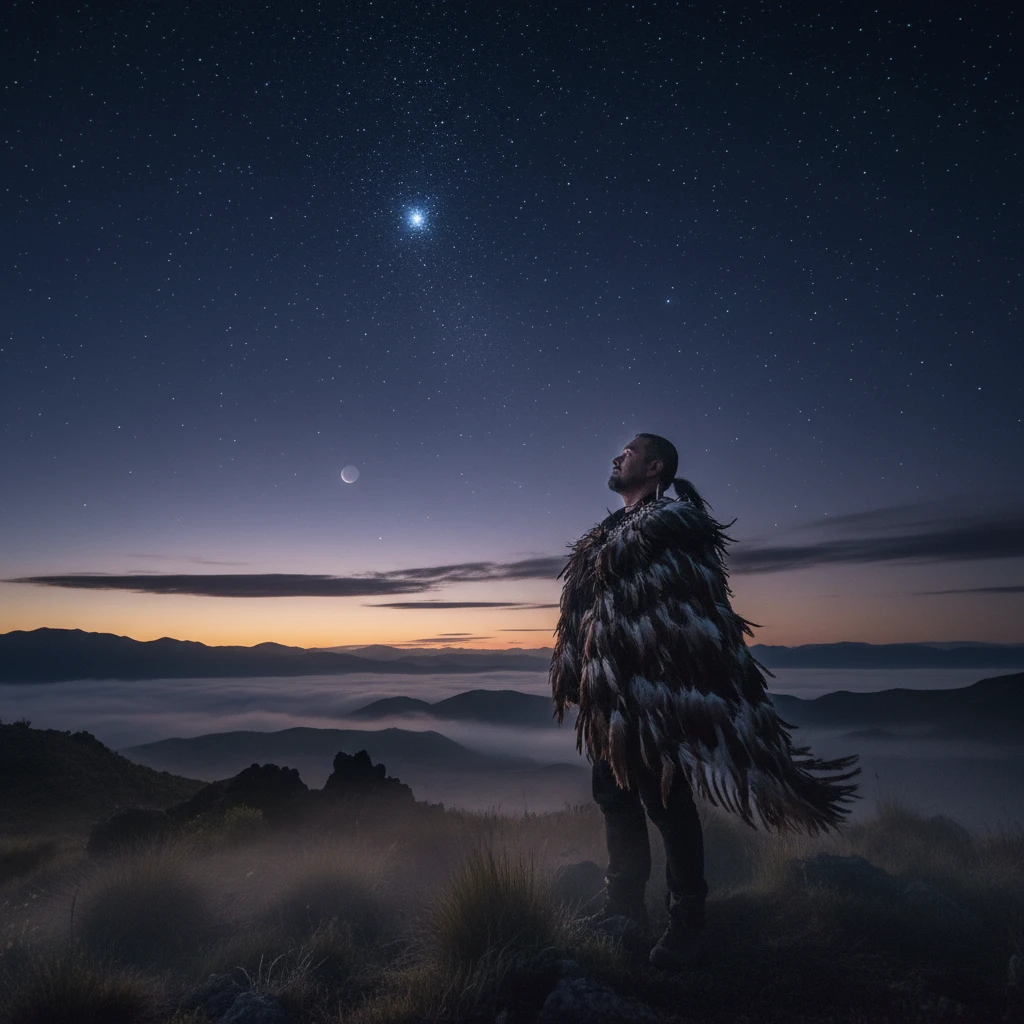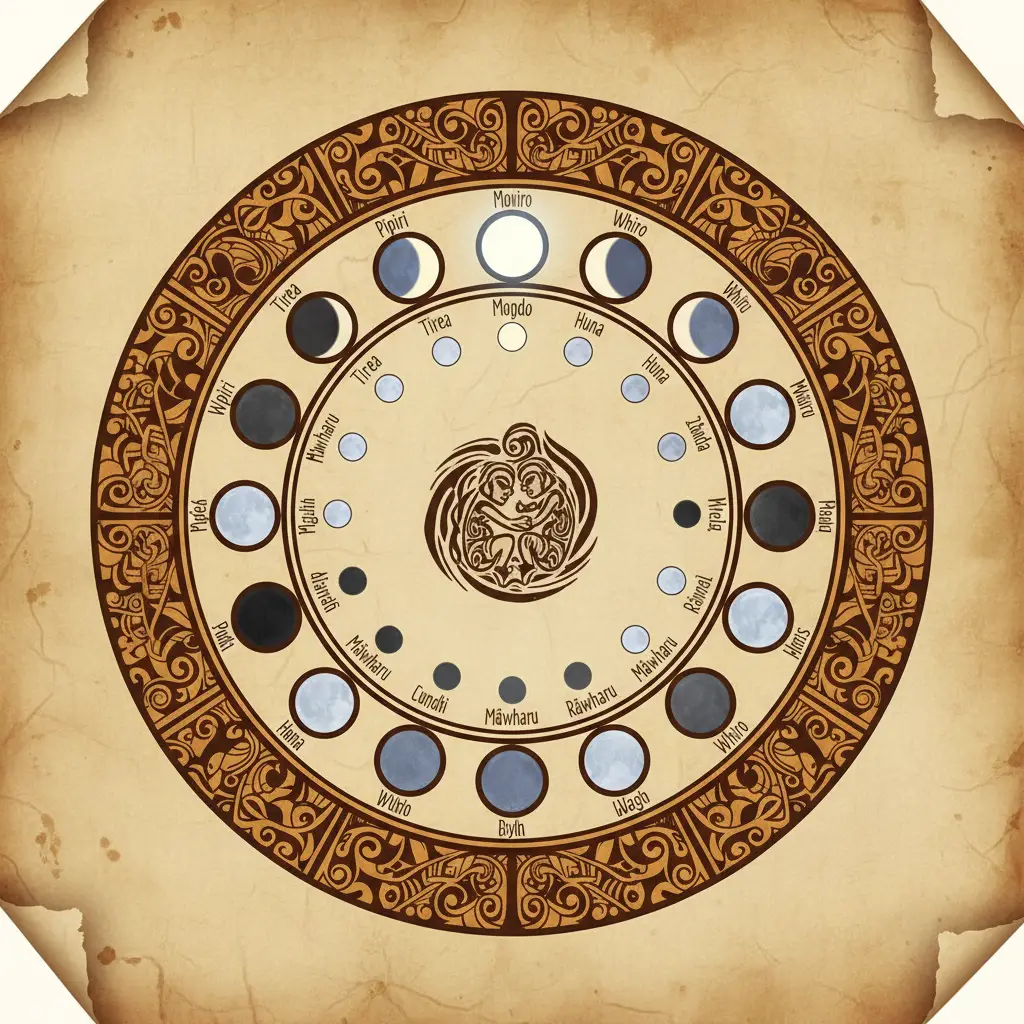
Climate change effects on tohu refer to the disruption of traditional Māori ecological indicators caused by rising global temperatures and shifting weather patterns. This environmental instability causes a “phenological mismatch,” where biological signs—such as flowering plants or bird migrations—no longer synchronize with the celestial calendar (Maramataka), making traditional weather prediction and resource management increasingly difficult for indigenous communities.
What are Tohu in the Context of Climate Science?
To understand the profound impact of climate change on indigenous practices, one must first grasp the sophistication of tohu. In Te Ao Māori (the Māori world), tohu are signs or indicators found in the natural world that predict future environmental conditions. These are not superstitions; they are the result of centuries of empirical observation, data collection, and knowledge transfer known as Mātauranga Māori.
Historically, tohu provided critical information for survival. They signaled when to plant kūmara, when to harvest eel, when to prepare for storms, and when to rest the land. These indicators generally fall into three categories:
- Biological Tohu: The behavior of animals, the flowering of trees, and the arrival of migratory species.
- Celestial Tohu: The rising, setting, and visibility of stars (such as Matariki and Puanga), the phases of the moon, and the position of the sun.
- Atmospheric Tohu: Cloud formations, wind directions, and the color of the sky.
Under stable climatic conditions, these three systems operate in a synchronized dance. The rising of a specific star would coincide with the blooming of a specific tree, which would signal the run of a specific fish. However, climate change is introducing chaos into this delicate symphony. The warming atmosphere and oceans are altering the biological triggers of flora and fauna, decoupling them from the relatively fixed celestial cycles.
The Importance of Environmental Synchronicity
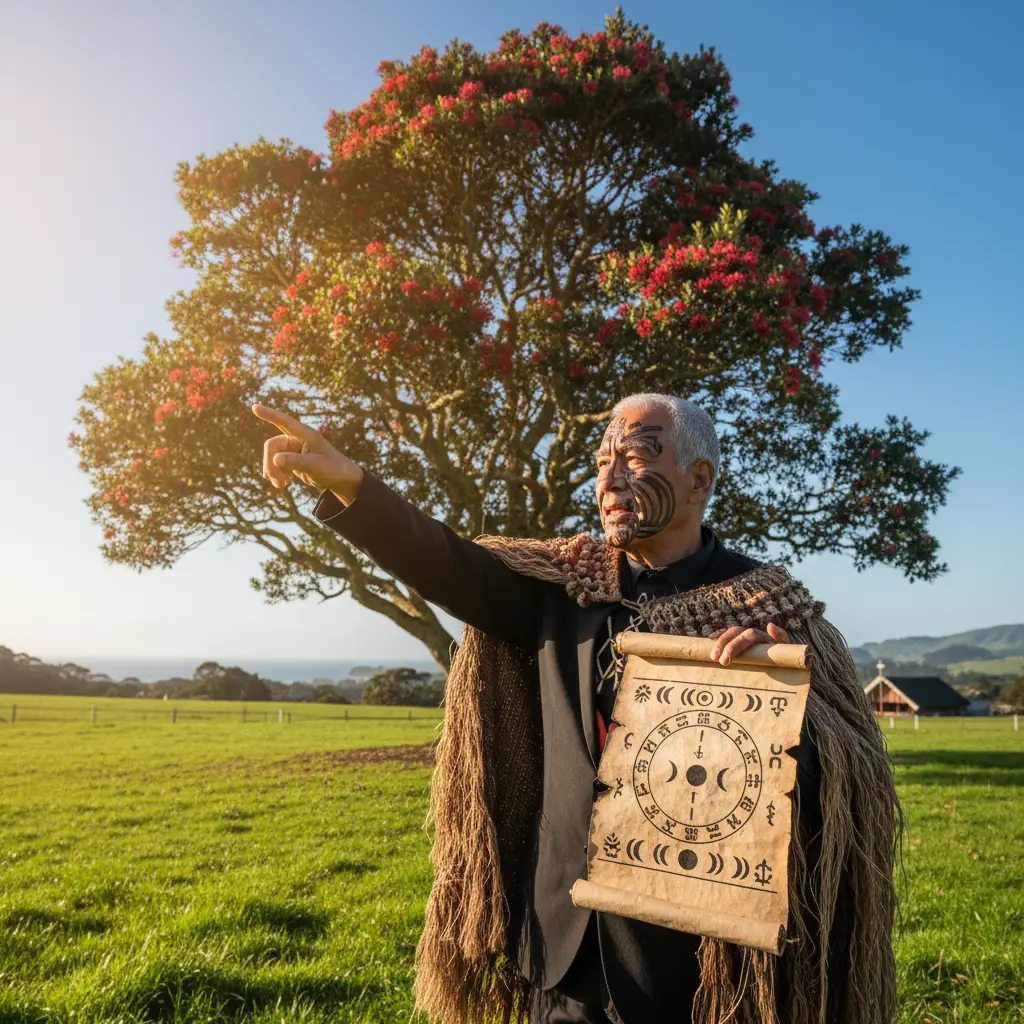
The reliability of tohu depends entirely on synchronicity. For generations, the Pōhutukawa tree blooming was a definitive sign that summer had arrived and seafood (kaimoana) would be abundant. If the tree blooms a month early due to unseasonably warm soil temperatures, but the fish have not yet migrated because ocean currents are still shifting, the tohu becomes “broken.”
This decoupling poses a significant threat to Mahinga Kai (food gathering practices). If harvesters rely on traditional plant signs to initiate fishing expeditions, they may arrive too early or too late, leading to food insecurity. In a modern context, this affects the cultural safety of the Matariki holiday, which is rooted in the celebration of harvest and preparation. When the signs of the earth no longer match the signs of the sky, the fundamental structure of the Maramataka (Māori lunar calendar) faces an unprecedented challenge.
How Do Warming Oceans Affect Star Visibility and Meaning?
While stars themselves are not moved by climate change, our ability to interpret them—and the environmental realities they represent—is being drastically altered. Matariki (the Pleiades cluster) is central to this. Each star within the cluster holds dominion over a specific environmental realm. For example, Waitī watches over fresh water, and Waitā watches over the ocean.
Traditionally, tohunga (experts) would observe the brightness, color, and clarity of these stars at the pre-dawn rising to predict the productivity of the coming season. A hazy appearance might predict a season of scarcity, while clear, bright stars predicted abundance.
Atmospheric Interference and Interpretation
Climate change is altering the atmosphere through which we view these stars. Increased evaporation from warming oceans leads to higher humidity and atmospheric turbulence. This can artificially create the “hazy” appearance that traditionally signaled poor crops, potentially leading to false negatives in prediction. Conversely, extreme drought conditions might alter atmospheric clarity in ways that do not align with traditional readings.
Furthermore, the physical domains the stars represent are changing rapidly. Waitā represents the ocean and its food sources. However, with ocean acidification and rising sea temperatures, the marine ecosystems are collapsing or shifting regardless of the star’s appearance. We are seeing a divergence where the celestial sign might appear “favorable,” but the physical reality of the ocean is under stress. This forces a re-evaluation of how tohu are interpreted: the star may still be a guide, but the baseline for “abundance” has shifted due to human-induced climate degradation.

Why Are Flowering Times and Bird Migrations Shifting?
The most visible evidence of climate change effects on tohu is found in the biological realm. This phenomenon is scientifically known as a phenological shift. In New Zealand, many native species are reacting to temperature changes much faster than others, breaking the ecological chains that sustained them for millennia.
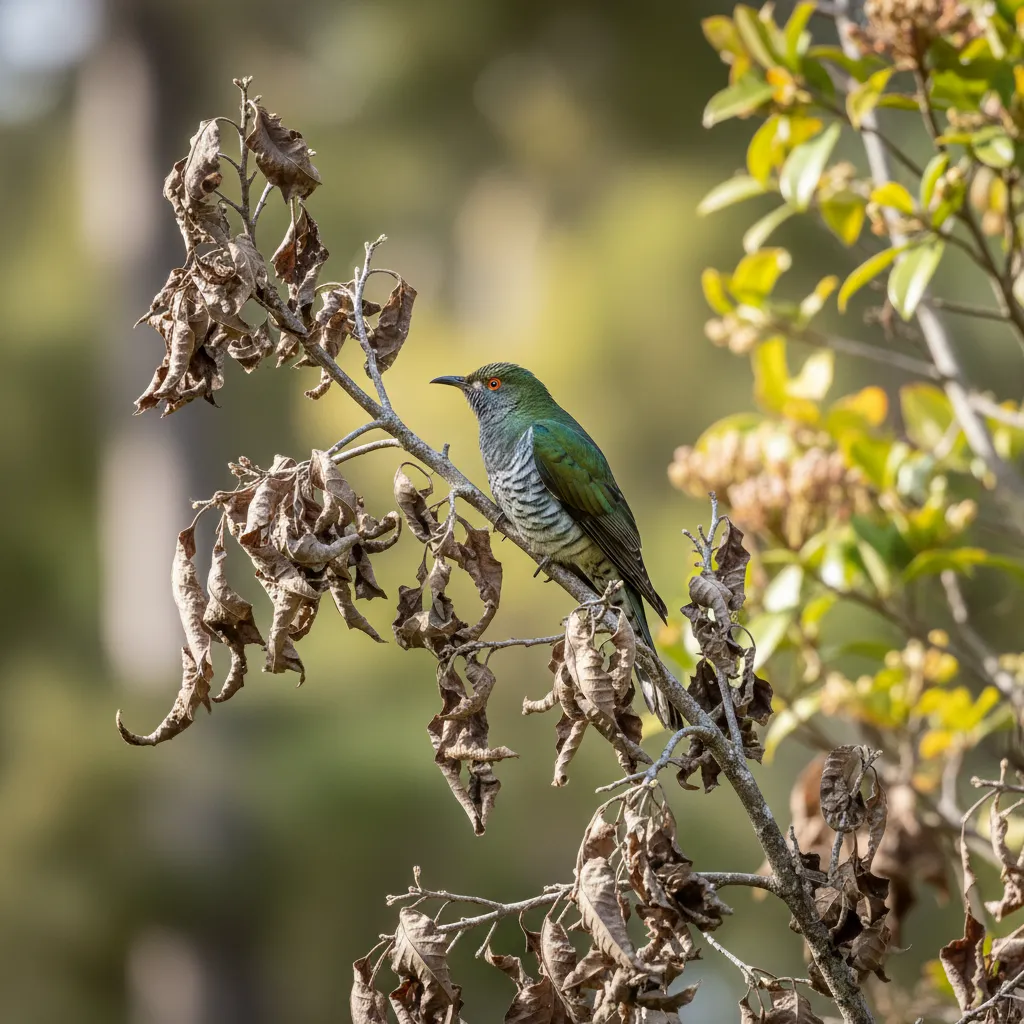
Case Study: The Pīpīwharauroa (Shining Cuckoo)
The arrival of the Pīpīwharauroa is a classic tohu signaling the time to plant kūmara (sweet potato). Traditionally, the bird arrives from its migration when the warmth is sufficient for planting. However, the bird’s migration is triggered by photoperiod (day length), which remains constant. In contrast, the insects the bird feeds on, and the soil temperature required for planting, are driven by thermal conditions.
As springs become warmer earlier, the insects may hatch and die off before the bird arrives, leaving the Pīpīwharauroa starving. Alternatively, if the bird arrives based on day length, but the weather is erratic due to climate instability (e.g., a sudden cold snap in a generally warming trend), the tohu for planting becomes unreliable. If farmers plant the kūmara solely because the bird has arrived, but a climate-change-induced late frost destroys the crop, the utility of the tohu is compromised.
Floral Confusion
Trees such as the Rātā and Pōhutukawa are also displaying “floral confusion.” There have been recorded instances of these trees flowering twice in a year or flowering months out of season due to stress or unseasonal warmth. For Māori, a tree flowering out of season was often considered an omen of misfortune. In the context of climate change, this “misfortune” is literal—it signifies an ecosystem in distress. When indicator species flower too early, they may miss the pollinators that usually service them, leading to reduced seed sets and threatening the long-term survival of the forest (Ngahere).
How Does This Impact Matariki and Indigenous Cultural Safety?
Matariki has recently been formalized as a public holiday in New Zealand, a massive step for cultural recognition. However, the integrity of Matariki is intrinsically linked to the environment. Matariki is not just a day off; it is a ceremony of environmental observation. It is about checking the tohu to ensure the community can survive the winter and thrive in the summer.
When climate change scrambles these signs, it threatens Indigenous Cultural Safety. Cultural safety involves creating an environment where indigenous knowledge is respected and validated. If the environment changes so drastically that traditional knowledge appears “wrong” or “inaccurate” to the uninitiated, it risks undermining the validity of Mātauranga Māori in the public eye.
Moreover, the inability to rely on traditional tohu creates spiritual distress. For Tangata Whenua (people of the land), the environment is an ancestor. Watching these ancestors struggle—seeing the rivers dry up or the stars obscured by pollution and atmospheric haze—is a source of deep grief, known as solastalgia. Protecting the integrity of Matariki requires not just celebration, but active climate action to restore the balance of the tohu.
Adapting Traditional Knowledge to Modern Climate
Despite these challenges, Mātauranga Māori is not static; it is a dynamic system of observation that has always adapted. Māori ancestors navigated across the vast Pacific, adapting their knowledge of stars and currents to new hemispheres. The current climate crisis requires a similar leap in adaptation.
Today, tohunga and Māori scientists are working together to recalibrate the tohu. This involves:
- Recording New Baselines: documenting the new flowering times and migration patterns to establish a revised Maramataka that reflects the current climate reality.
- Hybrid Knowledge Systems: Combining ancient wisdom with modern climate science. For example, using NIWA (National Institute of Water and Atmospheric Research) data alongside traditional observation to make planting decisions.
- Restoration as Tikanga: Shifting the focus from merely reading signs to healing the source of the signs. Kaitiakitanga (guardianship) is evolving into active climate resilience work, such as riparian planting to cool waterways, ensuring that the tohu of the river remain viable.
The resilience of the culture lies in its ability to observe the changes and modify practices without losing the underlying values. The tohu may change, but the responsibility to the land remains constant.

People Also Ask
What is the relationship between climate change and Maramataka?
Climate change disrupts the Maramataka (Māori lunar calendar) by altering the biological cues that usually align with lunar phases. While the moon’s cycle remains constant, the seasonal responses of plants and animals (like flowering or fish runs) are shifting due to warming temperatures, creating a misalignment between the calendar’s predictions and environmental reality.
How does climate change affect the stars of Matariki?
While climate change does not physically alter the stars, it affects atmospheric conditions (cloud cover, humidity, haze) which changes how we view them. More importantly, it degrades the environments the stars represent (e.g., Waitā represents the ocean), meaning the star’s traditional signal of abundance may no longer match the depleted state of the natural resource.
What are examples of biological tohu affected by warming?
Common examples include the Pōhutukawa tree flowering earlier than December, the Pīpīwharauroa (shining cuckoo) arriving after its food source has peaked, and whitebait (inanga) runs becoming unpredictable due to changing river temperatures and currents.
Why is cultural safety important in the context of climate change?
Cultural safety ensures that indigenous knowledge systems are respected and preserved. Climate change threatens the viability of traditional practices (like gathering mahinga kai). Protecting the environment is therefore essential to protecting the culture, identity, and mental well-being of indigenous peoples.
Can Mātauranga Māori help fight climate change?
Yes. Mātauranga Māori offers a holistic approach to environmental management that emphasizes long-term guardianship (kaitiakitanga) over short-term extraction. These principles of working with nature rather than against it are vital for developing sustainable climate adaptation strategies.
What happens when tohu are broken?
When tohu are broken (desynchronized), it leads to uncertainty in resource management. Harvests may fail, planting times may be missed, and the cultural transmission of knowledge to the next generation becomes difficult, as the “textbook” of the natural world is no longer accurate.