
A culturally safe corporate gifting policy for Matariki is a structured HR framework that guides organizations in selecting staff rewards that respect Māori tikanga (customs). It addresses the industry-wide lack of policy templates by establishing protocols for sourcing from verified Indigenous businesses, avoiding cultural appropriation, and ensuring gifts align with the values of remembrance, celebrating the present, and looking to the future.
As Aotearoa New Zealand embraces Matariki as a public holiday, Human Resources departments and executive leadership teams face a unique challenge. While the intention to celebrate staff and acknowledge the Māori New Year is strong, there is a significant infrastructure gap in corporate governance regarding indigenous cultural safety. Specifically, the lack of policy templates tailored to indigenous celebrations leaves organizations vulnerable to tokenism, cultural misappropriation, and reputational damage.
Transitioning from standard Christmas-centric gifting models to a culturally responsive framework requires more than just buying local; it requires a fundamental shift in how we view reciprocity and value within a corporate setting. This comprehensive guide serves to fill that void, providing the rationale, strategy, and text blocks necessary to build a robust Matariki gifting policy.

Why is there a lack of policy templates for Indigenous holidays?
The corporate world has long operated on Eurocentric governance models. Employee handbooks and procurement policies are typically designed around fiscal years, secular western holidays, or Christian traditions (like Christmas bonuses). When Matariki was legislated as a public holiday, it introduced a Te Ao Māori (Māori worldview) concept into a western corporate structure.
The current lack of policy templates exists because standard procurement rules—which prioritize the lowest cost or existing large-scale supplier contracts—often conflict with the principles required for indigenous gifting. Indigenous gifting prioritizes relationship (Whanaungatanga), sustainability (Kaitiakitanga), and local provenance over mass production and cost-minimization.
This void creates operational paralysis. HR managers want to “do the right thing” but lack the codified language to justify higher spend per unit for artisanal goods or to restrict the purchase of culturally insensitive items. Without a specific template, decisions are made ad-hoc, increasing the risk of offending staff or stakeholders.
What is a culturally sensitive gifting policy?
Cultural safety extends beyond cultural awareness. It is about analyzing power imbalances, institutional discrimination, and the nature of relationships. In the context of gifting, a culturally sensitive policy ensures that the gift honors both the recipient and the culture from which the holiday originates.
The Principle of Utu (Reciprocity)
In Te Ao Māori, gifting is not merely a transaction; it is an exercise in Utu—reciprocity and balance. A corporate gift during Matariki should not be seen as a “bonus” for labor extracted, but as a restoration of balance and an acknowledgment of the person’s mana (prestige/authority). Your policy must reflect this by shifting language from “rewarding performance” to “acknowledging contribution and connection.”
Alignment with Matariki Values
Your policy must explicitly state that gifts should align with the three major themes of Matariki:
- Remembrance: Honoring those who have passed (often reflected in charitable donations or legacy gifts).
- Celebrating the Present: Gathering and sharing food (Kai).
- Looking to the Future: Sustainability and growth (planting trees, sustainable goods).
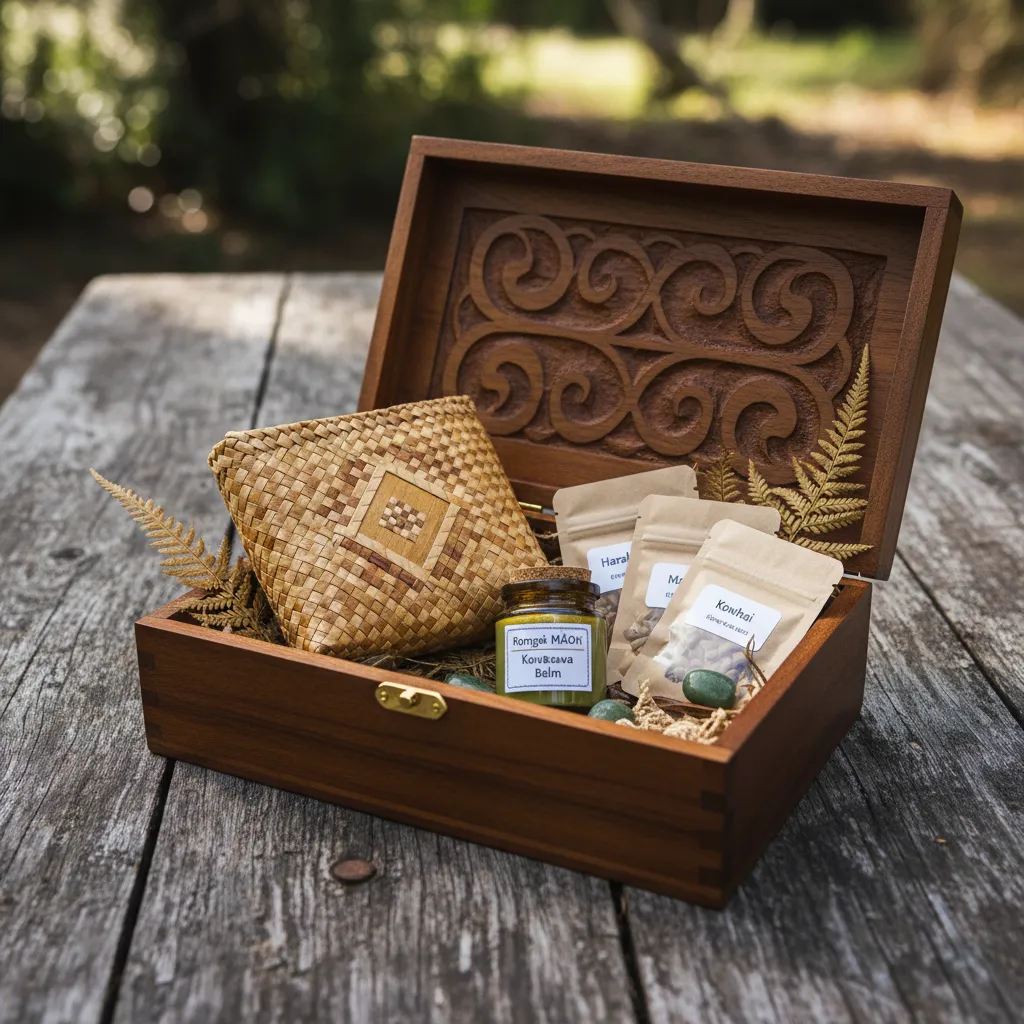
How to fix tokenism in staff rewards?
The most significant risk resulting from the lack of policy templates is the default to tokenism. Tokenism occurs when a company makes a superficial or symbolic effort to be inclusive to give the appearance of diversity, without actual engagement.
Examples of Tokenism vs. Genuine Engagement:
- Tokenistic: Buying mass-produced plastic items (like keychains or mugs) made overseas that feature appropriated Māori designs (Kowhaiwhai or Moko patterns) without artist permission.
- Genuine: Commissioning a local Māori artist to design a specific print for the team, or purchasing products where the intellectual property rights remain with the creator.
- Tokenistic: Giving food items that are unhealthy or cheap, ignoring the significance of Hākari (feasting).
- Genuine: Providing high-quality Kai that is locally sourced, such as Kūmara, Rewena bread, or sustainable seafood, facilitating a shared meal rather than individual consumption.
Your policy must include a “Prohibited Items” list. This list should ban the purchase of “cultural kitsch”—items that cheapen sacred symbols. If a gift involves Māori imagery, the policy must require verification of the artist’s whakapapa (lineage) and permission.
Sourcing from Verified Māori Businesses
To combat the lack of policy templates that focus on supplier diversity, your new framework must mandate the prioritization of Māori-owned businesses. This is often referred to as “social procurement.”
Using Amotai and Other Directories
Amotai is Aotearoa’s supplier diversity intermediary. They verify Māori and Pasifika-owned businesses. Your policy should explicitly state:
“For Matariki related expenditure, the Procurement Team is required to first consult the Amotai register or similar verified directories. A minimum of 50% of the Matariki budget must be directed toward verified Māori-owned enterprises.”
This serves two purposes: it ensures the economic benefits of the holiday return to the community that stewards the tradition, and it guarantees the cultural authenticity of the products.

The Framework: Creating Your Policy
Since there is a market-wide lack of policy templates, we have outlined the necessary sections for you to construct your own. A robust policy should contain the following headers:
- Kaupapa (Purpose): Why are we gifting? (Link to Matariki values).
- Scope: Who is eligible? (Staff, contractors, community partners).
- Cultural Integrity Clause: Rules against appropriation.
- Sustainability Mandate: Alignment with Kaitiakitanga (environmental guardianship).
- Procurement Hierarchy: Order of preference for suppliers.
- Approval Process: Who signs off on the cultural safety of the selection?
Drafting the Policy: Usable Text Blocks
Below are specific text blocks you can copy and adapt to overcome the lack of policy templates in your HR library.
Section 1: Cultural Integrity & Appropriation
“[Company Name] is committed to avoiding cultural appropriation. No gifts shall be purchased that utilize Māori iconography, language, or patterns unless the item has been produced by, or in direct partnership with, Māori artists or entities. Mass-produced items imitating indigenous designs without provenance are strictly prohibited. All gifts must respect the mana of the recipient and the occasion.”
Section 2: Sustainability (Kaitiakitanga)
“In alignment with the Matariki principle of environmental stewardship, all staff gifts must be plastic-free, biodegradable, or reusable. Single-use items are not permitted. Priority is given to products that support the regeneration of the natural environment (e.g., native tree donations, organic seeds, sustainable harvest Rongoā).”
Section 3: Supplier Diversity
“To support the Māori economy, [Company Name] sets a target that [Insert Percentage]% of the Matariki gifting budget be spent with verified Māori-owned businesses. Procurement officers must document efforts to source from these vendors before utilizing standard suppliers.”

Implementation and Feedback Loops
Writing the policy is only the first step. The lack of policy templates often means there is also a lack of implementation experience. To ensure success:
Consultation
If your organization has a Kaitakawaenga (Cultural Advisor) or a Māori staff network, engage them early in the drafting process. Do not ask them to do the work for free; this is a consultation that should be resourced. If you do not have internal expertise, hire an external cultural capability consultant.
Communication
When distributing the gifts, accompany them with a narrative. Explain why this specific gift was chosen, the story of the supplier, and how it connects to Matariki. This turns the gift into an educational opportunity and reinforces the company’s commitment to cultural safety.
Feedback (Whakahoki kōrero)
After the holiday, survey your staff. Ask specifically if they felt the gifting was culturally appropriate and meaningful. Use this data to refine the policy for the following year. Cultural safety is an evolving journey, not a one-time checklist.
By creating a bespoke policy, you not only solve the administrative problem of a lack of policy templates, but you also demonstrate genuine leadership in diversity, equity, and inclusion. You move from performative gestures to substantive economic and cultural support, honoring the true spirit of Matariki.
What creates a lack of policy templates for indigenous holidays?
The lack of policy templates stems from historical corporate governance structures being rooted in Eurocentric traditions. Most HR frameworks were designed around secular or Christian holidays, meaning there is no pre-existing “corporate memory” or documentation for indigenous celebrations like Matariki, leading to a gap in governance resources.
How can companies ensure Matariki gifts are culturally safe?
Companies can ensure cultural safety by sourcing gifts from verified Māori-owned businesses, avoiding mass-produced items that misappropriate Māori designs, and selecting gifts that align with Matariki values such as sustainability, remembrance, and shared feasting.
What is the best way to find Māori suppliers for corporate gifts?
The most reliable method is to use supplier diversity directories like Amotai, which verifies indigenous ownership. Additionally, engaging with local Iwi (tribal) business networks or seeking recommendations from cultural advisors can connect companies with authentic artisans.
Why is sustainability important in Matariki gifting policies?
Matariki is intrinsically linked to the environment and the cycles of nature. Gifting plastic or wasteful items contradicts the concept of Kaitiakitanga (guardianship). Policies should mandate eco-friendly, organic, or regenerative gifts to align with the holiday’s spiritual and physical significance.
Can we use standard corporate branding on Matariki gifts?
It is generally advised to be cautious. Slapping a corporate logo over a traditional design can be seen as commodification or colonization of the art. It is better to include a card with the company’s message rather than branding the Taonga (treasure) itself.
What should be included in a Matariki gifting policy template?
A robust template should include a clear purpose statement (Kaupapa), a definition of prohibited items (to prevent appropriation), a supplier diversity mandate (spending targets with Māori businesses), and sustainability requirements.