
Luxury stargazing NZ refers to exclusive astrotourism experiences in New Zealand’s accredited Dark Sky Sanctuaries, combining high-end accommodation with professional astronomical guidance. It integrates state-of-the-art telescopes, private observatories, and indigenous Māori astronomy (Maramataka) to offer a sophisticated, culturally rich view of the southern celestial hemisphere.
Introduction to New Zealand’s Dark Sky Sanctuaries
New Zealand is widely recognized as one of the premier destinations on Earth for observing the cosmos. Far removed from the light pollution that plagues much of the Northern Hemisphere, Aotearoa (the Māori name for New Zealand) offers a window into the universe that is unparalleled in clarity and depth. For the discerning traveler, luxury stargazing NZ is not merely about looking upward; it is an immersive journey that blends 5-star hospitality with the ancient wisdom of celestial navigation.
The country has aggressively pursued the preservation of its night skies, resulting in the establishment of multiple International Dark Sky Sanctuaries and Reserves. These protected areas ensure that artificial light does not encroach upon the pristine darkness required to view the Milky Way, the Magellanic Clouds, and the Aurora Australis in their full glory. When paired with high-end lodges and private guides, these sanctuaries offer a travel experience that feeds both the mind and the spirit.
The Intersection of Luxury Tourism and Cultural Astronomy
The evolution of tourism in New Zealand has moved beyond adrenaline sports and scenic drives. Today, the luxury market is defined by exclusivity, privacy, and deep cultural connection. In the context of astrotourism, this means moving away from crowded bus tours and toward bespoke experiences designed for the individual.
What sets luxury stargazing apart?
Standard stargazing tours often involve large groups and limited time on telescopes. Conversely, luxury stargazing in New Zealand focuses on intimacy and comfort. Imagine soaking in a cedar hot tub under a blanket of stars at a private lodge, or being flown by helicopter to a remote mountain peak for a champagne picnic as the sun sets and the constellations emerge. These experiences often include access to research-grade telescopes and the company of professional astronomers who can tailor the narrative to your specific interests.
The Role of Storytelling
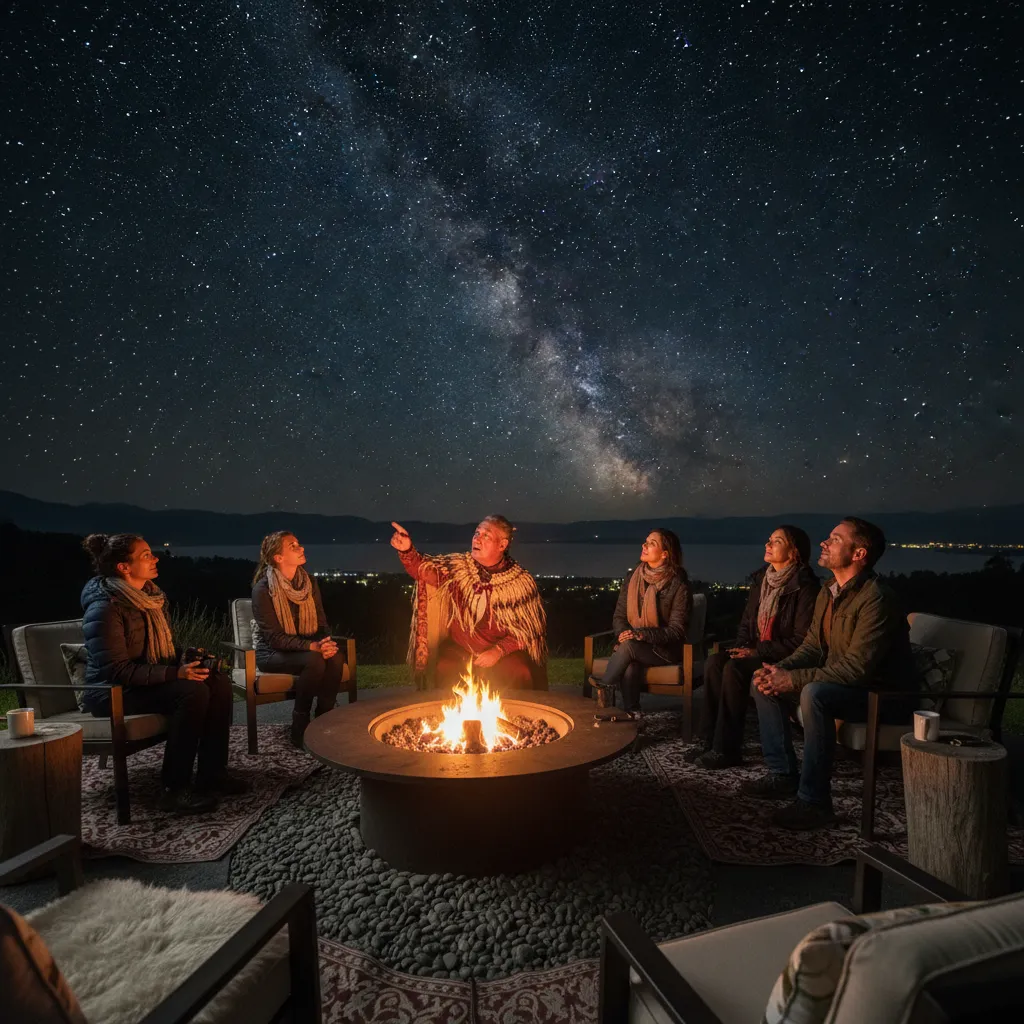
A critical component of high-end astrotourism is the narrative. It is not enough to simply identify Alpha Centauri; the luxury traveler seeks to understand the human connection to the stars. This is where the integration of Māori culture elevates the experience. New Zealand’s indigenous people were master navigators who traversed the vast Pacific Ocean using the stars. Modern luxury tours incorporate these stories, explaining how the cosmos dictated survival, agriculture, and navigation for centuries.
Understanding Maramataka, Matariki, and Puanga
To truly appreciate the New Zealand night sky, one must understand the cultural framework through which it has been viewed for a millennium. This framework is known as Maramataka, the Māori lunar calendar.
What is Maramataka?
Maramataka literally translates to “the moon turning.” Unlike the solar Gregorian calendar, the Maramataka is predictive, using the phases of the moon and the position of stars to guide daily activities such as fishing, planting, and harvesting. In the realm of luxury stargazing, guides who are well-versed in Maramataka provide a layer of depth that transforms a visual spectacle into a cultural education. They explain how the rising of certain stars signals the changing of seasons and the abundance of resources.
The Significance of Matariki
Matariki is the Māori name for the star cluster known globally as the Pleiades or the Seven Sisters. In New Zealand, the heliacal rising of Matariki in mid-winter (typically late June or July) marks the Māori New Year. It is a time of remembrance for those who have passed, celebrating the present, and planning for the future.
For luxury travelers, visiting during the Matariki period offers unique opportunities. Many lodges host special Matariki feasts (hākari) featuring indigenous ingredients, accompanied by storytelling sessions that delve into the specific meanings of the nine stars in the cluster. It is a celebration of renewal that aligns perfectly with the wellness and relaxation focus of luxury travel.
Puanga: The Alternative New Year
It is important to note regional nuances. In some parts of New Zealand, particularly the West Coast and parts of the North Island, the Matariki cluster is obscured by geography. In these regions, the star Puanga (Rigel) serves as the herald of the New Year. High-end tours in regions like Taranaki or Whanganui will focus on Puanga, offering a distinct variation of the celestial narrative. Understanding this distinction demonstrates a respect for local tribal (iwi) knowledge and enriches the traveler’s understanding of New Zealand’s diverse cultural landscape.
Top Regions for Luxury Astrotourism
New Zealand boasts several distinct regions where the infrastructure for luxury stargazing is world-class. Each offers a different landscape and atmospheric character.
1. Aoraki Mackenzie International Dark Sky Reserve
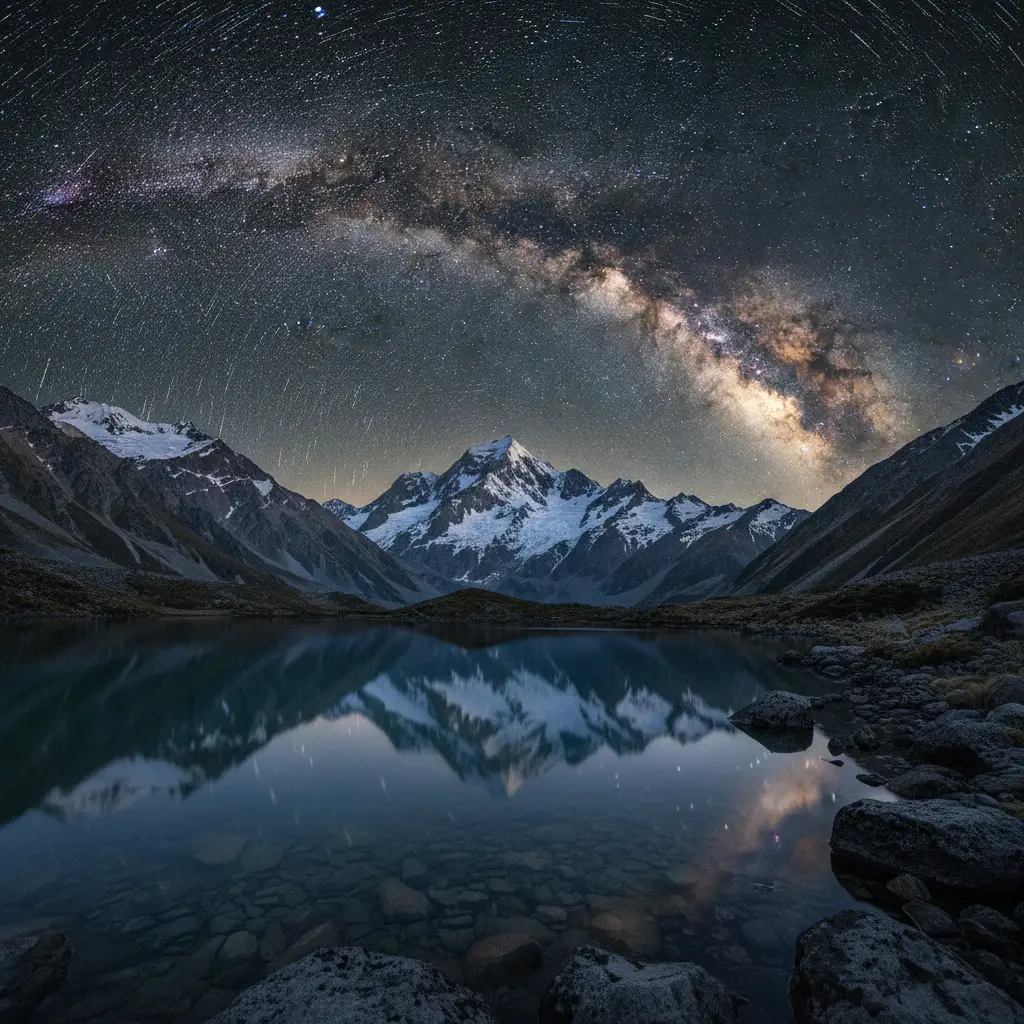
This is the crown jewel of New Zealand’s dark skies. Encompassing Aoraki/Mt Cook National Park and the Mackenzie Basin, it is the largest Dark Sky Reserve in the Southern Hemisphere.
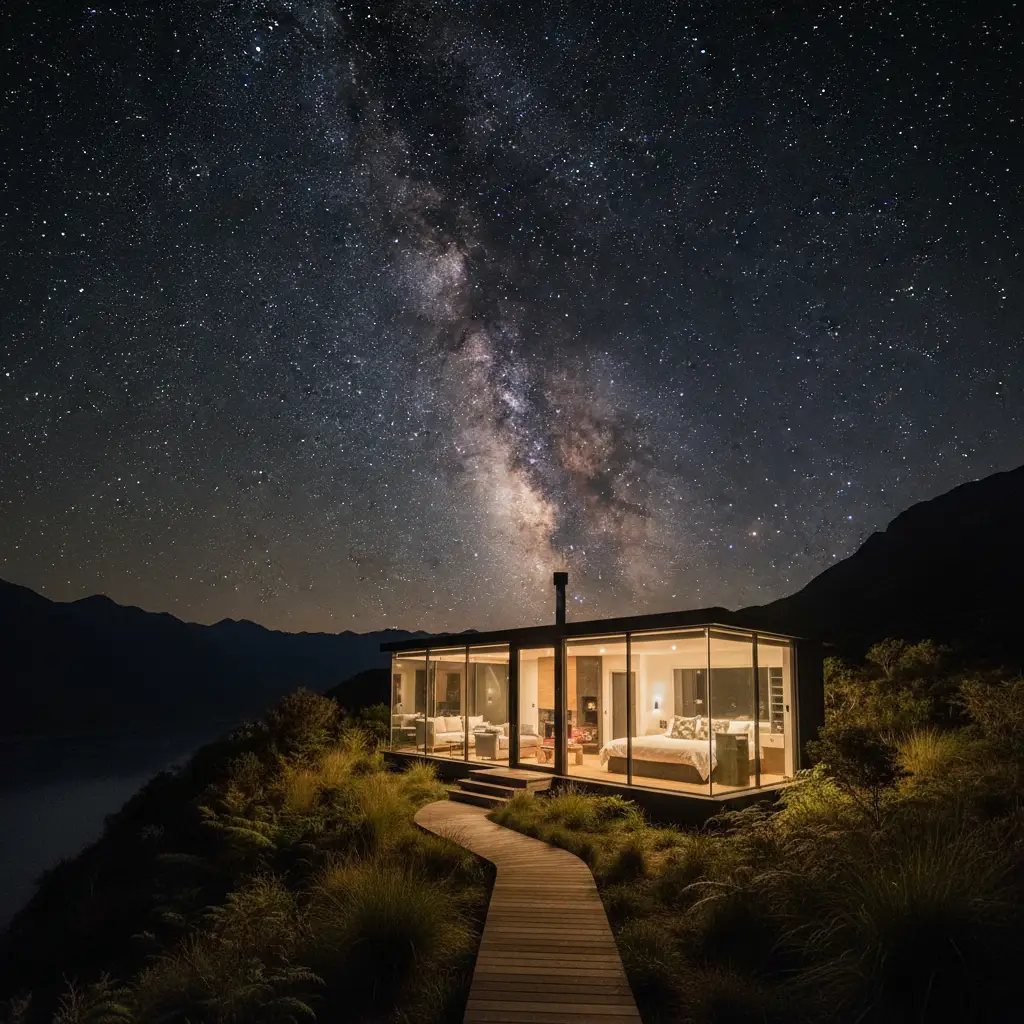
The Luxury Experience: Here, you can find the Mt John Observatory. While public tours are available, luxury travelers can book private nights at the observatory or stay in exclusive lodges like The Lindis. The Lindis features architecture that melts into the landscape, with suites designed specifically for sky viewing. Private astronomers can visit the lodge, setting up portable telescopes on your private terrace.
2. Aotea / Great Barrier Island
Located off the coast of Auckland, Aotea was the first island in the world to be designated an International Dark Sky Sanctuary. Being a sanctuary implies an even deeper level of isolation and darkness than a reserve.
The Luxury Experience: Aotea is off-grid, but that does not mean roughing it. Luxury eco-lodges here rely on solar power and offer a silence that is deafening. The experience here is raw and elemental. Without streetlights or light pollution, the Milky Way casts a shadow. Private guides on the island specialize in combining astronomy with nature walks, highlighting the nocturnal wildlife that thrives in the true dark.
3. Queenstown and the Southern Lakes
While Queenstown is known for adventure, it is also a hub for luxury. The region’s topography, surrounded by mountains, creates pockets of darkness ideal for viewing.
The Luxury Experience: For those staying at ultra-luxury lodges like Blanket Bay or Matakauri Lodge, stargazing is often an inclusive amenity. However, for a truly unique experience, one can take a private gondola ride to the Skyline observatory for a VIP dinner and viewing session, or charter a helicopter to a remote snow-capped peak for a private astronomy session, far above any low-lying atmospheric haze.
4. Stewart Island / Rakiura
Rakiura translates to “The Land of Glowing Skies.” As the southernmost populated island in New Zealand, it became an International Dark Sky Sanctuary in 2019.
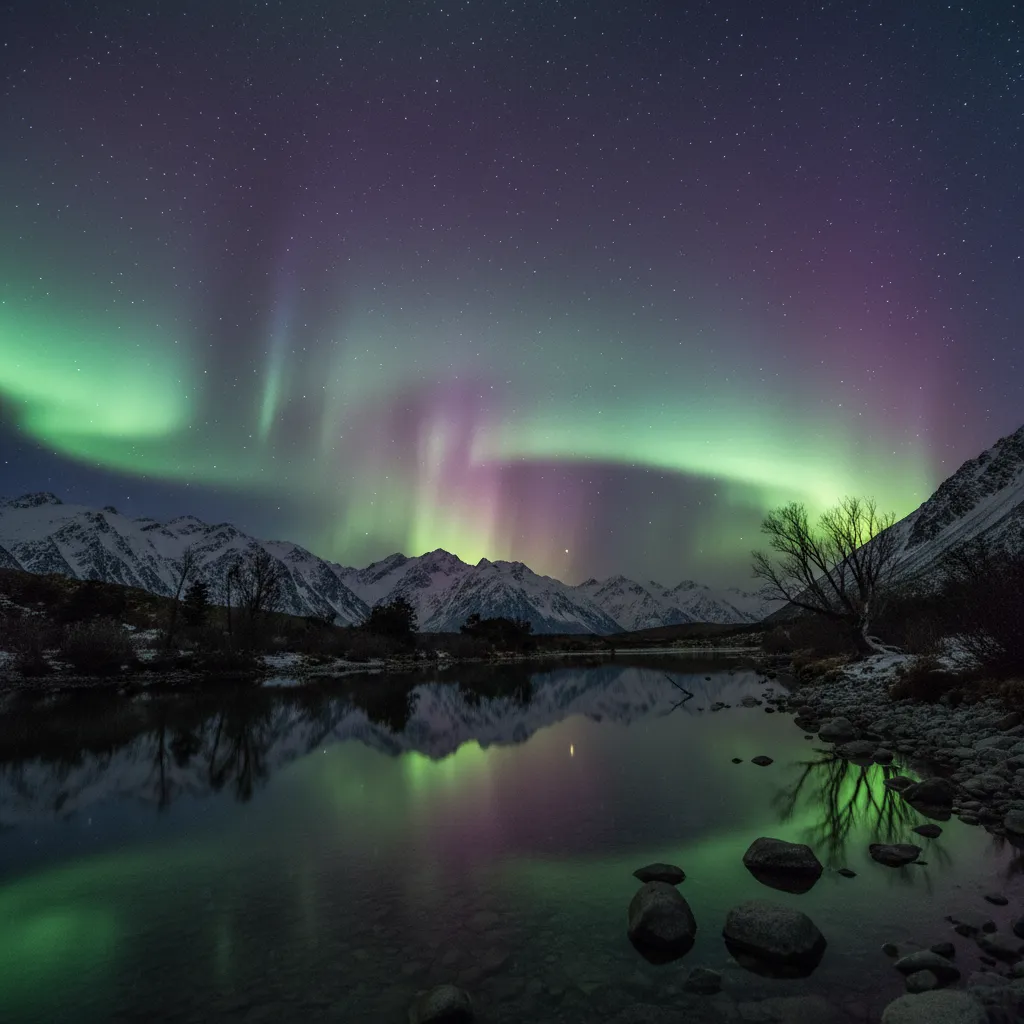
The Luxury Experience: This is the frontier of luxury. Accommodation options are fewer but intimate. The primary draw here is the Aurora Australis (Southern Lights). Because of its latitude, Rakiura offers the highest probability of seeing the aurora. Private charters can take you to secluded beaches where the only light comes from the dancing curtains of green and purple in the southern sky.
Planning Your Dark Sky Experience
Executing a flawless luxury stargazing trip requires attention to detail regarding timing, equipment, and geography.
When is the best time for stargazing in New Zealand?
While stars are visible year-round, the experience changes with the seasons. Winter (June to August) offers the longest nights and the clearest, crispest air. This is also the time when the galactic core of the Milky Way is most visible directly overhead, and it coincides with Matariki. However, winter temperatures in the South Island can drop well below freezing.
Summer (December to February) offers warmer nights, making outdoor viewing more comfortable, but the nights are much shorter, with true darkness not setting in until after 10:30 PM. For those prioritizing the Aurora Australis, the equinoxes (March and September) generally offer higher geomagnetic activity.
Essential Gear and Photography
In a luxury context, much of the heavy lifting is done for you. Lodges provide heavy down jackets, blankets, and often heated seating. However, for those interested in astrophotography, bringing the right equipment is vital.
While guides will have high-powered telescopes, capturing the night sky requires a DSLR or mirrorless camera with a wide-angle lens (14mm-24mm) and a fast aperture (f/2.8 or lower). A sturdy tripod is non-negotiable. Many luxury tours now offer “astrophotography workshops” where a professional photographer accompanies you to teach the nuances of long-exposure capture, ensuring you leave with museum-quality images of your experience.
Managing Expectations: The Aurora Australis
A common misconception is that the Southern Lights are a nightly occurrence. They are a solar phenomenon and are unpredictable. When booking a luxury stargazing trip, treat the Aurora as a potential bonus rather than a guarantee. Focus on the certainty of the Dark Sky Sanctuaries—the density of stars, the Magellanic Clouds (dwarf galaxies visible only in the Southern Hemisphere), and the cultural richness of the experience. If the Aurora appears, it is the cherry on top of an already world-class experience.
People Also Ask
What is the best month for stargazing in New Zealand?
The best months for stargazing are during the New Zealand winter, specifically June, July, and August. These months provide long nights and the atmosphere is generally crisper and clearer, offering the best views of the Milky Way core and the Matariki cluster.
Can you see the Southern Lights from New Zealand?
Yes, the Southern Lights (Aurora Australis) can be seen from New Zealand, particularly from the lower South Island and Stewart Island (Rakiura). The best chances are during the winter months and around the equinoxes, though they are solar-dependent and never guaranteed.
What is the difference between a Dark Sky Reserve and a Sanctuary?
A Dark Sky Reserve is a dark “core” zone surrounded by a populated periphery where lighting controls are in place to protect the core. A Dark Sky Sanctuary is typically in a very remote location with little to no nearby population, possessing an exceptionally dark sky quality and fragile nocturnal environment.
How much does a luxury stargazing tour cost in NZ?
Prices vary significantly. A private, exclusive tour with an astronomer can range from $500 to $1,500 NZD per couple. Overnight experiences at luxury lodges with integrated astronomy packages can range from $2,000 to over $5,000 NZD per night.
What is Matariki in New Zealand culture?
Matariki is the Māori name for the Pleiades star cluster. Its heliacal rising in mid-winter marks the start of the Māori New Year. It is a time for remembering ancestors, celebrating the present, and planning for the future, and is now a public holiday in New Zealand.
Where is the darkest sky in New Zealand?
Technically, the darkest skies are found in the remote International Dark Sky Sanctuaries like Aotea (Great Barrier Island) and Rakiura (Stewart Island), as well as the core of the Aoraki Mackenzie International Dark Sky Reserve, due to the complete absence of light pollution.