
Eco friendly party supplies in NZ are sustainable alternatives to single-use plastics, typically made from rapidly renewable materials like bamboo, sugarcane pulp (bagasse), fallen palm leaves, or birchwood. To be genuinely eco-friendly in the New Zealand market, these products should be certified home compostable (AS 5810) or commercially compostable (AS 4736), ensuring they return to the earth without leaving toxic residues or microplastics.
What Defines True Eco-Friendly Party Supplies?
When planning an event in Aotearoa, distinguishing between marketing buzzwords and genuine sustainability is crucial. The term “eco-friendly” is often used loosely, but in the context of party supplies, it specifically refers to the lifecycle of the product—from raw material extraction to end-of-life disposal.
True eco-friendly party supplies NZ retailers offer are characterized by three main pillars:
- Renewable Resources: The materials are plant-based and regenerate quickly. For example, bamboo can grow nearly a meter a day, and bagasse is a byproduct of sugarcane processing that would otherwise be waste.
- Chemical-Free Production: The manufacturing process avoids bleaches, dyes, and PFAS (forever chemicals) often found in standard paper plates to make them grease-resistant.
- Certified Compostability: This is the most critical factor for New Zealanders. A product is only truly eco-friendly if it can break down into organic matter. Certification standards like AS 4736 (Commercial Composting) and AS 5810 (Home Composting) provide the assurance needed that the item won’t sit in a landfill for decades.
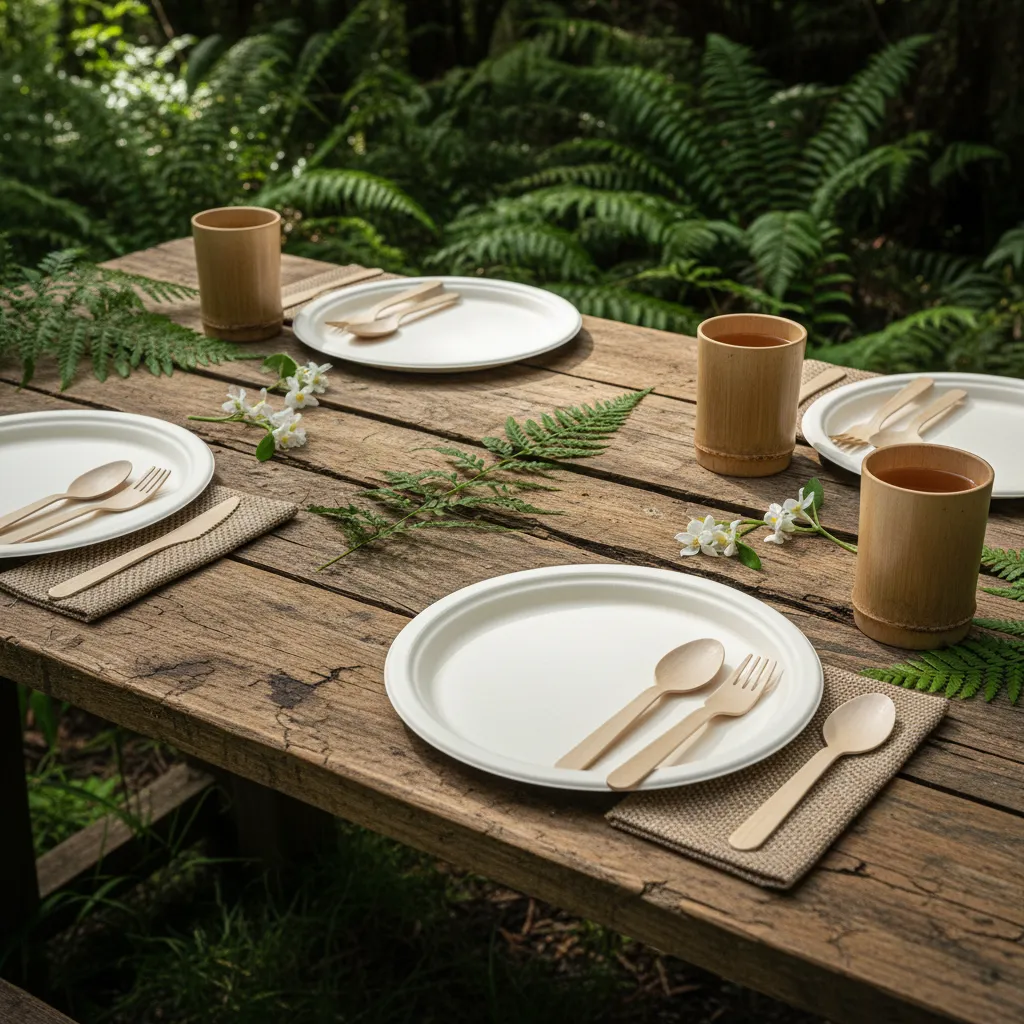
Celebrating Matariki with Kaitiakitanga
As Matariki (the Māori New Year) rises, communities across New Zealand gather to share kai (food), remember those who have passed, and look forward to the future. A central tenet of Te Ao Māori is kaitiakitanga—guardianship and protection of the environment. Hosting a Matariki feast using single-use plastics that clog our landfills contradicts the very spirit of the holiday, which celebrates our connection to Papatūānuku (Mother Earth).
Switching to compostable plates and cutlery is a tangible way to practice kaitiakitanga. By choosing products that return to the soil, hosts honor the cycle of life and renewal that Matariki represents. Whether you are hosting a small whānau dinner or a large community hāngī, the choice of tableware sends a powerful message about your values and respect for the land.
Best Brands for Bamboo and Palm Leaf Plates
In the New Zealand market, several materials dominate the eco-friendly sector. Understanding the difference between them will help you choose the right product for your menu.
Are Palm Leaf Plates Durable?
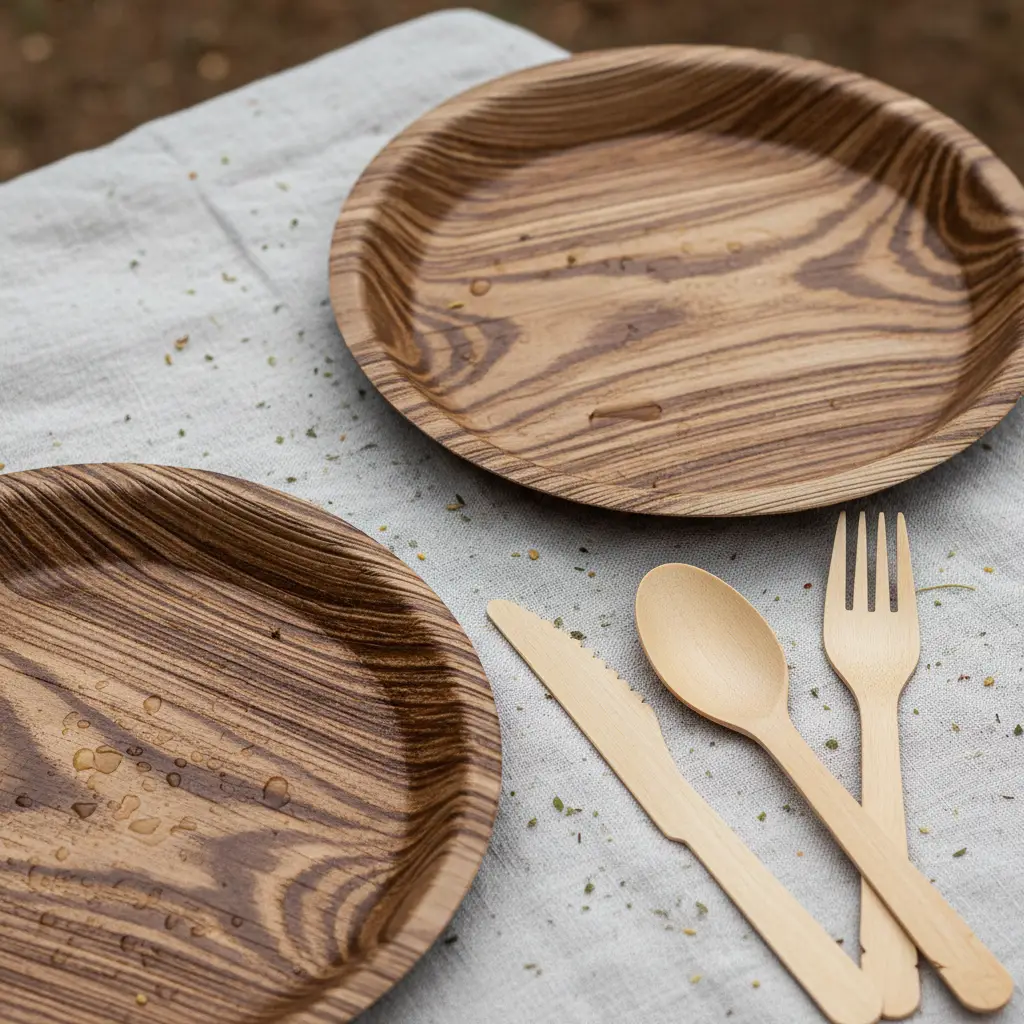
Yes, palm leaf plates are among the most durable disposable options available. Made from the naturally shed sheath of the Areca nut palm, these plates are heat-pressed into shape. They are thick, rigid, and capable of holding heavy, hot, or saucy foods without bending or leaking. Each plate has a unique wood-grain finish, adding an elegant aesthetic to events. Top brands available in NZ often source these ethically from India, ensuring no trees are cut down in the process.
Bamboo vs. Birchwood Cutlery
While often used interchangeably, bamboo and birchwood are the standard for eco-friendly cutlery. Bamboo is technically a grass and is incredibly strong and smooth. Birchwood is also sustainable but can sometimes have a “woody” taste if not coated with a natural food-safe wax. For premium events, look for polished bamboo sets which offer a mouth-feel closer to traditional silverware.
Sugarcane (Bagasse) Clamshells
For takeaway style food or casual BBQs, bagasse is the industry leader. It is lightweight, white (without bleach), and functions similarly to paper but with higher heat resistance. Brands like Ecoware and Innocent Packaging have popularized these in NZ.
Avoiding ‘Greenwashing’ in Party Products
Greenwashing occurs when companies spend more time and money marketing themselves as environmentally friendly than actually minimizing their environmental impact. In the party supply aisle, this is rampant.
The “Biodegradable” Trap
Be wary of products labeled simply as “biodegradable” without further certification. Technically, everything is biodegradable given enough time—even plastic, which takes hundreds of years. This term is unregulated. Instead, look for the word “Compostable.” Compostable means the product will break down into organic compost within a specific timeframe (usually 90-180 days) under specific conditions.
Oxo-Degradable Plastics
Avoid “oxo-degradable” plastics. These are conventional plastics with additives that cause them to fragment into tiny pieces (microplastics) when exposed to UV light. They do not return to nature; they simply become invisible pollution. New Zealand is moving to phase these out, but they can still be found in older inventory or cheap imports.
Bioplastics (PLA) Limitations
Polylactic Acid (PLA) is a plastic made from corn starch. It looks like clear plastic and is often used for cold cups. However, PLA generally requires commercial composting facilities (high heat) to break down. It will not break down in your home compost bin, and it cannot be recycled with standard PET plastics. If your region lacks commercial compost collection, PLA may end up in the landfill.
Where to Buy Bulk Compostable Supplies in NZ
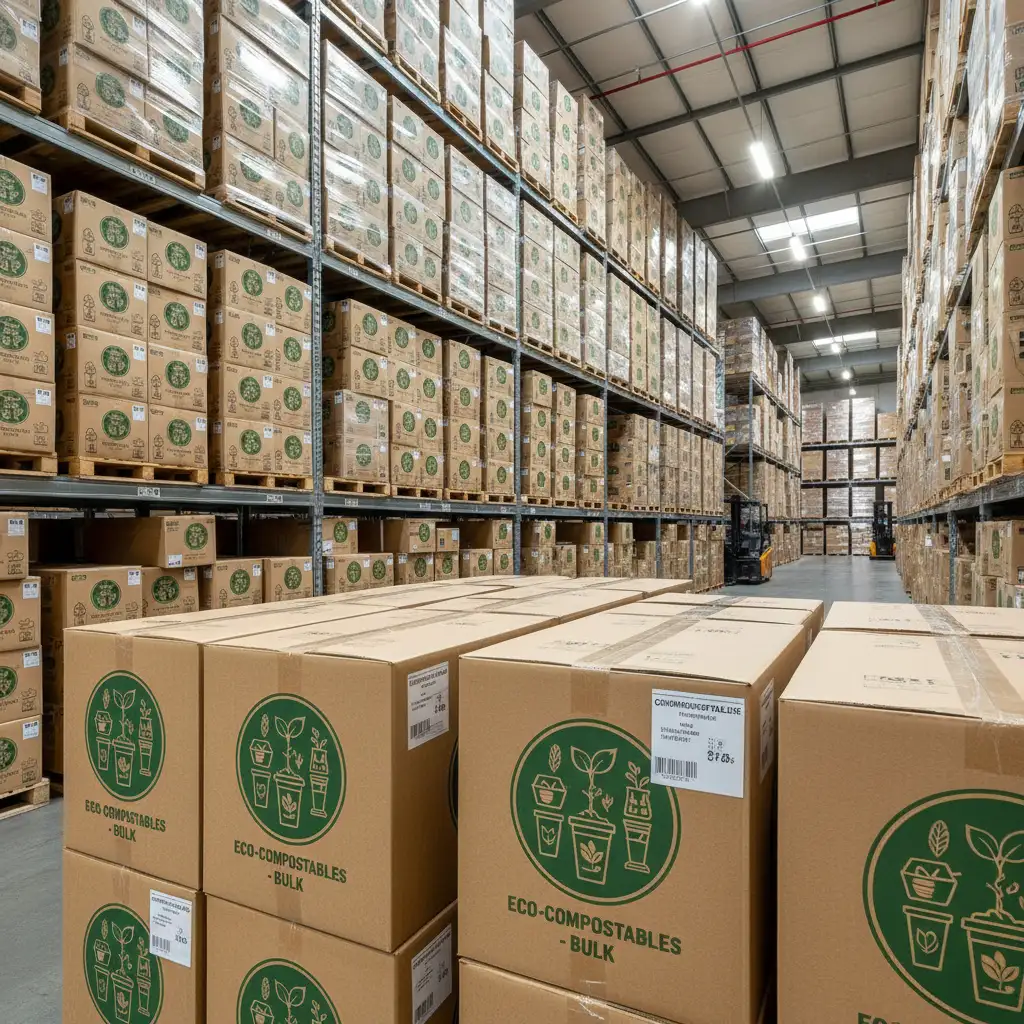
For large events, weddings, or corporate functions, buying in bulk is essential to keep costs down. New Zealand has several dedicated suppliers who prioritize sustainability.
Innocent Packaging
A market leader in NZ, Innocent Packaging offers a wide range of plant-based packaging. They are renowned for their transparency and commitment to circular economy principles. They offer bulk cartons of hot cups, cold cups, and takeaway containers suitable for large scale catering.
Ecoware
Ecoware is another giant in the Kiwi sustainable packaging scene. They provide comprehensive certification for their products. Their range includes heavy-duty sugarcane plates and bowls that are perfect for hāngī or heavy meals. They sell bulk cartons directly to the public and businesses.
Green Choice
Often found in wholesale environments, Green Choice offers a variety of bagasse and wooden cutlery options. They are a reliable option for those looking for cost-effective bulk solutions without compromising on environmental standards.
Local Auckland and Wellington Suppliers
While online ordering is convenient, sometimes you need supplies immediately or prefer to support local brick-and-mortar businesses.
Auckland Suppliers
In Auckland, you can visit showrooms or pick up from warehouses for brands like Ecoware (located in Avondale). Additionally, specialty stores like Commonsense Organics and Huckleberry stock smaller packs of eco-friendly party supplies for home parties. For bulk hospitality needs, Southern Hospitality in Parnell stocks a wide range of Green Choice and other compostable brands.
Wellington Suppliers
Wellington’s eco-conscious culture means many local grocers stock these items. Moore Wilson’s is the go-to destination for bulk party supplies in the capital. They have a dedicated section for foodservice packaging where you can buy sleeves of compostable cups and plates. Commonsense Organics (locations in Wellington City, Kilbirnie, Lower Hutt) is excellent for retail-sized packs of palm leaf plates and bamboo cutlery.
Disposal: How to Compost Your Party Waste
Buying the right product is only half the battle; disposing of it correctly completes the circle. If you throw a compostable plate into a general landfill bin, it may not break down efficiently due to a lack of oxygen, potentially producing methane.
Commercial Collection
If you are hosting a large event, consider hiring a bin from a service like WeCompost (Auckland) or similar organic waste collectors in your region. They take the waste to commercial facilities where temperatures are high enough to break down PLA cups and bioplastics rapidly.
Home Composting
For home parties using bagasse, palm leaf, or birchwood, you can compost these in your backyard bin. Tear the plates into smaller pieces to speed up the process. Ensure your compost pile has a good mix of “browns” (carbon) and “greens” (nitrogen) and stays moist. Note that bioplastic (PLA) clear cups should generally not go in home compost unless explicitly marked “Home Compostable” (AS 5810).
Beyond Tableware: Sustainable Decor Ideas
To host a genuinely zero-waste event, look beyond the plates. Traditional balloons and plastic bunting are significant polluters.
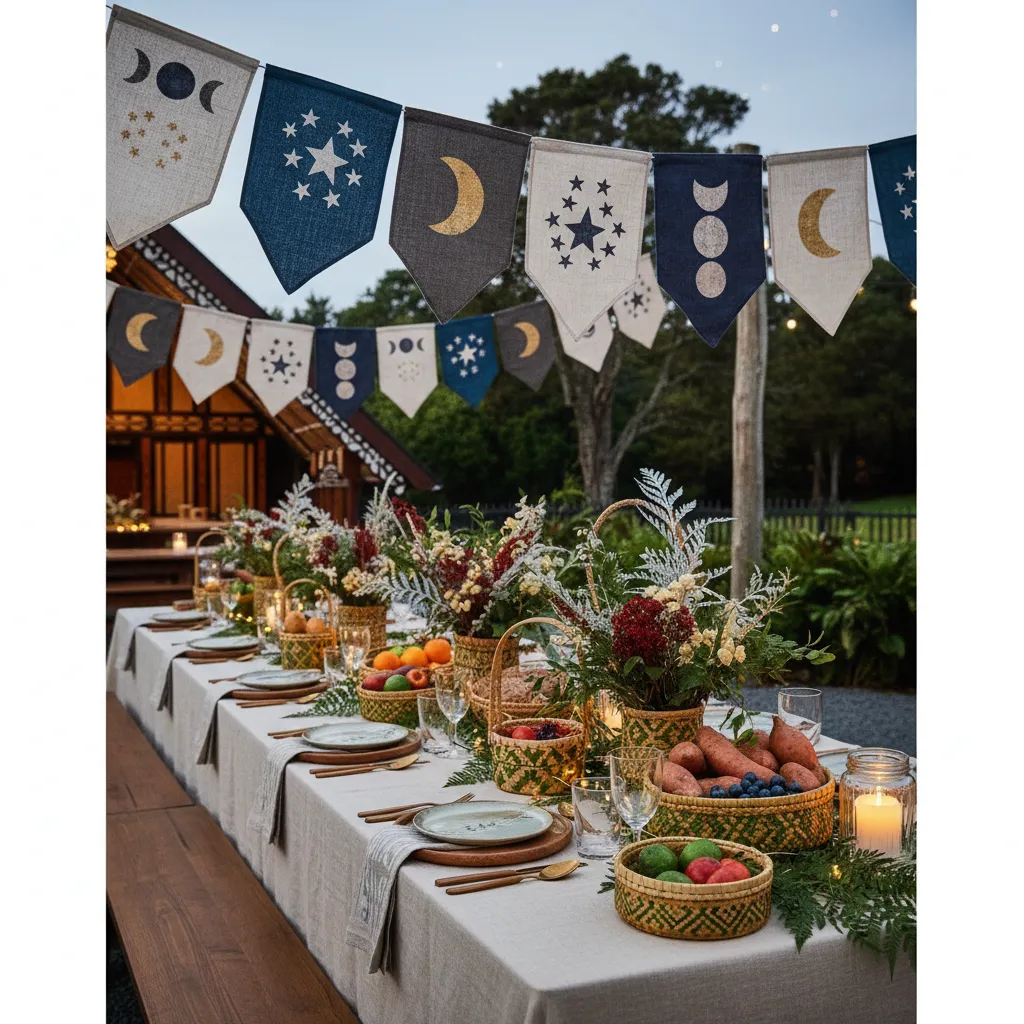
- Harakeke Weaving: Incorporate traditional Māori weaving using flax (harakeke) for table runners or food baskets (konc).
- Fabric Bunting: Use reusable cloth bunting instead of plastic streamers.
- Living Centerpieces: Use potted native plants like Kawakawa or ferns as table decorations, which can be planted in the garden afterwards.
- Edible Decor: Use fruits and vegetables as part of the table setting aesthetic.
Frequently Asked Questions
Are paper plates actually eco-friendly?
Not always. Standard paper plates are often coated with a thin layer of plastic (polyethylene) to prevent them from getting soggy. This coating makes them difficult to recycle and unsuitable for composting. Always look for “plastic-free” or “compostable” paper plates made from bagasse or uncoated board.
Can you put compostable plates in the recycling bin?
No. Compostable plates are made of organic fibers that cannot be processed by standard plastic or paper recycling machinery. Putting them in the recycling bin contaminates the recycling stream. They belong in a compost bin or, if necessary, the general waste bin.
What is the difference between biodegradable and compostable?
Biodegradable is a vague term meaning a material will eventually break down, but it doesn’t specify how long or if it leaves toxic residue. Compostable is a regulated term meaning the material will break down into nutrient-rich soil within a specific timeframe under specific conditions (usually certified by standards like AS 4736).
How long do bamboo plates take to decompose?
In a home compost environment, untreated bamboo or palm leaf plates typically take 4 to 6 months to decompose completely. In a commercial composting facility with higher temperatures, this process can happen in as little as 8 to 12 weeks.
Are palm leaf plates reusable?
While designed as single-use disposables, palm leaf plates are very sturdy. If they have only been used for dry foods (like crackers or bread), they can be wiped down and reused. However, if used for hot or oily foods, they should be composted after one use for hygiene reasons.
Where can I drop off compostable packaging in NZ?
Currently, public drop-off points are limited. However, some community gardens and farmers’ markets accept compostable packaging. The best option is to use a private collection service like WeCompost or check if your local council offers a food scraps collection bin that accepts certified packaging (rules vary by council).