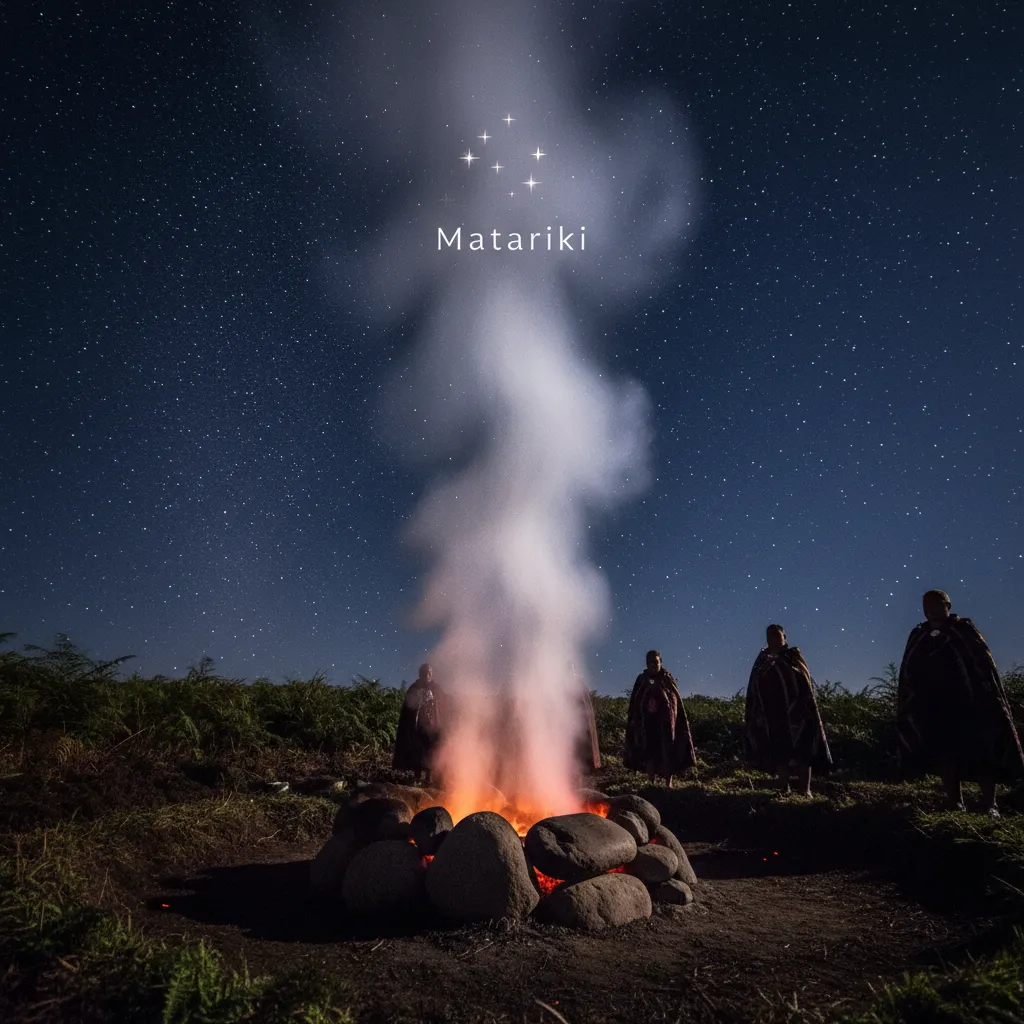
A Hautapu ceremony is a sacred Māori ritual performed during the Māori New Year, marked by the rise of Matariki or Puanga. It involves cooking specific foods in a ceremonial earth oven (umu) to create steam. This steam is released to ‘feed’ the stars, acting as a spiritual offering to thank the atua (gods) for the past year and ensure a bountiful harvest for the year ahead.
What is a Hautapu Ceremony?
The Hautapu ceremony stands as one of the most significant spiritual observances in the Māori calendar. Translated literally, “hau” means wind, air, or breath, and “tapu” means sacred. Together, the term encapsulates the process of offering a sacred scent or breath to the heavens. While the celebration of the Māori New Year involves feasting, remembrance of the dead, and planning for the future, the Hautapu is the solemn liturgical core of the event.
At its heart, the ceremony is about reciprocity. In Te Ao Māori (the Māori world view), humanity is deeply interconnected with the natural environment and the cosmos. The stars are not merely distant celestial bodies; they are tohu (signs) and atua (deities) that govern the weather, the tides, and the growth of food, highlighting The Connection Between Matariki and Navigation in Māori Culture. By performing a Puanga hautapu ceremony, the community acknowledges that their survival depends on these environmental forces.
The ritual is traditionally conducted in the pre-dawn hours, known as the “wehenga o te pō” (the separation of the night), just before the rising of the sun. This is the time when the veil between the physical world and the spiritual world is believed to be thinnest. It is a moment of high solemnity where tohunga (experts/priests) chant karakia (prayers) to clear the way for the new year, removing the tapu of the past and instituting the noa (common/free) state for the future.
Puanga vs. Matariki: Regional Distinctions
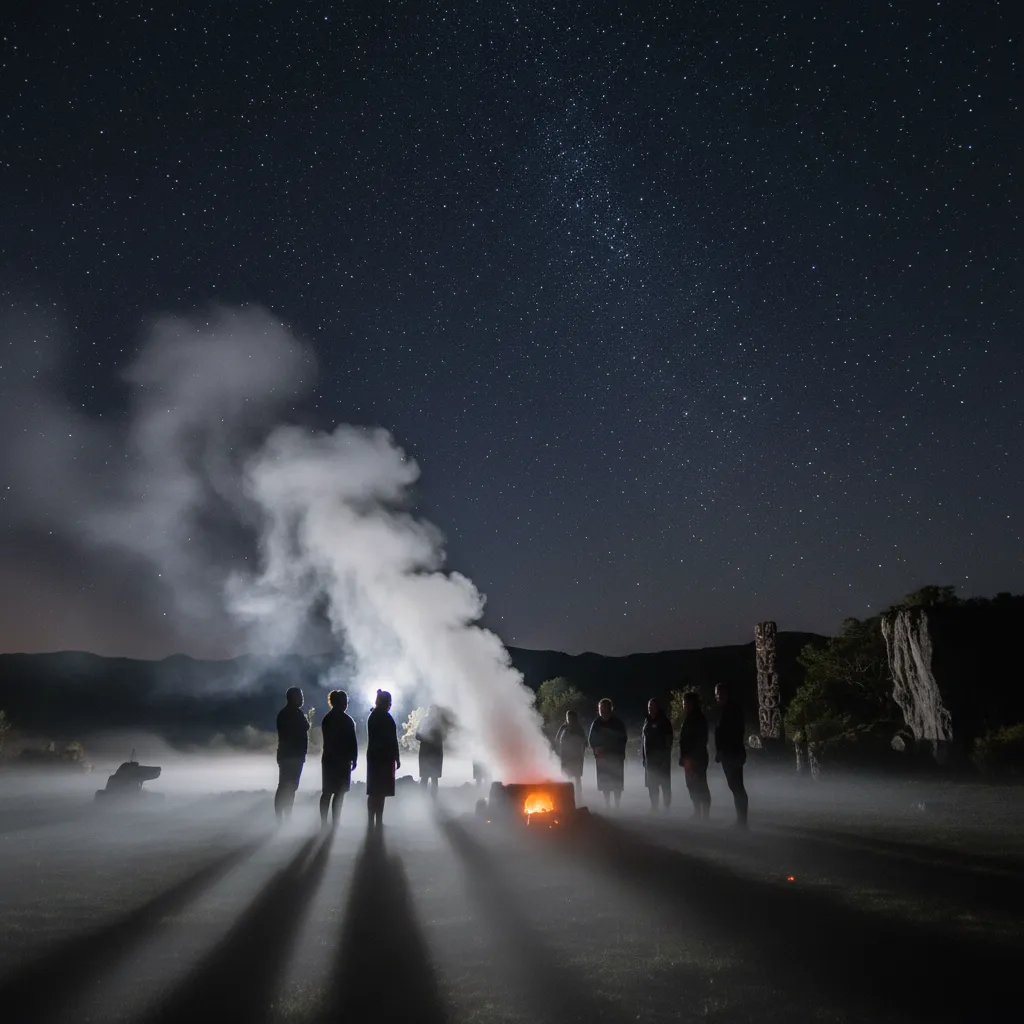
While Matariki (the Pleiades star cluster) is the most nationally recognized signifier of the Māori New Year, it is not the primary marker for all iwi (tribes). Understanding the Puanga hautapu ceremony requires recognizing the astronomical geography of Aotearoa (New Zealand) through an Interactive Night Sky Map Tool: Locate Matariki Now.
Why is Puanga celebrated instead of Matariki in some regions?
In certain parts of New Zealand, specifically the West Coast of the North Island (such as Taranaki and Whanganui), the Matariki cluster is physically obstructed by mountain ranges or is difficult to see on the eastern horizon during the mid-winter months. For these iwi, the star Puanga (Rigel), which is the brightest star in the constellation Orion, is the principal signifier of the New Year.
Puanga rises slightly earlier and higher in the sky than Matariki, making it a clearer and more reliable marker for these regions. Consequently, the ritual is often referred to locally as a Puanga ceremony. However, the mechanics of the Hautapu—the feeding of the stars—remain consistent. Whether the offering is directed specifically toward Puanga, or toward Puanga as the herald of the Matariki cluster, the intent is the same: to honor the celestial bodies that dictate the seasonal cycles.
This regional variation highlights the localized nature of Māori astronomy. It is not a monolithic system but one adapted to the specific landscapes and horizons of different tribal territories. Today, as the Māori New Year becomes a public holiday, the distinction of the Puanga hautapu ceremony serves as a crucial identity marker for the peoples of Taranaki, Whanganui, and parts of the Far North.
Te Umu Kohukohu Whetū: The Oven of the Stars
The physical vessel for the Hautapu ceremony is a specialized earth oven known as Te Umu Kohukohu Whetū—”The steaming earth oven of the stars.” This is not a standard hāngī used for cooking a community feast; it is a ritualistic device constructed for a singular, sacred purpose.
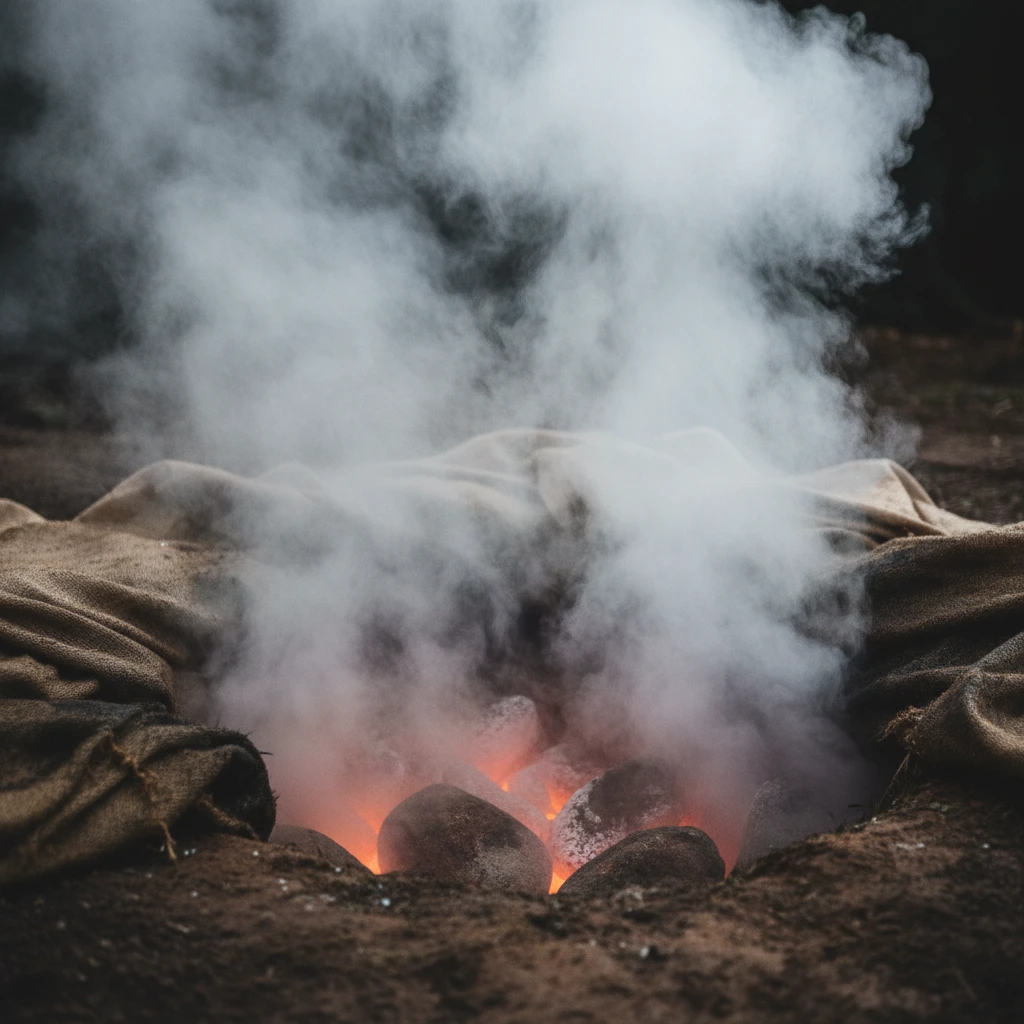
The construction of the umu follows strict protocols. It is dug into the earth, representing the womb of Papatūānuku (Earth Mother). Volcanic stones are heated in a separate fire until they are white-hot, then transferred into the pit. Unlike a cooking hāngī which creates a sealed pressure cooker environment to retain moisture, the objective of the Umu Kohukohu Whetū is to generate a distinct, visible column of steam.
The timing is critical. The food must be placed on the hot stones, covered with wet vegetation (often fern fronds or wet cloth), and allowed to cook while the stars are still visible. The ceremony reaches its climax when the covering is removed. The steam, infused with the essence (mauri) of the food, rises rapidly into the cold winter air. This rising steam is the “hautapu”—the sacred wind or breath—that travels upward to sustain the stars.
Sacred Ingredients: Foods Used in the Offering
The contents of the Puanga hautapu ceremony are not chosen at random. They are highly symbolic, representing the four main domains of the environment that sustain human life. These domains correspond to specific stars within the Matariki cluster, each of which has dominion over a food source.
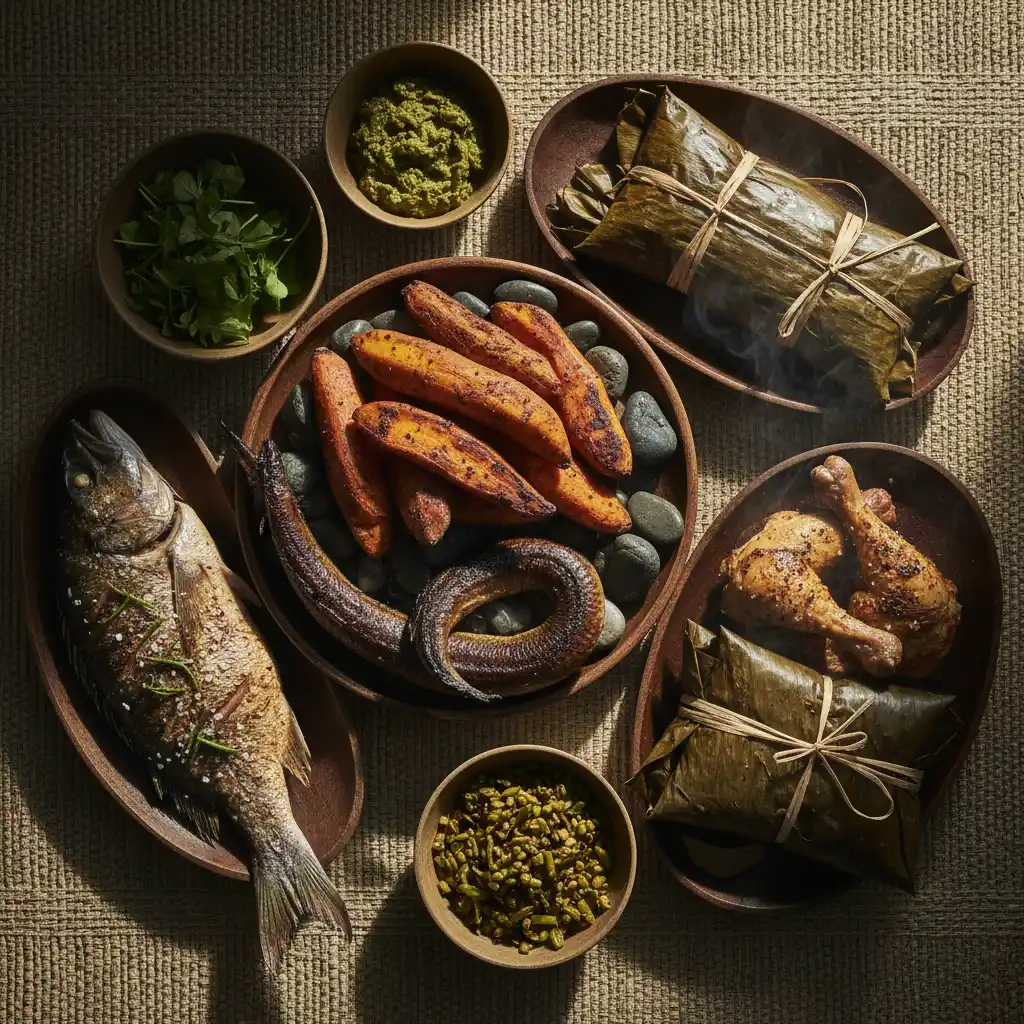
To perform a correct Hautapu, the umu must contain food from each of the following domains:
1. Tupuanuku (Food from the Earth)
This domain includes cultivated crops. The most common offering is Kūmara (sweet potato). Tupuanuku is the star connected to everything that grows within the soil. By offering cooked kūmara, the people thank the earth for the harvest just past and ask for fertile soil in the coming planting season.
2. Tupuarangi (Food from the Sky)
This domain covers birds and anything from the canopy of the forest. Historically, this might have been kererū (wood pigeon) or other forest birds. In modern ceremonies, this is almost exclusively represented by Chicken. Offering bird meat acknowledges the resources found above our heads and the health of the forests.
3. Waitī (Food from Fresh Water)
Waitī is the star associated with lakes, rivers, and streams. The creature offered to represent this domain is the Eel (Tuna). Eels are a staple protein source in Māori history. Their inclusion in the steam offering ensures the continued health of the waterways and the abundance of freshwater species.
4. Waitā (Food from Salt Water)
Waitā watches over the oceans. The offering here is Fish (Ika), usually a species common to the region, such as Snapper or Kahawai. This acknowledges Tangaroa (God of the Sea) and asks for safety and plenty for those who venture out onto the ocean.
It is strictly forbidden to include animals that do not fall into these categories (such as beef or lamb/mutton) in the ritual umu, as these are introduced species that do not have the same whakapapa (genealogical connection) to the Atua of the Māori cosmos in this context.
Divination: Reading the Smoke for Predictions
The Hautapu is not merely a one-way transaction of offering food; it is also a moment of divination. As the steam rises from the Umu Kohukohu Whetū, the Tohunga (expert practitioner) observes the behavior of the smoke and the visibility of the stars to predict the fortunes of the coming year.
This practice calls upon the skill of the Tohunga to interpret environmental signs. The reading of the smoke involves analyzing several factors:
- The Direction: Does the smoke rise straight up, or is it blown sideways? A straight column suggests stability and calm weather, while erratic movement might predict a turbulent year.
- The Density: Thick, rich steam is seen as a good omen, indicating that the offering has been accepted and the stars are “well-fed.”
- The Interaction with the Stars: The goal is for the steam to obscure the stars momentarily. If the stars are bright and clear, and the steam reaches them, it is a sign of a prosperous year ahead.
This part of the ceremony connects the physical act of cooking with the metaphysical act of communion. It reinforces the role of the Tohunga as the intermediary between the community and the cosmos. If the signs are negative, the community knows to prepare for a harsh winter or a difficult growing season, allowing them to ration resources accordingly.
Modern Adaptations and Cultural Revitalization
For many years, the practice of the Hautapu lay dormant in many regions, a casualty of colonization and the suppression of Māori spiritual practices. However, the last two decades have seen a massive resurgence in the observation of Matariki and Puanga, bringing the Hautapu back into the public consciousness.
Today, Puanga hautapu ceremonies are performed not only on marae (tribal meeting grounds) but also in public spaces, facilitated by city councils and tourism organizations committed to cultural education. These modern adaptations balance sacredness with inclusivity.
From Private Ritual to Public Celebration
While the core elements—the umu, the specific foods, and the pre-dawn timing—remain unchanged, the context has shifted. Modern ceremonies often include:
- Educational Components: Tohunga or cultural guides explaining the steps to the public as they happen, demystifying the process for non-Māori, often using Puanga Teaching Resources & Lesson Plans.
- Technology: The use of sound systems to amplify the karakia so that large crowds (sometimes numbering in the thousands) can participate in the chanting.
- Remembering the Dead: The ceremony often includes a “mihi ki te hunga mate” (acknowledgment of the dead), where the names of those who have passed in the previous year are called out to travel into the sky to become stars.
This revitalization is crucial for regional tourism in New Zealand. Regions like Taranaki and Whanganui utilize the unique Puanga aspect of their celebrations to attract visitors looking for authentic cultural experiences. It transforms the New Year from a generic holiday into a deeply rooted, place-based observance.
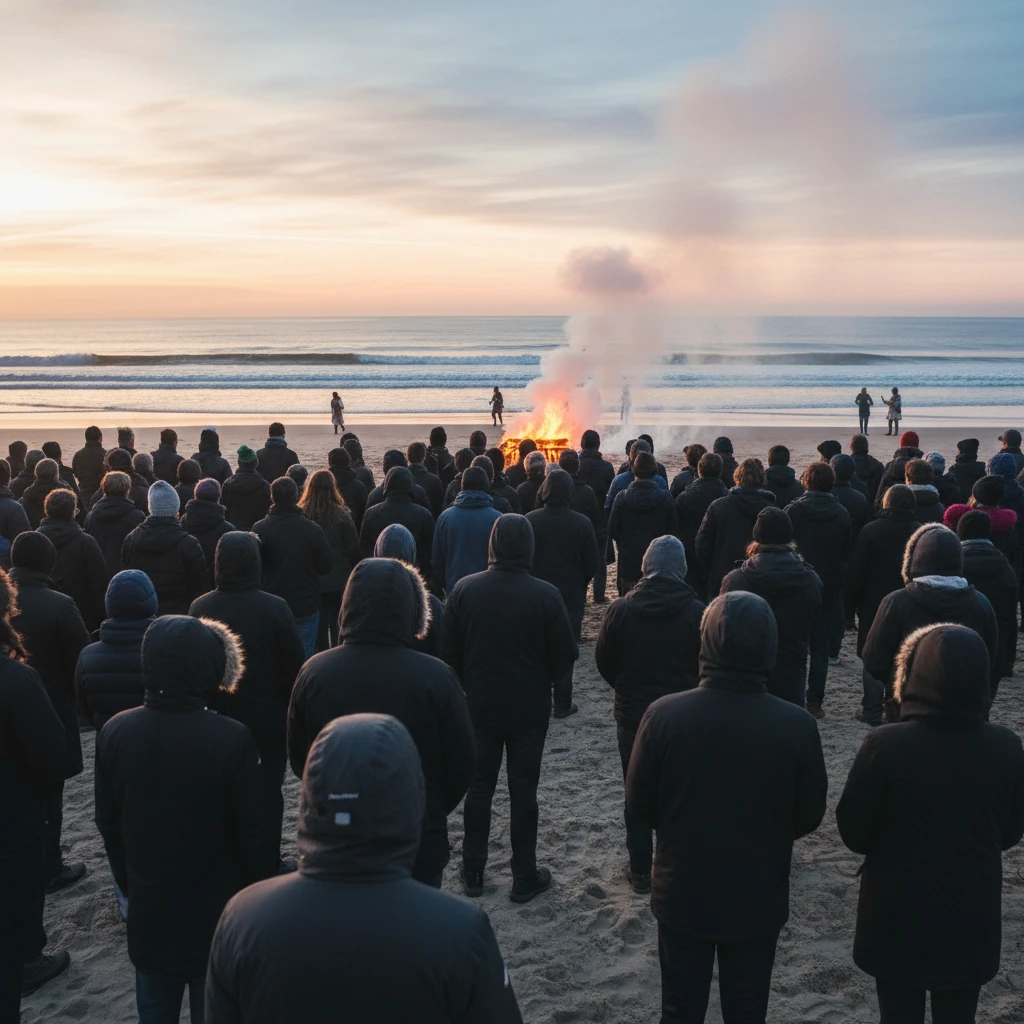
The Hautapu ceremony serves as a reminder that despite modern technology, we remain reliant on the earth, the water, and the sky. By feeding the stars, the people of Aotearoa re-establish their contract with nature, promising stewardship in exchange for survival.
Frequently Asked Questions
What is the difference between Matariki and Puanga?
Matariki is the Pleiades star cluster, while Puanga is the star Rigel in Orion. In some regions of New Zealand (like the West Coast and Far North), Matariki is hard to see, so Puanga is used as the primary marker for the Māori New Year. The celebrations and meanings are largely the same.
Can anyone attend a Hautapu ceremony?
Traditionally, these were strict tribal affairs. However, in modern times, many iwi and councils host public Hautapu ceremonies. It is important to check if an event is public or private and to follow all cultural protocols (tikanga) if you attend.
Why is pork not used in a Hautapu ceremony?
Pork (pigs) are an introduced species to New Zealand and do not have a traditional genealogical connection to the Māori Atua (gods) associated with the Matariki stars. Only foods native to the traditional environment (fish, eel, birds, kumara) are used.
What time of day is the ceremony performed?
The Hautapu is performed in the pre-dawn hours (wehenga o te pō), usually between 5:00 AM and 6:30 AM, before the sun rises. This allows the stars to be visible when the steam is released.
What happens to the food after the ceremony?
The food cooked in the ceremonial umu is considered tapu (sacred) because it has been offered to the gods. It is generally not eaten by the congregation. A separate hāngī or breakfast is prepared for the people to eat after the ritual is concluded (whakanoa).
Is the Hautapu performed every year?
Yes, it is an annual event marking the New Year. However, if the weather is terrible and the stars cannot be seen for several days during the correct lunar phase, it is sometimes interpreted as a sign that the new year will be difficult, though the ritual is usually attempted regardless.