
The Hautapu ceremony Matariki is a sacred Māori ritual involving the spiritual offering of food to the Matariki star cluster. Food representing four environmental domains is cooked in a ceremonial earth oven (umu kohukohu whetū), releasing steam that rises to feed the stars. This allows tohunga (experts) to read the smoke patterns and predict the bounty of the coming year.
What is the Hautapu Ceremony?
The Hautapu ceremony is the pinnacle of the Matariki celebrations, marking the Māori New Year with a profound spiritual exchange between the earth and the heavens. The term Hautapu translates loosely to “sacred wind” or “sacred offering,” referring to the steam and scent of food that rises to the sky. Historically, this ceremony was not merely a celebration but a critical survival tool, a moment of divination, and a necessary rite to ensure the favor of the environment for the year ahead.
Matariki, known internationally as the Pleiades cluster, reappears in the pre-dawn sky of mid-winter in Aotearoa (New Zealand). The visibility and brightness of these stars were historically used to predict the success of the upcoming harvest. However, the Hautapu takes this observation a step further. It is a reciprocal act: before the people ask for a bountiful year, they must first provide sustenance to the stars themselves.
In traditional Māori society, the ceremony was conducted by high-ranking *tohunga* (priests/experts) away from the general populace, often in a secluded, high place to be closer to the heavens. Today, as part of the cultural renaissance in New Zealand, the Hautapu ceremony Matariki has evolved into a public event, inviting communities to witness the regeneration of time and spirit.
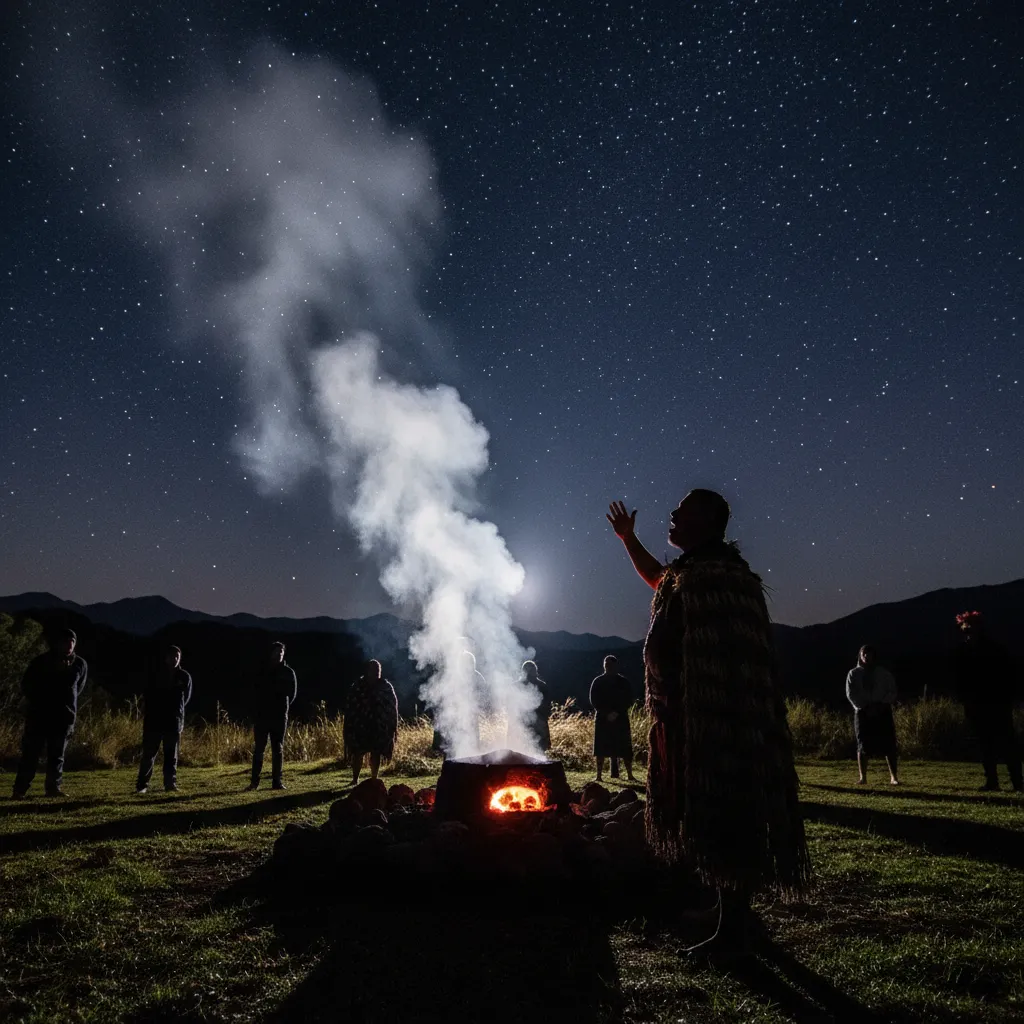
The Umu Kohukohu Whetū: The Sacred Oven
Central to the Hautapu is the umu kohukohu whetū, which translates to “the steaming earth oven of the stars.” It is imperative to understand that this is distinct from a standard hāngī used for cooking feasting food. The umu kohukohu whetū is a ritualistic vessel designed solely for the purpose of generating the sacred steam.
The construction of this oven follows strict protocols. It is prepared before dawn, under the cover of darkness. Stones are heated to an intense temperature, much like a standard earth oven, but the placement of the food and the intent behind the covering are different. The objective is not just to cook the food but to transform its essence into a vapor that can traverse the physical distance between the land and the cosmos.
The Distinction of Sacred Steam
In a normal hāngī, steam escaping is seen as a waste of heat. In the umu kohukohu whetū, the release of steam is the entire point of the exercise. When the oven is uncovered during the ceremony, the steam is viewed as the spiritual essence (mauri) of the food. It is believed that the stars of Matariki descend or draw closer to the earth to partake in this essence, replenishing their energy after their long journey across the sky.
Selecting the Offering: Connection to the Stars
The contents of the Hautapu are not random. They are carefully selected to align with the specific domains of the stars within the Matariki cluster. Matariki is not just a single star but a cluster where each distinct point of light holds dominion over a specific environmental realm. To conduct a proper Hautapu, the offering must include representatives from each of these realms.
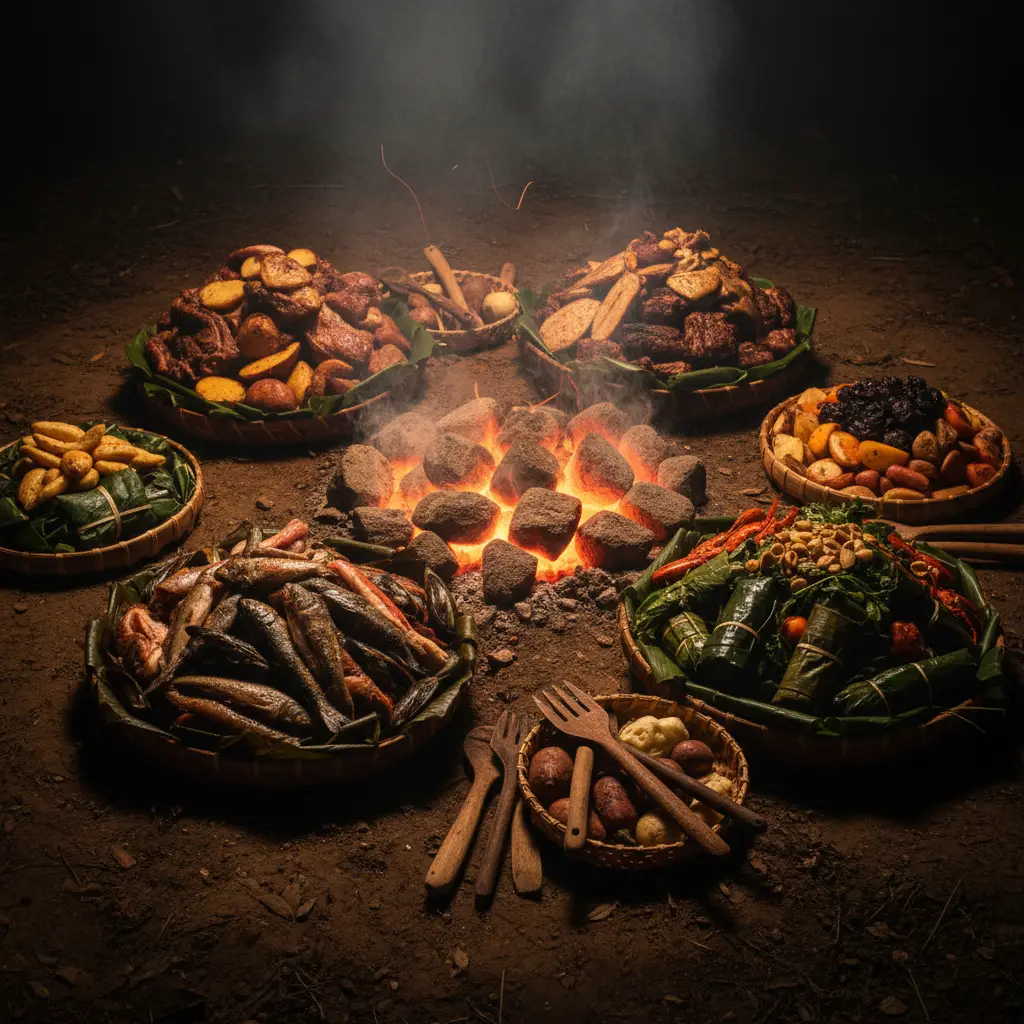
Typically, four specific types of food are cooked in the umu, corresponding to the four stars connected to food sources:
- Tupu-ā-nuku (Food from the earth): This star is connected to everything that grows within the soil. The offering usually consists of kūmara (sweet potato) or other root vegetables. It acknowledges the fertility of the soil and the staple crops that sustain the people.
- Tupu-ā-rangi (Food from the sky): This star watches over the forests and things that grow above the ground. Historically, this offering would be birds (manu), specifically kererū or preserved birds. In modern contexts, chicken is often used as a substitute to represent the domain of the sky and trees.
- Waitī (Freshwater food): This star is associated with lakes, rivers, and streams. The offering is typically freshwater fish, such as tuna (eels), to acknowledge the bounty of the inland waterways.
- Waitā (Saltwater food): This star governs the oceans. The offering consists of kaimoana (seafood), such as ika (fish) or shellfish, representing the vast resources of the sea.
By combining these elements in a single oven, the Hautapu harmonizes the different ecosystems, bringing the bounty of the entire environment together in one unified offering.
The Three Stages of the Ritual
The execution of the Hautapu ceremony Matariki follows a structured progression, moving from observation to remembrance, and finally to the offering. This structure ensures that all spiritual obligations are met before the new year is formally welcomed.
1. Te Tirohanga (The Viewing)
The ceremony begins well before sunrise. The tohunga and the participants gather to watch the horizon for the rising of Matariki. This stage is known as Te Tirohanga. It is a moment of intense observation. The tohunga examines the appearance of the stars—their brightness, their distinctness, and their distance from one another.
If the stars are clear and bright, it signals a warm and productive year. If they appear hazy, shimmering, or close together, it may predict a cold winter or poor harvest. This astrological reading sets the tone for the ceremony, determining the mood of the gathering.
2. Taki Mōteatea (Remembering the Departed)
Once the stars are sighted, the ceremony moves into Taki Mōteatea, the chanting of laments. Matariki is the time when the spirits of those who have passed away during the previous year are released into the heavens to become stars. The tohunga chants the names of the dead, acknowledging the grief of the community.
This is a solemn phase. It is the final farewell to loved ones, a process known as weeping for the dead (tangihanga). By calling out their names while looking at the star Pōhutukawa (connected to the dead), the living sever the ties of grief, allowing the spirits to ascend and the living to move forward into the new year unburdened.

3. Te Whāngai i te Hautapu (Feeding the Stars)
The final and most active stage is the opening of the umu. This is the Te Whāngai i te Hautapu. The earth covering is removed, and the steam from the cooking food escapes. The tohunga will perform karakia (incantations) inviting the stars to consume the essence of the food. This is the moment of renewal, where the physical labor of the people (the food) nurtures the metaphysical guardians of the year (the stars).
Te Whāngai i te Hautapu: Reading the Smoke
While the act of offering is significant, the reaction of the elements is equally important. In ancient times, and still practiced by experts today, the way the steam and smoke behave is read as a tohu (sign).
As the steam rises, the tohunga observes its direction and behavior:
- Straight Rise: If the smoke rises straight up toward the cluster, it is interpreted as the offering being accepted readily, signaling a propitious and calm year.
- Dispersion: If the smoke is blown vigorously by the wind or stays low to the ground, it might suggest climatic turbulence or that the stars are displeased, requiring further caution in the coming seasons.
This divination aspect of the Hautapu ceremony Matariki transforms it from a simple ritual into a complex interaction with the natural world. It reinforces the Māori worldview that humanity is in constant dialogue with nature, not separate from it.
Modern Adaptations and Community Renewal
With the establishment of Matariki as a public holiday in New Zealand, the Hautapu ceremony has seen a massive resurgence. What was once a specialized ritual conducted in secret by a few is now a televised national event and a local community practice.
Modern adaptations often involve:
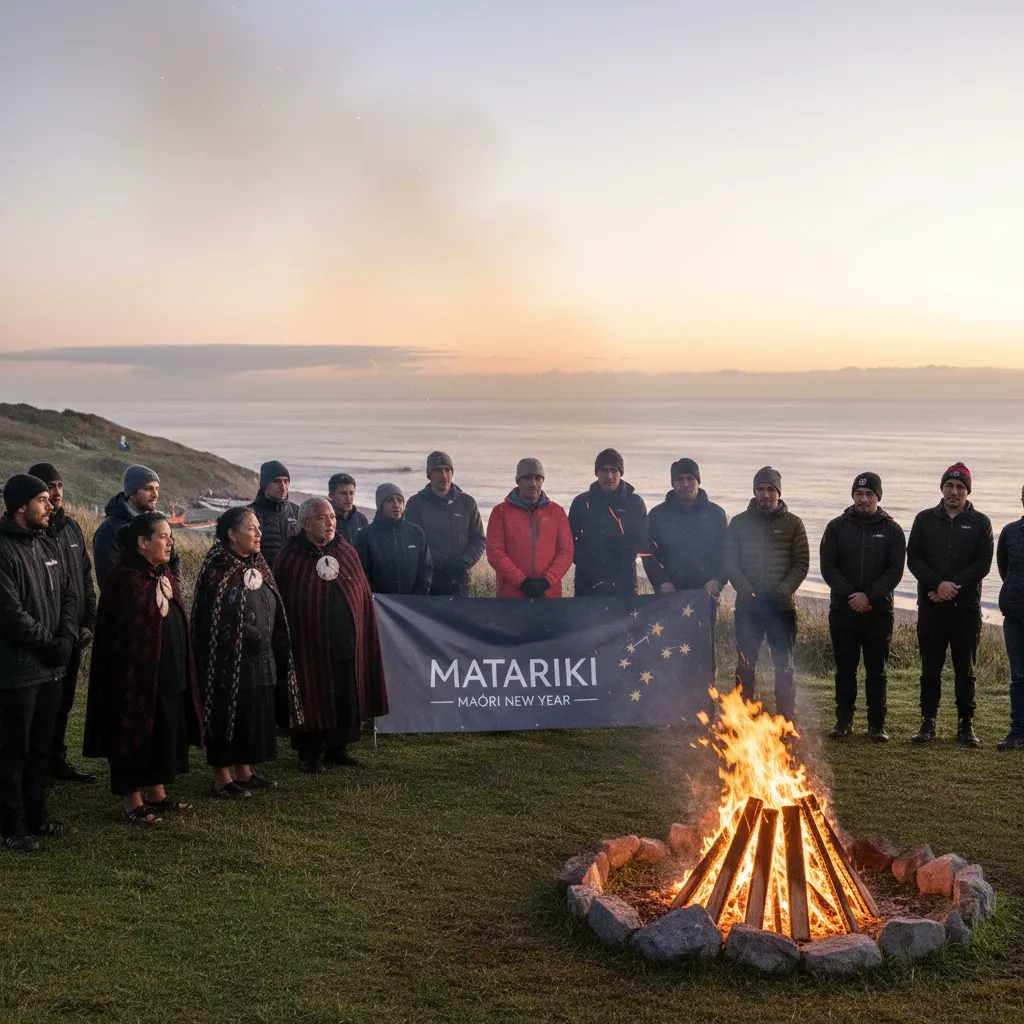
- Public Gatherings: Councils and iwi (tribes) host dawn ceremonies where hundreds gather to witness the steam rising. While a tohunga still leads the ritual, the community participates by listening and observing.
- Education: The ceremony is used as a vehicle to teach younger generations about the stars, environmental stewardship, and the cycle of life and death.
- Shared Breakfast: Following the sacred Hautapu (where the food is for the stars), the community engages in a hākari (feast). This moves the event from the sacred (tapu) back to the common (noa), allowing people to eat, laugh, and plan for the future together.
Despite these modernizations, the core intent remains unchanged: to acknowledge the source of our sustenance, to remember those we have lost, and to reset our internal compass for the year ahead.
Frequently Asked Questions
When is the best time to perform the Hautapu ceremony?
The Hautapu ceremony is performed during the Matariki period, specifically in the pre-dawn hours (around 5:00 AM to 6:30 AM) when the star cluster is visible on the horizon, just before the sun rises.
Can anyone perform a Hautapu ceremony?
Traditionally, only a tohunga (expert priest) could perform the rites due to their tapu nature. However, in modern times, community leaders or heads of families may lead adapted versions, provided they follow cultural protocols and treat the ceremony with the required respect.
What happens to the food after the Hautapu?
The food cooked in the umu kohukohu whetū is sacred (tapu) as it is an offering to the stars. It is generally not eaten by the participants. Instead, it is returned to the earth or left in a sacred place, while the community shares a separate feast (hākari) afterward.
Why is steam so important in the ceremony?
Steam is viewed as the physical manifestation of the food’s essence (mauri). It acts as the vehicle that carries the offering from the physical realm of the earth to the spiritual realm of the sky/stars.
Is the Hautapu the same as a Hāngī?
No. A hāngī is a method of cooking food for people to eat. The umu kohukohu whetū used in Hautapu is a ritual oven specifically designed to generate steam for the stars, and the food within it is usually not for human consumption.
What stars are fed during the ceremony?
The offering specifically targets the stars associated with food sources: Tupu-ā-nuku (soil/crops), Tupu-ā-rangi (sky/birds), Waitī (freshwater), and Waitā (saltwater). These stars are fed to ensure their domains remain productive in the new year.